Did you know that roughly 80% of dogs and 70% of cats over the age of three are already living with some form of dental disease? It’s a staggering number, especially when you realise our furry companions are absolute experts at hiding their discomfort. As a devoted pet owner here in West Gippsland, you likely worry about your best mate being in silent pain or feel a bit overwhelmed by the conflicting advice on dental diets versus brushing. We understand that the thought of a pet dental health check can even bring up a little anxiety, particularly when it comes to the safety of anaesthesia and the procedures involved.
We believe that every pet deserves a pain-free life and a healthy smile. In this guide, we’ll help you discover how to identify the early, subtle signs of dental issues and explain why professional care is such a vital investment in your pet’s long-term wellbeing. You’ll learn a simple way to assess your pet’s mouth at home and get a clear, reassuring look at what happens during a professional dental check-up in our clinic. Our goal is to replace your worries with confidence, ensuring your companion stays happy, healthy, and by your side for many years to come.
Key Takeaways
- Learn why a comprehensive pet dental health check is the best way to uncover hidden issues that standard brushing simply can’t reach.
- Master a simple at-home checklist to identify early warning signs like discoloured teeth or sensitive gums before they lead to “silent” pain.
- Discover the essential balance between daily treats and professional scaling to ensure your pet’s oral health supports their overall wellbeing.
- Explore our gentle, Fear-Free approach in Drouin and Warragul, designed to make every dental visit a calm and positive experience for your furry family member.
- Understand how early intervention and regular professional cleaning can prevent the need for more invasive procedures later in life.
Understanding the Importance of a Pet Dental Health Check
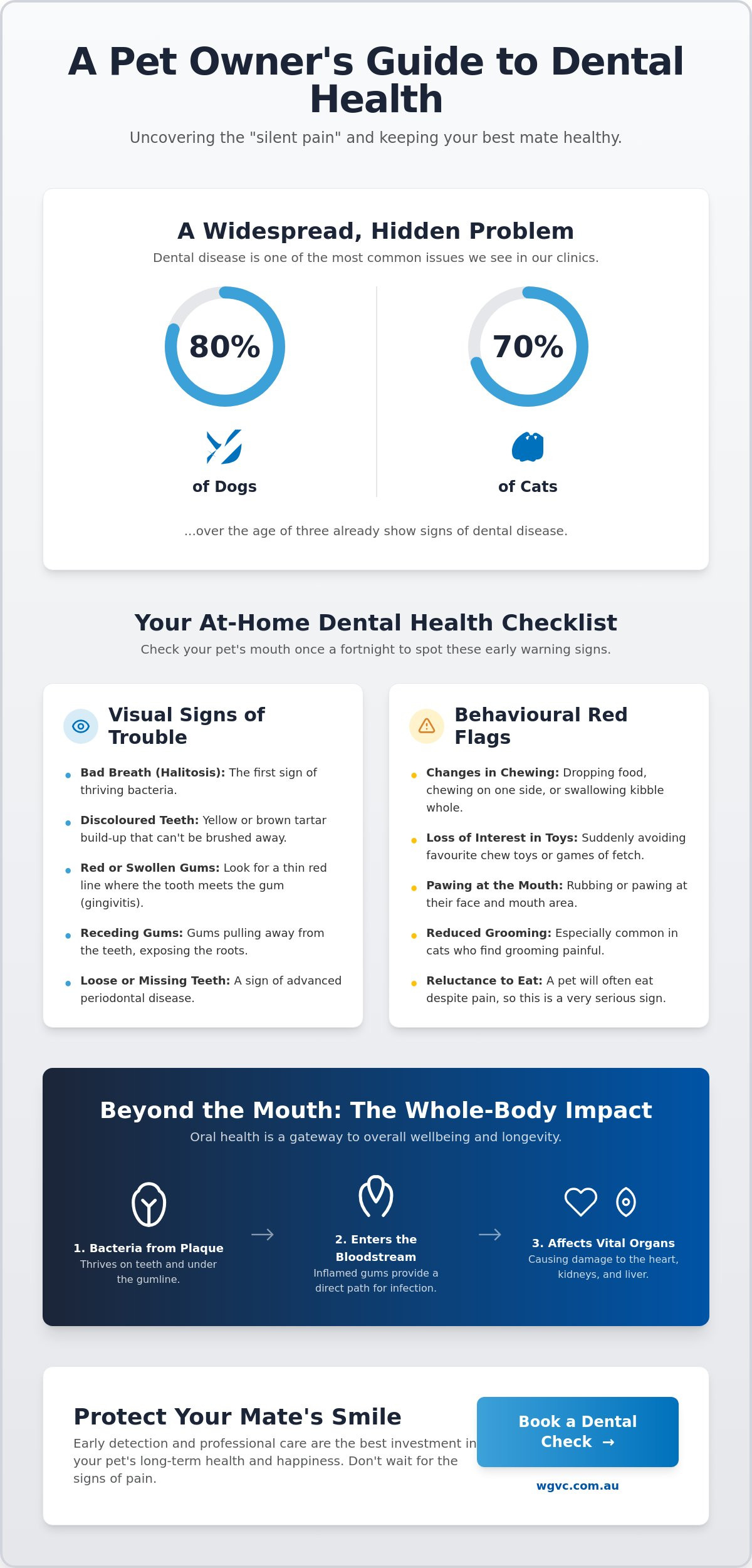
When we sit down with you for a pet dental health check, we’re looking at much more than just a few stained teeth. It’s a comprehensive examination of the entire oral cavity, including the gums, tongue, and the structures we can’t easily see without specialised equipment. Many owners are surprised to learn that around 80% of dogs and 70% of cats show signs of dental disease by the time they reach their fourth birthday. This isn’t about scaring you; it’s about recognising that our pets’ mouths age much faster than our own, and they require dedicated care to stay comfortable.
One of the most common misconceptions we hear in our West Gippsland clinics is that a pet will stop eating if they’re in pain. This simply isn’t true. Animals have an incredibly strong survival instinct that drives them to eat despite significant discomfort. They might chew on one side of their mouth or swallow kibble whole, but they rarely give up on their dinner until the situation is dire. This “silent pain” is exactly why professional checks are so important. We’re here to be their voice and identify issues before they become a source of daily distress for your mate.
The Link Between Oral Health and Longevity
The modern practice of Veterinary dentistry has shown us that a healthy mouth is a gateway to a healthy body. When periodontal disease takes hold, the gums become a doorway for bacteria to enter the bloodstream. Once there, these bacteria can travel to vital organs like the heart, liver, and kidneys, causing inflammation and long-term damage. For our senior pets in Gippsland, keeping up with a regular pet dental health check is one of the most effective ways to extend their golden years. By catching plaque buildup early, we can often avoid the need for more complex, invasive surgeries later in life, making preventative care a much gentler option for your older companion.
Why “Dog Breath” Isn’t Just a Smelly Nuisance
It’s easy to dismiss a bit of a pong from your pet’s mouth as just “dog breath,” but there’s a clear difference between a normal animal scent and halitosis. True bad breath is often the very first sign that bacteria are thriving beneath the gumline. At West Gippsland Vet Care, we prioritise dental health during every routine consultation. We know that for many of our local families, their pets are constant companions on farm walks or curled up on the rug at home. Identifying these smells early allows us to address the root cause of the infection before it spreads, ensuring your pet stays fresh-breathed and, more importantly, healthy. Whether you’re in Warragul, Drouin, or the surrounding hills, keeping an ear out for the “smell” of dental disease is your first line of defence.
Your At-Home Pet Dental Health Checklist
Monitoring your pet’s oral health at home is a wonderful way to stay connected to their wellbeing. It doesn’t need to be a struggle. Think of it as a quiet moment of care during your usual patting routine. By performing a regular pet dental health check at home, you become the first line of defence against discomfort. We recommend checking once a fortnight to stay ahead of any changes that might be brewing beneath the surface.
To start your check, choose a time when your pet is relaxed and happy. Gently lift the side of their lip to peek at the teeth and gums. If they pull away or seem anxious, stop and try again later with plenty of praise. You are looking for symmetry, clean surfaces, and healthy tissue. If you can, try to look at the very back molars, as these are often the first teeth to accumulate heavy buildup.
Visual Signs of Trouble
Healthy gums should be a soft, salmon pink colour. If you see a thin red line where the tooth meets the gum, that’s often the first stage of gingivitis. This inflammation is reversible with care, but it quickly progresses if ignored. We also look for tartar, which is mineralised plaque that cannot be brushed away and requires professional equipment to safely remove. Advanced periodontitis might show as receding gums, dark brown deposits, or even missing teeth. For our feline friends, the symptoms can be even more subtle, so it’s helpful to review the specific signs of dental disease in cats to know exactly what to look for.
Behavioural Red Flags to Watch For
Sometimes the clues aren’t in the mouth but in how your pet acts. A dog that suddenly loses interest in their favourite fetch toy or a cat that stops grooming their back might be trying to tell you something. Watch for “head shyness” where they flinch when you reach for a pat, or if they start pawing at their face as if something is stuck in their teeth. These actions, along with dropping food or chewing only on one side, are clear signals that your companion is uncomfortable and needs a professional pet dental health check.
Physical changes can also appear outside the mouth. Excessive drooling or a sudden swelling just under the eye can indicate a serious tooth root abscess. According to the American Veterinary Medical Association, Pet dental care is one of the most overlooked aspects of animal wellness, yet it has a massive impact on their quality of life. If you notice any of these signs, we invite you to reach out to our friendly team for a professional assessment to ensure your pet stays pain-free.
Professional Check-ups vs. At-Home Care: Finding the Balance
Many of our Gippsland families are incredibly diligent when it comes to their pet’s daily routine. We often see owners who have mastered the art of brushing or who use dental treats religiously. While these efforts are fantastic for slowing down plaque buildup, it’s helpful to think of home care as the daily maintenance and a professional pet dental health check as the deep clean your pet needs to stay truly healthy. Brushing is wonderful for prevention, but once plaque mineralises into hard tartar, it can only be safely removed with professional scaling equipment.
We also want to touch on a topic that often causes confusion: “anaesthesia-free” dentistry. While it might sound like a gentle alternative, these procedures are purely cosmetic and don’t address the disease hiding under the gumline. Without anaesthesia, we cannot safely use the tools required to clean the most important areas of the mouth. As the experts at the Cummings School of Veterinary Medicine explain in their look at Pet Dental Health: Fact or Fiction?, these “scraping” sessions can actually be quite stressful for animals and leave painful issues untreated.
The Gold Standard: Daily Brushing and Diets
The best time to start a dental routine is when your pet is young. If you have a new puppy or kitten, try introducing a soft finger brush with a tiny bit of pet-safe toothpaste. Keep the sessions short, positive, and full of praise so they learn to enjoy the attention. For those pets who simply won’t tolerate a brush, we often recommend specific dental diets like Hills Science Diet T/D. These kibbles are designed to scrub the tooth surface as your pet chews. Interestingly, our professional dog grooming services in Warragul often act as a second set of eyes, as our groomers are trained to spot early signs of mouth sensitivity while they’re pampering your pup.
Why Professional Diagnostics are Non-Negotiable
Even the most cooperative pet won’t sit still for a full diagnostic exam while awake. This is because roughly 60% of a tooth is hidden beneath the gumline, completely out of sight. During a professional pet dental health check, we use a specialised probe to measure the “pockets” around each tooth and create a detailed chart of their oral health. Dental X-rays are a vital tool in this process because they allow us to identify painful root abscesses and bone loss that are invisible to the naked eye. This level of detail ensures we only treat what is necessary, saving your pet from hidden pain and giving you peace of mind that their whole mouth is healthy.
The West Gippsland Vet Care Approach: A Fear-Free Experience
Many pet owners feel a pang of worry when it’s time for a pet dental health check. We understand that the clinic environment can sometimes feel overwhelming for your furry family members, especially if they’ve had stressful experiences in the past. At our Warragul and Drouin clinics, we’ve embraced the Fear-Free philosophy to ensure that every visit is as calm and positive as possible. By focusing on your pet’s emotional wellbeing alongside their physical health, we’re able to perform more thorough examinations while keeping tails wagging and cats purring.
Our approach starts the moment you walk through the door. We use species-specific calming pheromones throughout our facilities to create a soothing atmosphere. During the dental exam, our team utilises gentle handling techniques that prioritise your pet’s comfort. We believe a calm environment is essential; when a pet is relaxed, we can get a much clearer look at their teeth and gums without causing them distress. We also love having you involved as part of the support system. Your presence and a few reassuring words can make all the difference during that initial check.
Compassionate Care for Anxious Pets
For pets that are particularly nervous, we often recommend “happy visits.” These are short, low-pressure appointments where your mate gets to explore the clinic and enjoy some treats without any clinical procedures. It’s a wonderful way to build trust, especially for “head-shy” dogs who might be sensitive about having their muzzle touched. This commitment to low-stress care extends to all our services, including our cat grooming in Drouin. By integrating these gentle routines, we help your pet feel safe and respected throughout their entire healthcare journey.
Our Local Expertise in West Gippsland
Our clinics in Warragul and Drouin are more than just medical facilities; they are community hubs where we’ve built lasting relationships with local families. To ensure the highest level of safety during dental procedures, we utilise our in-house laboratory to perform pre-dental bloodwork. This allows us to check organ function and tailor anaesthesia protocols to your pet’s specific needs right here on site. For your peace of mind, we also provide 24-hour emergency support for our existing clients, ensuring that help is always available if you have concerns after a procedure. If you’re ready to see the difference a compassionate approach makes, we invite you to book a consultation with our dedicated team today.
Next Steps: Booking Your Pet’s Dental Check-up
Taking the proactive step to book a pet dental health check is one of the most caring decisions you can make for your companion. It’s a gentle, non-invasive starting point that focuses on prevention rather than just reaction. By identifying subtle changes in the gums or teeth early on, we can often avoid the need for the major, complex surgeries that become necessary when dental disease is left to progress. A simple check-up today is an investment in your pet’s future comfort, ensuring they can continue to enjoy their favourite treats and toys without a hint of “silent” pain.
We view every consultation as a partnership between our clinical team and your family. We aren’t just looking at teeth; we’re looking at the whole animal and the bond you share. This collaborative approach means we take the time to listen to your observations from home and answer any questions you have about your pet’s oral hygiene. Whether you’ve noticed a slight change in their breath or you’re simply staying on top of their annual wellness routine, we’re here to provide the expert guidance and compassionate care that Gippsland pet owners have come to rely on.
What to Expect After the Check-up
Once the initial assessment is complete, our vets will sit down with you to provide a tailored dental plan. This isn’t a one-size-fits-all list; it’s a specific roadmap designed for your pet’s unique needs. If the pet dental health check reveals significant tartar or signs of gingivitis, we may recommend a transition to a professional dental prophylaxis for dogs or cats. This procedure, commonly known as a “Scale and Polish,” allows us to thoroughly clean the teeth above and below the gumline while your pet is safely under anaesthesia. Following any procedure, we provide dedicated post-check-up support and home-care education, helping you feel confident in maintaining those pearly whites between clinic visits.
Join the West Gippsland Vet Care Family
We invite you to reach out and join our community of dedicated animal lovers. Our friendly teams at the Warragul and Drouin clinics are always ready to take your call and help you organise an appointment that fits your schedule. We are deeply committed to the West Gippsland region, supporting everyone from our local farmers with hardworking stock dogs to town residents with cherished indoor cats. Our goal is to provide a stable, supportive environment where you always feel heard and your pet always feels safe. You can trust that your companion will receive the highest standard of care from a team that truly values the special place they hold in your heart.
Protecting Your Pet’s Smile for the Years Ahead
A healthy mouth is about so much more than just fresh breath; it’s a vital part of your companion’s overall happiness and longevity. By staying alert to the subtle signs of discomfort at home and prioritising a regular pet dental health check, you are taking a beautiful step in protecting your best mate from unnecessary pain. We’ve seen how early intervention can stop minor issues from becoming complex health challenges, allowing your pet to age gracefully by your side.
As an independent local practice that has served the Gippsland community for decades, we’re proud to offer a truly nurturing environment. Our team uses Fear-Free Certified techniques and advanced dental X-ray technology to ensure every assessment is thorough, safe, and stress-free. We’re here to be your partners in care, providing the expertise and kindness your family deserves. We invite you to book your pet’s dental health check at West Gippsland Vet Care today. Let’s work together to keep those tails wagging and those smiles bright for many years to come.
Frequently Asked Questions
How often should my pet have a dental health check?
We recommend that your pet has a professional pet dental health check every six to twelve months. For most healthy animals, an annual check during their vaccination visit is perfect, but senior pets or those with a history of gum issues often benefit from a chat with our team every six months. Regular monitoring allows us to catch tiny changes before they become painful for your companion.
Will my pet need to be sedated for a dental check-up?
Your pet typically won’t need sedation for their initial dental health check in our clinic. We use gentle handling and Fear-Free techniques to peek at their teeth and gums while they are awake and relaxed. If we find issues that require a deeper look or X-rays, we will then discuss a separate procedure under a safe general anaesthetic to ensure their comfort.
My dog’s teeth look white, do they still need a check?
Yes, even pearly white teeth can hide significant problems beneath the gumline where we can’t see them. Dental disease often starts in the pockets around the tooth roots rather than on the visible surface. A professional pet dental health check ensures that the structures supporting the teeth are healthy, even if the enamel looks clean and bright to the naked eye.
Can I use human toothpaste for my pet’s teeth?
You should never use human toothpaste for your pet because it contains ingredients like fluoride and xylitol that are toxic to animals. Pets don’t know how to spit, so they swallow the paste, which can lead to serious stomach upset or toxicity. We always suggest using a pet-specific toothpaste, which comes in flavours like poultry or beef to make the experience more enjoyable for them.
What is the cost of a pet dental health check in West Gippsland?
The cost of a dental assessment can vary depending on whether it is part of a routine wellness exam or a dedicated dental consultation. Because every pet’s mouth is unique, we provide a clear estimate after our initial assessment if further treatment is required. We encourage you to chat with our friendly reception team in Drouin or Warragul for our current consultation fees.
Are certain breeds more prone to dental disease?
Yes, smaller dog breeds like Toy Poodles and Cavalier King Charles Spaniels often have crowded mouths that trap food and bacteria more easily. Similarly, flat-faced breeds like Pugs or Persian cats frequently deal with misaligned teeth. If you own one of these breeds, staying on top of their oral hygiene is especially important for their long-term comfort and health.
What happens if I ignore my pet’s bad breath?
Ignoring persistent bad breath allows bacteria to continue damaging the gums and bone supporting the teeth. This infection doesn’t just cause silent pain; it can eventually enter the bloodstream and impact your pet’s heart, liver, and kidneys. Addressing the pong early through a professional check is much kinder than waiting until your pet is visibly unwell or begins losing their teeth.
Can dental disease in pets be reversed?
Early-stage gingivitis, which shows up as red or swollen gums, is often completely reversible with a professional clean and improved home care. However, once the disease progresses to periodontitis and bone loss occurs, we can’t reverse the damage. In these cases, our focus shifts to managing the condition and removing any painful teeth to keep your pet comfortable and happy.