Choosing sedation for a dog nail trim isn’t giving up on your mate; it’s one of the kindest decisions you can make for them. If you’ve ever watched your dog tremble, snap, or cry through a nail trim, you already know that pushing through the fear doesn’t make it easier over time. It often makes it worse.
You’re not alone in feeling that guilt, and you’re certainly not alone in wondering whether there’s a better way. So many dog owners across West Gippsland are quietly dealing with the same thing: a beloved pet whose nails are clicking painfully on the floorboards, a grooming appointment that ends in stress for everyone involved, and a nagging worry about what happens next time. Sedation for dog nail trim in Trafalgar is a genuine, medically sound option, and it’s far more accessible than most people realise.
In this article, you’ll discover how professional sedation works, why it protects your dog’s long-term wellbeing rather than undermining it, and how the Fear-Free approach at West Gippsland Vet Care can turn a dreaded appointment into a calm, safe experience for your dog and a much easier one for you.
Key Takeaways
- Overgrown nails aren’t just a cosmetic concern — they can cause real, lasting damage to your dog’s posture, joints, and overall comfort if left unaddressed.
- Sedation for dog nail trim in Trafalgar is a vet-supervised procedure using mild relaxants, carefully tailored to your dog’s size and health profile, with vitals monitored throughout.
- Forcing a frightened dog through repeated restraint can deepen their fear over time, whereas a calm, sedated experience helps protect their long-term emotional wellbeing.
- West Gippsland Vet Care offers the unique advantage of having both vets and groomers under one roof, making it easier to combine nail trims with routine care like vaccinations.
- Understanding exactly what happens during a sedated nail trim — from the initial consultation through to recovery — can help you feel confident and prepared before your dog’s appointment.
The Struggle with Dog Nail Trimming in Trafalgar
For many dog owners in Trafalgar and across West Gippsland, nail trimming sits in a category all its own: dreaded, postponed, and quietly stressful for everyone involved. It seems like it should be simple. It rarely is. And when your dog is wriggling, whimpering, or snapping the moment the clippers come out, it’s easy to keep putting it off until the problem becomes impossible to ignore.
That’s where sedation for dog nail trim in Trafalgar becomes a genuinely practical conversation. Rather than a dramatic intervention, it’s a vet-supervised procedure using mild relaxants, carefully dosed to your dog’s size, age, and health history. It’s calm, controlled, and far removed from the white-knuckle experience of trying to hold a terrified dog still on your laundry floor.
When “Just a Trim” Becomes a Medical Necessity
Overgrown nails don’t just make an annoying clicking sound on the floorboards. Left too long, they force your dog’s toes into an unnatural position, which changes how weight is distributed across the paw. Over time, this puts strain on the joints and can contribute to postural problems that are genuinely painful. Signs that nails have reached a health concern include:
- A visible curl or twist in the nail growth
- Your dog favouring one paw or shifting their gait
- Nails touching the ground even when your dog stands still
- Reluctance to walk on hard surfaces they previously had no issue with
There’s also the very real risk of “quicking” a dog mid-trim. The quick is the blood vessel running through the nail, and cutting into it is painful and bleeds significantly. In a dog that’s thrashing or resisting, that risk multiplies. It’s one of the main reasons standard groomers in the region will sometimes refer clients directly to a vet clinic rather than attempt the trim themselves.
The Psychological Impact of Forced Restraint
Here’s something that doesn’t get talked about enough: a single traumatic grooming experience can reshape how a dog feels about vet visits, handling, and human contact for years. Rescue dogs and high-energy breeds, both of which are common in this part of Gippsland, often arrive with existing sensitivities that forced restraint only deepens. The Fear-Free approach recognises this, prioritising the dog’s emotional state alongside their physical safety.
Sedation becomes the kinder choice when a dog’s anxiety is so significant that any attempt at restraint causes genuine distress, placing both the animal and the people caring for them at risk. It’s not a shortcut. It’s a considered, compassionate line drawn by the vet and the owner together, with the dog’s long-term wellbeing at the centre of that decision.
Understanding Sedation: Why It’s a Compassionate Choice
Modern veterinary sedation is nothing like the blunt, one-size-fits-all approach some people imagine. When a dog comes in for sedation for dog nail trim in Trafalgar, the protocol is built around that individual animal: their weight, age, breed, temperament, and health history all shape exactly what’s used and how much. It’s a tailored process, not a template.
What sedation makes possible goes well beyond simply keeping a dog still. A calm, relaxed dog allows the vet and groomer to work thoroughly and safely, addressing dewclaws that are often missed during rushed standard trims, clearing hair matts around the paw pads, and cutting nails back to a genuinely healthy length rather than just taking the tips off. The result is a more complete job, done with far less risk to the dog or the people caring for them.
The Spectrum of Sedation: From Chill Pills to Full Sleep
Not every dog needs the same level of intervention. The approach at West Gippsland Vet Care reflects that reality:
- Oral pre-visit sedatives: For dogs with mild to moderate anxiety, medications like gabapentin or trazodone can be given at home before the appointment. They take the edge off without putting the dog fully under, making the whole experience far less confronting from the moment they leave the house.
- Injectable reversible sedation: For dogs that genuinely cannot be handled safely, injectable sedatives offer a deeper level of calm. Crucially, many of these are reversible, meaning the vet can bring your dog around once the procedure is complete.
- Tailored dosing: Age, breed size, and any existing health conditions all influence the protocol chosen. A young, healthy Labrador and a senior Dachshund with a heart murmur will have very different plans, and that’s exactly how it should be.
Safety First: The Role of Pre-Sedation Health Checks
Before any sedative is administered, the vet checks your dog’s heart and lungs. This isn’t a formality; it’s the step that makes everything else safe. Underlying conditions that aren’t immediately obvious can affect how a dog responds to sedation, and catching them beforehand is what separates a vet clinic from any other grooming environment.
This matters particularly for older dogs. Senior pets managing arthritis or joint conditions, which are common across West Gippsland, often have the greatest need for nail care and the least tolerance for the stress of a standard trim. The professional orthopaedic vet expertise available at West Gippsland Vet Care means sedation for senior dogs is approached with an extra layer of clinical understanding, not guesswork.
This is the heart of the Fear-Free philosophy: treating the whole dog, not just the task at hand. Emotional safety and physical safety aren’t separate considerations. They’re the same thing. If you’d like to talk through whether sedation is the right fit for your dog, the team at West Gippsland Vet Care is genuinely happy to have that conversation with you before you commit to anything.
Sedation vs. Traditional Restraint: A Fear-Free Comparison
There’s a persistent belief in some corners of the pet-owning world that if you just hold a dog firmly enough, for long enough, they’ll eventually accept what’s happening. It sounds reasonable on the surface. In practice, it can cause real harm, and not just in the moment.
When a dog is physically restrained against their will, their body responds the way any animal’s would: cortisol and adrenaline spike, muscles tense, and the brain locks the experience away as a threat memory. Research into canine stress physiology consistently shows that cortisol levels can remain elevated for hours after a frightening event, sometimes longer in dogs with existing anxiety. That’s not a dog who’s “over it.” That’s a dog who is still, biochemically, in a state of alarm long after they’ve been bundled back into the car.
By contrast, a dog who’s been sedated for their nail trim wakes up calm, without a stored memory of struggle or pain. Over time, that difference compounds in the most positive way: the clinic becomes a neutral or even pleasant place rather than somewhere their body braces against from the car park.
The Myth of “Muscling Through”
Pinning a frightened dog down doesn’t just fail emotionally; it creates physical risks that are easy to underestimate. A dog in full panic can redirect aggression in a split second, and the person doing the restraining is almost always the one who gets bitten. There’s also a real risk of soft tissue injury when a dog twists hard against a firm hold, particularly in smaller breeds or seniors with fragile joints. A torn muscle or sprained limb from a grooming session is a genuinely avoidable outcome.
From a practical standpoint, sedation for dog nail trim in Trafalgar is actually the more efficient choice: one calm, thorough appointment replaces three or four rushed, incomplete ones where the dog was too distressed to allow proper work.
Building Trust with Fear-Free Techniques
Sedation doesn’t operate in isolation at West Gippsland Vet Care. It’s layered into a broader fear-free veterinary care approach that uses high-value treats, calming pheromones, and a low-stress clinic environment to shift how a dog feels about being there. The goal isn’t permanent reliance on medication; it’s to give a dog enough calm, positive experiences that they gradually need less support to cope.
For local families across Trafalgar and the wider West Gippsland community, that kind of gentle, relationship-centred care matters. People here know their neighbours, their vets, and their groomers. They’re not looking for a conveyor-belt experience; they want someone who’ll treat their dog like the individual they are.
What to Expect During a Sedated Nail Trim at Our Clinic
Knowing exactly what happens during a sedated nail trim takes a lot of the worry out of the day. Rather than handing your dog over and hoping for the best, you can walk in with a clear picture of each step, from the moment you arrive to the drive back home to Trafalgar.
Here’s how the process unfolds at West Gippsland Vet Care:
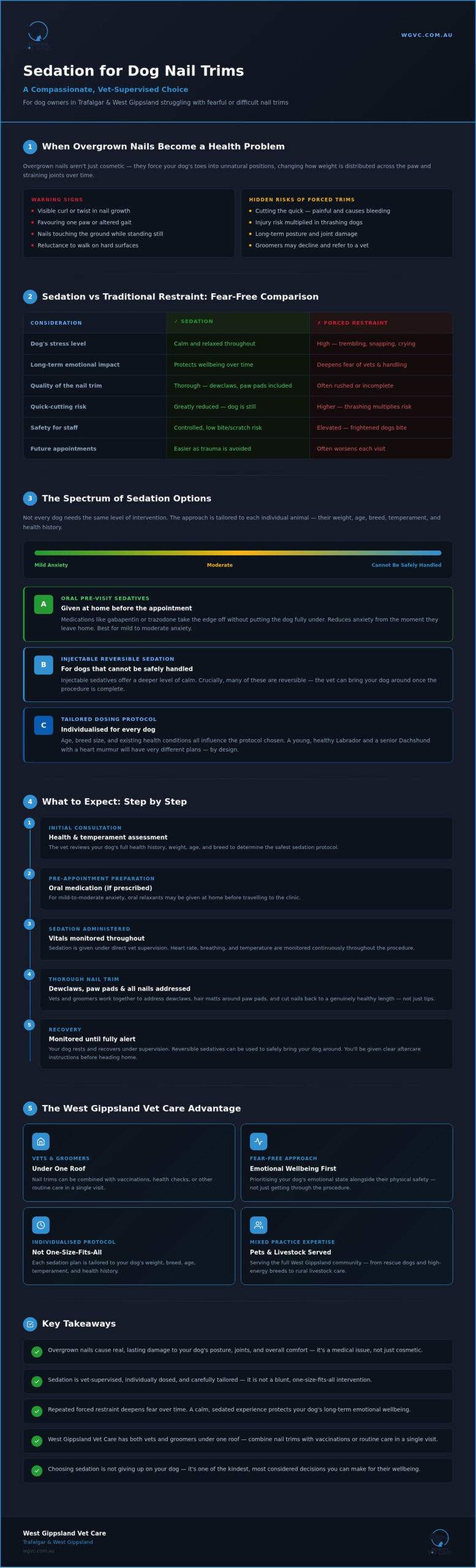
- Step 1 – Initial consultation and weight check: The vet meets your dog, reviews their health history, and checks their heart and lungs. Weight is confirmed so the sedative dose can be calculated precisely for that individual animal.
- Step 2 – Administration in a quiet space: The sedative is given in a calm, low-stimulus environment, away from the bustle of the waiting room. This matters. A dog that’s already wound up before the medication takes effect will have a harder time settling into it.
- Step 3 – The pedicure: Once your dog is relaxed, the groomer and vet work together to trim and file nails to a healthy length, check dewclaws, and assess the overall condition of the paw pads. It’s thorough in a way that simply isn’t possible when a dog is struggling.
- Step 4 – Reversal and recovery: Where a reversible sedative has been used, the reversal agent is administered and your dog is monitored closely as they come around. This isn’t rushed. Your dog stays in a quiet, warm space until the team is satisfied they’re ready.
- Step 5 – Post-care briefing: Before you leave, the team walks you through exactly what to watch for on the trip home and for the rest of the day.
Preparing Your Mate for Their Appointment
A little preparation at home makes a real difference. If sedation is planned, the vet team will advise you on fasting requirements during the pre-appointment conversation, as these vary depending on the type and depth of sedation used. Tell the team honestly about your dog’s history: past biting incidents, previous grooming reactions, any medications they’re currently on. Nothing you share will be judged. It’s all useful clinical information. Bringing a familiar blanket or a toy that smells like home can also help your dog settle more quickly in the recovery space.
Aftercare: The Trip Home to Trafalgar
Most dogs are noticeably groggy for a few hours after sedation for dog nail trim in Trafalgar, which is completely normal. Keep a few practical things in mind for the journey home:
- Have someone with you in the car if possible, so your dog isn’t travelling unattended in the back seat while still unsteady.
- Avoid letting them jump in or out of the car unaided; lift them carefully, especially if they’re a smaller or older dog.
- Once home, keep them away from stairs and elevated surfaces until they’re fully alert.
- Offer water, but don’t be alarmed if they’re not interested in food straight away.
If you notice anything that concerns you after you’re home, including prolonged unsteadiness, laboured breathing, or unusual behaviour, don’t hesitate to reach out. West Gippsland Vet Care provides 24-hour emergency care for existing clients, so you’re not left without support if something doesn’t feel right.
Ready to take that next step? Get in touch with the West Gippsland Vet Care team to talk through the right sedation approach for your dog before booking.
Grooming and Holistic Care in West Gippsland
There’s a genuine advantage to having a groomer and a vet working under the same roof, and it’s one that becomes especially clear when your dog needs sedation for dog nail trim in Trafalgar. Rather than coordinating between two separate businesses, hoping one knows what the other has done, everything happens in one place, with one team who knows your dog’s full picture.
That coordination matters more than it might seem. When the groomer and vet are colleagues rather than strangers, they can flag concerns to each other in real time. A groomer who notices unusual skin changes, a new lump, or a paw that’s being favoured can walk directly to the vet rather than leaving a note you might never see. That kind of communication is simply not possible when your dog’s medical care and grooming happen in separate locations.
Beyond the Nails: Full Grooming Services
A sedated appointment is a natural opportunity to do more. Dogs who’ve been avoiding grooming due to anxiety often arrive with matted coats, overgrown fur around the paw pads, and skin that hasn’t had a proper check in months. While your dog is calm and relaxed, the team can combine a full clip or bath with the nail trim, address matting that would otherwise be distressing to work through, and give the skin a thorough once-over for anything worth investigating. It’s efficient, kind, and far less disruptive to your dog than multiple separate visits. Professional grooming, like preventative dentistry, is a genuine pillar of long-term pet health, not a luxury add-on.
Routine care can be bundled into the same visit too. Vaccinations, a senior health check, a microchip scan, or a weight and dental assessment can all be folded into one appointment, saving you another trip across West Gippsland and reducing the number of times your dog has to walk through a clinic door.
Joining the West Gippsland Vet Care Family
West Gippsland Vet Care is genuinely part of this community. The team looks after dogs, cats, and livestock across Trafalgar, Warragul, Drouin, and the surrounding region, and they understand what local pet owners actually need: straightforward advice, honest conversations, and care that treats your dog as an individual rather than a number on a schedule.
If you’ve been putting off nail day because every attempt ends in stress, it doesn’t have to stay that way. You’re welcome to come in, meet the team, and have a no-pressure chat about whether a Fear-Free assessment and sedated nail trim is the right fit for your dog. Reach out to the West Gippsland Vet Care team to get started. Nail trim day can genuinely be fine. Let us show you how.
Nail Day Doesn’t Have to Be a Battle
If there’s one thing this article makes clear, it’s that your dog’s distress during nail trims isn’t something you simply have to accept. Overgrown nails carry real health consequences, forced restraint deepens fear over time, and there’s a genuinely kinder path available right here in your community.
Sedation for dog nail trim in Trafalgar, delivered through West Gippsland Vet Care’s Fear-Free approach, means your dog gets thorough, safe care without the trauma. With expert anaesthetic monitoring, professional groomers and vets working side by side, and a team that genuinely knows this region and the people in it, you’re not just booking a nail trim. You’re choosing a better experience for your mate, long-term.
The hardest part is often just making the first call. Book a Fear-Free consultation at West Gippsland Vet Care today and find out exactly what’s possible for your dog. They deserve to feel calm and cared for, and so do you.
Frequently Asked Questions About Sedation for Dog Nail Trims in Trafalgar
Is sedation safe for my older dog during a nail trim?
Yes, sedation can be very safe for older dogs when it’s properly tailored to their individual health profile. Before anything is administered, the vet checks your dog’s heart and lungs and reviews their full medical history. Senior dogs with conditions like arthritis or heart murmurs aren’t automatically excluded; they simply require a more carefully adjusted protocol. The pre-sedation health check is precisely what makes this process safe for dogs who need it most.
How much does a sedated nail trim cost compared to a normal groomer?
A sedated nail trim does cost more than a standard grooming appointment, because it involves a vet consultation, health assessment, and monitored sedation rather than just the trim itself. We’re not able to quote specific prices here, as costs vary depending on your dog’s size, health needs, and the sedation protocol used. The best approach is to contact West Gippsland Vet Care directly for an accurate estimate based on your individual dog.
Will my dog be “knocked out” completely for the trim?
Not necessarily. The level of sedation depends entirely on your dog’s needs. Some dogs do well with an oral pre-visit sedative that takes the edge off without putting them fully under. Others require deeper injectable sedation to be handled safely. The vet will discuss the most appropriate option with you beforehand, so you’ll know exactly what to expect before your dog’s appointment.
Can I give my dog human sedatives before coming to the clinic?
No, please don’t do this. Human sedatives like diazepam or antihistamines can have unpredictable and potentially dangerous effects in dogs, and they can also interfere with the veterinary sedatives the vet needs to use. If you’d like your dog to have something to help them relax before they arrive, the team at West Gippsland Vet Care can prescribe an appropriate veterinary pre-visit medication specifically dosed for your dog’s weight and health status.
How often should I bring my dog in for a sedated nail trim?
For most dogs, nail trims are needed every six to eight weeks, though this varies depending on breed, activity level, and how quickly their nails grow. Dogs who walk regularly on hard surfaces naturally wear their nails down more slowly than those who spend most of their time on grass or soft ground. Your vet can assess your dog’s nail growth rate and recommend a schedule that keeps their paws healthy without over-sedating them unnecessarily.
What happens if my dog is still aggressive even when sedated?
This is uncommon when the sedation protocol is correctly matched to the dog, but it’s a fair question. If a dog remains reactive, the vet has the option to adjust the level of sedation rather than attempting the trim under unsafe conditions. Sedation for dog nail trim in Trafalgar at West Gippsland Vet Care is a supervised clinical procedure, which means the team can respond in real time if something isn’t working as expected. Your dog’s safety, and the team’s safety, always comes first.
Do I need to stay with my dog during the procedure?
In most cases, owners wait while the procedure takes place, as the presence of an anxious owner can sometimes make a nervous dog more unsettled rather than less. That said, the team will talk you through exactly what happens and keep you informed throughout. You won’t be left wondering. Once your dog is in recovery, the team will come and update you before you’re reunited.
Is a sedated nail trim covered by pet insurance in Australia?
Coverage varies significantly between insurers and individual policy types, so it’s worth checking your policy documents or calling your insurer directly before your appointment. Some policies cover sedation when it’s deemed medically necessary, particularly for dogs with documented anxiety or health conditions that make standard handling unsafe. Ask the team at West Gippsland Vet Care for a detailed invoice after your visit, as this documentation is often what insurers need to process a claim.