Did you know that while nearly 60,000 dogs across Australia encounter a snake every year, those who receive rapid medical care have a 75% survival rate? As a pet owner in our beautiful region, you likely worry about what might be hiding in the long grass during your afternoon stroll. It’s a heavy weight to carry, especially when you consider your dog a true member of the family. If the unthinkable happens, knowing exactly where to find emergency snake bite treatment for dogs in Gippsland is the most important tool you have.
We understand the deep anxiety and confusion that sets in when you suspect a bite, and we’re here to help you move from fear to action. You’ll learn how to identify Gippsland snake bite symptoms and discover the life-saving emergency treatment available for your dog in Warragul. We will also provide clear, calm instructions on what to do while you’re on your way to the clinic; this ensures your companion has the best possible chance at a full and healthy recovery.
Key Takeaways
- Recognise the subtle signs of a bite, including the deceptive “pre-paralytic” collapse that often precedes more severe symptoms.
- Understand the life-saving role of our in-house laboratory and Venom Detection Kits in delivering rapid snake bite treatment for dogs in Gippsland.
- Learn the correct way to apply the Pressure Immobilisation Technique and why keeping your dog calm and still is your most important first-aid step.
- Get a transparent look at the costs of emergency care and why specialised antivenom is such a critical investment in your pet’s recovery.
- Discover how to effectively coordinate with our Warragul team during an emergency to ensure your dog receives immediate, expert attention.
Identifying Snake Bites in Gippsland Dogs
Identifying a snake bite on your dog is rarely as simple as finding a wound. Because of their thick fur, those tiny puncture marks are almost always hidden from view. Instead, we rely on observing your pet’s behaviour immediately after a suspected encounter. The first 15 minutes are absolutely vital. If your dog has been bitten, their body will react quickly to the toxins; waiting for a visible mark could delay life-saving snake bite treatment for dogs in Gippsland.
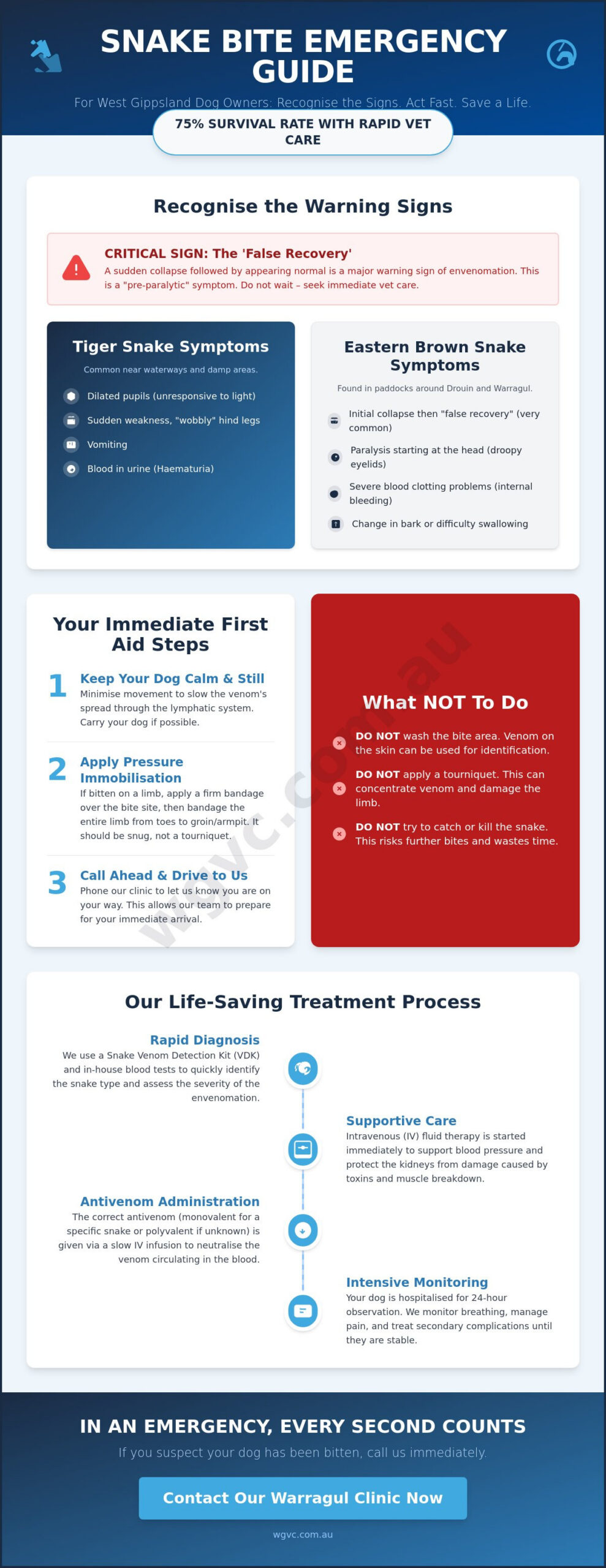
One of the most confusing and dangerous signs is the “pre-paralytic” collapse. This happens when a dog suddenly falls over, perhaps even loses consciousness, but then gets back up and appears completely normal. It’s easy to assume they just had a fright or a brief turn, but this is a major warning sign that venom has entered the bloodstream. This false recovery is a signature of several local species, and it means you should head to our Warragul clinic immediately for professional assessment of Snakebite symptoms and treatment.
Common Symptoms of a Tiger Snake Bite
Tiger snakes are frequently found near the waterways and damp areas of West Gippsland. When they strike, the venom often affects the muscles and nervous system quite rapidly. You might notice your dog becoming suddenly “wobbly” or weak in their hind legs, almost as if they are drunk. Their pupils will often become dilated and won’t shrink when you shine a light in them. In some cases, you may see blood in their urine or they might start vomiting shortly after the encounter. These signs indicate that the venom is already circulating and requires immediate intervention.
Signs of an Eastern Brown Snake Bite
While Tiger snakes are a major concern, we are seeing more Eastern Brown snakes in the flatter paddocks around Drouin and Warragul. These snakes are highly defensive, and their venom is incredibly potent. A Brown snake bite is the most likely to cause that “false recovery” collapse mentioned earlier. Beyond the initial collapse, Brown snake venom causes severe clotting issues, which can lead to internal bleeding that isn’t immediately obvious. Unlike the Tiger snake, paralysis from a Brown snake often starts at the head, causing droopy eyelids or a change in their bark, before moving down the rest of the body. Accessing snake bite treatment for dogs in Gippsland quickly is the only way to counteract these fast-moving toxins.
What Happens During Snake Bite Treatment?
When you arrive at our clinic with a suspected case, our team moves into a carefully coordinated emergency protocol. It’s a common misconception that treatment is just a single injection. In reality, effective snake bite treatment for dogs in Gippsland involves a multi-stage medical intervention designed to neutralise toxins and support failing organs. We begin by using a Snake Venom Detection Kit (VDK), which uses a sample of urine or a swab from the bite site to identify the specific type of venom. This is a critical step; using a specific monovalent antivenom is often more effective and targeted than a general one.
Venom doesn’t just cause paralysis. It often attacks the blood’s ability to clot. We perform rapid blood tests to monitor these clotting times, which helps our team gauge the severity of the envenomation. To protect your dog’s kidneys from the toxic byproducts of muscle breakdown, we start intensive intravenous fluid therapy immediately. This supportive care is just as vital as the antivenom itself. If you are interested in how local data helps us prepare for these cases, the University of Melbourne’s SnakeMap Project provides fascinating insights into the seasonal patterns we see in our region.
Because we use an in-house laboratory for these tests, we can make decisions in minutes rather than hours. Sometimes, a single vial of antivenom isn’t enough. Depending on the size of your dog and the amount of venom the snake delivered, we may need to administer multiple doses to fully neutralise the toxin and stop the progression of symptoms.
The Antivenom Administration Process
Antivenom works by binding to the venom circulating in the bloodstream, preventing it from attaching to the nerves and causing further paralysis. We administer this through a slow intravenous infusion. This careful pace allows us to monitor your dog closely for any signs of an allergic reaction to the biological product. If the snake species remains unknown after testing, we use a “polyvalent” antivenom that covers all major local species, ensuring your pet is protected regardless of the culprit.
Intensive Care and Monitoring
The hours following antivenom administration are critical. Your dog will require 24-hour observation to monitor for respiratory failure, as venom can weaken the muscles used for breathing. We also manage secondary complications like rhabdomyolysis, a painful condition where muscle fibres break down and enter the bloodstream. Our team uses gentle sedation and pain management to keep your pet calm and comfortable. This reduced activity is essential to prevent the further spread of any remaining toxins while their body begins the long process of recovery.
Emergency First Aid for Gippsland Pet Owners
In the frantic moments following a suspected encounter, your actions can significantly influence the success of snake bite treatment for dogs in Gippsland. The most important thing you can do is keep your companion as still as possible. Snake venom travels through the lymphatic system rather than the bloodstream initially. Because lymph fluid moves when muscles contract, every step your dog takes helps the toxin spread faster through their body. By keeping them calm and stationary, you are effectively buying them precious time before they reach our clinic. Knowing the fundamentals of pet first aid for West Gippsland pet owners can make a critical difference in these early moments before you reach professional care.
If you have a broad elastic bandage in your first aid kit, you can apply the Pressure Immobilisation Technique (PIT). This involves wrapping the bitten limb firmly, similar to how you would treat a sprained ankle. It shouldn’t be so tight that it cuts off blood circulation, but it needs to be firm enough to compress the lymph vessels. If applying the bandage causes your dog to struggle or become distressed, skip this step and focus on keeping them quiet. Never wash the bite site. Our team needs the microscopic traces of venom left on the skin or fur to use the Venom Detection Kit accurately.
Immediate Actions in the Backyard
If you suspect a strike, carry your dog to the car immediately. Even if they seem energetic or “fine,” do not let them walk. If you have a large dog, try to slide them onto a blanket or a piece of plywood to use as a makeshift stretcher. While you are getting organised, have someone else ring our Warragul surgery. This allows our team to prepare the emergency care suite and have the necessary antivenom ready the moment you pull into the driveway. Please do not try to catch or kill the snake. It’s dangerous for you, and we don’t need the physical snake to identify the venom; our laboratory tests handle that safely.
What NOT to Do
It is natural to want to do everything possible, but some traditional first aid methods actually cause more harm. Avoid using ice packs or tourniquets. These can lead to localised tissue death and do not stop the venom from spreading. Similarly, never attempt to “suck out” the venom or cut the wound. You should also avoid giving any human medications like aspirin or antihistamines, as these can complicate the medical treatment we need to provide. Most importantly, do not wait for symptoms to appear. If you saw a snake strike or even if you just have a strong suspicion, time is the most critical factor in a successful recovery.
The Cost of Antivenom and Emergency Care
Discussing the financial side of an emergency is never easy, especially when you are worried about your dog’s life. We believe in being open and honest so you can make the best decisions for your family. The total investment for snake bite treatment for dogs gippsland covers several critical components. This includes the initial emergency consultation, the diagnostic tests in our in-house laboratory to identify the venom, and the intensive hospitalisation required for constant monitoring. Our team stays by your pet’s side, managing their pain and checking their vital signs every hour. Every case is unique; some pets may only need a single vial of antivenom, while others might require multiple doses to successfully neutralise the toxin.
The number of vials used is directly linked to the clinical outcome. Our goal is always a full recovery, and we will work closely with you to create a treatment plan that balances your dog’s prognosis with your personal circumstances. While the costs of emergency care can be substantial, they reflect the high level of skill, specialised equipment, and life-saving medication required to save a pet from envenomation. We understand that this is a stressful time, and we aim to provide clarity and support at every step.
Why Antivenom is Expensive
Antivenom is a highly specialised biological product that requires a remarkable amount of work to produce. The manufacturing process is incredibly complex, involving the collection of venom and the careful purification of antibodies from donor animals. This work must be done in high-tech laboratories to ensure the product is safe for your pet. It also has a relatively short shelf life and must be stored under strict temperature-controlled conditions to remain effective. Because we must always have fresh stock ready for an immediate emergency, the overheads for maintaining this life-saving resource are high. While these costs are significant, it is the only life-saving option available when a dog has been envenomated.
Planning for Emergencies
One of the best ways to manage the anxiety of emergency costs is through pet insurance. Depending on your specific policy, insurance can often cover a significant portion of the expenses, sometimes up to 80% of the total bill for snake bite treatment for dogs gippsland. We recommend checking your policy details before snake season begins in October. We also place a high value on our relationships with our regular families. Being an existing client ensures you have access to our 24-hour emergency service, providing peace of mind that help is always available from a team that already knows and loves your pet. We are here to support you through the entire process, ensuring your companion receives the dedicated care they deserve. For breeders in the region, having a trusted local practice also means access to a canine reproduction vet victoria breeders rely on for year-round support beyond emergency care.
Emergency Vet Warragul: Accessing Critical Care
West Gippsland Vet Care has been a steady part of our local community for many years, acting as a trusted guide for families across Warragul, Drouin, Bunyip, and the surrounding districts. We know that when snake season arrives, the worry in our community grows. Providing reliable snake bite treatment for dogs in Gippsland is a responsibility we take very seriously. Our team is not just a group of medical professionals; we are your neighbours, and we view our work as a vital service to the families who trust us with their companions. By maintaining a highly equipped facility right here in your backyard, we ensure that you don’t have to travel far when every second counts.
Our ability to provide rapid care is anchored by our in-house laboratory. Instead of waiting for external results, we can perform immediate blood work and venom detection tests on-site. This speed is often the deciding factor in a successful recovery. We also provide 24 hours emergency service to existing clients, ensuring that if your dog has an encounter in the backyard after dark, you have a familiar and skilled team ready to help. This continuity of care means your pet is treated by people who already know their medical history and value the deep bond you share.
Our Emergency Readiness
During the peak months from October to December, we ensure our clinics are fully stocked with both Tiger and Brown snake antivenom. Our surgical and nursing teams undergo regular training in advanced trauma and injury care to stay at the forefront of envenomation management. We believe in a collaborative approach to health, which is why our emergency team liaises closely with our grooming and wellness staff. Once the crisis has passed, we help you manage your pet’s post-recovery care, from gentle grooming to remove any clinical residue to wellness checks that ensure their organs are functioning perfectly after the stress of the toxin.
How to Reach Us
If you suspect your dog has been bitten, please call our Warragul or Drouin surgeries immediately. When you speak to our receptionist, clearly state that you are calling about a “suspected snake bite.” Try to provide the approximate time of the incident and any symptoms you have noticed, such as a brief collapse or vomiting. This information allows us to clear a path straight to our emergency suite before you even arrive. To ensure you have access to our full range of after-hours support, we encourage all local pet owners to keep their records up to date. Ensure your pet is registered with us for 24-hour emergency support so that we can be there for you and your companion whenever you need us most.
Protecting Your Companion During Snake Season
While the thought of a snake encounter is frightening, being prepared is the best way to care for your dog. Remember that identifying early signs like a brief collapse and keeping your pet completely still are your most powerful tools. Our team has been serving the Gippsland community for decades, and we understand the deep bond you share with your animals. We’ve seen first-hand how quick action leads to the best outcomes.
When every minute matters, our in-house diagnostic laboratory provides the rapid results needed to start life-saving snake bite treatment for dogs gippsland. We are proud to offer 24-hour emergency care for our existing clients, ensuring that a trusted expert is always just a phone call away. You don’t have to face these moments alone; we are here to provide the clinical expertise and compassionate support your family deserves.
Contact West Gippsland Vet Care for Emergency Support to learn more about our services or to register your pet today. We look forward to being a steady partner in your pet’s long and happy life, giving you the peace of mind to enjoy our beautiful region together.
Frequently Asked Questions
How long does a dog have after a snake bite before it becomes fatal?
Time is the most critical factor in your pet’s survival. Depending on the species and the amount of venom injected, a dog might only have 30 to 60 minutes before symptoms become life-threatening. However, many cases progress over several hours. Seeking professional care within the first four hours offers the best prognosis for a successful recovery; waiting for symptoms to appear is often too late.
Can a dog survive a snake bite without antivenom?
It is highly unlikely for a dog to survive a venomous strike without professional intervention. While “dry bites” occur where no venom is injected, there is no way to confirm this without clinical testing in our laboratory. Delaying care to see if they survive often leads to irreversible organ damage or respiratory failure. Accessing professional snake bite treatment for dogs in Gippsland is the only reliable way to save your pet’s life.
What is the most common snake in West Gippsland that bites dogs?
Tiger Snakes and Eastern Brown Snakes are the two most common species we see in the West Gippsland region. Tiger Snakes prefer the damp areas around local creeks and dams, while Brown Snakes are frequently found in the drier paddocks around Drouin and Warragul. Both species are highly venomous and require immediate medical attention to neutralise the toxins before they cause permanent damage.
Will my dog have long-term damage after a snake bite recovery?
Most dogs make a full recovery if they receive prompt medical care and the correct dose of antivenom. However, significant delays in treatment can lead to lasting issues such as kidney impairment or chronic muscle weakness. Our team monitors these risks closely during the hospitalisation phase to ensure your pet returns home with the best possible long-term health outcomes.
How can I snake-proof my Gippsland backyard or farm?
Reducing hiding spots is the most effective way to protect your property during the warmer months. Keep your grass mowed short and remove piles of timber, rocks, or corrugated iron where snakes love to shelter. For smaller backyards, installing fine-mesh snake-proof fencing can provide an extra layer of safety. Keeping your dog’s play area clear of clutter helps you spot a snake before an encounter occurs.
Engaging professionals to manage overgrown vegetation and remove hazardous timber is a proactive way to keep your property safe. For those looking for examples of high-quality garden and tree management, you can discover WGS Tree Services and their range of specialist arboricultural solutions.
What should I do if I find a snake in my yard with my dog?
Stay calm and immediately call your dog away from the area using a firm, clear command. If they are already interacting with the snake, try to use a leash or a high-value treat to lure them into the house or a secure area. Never try to kill or catch the snake yourself; this often leads to a defensive strike against you or your pet. Once your dog is safe, check them closely for any signs of distress.
Does pet insurance cover snake bite treatment in Victoria?
Most pet insurance providers in Victoria cover snake bite treatment for dogs in Gippsland under their standard accident or illness policies. Because the costs of specialised antivenom and intensive care can be significant, insurance provides vital peace of mind. We recommend checking your specific policy wording to confirm your level of coverage and any applicable waiting periods before the peak snake season begins in October.
Can I use a human snake bite kit on my dog?
You can use the pressure immobilisation bandages from a human kit on your pet if the bite is on a limb. These wide, elastic bandages are excellent for slowing the spread of venom through the lymphatic system. However, always prioritise getting your dog to our Warragul surgery over perfecting a bandage. The antivenom we provide is the only definitive cure for envenomation. For broader guidance on stabilising your pet before reaching the clinic, our practical pet first aid guide for West Gippsland pet owners covers the essential techniques every local pet owner should know.