Imagine your Labrador’s tail thumping against the floor, eager for a walk, only to see them wince and struggle to stand when you grab the lead. It’s heartbreaking to watch a once-active dog lose their spark to joint pain or a sudden injury. You want the very best medical outcome for them, but the logistics of driving into a busy Melbourne clinic for specialist surgery can feel incredibly overwhelming for both you and your pet. Finding a vet specializing in large breed orthopedics Warragul pet owners can trust means you don’t have to choose between high-level expertise and the comfort of staying local.
We understand that your big mate is a central part of the family, and seeing them in pain is a heavy burden to carry. This article will show you how specialised local care can provide a clear diagnosis and a precise surgical plan to get your dog moving again. We’ll explore the benefits of advanced treatments and explain how local follow-up care ensures a smoother, stress-free recovery. You’ll discover how we can work together to restore your dog’s quality of life and get those tails wagging once more.
Key Takeaways
- Understand why dogs over 25kg face unique joint stresses and how specialised orthopaedic care addresses their specific physical needs.
- Discover why advanced procedures like TPLO surgery are the gold standard for treating cruciate ligament tears in larger, active dogs.
- Learn how consulting a vet specializing in large breed orthopedics Warragul can save your pet from the exhaustion of long-distance travel to the city.
- Explore how preventative procedures like prophylactic gastropexy can protect deep-chested breeds from the life-threatening risks of bloat.
- Find out how a local, fear-free approach provides a calmer, more supportive environment for your dog’s surgical journey and recovery.
Why Large Breed Orthopaedics Requires a Specialised Approach
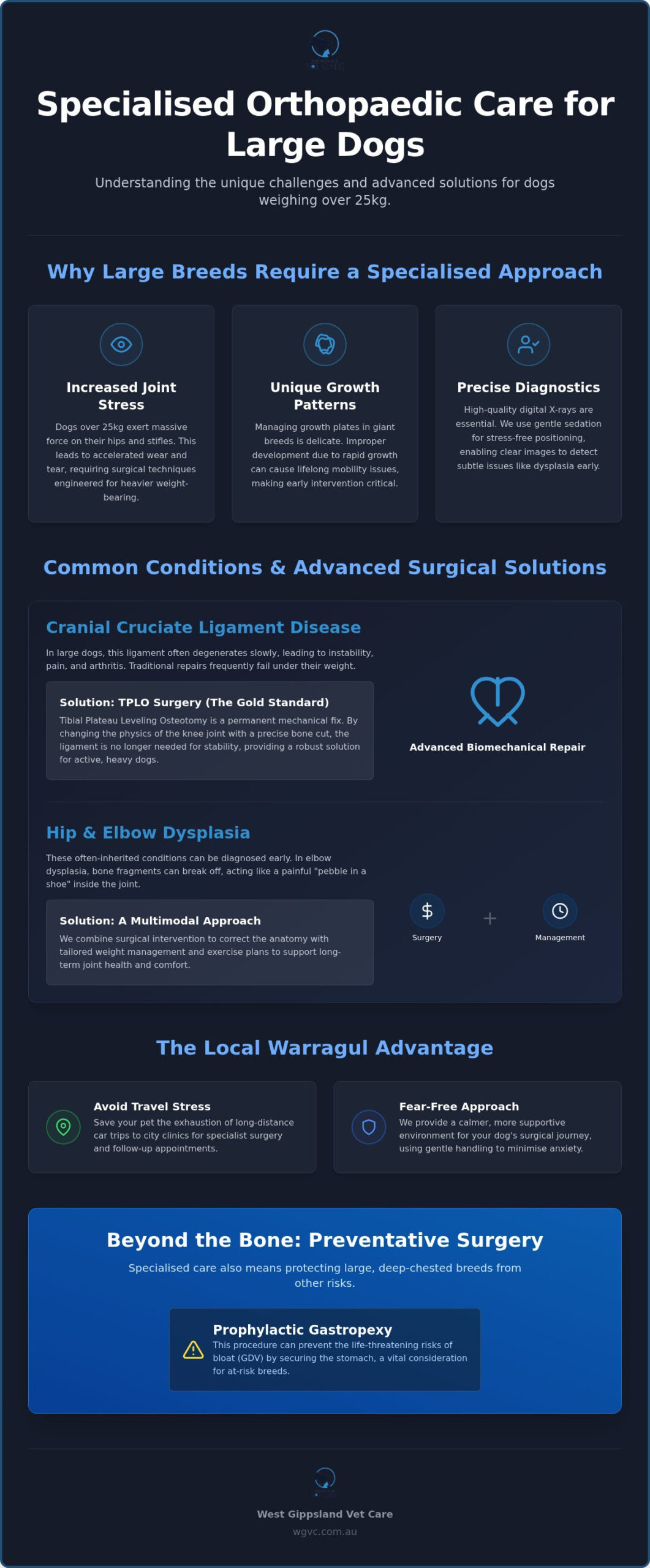
Large breed orthopaedics is the study and treatment of skeletal and joint issues in dogs weighing over 25kg. These big mates aren’t just larger versions of small dogs; they’re built differently and face unique physical challenges. When a heavy dog moves, their joints absorb massive amounts of force. This increased mass creates mechanical stresses on the hips and stifles that can lead to rapid wear and tear if not managed correctly. Because of this, standard surgical techniques must be adapted for heavier patients. You can’t simply use a larger version of a small dog’s plate; the physics of weight-bearing require different engineering and absolute precision.
Finding a vet specializing in large breed orthopedics Warragul ensures that your dog’s specific growth patterns are also taken into account. In giant breeds, managing the growth plates is a delicate task. If these plates close too early or unevenly due to rapid growth or injury, it can lead to lifelong mobility issues. We focus on early intervention to ensure your dog’s skeleton develops as it should, providing a stable foundation for their adult life.
The Impact of Weight and Conformation
A dog’s body condition score is one of the most critical factors in their orthopaedic health. Even a few extra kilograms can significantly worsen joint inflammation and put unnecessary strain on healing bones. Breeds like Labradors and German Shepherds are often prone to specific conformational issues where their bone structure doesn’t perfectly align. This misalignment, combined with the rapid growth seen in large-breed puppies, can trigger developmental joint diseases before the dog even reaches adulthood. Keeping your mate at an ideal weight is a collaborative effort that starts with early education and careful monitoring during their puppy years.
Diagnostic Imaging for Big Dogs
To get a clear picture of what’s happening inside a large joint, high-quality digital X-rays are non-negotiable. It’s often difficult to get a big dog into the precise positions needed for a clear view without causing them discomfort or stress. We use gentle sedation to help your dog relax, which allows us to capture diagnostic-grade images of the bones and soft tissues. This level of detail is vital for identifying subtle signs of Canine hip dysplasia or elbow issues before they become debilitating. Catching these problems early allows us to discuss a wider range of management options with you, often preventing the need for more invasive surgery later on.
Common Orthopaedic Conditions in Large Breeds and Their Solutions
Large dogs bring immense joy to our lives, but their physical stature makes them susceptible to specific joint and bone issues. One of the most frequent injuries we see is Cranial Cruciate Ligament Disease. Unlike humans who usually tear this ligament through a sudden sports injury, in dogs, it is often a slow, degenerative process. For a heavy dog, a compromised ligament quickly leads to instability, pain, and secondary arthritis. While smaller dogs might manage with conservative rest, our big mates almost always require a more robust surgical solution to regain their mobility.
Understanding TPLO Surgery
Tibial Plateau Leveling Osteotomy, or TPLO, is considered the gold standard for cruciate tears in larger dogs. Traditional repairs often used a heavy nylon “fishing line” to stabilise the knee. While this works for lighter pets, the material frequently stretches or snaps under the weight of a dog over 15kg. TPLO is a more permanent mechanical fix. By making a precise curved cut in the bone and rotating the joint surface, we change the physics of the knee so the ligament is no longer needed for stability. For a more detailed look at these procedures, you can read our guide on being an orthopaedic vet Gippsland families trust.
Managing Hip and Elbow Dysplasia
Conditions like hip and elbow dysplasia are often inherited and can be diagnosed early in a dog’s life. Elbow dysplasia frequently involves fragmented coronoid processes, which are small pieces of bone that break off inside the joint, acting like a pebble in a shoe. Choosing a vet specializing in large breed orthopedics Warragul allows for a multimodal approach to these complex cases. We combine surgical intervention with tailored weight management and exercise plans. Because these conditions are painful, we utilise “Fear Free” handling techniques during every exam. This ensures your dog remains calm and comfortable while we assess their range of motion and joint stability.
Another condition affecting young, fast-growing large breeds is Osteochondritis Dissecans (OCD). This occurs when a defect in the cartilage causes a flap to form, leading to inflammation and lameness, usually in the shoulder or elbow. Early surgical removal of these flaps can prevent severe long-term damage. If you have noticed your dog slowing down or limping after a nap, it might be time to discuss pain management and arthritis care options with our team to keep them comfortable and active.
Why Choose a Local Warragul Vet for Major Orthopaedic Surgery?
Choosing where to have major surgery is a significant decision for any pet owner. While some assume they must trek to Melbourne for high-level care, finding a vet specializing in large breed orthopedics Warragul residents can trust offers profound benefits for both you and your dog. The reality of a 90-minute drive with a 40kg dog who is sore and confused is incredibly taxing. Staying local means your mate spends less time in a car and more time resting in their familiar home environment. We believe that reducing this travel stress is a vital component of a successful recovery.
Continuity of care is another major advantage of staying within the West Gippsland region. When you choose our clinic, the same team that performed the initial consult and diagnostic imaging is the one scrubbed in for surgery. We know your dog’s temperament, their medical history, and exactly how they’ve responded to previous treatments. This personal connection creates a safer, more predictable environment. You aren’t just a patient number in a corporate referral hub; you are a valued member of our local community.
The Importance of Local Post-Operative Care
The first 48 hours after orthopaedic surgery are often the most nerve-wracking for owners. Managing pain levels and ensuring your dog doesn’t overdo it requires close attention. Being just a short drive away makes follow-up visits for bandage changes or suture removals simple and stress-free. This proximity allows us to build a stronger relationship with you and your pet. It ensures we can have an open dialogue and adjust recovery plans quickly if your dog’s progress needs a little extra support.
Emergency Support for Our Patients
Recovery doesn’t always follow a 9 to 5 schedule. If you have a concern at midnight, knowing you can reach out to a team that knows your dog’s case is a huge relief. We provide emergency vet Warragul services for our existing clients, ensuring that if a “what if” scenario occurs, you aren’t left searching for help in the dark. Having your surgeon or a familiar team member available for after-hours support provides an extra layer of safety. This immediate, informed care is based on the specific details of your dog’s procedure, which is something a distant city clinic simply cannot offer as easily.
Beyond the Bone: Preventative Surgery for Large Breeds
While we often focus on fixing injuries, preventative care is just as vital for our big mates. Large, deep-chested breeds like Great Danes, German Shepherds, and Standard Poodles are at a higher risk for Gastric Dilatation-Volvulus (GDV), commonly known as bloat. This life-threatening condition occurs when the stomach fills with gas and twists, cutting off blood supply. It’s a terrifying emergency that requires immediate action. To prevent this, we often recommend a prophylactic gastropexy. This procedure involves “tacking” the stomach to the abdominal wall to ensure it cannot twist, providing a permanent safeguard against one of the most common killers of large dogs.
Many owners choose to bundle this preventative measure with other scheduled surgeries. If your dog is already undergoing a procedure with a vet specializing in large breed orthopedics Warragul families trust, it’s often the perfect time to perform a gastropexy. Combining these means only one bout of anaesthesia and one recovery period for your dog. It’s a proactive way to provide long-term peace of mind while your pet is already in our care for their joints or bones. We find this collaborative approach helps reduce overall stress for both the pet and the owner.
Keyhole Spay and Gastropexy
We are proud to offer advanced laparoscopic, or “keyhole,” techniques for both desexing and gastropexy. This approach uses tiny incisions and a specialised camera, which significantly reduces post-operative pain compared to traditional open surgery. For high-energy large breeds, a faster recovery is a huge advantage. It means they can get back to their normal routine sooner with less discomfort and a lower risk of wound complications. This specialised focus on minimally invasive surgery is a primary service focus at our clinic, ensuring your dog receives the most modern care available.
Arthritis Management and Senior Pet Health
Orthopaedic care doesn’t end when the surgical site heals. As large dogs age, even those who have had successful surgeries may develop arthritis in their later years. We use regular senior pet health checks to monitor joint degradation and mobility. These assessments allow us to create customised pain management plans that evolve with your dog. Whether it’s through specialised diets, supplements, or modern medication, our goal is to keep your companion comfortable and mobile throughout their senior years. If you’re concerned about your dog’s long-term mobility, we invite you to talk to us about advanced diagnostics and medical care to keep them feeling their best.
The West Gippsland Vet Care Approach to Orthopaedics
Our approach at West Gippsland Vet Care is built on the foundation of Fear Free veterinary medicine. We know that for a large dog, a trip to the clinic can be a daunting experience. By focusing on calm handling and a soothing environment, we ensure your mate feels safe from the moment they walk through our doors. This is particularly important for orthopaedic assessments, where we often need to examine sensitive or painful joints. As a vet specializing in large breed orthopedics Warragul families can rely on, we combine this gentle touch with advanced technology. Our state-of-the-art diagnostic imaging and in-house laboratory allow us to get answers quickly, often during your initial visit, so we can start a treatment plan without delay.
We view every case as a partnership between our surgical team and you. You know your dog better than anyone else. Your observations of their daily movement and energy levels are crucial for a successful outcome. We work together to set realistic mobility goals, whether that is returning to long weekend hikes or simply being able to climb onto the couch for a cuddle without pain. This collaborative spirit ensures that the care we provide is tailored specifically to your dog’s lifestyle and your family’s needs.
Our Independent, Local Philosophy
Being an independent, partner-owned practice means we are deeply rooted in the Gippsland community. We aren’t answerable to a distant corporate head office; we are answerable to you, our neighbours. This local focus allows us to provide a unique breadth of care, from treating beloved urban pets to supporting the region’s farming industry. You can learn more about our on-farm services by visiting our page on being a livestock vet West Gippsland farmers trust. This deep connection to the land and its animals informs everything we do, ensuring our expertise is always delivered with a down-to-earth, practical perspective.
Taking the Next Step for Your Dog
Taking the first step toward restoring your dog’s mobility is as simple as booking a consultation. When you come in for your first surgical assessment, it’s helpful to bring any previous medical records or even short videos of your dog walking or getting up from a rest. These clips can provide vital clues that might not be obvious in a clinical setting. Our team is here to listen, support, and guide you through every stage of the journey. We are committed to providing the compassionate, expert care your big mate deserves, right here in the heart of Warragul.
Restoring Your Big Mate’s Quality of Life
Watching your dog regain their independence is one of the most rewarding experiences a pet owner can have. We have explored how specialised surgical techniques like TPLO and preventative measures like laparoscopic gastropexy provide a foundation for a long, active life. Choosing a vet specializing in large breed orthopedics Warragul means your dog receives world-class care without the exhaustion of city travel. Our independent, locally owned practice is proud to offer an advanced surgical facility right here in West Gippsland, backed by the peace of mind of 24-hour emergency care for our existing clients.
Your dog’s journey to a pain-free future doesn’t have to be a stressful one. We are here to listen to your concerns, answer your questions, and walk beside you through every step of the recovery process. Our team is dedicated to the bond you share with your animal, ensuring every treatment is delivered with kindness and expertise. If you are ready to discuss a tailored mobility plan for your companion, please contact West Gippsland Vet Care to discuss your dog’s orthopaedic needs. Let’s work together to get your big mate back on their feet and enjoying life to the fullest.
Frequently Asked Questions
Does my dog really need a specialist for orthopaedic surgery?
While some extremely rare cases are referred to city centres, many complex orthopaedic procedures are performed right here at our advanced facility in Gippsland. Having a local vet specializing in large breed orthopedics Warragul pet owners can trust means your dog benefits from high-level expertise without the stress of long travel. We assess each case individually to ensure your mate receives the most appropriate level of care for their specific condition and long-term mobility goals.
What is the recovery time for a large breed dog after TPLO surgery?
Most large dogs begin to bear weight on the operated leg within a few days, but full recovery typically takes eight to twelve weeks. The initial six weeks require strict confinement and controlled lead walking to allow the bone to heal correctly. We provide a detailed post-operative plan and regular check-ups to monitor their progress. Consistency with rehabilitation exercises is vital for restoring full strength and range of motion to the joint.
How much does orthopaedic surgery for a dog cost in Warragul?
The cost of orthopaedic surgery varies significantly depending on the specific procedure, the dog’s size, and the complexity of the case. Factors like diagnostic imaging, anaesthesia, surgical implants, and post-operative medications all contribute to the final amount. We provide a comprehensive written estimate following an initial consultation and diagnostic assessment. This ensures you have a clear understanding of the investment required for your dog’s surgical care and successful recovery.
Can hip dysplasia in large breeds be managed without surgery?
Many large dogs manage hip dysplasia through a multimodal medical approach rather than immediate surgery. This strategy often includes strict weight management, tailored exercise plans, and specific joint supplements or medications to reduce inflammation. We also offer senior pet health checks to monitor joint health as your dog ages. If the condition significantly impacts their quality of life or causes persistent pain, we can then discuss surgical options to restore their comfort.
Is gastropexy necessary for all large breed dogs?
While not strictly mandatory for every dog, prophylactic gastropexy is highly recommended for deep-chested large breeds at high risk of bloat. Breeds like Great Danes, German Shepherds, and Labradors benefit most from this preventative “tacking” of the stomach. We often perform this procedure using keyhole techniques during desexing to minimise recovery time. It is a proactive step that provides lifelong protection against a sudden, life-threatening stomach twist that can occur in large breeds.
What are the signs that my large breed dog has an orthopaedic issue?
Common signs include limping, stiffness after rest, or a reluctance to jump into the car or climb stairs. You might notice your dog “bunny hopping” when they run or taking longer to settle into a comfortable position. Subtle changes in temperament, such as irritability or a decreased interest in play, can also indicate chronic joint pain. If you observe any of these behaviours, a thorough orthopaedic examination is the best way to identify the cause.
Does West Gippsland Vet Care offer payment plans for major surgeries?
We understand that major surgery is a significant financial commitment for any family. While we don’t provide internal financing, many clients use external veterinary payment providers to manage costs over time. We recommend checking with our reception team about which third-party payment options are currently accepted at our clinic. This allows you to focus on your dog’s recovery while managing the financial side of their care in a way that suits your family’s budget.
How do I prepare my house for a large dog recovering from joint surgery?
Preparing a “recovery zone” is essential for a smooth healing process. You should set up a quiet, confined area with non-slip flooring, such as rubber mats or rugs, to prevent your dog from slipping and injuring the surgical site. Ensure their bed is supportive and easy to access without needing to step over high barriers. It’s also helpful to have a sturdy sling or towel ready to assist them when they need to go outside for toilet breaks.