You have just arrived home in West Gippsland with your best friend, but the usual wagging tail is replaced by a sleepy, confused gaze as the anaesthesia wears off. It is a moment filled with relief that the procedure is over, yet it is often shadowed by the daunting task of the weeks ahead. We understand how heart-wrenching it feels to see your pet in discomfort or to worry about every little stitch while they rest. It is completely normal to feel a bit anxious about keeping an energetic dog quiet or spotting the signs of a potential infection.
This guide provides essential dog surgery recovery tips to help you master post-operative care, ensuring your companion heals safely and comfortably within the familiar walls of your home. Our goal is to help you navigate this period with confidence and calm. We will show you how to manage those sudden bursts of energy and help you distinguish between normal healing and a genuine emergency. By following these practical steps, you can turn a stressful recovery period into a time of deep bonding and steady progress toward your dog’s favourite local walking tracks.
Key Takeaways
- Identify the difference between post-operative confusion and actual pain to ensure your pet stays comfortable during the initial groggy phase.
- Learn why strict confinement is necessary even when your dog starts acting like their old self, preventing setbacks during the most vulnerable healing stages.
- Master the art of the daily incision inspection using our expert dog surgery recovery tips to monitor for infection without needing to apply messy ointments.
- Establish a gentle feeding protocol and a medication schedule that aligns with your daily routine to keep your dog’s recovery on the right track.
- Understand the transition from the two-week suture removal to a gradual, safe return to your favourite West Gippsland walking spots.
The First 48 Hours: Navigating the Groggy Phase at Home
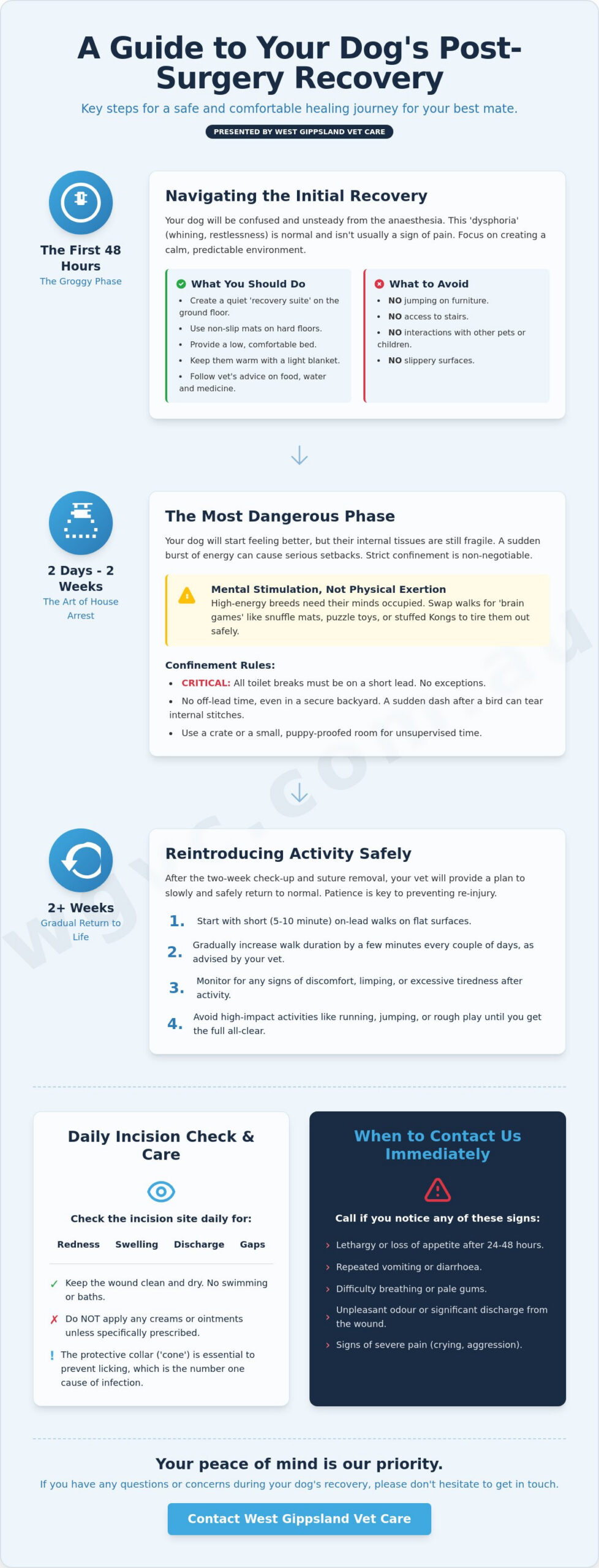
The moment you bring your dog home after a procedure is often the most emotional part of the journey. While you are relieved to have them back, seeing your best friend looking dazed or unsteady can be quite unsettling. One of the most vital dog surgery recovery tips we share with our West Gippsland community is to lean on the “Coming Home” conversation you had with your veterinary nurse. This chat is your roadmap, covering everything from the exact time they last had water to when their next dose of pain relief is due. Having these details written down allows you to focus entirely on providing a calm, nurturing environment during those first critical hours.
A solid foundation in understanding veterinary surgery helps pet owners realise that anaesthesia affects every animal differently. Some dogs will sleep deeply for hours, while others may seem restless. If your dog has undergone a gastropexy surgery for dogs or laparoscopic spay, you might notice they recover their spark slightly faster than a pet returning from a major orthopaedic procedure. Regardless of the surgery type, the goal for the first 48 hours is to keep their world small, quiet, and predictable.
Understanding Post-Anaesthetic Behaviour
It is common for dogs to experience “dysphoria” as they wake up. This is a state of confusion caused by the anaesthetic drugs rather than a reaction to pain. Your dog might whine, howl, or pace around their bed. They aren’t necessarily hurting; they are just trying to make sense of the world while feeling a bit “loopy”. This grogginess usually resolves within 24 to 48 hours. During this time, keep them snug with a light blanket to maintain their body temperature, but check periodically to ensure they aren’t panting or overheating, as their ability to regulate their own warmth is temporarily dampened.
Setting Up the Recovery Zone
Before you even arrive home, prepare a dedicated “recovery suite” in a quiet, draught-free corner of the house. This area should be the heart of their rest for the coming days. We recommend choosing a room with easy-to-clean, non-slip flooring. Slippery tiles or polished floorboards are a major hazard for a dog with reduced coordination. If you only have hard floors, lay down some yoga mats or rubber-backed rugs to provide a steady grip.
- Low-level bedding: Ensure their bed is tucked directly onto the floor. Even a small step up into a basket can be too much for a groggy pet.
- No-jump zone: Block off access to couches and beds. A single excited leap can put immense strain on fresh internal and external stitches.
- Stair safety: Use a baby gate or keep doors closed to prevent them from attempting the stairs, which is a common cause of post-op complications in two-storey Gippsland homes.
Restricting Movement: The Art of House Arrest
Perhaps the most challenging part of the healing journey is the “middle phase”. This is when the initial grogginess has faded, and your dog starts to feel like their old self again. We often hear owners say, “He looks fine, surely he can have a little run?” This is actually the most dangerous phrase in dog surgery recovery. While the skin incision might look closed, the deeper tissues, muscles, and internal sutures are still incredibly fragile. One sudden burst of energy or a playful leap can undo days of progress. Adhering to the specific post-operative instructions provided by your vet is the best way to ensure those internal layers heal without complication.
It is important to understand the difference between strict crate rest and confined movement. For major procedures like orthopaedic surgery, your dog may need to stay in a crate or a very small pen to prevent any weight-bearing strain. For softer procedures, confined movement might mean staying in a single, small room with no furniture to jump on. Regardless of the surgery, all toilet breaks must be on a short lead. Even if you have a securely fenced backyard in Warragul or Drouin, do not let your dog off the lead. A passing bird or a rustle in the bushes could trigger a dash that puts the entire recovery at risk.
Mental Enrichment vs. Physical Exertion
High-energy Gippsland breeds like Kelpies, Border Collies, and Cattle Dogs can find “house arrest” particularly frustrating. When physical exercise is off the table, we must pivot to mental stimulation. Swap your usual paddock walks for “brain games” that tire them out without moving their bodies. Stuffed Kongs, snuffle mats, or hide-and-seek with smelly treats are excellent ways to keep their minds busy. This is also a wonderful time for gentle, calm-time grooming. A soft brush can be very soothing and helps maintain that vital human-animal bond when you can’t play fetch. If your pet seems particularly restless, playing soft music or using pheromone diffusers can help create a stable, low-stress environment.
Outdoor Safety in West Gippsland
Our beautiful local landscape presents unique challenges for a recovering dog. During the wetter months, Gippsland paddocks can become quite muddy and damp. It is vital to keep your dog’s recovery area and their lead-walk path clear of moisture, as a damp bandage or a muddy incision is a recipe for infection. Be extra vigilant about long grass where ticks or snakes might hide, as a recovering dog is less able to move away from these threats. Always supervise outdoor time closely to prevent your dog from lunging at local wildlife. If you find it difficult to manage your pet’s energy levels after orthopaedic surgery, please reach out to us for additional support and advice.
Wound Care and the Infamous Cone of Shame
Focusing on the surgical site is a vital part of your daily routine. While it might feel a bit squeamish at first, performing a daily “Incision Inspection” is one of the most practical dog surgery recovery tips we can offer. It allows you to catch any minor issues before they become major concerns. The golden rule here is “Look but Don’t Touch”. It is tempting to want to clean the area or apply a soothing ointment, but this often introduces bacteria or softens the skin too much, leading to stitches failing. Unless specifically instructed by your vet, keep the area dry and leave the healing to your dog’s amazing body. A quick visual check with a torch while your dog is resting is usually enough to give you peace of mind.
The type of incision your dog has will influence what you see during your daily checks. Traditional open surgeries involve longer incisions that require more monitoring for tension and bruising. In contrast, if your dog had a laparoscopic spay or preventative gastropexy surgery for dogs, you will only see two or three tiny “keyhole” sites. These smaller wounds generally heal much faster and carry a lower risk of dehiscence, which is the surgical term for a wound opening up. Regardless of the size, these sites are the doorway to your pet’s internal health, and keeping them protected is essential. For more detailed guidance on what to expect, you can review these post-operative instructions for dogs.
What a Healing Incision Should Look Like
A healthy wound should have clean, closed edges. It is normal to see a small amount of pinkness or even some slight bruising around the site, especially in the first few days. However, you should call us immediately if you notice any “red flags” such as thick green or yellow discharge, a foul odour, or if the area feels hot to the touch. A seroma is a common but monitor-worthy fluid buildup that looks like a soft, painless swelling under the skin. While often harmless, it is a sign that your dog might be moving too much, so it definitely warrants a quick phone call to the clinic for advice.
Winning the Battle with the Collar
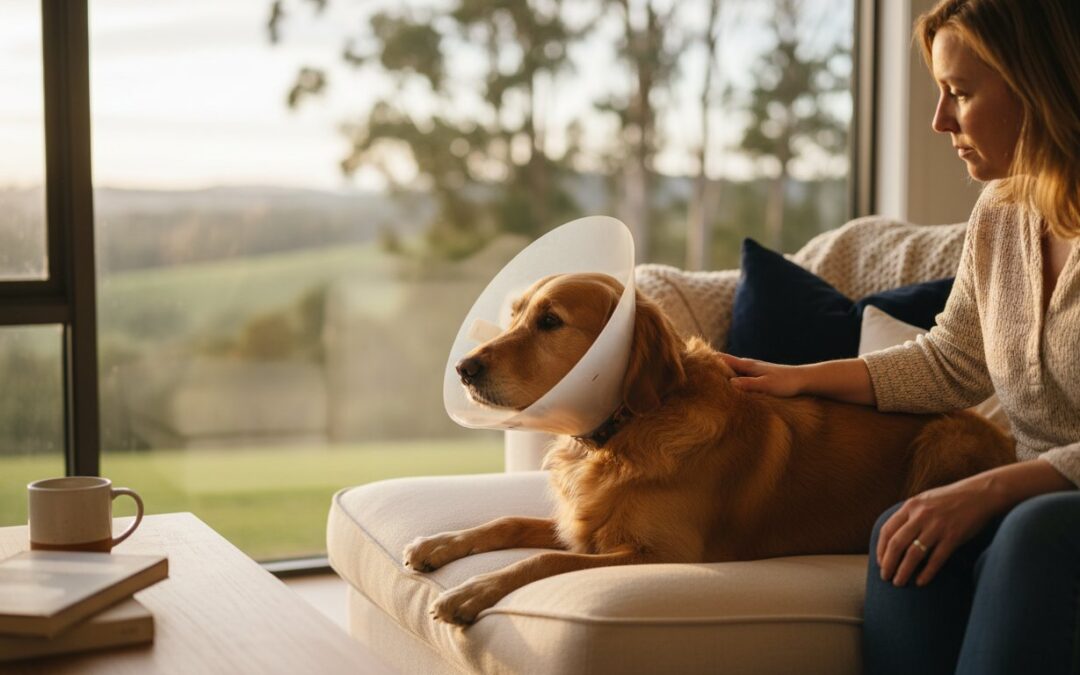
The Elizabethan collar, often called the “cone of shame”, is a non-negotiable safety tool. Most self-trauma happens in the “just for five minutes” when an owner takes the cone off for a break. It only takes a second for a dog to rip out a stitch. Following these dog surgery recovery tips will help you manage the “cone” phase with less stress. To help them adjust, try elevating their water and food bowls so the cone doesn’t hit the floor. If your dog is truly struggling, ask us about alternatives like inflatable collars or medical pet shirts, which can be appropriate for certain types of surgery. Helping your dog navigate doorways with a gentle hand on their harness will make the process much smoother for everyone.
Nutrition and Medication: Fuelling the Healing Process
Watching your dog take those first few bites of food after a procedure is a heartening sign that they are on the mend. However, that first night requires a careful approach to avoid upsetting a sensitive stomach. One of our most important dog surgery recovery tips is to follow a “First Meal” protocol. Since anaesthesia can temporarily slow down the digestive tract, we recommend offering a small, bland meal about half the size of their usual portion. Boiled chicken or white fish mixed with a little plain rice is usually the perfect choice to settle their tummy before you transition back to their regular diet the following day.
Managing a medication schedule can feel a bit overwhelming, especially when you are balancing your own busy Gippsland life. We suggest organising a simple chart or setting alarms on your phone to ensure no doses are missed. If your pet is a bit of a fussy eater, hiding pills in a tiny meatball of wet food or a small piece of cheese often does the trick. Always ensure they have easy access to fresh water; you might need to bring the bowl closer to their bed so they don’t have to wander too far while they are still feeling a bit unsteady.
Managing the Post-Op Appetite
It is quite common for dogs to feel a bit nauseous for the first 24 hours, so don’t panic if they turn their nose up at dinner on that first night. If the lack of appetite persists beyond a full day, it is time to give us a call. As they begin to feel better, high-quality protein becomes essential for tissue repair and wound healing. Gradually reintroduce their regular kibble over two or three days to keep their digestion stable and their energy levels consistent.
Pain Relief Mastery
We cannot stress enough the importance of following the pain relief dosage exactly as prescribed. Even if your dog seems bright and happy, never skip a pill; the medication is likely the reason they are feeling so good. Pain signs in dogs are often subtle, so keep a close eye out for trembling, frequent lip licking, or a tail tucked tightly between their legs. If you notice these signs or feel your pet isn’t as comfortable as they should be, our team is ready to provide Advanced Medical Care to help them through. Always store medications in a high, secure spot well away from children and other curious pets in the household.
The Long Road: Gradual Return to Gippsland Life
Reaching the two-week mark is a significant achievement for any pet owner. By now, the intensity of the initial “house arrest” phase usually begins to lift, and you can start looking forward to your dog’s eventual return to the rolling hills and local trails of West Gippsland. However, it is vital to remember that while the surface has healed, the internal recovery continues for several more weeks. Following these final dog surgery recovery tips ensures that your pet’s transition back to their active lifestyle is as safe and steady as possible, preventing setbacks just as the finish line comes into view.
The journey from the clinic to the paddock is a marathon, not a sprint. Even if your dog is bouncing at the door, their internal structures need time to regain their full strength. This is particularly true for our local working breeds who don’t always know when to slow down. By staying patient during this final stretch, you are protecting the investment you have made in your dog’s health and long-term mobility.
The Suture Removal Visit
The suture removal appointment is a wonderful opportunity to celebrate your dog’s progress with our team. During this visit, we do much more than just remove the stitches. We perform a thorough check of the wound site to ensure the tissue has knitted together perfectly and that there are no signs of underlying tension. It is a great time to discuss any lingering stiffness you might have noticed or subtle changes in their behaviour as they become more active. We can also use this visit to plan the next steps in their wellness journey, such as scheduling a Dental Prophylaxis or catching up on any Pet Vaccinations that might be due soon.
Re-introducing Physical Activity
Transitioning from “lead-only” toilet breaks to being “paddock-ready” requires a methodical approach. We often recommend the “5-minute rule” for our patients. This involves increasing your dog’s walk duration on a lead by just five minutes each week, provided they remain comfortable and show no signs of fatigue. For pets recovering from dog knee surgery in Gippsland, such as a TPLO or other knee procedures, this phase is especially critical. You must avoid high-impact activities like ball-chasing, jumping, or rough play with other dogs for several months, as these movements place extreme stress on the surgical site.
Keep a close eye on your dog after each increase in activity levels. If you notice any lameness, swelling at the site, or a sudden reluctance to move, it is a clear sign to scale back and give them more rest. Once we give the final all-clear, you can slowly begin to re-introduce social visits to the Drouin or Warragul dog parks. Watching your dog run freely again is a beautiful reward for all the patience and care you have provided during their recovery journey.
Supporting Your Pet’s Journey Back to Health
Recovering from a procedure is a shared journey between you and your pet. By creating a calm home environment, managing their activity with a steady hand, and following these dog surgery recovery tips, you’re giving them the very best chance at a smooth and safe healing process. It takes a little extra patience, especially during those early days of restricted movement, but the reward of a healthy, happy dog is well worth the effort. Our team understands the deep bond you share, and we’re committed to being a reliable part of your support system.
As a proudly independent and locally owned clinic in Warragul, we’ve equipped our advanced orthopaedic and laparoscopic surgical suite to provide the highest standard of care. Our dedication to your pet’s well-being continues long after they go home; we provide 24-hour emergency service to our existing clients, ensuring you’re never alone if a concern arises. If you have any questions about your pet’s progress, please book a post-op check-up or chat with our compassionate team at West Gippsland Vet Care. We look forward to seeing that tail wagging with its usual spark again very soon.
Common Questions About Dog Recovery
How long does it take for a dog to fully recover from surgery?
The timeline for a full recovery depends entirely on the type of procedure performed. Soft tissue surgeries, such as desexing, typically require about 10 to 14 days for the skin incision to heal completely. Major orthopaedic procedures, however, often require a much longer commitment of 8 to 12 weeks for the bone and deep tissues to fully stabilise and regain their strength. If your dog has experienced a cruciate ligament injury, our detailed guide on dog knee surgery in Gippsland and cruciate ligament care can help you understand what to expect throughout the full recovery process.
Can I leave my dog alone at home the day after surgery?
It is best to have someone stay with your pet for at least the first 24 to 48 hours after they return home. They may still be unsteady or confused from the anaesthesia and require assistance with toilet breaks or staying calm. If you must leave for a short period, ensure they are in a safe, confined recovery zone where they cannot jump or injure themselves.
My dog hasn’t had a bowel movement since surgery, should I be worried?
It is quite common for dogs to go two or even three days without a bowel movement after an operation. This delay happens because they fasted before the procedure and the anaesthesia naturally slows down their digestive system. If they haven’t gone by the fourth day, or if they seem to be straining uncomfortably, please give our clinic a call for some gentle advice.
What should I do if my dog licks their stitches?
You must stop them immediately and ensure their Elizabethan collar is fitted correctly and worn at all times. Licking is the most common cause of post-op infection and can lead to the wound opening up, which may require a second surgery to repair. If your dog is still reaching the site, we can provide additional dog surgery recovery tips and alternative collar options.
Is it normal for my dog to be shaking after their operation?
Mild shaking is a frequent side effect of anaesthesia as it leaves the body’s system. It can also be a sign that your pet is feeling a bit chilly, as their ability to regulate their own temperature is temporarily reduced. Keep them snug with a warm blanket in a draught-free spot. If the shaking is violent or persists for more than 24 hours, it is worth checking in with us.
How do I stop my dog from jumping on the sofa during recovery?
Physical barriers are your most effective tool for preventing unwanted leaps. You might need to use baby gates to block off the lounge room or even turn your sofa cushions upright so there is no flat surface for them to land on. For high-energy Gippsland dogs, keeping them on a short lead even inside the house helps you maintain control and prevents sudden jumps.
When can I give my dog a bath after they have had surgery?
You should wait until at least two days after the stitches have been removed before giving your dog a bath. This usually means a total waiting period of about 14 to 16 days from the date of the operation. It is vital to keep the surgical site completely dry during the initial healing phase to prevent bacteria from entering the wound and causing an infection.
What are the signs of an infected surgical incision in dogs?
Look out for increased redness, significant swelling, or the area feeling noticeably hot to the touch. While a tiny bit of clear or blood-tinged fluid is normal in the first 24 hours, any thick yellow or green discharge is a sign of infection. These dog surgery recovery tips are meant to help you spot red flags, like a foul odour or a gaping wound, which require immediate attention.