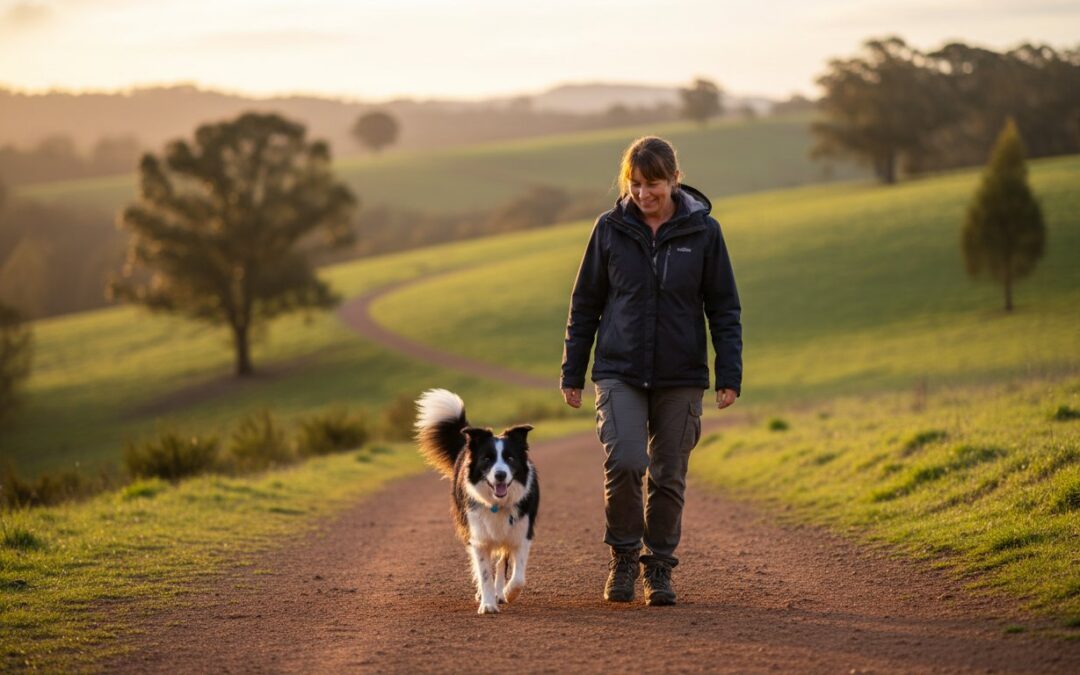
Imagine a crisp morning walk through the rolling hills of Warragul when your dog suddenly pulls up lame, lifting a back leg with a look of pure confusion. It’s a moment that stops every local pet owner in their tracks. If you’ve been searching for dog knee surgery Gippsland, you’re likely feeling that heavy weight of worry for your companion’s future mobility. We understand that your dog isn’t just a pet; they’re a central part of your family. Seeing them in pain is distressing, and the thought of complex surgery or long trips to Melbourne only adds to the stress.
You aren’t alone in this journey, as research suggests that up to 50% of dogs who injure one cranial cruciate ligament will eventually face the same issue in their other knee. It’s completely natural to feel anxious about anaesthesia or confused by the different surgical techniques available. This guide is here to help you breathe a sigh of relief. You’ll discover why your dog is limping and explore advanced surgical options like TPLO, which boasts a success rate of up to 90%. We’ll show you how local West Gippsland expertise ensures a smooth, fear-free recovery, helping your dog return to a pain-free, active life without the need for stressful city travel.
Key Takeaways
- Learn why a persistent limp is often caused by gradual “Cruciate Disease” rather than a sudden injury, and how this affects your dog’s long-term joint stability.
- Compare the differences between TPLO and Lateral Suture techniques to understand which surgical method best suits your dog’s unique size and energy levels.
- Discover how accessing expert dog knee surgery gippsland allows your pet to receive advanced orthopaedic care and diagnostic imaging without the stress of travelling to Melbourne.
- Understand the risks of a “wait and see” approach, including the high probability of the second knee failing and the rapid onset of irreversible arthritis.
- Get practical tips for managing the first 24 hours post-surgery and creating a comfortable “recovery suite” to ensure your dog heals safely at home.
Understanding the Limp: What is Dog Knee Surgery Really For?
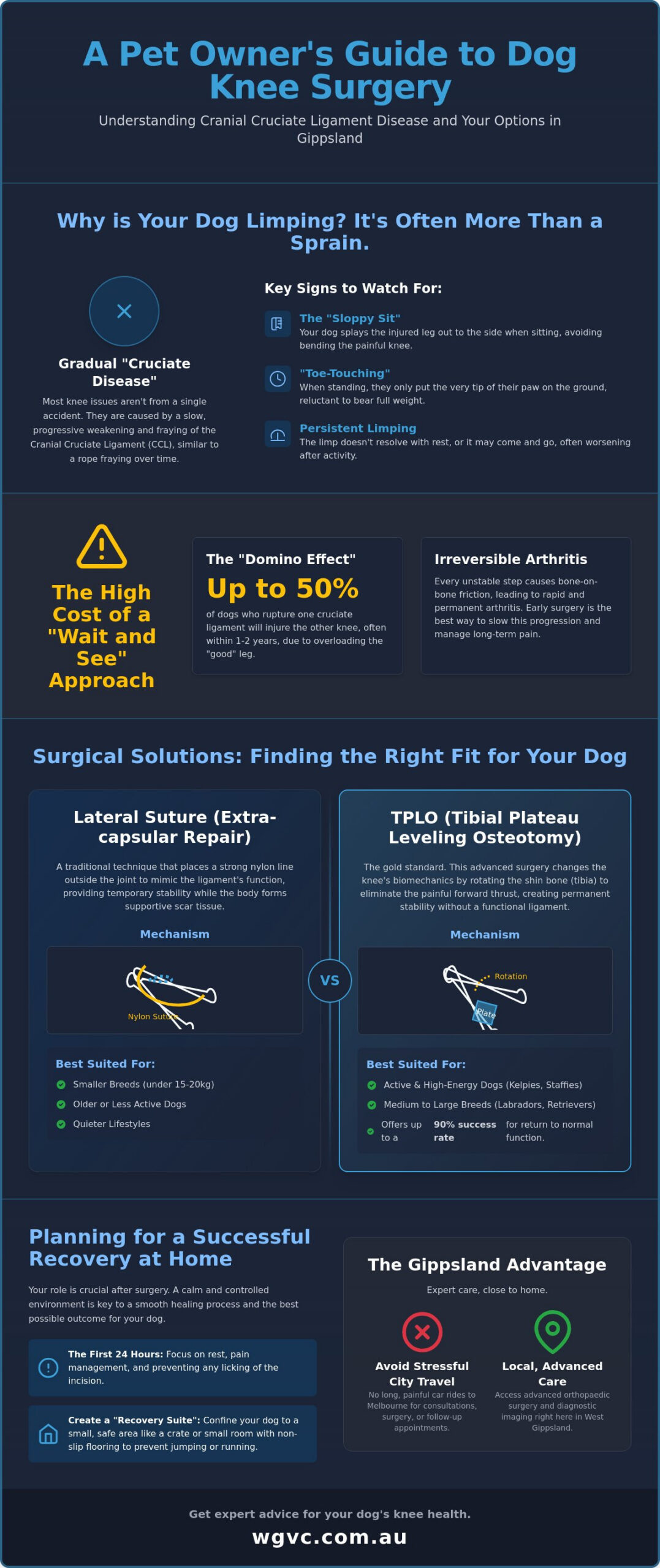
When your dog starts favouring a back leg, it’s easy to hope they’ve just stepped on a prickle or overdone it at the park. However, if that limp persists or comes and goes, it’s often a sign of something deeper within the joint. Many owners assume a torn ligament is always a sudden, dramatic snap. In reality, we usually see “Cruciate Disease,” which is a slow, progressive weakening of the ligament. This gradual fraying is far more common than a one-off accident. Understanding this distinction is the first step in deciding if your pet needs dog knee surgery gippsland to regain their quality of life.
You might notice your dog “toe-touching” while standing, barely putting weight on the limb. Another classic sign is the “sloppy sit.” Instead of tucking their legs neatly under them, they might splay the affected leg out to the side to avoid bending the knee. Catching these signs early is vital for your dog’s future. Without stability, the joint surfaces rub together. This creates chronic inflammation and leads to severe arthritis that can’t be reversed, even with later intervention.
The Anatomy of the Canine Knee
To understand the problem, it helps to look at what the cruciate ligament is and how it functions. While humans have an ACL, dogs have a Cranial Cruciate Ligament (CCL). Its main job is to stop the shin bone from sliding forward against the thigh bone. When this ligament frays, every step causes a painful “tibial thrust.” Think of it like a drawer sliding out of a cabinet when it shouldn’t. This instability often damages the meniscus; this is a C-shaped piece of cartilage that acts as a shock absorber. Once the meniscus tears, the pain becomes much more acute.
Why Do Gippsland Dogs Experience Knee Issues?
Our local environment and the breeds we love play a unique role in these injuries. Gippsland is home to many active breeds like Labradors, Golden Retrievers, and Staffies. These dogs often have a genetic predisposition to ligament issues. While we love our rolling green hills, the uneven terrain of local paddocks and hiking trails can put extra strain on a joint that’s already struggling. Carrying a few extra kilograms also makes a huge difference. Even a small amount of excess weight increases the mechanical load on the knee, speeding up the wear and tear. Providing expert dog knee surgery gippsland is often the most effective way to stop this cycle and get your mate back to exploring the bush safely.
Surgical Options: TPLO vs. Lateral Suture Techniques
Deciding on the best path for your dog’s recovery can feel like a heavy responsibility. In the field of dog knee surgery gippsland, we primarily focus on two distinct surgical paths: the traditional Lateral Suture and the modern gold standard, TPLO. While both methods aim to restore stability to the joint, they function in very different ways. A scientific review of cruciate ligament rupture highlights that the choice of technique should always be tailored to the individual dog’s anatomy, weight, and lifestyle requirements.
The Lateral Suture, also known as extra-capsular repair, involves placing a strong, medical-grade nylon line outside the joint capsule. This line acts as a temporary stabiliser while the body produces tough scar tissue to take over the role of the ligament. It’s often a reliable and successful option for smaller breeds or older, less active dogs who enjoy a quieter pace of life. However, for a high-energy Kelpie or a larger breed, this “external brace” might not provide the long-term durability needed for life on a Gippsland property.
TPLO (Tibial Plateau Leveling Osteotomy) is now widely considered the gold standard for active or larger dogs. Instead of trying to replace the ligament with a suture, we change the actual mechanics of the knee. TPLO is a permanent bone-shaping solution for knee stability that allows dogs to return to high-impact activities with a significantly lower risk of future arthritis. By rotating the top of the shin bone, we eliminate the painful sliding motion that occurs every time your dog takes a step.
How TPLO Changes the Biomechanics of the Knee
During a TPLO, we level the slope of the tibia so the joint remains stable during every stride, even without a functional ligament. This “leveling” process ensures the femur no longer slides backward, providing immediate mechanical relief. Research shows that approximately 90% of dogs return to good or excellent function following this procedure. Because the joint is mechanically sound, the progression of degenerative joint disease is greatly slowed, preserving the bond you share with your active companion for years to come.
Choosing the Right Procedure for Your Dog
We consider several vital factors when helping you choose the right path. Your dog’s weight, age, and the specific angle of their tibial slope are all part of the puzzle. While some owners might initially look for “cheap” surgical options, these can sometimes lead to complications or the need for revision procedures that cost more in the long run. Investing in the right method the first time is the most compassionate and effective choice. If you’re concerned about your mate’s mobility, our team offers expert orthopaedic surgery designed to get them back on all four paws safely and comfortably. You can also learn more about the full range of conditions treated by our orthopaedic vet Gippsland specialists to understand how we approach each case with precision and care.
The Cost of Inaction: Why “Wait and See” Often Fails
It’s a common hope for many pet owners in our community that a bit of rest and some anti-inflammatories will fix a persistent limp. While we always prefer the least invasive path, choosing a “wait and see” approach for a cruciate injury often carries hidden risks. When a dog has Cranial Cruciate Ligament Disease, the joint is fundamentally unstable. Every step your dog takes causes the bones to shift in ways they shouldn’t, which leads to micro-trauma on the delicate joint surfaces. This instability is the primary driver of degenerative joint disease, a form of arthritis that continues to worsen even if the dog eventually has surgery later on.
One of the most sobering facts for owners to consider is the risk to the “good” leg. Research indicates that between 30% and 50% of dogs that rupture the ligament in one knee will experience a rupture in the opposite knee, often within just one to two years. This happens because they overcompensate, shifting their weight to the healthy limb and putting it under immense strain. By delaying dog knee surgery gippsland, you might inadvertently be shortening the lifespan of the other knee. Managing a dog with two failed knees is an emotional and physical challenge that we want to help you avoid through timely, expert care.
Conservative management, such as strict crate rest and physical therapy, is sometimes appropriate for very small dogs or those with significant other health risks. However, for most of our active Gippsland dogs, it rarely provides a long-term solution. The ligament cannot heal itself; it lacks the blood supply to “knit” back together. Without a mechanical fix, the cycle of pain and inflammation becomes a permanent part of your dog’s life, eventually stealing their ability to enjoy simple pleasures like a walk to the local park.
The Meniscal Factor: A Hidden Source of Pain
Beyond the ligament itself, the meniscus is at great risk when surgery is delayed. This cartilage pad acts as a vital shock absorber within the knee. When the joint is unstable, the meniscus can get pinched and torn between the bones. You might even hear a distinct “meniscal click” when your dog walks. This is incredibly painful and often requires more extensive surgical intervention. We use advanced diagnostic imaging to assess the health of these structures, ensuring we have a complete picture of the joint health before we begin any corrective procedure.
Managing Pain and Inflammation Before Surgery
While you’re planning for your dog’s care, keeping them comfortable is our top priority. We use modern analgesics and tailored pain management plans to improve their quality of life. Weight management is also a critical pre-surgical step. Even a small reduction in body weight can significantly lower the stress on the joint. We often discuss how the principles of gastropexy surgery for dogs and other preventative care measures apply to orthopaedics. Just as we look to prevent bloat, we aim to prevent permanent joint damage through careful planning and early intervention.
Planning for Success: Recovery in a Gippsland Home
Bringing your dog home after dog knee surgery gippsland is a significant milestone, but it’s also the moment when the real work of healing begins. The first 24 hours are often the most emotional for owners. Your mate will likely be groggy from the anaesthesia and might seem a bit “off” or restless. This is a normal part of the recovery process. Our focus during this time is on quiet comfort and strict adherence to the pain management plan we’ve created together. Keeping your dog calm and comfortable during this initial window sets the stage for a much smoother 8-week journey ahead.
Success relies heavily on creating a “recovery suite” within your home. This is a dedicated, confined space where your dog can’t jump on furniture, run to the front door, or navigate stairs. Whether you use a recovery crate or a small, carpeted laundry, the goal is to prevent any sudden movements that could jeopardise the surgical repair. Over the coming weeks, you’ll see a gradual progression from simple “toe-touching” to controlled leash walks. By the eight-week mark, most dogs are ready to begin reintroducing light activity, often supported by physiotherapy or hydrotherapy to rebuild lost muscle mass and joint confidence.
Managing Regional Challenges During Recovery
Living in West Gippsland brings a few unique considerations for post-operative care. Many of our local country homes feature steep front steps or slippery polished floorboards that can be treacherous for a dog recovering from dog knee surgery gippsland. We recommend using non-slip rugs or even yoga mats to create “grip paths” across high-traffic areas. If your dog is recovering during a damp Gippsland winter, keeping the surgical incision clean and dry is vital. A simple plastic bag or a specialised paw bootie can protect the bandage from mud and moisture during those essential, short toilet breaks in the paddock.
The Fear-Free Approach to Post-Op Care
For a dog used to roaming a large backyard or working on a property, sudden confinement can lead to “crate frustration.” We embrace a fear-free approach to recovery, suggesting the use of pheromone diffusers or gentle calmatives to help your pet settle. Since physical exercise is off the table, mental stimulation becomes your best friend. Lick mats, snuffle rugs, and gentle scent games can keep their brain busy without putting any strain on the healing knee. For a more detailed look at what to expect each week, you can refer to our dog surgery recovery tips designed specifically for our local community.
Every dog heals at their own pace, and we’re here to guide you through every wobble and every win. If you have questions about setting up your home or need advice on post-operative equipment, please reach out to our team at West Gippsland Vet Care for personalised support.
Advanced Orthopaedic Care at West Gippsland Vet Care
At West Gippsland Vet Care, we believe that high-level medical care should never feel cold or distant. Choosing dog knee surgery gippsland means your pet is treated by neighbours who truly care about your family’s bond. We’ve invested in advanced in-house orthopaedic surgery at our Warragul and Drouin clinics to ensure you don’t have to face the stress of a long drive to Melbourne for specialist-level results. Our team combines technical precision with a nurturing, family-oriented approach that puts both you and your dog at ease.
Every successful surgery begins with meticulous planning. We utilise our in-house laboratory and advanced diagnostic imaging to map out the procedure before your dog even enters the theatre. This allows us to assess the joint with incredible accuracy, ensuring the surgical plan is tailored to your dog’s specific anatomy. During their stay, we provide dedicated hospitalisation and intensive care, focusing heavily on pain management and arthritis care. We pride ourselves on offering fear-free veterinary care, using gentle handling techniques and a calm environment to reduce the anxiety often associated with clinical stays.
Meet Your Local Surgical Team
Our surgical team is led by experienced veterinarians who have dedicated themselves to orthopaedic excellence. This includes expertise in TPLO procedures, with some of our team members having performed over 100 of these complex surgeries. The benefit of staying local goes beyond convenience. Having your surgery, follow-up X-rays, and rehabilitation checks in the same centre ensures a continuity of care that’s hard to find elsewhere. It’s much less stressful for your dog to visit a familiar place with familiar faces than to navigate the noise and traffic of a city referral centre. To explore the complete breadth of musculoskeletal conditions we treat, visit our dedicated orthopaedic vet Gippsland service page for a full overview of our advanced surgical capabilities.
Ready to Restore Your Dog’s Mobility?
If you’ve noticed your dog struggling to get up or limping after a walk, the first step is an initial orthopaedic consultation. During this visit, we’ll perform a thorough physical exam and discuss the best path forward for your mate’s specific needs. To help us provide the best care, please bring along any previous X-rays or medical history from other clinics. We understand that the prospect of surgery is daunting, but we’re here to support you every step of the way. Our goal is to see your dog back to their happy, active self, enjoying everything the Gippsland lifestyle has to offer. Contact our friendly team today to start the journey toward a pain-free life for your companion.
Helping Your Best Mate Back to Their Happy, Active Self
Choosing the right path for your dog’s recovery doesn’t have to be a journey you take alone. We’ve explored how early intervention protects against permanent joint damage and why modern techniques like TPLO offer such a high success rate for active pets. By choosing dog knee surgery gippsland, you’re ensuring your companion receives specialist-level care right here in our local community. Our clinics provide in-house advanced diagnostic imaging to plan every step with precision, so you can feel confident in the road ahead.
We understand that surgery is a big decision for any family. Our certified fear-free veterinary professionals are dedicated to making the hospital experience as gentle as possible for your pet. For your peace of mind, we also provide 24-hour emergency support to our existing surgical clients throughout their entire healing journey. You don’t need to travel to the city to find the expertise your dog deserves. We’re ready to help you navigate this process with kindness and clear, open communication.
Book an Orthopaedic Consultation with our Compassionate Team today. Let’s work together to get your dog back to those joyful Gippsland walks.
Frequently Asked Questions
How much does dog knee surgery cost in Gippsland?
The total investment for your dog’s procedure depends on several factors, including the dog’s weight, the specific surgical technique chosen, and the complexity of the joint damage. Costs typically cover the surgery itself, anaesthesia, hospitalisation, and initial take-home medications. Because every pet’s needs are unique, we recommend a clinical consultation to receive a detailed estimate that includes essential follow-up care and any required diagnostic imaging.
Can a dog walk after cruciate ligament surgery?
Most dogs are encouraged to start gentle “toe-touching” on the affected leg within 24 to 48 hours of their operation. This early, controlled movement is vital for preventing joint stiffness and maintaining muscle tone. However, “walking” at this stage must be strictly limited to very short, slow leash breaks for toileting purposes only. High-impact activity or off-leash running is strictly prohibited during the initial healing phase.
Is TPLO surgery worth it for an older dog?
Age is not a disease, and restoring mobility can significantly improve a senior dog’s quality of life. If your older dog is otherwise healthy, fixing a painful knee allows them to enjoy their golden years without chronic discomfort. We use tailored anaesthetic protocols and advanced monitoring to ensure the procedure is as safe as possible for senior patients, focusing on getting them back to their favourite gentle strolls.
What happens if I don’t get surgery for my dog’s torn cruciate?
Leaving a cruciate tear untreated leads to persistent joint instability, which causes the bones to rub together painfully. This constant friction results in the rapid onset of severe, irreversible arthritis and often leads to a painful tear of the meniscus. Over time, your dog will likely experience a permanent loss of mobility and chronic pain that requires lifelong medication, significantly impacting their overall happiness and well-being.
How long is the recovery period for dog knee surgery?
The complete journey for dog knee surgery gippsland usually takes about 12 weeks from the day of the operation. The first six to eight weeks are the most critical, requiring strict confinement to a small area to allow the bone or tissue to heal. After a follow-up assessment and potentially further imaging, we gradually increase your dog’s activity levels until they can return to normal exercise routines.
Will my dog need physiotherapy after their knee operation?
While some dogs recover well with home-based stretching, professional physiotherapy or hydrotherapy can significantly speed up the rebuilding of lost muscle mass. These sessions help your dog regain confidence in their leg and improve the joint’s range of motion. We often integrate simple rehabilitation exercises into your post-operative plan, as these small efforts at home can make a big difference in the final outcome.
Can my dog re-tear their knee after a TPLO procedure?
It is actually impossible to re-tear the cruciate ligament after a TPLO because the surgery changes the knee’s mechanics so the ligament is no longer needed for stability. The bone is held in its new position by a strong medical-grade plate and screws. While the repair itself is very robust, it’s still vital to follow recovery restrictions to ensure the bone heals perfectly around the new implants.
Are there non-surgical alternatives for cruciate ligament tears?
Non-surgical options like custom knee braces or “conservative management” focus on managing pain rather than fixing the underlying mechanical problem. These paths are usually reserved for dogs with high-risk medical conditions where anaesthesia isn’t an option. For the majority of active dogs, surgery remains the only way to restore full, pain-free function and stop the progression of debilitating joint disease in the knee.