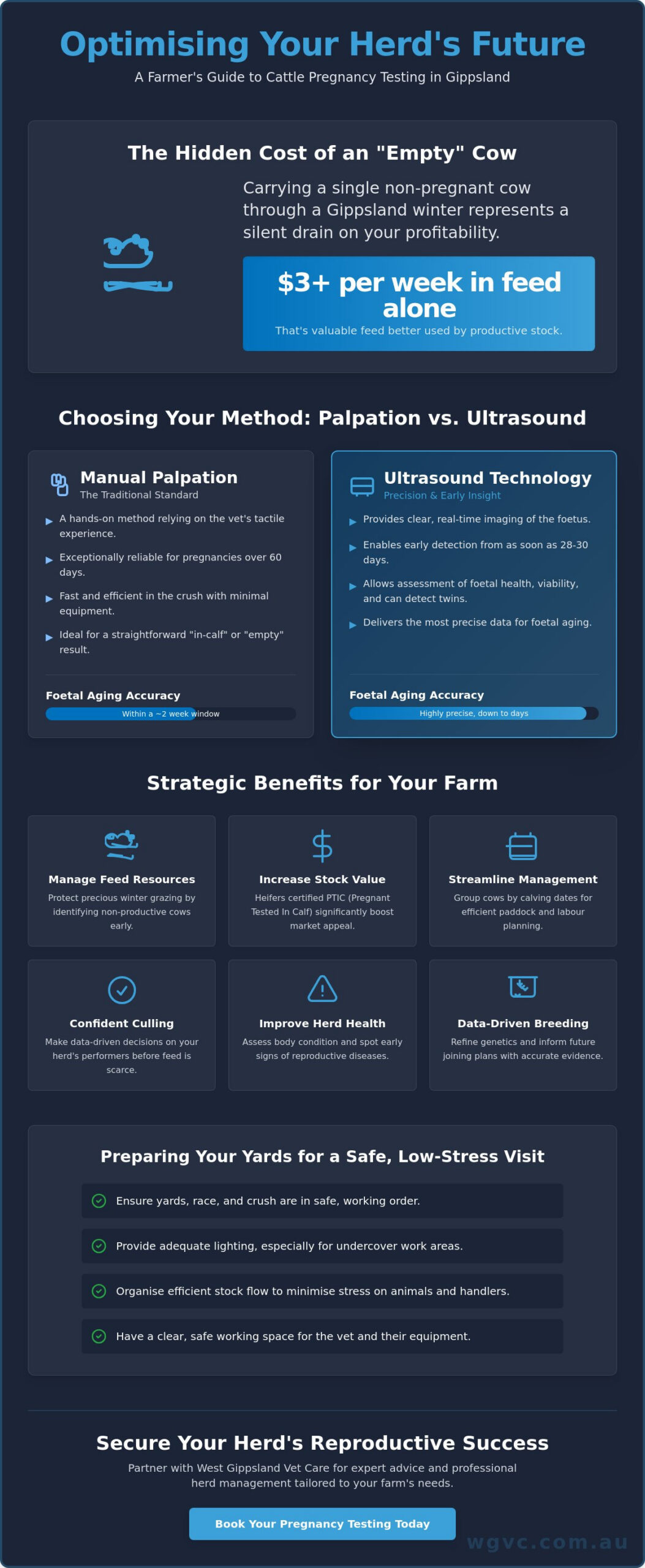
Did you know that carrying a single non-pregnant cow through a Gippsland winter can cost you roughly $3 every week in feed alone? These “freeloaders” represent a silent drain on your farm’s hard-earned profitability, especially when every blade of grass counts. We understand that your herd is the heart of your livelihood, and you want to ensure each animal is cared for with the respect and expertise she deserves. When it comes to cattle pregnancy testing gippsland, making the right choice is about more than just numbers; it’s about the future of your land and the well-being of your stock.
You likely already feel the pressure of managing calving spreads and the worry that comes with inaccurate foetal aging. It’s a challenge many of our local farming families face, balancing the need for precision with the desire to keep yard work as calm and stress-free as possible. We’re here to help you discover the most accurate pregnancy testing methods for your herd to maximise fertility and protect your bottom line. We’ll walk through a clear comparison of manual palpation and ultrasound technology, exploring how each method helps you organise your paddocks and secure a more predictable, successful season ahead.
Key Takeaways
- Learn how identifying “empty” cows early helps you manage Gippsland’s seasonal feed curves and protects your farm’s precious winter grazing resources.
- Discover the differences between manual palpation and ultrasound, including how real-time imaging provides a clearer view of foetal health and development.
- Find the ideal “Goldilocks” timing for cattle pregnancy testing gippsland to ensure the most accurate foetal aging and calving dates for your mob.
- Understand how to prepare your yards for a safe, low-stress vet visit that keeps your animals calm and comfortable throughout the process.
- Gain insights into professional herd management and why a partnership with trusted local experts supports your farm’s long-term reproductive success.
The Role of Cattle Pregnancy Testing in Gippsland Farming
Gippsland farmers know our seasons can be unpredictable. While our rolling green hills are the envy of many, managing them effectively requires a careful eye on the calendar and the grass. Regular cattle pregnancy testing gippsland is a vital part of this management cycle. It isn’t just about a simple “yes” or “no” for each cow. Instead, it’s a strategic tool that helps you align your herd’s nutritional needs with the natural growth of your pastures. Identifying “empty” cows early allows you to reduce the pressure on your winter grazing, ensuring your pregnant breeders get the best possible nutrition when they need it most. This data-driven approach takes the guesswork out of your wintering strategy, allowing you to focus your resources where they’ll actually generate a return.
Economic Benefits for West Gippsland Herds
The cost of carrying a non-pregnant cow through a cold, wet Gippsland winter is a silent drain on your farm’s success. Every day she spends in the paddock without a calf on the way is a day she consumes valuable feed that could be better utilised by your productive stock. When you identify these cows early, you can make confident culling decisions before feed becomes scarce. Accurate testing also adds tangible value to your stock. If you’re looking to sell, having heifers certified as PTIC (Pregnant Tested In Calf) significantly boosts their market appeal. It gives buyers peace of mind and allows you to organise your own labour and paddock management more efficiently by grouping cows according to their expected calving dates. This clarity makes for a much calmer calving season for both you and your animals.
Integrating Testing with Herd Health Advice
A vet visit for pregnancy testing is the perfect time to look at the bigger picture of your herd’s well-being. We view these visits as a collaborative moment to assess body condition scores across your whole mob. This information is essential for improving cattle conception rates in the seasons to come. Within the broader field of Veterinary obstetrics, these diagnostic checks help us spot early signs of reproductive diseases or nutritional deficiencies that might otherwise go unnoticed. By linking pregnancy results to overall health data, we can help you tailor a nutritional plan that supports foetal development and prepares the cow for a healthy birth. It’s about more than just checking a box; it’s about building a sustainable, healthy future for your entire farm family.
Ultimately, the data we collect together informs your future joining plans and culling decisions. It gives you the confidence to keep your best performers and refine your herd’s genetics over time. By making these choices based on clear evidence, you’re not just managing a farm; you’re nurturing a productive legacy that’s built to last.
Manual Palpation vs. Ultrasound: Comparing the Methods
Every farm in West Gippsland has its own unique rhythm, and choosing the right diagnostic tool for your mob is about finding the balance between efficiency and the specific data you need for the season ahead. When we talk about cattle pregnancy testing gippsland, we’re usually looking at two main paths: the traditional, hands-on approach of manual palpation or the high-tech visual clarity of ultrasound. Both methods have a valued place in modern herd management, and often, the best choice depends on your specific joining dates and what you hope to achieve with your calving schedule.
Manual Palpation: The Traditional Standard
Manual palpation has been the backbone of reproductive management for generations. It involves a vet gently and skillfully identifying the foetus and uterine changes by hand. This method is exceptionally reliable for cows that are further along in their pregnancy, typically over 60 days. It relies heavily on the vet’s tactile experience; it’s a “feel” developed over years of dedicated work in the yards. One of the main benefits is speed in the crush, as it requires minimal equipment setup. While it’s excellent for a simple “in-calf” or “empty” result, foetal aging with manual palpation is generally accurate within a two-week window, which is often perfectly sufficient for many commercial beef operations.
Ultrasound Technology: Precision and Early Detection
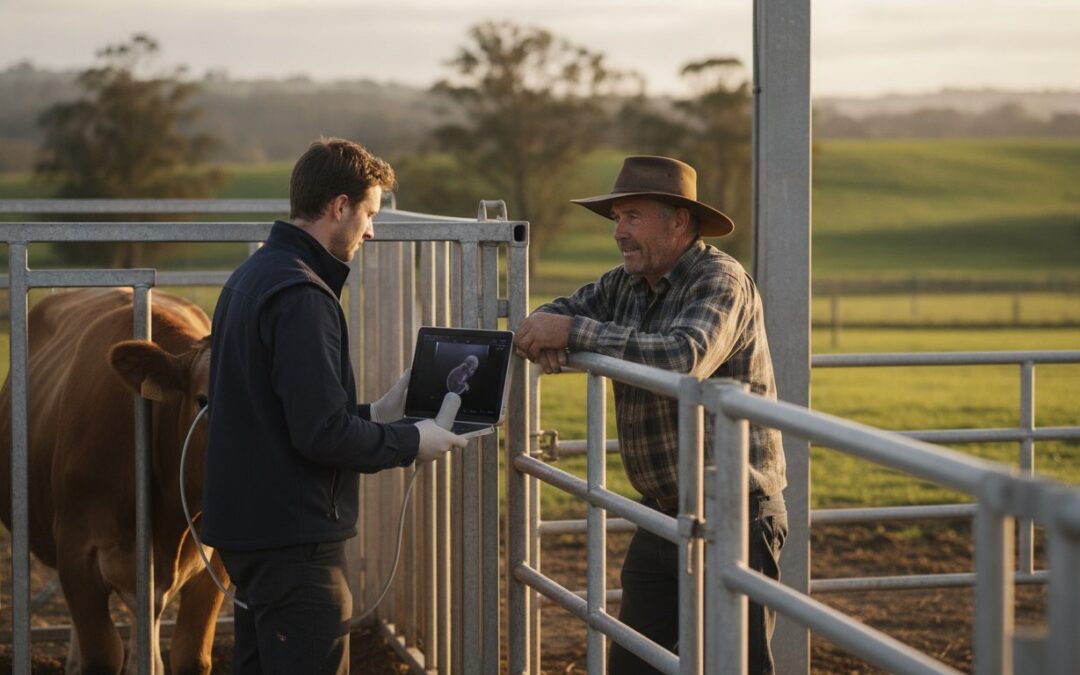
Ultrasound brings a different level of insight to your breeding programme. By using real-time imaging, we can actually visualise the foetus and confirm a steady, healthy heartbeat. The biggest advantage here is early detection. We can confirm pregnancies as early as 35 days post-joining, which is a game-changer if you’re looking to identify “empty” cows as soon as possible to save on feed costs. Ultrasound is also the superior tool for precise foetal aging. This precision allows you to predict calving dates with much greater accuracy, helping you group your heifers and cows into tighter mobs for better paddock management. It’s also the only reliable way to identify twins or assess foetal viability early on.
In the crush, ultrasound might take a few extra seconds per head compared to a quick manual check, but the depth of data it provides is often worth the wait. Many local producers find that a hybrid approach works best, perhaps using ultrasound for the heifers to get those precise dates while using manual palpation for the main breeder mob. We always aim to tailor our approach to what makes the most sense for your farm and the well-being of your stock. If you’re unsure which path to take for your next round of livestock pregnancy testing, we’re always here to listen and help you decide what’s best for your herd’s future.
Accuracy and Timing: When to Call the Vet
Timing is everything on a farm. For cattle pregnancy testing gippsland, finding that “Goldilocks” window is the difference between a vague guess and a precise management plan. Ideally, we like to see your mob between 8 and 10 weeks after the bulls have been taken out. This specific timing allows the foetus to be large enough for clear identification, yet small enough that we can still provide highly accurate aging data. We want to help you get the most out of your vet visit, ensuring every dollar spent translates into useful information for your season ahead.
If we visit the yards too early, there’s a risk we might miss those “late” pregnancies from the very end of the joining period. On the other hand, waiting too long can make foetal aging much trickier. As a pregnancy progresses past the four or five-month mark, the foetus often drops deeper into the cow’s abdomen, making it harder to measure precisely. Coordination is key. By scheduling your visit around that 8 to 10-week mark, we can ensure every cow that’s in-calf is accounted for. For any cows that appear borderline during the first round, we can simply organise a quick re-test a few weeks later to be absolutely certain.
Managing the Calving Window in West Gippsland
In West Gippsland, we’re blessed with a strong spring flush. Aligning your calving dates with this natural surge in pasture growth is a smart move for both cow health and calf growth. By using ultrasound to segregate your mob into early, mid, and late calvers, you can manage your paddocks with much more intent. This targeted approach often leads to better calf survival rates and higher weaning weights, as you can ensure the early calvers are on your best feed exactly when their lactation demands it most. It’s about working with the Gippsland environment, not against it.
Foetal Aging and Its Management Implications
Knowing the age of a foetus is far more valuable than a simple “yes” or “no” result. It gives you the power to organise supplement feeding based on actual needs rather than guesswork. You can lead-feed the early group while keeping the later group on maintenance, saving you both time and money on expensive inputs. It also means fewer midnight paddock checks in the cold and rain. You’ll know exactly which cows to watch and when, giving you back some well-deserved peace of mind and a bit more sleep during the busy calving season. Planning ahead for those early calvers also means you can schedule important calf health procedures in advance, including humane calf disbudding in Gippsland to ensure every calf gets the best possible start without unnecessary setbacks to growth.
Preparing Your Gippsland Property for a Successful Vet Visit
A smooth day in the yards is a shared goal for every farmer and visiting vet. When we arrive for cattle pregnancy testing gippsland, we aren’t just there to perform a technical task; we’re there to support your herd’s future. Good preparation is the foundation of a safe, efficient, and calm experience for everyone involved. It ensures that the data we collect is accurate and that your animals remain relaxed throughout the process. Taking a little extra time to get the yards ready makes a world of difference to the flow of the day.
Low-stress handling is vital for maintaining pregnancy health. We know how much you care for your mob, and keeping their heart rates down during yard work is a big part of that. When cattle are handled quietly and with patience, they move through the race and crush much more reliably. This calm environment isn’t just about safety; it actually protects the well-being of the developing foetuses. We always appreciate it when the mob is already drafted and settled in the yards before we arrive, allowing us to start our work in a peaceful atmosphere.
Yard and Crush Requirements
The safety of your livestock and our team depends on your equipment being in good working order. Please check that the crush is functional and that the rear gate secures firmly before the day of testing. Given Gippsland’s unpredictable weather, providing adequate shade or protection from the rain is always a thoughtful touch. If we’re using ultrasound technology, we’ll need a clear area to set up our monitors and potentially access to a power point or a reliable generator. Having a bucket of clean water and a towel nearby is also a simple but very helpful addition to the setup.
Record Keeping and Identification
Accurate data is only useful if it’s linked to the right animal. Before we start, it’s a great idea to ensure all cows have legible ear tags or functional NLIS devices. We’ll work with you to prepare a system to record results in real-time, whether you prefer a digital spreadsheet or a traditional notebook. This is also a perfect opportunity to look at the other half of your reproductive equation. Many of our clients choose to perform a bull breeding soundness evaluation on their sires during the same visit. It’s a proactive way to ensure your bulls are ready for the next joining period while we already have the gear on-site.
By preparing your property thoughtfully, you’re investing in the accuracy of your results and the safety of your team. If you’re ready to get your next round of testing in the diary, feel free to contact our friendly team to discuss your requirements and find a time that works for your farm’s schedule.
Professional Herd Management with West Gippsland Vet Care
Our commitment to the West Gippsland farming community runs deep. We’ve spent years working alongside local families, through the wet winters and the lush spring flushes, to ensure our agricultural region remains strong and productive. We don’t just see ourselves as service providers; we’re partners in your farm’s success. When we visit for cattle pregnancy testing gippsland, we bring a gentle authority and a genuine respect for the bond you have with your animals. Whether you’re managing a small beef mob or a large-scale dairy operation, our goal is to provide the clarity you need to make confident decisions for the future.
Every farm has a different story, and we pride ourselves on being expert listeners. Our team is highly experienced in both beef and dairy reproductive management, offering livestock vet west gippsland services that go far beyond a simple diagnostic check. We believe that the best results come from a collaborative effort. Once the testing is finished, we don’t just hand over a list of results and head off. We take the time to sit down with you, interpret the data, and discuss how we can work together to improve next season’s results. It’s about looking at the big picture and ensuring your herd’s health strategy is as robust as it can be.
Tailored Solutions for Local Farmers
We understand that a “one size fits all” approach doesn’t work in farming. We customise our testing methods and herd health advice to suit your specific herd size, your property’s layout, and your long-term goals. From our bases in the region, we provide on-farm support across Warragul, Drouin, Bunyip, and the wider West Gippsland area. By integrating your pregnancy data into a broader health and nutrition plan, we help you identify trends and address potential issues before they become costly problems. It’s a proactive way to manage your livestock that keeps both your animals and your business thriving.
Booking Your Seasonal Testing
Peak joining and testing seasons are incredibly busy times for everyone in our community. To ensure we can visit your property at that “Goldilocks” window we discussed earlier, it’s a great idea to organise your booking well in advance. When our team arrives, you can expect a calm, professional, and friendly presence in your yards. We’ll work efficiently while maintaining the low-stress environment your cows deserve. If you’re ready to schedule your next round of livestock support or want to chat about your herd’s reproductive strategy, we’re always here for a yarn. You can reach out to West Gippsland Vet Care to find a time that suits your seasonal calendar.
Securing Your Herd’s Future with Precise Data
Choosing the right approach for your mob’s reproductive cycle is a powerful way to support your farm’s long-term success. By identifying non-pregnant cows early, you’re protecting your precious Gippsland pastures and focusing your care on the productive breeders that represent your farm’s future. Whether you prefer the time-tested reliability of manual palpation or the pinpoint accuracy of advanced ultrasound technology for precise foetal aging, having clear data allows you to organise your paddocks and manage your labour with total confidence.
Our experienced livestock vets are proud to serve the Gippsland region, offering a blend of clinical expertise and a genuine, personal commitment to your herd’s well-being. We don’t just provide results; we offer comprehensive herd health and fertility advice to help you build a more resilient breeding programme. When you’re ready to take the guesswork out of your next season and ensure every cow is performing at her best, it’s time to chat about cattle pregnancy testing gippsland. Book your cattle pregnancy testing with West Gippsland Vet Care today. We look forward to visiting your property and working alongside you to ensure your herd thrives for years to come.
Frequently Asked Questions
How early can a vet detect pregnancy in cattle using ultrasound?
Ultrasound can detect pregnancy as early as 30 to 35 days after joining has finished. This early window is a major advantage of cattle pregnancy testing gippsland, as it allows for visual confirmation of the foetus and a heartbeat. Identifying pregnancies this early gives you a head start on planning your winter grazing and identifies any “empty” cows before they consume valuable paddock resources.
Is manual pregnancy testing less accurate than ultrasound?
Manual testing isn’t necessarily less accurate, but it provides different information. In the hands of an experienced vet, both manual palpation and ultrasound identify over 95% of pregnant and empty cows correctly. Ultrasound simply offers more detail, such as precise foetal aging and viability, while manual testing remains a very reliable and efficient way to check cows that are at least 60 days along.
What is the best time of year to preg test cattle in West Gippsland?
The ideal time for cattle pregnancy testing gippsland is 8 to 10 weeks after the end of the joining period. For many of our local spring-calving beef herds, this usually falls in late summer or early autumn. Testing during this window ensures the foetus is developed enough for accurate aging, which helps you align your calving dates with Gippsland’s natural spring pasture flush.
How long does it take to pregnancy test a mob of 100 cows?
Testing a mob of 100 cows usually takes between two and three hours, depending on your yard setup and how well the cattle flow through the race. We always aim to work at a steady, calm pace that keeps the animals relaxed. Having a few extra hands to keep the lead up full and the drafting gates moving ensures the process is efficient and stress-free for everyone involved.
Do I need to yard my cows overnight before the vet arrives for testing?
You don’t need to yard them overnight, but having the mob in the yards and drafted an hour before we arrive is very helpful. This gives the cattle time to settle down after being moved from the paddock. For ultrasound testing, having the cows slightly “empty” of green feed can sometimes make the imaging clearer, but it’s more important that the animals are calm and ready to go.
What happens if a cow is found to be “empty” or non-pregnant?
Identifying an “empty” cow allows you to make an informed decision that protects your farm’s profitability. Carrying a non-pregnant cow through a Gippsland winter can cost around $3 per week in feed alone. By identifying these animals early, you can cull them before feed becomes scarce, ensuring your resources are reserved for the productive breeders that will actually provide a return on your investment.
Can ultrasound testing identify twins in cattle?
Yes, ultrasound is the most reliable method for identifying twins in your herd. Knowing which cows are carrying twins allows you to give them the extra nutritional support they need during the later stages of pregnancy. It also means you can keep a closer eye on them during calving, as twin births often require a bit more management and care to ensure both calves and the mother stay healthy.
Does pregnancy testing cause any stress or risk of abortion in the cow?
Professional pregnancy testing is safe and involves very little stress for the cow when performed correctly. Our vets use gentle, low-stress handling techniques to ensure the animals remain comfortable throughout the process. When conducted by an accredited professional, there is no significant risk of abortion, and the benefits of having accurate data for your herd’s management far outweigh the minimal temporary stress of the yard visit.