
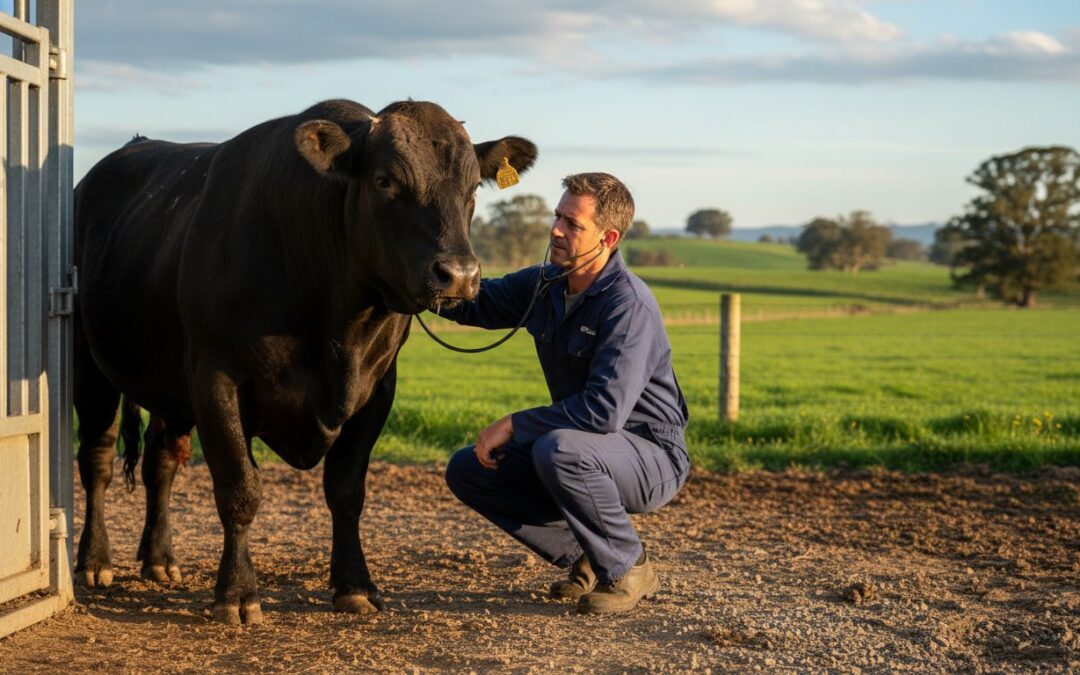
Did you know that nearly 50% of bulls assessed in a study by Australian Cattle Vets were found to be at risk of being sub-fertile? It’s a sobering thought when you consider how much heart and hard work you pour into your herd every season. While a bull might look strong and active in the paddock, visual fitness is often just a mask that hides underlying issues. Professional bull fertility testing victoria is the only way to truly know if your sires are fit for purpose before the joining period begins, saving you from the stress of low calving percentages later on.
We know how much you care about the future of your farm and the well-being of your animals. It’s completely natural to feel a bit of uncertainty about how maiden bulls will perform or the hidden costs of a sire failing mid-season. In this guide, we’ll explain how a standardised Veterinary Bull Breeding Soundness Examination (VBBSE) works to protect your livelihood. You’ll discover how we assess everything from physical conformation to semen morphology to give you total peace of mind and ensure your herd reaches its full reproductive potential.
Key Takeaways
- Learn why a bull’s physical appearance can be a mask and how a systematic VBBSE reveals the true breeding potential of your sires.
- View bull fertility testing victoria as an essential insurance policy that safeguards your calving percentages and long-term farm profitability.
- Understand why simply “swimming” isn’t enough and how semen morphology testing identifies bulls that are truly fit for purpose.
- Discover the best timing for your bull walk to ensure you have a reliable “Plan B” in place well before the joining season begins.
- Find out how to prepare your yards and crush for a safe, efficient visit that prioritises the well-being of your livestock and the vet team.
What is Bull Fertility Testing and Why is it Critical in Victoria?
The Veterinary Bull Breeding Soundness Examination (VBBSE) is the Australian industry standard for ensuring your sires are ready for work. It’s a structured, scientific approach that looks far beyond a bull’s physical presence in the paddock. While a sire might look strong and robust, visual fitness is often a mask. A bull can appear perfectly healthy while being functionally infertile or sub-fertile, meaning he lacks the physical or biological ability to get cows in calf efficiently. In our Victorian farming systems, where joining windows are often tight to align with seasonal pasture growth, a single bull failure can have a devastating impact on your bottom line.
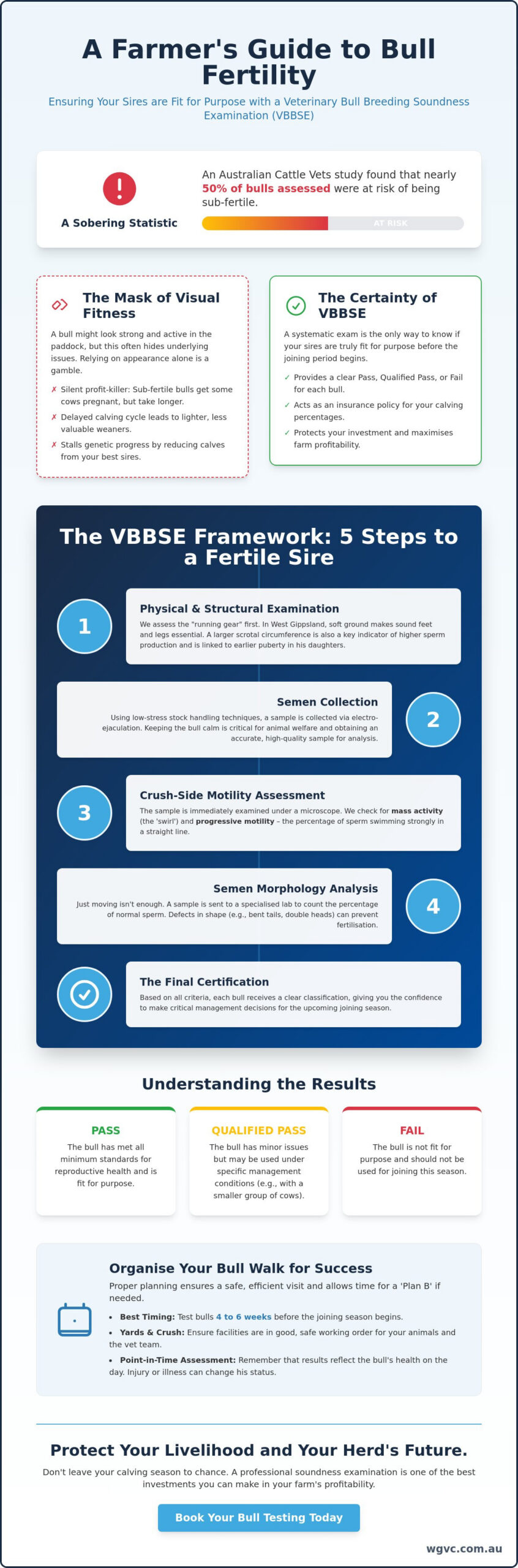
When we conduct bull fertility testing victoria, we provide you with a clear outcome for every animal. Each bull is classified as a “Pass,” a “Qualified Pass,” or a “Fail.” A Pass means the bull has met all the minimum standards for reproductive health. A Qualified Pass indicates that while the bull has some minor issues, he may still be used under specific management conditions. A Fail means the bull is not fit for purpose and should not be used for joining. Understanding these Bull fertility basics allows us to work together to protect your herd’s future.
The “Silent” Cost of Sub-Fertility
There is a significant difference between a sterile bull and a sub-fertile one. A sterile bull is often easier to identify because you’ll notice a high number of cows returning to heat. However, a sub-fertile bull is a silent profit-killer. These bulls still get some cows pregnant, but they take much longer to do so. This delays your calving cycle, leading to a “tail” of smaller, lighter weaners that fetch less at market. It also stalls your herd’s genetic progress, as your high-value sires aren’t contributing as they should, leaving you with fewer calves from your best genetics.
Regional Factors in West Gippsland
Living and working in West Gippsland brings unique challenges for our livestock. Our beautiful, lush pastures are fantastic for weight gain, but the soft, wet ground can be tough on a bull’s feet. We often see structural soundness issues or foot lesions that only become apparent when a bull starts the heavy work of joining. Additionally, our local climate can influence a bull’s libido and physical stamina. Testing your bulls four to six weeks before the spring or autumn joining peaks is essential. It gives us time to identify any issues caused by our local environment and ensures your sires are physically prepared for the season ahead. Working with an experienced livestock vet west gippsland means having a partner who understands these regional pressures and can provide tailored support across every stage of your herd’s reproductive calendar.
The VBBSE Framework: Five Steps to a Fertile Sire
When our team arrives at your yards, we see ourselves as more than just technicians. We act as an independent auditor for your bull team, providing an objective set of eyes to ensure your investment is protected. It’s vital to remember that bull fertility testing victoria is a point-in-time assessment. This means the results reflect the bull’s health and capability on the day of the exam. Because a bull’s condition can change due to injury or illness, this snapshot is the most reliable way to ensure he’s ready for the heavy workload ahead. Throughout the process, we use low-stress stock handling techniques. Keeping the environment calm isn’t just about kindness; it’s essential for animal safety and for obtaining the most accurate diagnostic results possible.
Physical Examination and Structural Soundness
We begin by assessing the “running gear.” In Gippsland, bulls often have to navigate soft, wet ground or hilly paddocks, so their feet and legs must be in top condition. We perform a gait analysis to ensure they can walk and mount without pain. We also conduct a thorough examination of the internal and external reproductive organs, looking for any lesions or abnormalities that could hinder performance. Scrotal circumference is a major focus here. A larger measurement typically indicates higher sperm production capacity. Plus, there’s a proven link between a sire’s scrotal size and the earlier onset of puberty in his daughters, which helps build a more fertile herd over time. For more tips on preparing your sires, you can read about broader bull management in Victoria.
Semen Collection and Crush-Side Assessment
Once the physical checks are complete, we move to semen collection, usually through electro-ejaculation. We handle this delicately to keep the bull relaxed. As soon as we have a sample, we examine it under the microscope right there at the crush. We’re looking for mass activity (the “swirl” of the sample) and progressive motility, which is the percentage of sperm swimming forward in a straight line. If the sperm aren’t moving effectively, the bull cannot reliably reach and fertilise the egg. Sometimes a bull might fail this initial crush-side test due to temporary factors like recent heat stress, while other times he may need more detailed laboratory analysis to confirm his status. If you’re planning your next joining season, it’s a great time to chat with our friendly team to organise your bull walk.
Decoding Semen Morphology: Why “Moving” Isn’t Enough
One of the biggest misunderstandings we hear from our local farmers is the idea that if sperm is “swimming” under a crush-side microscope, the bull is ready for the paddock. Motility is a wonderful first sign, but it’s only half the story. Morphology is the study of the structure and shape of individual sperm cells, and it’s what truly determines a bull’s ability to settle a cow. You can think of motility as the car’s ability to drive, whereas morphology is the car’s ability to actually reach the destination and deliver its cargo. Without both, the journey is incomplete.
During bull fertility testing victoria, we collect a sample and preserve it in a special solution to be sent to a specialised laboratory. There, an expert uses high-powered magnification to look at the finer details that simply aren’t visible in the yards. This step is vital because sperm with structural issues might swim perfectly well but lack the physical tools to penetrate the egg. Professional bull fertility testing victoria provides the deep data you need to make confident decisions about your sires before they ever meet the cows.
Common Morphological Defects
Sperm cells are incredibly complex. Defects can occur in the head, which carries the vital genetic material, the mid-piece, which acts as the engine, or the tail. If a bull has a high percentage of head defects, he might fertilise the egg, but the pregnancy often fails early. This leads to early embryonic loss, where a cow appears to return to heat after a few weeks. It’s a frustrating situation that often goes unnoticed until pregnancy testing. Following the Agriculture Victoria bull management guidelines, the Australian standard for a “Pass” generally requires at least 70% normal sperm. This benchmark ensures the bull has enough high-quality “workers” to get the job done effectively.
The Value of an Accredited Laboratory
At West Gippsland Vet Care, we believe in giving you the most accurate information possible to protect your livelihood. That’s why we send our samples to accredited morphologists who specialise in this delicate, high-stakes work. These results are incredibly helpful for identifying temporary “insults” to a bull’s system. Because sperm production takes about 60 days, a fever or a bout of heat stress from two months ago can show up in today’s test. Knowing this helps us decide if a bull just needs a bit of rest or if he’s a permanent risk to your calving percentages. Although it takes a few extra days to get these lab results back, the clarity they provide is invaluable for your joining strategy.
ROI: The Economics of Bull Testing for Victorian Farmers
It’s helpful to view bull fertility testing victoria as a vital insurance policy rather than just another farm expense. When you consider that research shows approximately 1 in 5 bulls fail a standard VBBSE, the risk of doing nothing is quite high. A bull that looks the part but can’t deliver results is a heavy financial drain on any operation. By identifying sub-fertile sires early, you aren’t just avoiding a “fail” in the paddock; you’re actively securing the next generation of your herd. The small cost of a professional examination is a minor investment when compared to the multi-thousand dollar loss of a failed joining season.
Small improvements in performance lead to significant gains across your entire mob. For instance, if professional testing helps you achieve just a 5% increase in conception rates in a 100-head mob, that’s five extra calves on the ground. In our local Gippsland markets, those extra calves represent a substantial boost to your annual turnover. This proactive approach ensures your top-performing genetics are actually doing the work, rather than leaving the heavy lifting to less capable sires.
The Cost of a “Dry” Cow in Today’s Market
Every empty cow represents a missed opportunity and a significant loss in potential income for Victorian beef producers. Beyond the lack of a calf, there is the hidden cost of lost time. One missed reproductive cycle of 21 days can result in significantly lower weaning weights because the calf is born later in the season. When a sub-fertile bull is responsible for an entire mob, these losses compound across every single cow he was meant to serve, creating a financial “tail” that can take years to recover from. Understanding the full picture of improving cattle conception rates across your whole herd is essential to reversing these compounding losses and achieving a tighter, more profitable calving pattern.
Optimising Bull-to-Cow Ratios
One of the most practical benefits of bull fertility testing victoria is the confidence it gives you to optimise your joining groups. When you know for a fact that a sire has passed a rigorous morphology and physical check, you can safely increase your bull-to-cow ratios to 1:40 or even 1:50. This reduces the need to keep “backup” bulls that are essentially just eating grass and costing you money. Managing your bull walk this way ensures even coverage across the joining period and keeps your bull team lean and efficient. If you want to make sure your sires are up to the task, get in touch with us to book your fertility assessments.
Organising Your Bull Walk: Preparation with WGVC
Getting your sires ready for the joining season is all about timing and teamwork. We recommend booking your bull fertility testing victoria at least four to six weeks before you plan to put the bulls out with the cows. This window is vital because it gives you a “Plan B” if a bull doesn’t meet the required standards. If a sire fails his assessment, you’ll have enough time to source a high-quality replacement without the stress of delaying your joining period. Our vets view themselves as partners in your farm’s success, and we want to ensure the process is as smooth and safe as possible for everyone involved.
Preparation in the yards makes a world of difference. A well-organised day keeps the bulls calm and allows us to focus on the technical details of the Bull Breeding Soundness Evaluation. To keep your animals and our vet team safe, please ensure your yards and crush are in good working order before we arrive. A functional crush with a reliable head bale and safe access to the rear of the bull is essential. Keeping the atmosphere quiet and steady helps the bulls stay relaxed, which is particularly important for maiden bulls who might be a bit unsure of the process.
Vaccinations and Health Protocols
A fertility check is the perfect time to review your herd’s broader health. We often integrate Vibriosis and Pestivirus (BVDV) testing into our visits. In our lush West Gippsland environment, annual “Vibrio” boosters are a key part of protecting your reproductive rates. It’s also a good idea to check your bulls’ Body Condition Score (BCS) well in advance. Sires should be fit and healthy, with enough cover to carry them through the physical demands of joining, but not so heavy that their mobility or stamina is compromised. We can have a chat about nutrition and health protocols during our visit to ensure your team is in peak condition.
Booking Your Local Gippsland Farm Visit
We love getting out into our local community, and we try to make our visits as efficient as possible for you. If you have several bulls that need testing, coordinating them all for a single visit helps minimise call-out fees and keeps your farm operations running smoothly. We regularly visit farms across Warragul, Drouin, Bunyip, and the surrounding Gippsland districts. Our team is here to listen to your concerns and provide the support you need to feel confident about the season ahead. When you’re ready to secure your dates, please Contact the team at West Gippsland Vet Care to find a time that suits your schedule.
Securing Your Next Calving Season
Your bulls are the heart of your herd’s future. Ensuring they’re truly ready for the task is one of the most rewarding steps you can take for your farm. We’ve explored how a standardised VBBSE identifies those hidden risks that a visual check simply can’t catch, from structural soundness in our local paddocks to the intricate details of sperm morphology. By prioritising bull fertility testing victoria, you’re choosing a path of certainty and protecting your calving percentages against the silent costs of sub-fertility.
Our experienced livestock vet west gippsland team serves the Warragul and Drouin regions with a commitment to clear communication and practical results. With our standardised reporting and comprehensive in-house laboratory support, we provide the rapid diagnostics you need to make informed decisions for your business. We’re here to walk alongside you as partners in your farm’s success, ensuring your sires are fit, healthy, and ready for work. Book your Bull Breeding Soundness Evaluation with our Gippsland vets today and step into the joining season with confidence. We look forward to seeing you in the yards soon.
Frequently Asked Questions
How long before the joining date should I have my bulls tested?
We recommend scheduling your assessment between four and six weeks before your joining date. This timing is ideal because it allows enough room for you to source a replacement sire if one of your bulls fails. It also ensures the results are a fresh reflection of the bull’s health, as the process of sperm production takes about 60 days to complete.
Can a bull pass a physical exam but still fail a fertility test?
Yes, it’s quite common for a bull to look physically perfect while being sub-fertile or even sterile. While he might have a great gait and strong conformation, issues with sperm motility or morphology are invisible without a microscope. When planning your bull fertility testing victoria, remember that the internal health of the sire is just as important as his outward appearance.
What happens if my bull receives a “Qualified Pass” result?
A “Qualified Pass” means the bull has met most standards but has a specific trait that might limit his performance. This doesn’t mean he’s useless, but he might need a smaller group of cows or shouldn’t be used as a single sire. We’ll sit down with you to discuss the results and help you decide the best way to manage that bull within your specific herd.
Is bull fertility testing necessary for maiden or virgin bulls?
Testing is absolutely essential for maiden bulls before their first season. It’s a common misconception that young bulls are guaranteed to be fertile because they haven’t worked yet. Statistics show that about 10% of virgin bulls fail their first VBBSE, so testing them ensures your investment in new genetics actually results in calves on the ground.
Does a bull’s fertility change from one year to the next?
A bull’s fertility can definitely change over time due to age, injury, or even a temporary bout of illness. A sire who passed with flying colours last year might have developed a foot issue or suffered from heat stress that has affected his sperm quality. This is why annual testing is the gold standard for maintaining a reliable and profitable breeding program.
What is the difference between motility and morphology in semen testing?
Motility refers to how well the sperm are swimming, while morphology looks at the actual structure and shape of the individual cells. A bull might have plenty of “swimmers,” but if those cells have structural defects, they won’t be able to fertilise the egg. We assess both factors to give you a complete picture of your sire’s reproductive capability.
How much does bull fertility testing cost in Victoria?
The cost of bull fertility testing victoria depends on several factors, including the number of bulls being assessed and your farm’s location. We suggest getting in touch with our clinic for a personalised quote that suits your specific needs. Viewing this as an investment in your calving percentage helps frame the cost against the potential loss of a dry cow.
Can West Gippsland Vet Care test for Vibriosis and Pestivirus at the same time?
We certainly can integrate disease testing into your bull walk for better efficiency. Testing for Vibriosis and Pestivirus (BVDV) at the same time as the fertility exam provides a comprehensive biosecurity check for your team. It’s a simple way to ensure your bulls aren’t just fertile, but also healthy and safe to introduce to your cows.