What if the secret to reaching your weaning weight targets this season isn’t just about the quality of your pasture, but the way you manage the very first weeks of a calf’s life? We understand that for families across West Gippsland, calving is a season of immense pride and equally intense pressure. You want to see every calf thriving, yet the thought of growth setbacks or the stress of managing procedures during a busy window can be a genuine worry. Our team believes that calf disbudding Gippsland services should be a collaborative effort that prioritises the deep bond you have with your livestock while keeping your operations running smoothly.
We’ve put together this 2026 humane practice checklist to help you ensure your herd’s welfare and long-term productivity. By following these steps, you can achieve a seamless experience that meets the Australian Animal Welfare Standards without the typical post-procedure lag. We’ll walk you through the latest multi-modal pain relief options, the importance of the current Code of Accepted Farming Practice, and why timing the procedure between two and four weeks of age is the gold standard for a stress-free experience for both your calves and your staff.
Key Takeaways
- Understand why the 2026 standard for humane care has moved toward a fully sedated, stress-free experience that prevents growth setbacks.
- Identify the perfect timing for calf disbudding Gippsland herds require, ensuring all calves are between two and six weeks old for the best health outcomes.
- Learn how to prepare your yard and organise your draft to create a calm, efficient environment for both your staff and the veterinary team.
- Discover the performance advantages of vet-led procedures, including cornual nerve blocks that provide complete pain coverage.
- Gain a clear checklist for post-procedure monitoring to ensure your calves remain alert and healthy during the critical 48 hours after treatment.
What is Humane Calf Disbudding and Why is it the Standard in 2026?
Humane Calf Disbudding is the gentle, professional process of removing the horn-growing tissue in young calves before it attaches to the skull. In 2026, the standard for calf disbudding Gippsland farmers expect has evolved significantly. It is no longer just about providing basic numbing; it’s about a holistic, stress-free experience. By using cautery under professional pain management, we ensure the horn bud is removed cleanly while the calf is in a state of deep comfort. This modern approach prioritises the emotional and physical well-being of the animal from the very start of its life.
Moving beyond simple pain relief to a fully sedated procedure is now the benchmark for excellence in herd management. This shift is deeply rooted in our understanding of animal physiology. When a calf is stressed, its cortisol levels spike, which directly suppresses its immune system. For our local herds, maintaining a robust immune response is vital for navigating the seasonal challenges of the region. Meeting these high standards isn’t just a choice; it’s a reflection of our legal and ethical obligations under the Australian Animal Welfare Standards and Guidelines, ensuring every animal is treated with the respect it deserves.
The Shift from Dehorning to Early Disbudding
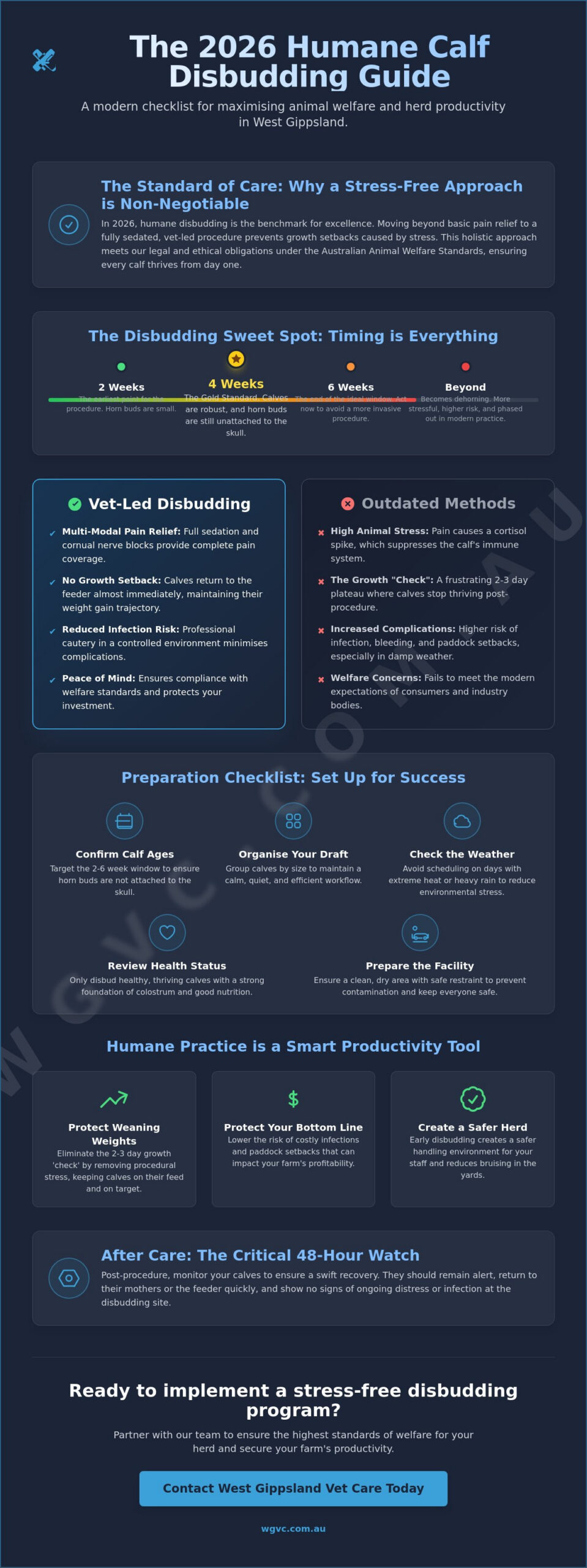
In the Victorian dairy industry, traditional dehorning of older cattle is rapidly being phased out. It’s a more invasive process that is harder on the animal and the people handling them. We focus on the “sweet spot” between two and six weeks of age, when the horn bud is still loose in the skin and hasn’t yet fused to the bone. Disbudding during this biological window is significantly less stressful. It also pays dividends for years to come by creating a safer environment for your staff and reducing the risk of bruising in the yards when the cattle reach maturity.
The Economic Case for Humane Practices
Choosing a humane, vet-led approach is a smart productivity tool that protects your bottom line. Every farmer is familiar with the “check”—that frustrating two or three day growth plateau where calves stop thriving after a stressful procedure. By using sedation and local nerve blocks, we effectively eliminate this setback. Because the calves don’t experience the trauma of pain, they return to the feeder almost immediately and maintain their feed conversion rates. This consistency is crucial for reaching weaning weight targets. Additionally, professional cautery in a controlled environment lowers the risk of infection and paddock setbacks, which is especially important during our damp Gippsland winters.
The 2026 Calf Disbudding Checklist: Essential Preparation
A successful day starts long before the vet arrives at your gate. Proper preparation is the foundation of a stress-free experience for your animals and your team. By following a clear plan, you can ensure calf disbudding Gippsland sessions run smoothly, allowing us to focus entirely on the comfort of your calves. This collaborative approach creates a calm environment where everything feels under control and predictable. It’s about working together to protect the health of your next generation of milkers or beef cattle.
- Confirm calf ages: Aim for the two to six week window. This ensures the horn bud is still floating in the skin and hasn’t yet attached to the skull, making the process much gentler.
- Organise your draft: Grouping calves by size allows for a more consistent workflow and helps maintain a quiet, settled atmosphere in the pens.
- Check the weather: Avoid scheduling during West Gippsland heatwaves or heavy rain. Extreme conditions can add unnecessary environmental stress to recovering calves.
- Review health status: Only disbud calves that are healthy and thriving. Calves with a strong foundation of colostrum and good nutrition have the best resilience.
- Prepare the facility: A clean, dry area with safe restraint options prevents site contamination and keeps both the animals and the staff safe.
Timing Your Disbudding Window
While the window is flexible, hitting the four-week mark is often the ideal target for Gippsland spring or autumn calvings. At this age, calves are robust enough for the procedure, yet the horn buds are still easily managed. It’s a good habit to track horn bud development weekly, as some fast growers may need attention earlier than others. We often find that coordinating this visit with other routine tasks, or even a chat about improving cattle conception rates, helps you manage your labour more effectively during the busiest windows of the year.
On-Farm Facility Requirements
Your facility setup plays a major role in how well calves recover. Providing access to clean water and a sheltered, draft-free area is essential once the sedation wears off. The AABP Dehorning Guidelines highlight that a clean environment is critical for preventing post-procedure infections. We also need safe, clear access for the vet vehicle and equipment near the calf pens. Managing dust and mud in these areas is a simple but effective way to protect the cautery site from environmental contamination. If you’re looking to refine your current setup, our team is always happy to provide herd health advice tailored to your farm’s specific layout and needs.
Vet-Led vs. DIY Disbudding: A Performance Comparison
While many farmers have traditionally managed their own disbudding, the shift towards professional, vet-led services is rapidly becoming the standard for calf disbudding Gippsland wide. The difference isn’t just about who holds the iron; it’s about the level of comfort and safety we can provide together as a team. When we step in to help, we bring a suite of tools that simply aren’t available for DIY use. The most significant advantage is sedation. Instead of wrestling with a conscious, frightened animal, we ensure the calves are calmly asleep. This dramatically reduces the risk of injury to both the calf and your team, creating a much more settled environment in the shed.
Beyond the immediate calm of sedation, we use cornual nerve blocks to provide 100% pain coverage during the hot iron application. This aligns with disbudding best practices, ensuring the animal feels nothing during the procedure itself. We also provide long-acting NSAIDs, such as Meloxicam, which offer 24 to 48 hours of sustained comfort. This comprehensive approach means your calves don’t just survive the day; they thrive through it. From a business perspective, a professional team can often process a mob faster than farm staff using manual restraint, freeing up your valuable labour for other critical calving tasks.
The Triple-Action Pain Management Protocol
Our approach follows a proven three-step process designed for maximum welfare and recovery:
- Step 1: Deep sedation to ensure a calm, still animal that is completely relaxed.
- Step 2: Local anaesthetic to block the specific nerve supply to the horn bud, providing total numbness.
- Step 3: Long-acting anti-inflammatories for sustained comfort that lasts through the following days.
This combination ensures that the calf remains comfortable long after we’ve left the farm, preventing that typical growth check and keeping them on their feed.
Risk Management and Safety
Professional cautery techniques are essential for avoiding “scurs,” those unsightly and potentially dangerous partial horn growths that can occur if the tissue isn’t removed precisely. Having a livestock vet west gippsland on-site also means we can manage any rare complications immediately. This level of oversight provides immense peace of mind during a busy season. It also protects your human assets by reducing staff fatigue and the physical risks associated with kicks or strains during traditional restraint methods. We view our role as an extension of your support system, dedicated to the safety and well-being of everyone in the yards.
Post-Disbudding Care: Monitoring Your Calves
Once the procedure is finished, the focus shifts to a gentle recovery and ensuring your calves return to their normal routines without delay. We want to see every animal feeling comfortable and alert as the sedation wears off. This period of observation is a vital part of the collaborative care we provide together. By keeping a close eye on your livestock during the first few days, you can protect the progress made during the calf disbudding Gippsland session and ensure your calves continue to hit their growth milestones.
- Immediate observation: It’s important to ensure calves are upright and becoming alert within a few hours. They should look bright and be capable of moving around the pen comfortably.
- Monitor for site issues: Check the cautery sites twice daily for the first 48 hours. While a small amount of oozing can be normal, look out for excessive bleeding or unusual swelling that might suggest an infection.
- Maintain nutrition: Calves need plenty of energy to heal. Ensure they have immediate access to fresh, clean water and receive their usual milk feed on time to prevent any nutritional dips.
- Paddock management: Keeping recently treated calves in a clean, dry environment is the best way to prevent environmental contamination and keep flies away from the healing sites.
The First 24 Hours: What to Look For
During the first day, you’ll want to distinguish between a calf that is simply resting and one that is genuinely “droopy” or lethargic. A healthy calf will still show interest in its surroundings and its pen mates. We encourage you to watch them at the feeder; social interaction is a great sign that they’re feeling well. Keep an eye out for subtle pain indicators like persistent ear flicking or head shaking. While our long-acting pain relief covers most of this, some individuals may occasionally need a little extra support to stay comfortable.
Regional Environmental Factors
In West Gippsland, our damp conditions can sometimes make recovery a bit more challenging. Dry bedding is absolutely non-negotiable during the first few days to keep the disbudding sites clean and free from mud. During the more humid months, flystrike can become a concern for our local farmers. Using a fly repellent around the yards can provide an extra layer of protection. Once the sites have scabbed over and the calves are vigorous, it’s usually safe to integrate them back into larger mob structures. If you’re ever concerned about a calf’s progress, reach out for herd health advice to ensure your animals receive the best possible care.
Why Partner with West Gippsland Vet Care for Disbudding?
Choosing the right partner for your farm is about more than just finding a service provider. It’s about finding a team that shares your values and understands the unique rhythm of life in West Gippsland. Our commitment to humane, fear-free livestock management in the Warragul and Drouin regions is at the heart of everything we do. We don’t just see ourselves as vets; we’re an extension of your support system, dedicated to ensuring every calf gets the best possible start. When you choose us for calf disbudding Gippsland services, you’re choosing a team that values the deep bond you have with your animals while maintaining the highest clinical standards.
Our experienced vets have spent years working within the local dairy and beef landscape, so we know exactly what challenges you face. We believe in a holistic approach to animal welfare. This means we can easily integrate disbudding with other essential tasks, such as vaccination schedules or bull fertility testing victoria, to help you stay ahead of your seasonal goals. By using professional equipment and high-grade pain relief protocols tailored specifically to your farm’s needs, we ensure a seamless experience that protects your herd’s future productivity.
A Supportive Local Partnership
We understand that your time is precious, especially during the peak of the season. Our team works closely with your schedule to ensure our visits cause as little disruption as possible to your morning milking or feeding routines. During every visit, we also focus on staff safety and education, sharing our knowledge to help your team feel confident and capable. As an independent practice, we take great pride in supporting our local West Gippsland community through expert, compassionate care that you can rely on year after year. We’re here to listen, to help, and to ensure your livestock are treated with the kindness they deserve.
Booking Your 2026 Disbudding Window
Forward planning is the key to a stress-free calving season. By securing your preferred dates early, you can rest easy knowing that your calves will receive professional care right when they need it most. We tailor our approach for every client, whether you’re managing a small hobby farm or a large-scale commercial dairy. Every herd is different, and we take the time to ensure our service fits your specific requirements. Contact us today to secure your preferred dates for the upcoming 2026 season and let’s work together to keep your calves thriving and your farm running smoothly.
Securing a Healthy Future for Your Next Generation
By choosing a vet-led approach to calf disbudding Gippsland, you’re doing more than just meeting the 2026 welfare standards. You’re making a strategic investment in your herd’s growth and vitality. We’ve explored how a calm, sedated procedure combined with a well-prepared facility can effectively eliminate growth setbacks and keep your calves thriving. This holistic focus on comfort ensures that your animals remain on their feed and reach their weaning targets without the typical post-procedure lag.
As your independent local partners, we take pride in offering advanced livestock pain management protocols that are tailored to the specific needs of West Gippsland farms. We are always here to support you, providing 24-hour emergency care for our existing clients whenever the need arises. It’s our privilege to help you look after the next generation of your herd with the same level of care and dedication you provide every day. Book your 2026 humane disbudding with West Gippsland Vet Care today to secure your preferred dates. We look forward to working alongside you this season and helping your calves get the best possible start.
Frequently Asked Questions
What is the best age for calf disbudding in Gippsland?
The ideal age for disbudding is between two and four weeks. At this stage, the horn bud is still floating in the skin and hasn’t yet fused to the skull, making the procedure much simpler and less invasive. Catching them early ensures a faster recovery and minimises the risk of growth setbacks during the busy Gippsland calving season.
Is sedation really necessary for calf disbudding?
Sedation is the cornerstone of the modern 2026 humane standard. While basic numbing helps, full sedation ensures the calf is completely relaxed and unaware of the procedure. This eliminates the stress of restraint and prevents the animal from struggling, which makes the entire process safer for the calf and the people handling them on the day.
How long does it take for a calf to recover after being disbudded?
Most calves are upright and alert within two to three hours as the sedation wears off. While the cautery site takes a few weeks to heal fully, the recovery from the procedure itself is almost immediate when professional pain relief is used. They should be back at the feeder for their next scheduled milk feed without any issues.
Can I disbud my own calves using caustic paste or a hot iron?
Farmers can legally perform disbudding, but achieving a truly humane outcome is difficult without professional-grade sedation and nerve blocks. Caustic paste can cause accidental chemical burns to the calf’s face or its pen mates. Using a hot iron without a local anaesthetic is a painful experience that often leads to the growth setbacks we aim to avoid.
What are the legal requirements for pain relief when disbudding in Victoria?
In Victoria, the Prevention of Cruelty to Animals Act 1986 and the associated Code of Accepted Farming Practice for the Welfare of Cattle govern these procedures. While the code is advisory, it sets a clear benchmark for humane treatment. Using effective pain relief like Tri-Solfen or vet-administered nerve blocks is strongly encouraged to stay compliant with evolving animal welfare expectations.
Will disbudding affect my calves’ growth rates or weaning weights?
Stressful procedures often cause a growth “check,” but calf disbudding Gippsland services that use full pain management actually protect your weaning weights. Because the calves don’t experience trauma or prolonged pain, they maintain their appetite and feed conversion rates. This ensures they continue to thrive and hit their weight targets right on schedule.
What should I do if a disbudding site starts bleeding or looks infected?
If you notice persistent bleeding or signs of infection like discharge or unusual heat, you should contact your vet immediately. While rare after professional cautery, these issues need prompt attention to prevent setbacks. We provide 24-hour emergency support to our existing clients to ensure any post-procedure concerns are managed quickly and with the utmost care.
How do I prepare my calf pens for the vet’s visit?
Preparation is about creating a calm, clean space for your animals. Ensure your pens have fresh, dry bedding to prevent site contamination and provide a draft-free area for calves to rest as they wake up. Having your calves drafted by size and ensuring the vet has easy access to water and a safe working area will make the whole morning run smoothly.