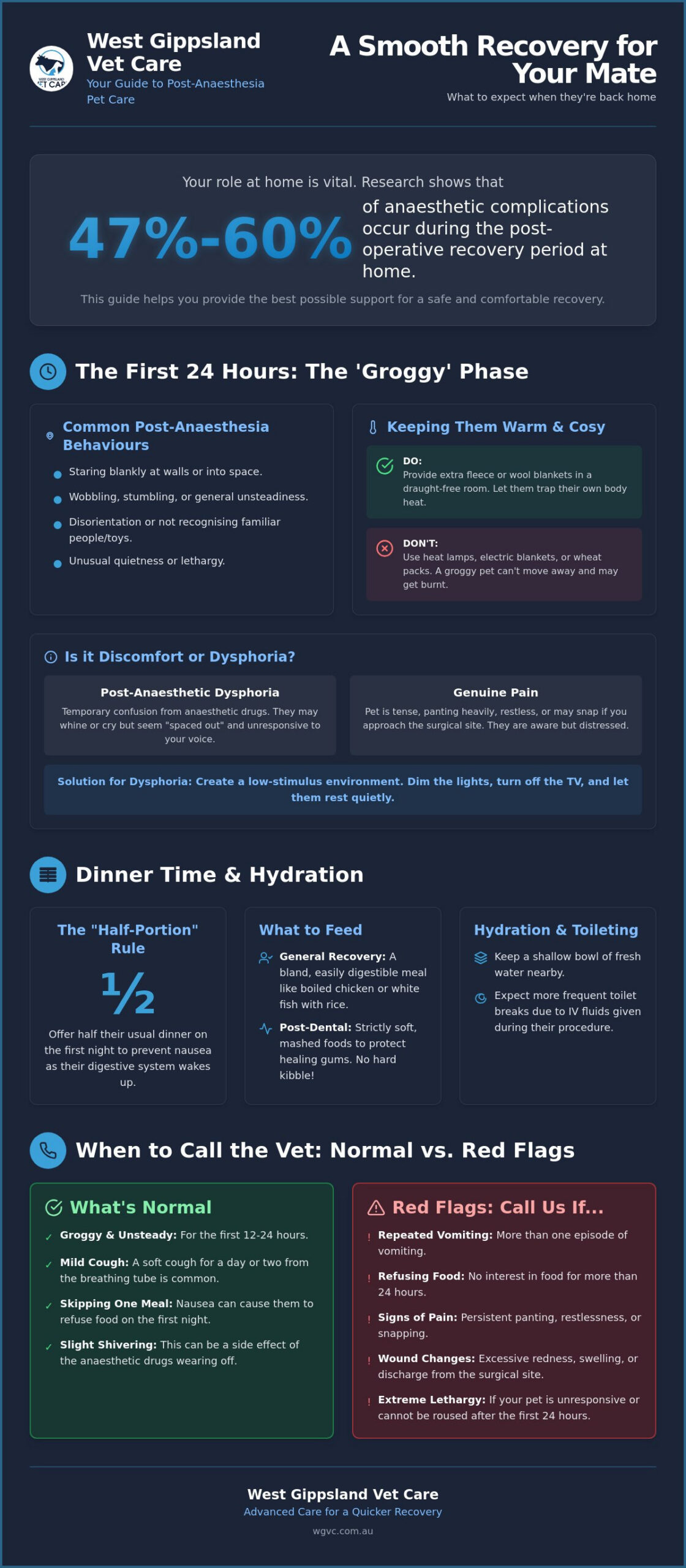
Have you ever brought your best mate home from the vet only to find them staring blankly at a wall or stumbling like they’ve had one too many at the local? It’s completely normal to feel a bit anxious when your dog or cat isn’t acting like themselves, but knowing exactly what to expect after your pet’s anesthesia can turn that worry into a calm, supportive recovery. Since research shows that between 47% and 60% of anaesthetic complications can occur during the post-operative period, your role as their primary carer at home is the most vital part of their healing journey.
We understand that seeing your companion disoriented or worrying about them accidentally bumping their surgical site is incredibly stressful. Our team is here to walk alongside you, ensuring you feel like a capable partner in your pet’s care rather than just a worried observer. This guide will walk you through the typical recovery timeline, identify the specific red flags that require a call to the clinic, and share gentle ways to keep your pet comfortable while they mend. You’ll gain the confidence to provide the best possible support, knowing your furry friend is safe, snug, and on the right track to being their old self again.
Key Takeaways
- Understand the “groggy” phase of the first 24 hours and why a quiet, dim space is the best medicine for a disoriented pet.
- Master the “half-portion” rule to manage post-op nausea and ensure your furry friend stays properly hydrated without upsetting their tummy.
- Learn exactly what to expect after your pet’s anesthesia in terms of wound care, including how to spot early signs of infection before they become a problem.
- Gain the confidence to distinguish between a harmless post-intubation cough and urgent red flags that require professional attention.
- Explore how advanced options like keyhole surgery and our fear-free approach can lead to a faster, more comfortable healing journey for your mate.
The First 24 Hours: Understanding the ‘Groggy’ Phase
Bringing your mate home after a procedure is a huge relief, but the first 24 hours can be a bit of a rollercoaster. Your pet might seem like a completely different animal for a while. They might stare blankly at walls, wobble when they walk, or even fail to recognise their favourite toy. This is all a normal part of the “waking up” process. For a deeper look at how these medications work, you can refer to this Veterinary Anesthesia Overview. Understanding what to expect after your pet’s anesthesia will help you stay steady while they find their feet again.
One thing that often catches owners off guard is the “clipped leg.” You’ll likely find a small square of shaved fur on one or both front legs. This isn’t a secondary injury; it’s where our team placed the intravenous catheter to administer fluids and keep your pet stable during their stay. It might look a bit unusual, but it’s a sign that they were closely monitored and kept well hydrated throughout their surgery. The hair will start to grow back before you know it.
What is Post-Anaesthetic Dysphoria?
Post-anaesthetic dysphoria is a state of temporary mental confusion that happens as your pet’s brain gradually processes the remaining anaesthetic agents. It’s vital to distinguish between this drug-induced whining and genuine pain. If your pet is crying out but seems “spaced out” and doesn’t respond to your voice, it’s likely dysphoria. If they are tense, panting heavily, or snapping when you get near the surgical site, they might be in discomfort. To settle a restless pet, keep the environment low-stimulus. Dim the lights, turn off the telly, and let them rest without too much fussing.
Temperature Regulation and Comfort
During recovery, a pet’s ability to regulate their own body temperature is compromised. They can’t shiver or move effectively to warm up like they usually do. In West Gippsland, where the air can get quite chilly, it’s important to keep them tucked away from drafts. Set up a cosy bed in a room with a stable temperature. While it’s tempting to use a heat lamp or a microwaveable wheat pack, please don’t. Because they are still groggy, they might not realise they are being burnt until it’s too late. Stick to extra layers of fleece or wool blankets to keep their natural body heat in.
Dinner Time and Hydration After Surgery
Once you’ve settled your mate into their recovery suite, the next big question is usually about dinner. It’s heart-wrenching to see them looking a bit hollow after a long day, but rushing into a big meal can lead to a messy cleanup. Part of knowing what to expect after your pet’s anesthesia involves understanding that their digestive system is still waking up from a deep sleep. Anesthetic drugs can slow down the movement of the gut, making them feel a bit “green around the gills” if they eat too much too soon. Experts at WSU Post-Anesthesia Care suggest that most pets can be offered a small amount of water and a light meal once they are fully alert and able to stand.
Managing the Post-Op Appetite
We generally recommend the “half-portion” rule for the first night. Offer about half of their usual dinner, ideally something bland and easy on the tummy, like boiled chicken breast or white fish mixed with a little white rice. If they turn their nose up at it, don’t worry. Nausea is quite common on the first night, and some pets prefer to skip dinner entirely while the drugs leave their system. If your pet vomits more than once or refuses food for more than 24 hours, it’s time to check in with us. For those who have undergone preventative dentistry or extractions, stick strictly to soft, mashed foods to protect their healing gums and avoid any hard kibble that could cause discomfort.
Hydration and Toileting
Hydration is vital for flushing the remaining anesthetic from their system, but you shouldn’t force them to drink. Keep a shallow bowl of fresh water nearby so they don’t have to travel far. You might notice your pet needs to go outside more often than usual tonight. This is because they likely received intravenous fluids during their procedure to support their blood pressure and organ function. If you have a larger or older dog, they might be a bit unsteady on their paws. Using a large towel as a makeshift sling under their belly can help you support their weight while they navigate the back steps for a toilet break. It keeps them safe and gives you peace of mind during those first few hours at home.
Wound Care and Managing Activity Levels
After the initial grogginess has lifted, you might find your mate is suddenly full of beans and ready to head back out into the paddock. However, the most important thing to understand about what to expect after your pet’s anesthesia is that external appearances can be deceiving. While the skin incision might look small, there are often several layers of internal stitches holding muscle and tissue together. In our part of the world, where many of our dogs are used to being flat out on the farm or patrolling large Gippsland backyards, enforcing strict rest can be a real challenge, but it is the only way to prevent a surgical site from opening up.
You should check the wound twice daily for any signs of trouble. A little bit of pinkness is normal, but if you notice angry redness, significant swelling, or any discharge that looks like pus or blood, please give us a ring immediately. Following the ACVAA Pet Care Guidelines is a great way to ensure you’re providing the high standard of recovery care your companion deserves. Remember, the goal is a quiet, uneventful healing process where the body can focus all its energy on repair. Keeping them from licking or scratching is the golden rule; a single minute of unsupervised chewing can lead to a costly and painful emergency repair.
The Reality of the Elizabethan Collar
The “cone of shame” is often the most disliked part of recovery, but it’s a vital tool for safety. It must stay on 24/7, even when you are sitting right next to them, because it only takes a split second for a pet to pull a stitch. To make it more comfortable, try raising their food and water bowls so they don’t have to navigate the rim of the cone against the floor. If your pet is truly struggling, we can discuss alternatives like soft collars or recovery suits, though their suitability depends entirely on the location of the surgery.
Keeping Your Best Mate Quiet
Enforcing rest doesn’t have to mean boredom. Since your pet can’t go for their usual run, provide mental stimulation through gentle nose-work games or food puzzles that can be enjoyed while lying down. Use a crate or a small, carpeted room to prevent them from jumping onto the couch or bed, which can easily tear internal sutures. Even if you have a securely fenced yard, always take your dog out on a lead for toilet breaks. This prevents them from suddenly spotting a bird or a neighbour’s cat and bolting, which is the most common cause of post-op setbacks for active Gippsland pets.
When to Call the Vet: Normal vs. Red Flags
Watching your best mate wake up from a big procedure can be a bit nerve-wracking. You’ll likely find yourself checking on them every few minutes, wondering if every little sigh or twitch is part of the plan. Knowing exactly what to expect after your pet’s anesthesia helps you stay calm and act only when it’s truly necessary. One thing that often surprises owners is a mild, dry cough. This is usually just a bit of throat irritation from the breathing tube used during the procedure. It should settle down within a day or two and doesn’t require any treatment other than a bit of peace and quiet.
Distinguishing between drug-induced grogginess and genuine pain is also key. As we mentioned earlier, “spaced out” whining is often just confusion. However, if your pet is trembling, refusing to settle, or guarding their wound even after their medication, they might be in discomfort. It is vital to finish the entire course of prescribed pain relief, even if they seem perfectly fine by day three. These medications do more than just mask pain; they reduce inflammation and support the internal healing process. Stopping early can lead to a “rebound” of discomfort that is much harder to manage.
The ‘Everything is Fine’ Signs
You should see a steady, gradual improvement in your pet’s alertness over the first 48 hours. While they might be sleepy tonight, they should be much more present by tomorrow morning. A healthy surgical site should stay clean and dry. You might see some minor bruising around the edges, especially with more involved procedures, but the skin itself should look like it’s beginning to knit together. By the second day, your pet should be showing a keen interest in their food and drinking their water as they normally would.
The ‘Call Us Straight Away’ Signs
If you notice your pet has very pale gums or is having any difficulty breathing, please treat this as a critical emergency and contact us immediately.
Other red flags that warrant a call to our Warragul clinic include persistent vomiting or a total refusal to eat once the 24-hour mark has passed. Keep a close eye on the wound for any excessive bleeding, a foul odour, or skin that feels hot to the touch. These can be early signs of infection or a reaction to the sutures. If you are an existing client and find yourself worried about a red flag after hours, our emergency care team is here to provide the support and advice you need to keep your companion safe.
Advanced Care for a Quicker Recovery in Gippsland
While the standard recovery process is straightforward for most pets, modern veterinary medicine has introduced ways to make the healing journey even smoother for our companions. Understanding what to expect after your pet’s anesthesia becomes much simpler when the surgical impact is minimised from the very start. We believe that recovery shouldn’t just be about “getting through it,” but about ensuring your mate feels safe, comfortable, and nurtured every step of the way.
Our approach combines clinical excellence with a deep understanding of the bond you share with your pet. By utilising advanced technology and a gentle touch, we aim to reduce the physical and emotional stress that often follows a trip to the vet. This ensures that when you arrive back home in Warragul or the surrounding townships, your pet is already on the best possible path to a swift recovery.
The Benefits of Keyhole Surgery
Traditional surgery often involves larger incisions that require more time and energy for the body to knit back together. By choosing keyhole spay and gastropexy, you are opting for a minimally invasive approach that uses tiny ports and specialised cameras. As highlighted by London Veterinary Surgeries, this technology results in heaps less post-operative pain and a significantly faster return to normal activity levels. For the high-energy kelpies and adventurous labradors of Gippsland, this is a total game-changer. Smaller wounds mean a lower risk of infection and fewer days spent in the Elizabethan collar, allowing your companion to get back to their favourite sunny spot in the yard much sooner.
Your Local Support System
One of the greatest comforts during the recovery phase is knowing that expert help is just down the road. Our team doesn’t just see your pet as a patient; we view them as a vital part of our local community. This personal connection means we know their history, their quirks, and exactly how they react to stress. Having a local team who knows your pet’s name provides a level of reassurance that generic advice simply can’t match.
Our commitment to fear-free veterinary care extends well into the recovery phase. We use gentle handling and tailored pain management protocols to ensure that even the “waking up” moments are calm and low-stress. If you ever find yourself worrying about a small change in their behaviour or have a question that’s been playing on your mind, please reach out. For our existing clients, our 24-hour emergency service provides total peace of mind, ensuring that professional support is always available if those red flags we discussed earlier ever appear.
Looking Ahead to Your Mate’s Full Recovery
Your pet’s recovery is a collaborative effort, and having the right information makes all the difference. By providing a quiet space for the initial groggy phase and strictly enforcing rest, even for the most active Gippsland farm dogs, you are giving their body the best possible chance to heal. We hope this guide has given you the confidence to manage the “half-portion” rule and distinguish between normal post-op behaviours and genuine red flags. Knowing what to expect after your pet’s anesthesia allows you to focus on what matters most: providing the comfort and care your companion needs to get back on their paws.
As a proudly independent and locally owned clinic in West Gippsland, we are dedicated to being your partner throughout this entire healing journey. Whether your pet has benefited from our specialists in minimally invasive keyhole surgery or a routine procedure, our commitment to fear-free care remains our top priority. If you have any concerns or simply want to check in, please book a post-operative check-up or chat with our caring team today. For our existing clients, our 24-hour emergency care is always ready to provide total peace of mind. You’ve done a wonderful job supporting your companion so far, and we’re here to ensure their path back to health is safe and steady.
Frequently Asked Questions
Is it normal for my dog to be shaking after anaesthesia?
Yes, shaking or shivering is a very common reaction as your dog wakes up. This usually happens because anaesthesia affects their ability to regulate body temperature, or it can be a side effect of the medications as they leave the system. Keep your mate tucked up in a warm, draft-free spot with plenty of blankets, and the shivering should settle as they become more alert.
Why is my cat coughing after her surgery?
A mild, dry cough is quite normal for a day or two following a procedure. This is typically caused by slight irritation in the throat from the endotracheal tube used to help them breathe during surgery. If the cough seems to be getting worse after 48 hours, or if your cat seems distressed, please give our team a call to ensure they are staying comfortable.
How long does it take for pet anaesthesia to wear off completely?
Most pets will take between 24 and 48 hours to return to their usual, chirpy selves. While the deepest effects of the drugs lift within the first few hours, understanding what to expect after your pet’s anesthesia includes knowing that their metabolism needs time to fully clear the agents from their system. Older pets or those with slower metabolisms might seem a bit “off” for an extra day.
Can I leave my pet alone the night after surgery?
We strongly recommend that you do not leave your pet unattended on their first night home. They are still quite groggy and may be prone to stumbling, falling, or having a delayed reaction to their medication. Staying close by allows you to monitor their comfort levels and ensure they don’t accidentally irritate their surgical site while they are still a bit disoriented.
My pet won’t eat after anaesthesia; should I be worried?
It is quite normal for a pet to refuse food on the first night after a procedure. Nausea and a lack of appetite are common parts of what to expect after your pet’s anesthesia as the body focuses on recovery. If they aren’t interested in a small, bland meal by the following evening, or if they are vomiting persistently, please contact our clinic for advice and support.
How do I stop my dog from jumping on the couch after surgery?
The best way to prevent jumping is to confine your dog to a small, carpeted room or a crate where they feel secure. For active Gippsland dogs used to the paddock, using a towel as a belly sling can help you guide them safely during toilet breaks. Blocking access to furniture with baby gates or temporary barriers is also a great way to protect those delicate internal stitches.
What should I do if my pet’s stitches come out?
If you notice a stitch has come loose or the wound is gaping, call us immediately. Do not attempt to bandage the area or apply any ointments yourself, as this can trap bacteria and lead to infection. Keep your pet calm and ensure their Elizabethan collar is securely in place to prevent further damage while you arrange to bring them into the clinic for a professional repair.
Can I give my pet human pain relief if they seem sore?
You should never give your pet human pain relief like Panadol or Ibuprofen, as these are highly toxic and can cause fatal organ damage. Even a single dose of human medicine can be a life-threatening emergency for a cat or dog. If you believe your companion is in pain despite their prescribed medication, call us straight away so we can provide a safe, veterinary-approved alternative.