
Imagine your active Kelpie suddenly limping after a game of fetch, and your heart sinks when you hear the words “cruciate rupture.” You want the absolute best for your mate, but the thought of a stressful two-hour drive to Melbourne for a specialist, combined with the eye-watering costs, adds a heavy layer of anxiety to an already difficult situation. When you’re weighing up a specialist orthopaedic surgeon vs general vet for TPLO, it’s natural to feel torn between the highest level of accreditation and the comfort of staying close to home.
We understand that your dog is a cherished member of the family, and you need to feel certain that their surgery will be a success. This article will help you understand the critical differences in expertise, surgical equipment, and patient outcomes so you can make the right choice for your dog’s recovery. We will explore the benefits of specialist care alongside the advantages of choosing an experienced local vet in West Gippsland, where high-success surgery meets the convenience of local aftercare and 24-hour support right here in Warragul. By the end, you’ll have the clarity you need to move forward with confidence.
Key Takeaways
- Learn why TPLO is considered the gold standard for cruciate repairs and why this specific surgical technique is so important for your dog’s long-term mobility.
- Understand the formal distinctions between a specialist orthopaedic surgeon vs general vet for TPLO to help you decide which path fits your dog’s needs and your family’s budget.
- Discover why specialised equipment like radial saws and locking plate systems are just as vital as the surgeon’s experience in achieving high success rates.
- Weigh the emotional and financial costs of travelling to Melbourne against the benefits of choosing an advanced local clinic that offers on-site aftercare in Warragul.
- Find out how local follow-up care and having immediate access to your surgeon can significantly reduce post-operative stress for both you and your pet.
What is TPLO Surgery and Why is the Surgeon’s Expertise Critical?
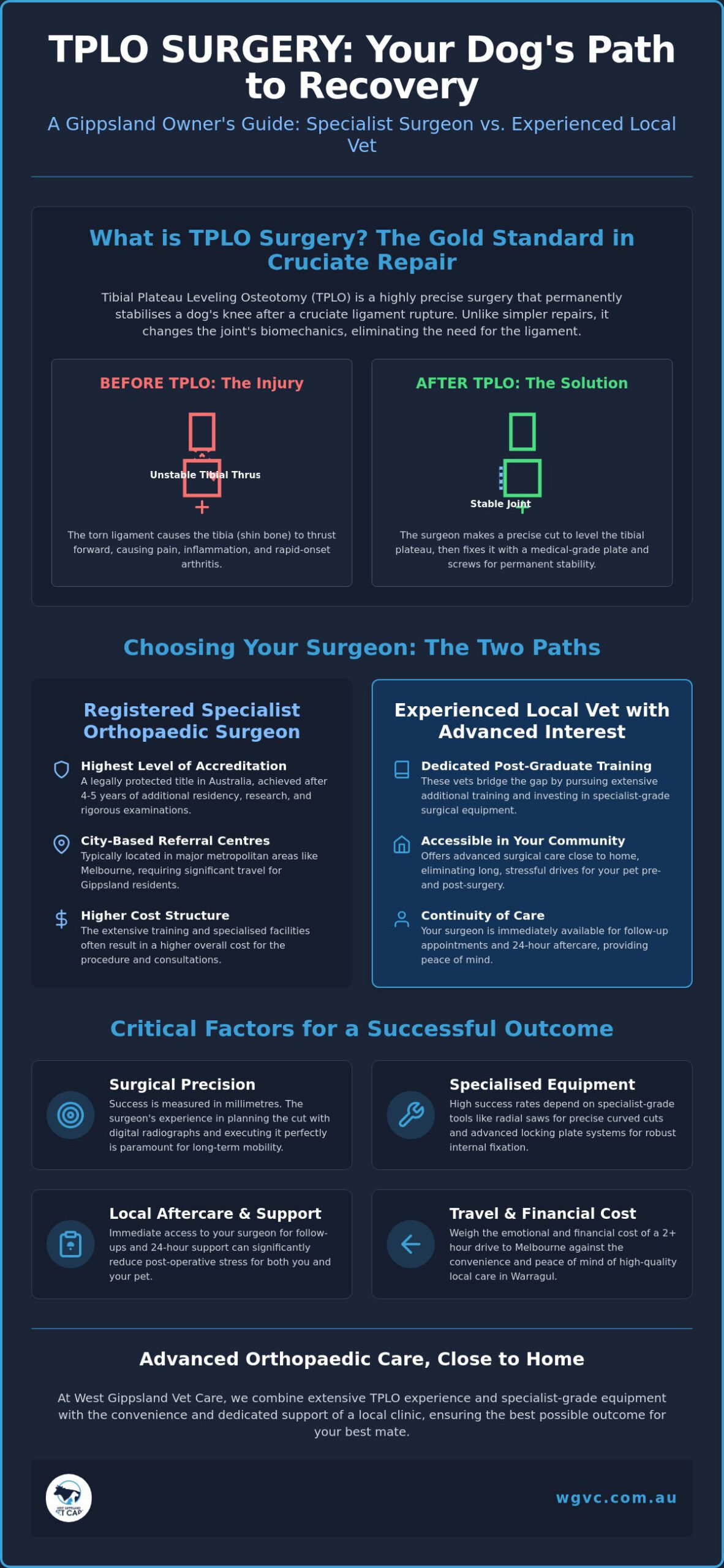
Tibial Plateau Leveling Osteotomy (TPLO) is a precision-engineered procedure designed to fundamentally change the biomechanics of your dog’s knee. When we discuss What is TPLO Surgery?, we’re looking at a sophisticated solution that stabilises the joint by altering the bone itself. Unlike simpler “fishing line” repairs, TPLO involves a radial bone cut and internal plate fixation. Deciding between a specialist orthopaedic surgeon vs general vet for TPLO is a vital step because the success of this procedure relies heavily on surgical accuracy. A few millimetres of difference in the bone alignment can be the gap between a dog who runs freely again and one who suffers from chronic lameness.
The Mechanics of the Canine Cruciate Injury
The cranial cruciate ligament is the primary stabiliser of your dog’s knee. It prevents the tibia, or shin bone, from sliding forward relative to the femur. When this ligament tears, your dog experiences what we call “tibial thrust.” This is a painful sensation where the bones grind together every time they put weight on the leg. This instability causes immediate inflammation and leads to the rapid onset of osteoarthritis. For larger dogs, typically those over 15kg, or very active breeds, TPLO is usually the preferred choice. It doesn’t just try to replace the ligament; it reorganises the joint so the ligament is no longer needed for stability.
The Complexity of the TPLO Procedure
This surgery is far more complex than a standard soft tissue procedure. It requires a radial osteotomy, which is a precise, curved cut made with specialised power saws. Before the first incision is even made, we use digital radiographs to plan the exact angle of the cut to ensure the tibial plateau is levelled perfectly. As an orthopaedic vet gippsland families can rely on, we know that this planning phase is where the success of the surgery is truly decided. This precision ensures the forces within the knee are redistributed correctly, allowing the joint to stay stable during movement.
The “surgeon’s hand” is just as important as the technology used. Every dog is different. A surgeon must manage varying bone densities, especially in older pets, and contour the medical-grade plates to fit each unique limb perfectly. Handling the surrounding soft tissues with a gentle, experienced touch is essential for reducing post-operative pain and ensuring a smooth recovery. This combination of engineering and clinical intuition is why the experience level of your chosen vet is so vital for your dog’s future mobility.
Specialist Orthopaedic Surgeons vs General Vets: Defining the Difference
When you are faced with a major decision for your dog’s health, understanding the professional landscape of the veterinary industry is the first step toward peace of mind. The choice between a specialist orthopaedic surgeon vs general vet for TPLO often comes down to the specific level of accreditation and the environment in which the surgery takes place. In Australia, the title “Specialist” is a legally protected term. It isn’t just a self-assigned label; it represents a veterinarian who has met incredibly high standards set by the Australasian Veterinary Boards Council.
Contrast this with your local General Practitioner (GP) vet, who acts as your dog’s “family doctor.” While your GP vet is exceptionally skilled at managing your pet’s overall wellbeing, from vaccinations to emergency care, TPLO surgery sits in a more complex category. However, there is a third option that many Gippsland families find perfect for their needs: the GP vet with an “Advanced Interest” in orthopaedics. These vets have bridged the gap by pursuing extensive postgraduate training and investing in specialist-grade equipment while remaining accessible within your local community.
The Path to Veterinary Specialisation
The journey to becoming a registered specialist is long and demanding. After completing their initial veterinary degree, these professionals undertake a minimum of 4 to 5 years of additional study. This includes a rigorous residency program where they treat hundreds of complex cases under the direct supervision of senior specialists. They must also publish original research and pass difficult international board examinations. Because of the high-volume nature of their work and the need for expensive, multidisciplinary teams, most specialists are based in major referral centres in Melbourne. This path ensures they are equipped to handle the most rare or high-risk surgical complications.
The “GP Vet with an Interest” in Orthopaedics
Many local vets choose a different path, focusing their careers on surgical excellence without moving into a city-based specialist centre. These veterinarians often complete advanced postgraduate certificates in small animal surgery and equip their clinics with the same precision technology used by specialists, such as locking plate systems and digital planning software. When looking at TPLO success rates and outcomes, research suggests that the experience of the surgeon and the quality of the equipment are the most critical factors for a positive result.
The benefit of choosing a local vet with an advanced interest is the continuity of care. They already know your dog’s medical history, their temperament, and your family’s preferences. This relationship creates a supportive environment that can make the entire surgical process feel much less clinical and far more personal. If you are feeling overwhelmed by the options, we invite you to chat with our friendly team to see how we can support your dog’s journey back to health.
Comparing the Two Paths: Success Rates, Risks, and Equipment
When you are weighing up the choice between a specialist orthopaedic surgeon vs general vet for TPLO, the most reassuring statistic is the high success rate. Generally, 90% to 95% of dogs regain excellent function of their limb after a TPLO procedure. This success is not accidental. It’s the result of meticulous planning and the use of advanced surgical technology. When you are choosing the right surgeon for TPLO, you aren’t just selecting a person; you are selecting a surgical environment and a team dedicated to your dog’s safety.
Surgical Equipment and Sterility
A successful TPLO is a feat of biological engineering. To achieve a stable result, surgeons use “locking plates,” which are considered the gold standard. These plates act like an internal fixator, providing superior stability compared to older, non-locking systems. This stability is vital for bone healing, especially in active dogs. Before the first cut is made, high-resolution diagnostic imaging is used to measure the tibial plateau angle with extreme precision. The surgery itself must be performed in a high-grade sterile theatre to minimise the risk of post-operative infection. While specialists always have these facilities, an advanced local clinic will also invest in this same level of technology to ensure your pet receives the best care close to home.
Complication Rates: Specialist vs GP
Every surgery carries risks, and TPLO is no exception. Research indicates that complication rates for specialists sit around 14.8%, with major complications occurring in about 6.6% of cases. While complication rates can be higher for general practitioners who only perform the surgery occasionally, an experienced vet with an advanced interest in orthopaedics often achieves outcomes comparable to a specialist. One critical step in managing these risks is checking the meniscus, the “cushion” in the knee. A “meniscal click” after surgery is a sign that a tear was missed or has developed later, which can lead to ongoing pain. An experienced surgeon, whether a specialist or an advanced GP, knows that inspecting and treating the meniscus is just as important as the bone cut itself.
The role of the surgical team extends beyond the surgeon. During the procedure, a dedicated nurse monitors your dog’s anaesthesia using advanced equipment to track heart rate, oxygen levels, and blood pressure. This constant vigilance ensures that any tiny changes are managed immediately. Whether you choose a specialist or a local expert, the goal remains the same: a safe procedure and a dog that can eventually return to running through the paddocks without pain.
Key Factors for Gippsland Owners: Travel, Cost, and Local Aftercare
Living in West Gippsland offers a beautiful lifestyle for our dogs, but when your mate needs surgery, the distance to Melbourne can feel like a massive hurdle. The decision between a specialist orthopaedic surgeon vs general vet for TPLO often hinges on these practical, everyday logistics. For many families in Warragul and Drouin, the thought of a 90-minute drive down the Monash with a dog that is groggy and sore after a major bone procedure is enough to cause significant stress. Staying local means your dog is back in their own bed sooner, without the agitation of a long car trip during those first critical hours of recovery.
The Logistics of Post-Op Care
Strict confinement is the most important part of the first six weeks of healing. Every bump on the road or sudden movement in the back of the car can potentially agitate the patient or jeopardise the alignment of the healing bone. When you choose a surgeon in Gippsland, you eliminate that initial stressful journey. Local care also means that if you notice a bit of redness around the wound or if your dog seems a bit off, you can be at the clinic in minutes rather than hours. Having access to an emergency vet Warragul families trust provides an extra layer of security for our existing clients during those first nights at home.
Cost vs Value in Orthopaedic Surgery
It’s no secret that specialist fees in the city are often higher. This isn’t necessarily because the surgery itself is different, but because city clinics face enormous overheads, including high rents and referral levies. When comparing a specialist orthopaedic surgeon vs general vet for TPLO, it’s worth looking at the total value of the package. Local clinics often provide all-inclusive surgical care that covers the procedure, anaesthesia, initial medications, and the vital follow-up checks at 2, 6, and 12 weeks.
Don’t forget the hidden costs of city travel. Fuel, tolls, and taking full days off work for multiple follow-up appointments can add hundreds to your final bill. By choosing a local expert, you invest your money directly into your dog’s care rather than into the logistics of the trip. Most importantly, you get the peace of mind that comes from knowing your surgeon is just down the road if you need them. If you’re ready to discuss a local recovery plan for your mate, contact our team today to book a consultation.
Orthopaedic Surgery at West Gippsland Vet Care: Advanced Care Close to Home
Choosing the right path for your dog’s recovery is a deeply personal decision. When you are weighing up a specialist orthopaedic surgeon vs general vet for TPLO, our mission at West Gippsland Vet Care is to provide a gold-standard local alternative that doesn’t compromise on quality or safety. We’ve purposely built a surgical environment that combines advanced clinical training with the warmth and accessibility of a local community clinic. By choosing to stay with us in Warragul, you gain the peace of mind that comes with 24-hour emergency support for our existing surgical patients, ensuring that help is always just a phone call away during those first few nights of healing.
Our Surgical Expertise in Warragul
Our team is committed to a programme of ongoing orthopaedic training to stay at the forefront of canine surgical techniques. We utilise state-of-the-art digital X-ray technology for precise pre-operative planning, ensuring every bone cut is calculated to the millimetre. To give your dog the best possible outcome, we use high-quality locking plate systems that provide rigid stability, while also referencing professional clinic benchmarks from Helpful.vet to ensure our daily operations maintain the highest standards of safety. This technical precision is paired with our “Fear Free” approach to veterinary care. We focus heavily on advanced pain management protocols and a calm clinical environment to ensure your dog feels safe and comfortable from the moment they are admitted for surgery.
A Compassionate, Family-Centred Journey
We believe that successful surgery is about more than just the procedure itself; it’s about the relationship we build with you and your pet. We treat every dog as if they were a member of our own family, not just another case on the surgical list. This means we prioritise clear, open communication at every stage of the journey. From your initial consultation through to the final 12-week check-up, we are here to answer your questions and guide you through the challenges of post-operative confinement. We understand the stress that comes with a major injury, and we work as your partners to get your best mate back to their best.
Deciding between a specialist orthopaedic surgeon vs general vet for TPLO shouldn’t feel like a choice between expertise and convenience. At West Gippsland Vet Care, we strive to offer both, providing advanced surgical care right here in the heart of Gippsland. If you are worried about your dog’s mobility or have recently received a diagnosis of a cruciate tear, we are here to help. To discuss your dog’s knee and explore a local recovery plan tailored to your family, please Contact West Gippsland Vet Care today to speak with our compassionate team.
Helping Your Mate Get Back to Their Best
Choosing between a specialist orthopaedic surgeon vs general vet for TPLO is a big step, but it’s one you can take with confidence when you have the right information. The most important thing is that your dog receives precise surgical care and a calm environment for healing. Staying local in West Gippsland removes the agitation of long car trips to Melbourne and ensures you have a supportive team nearby for every check-up and milestone.
At West Gippsland Vet Care, we combine high-level expertise with the warmth of a local clinic. Our experienced local orthopaedic surgeons use advanced on-site diagnostic imaging to achieve the best results for every patient. We also offer 24-hour emergency care for our existing surgical clients, so you’re never alone if you have a worry during recovery. To discuss the best path forward for your dog, Book an Orthopaedic Consultation at West Gippsland Vet Care. We look forward to seeing your dog running happily and comfortably again.
Frequently Asked Questions
Is TPLO surgery worth the cost for an older dog?
TPLO is often a wonderful investment for an older dog, provided they are otherwise healthy and have a good quality of life. The primary goal of the surgery is to eliminate the chronic pain caused by joint instability. Many senior dogs enjoy several more years of comfortable mobility and backyard play after a successful procedure. We always perform comprehensive pre-operative health checks to ensure your dog is a safe candidate for the anaesthesia and recovery process.
What is the success rate of TPLO performed by a non-specialist?
The success rate for TPLO is generally very high, with 90% to 95% of dogs regaining excellent function of their limb. While board-certified specialists have extensive training, an experienced local vet with an advanced interest in orthopaedics can achieve similar success rates using the same precision equipment. When weighing up the choice of a specialist orthopaedic surgeon vs general vet for TPLO, the most important factor is the surgeon’s specific track record and experience with this particular procedure.
How long is the recovery period after TPLO surgery in Gippsland?
Most dogs require a total recovery period of 12 weeks before they can return to off-lead activity. The first 6 weeks are the most critical, requiring strict confinement to a crate or small room to allow the bone to heal safely. During the following 6 weeks, we slowly increase controlled lead walks. Because we are based locally in Warragul, we can support you through this journey with regular check-ups to ensure your dog’s healing is on track.
Can my dog just rest and heal a cruciate tear without surgery?
A ruptured cruciate ligament cannot heal itself because the canine knee is naturally sloped, causing the bones to shift painfully every time your dog stands. While rest might temporarily reduce swelling, the underlying instability remains. Without surgery, the constant “tibial thrust” leads to rapid osteoarthritis and potential damage to the meniscus. Surgery is the only way to permanently stabilise the joint and prevent long-term lameness for your mate.
What are the most common complications of TPLO surgery?
The most common complications include minor skin infections, swelling around the incision, or a late-onset meniscal tear. Major complications, such as plate failure or bone fractures, are less common, occurring in approximately 6.6% of cases performed by experienced surgeons. We use advanced locking plate systems and strict sterile protocols in our theatre to keep these risks as low as possible. Having your surgeon nearby in Drouin or Warragul makes managing any minor concerns much easier.
How much does TPLO surgery typically cost in regional Victoria?
In regional Victoria, the total investment for TPLO surgery typically ranges from $3,500 to $6,500 depending on the size of the dog and the complexity of the injury. When comparing a specialist orthopaedic surgeon vs general vet for TPLO, it’s important to consider that specialist centres in Melbourne often have higher overheads and referral fees. Choosing a local expert can often reduce the total cost while also saving you the hidden expenses of travel and time off work. For regional small business owners looking to manage their professional success alongside personal lifestyle goals, you can visit The Bucket List Accountant for tailored financial advice.
Do I need a referral to see an orthopaedic vet at West Gippsland Vet Care?
You do not need a formal referral to book a consultation with our orthopaedic team. If you are concerned about your dog’s limping or have already received a diagnosis of a cruciate injury, you can contact us directly. We will perform a detailed physical examination and use our on-site diagnostic imaging to confirm the injury. This allows us to have an open, honest conversation about the best surgical path for your dog’s specific needs.
What happens if my dog needs emergency care after their TPLO surgery?
We provide a 24-hour emergency service for our existing clients, ensuring that help is always available if you have concerns after hours. If you notice anything unusual during the recovery process, you can speak with a team member who has access to your dog’s full surgical records. This local support eliminates the stress of a long drive to a city emergency centre and ensures your dog receives immediate care from the team that knows them best.