
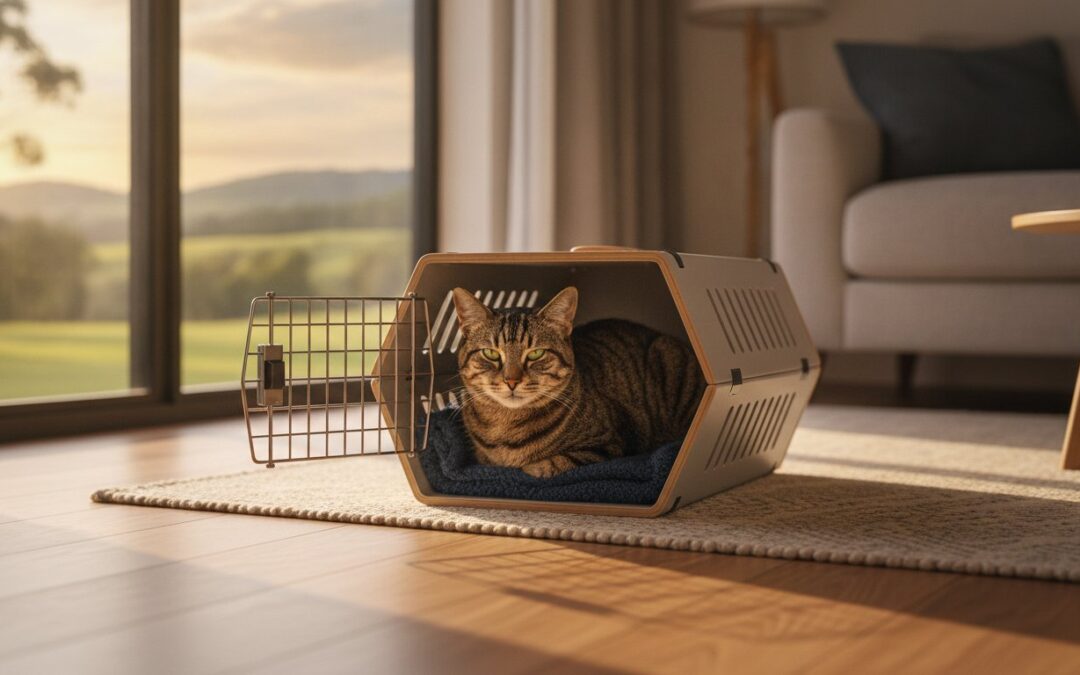
You’ve barely touched the handle of the cat carrier, yet your feline friend has already vanished under the sofa. For many pet owners across West Gippsland, preparing an anxious cat for a vet visit often feels like a looming battle that ends in scratched arms and the sound of heartbreaking howling during the drive to Warragul or Drouin. It is completely normal to feel a sense of dread or even worry about being judged by others in the waiting room when your cat is distressed. We know you are doing your absolute best for your pet, and that emotional bond is exactly why these moments feel so difficult.
The good news is that you can transform this experience from a frantic struggle into a calm, supportive journey. By embracing Fear-Free strategies, you’ll learn how to turn the carrier into a familiar sanctuary rather than a sign of trouble. This guide covers practical steps you can take at home and what to expect during a low-stress consultation at our clinic. We will walk through everything from scent therapy to the latest situational anxiety supports, giving you the confidence to provide the best care while keeping your cat’s peace of mind a top priority.
Key Takeaways
- Discover how to reframe the cat carrier as a permanent, comforting piece of home furniture to reduce fear before you even leave the house.
- Master the ‘Gippsland Sway’ by securing your cat’s carrier safely behind the front seat for a more stable and less stressful car journey on our local roads.
- Learn why preparing an anxious cat for a vet visit includes the ‘wait in the ute’ strategy to avoid the common stresses of a busy clinic waiting room.
- Understand how to use ‘decompression zones’ and scent management to ensure a peaceful reunion with other household pets once you return home.
- Explore the benefits of Fear-Free certified techniques used at our Warragul and Drouin clinics to keep your feline friend feeling safe and respected throughout their check-up.
Understanding Feline Anxiety: Why the Vet Feels Like ‘Stranger Danger’
For a cat, the world is divided into “safe” and “dangerous” zones based almost entirely on smell and territory. When we discuss preparing an anxious cat for a vet visit, we aren’t just managing a grumpy pet; we are helping a small predator navigate what feels like a life-threatening loss of control. In the wild, losing one’s territory is often a death sentence. This is why the sudden transition from a sunny windowsill in Warragul to a clinical environment triggers such a profound survival response. It isn’t “naughty” behaviour; it’s an ancient instinct designed to keep them alive.
The vet clinic is a sensory minefield for a feline. They hear high-frequency sounds from electronic equipment that we can’t detect. They smell the adrenaline and fear of previous patients, alongside the sharp, sterile scents of disinfectants. These are clear “stranger danger” signals. Add the presence of barking dogs in a shared lobby, and it’s easy to see why your cat’s instinct is to hide or defend themselves. Because cats are masters at masking pain to avoid appearing vulnerable, these visits are vital. Routine checks allow us to catch silent issues like dental disease before they become emergencies. To bridge this gap, we use Fear-Free certified care to mitigate these triggers and respect your cat’s emotional needs.
The Feline Territory Instinct
Every home has a unique “scent-profile” that acts as a security blanket. Leaving this zone causes an immediate spike in cortisol. Many owners find that the carrier becomes a “closet ghost” that only appears for scary trips, which reinforces the association with disappearing from their safe zone. By understanding cat behavior, we can see how pheromones—the chemical messages cats use to mark territory—are essential for their confidence. When those scents are replaced by the neutral or “scary” smells of a car and clinic, the cat feels completely exposed.
Recognising Subtle Signs of Stress
Stress isn’t always loud. While hissing or growling is easy to spot, other signs are much more quiet. Keep an eye out for piloerection, where the fur along the spine or tail stands up, and dilated pupils that look like large black saucers. Some cats enter a “freeze” response, staying perfectly still while their heart races; this isn’t calmness, but rather an extreme emotional shut-down. You might also notice displacement grooming, which is a stress indicator where a cat suddenly and intensely grooms a specific spot, like a shoulder, to distract themselves from a perceived threat.
The Carrier Revolution: Turning the ‘Box of Doom’ into a Safe Haven
Most cats see the carrier as a “closet ghost.” It only appears once or twice a year, usually followed by a stressful chase and a car ride. This immediate association makes preparing an anxious cat for a vet visit nearly impossible before you’ve even left the house. To change this, we need to rebrand the carrier as a permanent, reliable piece of home furniture. When the carrier stays in the lounge room with the door open, it becomes just another bed or a quiet place for a nap, losing its power to trigger a flight response.
The type of carrier you choose also makes a world of difference for Fear-Free care. While front-loading carriers are common, top-loading models or those where the lid can be completely unclipped are much better. This allows our team at the clinic to examine your cat while they remain nestled in the bottom half of their familiar box. If you’re unsure which style would suit your feline friend best, our team at West Gippsland Vet Care is always happy to provide a recommendation during your next check-up.
A 5-Step Carrier Training Plan
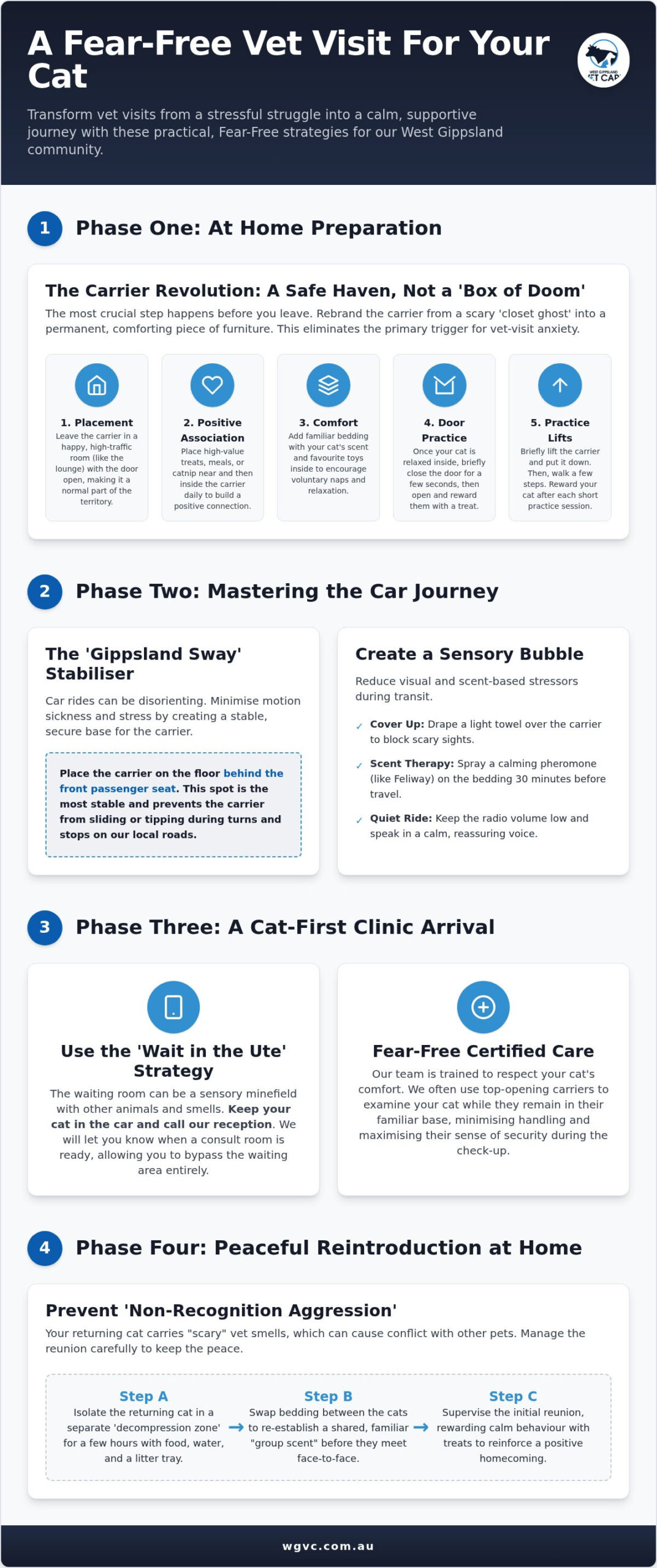
Creating a positive bond with the carrier takes patience, but it’s the most effective way of preparing an anxious cat for a vet visit. Try this gradual approach over a few weeks:
- Step 1: Placement. Put the carrier in a high-traffic, “happy” area like the lounge room where your cat already feels secure.
- Step 2: Feeding. Place high-value treats like roast chicken or tuna near the entrance, then slowly move them inside over several days.
- Step 3: Comfort. Add familiar bedding and a few favourite toys to encourage voluntary napping.
- Step 4: Door Practice. Once they are relaxed inside, close the door for just a few seconds, then open it and offer a reward.
- Step 5: Lift and Carry. Practise lifting the carrier and walking gently around the house to get them used to the sensation of movement.
Emergency Loading Techniques
We understand that sometimes you don’t have weeks to train before an appointment. If you’re in a hurry, avoid chasing or cornering your cat, as this spikes their adrenaline. Instead, try the “bum-first” method by gently guiding them into a front-loading carrier backwards; cats often resist less when they aren’t being pushed head-first into a dark space. For high-anxiety situations, a “purrito” towel wrap can provide a sense of security while protecting you from accidental scratches. Scent-swapping—rubbing a cloth on your cat’s cheeks and then placing it in the carrier—helps maintain that vital home-scent profile during the journey.
Navigating Gippsland Roads: Mastering the Car Journey
Driving through the rolling hills of West Gippsland is a beautiful experience for us, but for a cat, the constant tilting and vibration can be terrifying. When preparing an anxious cat for a vet visit, the car journey is often where the most stress occurs. The “Gippsland Sway” on our winding backroads or the vibrations from unsealed tracks can easily cause motion sickness or a panic attack. To keep things steady, place the carrier on the floor behind the front seat. This is the most stable part of the car and prevents the carrier from sliding around during turns. If your car seats are particularly angled, use a rolled-up towel underneath the carrier to ensure your cat is resting on a level surface.
Temperature is another critical factor to consider before you set off. Our Aussie sun can turn a car cabin into an oven surprisingly quickly, and cats overheat much faster than humans do. Always pre-cool the car with the air conditioner before loading your pet. We also highly recommend the “Visual Blackout” technique. Cover the carrier with a light towel that has been sprayed with synthetic pheromones. This limits the confusing visual stimuli of passing trees and cars while providing a familiar, cocoon-like environment that helps your cat feel hidden and safe.
Sensory Calming in the Cabin
Creating a peaceful environment inside the cabin helps lower your cat’s heart rate before they even arrive at the clinic. Use synthetic feline pheromones on the bedding about 15 minutes before you leave to let the scent settle. While you might enjoy the morning news or loud music, these can be overwhelming for sensitive feline ears. Instead, try playing low-frequency “cat music” which is specifically designed to mimic the rhythm of purring and suckling. It’s also best to avoid using heavy perfumes or strong car air fresheners, as these scents can be quite abrasive to a cat’s highly developed nose.
Regional Travel Safety Tips
If you’re travelling from further afield, such as Neerim South or Willow Grove, the longer drive time increases the chance of your cat becoming distressed. Keep a close eye on them for signs of motion sickness, which often presents as excessive drooling, constant lip licking, or vomiting. If your pet regularly struggles with the trip to our Warragul or Drouin clinics, please chat with us about situational support options. By managing the car journey with patience and care, you’re ensuring that the consultation starts on the right paw, with a cat that feels supported rather than traumatised by the trip.
Arrival Etiquette: The ‘Cat-First’ Waiting Room Strategy
Arriving at the clinic is often the moment when an owner’s stress levels peak, especially if the lobby is busy with barking dogs or loud noises. When preparing an anxious cat for a vet visit, the goal is to maintain the “safety bubble” you’ve carefully created during the car journey. One of the most effective ways to do this is by using the ‘Wait in the Ute’ protocol. Instead of bringing your cat straight into the reception area, leave them in the pre-cooled car and pop inside to let our team know you’ve arrived. We can then call or text you as soon as a consultation room is ready, allowing you to bypass the waiting room entirely.
When it is time to come inside, keep the ‘towel shield’ firmly in place over the carrier. This visual barrier prevents your cat from seeing potential threats, such as other pets or unfamiliar people. If you do need to spend a moment in the waiting area at our Warragul or Drouin clinics, remember the golden rule of feline security: never place the carrier on the floor. To a cat, the ground level is where they feel most vulnerable to roaming predators. Instead, look for our dedicated cat parking stations or use a sturdy side table to keep your pet at waist height or higher.
The Power of Elevation
In the wild, a cat’s primary defence is to climb. Perching on a high surface allows a cat to scan their surroundings from a position of safety, helping them feel more in control of their environment. When you keep the carrier elevated, you are respecting this biological need for a vantage point. Our clinics are designed with this in mind, providing quiet corners and elevated surfaces where your feline friend can observe the world without feeling exposed to the curious noses of walking dogs.
Partnering with Your Fear-Free Vet
Once you are in the consultation room, our team uses Fear-Free techniques to build a relationship based on trust rather than force. We often perform ‘touch-free’ exams, observing your cat’s movement and breathing from a distance before we begin a physical check. We might even examine them while they remain nestled in the bottom of their carrier to keep them feeling secure. If your pet’s anxiety is severe, we can discuss pre-visit pharmaceuticals (PVPs), which are safe medications given at home to take the edge off their fear.
We also highly encourage the ‘Happy Visit’—a quick trip to the clinic where nothing scary happens. Bring your cat in just for some high-value treats and a chin rub from our nurses to help rewrite their internal script about what a vet visit means. If you’re ready to experience a different approach to feline health, book a Fear-Free consultation with our compassionate team today.
The Post-Visit Protocol: Settling Back into the Gippsland Home
The journey isn’t quite over when you pull back into your driveway. While you might feel a sense of relief that the appointment is finished, your cat is still processing a significant amount of sensory information. Much like the effort put into preparing an anxious cat for a vet visit, the “re-entry” phase requires a gentle touch to ensure your pet feels truly safe again. It is quite common for cats to experience a “vet-visit hangover,” where they may be more withdrawn or jumpy for a day or two as they decompress from the excitement.
One of the biggest hurdles in a multi-cat household is the “Scent of the Clinic.” Your returning cat now carries the smell of antiseptics, other animals, and the clinic environment, which can make them unrecognisable to their housemates. This often leads to hissing or swatting from cats who stayed home. To prevent this, create a dedicated decompression zone, a quiet room with food, water, and a litter tray, where the returning cat can spend some time alone to groom and reclaim their familiar home scent before meeting the rest of the family.
This period of recovery is also the perfect time to reflect on the health milestones achieved during the visit. Whether it was a routine vaccination or a deeper look at cat dental cleaning in Gippsland, these moments of care are what build a long, comfortable life for your companion. By monitoring their behaviour closely over the next 24 hours, you can ensure they are returning to their normal, happy selves without lingering distress.
Re-introducing Multi-Cat Households
If you have other pets at home, a structured re-introduction is essential. Keep the returning cat in their separate room for at least 30 minutes. During this time, use the “Scent Swap” technique by rubbing a clean cloth on the home cats and then on the vet-goer, and vice versa. This helps re-establish the group’s collective “family scent.” Using pheromone diffusers in common areas can also help maintain a calm territory scent profile, reducing the chance of territorial disputes while everyone settles back into their routine.
Next Steps for a Lifetime of Calm
Building a Fear-Free future is a collaborative effort. When you book your next check-up at our Warragul or Drouin clinics, we will have already made notes on what worked best for your pet. If you noticed that travel seemed particularly difficult due to stiffness or discomfort, it might be worth considering a senior pet health check to see if underlying mobility issues are adding to their travel anxiety. Our goal is to ensure that every visit feels a little easier than the last, strengthening the bond between you and your feline friend. Book your cat’s Fear-Free consultation today.
Creating a Lifetime of Calm for Your Feline Friend
By rethinking the way we approach clinical care, we can ensure our cats feel safe and respected throughout their lives. From turning the carrier into a familiar sanctuary to mastering the quiet roads of West Gippsland, every small step you take makes a significant difference. Preparing an anxious cat for a vet visit is no longer a solo struggle; it’s a partnership between you and a veterinary team that truly understands feline behaviour.
Our Fear-Free Certified Professional Staff are dedicated to using feline-friendly handling protocols that prioritise your pet’s emotional well-being. We are here to support you at every stage, offering 24/7 emergency support for peace of mind when life takes an unexpected turn. You don’t have to dread the next appointment. Instead, you can look forward to a productive, low-stress experience that keeps your companion healthy and happy. To learn more about maintaining your pet’s wellness, you can explore Preventive Care at Animal Hospital of Sullivan County.
Book a Fear-Free Feline Consultation at West Gippsland Vet Care and let’s work together to make your next visit the calmest one yet. Your cat’s comfort is our priority, and we’re ready to welcome you both with open arms.
Frequently Asked Questions
How do I get my cat into a carrier when they are hiding?
If your cat has already retreated to a hiding spot, avoid the urge to reach in and pull them out, as this often triggers a fight-or-flight response. Instead, try using a high-value treat trail or gently use a large towel to scoop them up in a “purrito” wrap to keep their limbs secure. This common struggle is why preparing an anxious cat for a vet visit is much easier if the carrier is kept out as a regular piece of furniture in your home.
Can I give my cat human sedatives for a vet visit?
You should never give your cat human sedatives, as these can be highly toxic or cause dangerous heart and respiratory issues in felines. If your cat’s anxiety is severe, please consult our team at the Warragul or Drouin clinics about safe, veterinary-prescribed pre-visit pharmaceuticals. These medications are specifically formulated for cats to help them feel relaxed and comfortable during their journey and consultation.
Why does my other cat hiss at the one who just came back from the vet?
This behaviour is known as non-recognition aggression, and it happens because the returning cat smells like the “scent of the clinic” rather than the familiar family scent. Your other cat perceives these strange smells as a threat from an intruder. To manage this, keep the returning cat in a separate decompression room for about 30 minutes to allow them to groom and reclaim their normal home scent before they reunite with the group.
Is it okay to cover the cat carrier with a towel during the car ride?
Yes, covering the carrier with a light towel is a fantastic way to provide a “visual blackout” that reduces sensory overload. It helps your cat feel hidden and secure by limiting their view of passing trees, cars, and bright lights. For the best results, spray the towel with synthetic pheromones 15 minutes before you leave to create a portable sanctuary of calm during the drive.
How long before the vet visit should I use pheromone sprays?
You should apply pheromone sprays to the carrier and bedding approximately 15 minutes before your cat enters the space. This short wait allows the alcohol base in the spray to evaporate, leaving behind only the soothing scent that mimics a mother cat’s natural pheromones. If you spray it immediately before loading your pet, the sharp smell of the alcohol can be quite abrasive and off-putting for their sensitive noses.
What should I do if my cat vomits every time they are in the car?
If your cat suffers from motion sickness, please reach out to us to discuss feline-specific anti-nausea medications that can be given before you set off. You can also help by ensuring the carrier is placed on a level surface on the floor behind the front seat. This position provides the most stability and reduces the physical swaying and vibrations that often lead to nausea on our winding West Gippsland roads.
Are there ‘cat-only’ times at West Gippsland Vet Care clinics?
We work hard to maintain a peaceful environment for all our feline patients and can recommend the quietest times for your appointment if you call our Warragul or Drouin receptionists. We also encourage our “Wait in the Ute” protocol, where you can stay in the comfort of your car until a consultation room is ready. This ensures your cat bypasses the busy waiting room and goes directly into a calm, dog-free space.
What is a ‘Happy Visit’ and how does it help my anxious cat?
A “Happy Visit” is a short, stress-free trip to the clinic where your cat receives treats, chin rubs, and positive attention without any medical procedures or needles. These visits are a vital part of preparing an anxious cat for a vet visit because they help rewrite your pet’s negative associations. By creating positive memories at the clinic, your cat learns to feel more confident and less fearful during their actual health check-ups.