
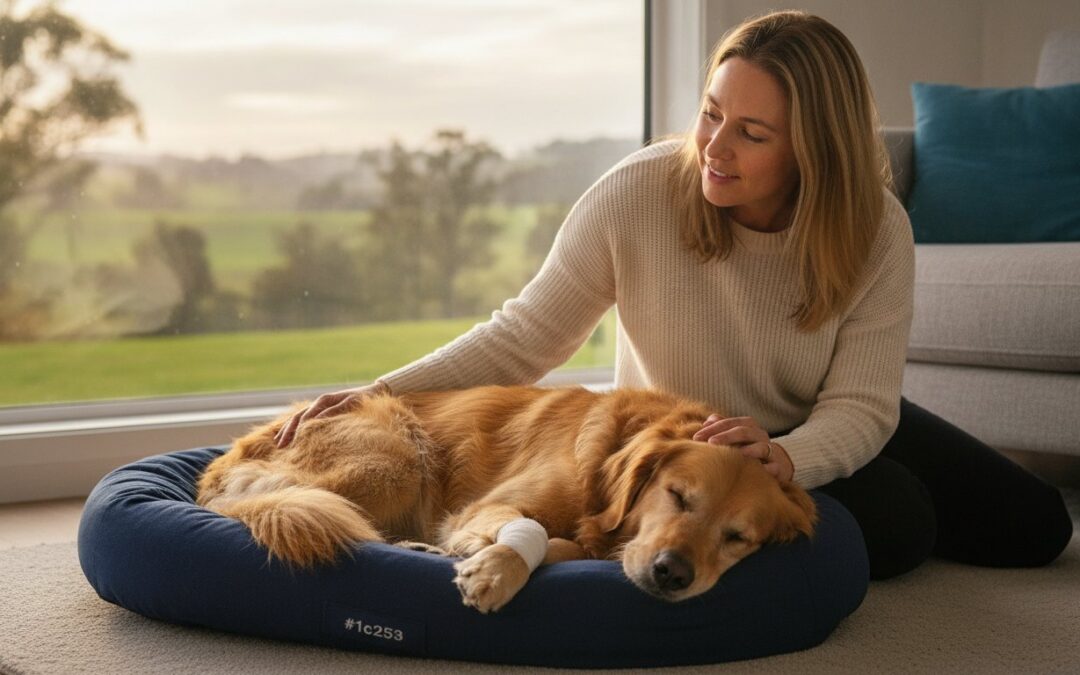
What if the most vital part of your pet’s surgery doesn’t happen in the operating theatre, but right on your living room floor? We know how heart-wrenching it is to see your four-legged family member looking a bit flat after a big day at the clinic. It’s completely natural to feel a bit anxious about whether they’re truly comfortable or if you’re getting the medication timing just right. Managing post-operative pain in pets at home is a shared journey between you and your vet team, and your local observations are just as important as the surgeon’s skill.
In this guide, you’ll learn how to recognise those subtle, often missed signs of discomfort and how to provide the nurturing care your pet needs for a smooth, speedy recovery. We’ll walk through simple ways to track medication schedules, tips for keeping active dogs settled during their rest period, and exactly when you should give us a call for extra support. With a bit of preparation and a lot of love, you can ensure your companion rests easy and stays comfortable while they heal.
Key Takeaways
- Understand why effective pain relief is a biological necessity for healing, as reducing stress hormones helps your pet’s body repair tissue more efficiently.
- Learn to spot the subtle survival instincts pets use to hide discomfort, such as a tucked-up abdomen or a slightly hunched posture.
- Gain confidence in managing post-operative pain in pets at home by using a multimodal approach that combines different treatments for better comfort.
- Discover how to set up a dedicated “recovery suite” with non-slip flooring to keep your mate safe and settled during their rest period.
- Find out how to use a simple recovery log to track medication and mood, helping you identify exactly when your pet is back to their old self.
Why Effective Pain Management is Vital for Your Pet’s Recovery
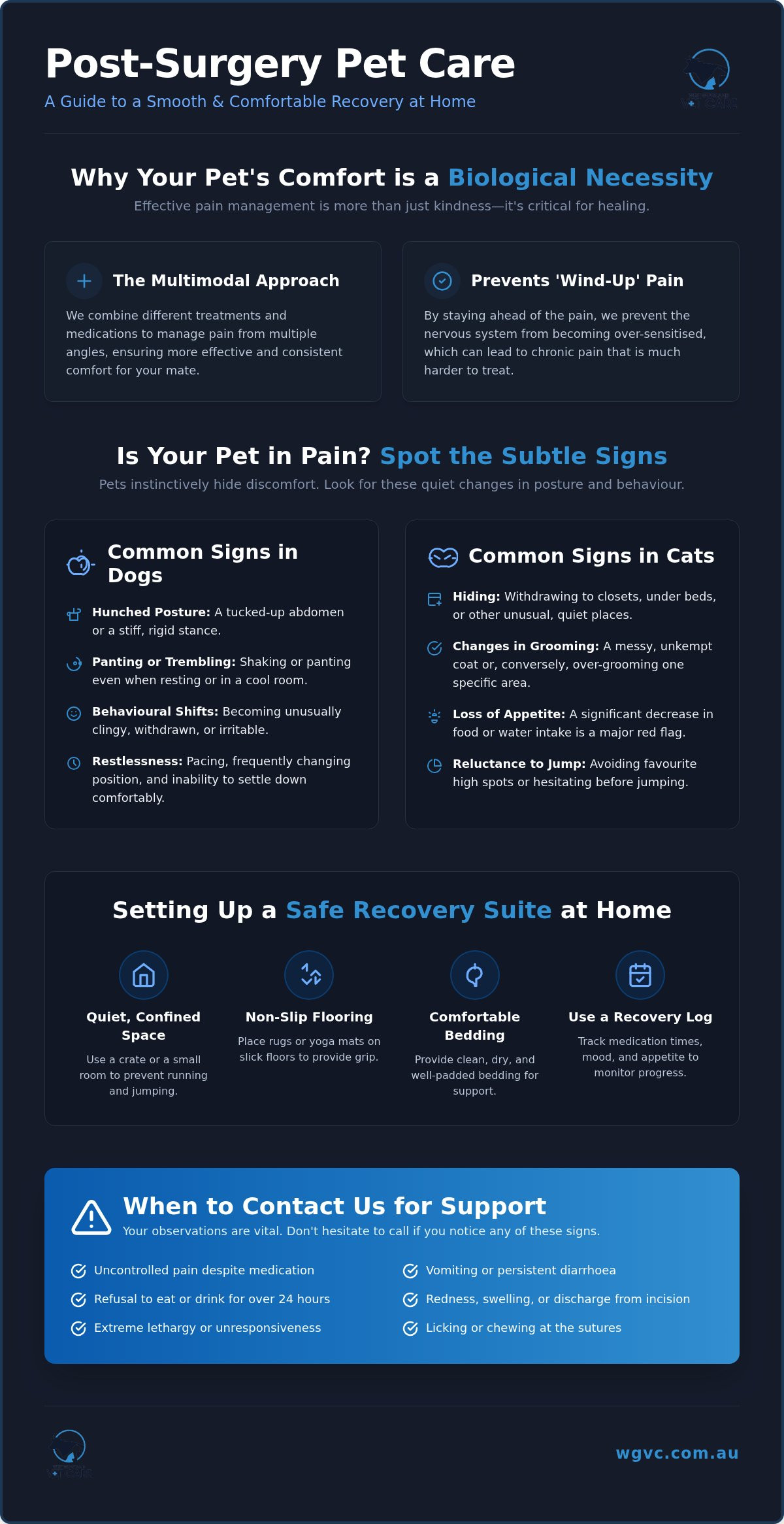
When your pet returns home after surgery, it is natural to want them to feel settled and loved. However, providing pain relief is far more than just a kindness for your mate; it is a biological necessity. Successfully managing post-operative pain in pets at home involves more than just following a schedule. It is about understanding the biological engine that drives healing. When a dog or cat experiences uncontrolled pain, their body enters a state of high alert, triggering the release of stress hormones like cortisol. While cortisol helps animals deal with immediate threats, high levels over a long period actually slow down tissue repair and weaken the immune system. By prioritising comfort, you are literally giving their body the resources it needs to knit back together.
Just as monitoring hormonal levels and overall health is crucial for pets, humans can also benefit from regular health check-ups; to explore comprehensive wellness panels, you can discover Dyvine Medical & Wellness.
One of the most critical reasons to stay ahead of the pain is to prevent what veterinarians call “wind-up” pain. This occurs when the nervous system becomes over-sensitive due to constant painful stimuli. Scientific research into Pain in animals shows that once these neural pathways are sensitised, the pain becomes much harder to treat, even with strong medications. It is like a volume knob that gets stuck on high. By providing consistent relief early on, we keep that volume turned down, ensuring your pet stays calm and their nervous system remains stable.
The Link Between Comfort and Clinical Outcomes
A comfortable pet is a pet that heals faster. When stress levels are low, inflammation around the surgical site tends to subside more quickly. This is particularly important for pets recovering from complex procedures like orthopaedic surgery, where joint stability and tissue health are paramount. Sleep also plays a vital role in this process. Deep, restful sleep is when cellular regeneration is at its peak. If your pet is pacing or shifting restlessly because of an ache, they miss out on this essential recovery time. Additionally, a pet that feels good is less likely to engage in “self-mutilation” behaviours, such as licking or chewing at their sutures, which can lead to infections or further surgery.
A Compassionate Approach to Post-Op Care
At West Gippsland Vet Care, our philosophy is simple: we treat every patient as if they were our own family member. We don’t wait for a pet to show signs of distress before we act. Our team prioritises pain relief before your pet even wakes up from anaesthesia, creating a “protective cocoon” of comfort that carries through to their arrival at home. We believe that you are the most important member of the recovery team. You know your pet’s quirks and personality better than anyone else, and your role in observing their comfort levels is the final, vital piece of the healing puzzle. Together, we can ensure your companion’s journey back to health is as gentle as possible.
Recognising the Subtle Signs of Post-Operative Pain in Dogs and Cats
Pets are masters of disguise when it comes to discomfort. This is a deeply ingrained survival instinct; in the wild, showing weakness or pain makes an animal a target for predators. Even in the safety of a West Gippsland lounge room, your dog or cat will likely try to hide their distress. This makes managing post-operative pain in pets at home a task that requires a keen eye and a gentle touch. If you wait for your pet to whimper or howl, you have likely waited too long. Vocalisation is often the last sign of pain, not the first. Instead, we must look for the quiet shifts in their daily habits and body language.
One of the most reliable indicators is a change in posture. A pet in pain will often appear “hunched” or stiff. You might notice a tucked-up abdomen or a reluctance to stretch out fully when resting. Behavioural shifts are equally telling. A normally independent dog might suddenly become unusually clingy, while a social cat might disappear into the back of a wardrobe. According to recent insights on Postoperative pain management in companion animals, these subtle deviations from “normal” are the most critical data points an owner can provide to their veterinary team.
Species-Specific Pain Indicators
Dogs and cats express their discomfort in very different ways. For dogs, keep a close watch for trembling or panting, especially if the room is cool and they haven’t been active. They may also pace restlessly, unable to find a comfortable position to lie down. Cats are even more stoic. A cat in pain will often neglect their grooming or sit in a “hunched” loaf position for hours. The Feline Grimace Scale is a scientifically validated tool that allows owners to assess their cat’s comfort levels by observing specific changes in ear position, eye squinting, and muzzle tension. If your cat’s ears are pinned back or their eyes are constantly squinted, they are likely struggling.
Physical Red Flags Near the Surgical Site
While you should avoid poking or prodding the wound, a “hands-off” visual check once or twice a day is essential. It is normal to see some light bruising or minor pinkness around the incision. However, if the area appears angry and red, feels hot to the touch, or has a foul-smelling discharge, these are signs of excessive inflammation or infection. If your pet reacts aggressively or pulls away sharply when you simply move near the area, their pain relief may need adjusting. If you ever feel unsure about what you are seeing, please don’t hesitate to reach out to our team at West Gippsland Vet Care for a quick chat or a check-up to put your mind at ease.
Understanding Post-Surgical Medications and Multimodal Therapy
When it comes to successfully managing post-operative pain in pets at home, we don’t rely on just one “magic” pill. Instead, our team uses a multimodal approach. This means we combine different classes of medication that work on various parts of the nervous system. By attacking the pain from multiple angles, we can often use lower doses of each individual drug. This gives your pet better overall relief while significantly reducing the risk of unwanted side effects. It is a modern standard of care that ensures your companion feels like themselves again much sooner.
The foundation of most recovery plans involves Non-Steroidal Anti-Inflammatory Drugs, or NSAIDs. These medications are excellent at reducing the throbbing and swelling that naturally occurs after a procedure. In many cases, we might also prescribe Gabapentin or Tramadol. These aren’t just “extra” pills; they target specific nerve pathways and can provide a mild sedative effect. This is particularly helpful for high-energy pets that need to stay calm and rested while their body repairs itself. These veterinarian-approved pain management strategies are designed to keep comfort levels steady.
A consistent schedule is the secret to successfully managing post-operative pain in pets at home. We want to keep the medication levels “below the curve” of pain. Think of it like keeping a fire burning steadily rather than letting it go out and trying to restart it from scratch. If you wait until your pet looks uncomfortable before giving the next dose, their body has to work much harder to get back to a state of ease.
Administering Medication Safely at Home
Giving tablets can sometimes feel like a bit of a battle, especially with “spicy” cats or stubborn dogs. We recommend using a small amount of a highly palatable treat, like a tiny piece of roast chicken or a dedicated “pill pocket,” to hide the medication. It’s vital that you never use human medications like Panadol or Nurofen. These are incredibly toxic to pets and can cause life-threatening organ failure. If your pet happens to vomit within thirty minutes of taking their dose, please give us a call before attempting to give another one.
Recovery Advantages of Keyhole Surgery
We are proud to offer advanced options like keyhole spay and gastropexy for our West Gippsland community. Because these procedures use tiny incisions and specialised cameras, there is far less trauma to the body wall. This results in significantly less post-operative bruising and a much faster return to normal activity. While the external wounds are small and less likely to be bothered by your pet, remember that internal healing still takes time. Even if your pet seems ready to sprint through the park after a keyhole procedure, they still need a period of strict rest to ensure everything heals perfectly inside.
Practical Tips for Creating a Stress-Free Recovery Space at Home
Your home environment is the foundation for successfully managing post-operative pain in pets at home. Setting up a dedicated “recovery suite” before your mate arrives back from the clinic makes a world of difference to their stress levels. This space should be a quiet, draught-free corner of the house, away from high-traffic areas like the kitchen or the front door. We also recommend using pheromone diffusers, such as Adaptil for dogs or Feliway for cats, to create a naturally calming atmosphere that signals safety to their nervous system.
Safety underfoot is a major factor, particularly for patients recovering from orthopaedic surgery. Slippery floorboards or tiles can cause your pet to lose their footing, leading to panic or sudden movements that strain the surgical site. Laying down non-slip rugs or even cheap yoga mats provides the grip they need to move gently. During the first few days, it is vital to keep boisterous children and other household pets separated from the patient. Even a well-meaning “hello” from a furry housemate can lead to accidental bumps or over-excitement that might compromise their healing.
The Art of Confinement Without Stress
Confinement doesn’t have to feel like a punishment. We advocate for a Fear-Free approach, focusing on your pet’s emotional well-being as much as their physical health. While they can’t go for their usual walk, you can keep them happy with “mental enrichment.” Lickimats or slow-feeder toys filled with a bit of peanut butter or wet food provide a soothing activity that requires zero physical exertion. This quiet time is the most valuable gift you can give a healing pet, as it allows their body to focus entirely on cellular repair rather than managing external stressors.
Managing the Dreaded “Cone of Shame”
Most pets find the traditional plastic collar a bit clunky. If your companion is struggling to navigate their bed or reach their water bowl, ask us about alternatives like soft foam collars or recovery onesies. These options often feel less restrictive and reduce the “satellite dish” effect that can startle some animals. You can remove the collar for short breaks, but only if you are giving them your full, undivided attention. If you need more advice on tailoring a recovery space for your specific home layout, contact our friendly team for personalised support.
Monitoring Progress and Partnering with West Gippsland Vet Care
Your role in observing your pet’s recovery is just as vital as the surgery itself. While the first few days require the most intensive care, the healing process is a marathon rather than a sprint. We highly recommend keeping a simple “recovery log” on your fridge. Jot down the exact times you administer medications and make brief notes about your pet’s appetite, toilet habits, and general mood. This log takes the guesswork out of managing post-operative pain in pets at home, especially if multiple family members are sharing the care duties. Most pets show a significant boost in spirits within the first 3 to 5 days, but remember that internal tissues often take several weeks to reach full strength.
Attending your scheduled follow-up appointments at our Warragul or Drouin clinics is a non-negotiable part of the process. Even if your mate looks “perfectly fine” on the outside, these checks allow us to ensure there is no hidden fluid buildup or tension on the internal sutures. We view ourselves as an extension of your support system. Never feel like a question is too small; we would much rather have a quick chat over the phone to reassure you than have you worrying at home.
When to Contact Us Immediately
While most recoveries are smooth, you should be aware of specific red flags that require urgent attention. If you notice your pet has very pale or white gums, is struggling with laboured breathing, or has an incision that is bleeding persistently, please do not wait. It is also important to remember that existing clients have access to 24-hour emergency care. If a crisis occurs after our doors have closed for the evening, simply follow the instructions on our after-hours phone message. This ensures you are connected to a vet who can provide immediate guidance and care, giving you peace of mind in a stressful moment.
The Road to Full Activity
The transition from strict rest back to normal life must be handled with care, particularly after complex orthopaedic or soft tissue procedures. We will provide you with a tailored plan to gradually reintroduce short, controlled lead walks. The final “all clear” from your vet is the most important milestone in the entire journey. Rushing this stage can lead to setbacks that are easily avoided with a bit of patience. Your dedication to your pet’s home care is what truly makes the surgery a success. We are so grateful for the trust you place in us, and we look forward to seeing your companion back to their happy, active self very soon.
Helping Your Mate Heal with Confidence
Navigating the days following a surgery can feel overwhelming, but you aren’t alone in this. By learning to spot those quiet shifts in posture and embracing a consistent medication schedule, you are already well on your way to successfully managing post-operative pain in pets at home. Remember that a calm environment and a bit of mental enrichment are just as vital for cellular repair as the clinical care we provide in the theatre. Your dedication to these small, daily acts of care is what ensures your companion can return to their happy, active life in West Gippsland.
While your focus is on your family pet, those interested in the care and history of other majestic animals like the Lipizzaner horse can visit JJ-LIPIZZANS to explore their dedicated animal health resources.
We are here to support you every step of the way, from our Fear-Free certified approach to our advanced keyhole and orthopaedic surgical facility. If you ever feel unsure about your pet’s progress, we offer the peace of mind that comes with 24-hour emergency support for our existing clients. Whether you are preparing for a procedure or need a helping hand during recovery, please contact West Gippsland Vet Care for expert surgical advice and support. You’ve got this, and we’re honoured to be part of your pet’s recovery team.
Frequently Asked Questions
How can I tell if my dog is in pain if they aren’t crying or whimpering?
Dogs often express discomfort through quiet, physical cues such as trembling, panting when it isn’t hot, or a general reluctance to lie down and settle. You might notice your mate becoming unusually clingy or, conversely, withdrawing to a quiet corner of the house. These subtle behavioural shifts are far more common than vocalisation, which is typically only seen when pain is quite severe or sudden.
Is it normal for my cat to hide for two days after surgery?
It is quite common for cats to seek out a dark, quiet spot to recover, but they should still be responsive and willing to eat small amounts. While hiding is a natural survival instinct, staying tucked away for more than 24 to 48 hours can sometimes suggest their comfort levels aren’t quite right. If your cat refuses to come out for meals or seems very lethargic, please contact us for advice.
Can I give my pet a half-dose of my own pain relief medication?
No, you must never give your pet human medications like Panadol, Nurofen, or aspirin, as these are highly toxic to animals. Even a small dose can cause life-threatening complications such as stomach ulcers or organ failure. When managing post-operative pain in pets at home, you should only ever use the specific medications prescribed by our team, as these are safely formulated for your pet’s weight and species.
What should I do if my pet won’t eat their food with the medicine in it?
Try hiding the tablet in a high-value treat like a small piece of roast chicken, a bit of cheese, or a dedicated pill pocket. If your pet is still refusing their medication, don’t try to force it, as this can cause unnecessary stress for both of you. Give our clinic a call; we can often suggest different techniques or provide the medication in a more palatable liquid form to make things easier.
How do I stop my pet from jumping on the couch while they are healing?
The most effective way to prevent jumping is to restrict your pet to a small, safe area using a puppy pen, a crate, or a room with no furniture. You can also place cushions on the floor or “pet steps” if they usually sleep with you, though total restriction is much safer during the initial healing phase. Using a lead when moving through the house also helps you keep their movements slow and controlled.
What are the signs of a surgical site infection I should look for?
Keep a close eye out for an incision that appears angry and red, feels hot to the touch, or has a foul-smelling discharge. While some minor bruising is expected, excessive swelling or any gaps appearing between the sutures are signs that something isn’t right. If your pet is constantly trying to lick the area or if the skin looks tight and shiny, it’s time to bring them in for a check-up.
When is it safe to take my dog for their first walk after surgery?
Most dogs can start very short, lead-only toilet breaks within 48 hours, but proper exercise usually needs to wait for at least 10 to 14 days. The exact timing depends on whether they had a routine desexing or a more complex orthopaedic procedure. We will give you a clear, staged exercise plan at your first follow-up appointment to ensure the internal tissues have had enough time to heal properly.
Does keyhole surgery really require less pain medication than traditional surgery?
Yes, pets undergoing keyhole surgery generally experience less discomfort because the incisions are significantly smaller and there is less trauma to the internal tissues. While this often means they require a shorter course of relief, managing post-operative pain in pets at home remains a vital part of their care. Even with the faster recovery times of keyhole procedures, your pet still needs strict rest to ensure their internal wounds heal without any setbacks.