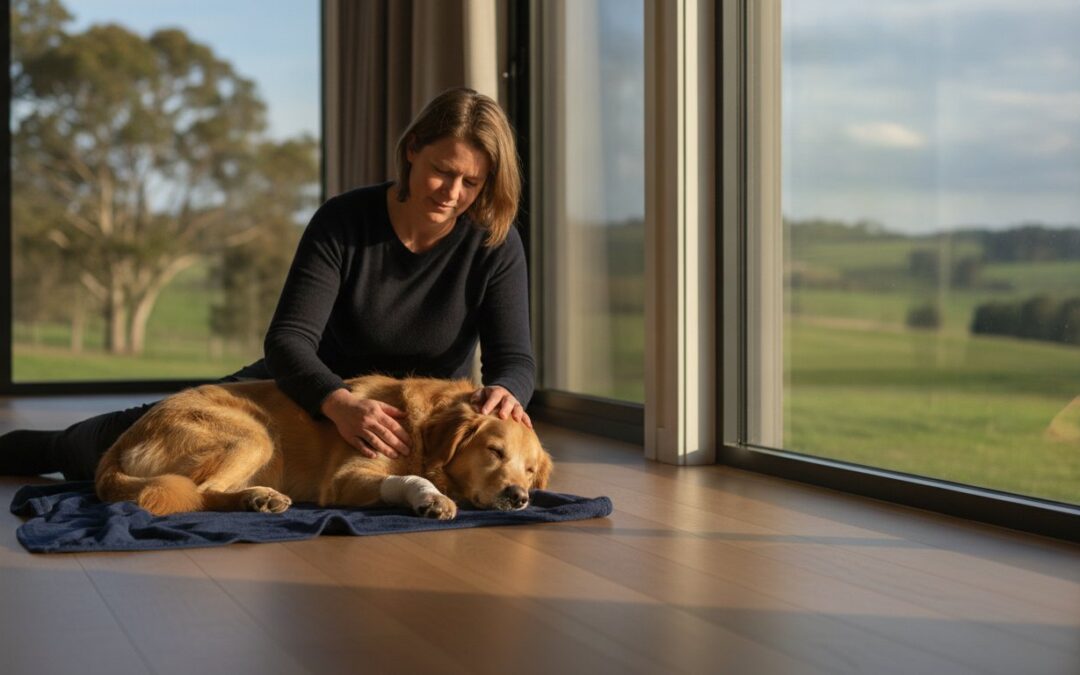
Imagine sitting on the lounge room floor in Warragul, watching your dog sleep after their surgery and wondering if that tiny whimper is just a dream or something more. It’s a heavy feeling. You want nothing more than for them to be comfortable, yet pets are masters at hiding their discomfort. It’s completely normal to feel a bit overwhelmed by the responsibility of managing post-operative pain in pets at home, especially when you’re balancing multiple medications and trying to keep a high-energy pet still.
This guide will help you recognise the subtle signs of pain that even the bravest pets try to mask. You’ll learn how to provide the nurturing care they need for a smooth, stress-free recovery. We’ll cover everything from demystifying your medication schedule to clever ways to keep your companion calm while they heal. By the end, you’ll know exactly how to keep your pet resting comfortably and when it’s time to reach out to our clinic for extra support. Our goal is to ensure you feel confident as a vital part of your pet’s healing team.
Key Takeaways
- Understand why managing pain isn’t just about comfort; it’s a vital biological step that helps your pet’s body repair tissue much faster.
- Learn to recognise the “quiet” signs of discomfort, such as a tucked-up abdomen or subtle changes in posture, that pets often use to hide their pain.
- Gain confidence in managing post-operative pain in pets at home by discovering how a multimodal approach makes medication safer and more effective.
- Discover how to create a calm “Recovery Suite” with essential features like non-slip flooring to prevent injury during those first few days.
- Know exactly when to trust your intuition and how our team in Warragul and Drouin supports you through every stage of the healing process.
Why Effective Pain Management is Essential for Your Pet’s Healing
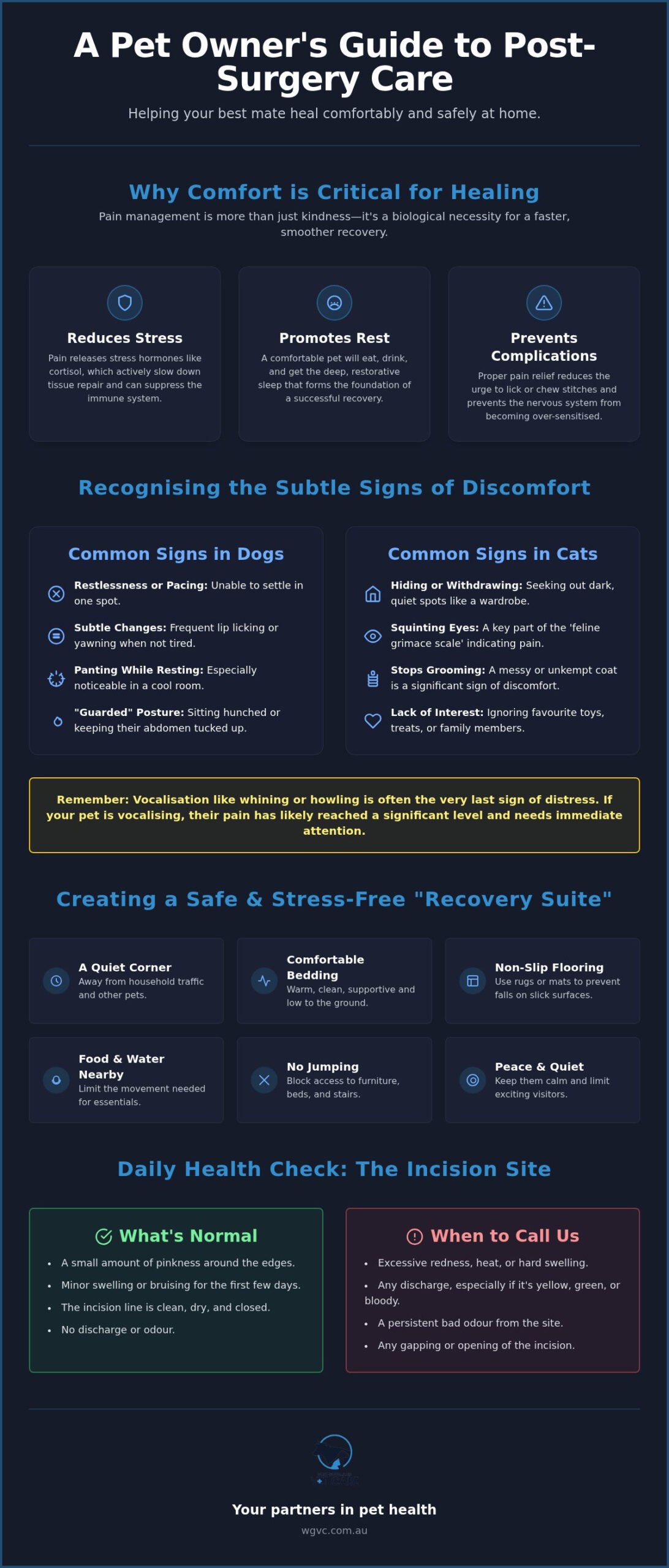
When your pet returns from our clinic, your primary focus is naturally on their comfort. However, managing post-operative pain in pets at home is about much more than just being kind. It’s a critical biological requirement for physical healing. When a dog or cat is in persistent pain, their body enters a state of high stress, triggering the release of hormones like cortisol. While cortisol is helpful in a short-term crisis, during recovery it’s quite counterproductive. It actually hinders tissue repair and can suppress the immune system, making it harder for your pet to fight off potential infections at the surgical site.
It’s helpful to understand that not all pain is the same. Veterinarians often distinguish between ‘adaptive pain’, which protects an injury by discouraging movement, and ‘maladaptive pain’, which serves no purpose other than to cause suffering. Deepening our understanding of how animals experience pain shows that their nervous systems can become over-sensitised if discomfort isn’t managed proactively. Providing relief isn’t about ‘masking’ symptoms; it’s about removing a major barrier to your pet’s recovery.
The Link Between Comfort and Clinical Outcomes
A pet that feels settled is much more likely to eat their dinner and drift into a deep, restorative sleep, which are the two absolute pillars of a successful recovery. By staying ahead of the pain, we prevent the ‘wind-up’ effect. This is a condition where the nervous system becomes so sensitive that even a gentle touch or a normal movement feels painful. When you are managing post-operative pain in pets at home effectively, your companion is also far less likely to obsessively lick or chew at their stitches, which is one of the most common causes of post-surgical complications.
A Compassionate Approach to Post-Op Care
At West Gippsland Vet Care, we view ourselves as a vital part of your support system. Our philosophy balances clinical expertise with a nurturing, family-oriented approach because your pet’s emotional state is just as important as the physical state of their incision. A stressed or anxious pet heals more slowly than one that feels safe and relaxed. This is particularly important for pets recovering from orthopaedic surgery, where maintaining a calm, comfortable environment over several weeks is essential for regaining full mobility. We work with you to ensure your pet feels loved and supported through every stage of their journey back to health.
Recognising the Subtle Signs of Post-Surgical Discomfort
It’s one of the most challenging parts of being a pet owner. Our animals can’t tell us where it hurts. In the wild, showing weakness or pain makes an animal a target, so our dogs and cats have evolved to be incredibly stoic. This survival instinct remains strong today. When you’re managing post-operative pain in pets at home, you have to look past the obvious whimpering or crying. Often, the most telling signs are much quieter and requires a watchful, loving eye.
You might notice your pet sitting in a hunched position or keeping their abdomen tucked up tight. This “guarded” posture is a classic sign of discomfort. It’s also vital to distinguish between normal post-anaesthetic grogginess and genuine pain. A groggy pet is usually just sleepy and quiet. A pet in pain might be restless, unable to settle, or have a vacant look. We often tell our clients in Drouin and Warragul to look for that familiar “glint in their eye”. If they seem “present” and recognise your voice, they’re likely doing well. If they seem distant or glassy-eyed, they might need more support.
Species-Specific Pain Indicators for Dogs and Cats
Dogs and cats express their feelings quite differently. While a dog might seek more attention, a cat will often do the exact opposite. Keeping a simple diary of these behaviours can help you track their progress.
- Common signs in dogs: Restlessness or pacing, subtle lip licking, frequent yawning when not tired, and panting while resting in a cool room.
- Common signs in cats: Hiding in dark spots like the back of a wardrobe, squinting their eyes (part of the feline grimace scale), or stopping their usual grooming routine.
Remember, vocalisation like whining or howling is often the very last sign of distress. If a pet is vocalising, their pain has likely reached a significant level and needs immediate attention.
Physical Red Flags Near the Surgical Site
Checking the incision site is a daily task. A small amount of pinkness or minor swelling is normal inflammation as the body begins to heal. However, if you see angry red skin, thick discharge, or if the area feels hot to the touch, please reach out. You can gently feel the skin near the site, but always watch your pet’s reaction. If they flinch or try to snap, it’s a clear signal they’re hurting. For specific procedures like cat dental cleaning, signs might include pawing at the mouth or dropping biscuits while eating.
If you notice any of these changes and feel unsure, it’s always best to chat with our supportive team for peace of mind.
Understanding Post-Op Medications and the Multimodal Approach
You might feel a bit daunted when you see several different bottles of medicine on the kitchen bench after your pet’s procedure. It’s a lot to keep track of, but there’s a very good reason for this variety. We use a strategy called “Multimodal Analgesia”. This is a clever way of attacking pain from several different directions at once, rather than relying on just one type of drug. It’s a bit like a sports team where every player has a different role to ensure a win. By using small doses of different medications, we can achieve much better results with a lower risk of side effects than if we used a massive dose of a single drug.
When you’re managing post-operative pain in pets at home, you’ll typically be working with two main classes of medication. Non-Steroidal Anti-Inflammatory Drugs (NSAIDs) act like a cooling bucket of water on the “fire” of inflammation at the surgical site. Other medications, such as Gabapentin, work specifically on the nervous system to settle down those over-sensitive pain signals. Please remember that your pet’s liver and kidneys don’t process chemicals the same way yours do. Never give your pet human medications like Panadol or Ibuprofen. These are highly toxic to animals and can lead to life-threatening emergencies.
Administering Medication Safely at Home
Giving tablets can sometimes feel like a bit of a struggle, but it doesn’t have to break the bond of trust you share. To keep things stress-free, try hiding tablets in a small piece of cheese or a “meatball” of their favourite wet food. Most pain medications should be given with a meal to protect the stomach lining, so check your labels carefully. We recommend keeping a simple “Recovery Log” on the fridge. Ticking off each dose ensures that medications aren’t missed or accidentally doubled up by different family members.
Recovery Advantages of Keyhole Surgery
If you’re planning a procedure and want the gentlest path possible, our Warragul clinic offers advanced keyhole surgery options, such as laparoscopic spays. Because these procedures involve tiny incisions rather than a traditional large opening, the internal trauma is minimal. This leads to a significantly reduced need for heavy sedation and strong pain relief during recovery. Keyhole patients are often much brighter the next morning and return to their usual happy selves far more quickly than with traditional methods. It’s a wonderful way to simplify the process of managing post-operative pain in pets at home.
Creating a Safe and Stress-Free Recovery Space at Home
Managing post-operative pain in pets at home is much easier when you have a dedicated “Recovery Suite” ready before your companion arrives back from the clinic. This isn’t just about finding a place for a bed. It’s about creating a sanctuary where your pet feels safe, warm, and protected from the usual hustle and bustle of the household. By choosing a quiet corner of the lounge room or a spare bedroom, you provide a space where they can rest without the constant interruption of foot traffic or loud noises. This concept of “confinement without isolation” is vital. Your pet wants to know you’re nearby, but they need to be shielded from boisterous children or other curious four-legged family members.
In West Gippsland, we have to be mindful of the local climate. Our winters and autumns can be quite damp and chilly, which isn’t ideal for a pet with a healing incision. Ensure their recovery bed is thick, well-padded, and raised off cold tiles or floorboards to prevent drafts. If your pet is recovering from orthopaedic surgery, non-slip flooring is absolutely non-negotiable. If you have floorboards or tiles, lay down some cheap yoga mats or rubber-backed rugs. These provide the steady footing your pet needs to move safely without the risk of a painful slip or a sudden jar to their surgical site.
The Art of Confinement and Rest
For high-energy dogs, the idea of “rest” can be a foreign concept. Using a crate or a puppy playpen isn’t a punishment; it’s a safety tool that prevents them from jumping on the couch or racing to the front door. To keep their minds busy while their bodies heal, you can offer mental stimulation like lick mats or gentle grooming sessions. When it’s time for a toilet break, always use a short lead, even in a fenced backyard. This gives you total control and prevents any sudden lunging or jumping that could cause a setback in their recovery. It’s these small, consistent habits that make managing post-operative pain in pets at home much more predictable.
Managing the Dreaded “Cone of Shame”
While the Elizabethan collar (or “the cone”) is rarely a pet’s favourite accessory, it’s a lifesaver for protecting surgical sites. It only takes a few seconds of licking to cause an infection or pull out a stitch. You can make the collar more comfortable by ensuring it’s adjusted to the right height and keeping it clean of food debris. It’s only safe to remove the collar briefly for supervised meals or grooming, but this requires your 100 per cent direct attention. If you’re ever worried about how your pet is settling into their space, you can always reach out to our dedicated team at West Gippsland Vet Care for advice tailored to your home setup.
Monitoring Progress and Partnering with West Gippsland Vet Care
No one knows your pet quite like you do. While we provide the clinical expertise, you are the expert on your companion’s personality and daily habits. You’ll be the first to notice if that “glint in their eye” has returned or if they’re finally resting in their favourite silly sleeping position. Trusting your intuition is a major part of managing post-operative pain in pets at home. If something feels “off”, even if you can’t quite put your finger on it, it’s always worth a quick chat with our team. We view ourselves as your partners in this journey, and we’re here to support you through every stage of the healing process.
The post-operative check-up at our Warragul or Drouin clinics is a vital milestone. These appointments allow us to ensure the incision is healing perfectly and to adjust any medications as your pet’s needs change. It’s also a great time for you to ask questions about their progress. Most pets require about 10 to 14 days of restricted activity before they can begin returning to their normal routine. We want you to feel confident and empowered as you guide your mate back to full health, knowing that professional advice is always just a phone call away. This model of accessible, remote support is becoming a standard in healthcare, with services such as NOVAGP.ie offering similar digital consultations for human patients.
While most recoveries are smooth, it’s important to know the signs that require urgent attention. If you notice any of the following “Call Now” triggers, please don’t hesitate to reach out. We provide a 24-hour emergency service to our existing West Gippsland clients, giving you peace of mind during those late-night worries.
- Pale or blue-tinged gums: Gums should be a healthy bubblegum pink.
- Extreme lethargy: If your pet is difficult to rouse or seems completely out of it.
- Uncontrolled vomiting: Especially if they can’t keep water down.
- Heavy bleeding: Any active oozing from the surgical site.
Please keep our numbers saved in your phone for quick access: Warragul (03 5623 4822) or Drouin (03 5625 1707).
The Road to Full Activity
Once we’ve given the all-clear at the final check-up, you can slowly reintroduce physical exercise. Start with very short, five-minute walks on a lead in a flat, quiet area. Once they’re comfortable, you might head to a local spot like Burke St Park for a gentle sniff and stroll. Professional services like The Fur Seasons show that a high-quality walking routine is about more than just movement; it’s about careful, attentive care. Keep a close eye on the surgical site after these first few outings. If you notice any new swelling or if your pet seems stiff the next morning, it’s a sign you might be progressing a little too fast. Helping your mate heal with kindness and patience is the best way to ensure they’re back to their happy, active selves for years to come.
Your role in your pet’s recovery is just as vital as the surgery itself. By recognising those quiet signals of discomfort and creating a snug, safe recovery suite, you’re giving them the best possible start to their healing journey. Managing post-operative pain in pets at home doesn’t have to be a source of worry when you have the right tools and a supportive team behind you. We’re proud to offer specialised low-pain keyhole surgery techniques and a fear-free certified approach. These methods ensure every pet feels safe and respected while in our care.
You’re never alone in this. Our clinics in Warragul and Drouin provide 24-hour emergency support for our local Gippsland clients, so help is always available if you feel unsure. Whether your companion is recovering from a routine procedure or complex orthopaedic surgery, we’re here to help you navigate the process with confidence. We’re committed to being an extension of your support system every step of the way.
Book a post-operative check-up or consult with our compassionate team today.
We look forward to seeing that happy tail wag or gentle purr return very soon.
Frequently Asked Questions
How can I tell if my dog is in pain if they aren’t crying or whining?
Look for subtle changes like a tucked-up belly, restlessness, or a distant look in their eyes. Dogs often hide pain as a survival instinct. You might notice them panting even when the room is cool or licking their lips frequently. These “quiet” signals are often more common than vocalisation when managing post-operative pain in pets at home, so trust your intuition if they just don’t seem like their usual self.
My pet seems very sleepy after surgery; is this normal or should I be worried?
It is completely normal for your pet to be very drowsy for the first 24 hours as the anaesthetic wears off. They may sleep deeply or seem a bit wobbly on their feet. However, they should still be responsive to your voice and able to stand if encouraged. If they are so lethargic that you cannot rouse them, or if their gums look pale, please call our Warragul or Drouin clinic immediately.
What should I do if my pet refuses to take their pain medication?
Try hiding the tablet in a small “meatball” of high-value food like plain boiled chicken, a bit of cheese, or a teaspoon of wet food. It’s vital that they don’t miss doses, as staying ahead of the pain is much easier than catching up. If they are still refusing or have a sensitive stomach, please contact us. We can often provide liquid alternatives or different options that are more appealing to fussy eaters.
Is it okay to use a heat pack or ice pack on my pet’s surgical incision?
Please do not apply heat or ice packs unless specifically instructed by our veterinary team. While these can help humans, a pet’s skin is very sensitive and can easily be burnt or damaged, especially if they are still numb from local anaesthesia. If the area looks particularly swollen or red, it’s safer to give us a quick ring so we can advise on the best way to keep them comfortable without risking a skin injury.
Can I leave my pet alone at home during the first 24 hours after surgery?
We strongly recommend that someone stays with your pet for the first 24 hours after they return home. This is the most critical period for monitoring their recovery from anaesthesia and ensuring they don’t accidentally injure themselves while groggy. If you must pop out for a moment, ensure they are in a secure, small “recovery suite” like a crate or playpen where they cannot jump, climb, or fall while they are still disoriented.
What happens if my pet accidentally jumps on the couch or runs during recovery?
Don’t panic, but do check the surgical site immediately for any new redness, swelling, or bleeding. A single jump might not cause damage, but repeated activity can pull stitches or cause internal bruising. If your pet is being particularly boisterous, try using a crate or a short lead for toilet breaks to maintain control. If the incision looks different or if they start limping, it’s best to have them checked by our team for peace of mind.
How long does it typically take for a pet to fully recover from a routine desexing?
Most pets take about 10 to 14 days to fully heal from a routine desexing procedure. During this time, managing post-operative pain in pets at home involves strict rest and lead-only toilet breaks. While they might feel like their old selves after just a few days, the internal tissues are still fragile and need time to knit back together. We usually schedule a post-op check-up around the 10-day mark to ensure everything is perfect.
When is it safe to give my pet a bath or take them for a swim after surgery?
You must wait until the surgical site is completely healed and any external stitches have been removed, which is usually after 14 days. Getting the incision wet can introduce bacteria and lead to infection, while swimming can cause excessive movement that strains the wound. Once our vet gives the all-clear at your follow-up appointment in Warragul or Drouin, you can slowly reintroduce water activities, starting with a gentle bath at home.