
Imagine trying to keep a bounding Kelpie or an adventurous Labrador quiet on your West Gippsland property for a full fortnight while they heal from surgery. It’s a daunting task that many local pet owners face with a heavy heart, worrying about their mate’s comfort and the risk of internal complications like bleeding. You want the very best care for your dog, yet the thought of them enduring significant post-operative distress or being confined to a crate is naturally upsetting.
When weighing up a laparoscopic spay incision vs traditional surgery, it’s helpful to know that modern veterinary medicine has evolved to make this milestone much kinder. This article will show you how keyhole surgery provides a safer, more precise alternative that can reduce post-operative pain by up to 65 percent, according to studies in the Journal of the Veterinary Medical Association. We’ll explore the clinical benefits of this minimally invasive technique and how it allows for a much faster return to your usual routines in our beautiful local parks. By the end, you’ll have the peace of mind that comes from knowing world-class surgical care is available right here in our community, ensuring your pet’s recovery is as gentle as possible.
Key Takeaways
- Understand the technical shift from traditional methods to modern ovariectomy, where only the ovaries are removed to ensure a less invasive experience for your dog.
- Learn how comparing a laparoscopic spay incision vs traditional surgery reveals significant safety benefits, including superior internal visualisation that helps our vets manage surgical risks with precision.
- Discover why keyhole surgery is the gold standard for pain management, with studies showing patients often require significantly less post-operative medication and experience a smoother recovery.
- See how the 2-3 day “quiet time” window for keyhole surgery is a total game-changer for active dogs living on Gippsland farms or large blocks compared to the traditional two-week restriction.
- Find out how our Fear Free certified team in Warragul and Drouin combines world-class surgical technology with a nurturing, local approach to put both you and your mate at ease.
What is a Laparoscopic Spey? Understanding the Keyhole Difference
Desexing is a significant milestone for every pet parent in West Gippsland. While it’s a routine procedure, we know it doesn’t feel routine when it’s your best mate on the surgery table. Traditionally, desexing involved a large abdominal opening, but modern veterinary medicine has introduced a much gentler approach. Laparoscopic surgery, commonly known as “keyhole,” is a minimally invasive technique that uses advanced technology to perform the procedure through tiny incisions. By Understanding the Keyhole Difference, you can see how this method prioritises your dog’s comfort and safety from start to finish.
The Keyhole Technique vs. Traditional Desexing
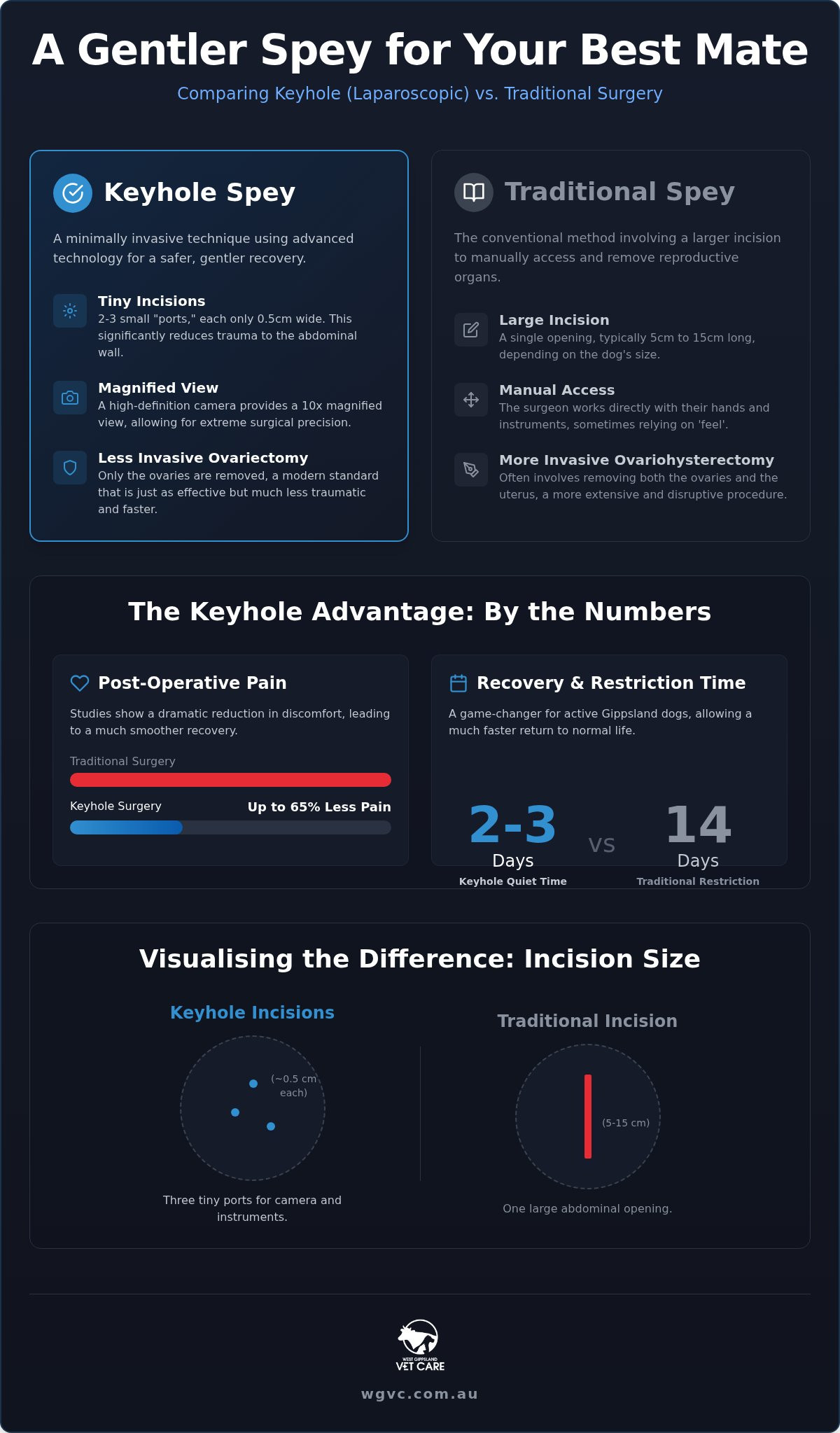
The primary difference between these two methods lies in how the surgeon accesses the internal organs. In a traditional spey, a vet makes a larger incision, often between 5cm and 15cm depending on the size of the dog, to allow enough room for their hands and instruments to work. This larger opening is necessary for the surgeon to have a clear view and enough space to manually move tissues. It’s a reliable method, but it naturally leads to more trauma for the abdominal wall and a longer healing process.
In contrast, keyhole surgery uses two or three tiny “ports” that are only about 0.5cm wide. We insert a specialised camera, called a laparoscope, into one port, which provides a high-definition, 10x magnified view of the internal organs on a screen. This incredible level of detail allows us to operate with extreme precision. When comparing a laparoscopic spay incision vs traditional surgery, the smaller ports mean there’s significantly less bruising and tension on the skin, which is why most dogs are back on their feet so quickly.
Why We Recommend Ovariectomy for Safety
Another technical shift in keyhole surgery is the move toward an “ovariectomy.” In traditional surgery, it’s common to remove both the ovaries and the uterus, known as an ovariohysterectomy. However, clinical evidence and international veterinary standards now show that removing only the ovaries is just as effective for preventing unwanted pregnancies and health issues like pyometra. Because we aren’t removing the entire uterus, the procedure is faster and much less invasive.
This modern approach is a cornerstone of our care in Warragul because it directly benefits your dog’s safety. A shorter surgical time means your pet spends less time under anaesthesia, which is always a priority for any surgical patient. By focusing on a smaller, more precise area of the body, we reduce the overall physical stress on your dog, aligning with the “Fear Free” principles we value so deeply at our practice. It’s a sophisticated way to ensure your mate receives world-class care right here in Gippsland.
Is Keyhole Surgery Safer? Clinical Evidence for West Gippsland Pet Owners
When we talk about the safety of your pet, we’re looking far beyond the skin’s surface. While a smaller scar is a lovely bonus, the true clinical advantages of keyhole surgery happen deep inside the abdomen. One of the most significant safety upgrades is the level of visualisation our surgeons have. In a traditional procedure, a vet often works through a relatively small opening, sometimes relying on tactile feedback or “feel” to locate delicate structures. With the high-definition camera used in keyhole procedures, we can see every blood vessel and organ with incredible clarity. This precision is vital for identifying anatomical variations that might be missed in open surgery, significantly reducing the risk of internal haemorrhage.
Another major safety benefit involves how we secure blood vessels. Traditional surgery relies on manual knots using silk or nylon sutures. While effective, there is always a tiny margin for human error or a knot slipping, known as a “dropped pedicle.” In our Gippsland clinics, we use advanced vessel sealing technology. This tool uses bipolar energy to permanently fuse the vessel walls together, creating a seal that is often stronger than the vessel itself. When researchers look at Comparing the Incisions: Laparoscopic Spey vs. Traditional, the clinical data consistently supports these minimally invasive techniques as a way to lower complication rates and improve patient outcomes.
Precision and Vessel Sealing
The mechanical difference in how we handle internal tissues is where the “Fear Free” benefit really shines. In a traditional spey, the surgeon must manually stretch or even “break” the suspensory ligament to bring the ovary up to the incision. This tearing is the primary cause of post-operative bruising and pain. By choosing a laparoscopic spay incision vs traditional surgery, we avoid this trauma entirely. We use the sealing device to gently cauterise and cut the ligament in its natural position. There’s no “tug and pull,” which means your dog wakes up feeling much more comfortable and requires significantly less pain medication during their recovery.
Preventative Gastropexy for Large Breeds
For many of our local Gippsland families, their “mate” is a large or deep-chested breed like a Labrador, German Shepherd, or Golden Retriever. These dogs are at a higher risk of Gastric Dilatation-Volvulus (GDV), or “bloat,” which is a life-threatening emergency. Because we are already using the laparoscope for the spey, we can perform a preventative gastropexy at the same time. This involves safely securing the stomach to the abdominal wall through the same tiny ports. It’s a proactive way to protect your dog’s future health without the need for a second, more invasive surgery later in life. If you’re curious about whether your dog is a candidate for this dual procedure, we’d love to chat about your pet’s specific needs during your next visit.
Comparing the Incisions: Laparoscopic Spey vs. Traditional Abdominal Surgery
When you first see your dog after a traditional spey, the sight of a long, stitched incision can be quite confronting. For larger dogs, these wounds can reach up to 15cm in length, requiring significant healing time for the skin and underlying muscle. Comparing a laparoscopic spay incision vs traditional surgery shows a stark physical difference, as keyhole surgery relies on just two or three tiny ports, each only about 0.5cm wide. This isn’t just about aesthetics; it’s about the physical and emotional toll the surgery takes on your pet’s body.
One of the most rewarding parts of our work is seeing how quickly our patients bounce back. Instead of the grogginess and distress often seen with more invasive procedures, keyhole patients are typically alert and happy just hours after their procedure. This faster recovery is a direct result of the reduced trauma to the abdominal wall. When the body doesn’t have to knit together a large wound, it can focus its energy on a smooth return to health, which is a wonderful relief for any pet parent.
Pain Reduction: The 65% Factor
The clinical evidence for reduced pain is compelling and well-documented. A landmark Clinical trial comparing spay procedures published in the Journal of the American Veterinary Medical Association found that dogs undergoing laparoscopic procedures experienced up to 65% less post-operative pain. This is measured by tracking cortisol levels, which are the body’s natural indicator of stress. When stress levels are lower, your dog’s appetite returns faster and their anaesthetic recovery is much more stable. This dedication to advanced, gentle techniques is something we also apply to our Orthopaedic Vet Gippsland services, ensuring every surgical patient receives the highest standard of care.
Surgical Complication Rates
Traditional incisions carry a higher risk of “seromas,” which are pockets of fluid that can form under the skin as the body tries to heal a large wound. These can be uncomfortable and sometimes lead to wound breakdowns if the dog starts licking or worrying at the site. Because keyhole incisions are so small, they are much less likely to become itchy or irritated. Some of the specific advantages of these smaller ports include:
- Minimal risk of wound breakdown: Small ports are much easier for the body to keep closed.
- Reduced bruising: Less tension on the abdominal wall means far less internal and external bruising.
- Lower “self-trauma” risk: Dogs are less inclined to lick at wounds that aren’t painful or itchy.
This provides immense peace of mind for owners of energetic Gippsland breeds, like Kelpies or Border Collies, who find it nearly impossible to stay still for long. With tiny ports, the risk of your dog accidentally hurting themselves during the healing process is greatly minimised, allowing for a much more relaxed recovery for both you and your mate.
Recovery and the Gippsland Lifestyle: Getting Your Mate Back on Their Paws
Living in West Gippsland often means having plenty of room for our dogs to roam. Whether you’re on a few acres in Drouin or a larger working farm in Warragul, keeping an active dog quiet is one of the biggest hurdles after any surgery. Traditional desexing requires a strict 10 to 14 day “quiet time” to prevent the large abdominal incision from opening or becoming infected. For a high-energy Kelpie or an adventurous Labrador, this level of confinement can be incredibly stressful for both the dog and the owner. It often feels like a constant battle to keep them from jumping, running, or stretching those delicate stitches.
When we compare the recovery of a laparoscopic spay incision vs traditional surgery, the difference is a total game-changer for our local lifestyle. Because the “ports” are so small, the “quiet time” is typically reduced to just two or three days. This faster turnaround is possible because we aren’t waiting for a large muscle incision to knit back together. Instead, your mate can return to their normal alert self much sooner, allowing you to get back to your favourite routines without the worry of a major wound breakdown.
The First 72 Hours
During the first 48 to 72 hours at home, your main task is simply to let your dog rest and recover from the anaesthetic. You’ll want to check the tiny port sites daily for any unusual redness or discharge, but you’ll likely find there is very little to see. One of the best parts of keyhole surgery is that most dogs don’t even need the “cone of shame.” Since the wounds aren’t itchy or painful, they usually leave them well alone. In our West Gippsland climate, just ensure they have a clean, dry bed away from any dampness or drafts. By the second morning, most owners tell us their dogs are already nudging them for their morning walk.
Returning to Outdoor Activity
We recommend a gradual return to exercise to ensure everything is healing perfectly. By day three or four, you can usually start with gentle lead walks around the neighbourhood or along the local Drouin tracks. Watch your dog closely; if they are bright and moving freely, you’re on the right track. For those living on larger blocks or farms, we suggest waiting about five to seven days before allowing off-lead play in the paddock. This gives the internal sites plenty of time to settle before your dog starts any high-speed sprinting or jumping. While you’re preparing to head back into the long grass, it’s a great idea to review our guide on Snake Bite Treatment for Dogs in Gippsland to keep your mate safe during their outdoor adventures.
If you’re ready to choose a smoother, faster recovery for your pet, we invite you to get in touch with our friendly team to discuss how keyhole surgery can fit your dog’s active lifestyle.
The West Gippsland Vet Care Approach: Compassionate, Advanced Surgery
At West Gippsland Vet Care, we believe that every pet deserves access to the highest standards of medical care without having to travel into the city. Our clinics in Warragul and Drouin are equipped with the same advanced laparoscopic technology you’d find in world-class veterinary hospitals. As an independent, locally-owned practice, we take pride in combining this surgical precision with a deeply personal touch. We know that when you’re weighing up a laparoscopic spay incision vs traditional surgery, you’re looking for the safest possible path for your dog. Our team is here to guide you through that choice with kindness and expertise.
Safety begins long before the first incision is made. We use our in-house laboratory to perform comprehensive pre-surgical blood testing, ensuring your pet’s internal organs are healthy and ready for the procedure. This immediate data allows us to tailor every aspect of the day to your dog’s specific health profile. Because we are a local team, we often know our patients by name; we understand their quirks, their histories, and the deep bond they share with your family. This connection is why we treat every surgery as if we were operating on our own pets.
Fear Free Surgical Care in Warragul
Our “Fear Free” certification is more than just a title; it’s a commitment to your dog’s emotional well-being. From the moment you arrive, we use calming techniques and gentle handling to keep stress levels low. A stress-free pet actually heals more reliably, as their body isn’t fighting the physical effects of anxiety. We don’t use a one-size-fits-all approach to pain management. Instead, we design a protocol specifically for your mate, ensuring they remain comfortable and settled throughout their stay with us. This nurturing approach makes a world of difference in how your pet perceives their visit to the vet.
Booking Your Consultation
The first step in your pet’s surgical journey is a pre-surgical assessment at our Warragul or Drouin clinics. This is a chance for us to sit down together and discuss your dog’s breed, age, and lifestyle. We’ll take the time to answer your questions about the laparoscopic spay incision vs traditional methods, helping you feel confident in the care your pet is receiving. Our goal is to provide you with peace of mind and your dog with a gentle, rapid recovery. If you’re ready to discuss the best options for your mate, you can Book a consultation with our surgical team today and experience the difference of truly compassionate care.
A Gentler Path to Recovery for Your Best Mate
Choosing how to desex your dog is a decision made with love and a deep desire for their comfort. We’ve explored how the technical advantages of a laparoscopic spay incision vs traditional surgery translate into real-world benefits for your pet. By opting for keyhole surgery, you’re choosing significantly less post-operative pain and a recovery window that truly fits our active West Gippsland lifestyle. This modern approach ensures your mate can return to their favourite paddock routines and local park walks in just a few days rather than weeks.
Our dedicated team is here to provide this world-class care right in your backyard. As Fear Free Certified Professionals, we prioritise your dog’s emotional well-being at every step. With our advanced in-house surgical suite and the added security of 24/7 emergency support for our existing clients, you can have complete peace of mind that your mate is receiving the highest standard of care. We’re committed to making this important milestone as stress-free as possible for both you and your pet.
Book a consultation for your dog’s keyhole spey at West Gippsland Vet Care today. We look forward to chatting with you about how we can support your pet’s health with the kindness and expertise they deserve.
Frequently Asked Questions
Is laparoscopic spey actually worth the extra cost?
Yes, the value lies in the significantly reduced recovery time and lower pain levels for your dog. When comparing a laparoscopic spay incision vs traditional surgery, the investment covers specialised equipment and the expertise required to use it. For active Gippsland dogs, getting back to the paddock in three days instead of two weeks is often a priceless benefit for their mental and physical well-being.
Can any vet perform a keyhole spey, or do I need a specialist?
No, this procedure requires specialised laparoscopic equipment and specific surgical training that isn’t available at every clinic. While you don’t necessarily need a board-certified specialist, you do need a vet who has invested in the technology and performed the procedure many times. At our Warragul and Drouin clinics, we’ve made this advanced care a core part of our surgical offering for the local community.
Is my dog too small for laparoscopic surgery?
Most dogs are suitable candidates, though we typically recommend this method for pets weighing at least 7 to 9 kilograms. In very small dogs, the abdominal space can be too tight to safely navigate the laparoscopic camera and instruments. During a pre-surgical consultation, we’ll carefully assess your dog’s size and anatomy to ensure we choose the safest surgical path for their body.
What is the main risk associated with laparoscopic surgery for dogs?
The primary risk is the rare possibility of needing to “convert” to a traditional open surgery if the vet encounters unexpected internal bleeding or anatomical issues. While this happens in fewer than 3 percent of cases, our team is always prepared to transition safely. There are also minor risks associated with the CO2 gas used to inflate the abdomen, though we monitor this closely with advanced anaesthetic equipment.
Will my dog still need to wear a cone after keyhole surgery?
Most dogs don’t need a “cone of shame” after a keyhole procedure. Because the incisions are only about 0.5cm and we don’t pull on internal ligaments, there is very little post-operative itchiness or pain. Without that irritation, most dogs simply ignore the site. This is a huge relief for owners who worry about their mate’s comfort and stress levels during the healing process.
Can a laparoscopic spey be performed if my dog is in heat?
We generally recommend waiting until your dog is not in heat, ideally two to three months after their cycle ends. During a heat cycle, the blood vessels supplying the reproductive tract become much larger and more fragile. While a laparoscopic spay incision vs traditional approach offers better visualisation, the increased risk of bleeding means it’s usually kinder to wait for a more stable time.
How long does the actual keyhole procedure take compared to traditional surgery?
The actual surgical time is often shorter than traditional surgery, typically taking between 30 and 45 minutes. Because we use advanced vessel sealing technology instead of tying multiple manual knots with suture material, the internal part of the procedure is very efficient. Additionally, closing two tiny 0.5cm ports takes much less time than suturing a large abdominal wound, meaning less time under anaesthesia.
Does pet insurance usually cover the cost of a laparoscopic spey?
Pet insurance coverage for desexing varies significantly between providers and usually requires a specific “routine care” add-on. Most standard policies view desexing as a elective preventative measure rather than an emergency. If your policy does include desexing, they typically pay out a fixed benefit amount, regardless of whether you choose a keyhole or traditional method. It’s always best to check your specific policy first.