
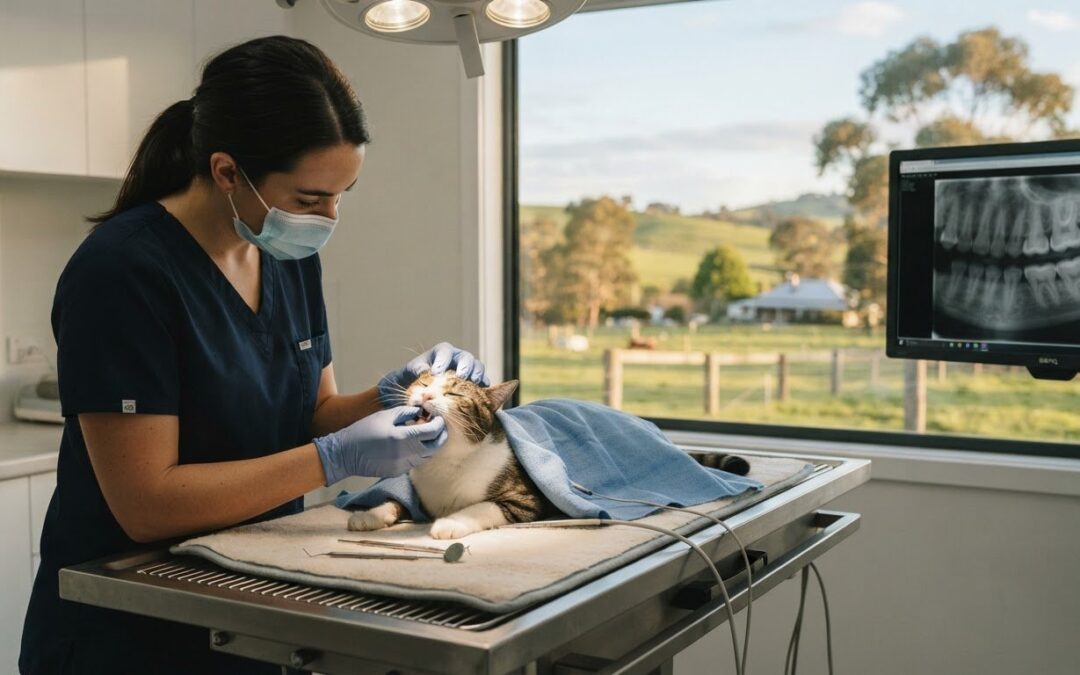
Could your cat have a painful tooth even if their mouth looks fine? A visual check can reveal obvious changes, but problems beneath the gumline may be harder to see. That’s why your vet may recommend full mouth dental x-rays for cats Trafalgar owners are arranging care for. Images of every tooth can reveal hidden changes and help guide decisions about treatment.
It’s understandable to wonder why every tooth needs an image or to feel concerned about anaesthesia and radiation. A thorough dental assessment commonly involves general anaesthesia so the veterinary team can examine the mouth and take clear dental images. Your cat’s needs are individual, and the team can explain why imaging is recommended and discuss your concerns.
Here’s what full-mouth dental X-rays may show beyond a visual examination, what to expect during assessment and what to ask before care is planned. West Gippsland Vet Care provides preventative dentistry and dental X-rays for cats across West Gippsland, including cats from Trafalgar.
Key Takeaways
- Full-mouth images give the vet a broader view of your cat’s teeth and supporting structures, helping inform an individual care plan.
- Learn what may happen during assessment and imaging, and why anaesthesia can be part of obtaining dental X-rays safely and accurately.
- Full-mouth and selective X-rays offer different coverage. The vet’s examination and your cat’s clinical needs guide the approach.
- Dental images may reveal changes around tooth roots or nearby bone. The veterinary team interprets them alongside examination findings.
- If you’re considering full mouth dental x-rays for cats Trafalgar, West Gippsland Vet Care provides preventative dentistry and dental X-rays to support your cat’s care.
Why full-mouth dental X-rays matter for cats in Trafalgar
A cat’s teeth can look healthy at a glance while changes remain hidden beneath the gums. A visual examination helps the veterinarian assess what can be seen in the mouth, but it can’t show the full length of a tooth or the structures supporting it. Dental X-rays provide another view of what may be happening below the surface.
Full-mouth dental X-rays are a series of images that lets a veterinarian assess every tooth, its roots and the surrounding jaw structures, rather than relying only on what’s visible during a mouth check. This broader view can help the veterinary team understand your cat’s dental health and discuss suitable next steps with you.
What does a full-mouth dental X-ray show?
Dental images show tooth roots and nearby jawbone, including areas that are difficult or impossible to inspect directly during a visual examination. A full-mouth series helps the veterinarian assess teeth that may be partly hidden, crowded or difficult to see clearly. An image can point to a possible concern, but it isn’t a diagnosis on its own. The vet interprets it alongside the physical examination and your cat’s circumstances.
For a broader overview of how imaging supports veterinary dentistry and radiography, you can explore this reference. During your cat’s assessment, the veterinary team can explain what the images show and how they relate to the mouth examination.
Why might a cat need images of every tooth?
Cats don’t always show obvious signs of dental discomfort at home, and one visible problem may not tell the whole story. A full-mouth series gives the veterinarian a more complete picture than focusing only on the tooth that first drew attention. This can be useful if the examination raises questions about several areas or teeth that are hard to see.
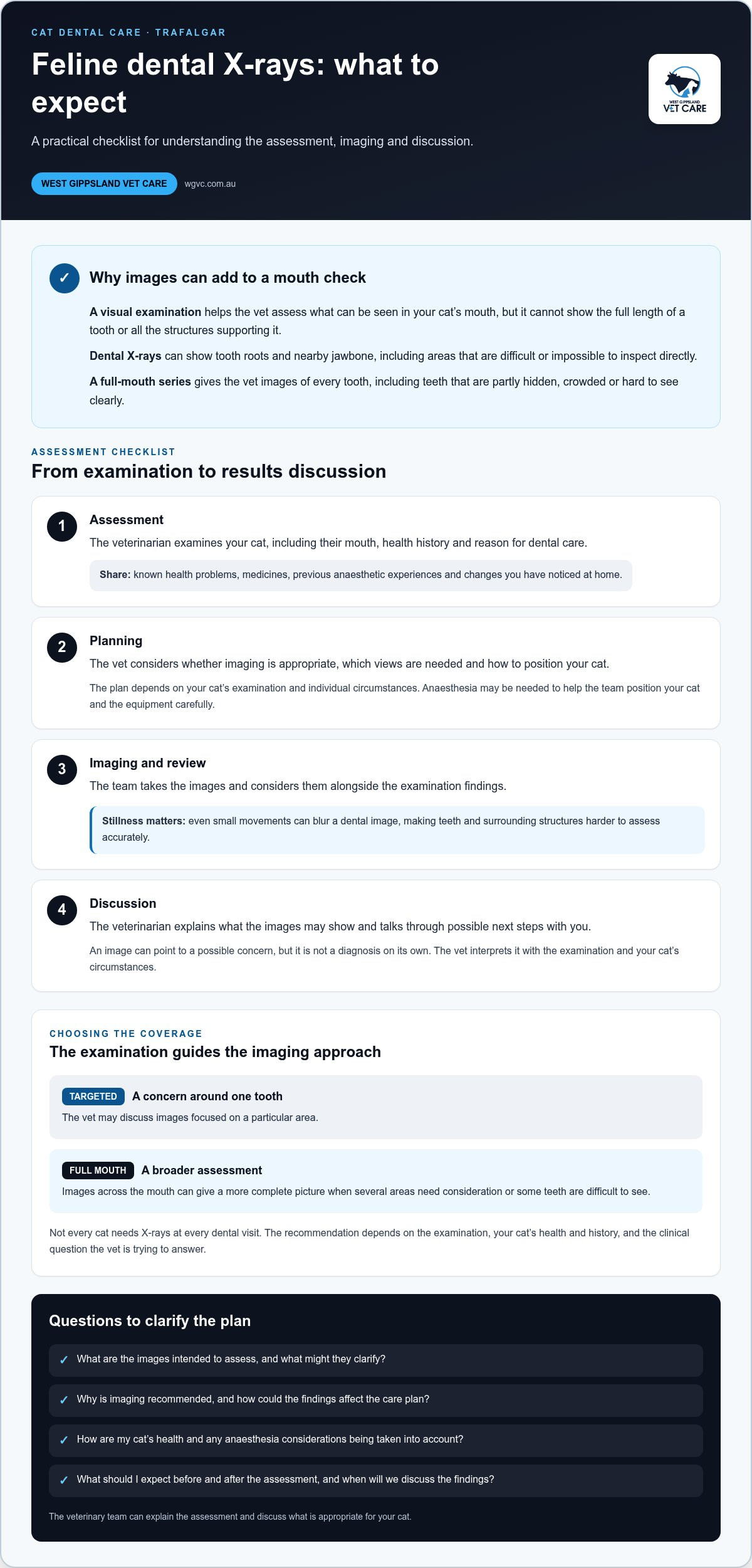
That doesn’t mean every cat needs X-rays at every dental visit. The recommendation depends on the examination, your cat’s health and history, and the clinical question the vet is trying to answer. A concern around one tooth may lead to discussion of targeted images, while a broader assessment may call for images across the mouth. Your vet can explain why a particular approach suits your cat.
If you’re weighing up full mouth dental x-rays for cats Trafalgar, ask what the images are intended to assess and how the findings could affect the care plan. West Gippsland Vet Care provides preventative dentistry and dental X-rays for cats across West Gippsland. The veterinary team can explain the assessment and discuss the options for your cat.
How feline dental X-rays are taken and what to expect
It’s natural to have questions about what your cat will experience, particularly if dental imaging may involve anaesthesia. The process is planned around your cat’s examination and health, rather than following the same routine for every patient. The veterinary team can explain why imaging is being considered, what it may clarify and how they’ll discuss the results with you.
What happens before and during imaging?
The veterinarian first assesses your cat, including their mouth, health history and reason for dental care. They then decide whether imaging is appropriate and whether anaesthesia is needed. Dental X-rays may require anaesthesia so the team can position your cat and the equipment carefully and obtain useful images. The plan depends on your cat and the assessment.
In general, the process moves through a few stages:
- Assessment: The veterinarian examines your cat and discusses their health and dental concerns.
- Planning: If imaging is recommended, the team plans which views are needed and how to position your cat.
- Imaging and review: The team takes the images and considers them alongside the examination findings.
- Discussion: The veterinarian explains what the images may show and talks through possible next steps with you.
Stillness matters because even small movements can blur a dental image, making the teeth and surrounding structures harder to assess accurately. Cats can’t be asked to hold a position on cue, so the vet considers how to obtain clear images while attending to your cat’s wellbeing. The team can explain how this applies to your cat’s plan.
How are safety and comfort considered?
Anaesthesia and radiation are reasonable things to feel concerned about. Anaesthesia can be part of a thorough dental assessment, but your veterinarian should discuss your cat’s health and any relevant considerations before proceeding. Share details about known health problems, medicines, previous anaesthetic experiences or changes you’ve noticed at home. This information helps the team consider the plan in context.
X-rays use radiation, so ask why imaging is recommended, what the vet hopes to learn and how the images may affect care decisions. The veterinarian weighs the expected diagnostic value against your cat’s individual circumstances and can explain how imaging will be planned. If you’re unsure about a term or possible finding, ask for it to be explained in everyday language.
Before the appointment, write down your questions, including what to expect before and after the assessment and when you’ll discuss the findings. For Trafalgar cat owners considering full mouth dental x-rays for cats Trafalgar, West Gippsland Vet Care’s veterinary team can help clarify the plan. Learn more about preventative dentistry and dental X-rays and discuss your cat’s needs with the team.
Full-mouth versus selective dental X-rays: how vets decide
Dental imaging can answer a focused question or give the veterinarian a broader view of the mouth. Neither approach is automatically better for every cat. The choice depends on what the examination reveals, what the vet needs to assess and your cat’s individual circumstances. Understanding the difference can help you follow the reasoning behind a recommendation.
| Approach | Scope and typical purpose | How the vet decides |
|---|---|---|
| Full-mouth series | Images cover the teeth and supporting structures across the mouth. This may help build a broader picture when more than one area needs assessment. | The vet may recommend it when a wider view would help answer the clinical questions raised by the examination. |
| Selective images | Images focus on a particular tooth or area of concern. They may help investigate a specific finding. | The vet considers whether focused views suit the concern and whether other areas also need assessment. |
When might a complete set of images be useful?
A complete set can help the veterinarian assess several teeth and the structures around them, including areas that can’t be judged from the visible tooth surface alone. If an examination raises questions about more than one part of the mouth, a wider view may help the vet assess those areas together. This is an example, not a diagnosis or a recommendation for every cat.
Selective images can be useful when the clinical question is more focused. However, a concern that seems limited to one tooth doesn’t automatically mean other areas are clear. The vet considers whether targeted views will provide enough information or whether broader coverage would be more helpful. The recommendation should relate to the examination, not a fixed rule for every patient.
What questions can owners ask about the recommendation?
You’re part of the decision-making conversation. If your cat’s vet recommends imaging, ask what the images are intended to clarify and how the results could influence the care plan. You can also discuss comfort, anaesthesia and any part of your cat’s health history that may affect the plan.
- What concern from the examination are the images intended to assess?
- Why might a full-mouth or selective approach be suitable for my cat?
- Could the findings change the care options being considered?
- What health history or other information would help you plan the assessment?
These questions can clarify the recommendation without requiring you to interpret images yourself. For Trafalgar owners considering full mouth dental x-rays for cats Trafalgar, the veterinary team can explain how the imaging approach relates to the examination and discuss the findings with you.
Understanding feline dental X-ray findings and next steps
Dental images can help the veterinarian look for changes that aren’t obvious on the visible part of a tooth. They may show differences around a tooth root or in nearby jawbone. These are possible findings for the vet to assess, not conclusions you need to draw from an image on your own.
A dental X-ray finding needs veterinary interpretation in context, alongside your cat’s examination, health and any signs you’ve noticed at home. An image detail can’t be understood in isolation. Your veterinarian considers all of these factors before discussing what the findings may mean for your cat.
What hidden dental problems may images reveal?
One condition the vet may investigate is tooth resorption, where a tooth’s structure breaks down. Changes may affect parts of the tooth that aren’t visible above the gumline, so images can help the veterinarian assess the roots as well as the exposed surface. This is one possible reason for dental imaging and doesn’t mean your cat has the condition.
Images may also show changes in the bone surrounding a tooth or other differences around its roots. The veterinarian considers whether these details fit with the mouth examination and your cat’s health. An image can raise a question that needs closer assessment; it doesn’t automatically determine a diagnosis or the care that should follow.
How do findings guide a care discussion?
Your veterinarian relates the images to the full picture: examination findings, symptoms you’ve observed and your cat’s individual health. Mention changes in eating habits or behaviour, even if you’re unsure whether they’re linked to the mouth. This context can help the vet explain the significance of an image and discuss suitable options.
It’s okay to ask the team to talk through the images in everyday language. You might ask:
- What does this finding show, and how does it relate to the examination?
- What care options are you recommending, and what is each intended to address?
- Are there other factors about my cat’s health that shape the plan?
The aim is a clear, shared understanding of the next steps, not a decision based on an image alone. For more background on how dental care fits into a cat’s oral health, explore this guide to cat dental cleaning in Gippsland.
West Gippsland Vet Care’s veterinary team can explain dental X-ray findings and discuss care in light of your cat’s needs. Arrange a cat dental assessment to talk through your concerns and the options available.
Arrange a cat dental assessment near Trafalgar with West Gippsland Vet Care
Understanding what dental X-rays can show is a helpful start. An assessment considers your cat as an individual, including what you’ve noticed at home and their health history. West Gippsland Vet Care provides preventative dentistry and dental X-rays, and the veterinary team can discuss whether imaging may help guide your cat’s care.
Preparing for a dental conversation about your cat
You don’t need to arrive with a diagnosis. A few observations can help the vet understand what has changed and when. Cats can be subtle about discomfort, so mention changes even if they seem small or intermittent. For example, note if your cat approaches food but eats differently, grooms less, acts differently around their face or seems uncomfortable when eating.
It can help to jot down:
- Changes in eating, grooming or behaviour, including when you first noticed them.
- Any signs of apparent oral discomfort or previous dental concerns.
- Known health conditions and medicines your cat is taking.
Bring any relevant health information you have and follow the veterinary team’s individual pre-visit instructions. If you’re unsure whether an observation matters, share it anyway. These details help the team understand your cat’s circumstances and explain how an examination or imaging recommendation fits their needs.
A local next step for Trafalgar cat owners
West Gippsland Vet Care serves pet owners in Trafalgar and the wider West Gippsland community, including Warragul, Drouin, Bunyip, Yarragon, Willow Grove, Hill End and Neerim South. Discuss your cat’s dental assessment with the veterinary team and ask about imaging, possible findings and care options. You can ask the team to explain unfamiliar terms or why a particular approach is being considered.
For owners searching for full mouth dental x-rays for cats Trafalgar, a useful starting point is a conversation about your cat: what you’ve noticed, what the examination may involve and what the vet hopes to learn. The team can explain the proposed next steps without assuming the same plan is right for every cat.
Contact West Gippsland Vet Care to discuss your cat’s dental care and arrange an assessment focused on their wellbeing.
Take the next step for your cat’s dental wellbeing
Dental care decisions can feel easier with an individual plan and the chance to talk through your concerns. If you’re considering full mouth dental x-rays for cats Trafalgar, start with the changes you’ve noticed and the questions you’d like answered. The veterinary team can explain how an assessment may guide decisions for your cat.
West Gippsland Vet Care offers preventative dentistry and dental X-rays as part of its broader pet healthcare, which includes diagnostic imaging. Trafalgar cat owners can discuss their companion’s needs and the care options that may be appropriate.
Talk with West Gippsland Vet Care about your cat’s dental care. Start with a conversation about your cat’s needs and the next steps.
Frequently Asked Questions
Is full-mouth dental X-ray imaging useful for a cat with no obvious symptoms?
It may be useful because cats can have dental changes without clear signs at home. However, imaging isn’t automatically needed for every cat. The veterinarian considers the mouth examination, health history and likely benefit before recommending it. If you’re considering full mouth dental x-rays for cats Trafalgar, ask what the images are intended to clarify for your cat. Appetite and behaviour are useful clues, but they aren’t the only factors in the decision.
Can dental X-rays show tooth resorption in cats?
Yes, dental radiographs can help the veterinarian assess changes below the gumline that may be consistent with tooth resorption. The images need to be considered alongside the mouth examination and your cat’s health, so they aren’t a diagnosis to make at home. Ask the vet to explain what a finding means for your cat and how it may shape the care options they discuss with you.
Does a cat need general anaesthesia for dental X-rays?
Dental X-rays commonly require general anaesthesia because the cat needs to stay still while the team positions them for useful images. Whether it’s appropriate depends on the cat’s health and circumstances, so the veterinarian makes an individual assessment. Tell the team about health conditions, medicines or previous anaesthetic experiences, and raise any concerns before the planned appointment.
How often should a cat have full-mouth dental X-rays?
There’s no single interval that suits every cat. The veterinarian considers factors such as age, the oral examination, previous dental history and any new concerns when deciding whether imaging is useful. Your cat may not need images at every dental visit. Ask whether the vet recommends imaging now or at a later assessment, and what changes in your cat’s mouth or health would affect the timing.
Can I feed my cat before dental X-rays?
Follow the feeding instructions given for your cat’s appointment, as they depend on the planned care and whether anaesthesia is involved. Don’t apply a general fasting rule or change your cat’s routine based on advice intended for another animal. If the instructions aren’t clear, contact the clinic before the appointment. The veterinary team can guide you according to the plan for your cat and their individual needs.
What should I watch for after my cat’s dental X-ray appointment?
Aftercare depends on what took place, including whether your cat had anaesthesia or dental treatment as well as imaging. Follow the veterinary team’s instructions for your cat, as they’ll reflect the care given. Monitor your cat in line with that advice, and contact the clinic if you’re worried about their recovery or notice a concerning change. Don’t assume another cat’s aftercare instructions apply.
Are full-mouth dental X-rays different from the X-rays used for other parts of a cat’s body?
Yes. Dental radiographs are intended to show teeth and nearby structures in detail, while other veterinary X-rays answer questions about different body areas. Positioning and imaging choices depend on the clinical purpose. West Gippsland Vet Care provides diagnostic imaging as part of broader pet healthcare for owners across Trafalgar, Warragul, Drouin, Bunyip, Yarragon, Willow Grove, Hill End and Neerim South. Your vet can explain why dental views suit the examination.