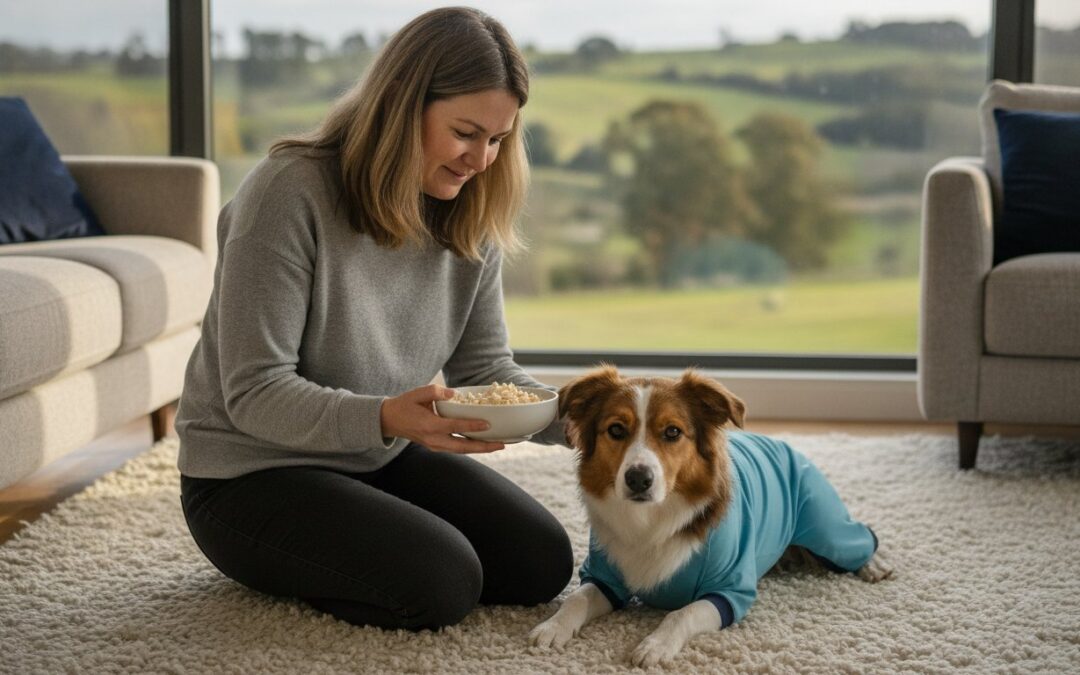
You’ve finally settled your pup onto their favourite rug after a long day at the clinic, but when you offer a small bowl of chicken, they simply turn their head away. It’s a heart-wrenching moment that leaves many owners wondering if their dog won’t eat after surgery what to do next. We completely understand that knot in your stomach when your best mate isn’t acting like themselves. It’s natural to feel anxious when the special recovery food stays untouched, or when you aren’t sure if they’re just groggy from the anaesthetic or actually unwell.
In this article, we’ll help you navigate these quiet post-op hours with confidence. You’ll discover why a temporary loss of appetite is often a normal part of the healing journey and learn practical, vet-approved steps to encourage your dog to take those first vital bites. We will cover exactly when you should expect their hunger to return, how to entice a fussy eater, and the specific red flags that indicate it’s time to contact a vet for emergency care. Our goal is to help you and your companion get back to your normal routine as smoothly as possible.
Key Takeaways
- Understand how anaesthesia and post-op stress naturally slow down your dog’s digestion, making a temporary loss of appetite a common part of the healing process.
- Learn the “24-hour rule” for healthy adult dogs and how to distinguish between a pet being slightly picky and a genuine medical concern.
- Discover vet-approved “temptation” meals and simple environmental tweaks if your dog won’t eat after surgery what to do to help them feel comfortable enough to try a few bites.
- Explore how modern, less invasive techniques like keyhole surgery can result in less internal inflammation and a much faster return to normal eating habits.
- Identify the specific red flags and clinical signs that mean you should skip the home remedies and contact your vet for emergency care immediately.
Why Your Dog Won’t Eat After Surgery: Understanding the Post-Op Slump
Bringing your pup home after a procedure should be a relief, but that feeling often evaporates when they turn their nose up at their dinner. It’s heart-wrenching to see your normally food-motivated mate look so disinterested in their favourite treats. We want to reassure you that this “post-op slump” is a very common physiological response. Your dog’s body has been through a significant event, and their digestive system is often the last part of them to wake up fully. If you find yourself in this situation, knowing why your dog won’t eat after surgery what to do next becomes your top priority.
The clinic environment, while safe and professional, is a world away from their comfortable bed at home. The sights, sounds, and even the unique hospital smells can leave a dog feeling overstimulated or anxious. By the time they get back to their own backyard, they might simply be too exhausted to think about eating. Validating your concern is a key part of our care, but we also want to provide the clinical context that helps you stay calm during these first few quiet hours of recovery.
The Role of Anaesthesia and Nausea
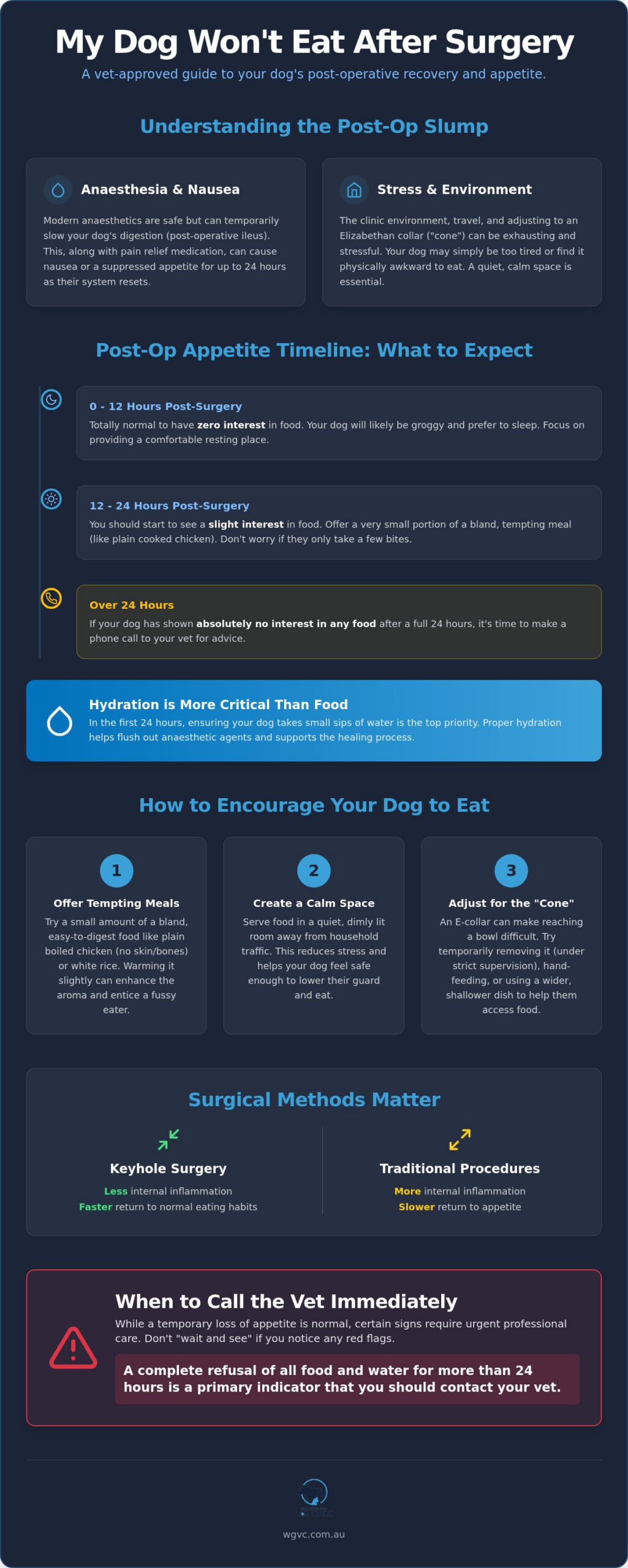
Post-operative ileus is defined as the temporary slowing of intestinal movement that frequently occurs after a surgical event. Modern anaesthetic drugs are incredibly safe, but they do have a lingering effect on the gut’s ability to move and process food. Some dogs are particularly sensitive and metabolise these sedatives at a slower rate than others, which leaves them feeling full or slightly nauseated for up to 24 hours. Additionally, the pain relief we provide to keep them comfortable can sometimes suppress their appetite as a side effect. Having a basic grasp of Pet first aid and recovery milestones will help you monitor these signs with a steady hand while your dog’s system resets.
Stress and Environmental Factors
We strive for a fear-free experience in our clinic, but the transition home still requires an adjustment period. If your dog is wearing an Elizabethan collar, or the cone, they might find it difficult or intimidating to lower their head to their usual bowl. The plastic can hit the floor or the edge of the dish, creating a sound that startles a sensitive pup. Beyond the physical barriers, your mate might just be worn out from the adrenaline of the day. Often, the best thing you can do is provide a quiet, dim space where they can sleep off the excitement of seeing you again before you try to entice them with a meal.
Normal vs. Concerning: How Long Can a Dog Safely Go Without Food?
While it’s unsettling when your dog won’t eat after surgery what to do often comes down to a mix of patience and close observation. For most healthy adult dogs, we generally follow a 24-hour rule. During the first day back in their own bed, their body is busy prioritising internal healing over the complex task of digestion. It’s quite common for a pet to be “picky” rather than completely off their food. If they turn their nose up at dry kibble but wag their tail for a tiny sliver of plain chicken, they are likely just feeling a bit sensitive. However, hydration is far more critical than solid food in these first 12 to 24 hours. Ensuring your mate is taking small sips of water is the best way to help them flush out the lingering effects of their medication.
If you find that your mate is still refusing every single thing you offer after the first day, it’s time to take a closer look at their overall behaviour. A dog that is recovering well should still be responsive to your voice and able to settle comfortably. If you’re ever feeling a bit stuck or worried about their progress, you can always chat with our experienced staff for some extra peace of mind.
The 24-Hour Appetite Timeline
In the first 0 to 12 hours after coming home, most vets expect zero interest in food. Your dog is likely still quite groggy and may just want to sleep. Between 12 and 24 hours, you should ideally start to see a slight interest in high-value treats or a very small portion of a bland meal. If you hit the mark of over 24 hours with absolutely no food intake, a quick phone call to West Gippsland Vet Care is necessary. We can help determine if this is a normal part of their individual recovery or if they need a check-up at our clinic.
Red Flags: When It’s a Gippsland Emergency
There are specific symptoms that move a situation from “watch and wait” to an urgent matter. Following standard Post-Surgery Instructions is the best way to ensure a smooth recovery. You should contact a professional immediately if you notice repeated vomiting, extreme lethargy where they won’t stand up, or if their gums appear pale or grey. It is also a good idea to gently inspect the surgical site; any significant swelling, fresh bleeding, or discharge is a red flag. For our existing clients, remember that we provide a dedicated emergency vet Warragul service to support you and your companion through any post-op hurdles, no matter the hour.
Surgical Methods and Recovery: Keyhole Spay vs. Traditional Procedures
It is often overlooked, but the specific technique used during a procedure plays a massive role in how quickly your dog feels like visiting their food bowl again. While every surgery requires care, the level of internal inflammation and physical trauma varies significantly between different methods. When we reduce the physical stress on the body, the digestive system is much less likely to “shut down” in response. If your dog won’t eat after surgery what to do often starts with understanding the specific recovery arc associated with their particular operation. A simple lump removal has a very different impact on appetite compared to a major abdominal or bone surgery.
We believe in using the most advanced, gentle techniques possible to ensure our patients return to their happy, hungry selves quickly. Whether it is a routine desexing or a complex internal procedure, the goal is always to minimise discomfort. By focusing on precision and modern surgical standards, we help your mate bridge the gap between the clinic and their first post-op meal with much more ease.
The Keyhole Advantage (Laparoscopic Spay)
We are proud to be regional leaders in laparoscopic, or keyhole, surgery. Unlike a traditional “open” spay which requires a larger incision, keyhole surgery uses tiny ports and a specialised camera. This means there is significantly less tissue handling and internal bruising. Because the physical impact is so much smaller, these patients experience far less post-operative nausea. In our experience, dogs who undergo keyhole procedures often show an interest in food the very same evening. The faster “re-start” of the digestive system is one of the biggest benefits of this less invasive approach, helping your pup feel like themselves much sooner.
Major Procedures: Orthopaedics and Gastropexy
For more intensive surgeries, such as a gastropexy or a TPLO for a torn ligament, the recovery journey is naturally a bit more demanding. An orthopaedic vet Gippsland specialist understands that bone surgery involves a different level of pain management. These procedures often require stronger medications that can linger in the system and suppress the appetite for a little longer than a routine desexing. For our gastropexy patients, we also have to be very mindful of meal size and frequency to protect the surgical site. We tailor every pain management plan to ensure your dog stays comfortable enough to rest, yet alert enough to maintain their strength through nutrition. If your mate is facing a major recovery, we work closely with you to adjust their care plan if their appetite is slow to return.
Practical Tips: What to Do to Encourage Your Dog to Eat
When the usual rattling of the kibble bag fails to get a tail wagging, it is time to try a gentler approach. If you are staring at an untouched bowl and wondering about your dog won’t eat after surgery what to do, the secret often lies in making the food as enticing and easy to digest as possible. We recommend a “little and often” strategy. Instead of two large meals, offer a tablespoon of food every few hours. This prevents overwhelming a sensitive stomach that might still be feeling the effects of medication. Small successes build confidence for both you and your mate.
Creating a calm, predictable environment is just as important as the food itself. Your dog needs to feel safe and relaxed to trigger their “rest and digest” response. If you need more tailored advice for your pet’s specific recovery, you can always contact our clinic for support. We are here to help you through every step of the post-op journey.
The ‘Bland Diet’ Menu
A simple, home-cooked bland diet is the gold standard for post-op recovery. Prepare a mix of boiled chicken breast (ensure all skin and bones are removed) and plain white rice. Use a ratio of one part chicken to two parts rice. To make this even more appealing, try the “Warmth Trick.” Gently heat the meal to roughly body temperature; this releases the natural aromas that signal to your dog’s brain that it is time to eat. If they still seem hesitant, try a “kickstarter” topper. A small dollop of plain Greek yoghurt or a teaspoon of low-salt tuna can provide just enough scent and flavour to get them started.
Feeding Techniques for Post-Op Comfort
Sometimes the barrier to eating is physical rather than a lack of hunger. We often see that a bit of extra TLC goes a long way. Consider these adjustments to help your mate feel comfortable:
- The Power of Hand-Feeding: Sitting on the floor and offering tiny bites from your palm provides immense emotional security. Your soothing voice and touch can reassure a confused pup that it is okay to eat.
- Elevating the Bowl: For dogs with abdominal incisions or those who have had orthopaedic work, leaning all the way down to the floor can be painful. Placing their dish on a small step or a sturdy box can make a world of difference.
- Supervised Meal Breaks: The Elizabethan collar, or “cone of shame,” is a common culprit for meal refusal. You can temporarily remove the cone for a “supervised meal break.” Just ensure you stay right by their side and replace the collar immediately once they have finished.
By combining these nutritional and environmental tweaks, you provide your dog with the best possible chance of a swift return to their normal appetite. Remember to keep water easily accessible at all times, as staying hydrated is the most important part of the healing process.
Dedicated Post-Op Support for Gippsland Pet Owners
At West Gippsland Vet Care, we believe that our responsibility to your companion doesn’t end when you walk out our clinic doors. We see ourselves as a vital extension of your support system, standing beside you as your mate navigates their path to recovery. While it is natural to feel a bit of anxiety if your dog won’t eat after surgery what to do is a question we are always ready to answer. We encourage our clients to reach out with any concern, no matter how small it might seem. A quick chat can often provide the peace of mind you need to stay calm and supportive for your pet.
Our follow-up process is designed to monitor every surgical patient closely, ensuring that their healing is progressing exactly as it should. We track appetite, energy levels, and wound healing to catch any potential hurdles before they become serious issues. This collaborative approach between our clinical team and your family ensures that your dog receives a personal level of care that prioritises their unique needs and medical history. We don’t just treat symptoms; we care for the individual animal and the bond you share.
Our Commitment to Fear-Free Recovery
We work hard to ensure that post-op checks are as stress-free as possible. By utilising fear-free veterinary care techniques, we help your dog feel safe and relaxed during their follow-up visits. If your mate’s appetite fails to return within the expected timeframe, we have the advantage of an in-house laboratory. This allows us to rapidly check hydration levels or organ function right here in the clinic, providing answers in minutes rather than days. This immediate insight helps us tailor our advice and adjust pain management or nutritional plans on the spot, ensuring your pup is back to their best as quickly as possible.
How to Contact Us in Warragul and Beyond
We are proud to serve families across the Gippsland region, including those in Drouin, Bunyip, and Neerim South. If you have any worries during our regular hours, simply give our Warragul centre a call to speak with one of our friendly staff members. For our existing clients, we also provide a dedicated 24-hour emergency service. If something doesn’t feel right in the middle of the night, you don’t have to wait until morning to seek help. Whether you are dealing with a fussy eater or a more urgent concern, you’re not in this alone; we’re here to help your best mate get back on their paws with kindness and expertise.
Supporting Your Mate’s Path to Recovery
Watching your dog slowly regain their spark after a procedure takes a bit of patience and a lot of love. We have explored how modern techniques like keyhole surgery can significantly reduce post-op nausea, and why a quiet, comfortable environment at home is the best medicine for a sleepy gut. While it’s normal to feel a bit rattled when your dog won’t eat after surgery what to do is simply follow the gentle steps we’ve discussed, from offering bland meals to providing a bit of extra TLC through hand-feeding. Remember that most healthy pets will find their appetite again within that first 24-hour window as the anaesthetic wears off.
As regional leaders in keyhole spay and gastropexy, we are dedicated to making every recovery as smooth as possible through our fear-free certified approach. If you have any concerns or if those red flags appear, our 24-hour emergency service is always available for our existing clients in Warragul and the surrounding areas. You can book a post-operative check-up or consult with our compassionate team at West Gippsland Vet Care to ensure your mate is on the right track. We are here to support you both every step of the way, so you can get back to your daily walks and backyard games soon.
Frequently Asked Questions
Is it normal for a dog not to eat for 24 hours after being desexed?
Yes, it is quite normal for a dog to skip their meals for the first 24 hours after being desexed. The lingering effects of anaesthesia often cause a bit of nausea, and the stress of a day at the clinic can leave them feeling quite exhausted. We generally expect their appetite to return slowly by the next morning as their system settles and they feel more secure in their own home.
Can I give my dog their pain medication if they haven’t eaten anything?
It depends on the specific medication, but many anti-inflammatories are best given with at least a small amount of food to protect the stomach lining. If your dog is refusing every morsel, please call our clinic before you administer the dose. We can advise if that particular medicine is safe to give on an empty stomach or if we need to adjust their pain management plan to help them feel better.
My dog is drinking water but refusing food after surgery; is this okay?
Seeing your mate drink water is a wonderful sign, as hydration is far more critical than solid food in the first 12 to 24 hours. If they are taking small sips of water but still refusing dinner, don’t panic just yet. Their body is simply prioritising fluid intake to help flush out the medications from their system. As long as they remain hydrated and alert, you can wait for their hunger to return naturally.
Should I be worried if my dog is shaking and won’t eat after their procedure?
Shaking can be a sign of many things, including pain, feeling a bit chilly after anaesthesia, or even just post-op stress and anxiety. If your dog is shaking and won’t eat, try offering a warm blanket and a quiet, dim space first to see if they settle. However, if the shaking is persistent or accompanied by extreme lethargy, it is best to contact us to ensure they are comfortable and their recovery is progressing.
What is the best food to give a dog who is recovering from major orthopaedic surgery?
For dogs recovering from major orthopaedic surgery, we recommend a highly digestible, bland diet such as boiled chicken breast and white rice. These procedures often involve stronger medications that can leave the stomach feeling a bit sensitive, so a gentle meal is much easier for them to process. You might also consider using small amounts of plain Greek yoghurt as a “kickstarter” if you are worried about your dog won’t eat after surgery what to do.
When should I call the emergency vet if my dog refuses to eat?
You should contact the emergency vet if your dog has refused all food for more than 24 hours or if they show “red flag” symptoms like repeated vomiting, pale gums, or extreme lethargy. It’s also vital to call if they aren’t drinking any water at all. For our existing Gippsland clients, our 24-hour emergency service is always available to provide immediate support and ensure your mate’s recovery stays on the right track.
Can the ‘cone of shame’ stop my dog from wanting to eat their dinner?
The Elizabethan collar can definitely be a major hurdle for many dogs at dinner time. The plastic often bumps into their bowl or the floor, creating scary noises or making it physically awkward to reach their food. We suggest supervising a “cone-free” meal break where you remove the collar while they eat. Just ensure you stay by their side and put the collar straight back on once they have finished to protect their stitches.
How can I tell if my dog isn’t eating because of pain or just nausea?
Distinguishing between the two can be tricky, but there are often subtle clues to look for. A nauseated dog might lick their lips, drool, or turn away from food with a “queasy” expression. A dog in pain is often more restless, unable to settle comfortably, or may be vocalising. If you aren’t sure which one is affecting your mate, we always prefer you give us a ring so we can help you assess their comfort levels.