
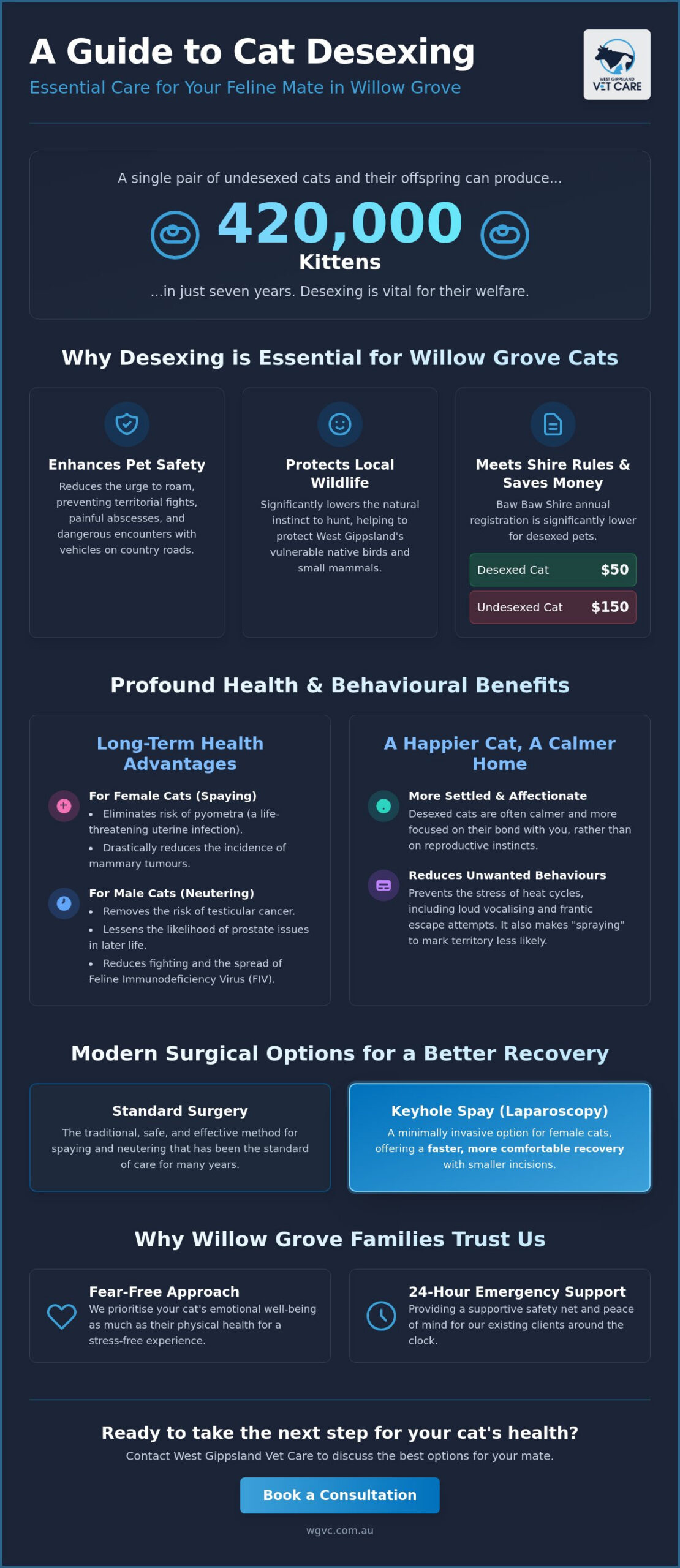
Did you know that a single pair of intact cats and their offspring can produce up to 420,000 kittens in just seven years? This staggering figure highlights why cat desexing Willow Grove services are so essential for our local community and the long-term welfare of our feline friends. We understand that as a pet parent, the thought of your companion undergoing surgery can be daunting. It’s completely natural to feel a bit of anxiety about general anaesthesia or worry about how much discomfort they might feel during recovery. You want to know your cat is in safe, gentle hands that value their emotional well-being as much as their physical health.
In this guide, you’ll discover how modern veterinary care and a compassionate, fear-free approach can turn this routine procedure into a stress-free milestone. We’ll explore the significant health benefits of desexing, including a reduced risk of disease and a calmer life at home. We will also preview advanced surgical options like keyhole spay, clarify the best age for the procedure, and explain how staying on top of these health checks helps you meet Baw Baw Shire registration rules with ease.
Key Takeaways
- Learn why desexing is a vital step for responsible pet ownership in West Gippsland and how it helps protect our unique local wildlife.
- Understand the long-term health advantages for your cat, such as preventing life-threatening uterine infections and reducing the risk of certain cancers.
- Explore the differences between traditional surgery and modern keyhole spay options for cat desexing Willow Grove to ensure a faster, more comfortable recovery for your mate.
- Get practical advice on preparing your feline friend for their procedure and setting up a peaceful “recovery suite” in your own home.
- Discover how our fear-free approach and 24-hour emergency support for existing clients provide a supportive safety net for the Willow Grove community.
Why Cat Desexing is Essential for Willow Grove Pet Owners
Living amongst the rolling hills and quiet beauty of West Gippsland is a joy for both people and their pets. However, the semi-rural nature of our community in Willow Grove brings unique responsibilities for cat owners. Choosing cat desexing Willow Grove services is one of the most impactful decisions you can make for your companion. It isn’t just about preventing unwanted litters; it’s a vital step in fostering a safer, more harmonious environment for your cat and the local community we all share.
Cats with a natural urge to roam can travel surprisingly far across our local paddocks and bushland. This wandering behaviour, driven by hormones in undesexed felines, often leads to territorial disputes with other animals, painful abscesses, and a high risk of being struck by vehicles on our country roads. By choosing to desex your companion, you’re helping them stay closer to home and away from these avoidable dangers. It’s a compassionate choice that reflects a deep commitment to their long-term safety.
Protecting Our Local Gippsland Environment
The Willow Grove region is home to stunning native birdlife and delicate small mammals that are particularly vulnerable to roaming cats. Even the most well-fed pet retains a natural hunting instinct. Neutering significantly reduces the drive to hunt and roam, which directly supports local wildlife conservation efforts in our backyard. This proactive approach also helps manage the stray cat population in West Gippsland, preventing the cycle of unplanned litters that can overwhelm local shelters.
Even if your cat stays strictly indoors, they still benefit immensely from the procedure. It prevents the intense hormonal stress and loud vocalisation associated with heat cycles. A desexed cat is typically much calmer, more affectionate, and less likely to engage in “spraying” to mark their territory inside your home.
Understanding Local Baw Baw Shire Requirements
Navigating local regulations is a key part of being a responsible pet parent. In the Baw Baw Shire, Victorian state law requires all cats to be registered by three months of age. There is also a clear financial benefit for those who choose to desex their pets. Based on the 2025-2026 fees, the annual registration for a desexed cat is $50, whereas an entire cat costs $150. These fees are halved for pensioners, making it easier for everyone in our community to provide the best care.
During the process of cat desexing Willow Grove residents often choose to update their pet’s microchip details at the same time. This ensures that if your mate ever does manage to slip out the door, they have the best possible chance of being safely reunited with you through a local vet or council officer. It’s a simple, collaborative way to ensure your pet is protected for life.
The Health and Behavioural Benefits of Feline Desexing
When we talk about cat desexing Willow Grove pet owners often ask how the procedure will truly change their companion’s life. Beyond preventing unplanned litters, the health benefits are profound and can save your cat from significant pain later in life. For female cats, desexing entirely eliminates the risk of pyometra, a life-threatening uterine infection that requires emergency surgery. It also drastically reduces the incidence of mammary tumours, which are unfortunately often malignant in felines. For the boys, the procedure removes the risk of testicular cancer and lessens the likelihood of prostate issues as they age.
The hormonal “heat” cycle is another factor that can be incredibly stressful for both the animal and the household. A female in heat may vocalise loudly for days, show signs of restlessness, and try desperately to escape. By choosing desexing procedures performed with a gentle, compassionate touch, you’re removing this biological frustration from their lives. This leads to a more settled, content pet who is focused on their bond with you rather than their reproductive instincts.
Long-term Health and Longevity
By removing the risks of certain cancers and infections, desexing can increase a cat’s lifespan by several years. This longevity isn’t just about internal health; it’s also about protection from external threats. Undesexed cats are much more likely to engage in territorial fights, which are the primary way feline immunodeficiency virus (FIV) is spread through deep bite wounds. A calmer, desexed cat is less likely to scrap with the local tom-cat, keeping them safe from these transmissible diseases. Research from Cornell University on Spaying and Neutering supports these findings, highlighting how the procedure fosters a healthier, more predictable life for domestic felines.
Behavioural Changes: Myth vs. Reality
A common worry we hear is that a cat’s unique personality might disappear after surgery. We want to reassure you that your cat will still be the same quirky, lovable individual they’ve always been. In fact, many owners find their pets become more affectionate and less prone to aggressive “tom-cat” behaviours like urine spraying or wandering. These habits are driven by hormones, not personality. Once those hormones are removed, your cat can relax into their true self.
One reality to prepare for is a slightly slower metabolism. Because desexed cats aren’t burning energy looking for mates or defending territories, they can be prone to weight gain. Managing your cat’s diet post-surgery with high-quality nutrition and regular play will keep them trim and active. We’re always here to chat about the best food options to keep your mate in peak condition as they enjoy their quieter, healthier life in Willow Grove.
Standard Surgery vs. Keyhole Spay: Choosing the Best for Your Mate
When you begin looking into cat desexing Willow Grove families often find that there is more than one way to approach this important health milestone. While traditional “open” surgery has been the standard for decades, veterinary medicine has evolved significantly. We are proud to offer advanced laparoscopic, or keyhole, surgery as a modern alternative. Understanding the differences between these two methods allows you to make an informed choice that best suits your cat’s needs and your own peace of mind.
Traditional surgery involves a larger incision to allow the vet to perform the procedure. While this is a safe and routine method, it does require more internal manipulation and a longer recovery period. Keyhole surgery, on the other hand, uses a specialized camera and fine instruments through two or three tiny entry points. This “gold standard” approach provides our surgical team with a high-definition view of the internal organs, allowing for incredible precision and minimal tissue trauma. It requires a high level of expertise and specific equipment that we are glad to provide for our local West Gippsland community.
The Advantages of Laparoscopic Keyhole Spay
The most significant benefit of a keyhole spay is the comfort of your companion. Because the incisions are so small, usually only a few millimetres long, there is far less post-operative discomfort compared to traditional methods. Most cats are back to their bouncy, normal selves much faster, often within just a day or two. Other key advantages include:
- Reduced Pain: Minimal internal pulling means your cat feels much better immediately after waking up.
- Faster Healing: Smaller wounds close more quickly and require less restrictive “cone” time.
- Lower Risk: Tiny entry points significantly reduce the chance of wound infections or complications during the healing process.
We believe that providing these advanced options is part of our commitment to a fear-free experience. When your pet feels less pain, they feel less stress, which makes the entire visit to the clinic a more positive one for everyone involved.
What to Expect During the Procedure
Regardless of the surgical method you choose, our team follows a rigorous safety protocol. Every cat receives a thorough pre-anaesthetic check to ensure they are fit for the day. We use tailored general anaesthesia plans and have a dedicated nurse monitoring your mate’s vital signs every second they are in our care. This level of attention is a hallmark of our clinic, whether we are performing a routine spay or providing complex Orthopaedic Vet Gippsland services.
Clear communication is vital during this process. As the University of Sydney on Cat Desexing highlights, being well-informed about the procedure helps reduce owner anxiety and ensures you can provide the best care at home. We will walk you through every step, from the moment you drop them off to the detailed instructions we provide for their quiet evening of recovery.
Preparing Your Cat and Post-Operative Care at Home
Getting ready for your companion’s surgery involves a few simple steps that make a world of difference for their comfort. For cat desexing Willow Grove families should follow the specific fasting instructions provided by our team, which usually means no food after 8:00 pm the night before the procedure. You’re more than welcome to bring along a favourite blanket or a small item from home that smells like you. This little touch of familiarity helps your mate feel secure and settled while they are in our care for the day.
Once you return home, creating a dedicated “recovery suite” is essential. This should be a quiet, warm area where your cat can’t jump onto high surfaces like kitchen benches or wardrobes. Restricting activity is vital for protecting both the skin incision and the internal stitches while they heal. In our clinic, we never compromise on comfort. We use a multi-modal approach to pain management, ensuring your cat has adequate relief before, during, and after their procedure so they can focus entirely on a peaceful recovery.
Our Fear-Free Approach to Surgery
We know that a trip to the vet can be stressful for some felines, so we’ve designed our process to be as gentle as possible. We use calming pheromones and specialised handling techniques from the moment your cat enters our care. For the car journey from Willow Grove to the clinic, try covering the carrier with a towel to create a dark, safe “den” environment. Spraying the towel with a synthetic feline pheromone about fifteen minutes before you leave can also help settle their nerves before the drive begins.
The First 48 Hours: A Recovery Checklist
The first two days at home are the most important for a smooth transition. Your cat might be a little groggy from the general anaesthesia, so follow this simple checklist to keep them on track:
- Light Meals: Offer a small portion (about half the usual amount) of their food on the first evening. Don’t be alarmed if they aren’t very hungry right away.
- Restricted Movement: Keep them in a single room with their litter box, water, and bed to prevent any vigorous running or jumping.
- Site Monitoring: Check the surgical site twice daily. Look for any unusual redness, significant swelling, or discharge that seems out of the ordinary.
If you notice anything that concerns you or if your cat seems excessively quiet, please don’t hesitate to reach out. We provide 24-hour emergency care for all our existing clients, giving you a direct line to professional support whenever you need it. If you’re ready to take this important step for your pet’s health, you can book a desexing consultation with our friendly team today.
Why Willow Grove Families Trust West Gippsland Vet Care
Our relationship with the Willow Grove community is built on years of shared stories and a genuine love for the animals that call this region home. When you visit us for cat desexing Willow Grove, you aren’t just another appointment in a diary; you’re part of our extended veterinary family. We understand the profound trust you place in us when you hand over your companion for surgery. It’s a responsibility we take deeply to heart, ensuring every pet is treated with the same tenderness and clinical excellence we would provide for our own furry mates.
One of the reasons local owners feel so secure with our team is the ongoing support we provide long after the initial procedure is finished. Life with pets can be unpredictable. That’s why we offer 24-hour emergency care exclusively for our existing clients. Knowing that a familiar, skilled team is available at any time of the night provides an invaluable safety net for your household. Whether it’s a minor concern during post-operative recovery or an unexpected illness later in life, we’re here to help when it matters most.
Comprehensive Care Beyond Desexing
Health doesn’t start and end with a single surgery. Desexing is a fantastic foundation for a long life, but maintaining that quality of life requires a holistic approach to wellness. For instance, oral hygiene is often overlooked in felines, yet it plays a massive role in their overall comfort and heart health. We often recommend Cat Dental Cleaning Gippsland services to keep those pearly whites in top shape and prevent painful infections.
As your cat matures, our senior pet health checks become vital for catching age-related changes early. We also offer specialised grooming services to keep your pet’s coat healthy and manageable, which is especially helpful for our long-haired Gippsland residents. Because we have an in-house laboratory, we can run diagnostic tests quickly. This allows us to get answers and start necessary treatments without the stress of long waiting periods for external results.
Booking Your Appointment Today
Deciding on the right time for your cat’s procedure is a personal choice that we’re happy to help you navigate. We maintain an open-door policy for all your questions, providing compassionate advice tailored to your pet’s specific lifestyle and health needs. There’s no such thing as a silly question when it comes to the well-being of your companion. We invite you to give us a ring for a friendly chat about the best timing for your cat’s needs.
Book your cat desexing at West Gippsland Vet Care today and experience the peace of mind that comes with truly local, fear-free veterinary care. Our team is ready to welcome you and your pet into a supportive environment where their health and happiness are always the top priority.
Partnering in Your Cat’s Long-Term Wellness
Choosing to desex your companion is a wonderful expression of care that sets the stage for a longer, more peaceful life. We’ve explored how modern advancements like laparoscopic keyhole spay can make the recovery process much faster and more comfortable for your mate. By addressing hormonal stresses and preventing serious health issues like pyometra and certain cancers, you’re giving your pet the best possible start in our local community.
When you choose cat desexing Willow Grove services at our clinic, you’re supported by specialists in advanced surgical care who prioritise emotional well-being through fear-free certified techniques. Our commitment to you doesn’t end when you leave the surgery; we provide 24-hour emergency care for all our existing clients to ensure you always have a professional safety net. We are here to listen, support, and guide you through every step of this important milestone.
Book your cat’s desexing consultation with our compassionate team and let’s work together to ensure your feline friend enjoys a happy, healthy life in West Gippsland. We look forward to seeing you and your pet soon.
Frequently Asked Questions
At what age should I get my cat desexed in Victoria?
Most cats in Victoria are desexed between four and six months of age. While Victorian state law requires all cats to be registered by three months, many owners find that waiting until they are slightly older is the best fit for their pet’s development. We recommend a consultation to discuss the most appropriate timing for your mate’s specific needs.
How much does cat desexing cost at West Gippsland Vet Care?
The cost for cat desexing Willow Grove depends on your pet’s sex, weight, and whether you choose traditional surgery or a modern keyhole spay. We believe in being open and transparent, so we provide a clear, personalised quote for every patient. This quote includes all safety measures, tailored anaesthesia, and follow-up care to ensure your pet is well looked after.
Will my cat need to stay overnight after the procedure?
Most cats return home on the same day as their surgery. We monitor them closely throughout the day as they wake up from their anaesthesia to ensure they are stable and comfortable. Once our team is happy with their progress, usually by late afternoon, they’ll be ready to settle back into their own quiet space at home.
What is the difference between a spay and a castrate?
A spay is the surgical procedure for female cats, which involves removing the ovaries and often the uterus to prevent pregnancy and heat cycles. Castration is the procedure for male cats, where the testes are removed. Both procedures are vital for preventing unplanned litters and reducing hormonal behaviours like wandering or territorial spraying.
Can my cat be desexed if she is currently in heat?
Yes, we can perform the procedure if your cat is in heat, though it does make the surgery slightly more complex. The blood vessels in the reproductive tract are more enlarged and delicate during this time. While we often suggest waiting for the cycle to finish, our experienced surgical team can safely manage the procedure if it needs to happen sooner.
How long does the recovery process take for a keyhole spay?
Recovery from a keyhole spay is remarkably fast, with most cats returning to their normal, bouncy selves within 48 hours. Because the entry points are tiny, there is far less tissue trauma and post-operative discomfort compared to traditional methods. Your cat will still need a quiet area for a few days, but they generally bounce back very quickly.
Does Baw Baw Shire offer any discounts for desexing?
Baw Baw Shire encourages desexing by offering significantly lower annual registration fees for desexed cats. For the 2025-2026 period, the fee for a desexed cat is $50, whereas an entire cat costs $150. These registration fees are halved for pensioners, helping to make responsible pet ownership more accessible for everyone in our community.
What should I do if my cat licks their stitches?
You must prevent your cat from licking their stitches immediately to avoid infections or the wound opening. We provide protective collars or comfortable recovery suits to stop this behaviour during the healing phase. If you notice any unusual redness, swelling, or if the stitches look disturbed, please call our team straight away for advice.