
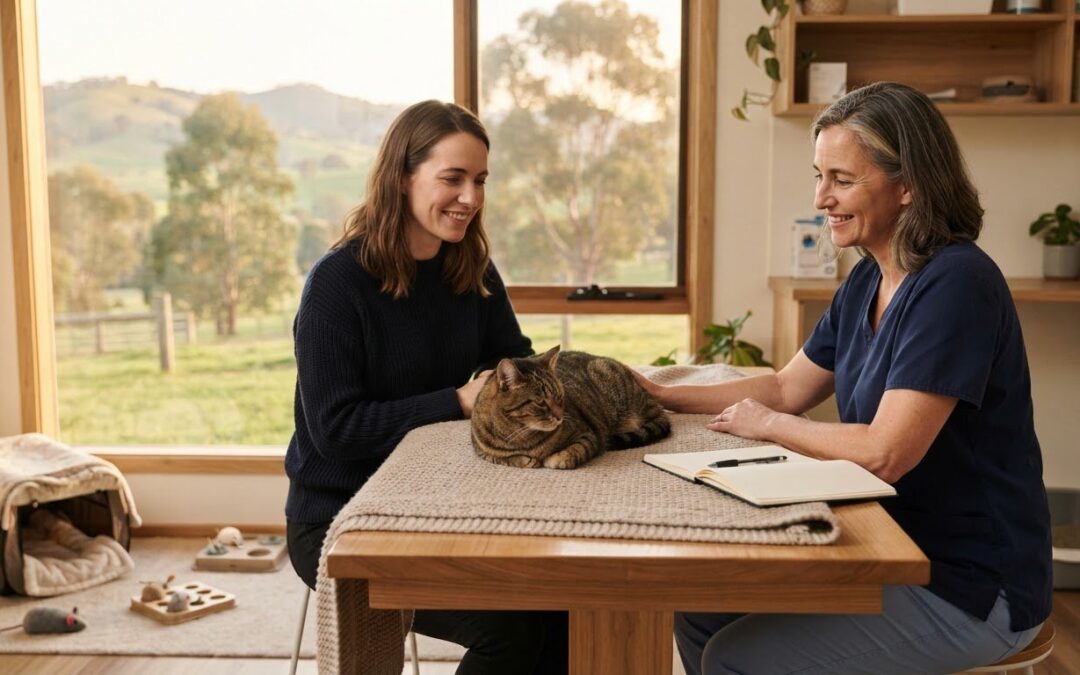
What if the behaviour worrying you is your cat’s way of showing that something in their health or home environment needs attention? Toileting outside the litter tray, hiding more often or behaving differently can leave you unsure what to do next. It doesn’t mean your cat is being naughty, and you don’t have to work it out alone. A cat behaviourist consultation Bunyip owners can access through West Gippsland Vet Care offers a chance to discuss what has changed and consider appropriate next steps.
Changes in behaviour can have different causes, including health concerns, stress or changes at home. A calm conversation can help bring these factors into focus without blame or harsh training advice. West Gippsland Vet Care provides behaviour consultations and fear-free veterinary care for Bunyip and surrounding West Gippsland communities.
In this article, you’ll learn what a cat behaviour consultation may help with, which details about your cat’s history and home environment are useful to share, and how local veterinary support can help your household move forward.
Key Takeaways
- Changes in toileting, social habits or interactions can have different causes. Look for patterns rather than assuming your cat needs training.
- A behaviour consultation brings your observations, your cat’s health context and their everyday surroundings into the discussion.
- Keep a diary of when a behaviour happens, possible triggers, how long it lasts and what follows.
- A cat behaviourist consultation Bunyip cat owners can access may help clarify supportive next steps for their household.
- West Gippsland Vet Care provides behaviour consultations and fear-free veterinary care for Bunyip and surrounding West Gippsland communities.
When should Bunyip cat owners consider a behaviour consultation?
A change in your cat’s behaviour can be unsettling. You might be worried about your cat, losing sleep over night-time noise or managing tension between pets at home. Seeking support isn’t an admission that you’ve done something wrong. It’s a practical way to understand what your cat may be communicating and consider what could help.
A cat behaviourist consultation Bunyip owners seek can be useful when a behaviour is new, recurring or affecting your cat’s comfort and your household’s routine. You don’t need to wait until things feel unmanageable. The aim is to discuss what you’ve noticed and the context around it, not to label your cat as difficult.
Which cat behaviours may prompt a consultation?
Consider getting guidance if your cat has started hiding more, vocalising more often, scratching furniture in a new way, or avoiding people or familiar spaces. Repeated chasing, blocking access to resources or tense encounters between cats may also be worth discussing. These signs can have different explanations, so behaviour alone can’t tell you what’s causing them.
Toileting changes deserve attention too. Your cat may begin urinating or defecating outside the litter tray, or their usual pattern may shift. Rather than assuming it’s a training issue, note what you’re seeing and share it with your vet. For general background on how cats communicate and behave, the overview of cat behaviour covers topics such as grooming, play and communication.
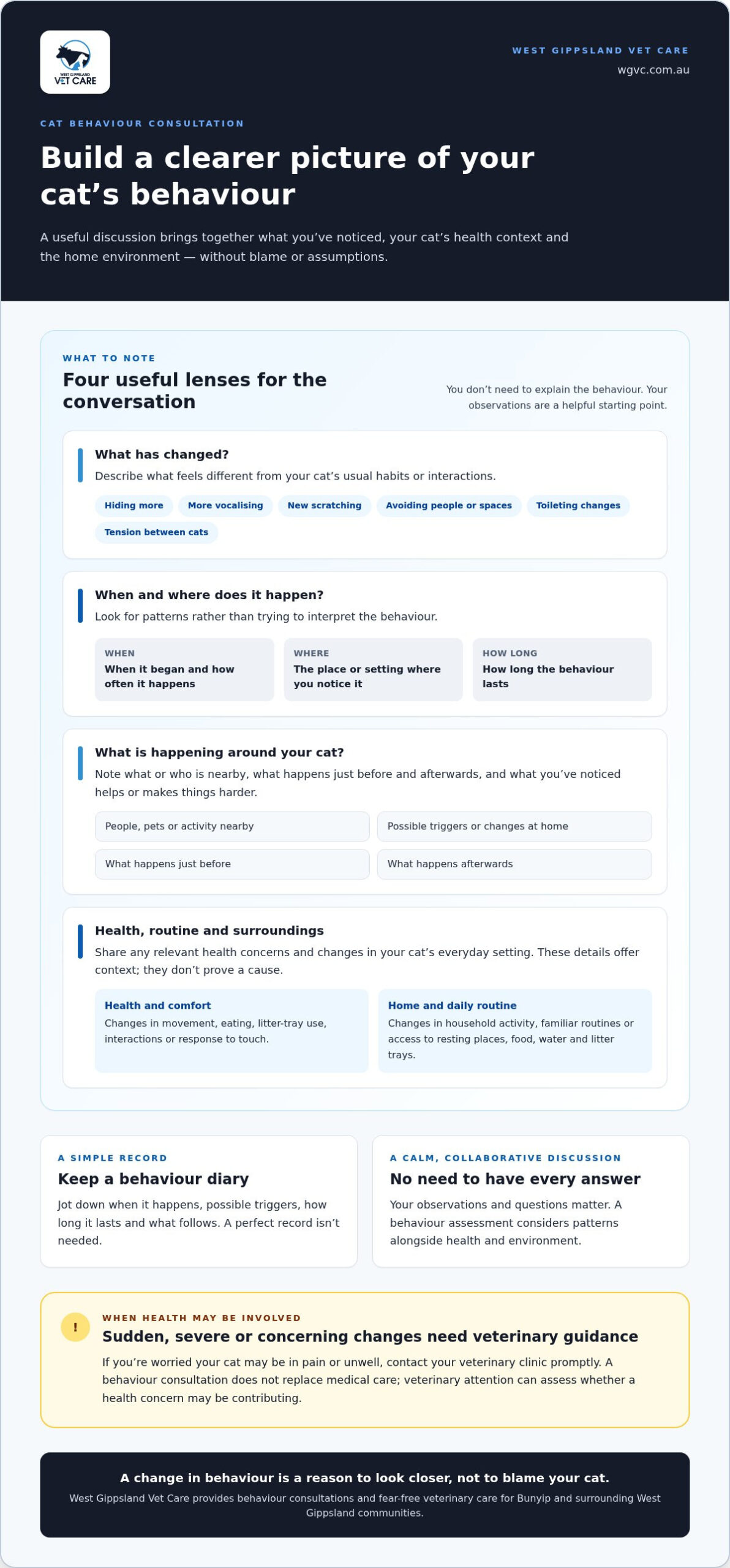
Start with three simple observations: when the behaviour began, how often it happens and where. Note who or what is nearby, any recent changes at home, and what happens just before and afterwards. These details can help build a clearer picture without requiring you to interpret the behaviour yourself.
When a behaviour change may need veterinary attention
Behaviour and health can be connected. Discomfort or illness may affect how a cat moves, interacts, eats, uses the litter tray or responds to touch. A cat who suddenly withdraws, becomes unusually unsettled or shows a sharp change in their normal habits may need a veterinary assessment, rather than behaviour advice alone.
If a change is sudden, severe or otherwise concerning, contact your veterinary clinic promptly for guidance. This is particularly important if you’re worried your cat may be in pain or unwell. A behaviour consultation doesn’t replace medical care. Veterinary attention can help assess whether a health concern may be contributing, while behaviour support can explore the wider picture when appropriate.
You don’t need to arrive with a complete explanation or a perfect record. Your observations are a helpful starting point, and asking questions is part of looking after your cat. West Gippsland Vet Care offers behaviour consultations and fear-free veterinary care for Bunyip and surrounding West Gippsland communities, with a calm, collaborative approach.
What happens in a cat behaviour consultation?
A cat behaviour consultation is a supported discussion about what your cat is doing, their health context and the surroundings they live in. Rather than looking at one behaviour in isolation, the conversation considers when it happens, what may be going on around your cat and how their usual routine has changed. The goal is to build a clearer picture together, not to blame you or your cat.
Your observations are central. You know your cat’s everyday habits best, including what’s normal for them and what feels different. Sharing examples, changes you’ve noticed and questions you have can help make the discussion more useful. A behaviour assessment considers patterns alongside health and environment, while recognising that no single detail necessarily explains the whole situation.
How health, routine and surroundings fit together
A cat’s day-to-day setting can offer useful context. Changes in household activity, familiar routines or access to resting places, food, water and litter trays may be relevant. These details don’t prove a cause, but they can guide a thoughtful discussion about what might be influencing your cat.
Health and behaviour can overlap, too. Discomfort or illness may affect a cat’s habits or responses, so apparent behaviour concerns shouldn’t automatically be treated as training problems. The Merck Veterinary Manual’s overview of common feline behaviour problems also discusses possible causes and the role of medical and environmental factors. An individual assessment helps determine which aspects need attention.
Why a cat-centred, fear-aware approach matters
Each cat responds differently to unfamiliar people, places and experiences. Calm, respectful observation keeps your cat’s comfort in mind while you explain what you’ve seen. There’s no need to expect your cat to behave a particular way during a discussion; your account of their everyday life is valuable in its own right.
West Gippsland Vet Care includes fear-free veterinary care in its approach, with the aim of supporting a more settled experience for pets. A cat behaviourist consultation Bunyip owners access through the clinic is a chance to work collaboratively and discuss your concerns without assuming a diagnosis or treatment in advance.
To make the conversation more focused, note:
- What has changed from your cat’s usual behaviour.
- When and where the behaviour tends to happen.
- Any routine or household changes around the same time.
- What you’ve noticed helps or makes the situation harder.
There’s no need to have every answer ready. If you’re concerned about a change, discussing it with a veterinary team can help you consider an appropriate next step. West Gippsland Vet Care provides behaviour consultations for cats and their people across Bunyip and surrounding West Gippsland communities.
Behaviour concern or health problem? How to think about the difference
It’s easy to assume a behaviour change means your cat needs different training or boundaries. But cats don’t change their habits for just one reason. Behaviour changes can have medical, environmental or learned contributors. The same outward sign may have more than one possible explanation, so it’s best not to diagnose from behaviour alone.
For example, a cat avoiding a usual resting spot might be responding to a change at home, feeling uncomfortable or reacting to something else. A shift in toileting habits can also have different causes. Looking at the whole picture, rather than settling on the first explanation, helps you decide what support to seek.
Clues that make a health assessment important
A sudden change deserves attention, particularly if it appears alongside signs of discomfort or a shift in everyday habits. You might notice your cat moving differently, eating less, withdrawing from usual interactions or reacting in a new way when touched. None of these signs proves a particular condition, but they’re useful observations to share with your vet.
Keep track of what changed and when, along with any other differences you’ve noticed. If your cat seems unwell or the change is severe or worrying, seek veterinary advice promptly rather than waiting to see whether it passes or treating it as a behaviour issue alone. A cat behaviourist consultation Bunyip owners consider can support understanding of behaviour, but it isn’t a substitute for medical assessment.
How home context can help explain behaviour
Once immediate health concerns are considered, details about home life may help make sense of a pattern. Think about changes in household activity, visitors, routines or relationships between pets. Consider whether your cat can comfortably reach everyday resources, including food, water, resting areas and litter trays. These details don’t establish a cause by themselves, but they give your veterinary team useful context.
Timing can be revealing. Does a behaviour happen after a particular household event, at a certain time of day or in one location? Does it happen once in a while or repeat in a similar way? A short diary can help you describe the pattern without guessing what it means. Include what happened before and after, and note any changes in your cat’s health or routine.
Oral discomfort is one health consideration that may affect a cat’s usual habits. Changes around eating or handling near the face are worth mentioning to your vet, but they don’t confirm a dental problem. West Gippsland Vet Care’s cat dental health guide offers further information about feline oral health.
Trust your sense of what’s normal for your cat. Clear observations support a careful discussion of health and home context, without placing blame or delaying care for a concerning change.
How to prepare for a cat behaviour consultation near Bunyip
You don’t need a perfect explanation of what’s happening. A few clear observations can help you and the veterinary team discuss your cat’s behaviour in context. Try a simple sequence: observe what happens, record the details, gather relevant history, then share your concerns openly.
Keep notes in whatever way suits you, whether that’s a notebook or a phone app. Describe what you see rather than guessing what your cat intends. For example, write “hid under the bed after visitors arrived” instead of “was being unfriendly”. That keeps the record factual and judgement-free.
A simple behaviour diary owners can keep at home
For each episode, note the date and time, what happened just before, what your cat did, how long it lasted and what followed. Include who or what was present, where it happened and whether anything in the household routine had changed. Over several entries, you may see whether the behaviour occurs in a particular setting or at a certain time.
Frequency matters too. Record whether something happened once or has become a regular pattern, but don’t worry about making the notes exhaustive. A brief, factual account is more helpful than a detailed interpretation of your cat’s motives.
What information can help the conversation?
Alongside your diary, gather relevant health history and a list of any medicines your cat is currently taking. Think about recent changes at home, such as a shift in household routines, new people or pets, or changes to where your cat eats, rests or uses the litter tray. Notes about how your cat interacts with familiar people and other animals can add useful context.
A short video can sometimes help show a behaviour that’s difficult to describe, provided you can record it safely and without upsetting your cat. Don’t stage an encounter, provoke a response or interrupt your cat’s comfort to get footage. If recording isn’t practical, a written description is still valuable.
If you’re unsure what details to prioritise, discuss your concerns with the clinic team. A cat behaviourist consultation Bunyip cat owners seek is a collaborative conversation, and your everyday knowledge of your cat is an important part of it.
- Observe: Notice what happens and the setting around it.
- Record: Note timing, frequency, duration and what came before and after.
- Gather: Bring relevant health, medication and household information.
- Share: Explain what worries you, even if you’re not sure how the details fit together.
When you’re ready to talk through your cat’s behaviour, contact West Gippsland Vet Care about a behaviour consultation. The clinic provides behaviour consultations and fear-free veterinary care for Bunyip and surrounding West Gippsland communities.
Cat behaviour consultations in Bunyip with West Gippsland Vet Care
When your cat’s behaviour changes, it can be hard to know what to do or where to begin. West Gippsland Vet Care provides behaviour consultations for cats and their people in Bunyip and surrounding West Gippsland communities. Start by sharing what you’ve noticed and what’s concerning you. You don’t need to arrive with a diagnosis or complete explanation.
A cat behaviourist consultation Bunyip owners seek is an opportunity to talk through their cat’s individual situation with a veterinary team. Behaviour, health and home life can overlap, so details that seem small to you may still be useful. The conversation considers your observations and the context you provide, without assuming every cat or household needs the same response.
A supportive local team for cats and their people
Your relationship with your cat matters. You see their familiar routines, preferences and ways of communicating every day, so your perspective is an important part of discussing a change. It’s natural to feel worried, frustrated or unsure, particularly if the behaviour is affecting other people or pets at home. Those feelings are welcome in the conversation, too.
West Gippsland Vet Care’s approach includes fear-free veterinary care, with attention to supporting feline wellbeing. Each concern deserves to be heard on its own terms. Rather than expecting you to know the cause, the team can listen to what you’ve observed and discuss the situation with you. Seeking support is a thoughtful step for your cat.
Arrange a behaviour consultation
If you’re in Bunyip or the surrounding West Gippsland area and would like to talk about your cat’s behaviour, contact the clinic to discuss a consultation. It may help to have a few notes nearby, such as when you first noticed the change, how often it happens and any relevant changes at home. Don’t wait until your notes are complete before reaching out. A straightforward description of what’s worrying you is a good place to start.
If the change is sudden, severe or makes you concerned your cat may be unwell, raise that promptly with the veterinary team. Behaviour support and attention to health concerns can both matter. Explain what you’re seeing so the concern can be discussed in context.
When you’re ready, contact West Gippsland Vet Care to discuss a behaviour consultation. The team is here to listen and support you as you consider a caring way forward for your cat and household.
Take the next step towards a calmer home
You don’t need to solve everything at once. A helpful first step is recognising that something has changed and making space to talk it through. Your concern matters, and reaching out for support is a kind choice for both you and your cat.
A cat behaviourist consultation Bunyip cat owners arrange with West Gippsland Vet Care offers a chance to explore their concerns with a team that values fear-free veterinary care and a respectful partnership with each household. Begin with what feels most important, even if you’re still unsure how to describe the situation.
West Gippsland Vet Care supports cat owners across Bunyip, Warragul, Drouin, Yarragon, Trafalgar, Willow Grove, Hill End and Neerim South. When you feel ready, talk with West Gippsland Vet Care about a cat behaviour consultation.
Frequently Asked Questions
Can a cat behaviour consultation help with toileting outside the litter tray?
Yes, a consultation can help you discuss toileting changes and consider an appropriate next step, but that behaviour alone can’t establish a cause. Health, the home environment and other factors may contribute. Note when the change began, how often it happens and whether you’ve noticed other differences, such as altered appetite or discomfort. Don’t assume your cat is acting out or trying to punish you. Share your observations with the veterinary team.
How long does it take to change a cat’s behaviour?
There’s no single timetable for behaviour change. Progress depends on your cat, what may be contributing to the behaviour and how consistently a suitable approach can be followed at home. Look for small shifts, such as your cat settling sooner or a concerning behaviour becoming less frequent, rather than expecting an overnight fix. If progress feels uneven, that doesn’t mean you’ve failed. Discuss what you’re seeing with your veterinary team to consider realistic next steps.
Will a cat behaviour consultation automatically mean my cat needs medication?
No, a consultation doesn’t automatically mean medication will be recommended. Possible next steps depend on your cat’s individual situation and the assessment. Raise any questions or concerns you have about medication, including your preferences and what feels manageable for your household. Open discussion helps you understand the considerations involved and take part in decisions about your cat’s care, without assuming in advance which options will or won’t be appropriate.
Can older cats develop new behaviour problems?
Yes, cats can show behaviour changes at any age, including later in life. A new pattern, such as becoming less social or changing established routines, shouldn’t automatically be put down to ageing. Note what’s different and whether other signs have appeared. If the change is sudden, worsening or accompanied by something else concerning, arrange veterinary advice rather than assuming it’s simply behavioural. An assessment can help explore the situation without guessing at the cause.
Is a cat behaviourist the same as a veterinary behaviourist?
The terms can be used differently, so a title alone may not explain someone’s training or professional role. If you’re considering behaviour advice, look for clear information about the person’s background and scope of practice. A veterinary consultation can also consider whether health may be affecting behaviour. You can ask the clinic team how health and behaviour concerns will be considered in your cat’s care discussion.
How much does a cat behaviourist consultation in Bunyip cost?
Contact the clinic team for the current consultation fee when arranging an appointment. You can also explain your main concern and ask what the fee covers before deciding on next steps. West Gippsland Vet Care serves pet owners in Bunyip and nearby communities, including Warragul, Drouin, Yarragon, Trafalgar, Willow Grove, Hill End and Neerim South.
Can I help my cat before the consultation?
Yes. Keep your cat’s routine as steady as you can and calmly note what’s happening around the behaviour. Avoid punishment, forced interactions or deliberately creating a situation to capture a video. If your cat seems distressed, unwell or at risk, seek veterinary attention promptly instead of waiting for a behaviour consultation. For less urgent concerns, a few observations can help you explain what you’ve noticed when you speak with the team.