Choosing to have your dog’s stomach tacked isn’t just an extra procedure; it’s a life-saving decision that can prevent one of the most terrifying medical emergencies a pet owner can face. If you’re the proud owner of a large or deep-chested breed, you likely already know the quiet worry that comes with the risk of bloat, or Gastric Dilatation-Volvulus. It’s completely natural to feel anxious about the idea of multiple surgeries or long recovery times for your active mate. We understand that you want the best protection for your dog while keeping their comfort and safety as the top priority. One of the most significant benefits of combining spay and gastropexy surgery is the ability to provide lifetime protection against stomach torsion in a single, gentle event.
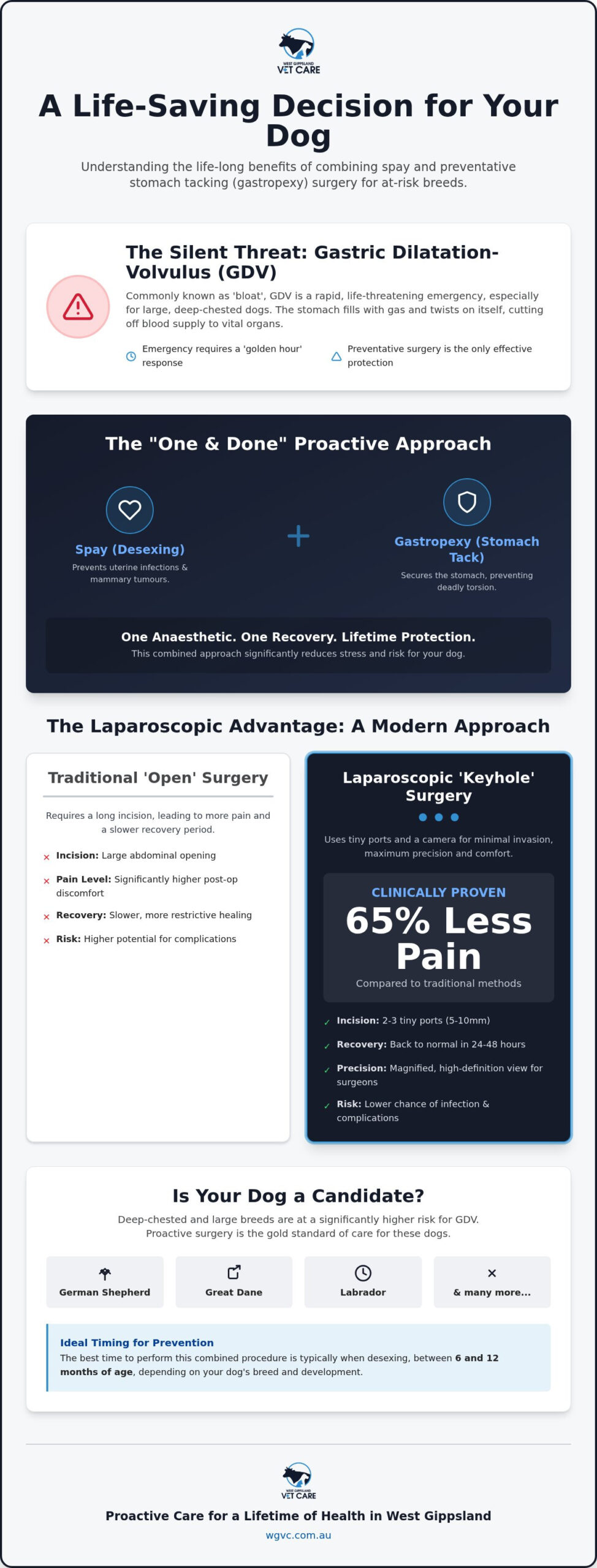
By choosing this proactive path, you’re ensuring your dog only needs to go under anaesthetic once, which significantly reduces stress for both of you. We will show you how modern keyhole techniques mean your dog experiences 65% less pain compared to traditional methods, allowing for a much faster return to zoomies in the backyard. This guide covers everything you need to know about why this combined approach is the gold standard for care in Warragul and Drouin, giving you total peace of mind that your best friend is protected for life.
Key Takeaways
- Learn why the “One and Done” approach is the most compassionate way to protect your large-breed dog from the life-threatening risk of bloat.
- Discover the benefits of combining spay and gastropexy surgery, including reduced anaesthesia risks and a single, streamlined recovery period.
- Understand how advanced keyhole technology reduces post-operative pain by 65%, helping your mate get back to her active life in the Gippsland countryside sooner.
- Identify if your dog is at higher risk for GDV and why preventative action is the gold standard for deep-chested breeds like Labradors and German Shepherds.
- Explore our Fear Free surgical process that ensures your pet feels safe and nurtured from the moment they arrive at our Warragul or Drouin clinics.
Understanding the Duo: What are Spay and Gastropexy Procedures?
A spay, or desexing, is a fundamental procedure where we remove the reproductive organs to keep your girl healthy and prevent serious issues like pyometra, which is a life-threatening uterine infection. While desexing is a standard part of responsible pet ownership, many owners of larger dogs are now choosing to add a vital second layer of protection. Canine gastropexy is a preventative surgery, often called a ‘stomach tack’, that physically secures the stomach to the abdominal wall. While a spay manages reproductive health, a gastropexy is the only effective way to stop the stomach from physically rotating. One of the primary benefits of combining spay and gastropexy surgery is that we can address both of these vital health needs during a single, carefully managed hospital visit.
The Threat of Bloat (GDV) in Large Breeds
Gastric Dilatation-Volvulus, or bloat, is a terrifying prospect for any dog owner, especially for those living in rural areas of Gippsland where a quick trip to the vet might take longer than in the city. When bloat occurs, the stomach fills with gas and then twists on itself, effectively cutting off the blood supply to the stomach and other vital organs. This creates immense pressure on the diaphragm, making it hard for the dog to breathe and leading to a rapid, painful decline. Vets often speak about the ‘golden hour’, the narrow window of time where emergency surgery might save a dog’s life. By choosing a preventative tack, you’re removing the risk of that frantic, middle-of-the-night emergency dash to our Warragul clinic. It’s about giving your dog a safety net before an emergency ever has the chance to happen.
Desexing: The Ideal Window for Prevention
The most effective time to consider these procedures is usually between the 6 and 12 month mark, depending on your dog’s specific breed, size, and physical development. Spaying during this developmental window provides significant protection against mammary tumours and completely eliminates the risk of future uterine infections. Combining these surgeries allows our team to use the same anaesthetic event to set your dog up for a long, healthy life without the need for multiple recoveries. These two procedures work together to provide a ‘clean slate’ for your dog’s future health, ensuring they’re protected from both reproductive diseases and the physical danger of stomach torsion from the very start of their adult life. One of the long-term benefits of combining spay and gastropexy surgery is the significant reduction in lifelong anxiety for you as an owner.
The Laparoscopic Advantage: Why Keyhole Surgery Changes the Game
Laparoscopic surgery is often called ‘keyhole’ surgery for a good reason. Instead of making a large incision to see inside the abdomen, we use tiny ports and a specialised camera called a laparoscope. This modern approach is a central pillar of the benefits of combining spay and gastropexy surgery. By using these small ports, we don’t need to manipulate the internal organs nearly as much as we would in traditional ‘open’ surgery, which requires a much larger abdominal opening for the surgeon to work. This means less internal bruising and a significantly more comfortable experience for your dog from the moment she wakes up.
Smaller Incisions, Faster Healing
One of the most immediate benefits you’ll notice is the size of the surgical site. While a traditional spay or gastropexy might leave a long wound that requires strict management, keyhole surgery typically involves only two or three tiny incisions. These openings are usually only 5 to 10mm in length. Because the wounds are so small, there’s far less chance of post-operative infection or the common ‘licking’ issues that can lead to complications. Most importantly, clinical data shows that dogs experience 65% less pain after a laparoscopic procedure compared to traditional methods. This translates to a much happier pet who is often back on their feet and feeling like their usual, bouncy self within just 24 to 48 hours.
Enhanced Visualisation for the Surgeon
The laparoscope acts as our eyes inside your dog, providing a magnified, high-definition view of the internal organs on a screen. This level of detail allows for incredible precision when we perform the ‘tack’ for a Prophylactic Gastropexy. Because we can see every vessel and tissue with such clarity, there is significantly less tissue trauma and bleeding during the spay. While we are well-known for providing Orthopaedic Vet Gippsland services for complex bone and joint issues, we bring that same level of advanced surgical care to every preventative procedure we perform. This precision ensures the stomach is secured exactly where it needs to be, providing the most reliable protection possible for your mate’s future. If you’re curious about how this technology could benefit your pet, we’d love to discuss a tailored plan for your dog’s specific needs.
3 Crucial Benefits of a Combined Procedure for Your Dog
Choosing a combined procedure is often described as the ‘one and done’ philosophy. It’s an approach that prioritises your dog’s long-term safety while respecting your time and emotional energy. Instead of planning two separate hospital stays, two drop-offs, and two anxious waits by the phone, everything is handled in a single visit. This efficiency also extends to your finances. By performing both surgeries together, you avoid paying for two separate sets of hospital theatre fees, sterile equipment setups, and certain administrative costs. It’s a practical way to access premium care while being mindful of the family budget. One of the most significant benefits of combining spay and gastropexy surgery is the immediate relief of knowing your dog is protected for the rest of her life.
Reducing Anaesthetic Risk
A common worry we hear from pet owners is whether ‘more surgery’ at one time increases the risk to their dog. In reality, the opposite is often true. Every time a dog undergoes general anaesthesia, their body must process and recover from the medications used. By opting for a combined procedure, your mate only has to go through the induction and recovery phase once. Research into the endoscopically assisted gastropexy technique shows that these minimally invasive methods are highly stable and reliable. At West Gippsland Vet Care, our advanced monitoring equipment tracks heart rate, oxygen levels, and blood pressure every second she is under our care. Reducing the number of anaesthetic events is a proactive way to protect her vital organs and ensure a smoother return to health.
Streamlining the Healing Process
Managing post-operative care can be a juggle, especially for busy families across the Gippsland region. When you combine these procedures, you only have to manage one set of post-op instructions, one course of pain relief, and one follow-up check. This means your dog only needs to be kept quiet for a single window of time, rather than having her active lifestyle interrupted twice in one year. We know that life in rural areas comes with its own set of challenges, from managing farm boundaries to being aware of local hazards. Just as you stay prepared for other regional risks like snake bite treatment for dogs in Gippsland, choosing a combined surgery is about being prepared for the ‘what ifs’ before they happen. It’s the ultimate peace of mind, knowing that the threat of a twisted stomach is permanently off the table while she is already being desexed.
Is Your Dog a Candidate? Breeds and Ideal Timing in West Gippsland
Determining if your dog is the right candidate for a preventative stomach tack often comes down to their unique physical build. In the West Gippsland region, we see a wide variety of active breeds, from loyal working dogs on local farms to beloved family companions in town. One of the primary benefits of combining spay and gastropexy surgery is the ability to tailor this protection to your dog’s specific anatomy at the exact moment they reach physical maturity. While we often focus on purebreds, mixed breeds with a deep, narrow chest can be just as susceptible to the dangers of stomach twisting.
The anatomy of a “deep-chested” dog is the biggest risk factor. These dogs have a ribcage that is much deeper than it is wide, creating a larger space in the abdomen where the stomach can potentially move. If the stomach becomes heavy with food or gas, this extra room allows it to rotate. Timing is also crucial. We want to perform the procedure when your dog’s frame is well-developed but before they face the higher risks associated with ageing. This usually aligns perfectly with the standard desexing window, allowing us to provide a lifetime of safety in one go.
High-Risk Breeds in Our Community
Certain breeds are frequent visitors to our clinics and are well-known for their predisposition to GDV. Great Danes, Weimaraners, and Saint Bernards are at the top of the list, but we also see significant risks in German Shepherds, Pointers, and even Standard Poodles. The ratio of chest depth to width is something we assess during every puppy check. If your girl’s chest looks particularly narrow when viewed from the front but very deep when viewed from the side, she may be at a higher risk. Our team can help you understand your dog’s specific risk level during a routine health check.
Factors Beyond Breed: Size and Temperament
It’s not just about the breed on the papers; it’s about how your dog lives and feels. Research suggests a strong link between a dog’s temperament and their risk of bloat. Dogs that are naturally more anxious, nervous, or easily stressed have a higher statistical chance of experiencing a gastric emergency. This is particularly relevant for active Gippsland dogs that might be high-energy workers or those who get very excited during meal times. Your dog’s final adult size also plays a part, as larger dogs generally have more room for internal organ movement. If you’re wondering whether your pet fits this profile, contact West Gippsland Vet Care to discuss your dog’s individual risk factors with our experienced team.
What to Expect: Surgery Day at West Gippsland Vet Care
Walking through our doors on surgery day should feel like visiting a trusted friend. We know that leaving your dog for a procedure can be an emotional experience, so we’ve designed our process to be as calm and transparent as possible. From the moment you arrive at our Warragul or Drouin clinics, our focus is on making your girl feel safe and settled. One of the practical benefits of combining spay and gastropexy surgery is that our team can dedicate a single, focused block of time to her complete preventative care, ensuring every detail is managed with the highest level of expertise.
Before any surgery begins, we perform a comprehensive pre-surgical health check. This includes an in-depth physical examination and blood tests to ensure her internal organs are functioning perfectly and she is fit for anaesthesia. This baseline data gives us the confidence to proceed safely. She isn’t just another patient. She is treated with the same tenderness we would show our own pets. Our surgical suite is equipped with advanced monitoring technology, but it’s the human touch of our nursing team that truly makes the difference during her stay.
Our Fear Free Approach to Surgery
We are proud to use Fear Free techniques to minimise “vet stress” for every dog that visits us. This involves using calming pheromones throughout the clinic, offering high-value treats to create positive associations, and using gentle handling methods that respect her personal space. A calm dog has a much smoother anaesthetic recovery, which is why we prioritise a quiet, low-stress environment from admission to discharge. By choosing to access the benefits of combining spay and gastropexy surgery, you are giving your dog the highest standard of modern veterinary care in a way that respects her emotional well-being.
Post-Operative Care and Support
Recovery starts in our heated wards, where your dog is closely monitored as she wakes up from her “gentle sleep.” When it’s time to go home, we’ll hold a detailed discharge meeting to walk you through her simple home-care steps. You’ll receive clear instructions on feeding, exercise restrictions, and what to look for during those first 24 hours in Warragul or Drouin. While most keyhole patients are back to their normal selves quickly, we are always here if you have late-night worries. Our 24-hour emergency service is available to all existing clients, providing a safety net that is just a phone call away. For those who are also interested in the broader aspects of reproductive health, you might find our guide on Canine Reproduction Vet Victoria a helpful resource for long-term planning. Our commitment to you and your mate doesn’t end when you leave the clinic; we’re your partners in her health for life.
Protecting Your Best Friend’s Future Today
Choosing the right preventative care is one of the most loving decisions you can make for your dog. By opting for keyhole technology, you’re giving her the gift of a faster, more comfortable recovery with 65% less pain than traditional methods. The long-term benefits of combining spay and gastropexy surgery provide essential protection against the life-threatening risk of bloat, ensuring your mate stays healthy and active for years to come. It’s about more than just a procedure; it’s about your peace of mind and her quality of life.
At West Gippsland Vet Care, our Fear Free certified team uses advanced laparoscopic equipment on-site to deliver world-class surgical care right here in our local community. We stand by our patients with 24/7 emergency support, so you’re never alone in caring for your girl during her recovery. We invite you to book a consultation with our surgical team at West Gippsland Vet Care to discuss a tailored health plan for your dog. We look forward to seeing you and your best friend soon and helping her live her very best life.
Frequently Asked Questions
Is combining spay and gastropexy surgery safe for my dog?
Yes, combining these procedures is very safe and is often considered the gold standard for large breeds. While any surgery involves some risk, the benefits of combining spay and gastropexy surgery include only requiring one session of anaesthesia. Our team uses advanced monitoring and a Fear Free approach to keep your girl relaxed. This single-event strategy reduces the overall physiological stress on your dog’s body compared to two separate operations performed months apart.
How much longer does the combined surgery take compared to a standard spay?
The addition of a preventative gastropexy typically extends the total surgical time by only 20 to 30 minutes. Because we use laparoscopic techniques, the process is streamlined and highly efficient. This small increase in time under anaesthesia is well-tolerated by healthy dogs. It’s a minor addition to the day that provides a lifetime of protection against the sudden and life-threatening danger of a twisted stomach, giving you much-needed peace of mind for your mate.
Will my dog have a larger scar if we do the gastropexy too?
Not if you choose the laparoscopic method. One of the greatest advantages of keyhole surgery is that we only need two or three tiny ports, each about the size of a fingernail. Even with the added gastropexy, the external wounds remain very small. This is a massive contrast to traditional open surgery, which would require a much longer incision along the abdomen to reach both the reproductive organs and the stomach wall during the same session.
What is the recovery time for a laparoscopic combined procedure?
Most dogs are back on their feet and feeling quite like themselves within 24 to 48 hours after a keyhole procedure. While we recommend restricted exercise for about 7 to 10 days to ensure internal healing is complete, the recovery is remarkably fast. Because there is 65% less pain involved than traditional surgery, your dog won’t feel the same level of post-operative lethargy or discomfort often seen with larger abdominal incisions following a standard spay.
Can any vet perform a keyhole gastropexy and spay?
No, these procedures require specialised laparoscopic equipment and specific surgical training that isn’t available at every general practice. At West Gippsland Vet Care, we’ve invested in this advanced technology to ensure our local clients can access the benefits of combining spay and gastropexy surgery close to home. It’s vital to choose a team with experience in minimally invasive techniques to ensure the stomach tack is secure and the recovery is as smooth as possible.
Is gastropexy 100% effective at preventing bloat?
A gastropexy is highly effective at preventing the stomach from twisting, which is the fatal part of the condition known as volvulus. However, it doesn’t prevent the stomach from filling with gas, known as simple bloat or dilatation. While your dog might still experience some gas discomfort, the life-threatening emergency where the blood supply is cut off is almost entirely eliminated. It turns a potential tragedy into a manageable veterinary visit for your best friend.
Should I wait until my dog is older to do the stomach tack?
It’s generally best to perform the gastropexy during the same window as your dog’s desexing, typically between 6 and 12 months of age. Waiting until a dog is older can increase anaesthetic risks and leaves them unprotected during their most active young years. By acting early, you provide your mate with lifetime protection from the very start. Our team can help you decide the perfect timing based on your dog’s specific growth, breed, and physical development.
What happens if I don’t do the gastropexy and my dog gets bloat?
If a dog develops GDV without a preventative tack, it becomes a critical, time-sensitive emergency. The stomach twists, cutting off blood flow and causing rapid organ failure. This requires immediate emergency surgery with a much higher risk and a lower success rate than a preventative procedure. For owners in regional areas like Warragul, the time spent travelling to a clinic during such an emergency can unfortunately be the difference between life and death for their dog.