
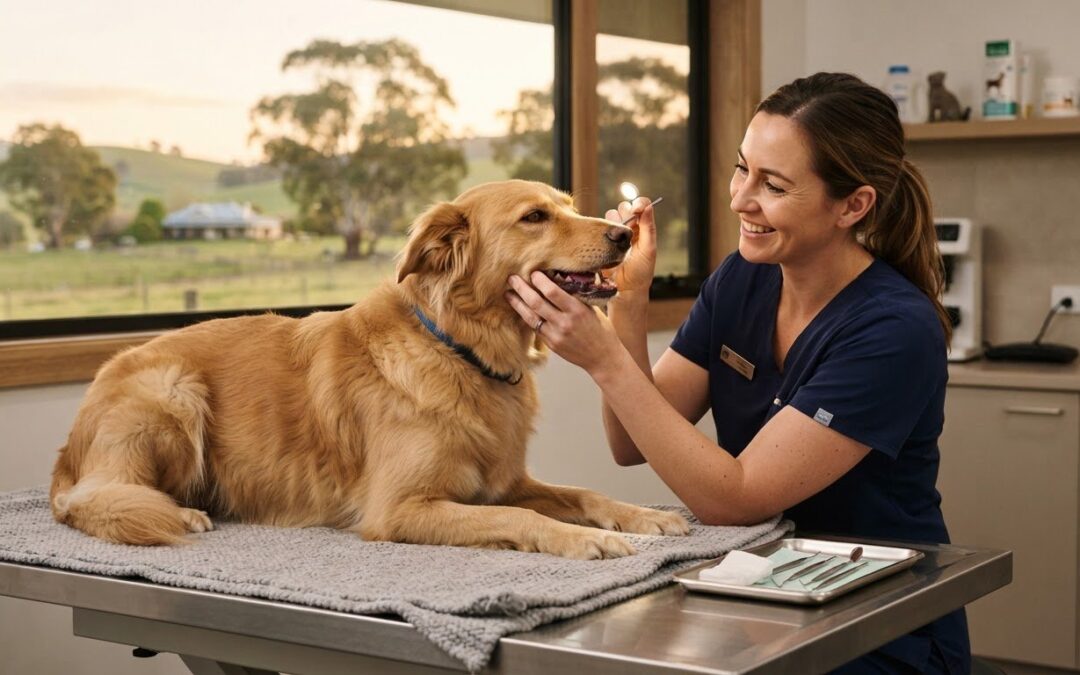
Could a tooth that looks like a small chip still be painful? If you’re wondering what to do for a dog with a broken tooth, contact your vet promptly, even if your dog seems comfortable. A fracture can extend below the visible surface, and its depth helps determine whether the tooth needs treatment.
It’s understandable to worry about pain, urgency and what an examination might involve. While arranging veterinary advice, keep your dog comfortable by offering soft food if they’re happy to eat, and put away hard toys and treats. Don’t handle the injured tooth or give human pain relief.
This guide covers what to do straight away, which signs call for prompt veterinary advice, and how a vet can assess the damage. It also explains why dental X-rays may help and outlines possible treatment options, so you can prepare to support your dog.
Key Takeaways
- Learn what to do for a dog with a broken tooth and why a suspected fracture needs veterinary assessment.
- Understand how damage to the enamel, dentine or pulp can affect comfort and influence care.
- Find out what your vet may consider during an examination, including whether dental X-rays could help assess the fracture.
- Prepare useful details for the appointment, such as when the injury happened and any changes in eating or behaviour.
- See how West Gippsland Vet Care’s preventative dentistry and dental X-rays can support assessment of your dog’s teeth.
What to do for a dog with a broken tooth right now
It’s unsettling to notice a chip, crack or missing piece of your dog’s tooth, but you can take calm, practical steps. A suspected broken tooth should be assessed by a vet, even if the damage looks minor. The visible part may not show how far the fracture extends, and dogs can hide discomfort. Eating and behaving normally don’t rule out a painful injury.
If you’re deciding what to do for a dog with a broken tooth, follow this simple sequence:
- Keep your dog settled. Give them a quiet place to rest and avoid play that could put pressure on the tooth.
- Leave the tooth alone. Don’t touch, clean or probe the broken area, even if you can see a crack or blood.
- Contact your veterinary clinic. Describe what you’ve noticed and follow the team’s advice about arranging an assessment.
Dogs’ teeth have different structures, as outlined in the general reference on Dog Anatomy. A vet can assess your dog’s individual injury and advise on next steps. This guide can help you prepare, but it can’t replace veterinary advice tailored to your dog.
What to do while arranging veterinary advice
Keep things gentle. Offer water, but don’t force your dog to drink. Put away bones, hard chews and toys until a vet advises otherwise. If your dog is eating comfortably, you can offer soft food temporarily, but don’t force them to eat. Never give human pain relief or put household products on the tooth, as these may harm your dog or complicate care.
Resist the urge to open your dog’s mouth for a closer look. Even a normally friendly dog may react if they’re sore, and handling the area can cause further discomfort. If your dog won’t let you look, leave it to the veterinary team.
When a broken tooth needs urgent attention
Call a veterinary clinic promptly if you notice bleeding that continues, swelling around the face, marked distress or difficulty eating. These signs warrant timely advice. Don’t wait for your dog’s behaviour to change further, and don’t try to make them finish a meal if they’re struggling to eat.
When you call, describe what happened, what you can see and how your dog is acting. Existing West Gippsland Vet Care clients can access the practice’s 24-hour emergency care. If you’re unsure what to do next, speaking with the clinic is a sensible first step.
How a dog’s broken tooth can affect comfort and health
A broken tooth is damage to the visible part of the tooth, called the crown. The size of the chip doesn’t necessarily show how serious the injury is. A small-looking break may affect only the hard outer surface, while a deeper fracture can reach sensitive tissue inside the tooth or extend below the gumline. That difference matters because it can change what care the tooth needs.
Knowing the basic tooth layers helps explain why a veterinary assessment is useful. A vet can examine the visible damage and, when appropriate, use dental X-rays to assess parts that can’t be seen by looking at the crown alone.
What the different layers of a dog’s tooth do
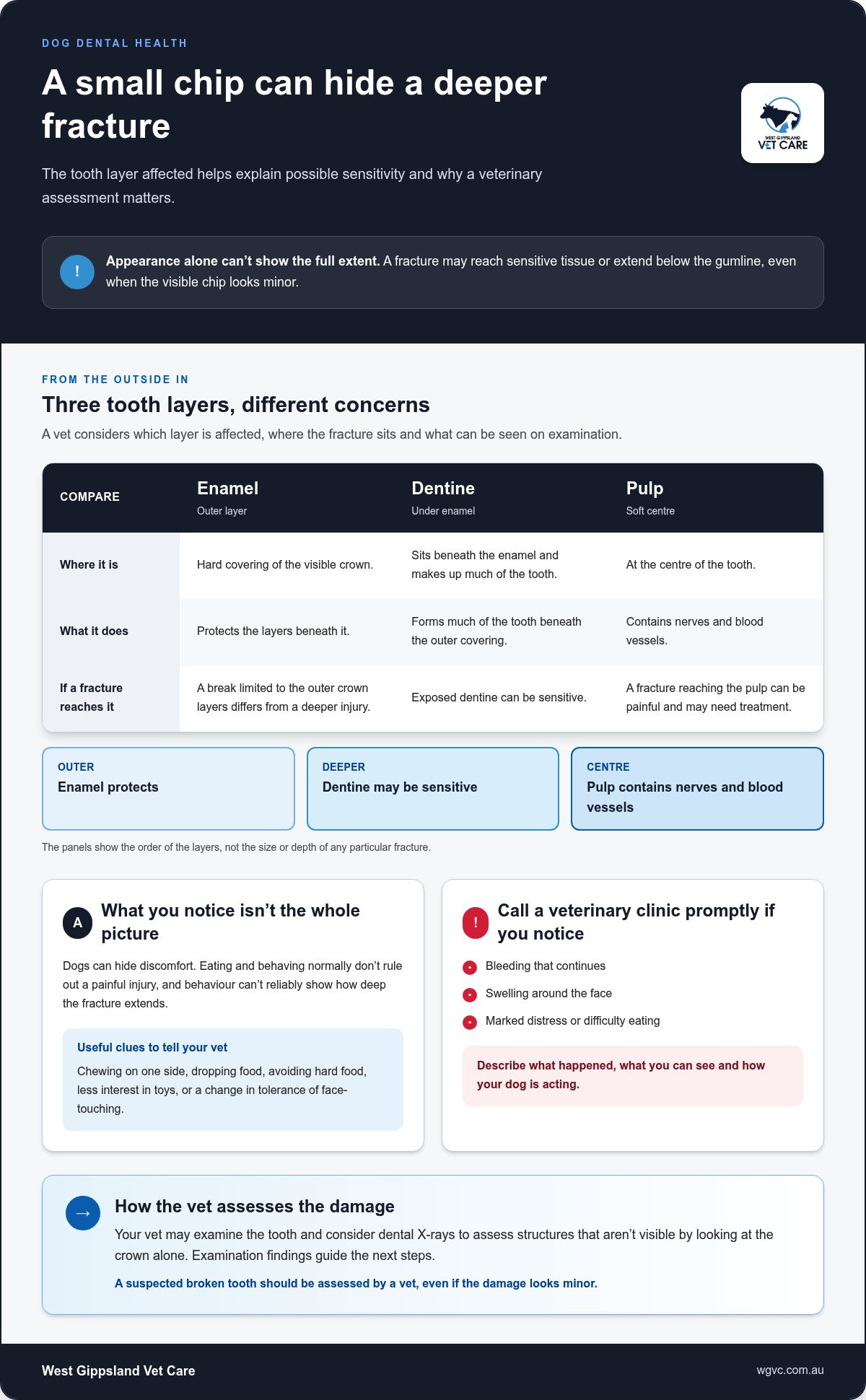
Think of a tooth as protective outer layers around a sensitive centre. From the outside in, these are enamel, dentine and pulp:
- Enamel is the hard outer covering of the crown. It protects the layers beneath it.
- Dentine sits under the enamel and makes up much of the tooth. If exposed by a fracture, it can be sensitive.
- Pulp is the soft centre, containing nerves and blood vessels. A fracture that reaches the pulp can be painful and may need treatment.
A break limited to the crown’s outer layers differs from one that exposes the pulp or involves the root. Those distinctions aren’t always clear from a home inspection. Your vet will consider the affected tooth and the fracture when assessing the injury and discussing suitable care.
Why a dog may hide signs of dental pain
Some dogs keep eating despite dental discomfort, so a normal appetite doesn’t rule out a problem. Others may chew on one side, drop food, avoid hard food or seem less interested in toys. You might also notice a change in how readily your dog lets you touch their face. These behaviours can be useful clues, but they can’t show how deep a fracture is.
A calm dog can still have a deep fracture: behaviour may reveal discomfort, but it can’t reliably show how far the damage extends.
Tell your vet about any changes in eating, play or tolerance of face-touching, including when you first noticed them. Don’t test the tooth by touching it or offering something hard to chew. A veterinary dental assessment can help clarify the extent of the injury. West Gippsland Vet Care provides preventative dentistry and dental X-rays as a diagnostic option when the vet considers them appropriate. Arrange a veterinary dental assessment to discuss your dog’s needs.
How vets assess a broken tooth and choose treatment
A vet’s recommendation depends on more than how large the break looks. They’ll consider which tooth is affected, where the fracture sits, what they can see on examination and any signs you’ve noticed, such as changes in eating. A chip limited to the crown is different from damage that reaches the pulp or extends towards the root. Treatment is guided by the findings, not appearance alone.
What the veterinary dental examination may involve
Your vet will ask how and when the injury happened, then examine your dog and the affected area as safely as possible. Details about eating, chewing and behaviour help build the picture. Depending on the findings, they may recommend a more complete dental assessment or dental X-rays to look beyond the visible crown. West Gippsland Vet Care provides preventative dentistry and dental X-rays, with examination findings guiding the next steps.
A dental X-ray can help assess tooth structures that aren’t visible during an ordinary oral examination, including the root. This can be useful when the visible break doesn’t show how far the damage extends. X-rays are a diagnostic option, not an automatic step for every case. Your vet can explain whether they’re appropriate and how the results may affect the care plan.
Why treatment options depend on the fracture
A small chip and a fracture involving sensitive inner tissue aren’t equivalent. Depending on the assessment, a vet may discuss smoothing and sealing a minor fracture, or tooth-preserving treatment such as root canal therapy if the tooth and injury are suitable. Extraction may also be considered if damage is extensive or the tooth can’t be suitably preserved. These options can’t be decided from a photo or home inspection alone.
The comparison below is a general guide to possibilities, not a diagnosis. The exact location and depth of the fracture, along with your dog’s individual circumstances, shape the recommendation.
Possible finding
What it may mean
Options the vet may discuss
Small chip in the crown
Damage may be limited to the outer tooth layers.
Smoothing or sealing may be considered, depending on the tooth and examination.
Deeper crown fracture
The break may expose dentine or reach the pulp, which contains sensitive tissue.
Root canal treatment or extraction may be discussed, depending on suitability.
Possible root involvement
The visible crown may not show the full extent of the injury.
Dental X-rays may help assess the root; treatment depends on the findings.
If you’re wondering what to do for a dog with a broken tooth, let the veterinary assessment guide decisions rather than assuming the tooth must be removed or can definitely be saved. Your vet can explain the findings and the reasons for any proposed option, so you can make an informed plan together. Protecting your pet’s dental health also plays an important role in their lifelong wellbeing, and dog owners seeking vet-led guidance on senior care and healthy ageing can explore caninelongevityacademy.com for practical support.
How to prepare for your dog’s broken-tooth appointment
A little preparation can help your vet understand what’s happened and make the visit more straightforward. You don’t need every detail or a close inspection of the tooth before you go. If you’re working out what to do for a dog with a broken tooth, contact the clinic for advice first, then share what you’ve noticed while keeping your dog comfortable.
What to tell the vet before the examination
Jot down the details you can recall. A short list is useful, but don’t delay seeking veterinary advice while trying to gather everything.
- When you first noticed the damage: include any possible accident, fall or chewing incident, even if you’re not sure it caused the break.
- Changes in eating: mention reduced appetite, chewing more slowly or on one side, dropping food, or avoiding particular foods.
- Other changes: note drooling, pawing at the mouth, altered play or behaviour, or reluctance to have the face touched.
- Visible signs: report bleeding, facial swelling or any tooth fragments you’ve found. Don’t reach into your dog’s mouth to retrieve a piece.
- Medication: tell the clinic about your dog’s regular medicines and anything already given, including the amount and time if you know them.
A clear photo may help show what you noticed, but only take one if your dog is relaxed and you can do so without forcing their mouth open. Never risk a bite or cause extra discomfort for a picture. For information about pet teeth more generally, West Gippsland Vet Care’s cat dental cleaning guide is a related resource, but it isn’t dog-specific advice.
Keeping your dog comfortable before the visit
Keep your dog settled and supervise them so they can’t chew bones, hard toys or other firm objects. If they’re comfortable eating and the clinic hasn’t advised otherwise, offer soft food. Don’t insist on a meal if they’re reluctant, and avoid trying to examine the damaged area, particularly if your dog is distressed or may bite.
Follow the clinic’s directions about travel and preparation, including whether to offer food or water before the appointment. Don’t assume fasting is needed or withhold food or water unless the veterinary team advises you to do so. What’s appropriate can depend on the assessment and any further care being considered.
Whether you’re travelling from Warragul, Drouin, Bunyip, Yarragon or another West Gippsland community, clear observations can help your veterinary team understand your dog’s situation. Contact West Gippsland Vet Care to arrange a veterinary assessment and discuss the next steps for your dog.
Getting veterinary care for a broken tooth in West Gippsland
A suspected broken tooth is best assessed by a vet, rather than judged at home by the size of the chip or how your dog seems to feel. Fractures can affect different parts of a tooth, and damage beneath the visible surface may not be obvious. An examination helps your veterinary team understand what’s happening and discuss suitable next steps for your dog.
West Gippsland Vet Care provides preventative dentistry and dental X-rays. When imaging is appropriate, it can help the vet assess parts of the tooth that aren’t visible during an oral examination. X-rays aren’t necessary in every case, so the recommendation depends on your dog’s examination and clinical signs.
What to expect when discussing care with the clinic
Your veterinary team can explain their examination findings and discuss options suited to your dog. You can ask how they’ll assess comfort, whether dental imaging may help, what treatment choices could be considered and what aftercare might involve. A small chip and a deeper fracture may call for different approaches, so recommendations are individual to your dog and based on the findings.
It’s reasonable to ask the team to explain unfamiliar terms or talk through why a particular option is being considered. Understanding the assessment can help you feel more prepared to make decisions for your dog. Treatment, aftercare and any further assessment depend on the tooth, the fracture and your dog’s circumstances. No single approach suits every injury.
A reassuring next step for West Gippsland dog owners
Even if your dog seems settled, seeking advice is a sensible step. Dogs don’t always show clear signs of dental discomfort, and their behaviour can’t tell you how deeply a tooth is damaged. Owners in Warragul, Drouin, Bunyip, Yarragon, Trafalgar, Willow Grove, Hill End and Neerim South can contact West Gippsland Vet Care to discuss what to do next.
Existing West Gippsland Vet Care clients have access to the practice’s 24-hour emergency care. If you’re an existing client and need emergency advice, tell the team what has happened and describe any concerning signs, such as facial swelling, bleeding or difficulty eating.
Until your dog has been assessed, don’t give human pain medication or try to treat the tooth with household products or tools. Keep your dog comfortable and follow the veterinary team’s guidance. Talk with West Gippsland Vet Care about your dog’s tooth and take a calm, informed next step.
Take the next step with confidence
It’s natural to feel unsure after discovering a damaged tooth, especially if your dog can’t show you where it hurts. You don’t need to work out the severity yourself. A veterinary conversation can help you decide what attention your dog may need and share the questions that matter most to you.
If you’re still weighing up what to do for a dog with a broken tooth, consider what would help you feel prepared: understanding how the tooth will be assessed, how your dog’s comfort will be considered and what choices may follow. Bring those questions to the discussion and talk them through with the veterinary team.
West Gippsland Vet Care supports local owners with veterinary assessment, preventative dentistry and dental X-rays. Discuss your dog’s next step with West Gippsland Vet Care.
Frequently Asked Questions
Can a broken tooth hurt a dog even if they are still eating?
Yes. Some dogs keep eating despite dental discomfort, so appetite alone can’t tell you whether a tooth hurts or how deep a fracture is. Notice whether your dog favours one side, drops food or avoids harder food, but treat these as clues rather than a diagnosis. Contact your vet and describe what you’ve observed, even if your dog finishes meals as usual.
Should I take my dog to the vet for a chipped tooth?
Yes, contact a veterinary clinic for advice about a chipped tooth, even if the damage seems minor. For dog owners across West Gippsland, including Warragul and Drouin, an examination can help assess what the visible chip doesn’t show. Seek prompt advice if there’s bleeding, swelling, marked distress or difficulty eating. Don’t probe the tooth or try to repair it at home.
What can I give my dog for pain from a broken tooth?
Don’t give your dog human pain relief unless a veterinarian has specifically instructed you to. Some medicines intended for people can be dangerous for dogs, and appropriate pain management depends on your dog’s health and examination. Keep your dog quiet and avoid hard chews while you seek advice. Don’t put gels, oils or other household products on the tooth, as these aren’t a substitute for veterinary guidance.
Can a broken dog tooth heal on its own?
Don’t assume a broken tooth will heal without veterinary care. The visible break may not show whether deeper parts of the tooth are affected, and appropriate care depends on the individual injury. A vet can examine your dog and decide whether dental X-rays could help. Until you’ve received advice, discourage hard chewing and don’t file, glue or otherwise attempt to repair the tooth yourself.
What happens if a dog’s broken tooth is left untreated?
The possible effects depend on the tooth and the fracture, so appearance alone can’t predict what will happen. If sensitive inner tissue is affected, the injury may cause discomfort and require treatment. Waiting for obvious pain or a change in appetite could leave the problem unassessed. Contact a veterinary clinic to discuss the tooth and whether your dog should be examined.
Does a dog need a dental X-ray for a broken tooth?
Not necessarily. A vet may recommend a dental X-ray if they need to assess the root or other structures that can’t be judged from the visible crown alone. Whether imaging is useful depends on the examination and the particular injury. Ask what the proposed images could help reveal and whether the findings might change the care options being considered for your dog.
What should I feed my dog with a broken tooth?
If your dog seems comfortable eating and the clinic hasn’t advised otherwise, offer soft food temporarily rather than hard kibble, bones or crunchy treats. Don’t push food if your dog hesitates, and stop if they appear uncomfortable. Keep hard chew toys out of reach too. Before the appointment, follow the clinic’s instructions about food and water, as your dog’s assessment may affect what they recommend.