
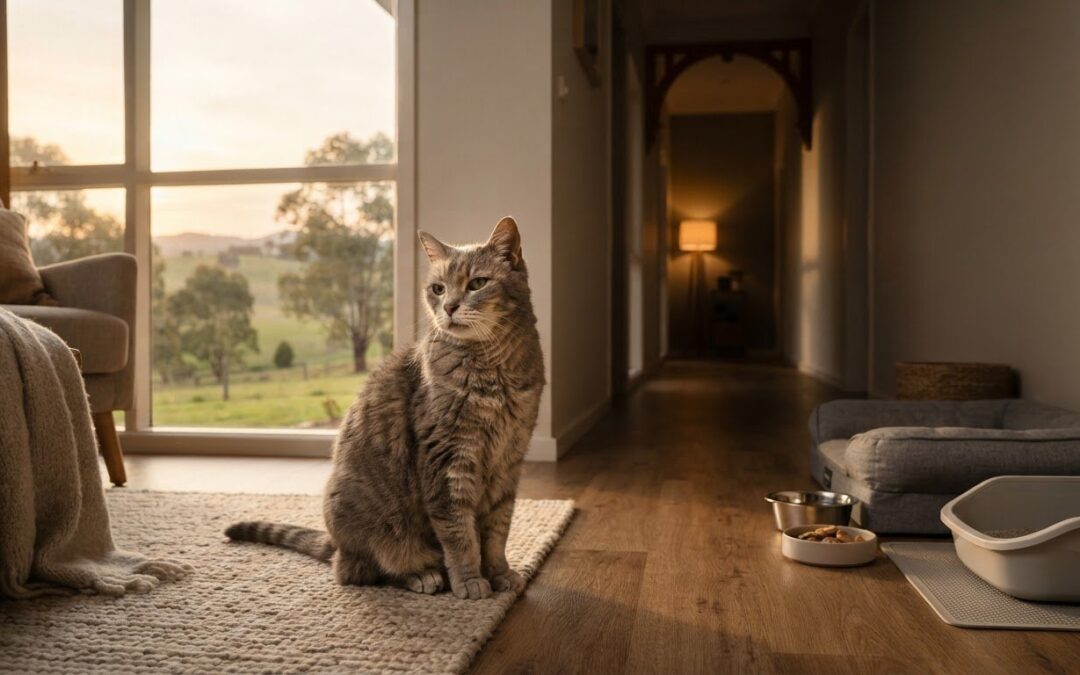
What if the behaviour changes you’re noticing aren’t simply part of getting older? If you’re searching for “cognitive dysfunction in senior cats symptoms”, you may be trying to make sense of new yowling, disrupted sleep or getting lost in familiar places. It’s understandable to wonder what’s behind these changes, especially when your cat can’t tell you how they feel.
These behaviours can be clues to feline cognitive dysfunction, but they aren’t proof. Pain, arthritis and other health problems can cause similar changes, so don’t dismiss them as normal ageing or assume they’re cognitive. A veterinary assessment can help explore possible causes in light of your cat’s health history.
This guide covers behaviour patterns to watch for, other possible explanations and when to seek veterinary advice. A simple record of changes can make it easier to explain what you’ve noticed, while predictable routines and a supportive home environment may help your senior cat. West Gippsland Vet Care offers senior pet health checks and behaviour consultations for local cat owners.
Key Takeaways
- Look for patterns in social interaction, sleep, vocalising, toileting and activity. Cognitive dysfunction in senior cats symptoms can vary from one cat to another.
- New behaviour changes aren’t always cognitive. Pain, sensory decline and medical illness may cause similar signs, so a veterinary assessment matters.
- Keep a brief record of when changes began, how often they happen and any shifts in appetite, mobility, toileting, sleep or medication.
- Support your cat’s comfort and confidence with familiar routines and easy access to resting places, food, water and litter.
- Senior pet health checks and behaviour consultations can help guide an individual care plan for your cat.
Cognitive dysfunction in senior cats: what the symptoms can mean
Noticing a change in a much-loved older cat can be unsettling. You may wonder whether they’re slowing down, feeling uncomfortable or experiencing changes in how they think. Feline cognitive dysfunction describes age-associated changes in a cat’s thinking and behaviour. It can affect awareness, learning, memory, sleep and social responses, but it can’t be diagnosed at home.
Changes may build gradually, making the shift subtle at first. One cat may seem less responsive to familiar cues, while another may behave differently around family members or rest at unusual times. Patterns vary between cats, and getting older doesn’t mean every cat will develop cognitive dysfunction. The term Feline cognitive dysfunction is also used to describe these age-related changes and commonly reported behaviour patterns.
Behaviour changes may point to cognitive dysfunction, but they’re clues to investigate, not a confirmed diagnosis.
How cognitive changes may affect an older cat
Changes in thinking and memory can make familiar routines harder to follow. A cat might seem unsure about where they are, take longer to respond to a known cue or be less certain during a familiar interaction. Changes in sleep can also affect how settled they are during the day and night. These signs are worth noting, but a single unusual moment doesn’t establish cognitive dysfunction.
Why a change from your cat’s normal matters
You know your cat’s usual habits best. Compare what you’re seeing now with their typical routines, responses and relationships. Small changes can blend into daily life: a little less engagement or a gradual shift in sleep may be easy to miss until it becomes more noticeable.
If you’re searching for cognitive dysfunction in senior cats symptoms, start with what has changed for your cat rather than trying to match them to a checklist. A veterinary check can help explore the concern alongside your cat’s health history and overall wellbeing. Senior pet health checks at West Gippsland Vet Care give cat owners in Warragul, Drouin, Bunyip, Yarragon, Trafalgar, Willow Grove, Hill End and Neerim South an opportunity to discuss changes and consider appropriate next steps.
Common cognitive dysfunction symptoms in senior cats to watch for
No single behaviour confirms cognitive dysfunction, and signs can look different from cat to cat. Look across everyday routines, including sleep, social contact, movement around the home and use of the litter tray. The Cornell Feline Health Center also outlines behaviour changes owners may see, while noting that some health problems can cause similar signs.
Changes in sleep, vocalising and social behaviour
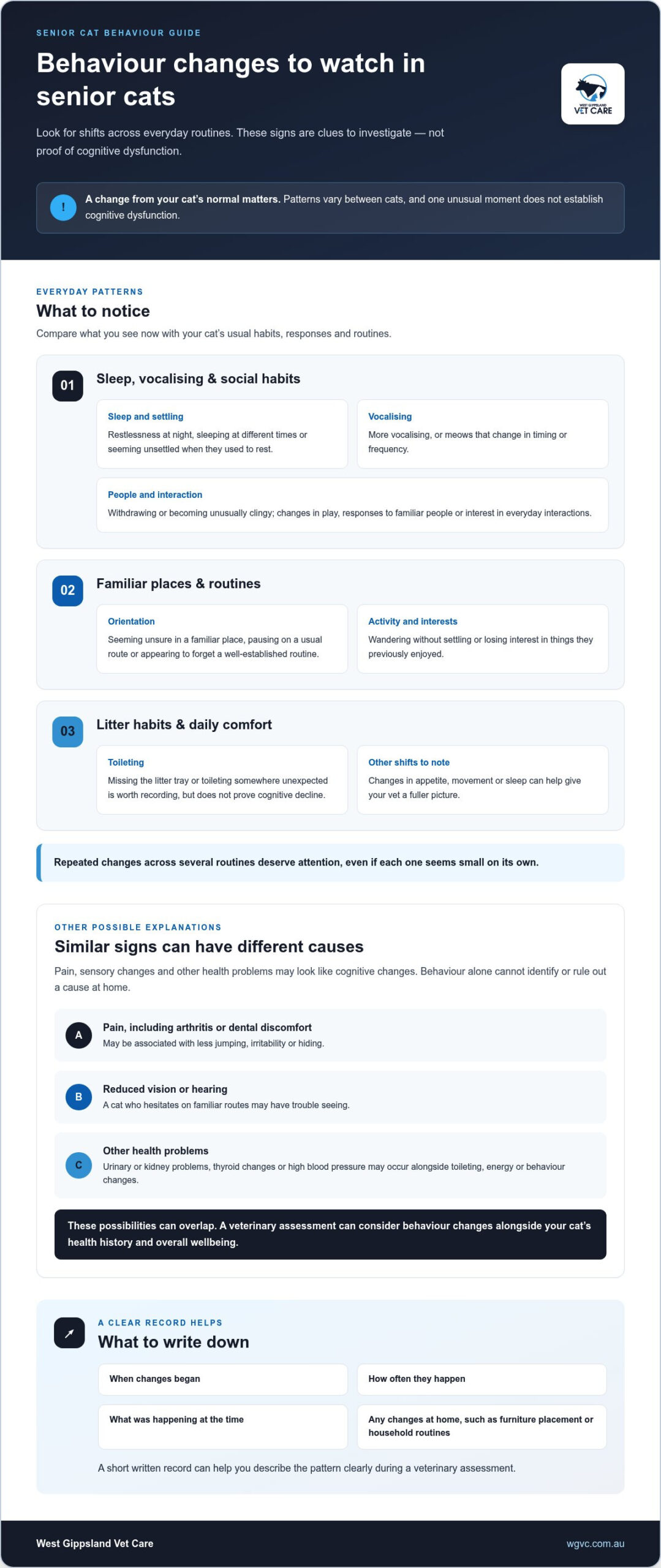
Your cat may become more restless at night, sleep at different times or seem unsettled during periods when they used to rest. Some cats vocalise more, or their meows change in timing or frequency. Note whether this is a clear shift from their usual pattern rather than focusing on one noisy night.
Social habits can change in either direction. A cat who once sought company may withdraw, while a usually independent cat may become unusually clingy. Changes in play, response to familiar people or interest in everyday interactions are also worth recording.
Disorientation, routines and litter habits
Look for moments when your cat seems unsure in a familiar place, pauses on a usual route or appears to have forgotten a well-established routine. They might also wander without settling or lose interest in things they previously enjoyed. Consider whether changes in learned habits happen repeatedly, rather than judging from a single incident.
Missing the litter tray or toileting somewhere unexpected should be recorded, but it doesn’t prove cognitive decline. Note when it happens, how often, what was going on at the time and whether anything has changed at home, such as furniture placement or household routines. Include changes in sleep, appetite and movement to give your vet a fuller picture.
Repeated changes across several routines deserve attention, even if each one seems small on its own. A short written record can help you describe the pattern clearly during a veterinary assessment. Cat owners in Warragul can discuss their observations with West Gippsland Vet Care as part of senior cat health advice.
Could another health problem explain your senior cat’s symptoms?
Ageing alone doesn’t explain every new behaviour. Changes that look like cognitive decline may also be linked to pain, reduced vision or hearing, or another health problem. These possibilities can overlap, so behaviour changes alone can’t identify or rule out a cause at home.
Conditions and changes that can look like cognitive dysfunction
For example, a cat who hesitates on familiar routes may have trouble seeing, while restlessness or reluctance to jump may be associated with pain or arthritis. Toileting changes and shifts in energy or behaviour can also occur alongside urinary or kidney problems, thyroid changes or high blood pressure. This isn’t a complete list, and the same sign may have more than one possible explanation. Cornell’s guidance on cognitive dysfunction also discusses age-related changes in cats and why health assessment matters.
| Observed sign | Possible alternative explanation | Why seek advice |
|---|---|---|
| Less jumping, irritability or hiding | Pain, including arthritis or dental discomfort | Your cat may be uncomfortable, even without an obvious injury. Read our cat dental health guide for more on how oral health can affect cats. |
| Hesitating in familiar spaces or seeming startled | Changes in vision or hearing | An assessment can help explore sensory changes and their effect on everyday behaviour. |
| Changes in toileting, thirst or activity | Urinary or kidney concerns, thyroid changes or blood-pressure problems | These signs need veterinary consideration rather than a guess based on behaviour alone. |
Why a veterinary assessment is important
When you discuss cognitive dysfunction in senior cats symptoms with a vet, your observations help provide context. The vet can consider your cat’s health history, examine them and decide whether diagnostic tests are appropriate. The aim is to investigate possible causes, not to assume a behaviour change is dementia or that you’ve missed something.
West Gippsland Vet Care offers senior pet health checks and diagnostic services, including diagnostic imaging and an in-house laboratory. An assessment considers your individual cat and their history to help guide suitable next steps and support their comfort.
What to record and when to seek help for a senior cat
A few brief notes can make it easier to explain what’s changed, especially if a behaviour happens only now and then. You don’t need to work out the cause yourself. Use this simple plan to prepare for a veterinary conversation and follow the advice you receive.
- 1. Observe: Notice changes in familiar routines, interaction, vocalising, sleep, appetite, drinking, movement and toileting.
- 2. Record: Write down when each change began, how often it happens and what was going on at the time. Include changes at home and any medication changes.
- 3. Arrange advice: Share your notes with your vet and describe what’s different from your cat’s usual behaviour.
- 4. Follow the agreed care plan: Keep track of further changes and follow up with your vet if you’re concerned or your cat’s condition shifts.
A simple behaviour diary for your cat
Use dated notes rather than relying on memory. “Called repeatedly after waking at night” is more useful than “seemed confused”. Record how often it happens and the context, such as whether it occurs near mealtimes, after visitors or along a particular route around the house. Note appetite, drinking, movement and litter habits too. A short video may help show an intermittent behaviour, but only film if it’s safe and doesn’t delay care.
When behaviour changes need prompt attention
Gradual changes still deserve attention, but don’t wait to build a diary if your cat’s behaviour changes suddenly or worsens rapidly. Seek urgent veterinary advice if your cat can’t urinate, collapses, has difficulty breathing or experiences a seizure. These signs need prompt attention rather than observation at home.
West Gippsland Vet Care provides 24-hour emergency care to existing clients. If you’re an existing client and your cat has an urgent warning sign, contact the clinic for guidance without waiting to complete your notes.
For less urgent but persistent changes, a record of cognitive dysfunction in senior cats symptoms can help your vet assess the pattern alongside your cat’s health history. If you’re in Warragul, arrange a senior cat health check to discuss what you’ve noticed and plan next steps together.
Supporting a cat with cognitive changes in West Gippsland
Support starts with your cat’s individual needs. Whether changes are linked to cognitive decline or another health concern, focus on comfort, safety and quality of life. Small, thoughtful adjustments can make familiar parts of the day easier without overwhelming your cat with unnecessary changes.
Making familiar spaces easier to navigate
Keep food, water, litter and favourite resting places easy to find and reach. If your cat has trouble moving around, consider whether the route to these resources involves stairs, slippery floors or a high step. A safe, low-effort path may help, but the right setup depends on your cat’s mobility, habits and home.
Keep daily routines and familiar areas consistent where practical. Sudden changes to furniture or resource locations may make it harder for some cats to find their way. Rather than rearranging everything, notice where your cat seems comfortable and adapt the space around their needs. Your veterinary team can help you consider practical changes, especially if pain or reduced mobility may be affecting how your cat gets around.
Building an ongoing care plan with your vet
Care needs can change over time, so follow-up conversations can help review your cat’s behaviour, comfort and day-to-day wellbeing. Bring notes about the cognitive dysfunction in senior cats symptoms you’ve noticed, along with any changes in their home environment. This gives your vet useful context when discussing what may support your cat.
West Gippsland Vet Care offers senior pet health checks and behaviour consultations, and can discuss pain management and arthritis care where appropriate. Together, you can consider a plan that suits your cat rather than relying on a one-size-fits-all approach. If you’re concerned about changes in your senior cat, contact West Gippsland Vet Care to discuss guidance and support.
Take the next step for your senior cat
Changes in your cat’s behaviour can be unsettling, but they’re useful clues, not a diagnosis. Keep a simple record of patterns and timing, and remember that pain or other health concerns can resemble cognitive changes. A veterinary assessment can help explore what’s happening and how best to support your cat’s comfort and quality of life.
If you’re concerned about cognitive dysfunction in senior cats symptoms, West Gippsland Vet Care can help you consider your cat’s individual needs. Senior pet health checks and behaviour consultations provide an opportunity to discuss changes, while pain management and arthritis care, diagnostic imaging and an in-house laboratory can support further assessment where appropriate.
For senior cat health advice in Warragul, Drouin, Bunyip, Yarragon, Trafalgar, Willow Grove, Hill End or Neerim South, talk with West Gippsland Vet Care about your cat.
Frequently Asked Questions
What are the first signs of cognitive dysfunction in senior cats?
Early changes may involve sleep, social behaviour, vocalising or familiar routines. If you’re watching for cognitive dysfunction in senior cats symptoms, notice whether your cat seems disoriented, becomes unusually clingy or withdrawn, or starts calling out at different times. These changes can have other causes, so one sign alone can’t confirm cognitive dysfunction. Record what’s changed and discuss persistent or concerning patterns with your vet.
Is cognitive dysfunction in cats the same as normal ageing?
No. Ageing may bring changes in activity or mobility, but a new behaviour shouldn’t automatically be dismissed as normal. Cognitive dysfunction involves age-associated changes in thinking and behaviour, and not every senior cat develops it. Pain, changes in sight or hearing, and other health problems can also affect behaviour. A veterinary assessment can help explore what may be contributing to the change in your cat.
Can cognitive dysfunction make a cat miss the litter tray?
It can be associated with changes in learned routines, including litter habits, but missing the tray doesn’t prove cognitive dysfunction. Pain or mobility difficulties may make getting to or using the tray harder, and urinary or other medical concerns can also affect toileting. Note when accidents happen and whether anything has changed at home. Arrange veterinary advice so possible causes can be considered rather than guessed at.
How is cognitive dysfunction diagnosed in senior cats?
There isn’t a simple home test that confirms cognitive dysfunction. Your vet will consider your cat’s behaviour and health history, examine them, and may recommend diagnostic tests to investigate other possible causes. This matters because pain, sensory changes and medical illness can resemble cognitive signs. A clear record of when behaviours began, how often they occur and any changes in appetite, movement or toileting can help inform the assessment.
What should I do if my senior cat suddenly seems confused?
Contact a vet promptly if your cat’s confusion comes on suddenly or worsens quickly, rather than waiting to see whether it settles. Sudden changes can have causes that need timely assessment. Seek urgent veterinary advice if your cat collapses, struggles to breathe, has a seizure or can’t urinate. If it’s safe, note what happened and when, but don’t delay getting help to gather more information.
Can I help a cat with cognitive changes at home?
Yes. Keep routines as predictable as you can and make familiar resting places, food, water and litter easy for your cat to reach. Adapt the setup to their mobility and habits, and discuss pain, comfort and home changes with your veterinary team. West Gippsland Vet Care supports senior cats and their people across Warragul, Drouin, Bunyip, Yarragon, Trafalgar, Willow Grove, Hill End and Neerim South through senior pet health checks and related care.