
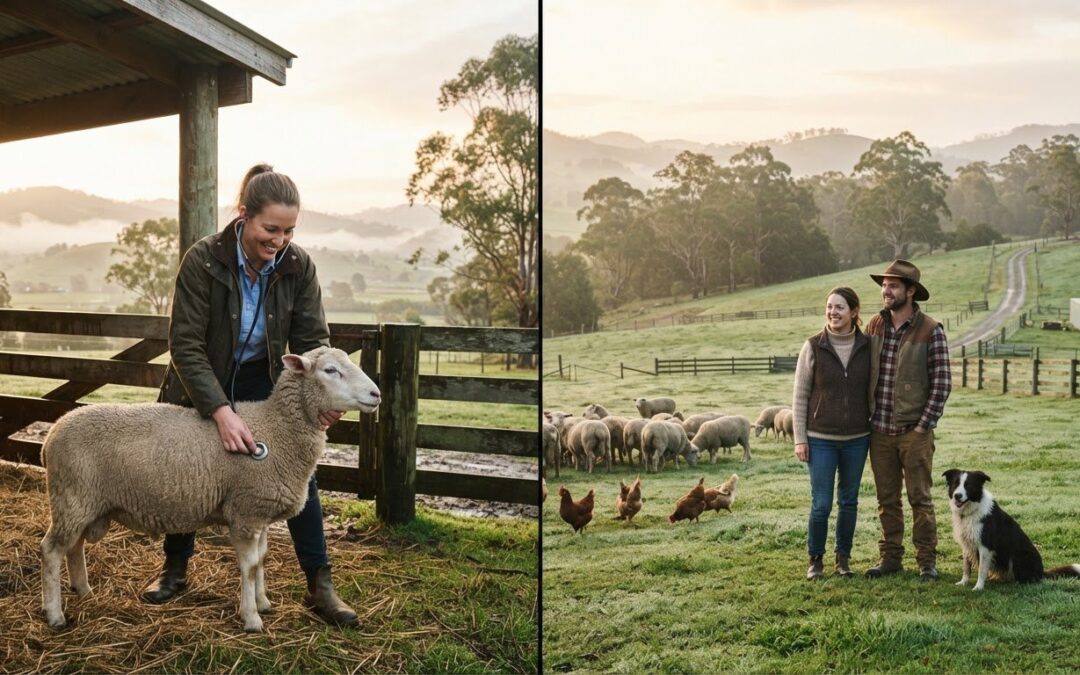
Imagine waking up on your first misty morning in Willow Grove, coffee in hand, only to find one of your new sheep shivering in the corner of the paddock. It’s a heart-sinking moment that every new landowner fears. Starting a small-scale farm is a beautiful dream, but finding reliable vet advice for first-time hobby farmer Willow Grove residents is the first step to peace of mind. The reality of Victorian agricultural regulations and the unique Gippsland climate can feel incredibly overwhelming when you’re just starting out.
You want to provide the best possible life for your animals, yet the fear of missing a critical vaccination or falling foul of local laws is always there. This guide ensures you have a steady hand to guide you through the basics of livestock care and land management. We’ll help you master the essentials, from understanding your mandatory Property Identification Code (PIC) to managing regional pests like liver fluke. By the end of this article, you’ll know exactly how to keep your animals thriving, stay compliant with Agriculture Victoria, and build a supportive partnership with a local veterinary team who truly understands our lush, green corner of the world.
Key Takeaways
- Understand the legal essentials for your property, including why a Property Identification Code (PIC) is mandatory and free for all Victorian livestock owners.
- Learn how to manage Gippsland-specific health challenges like liver fluke and frothy bloat by implementing a proactive preventative health plan.
- Discover how to correctly assess your land’s carrying capacity to prevent overstocking and protect animal hoof health from heavy, waterlogged winter soils.
- Gain professional vet advice for first-time hobby farmer Willow Grove residents to transition from stressful emergency fixes to a sustainable herd health approach.
- Prepare for the local Gippsland seasons with a management calendar focused on spring pasture risks, summer bushfire safety, and year-round biosecurity.
Starting Your Willow Grove Hobby Farm: The Legal Essentials
Moving to a lifestyle block near Blue Rock Lake is a dream for many families. While the focus is often on choosing the cutest alpacas or the best breed of sheep, the administrative side of hobby farming is actually where your journey begins. In Victoria, keeping livestock isn’t just a lifestyle choice; it’s a regulated responsibility. Our vet advice for first-time hobby farmer Willow Grove residents always starts with a clear understanding of your legal duties. These rules aren’t there to make life difficult. They exist to protect your animals, your neighbours, and the broader Australian agricultural industry from disease outbreaks.
Obtaining Your PIC in West Gippsland
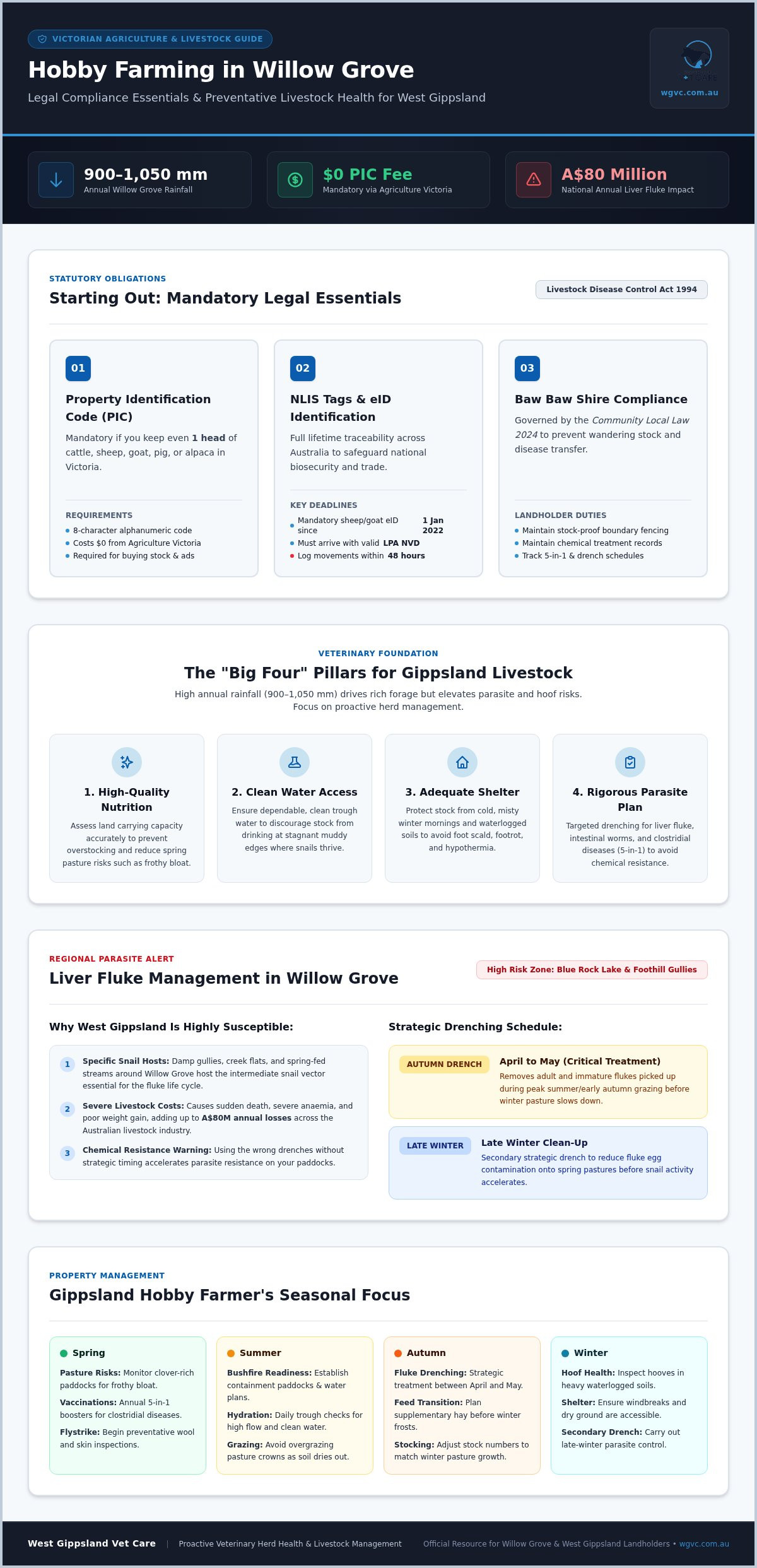
A Property Identification Code (PIC) is an eight-character alphanumeric code assigned to a specific piece of land. Under the Livestock Disease Control Act 1994, you’re legally required to hold a PIC if you keep even one head of cattle, sheep, goat, pig, or alpaca. For those in Willow Grove, applying through Agriculture Victoria is straightforward and, importantly, currently costs $0. Your PIC is the foundation of your biosecurity. It ensures that if a disease is detected in the region, authorities know exactly where animals are located so they can provide urgent support. You’ll also need this code to buy stock at local saleyards or even through online marketplaces, where it’s illegal to advertise livestock without listing a valid PIC.
NLIS Tags and Livestock Movement
Traceability is the heart of Australia’s biosecurity system. The National Livestock Identification System (NLIS) uses ear tags to track an animal’s history from birth to its final destination. In Victoria, all sheep and goats born or moved must have an electronic (eID) tag. This has been a mandatory requirement since January 1, 2022. When you bring new animals home to Willow Grove, it’s your job to ensure they arrive with the correct tags and a National Vendor Declaration (LPA NVD). This document acts as a social and health passport, proving the animal’s history and chemical treatment status. Once they arrive, you have exactly 48 hours to record the movement on the national NLIS database.
Beyond these codes, the Baw Baw Shire Community Local Law 2024 requires you to maintain stock-proof boundary fencing. Straying stock can lead to council fines, but more importantly, it puts your animals at risk of injury. Keeping a simple diary of chemical treatments, such as drenching for liver fluke or 5-in-1 vaccinations, is also essential. These records ensure you never double-dose an animal and help us provide the most accurate care during a visit. It’s about building a safe environment where your new companions can truly thrive.
Essential Preventative Health for Gippsland Livestock
Keeping animals healthy in our beautiful corner of West Gippsland involves more than just a lush paddock and a full water trough. Willow Grove receives between 900 and 1,050 mm of rainfall annually. This high rainfall creates incredible grass growth, but it also provides the perfect environment for parasites and soil-borne diseases to flourish. Our vet advice for first-time hobby farmer Willow Grove residents always focuses on the “Big Four”: high-quality nutrition, clean water, adequate shelter, and rigorous parasite control. When you manage these pillars proactively, you spend less time worrying about sick animals and more time enjoying the farm lifestyle.
Because every property has its own unique layout and history, local knowledge is your best tool for success. Partnering with a livestock vet West Gippsland families rely on allows you to build a seasonal plan tailored to your specific paddocks. This preventative approach is far more cost-effective than calling for emergency help when an animal is already in distress. It’s about staying one step ahead of the challenges our damp Gippsland climate presents.
Parasite Control: Fluke, Worms, and Flies
Liver fluke is a significant concern for any farm near Blue Rock Lake or the surrounding foothills. The damp gullies and spring-fed streams common in Willow Grove host the specific snails required for the fluke’s life cycle. Industry data from Meat & Livestock Australia suggests that liver fluke costs the Australian livestock industry up to A$80 million every year through lost weight gain and sudden death. We recommend a strategic drenching program, typically in autumn (April to May) and again in late winter. It’s vital to use the right chemicals to avoid building resistance. If you have sheep, you must also plan for flystrike prevention. Timing your shearing and crutching before the humid summer peaks is the kindest way to protect your flock from this painful condition.
Vaccination Protocols
In Gippsland, clostridial diseases like pulpy kidney, tetanus, and blackleg are a constant threat because the spores live in the soil for years. Following established clostridial disease vaccination protocols is the simplest way to prevent these often-fatal infections. Most hobby farmers use a 5-in-1 vaccine for sheep and goats, while cattle owners often step up to a 7-in-1. This extra protection is crucial in our wet environment, as it guards against leptospirosis, a serious disease that can cause abortions in cows and severe illness in humans. A standard primary course requires two doses given four to six weeks apart, followed by an annual booster. If you’re feeling unsure about the right timing for your stock, our team can help you organise a simple health calendar that keeps everyone on track.
Choosing the Right Stock for Your Paddocks
Deciding which animals will call your property home is perhaps the most exciting part of starting your journey. However, the lush, green slopes of Willow Grove can be deceptive. While the grass looks endless in spring, the heavy grey clay and red volcanic soils of West Gippsland pose unique challenges for livestock. Our vet advice for first-time hobby farmer Willow Grove residents always begins with a simple rule: listen to your land before you buy your stock. Overstocking is the most common mistake new farmers make, often leading to degraded pastures and stressed, hungry animals when the winter growth slows down.
In our region, a good benchmark for improved pastures is roughly one cow-calf unit per 1.0 to 1.5 hectares, or about 12 to 18 Dry Sheep Equivalents (DSE) per hectare. During our wet winters, the ground becomes soft and prone to “pugging,” where heavy hooves damage the soil structure and grass roots. This is why infrastructure is just as important as the animals themselves. Before your first delivery arrives, ensure you have:
- Stock-proof fencing: Standard cattle wire won’t keep a curious goat or a small lamb contained.
- Reliable water: Troughs should be easy to clean and positioned to prevent mud holes from forming around them.
- Handling facilities: Even a small hobby block needs a safe way to restrain an animal for a health check or treatment.
Cattle vs. Sheep vs. Goats
Cattle are fantastic for keeping long grass under control, but their weight can be devastating to soft Gippsland paddocks in July. They also require sturdy yards and a loading ramp for safe transport. Sheep are much lighter on the land, though they require more hands-on care regarding shearing, crutching, and monitoring for flies. Goats are wonderful characters and excellent at clearing woody weeds, but they are notorious escapologists. If your fencing isn’t “goat-tight,” they will likely end up in your neighbour’s garden or exploring the roadside. Whether you plan to keep a few animals for lifestyle maintenance or take inspiration from pasture-raised livestock producers like Fowler & Valley Farms, matching the right species to your property’s infrastructure is essential.
Alpacas and Miniature Breeds
Many Willow Grove families choose alpacas as herd guardians. While they can be effective at deterring foxes from young lambs, they still require their own specific care, including annual vaccinations and toenail trimming. Miniature cattle breeds are also surging in popularity. They are often easier to handle and less intimidating for beginners, but don’t be fooled by their size; they still have the same nutritional and health requirements as their larger cousins. If your lifestyle property includes horses, their medical and management needs are equally distinct; to see how specialist equine practices approach horse health and routine care, visit Exmoor Equine Vets. Starting with just two or three animals allows you to learn their rhythms without feeling overwhelmed. As your confidence and your pasture management skills grow, you can slowly expand your family.
The Hobby Farmer’s Seasonal Management Calendar
Life on a farm in the Willow Grove basin follows a distinct rhythm. While your city friends might only notice the changing colours of the trees, you’ll learn to read the paddocks and the sky. Our vet advice for first-time hobby farmer Willow Grove residents focuses on staying ahead of the seasons. By anticipating the challenges of the Gippsland climate, you can prevent many common emergencies before they occur.
Spring is a time of incredible abundance, but it brings hidden risks. The rapid growth of clover-rich pastures can lead to frothy bloat, where trapped gasses in the rumen become life-threatening. During wet, cold snaps, lactating cows are also at risk of grass tetany due to magnesium deficiencies in the lush “green pick.” As the weather warms into summer, your focus must shift to bushfire preparedness and water security. Ensure your troughs are clear and your fire plan includes your livestock. This is also the peak time for tiger and brown snakes. While you’re checking fences, remember that your four-legged companions are also at risk; keep our guide on snake bite treatment for dogs Gippsland bookmarked for peace of mind.
When autumn arrives, usually with the “autumn break” rains in April or May, it’s time for strategic parasite control. This is the most critical window to treat for liver fluke before the winter cold sets in. As we move into winter, the heavy Gippsland soils become waterlogged. You’ll need to monitor hoof health closely to prevent foot rot and ensure your stock has enough supplemental hay to maintain their body condition when pasture growth stalls.
Managing Pasture and Nutrition
Gippsland pastures are famous for their productivity, but they aren’t always a complete meal. We often see cases of acidosis when new owners introduce grain or pellets too quickly to their animals’ diets. Any change in feed should happen slowly over two weeks. Because our soils can be deficient in certain minerals, we might suggest soil or blood testing to see if your animals need selenium or copper supplements. This ensures your stock isn’t just full, but truly nourished.
Reproduction and Breeding Basics
If you’ve decided to start a breeding program, success begins months before the first lamb or calf arrives. We highly recommend bull fertility testing and livestock pregnancy testing to ensure your breeding season is productive and predictable. During the birthing season, most animals do well on their own, but you should have a basic first aid kit ready. This should include iodine for navels, clean towels, and a thermometer. If an animal has been straining for more than an hour without progress, that’s the moment to call for professional help. To ensure your property is ready for the year ahead, contact us to book a seasonal herd health consultation.
Partnering with West Gippsland Vet Care
Starting a hobby farm is a deeply personal journey, one that often begins with a love for the land and a desire to care for animals. However, you don’t have to walk this path alone. At West Gippsland Vet Care, we view ourselves as an extension of your support system. Our vet advice for first-time hobby farmer Willow Grove residents focuses on building a long-term partnership that prioritises the well-being of your animals and the sustainability of your farm. By shifting from a reactive “sick animal” mindset to a proactive herd health approach, you can actually save significant money over the years while ensuring your livestock thrive.
When we visit your property, we aren’t just looking at a single animal; we’re looking at your paddocks, your water sources, and your infrastructure. This local expertise allows us to provide advice that is tailored to your specific corner of the Gippsland landscape. It’s about more than just clinical expertise; it’s about a shared dedication to the animals in your care. We understand the nuances of the Willow Grove soil and climate, and we use that knowledge to help you avoid common pitfalls before they become costly problems.
One of the most vital benefits of this partnership is peace of mind. We provide a 24-hour emergency service to our existing clients. Because we already know your farm, your history, and your livestock, we can respond more effectively when the unexpected happens. This reliability is a cornerstone of the community we’ve built together, ensuring that help is only a phone call away during those stressful moments.
On-Farm Consultations and Herd Strategy
A routine farm visit is a collaborative effort. We’ll walk through your paddocks together, discussing your drenching and vaccination schedules to ensure they are perfectly timed for our local climate. If we suspect an issue, our in-house laboratory provides rapid diagnostic results, so we can act quickly to protect the rest of your mob. We also offer educational support for tasks like humane calf disbudding, ensuring these essential procedures are handled with the highest level of care and compassion. This hands-on guidance helps you build the skills and confidence needed to manage your farm effectively.
Support Beyond the Paddock
Your farm is a whole ecosystem, and that includes your working dogs and family pets. We offer comprehensive pet vaccinations, grooming, and senior pet health checks to keep every member of your family healthy. By accessing expert vet advice for first-time hobby farmer Willow Grove residents, you can transition from a city lifestyle to a rural one with a trusted guide by your side. We speak your language and are here to help you navigate every challenge with kindness. To begin this journey, we invite you to book your first farm assessment with our team, where we can listen to your goals and help you create a healthy, thriving home for your livestock.
Cultivating Your Willow Grove Dream with Confidence
Starting a lifestyle property is a journey filled with learning and reward. By securing your Property Identification Code early and staying ahead of Gippsland’s seasonal parasite risks, you’re already setting your animals up for a healthy life. Success isn’t about knowing everything on day one; it’s about having the right support system in place when questions arise. Accessing professional vet advice for first-time hobby farmer Willow Grove residents ensures that your livestock remain a joy rather than a source of stress.
Our team at West Gippsland Vet Care consists of independent, local partners who live right here in your community. We bring specialised livestock and reproduction expertise directly to your gate, helping you navigate everything from birthing seasons to pasture management. As an existing client, you’ll also have the security of 24-hour emergency care, so you’re never alone during a midnight crisis. We’re here to listen, guide, and care for your animals as if they were our own. Book a herd health consultation with West Gippsland Vet Care today and let’s start building a thriving future for your farm. You’ve got this, and we’re right here with you.
Frequently Asked Questions
Do I really need a PIC if I only have two pet sheep in Willow Grove?
Yes, you legally require a Property Identification Code (PIC) even if you only keep a single sheep or goat as a pet. Under the Livestock Disease Control Act 1994, this registration is mandatory for biosecurity and disease tracking across Victoria. Applications through Agriculture Victoria are currently free of charge. Holding a PIC is the first step in following vet advice for first-time hobby farmer Willow Grove residents, ensuring you receive urgent alerts during regional health emergencies.
What is the most common health issue for cattle in West Gippsland?
While we see many metabolic cases, lameness is a recurring challenge for cattle in our region due to the high rainfall and heavy clay soils. Constant moisture can soften the hoof, making animals prone to infections like footrot or digital dermatitis. This is why we often emphasise the importance of well-maintained laneways and dry standing areas. Managing these environmental factors is a key part of the herd health strategy we develop for local smallholders.
How often should I drench my livestock for worms?
There is no “one size fits all” schedule, as blanket drenching can lead to chemical resistance. Instead, we advocate for Integrated Parasite Management using Faecal Egg Counts (FEC) to monitor worm burdens before treating. Generally, a strategic drench is performed in autumn and again in late winter or early spring. This targeted approach ensures you only use chemicals when necessary, protecting your animals’ health and your long-term pasture management goals.
Can I use a normal dog vet for my hobby farm animals?
While many clinics only treat small pets, West Gippsland Vet Care offers specialised livestock and reproduction expertise alongside routine pet care. Farm animals have vastly different nutritional, legal, and medical needs compared to cats or dogs. Partnering with a dedicated rural team ensures you get accurate vet advice for first-time hobby farmer Willow Grove landowners. We provide on-farm consultations and 24-hour emergency support to our existing clients, bridging the gap between clinical excellence and practical farm management.
What should I do if I find a snake in my livestock paddock?
If you spot a tiger or brown snake in your paddock, the best course of action is to leave it alone and move your livestock to a different area if possible. Snakes are protected wildlife and will usually move on if they aren’t provoked. Most livestock are naturally wary, but inquisitive dogs are at high risk. Always keep your grass short around troughs and gates. If you suspect an animal has been bitten, contact us immediately for emergency guidance.
Is it legal to perform my own livestock procedures like ear tagging?
It is legal and mandatory for you to ear tag your own livestock with NLIS-accredited tags before they leave your property. However, certain procedures like calf disbudding or complex medical treatments should be handled by a professional to ensure animal welfare and compliance with Victorian standards. We can provide training on basic handling and tagging during a routine farm visit, helping you build the skills needed to manage your property confidently and humanely.
Why is liver fluke such a big problem in the Willow Grove area?
Willow Grove’s topography, featuring many spring-fed gullies and drainage lines leading toward Blue Rock Lake, creates the perfect environment for the intermediate host snail. These snails thrive in the permanent damp patches common on our local hillsides. Because the fluke life cycle is so well-supported by this specific Gippsland landscape, it remains a primary concern. Fencing off these wet “hotspots” is often the most effective way to break the cycle on your property.
What are the signs that my sheep might have flystrike?
Struck sheep often appear agitated, tail-twitching, or biting at their wool. You might notice dark, damp patches on the fleece where maggots are active, accompanied by a distinct, unpleasant odour. As the condition progresses, the animal may isolate itself from the flock and become lethargic. Early detection is vital, as flystrike causes rapid tissue damage. Regular crutching and monitoring during humid Gippsland summers are your best defences against this painful and potentially fatal condition.