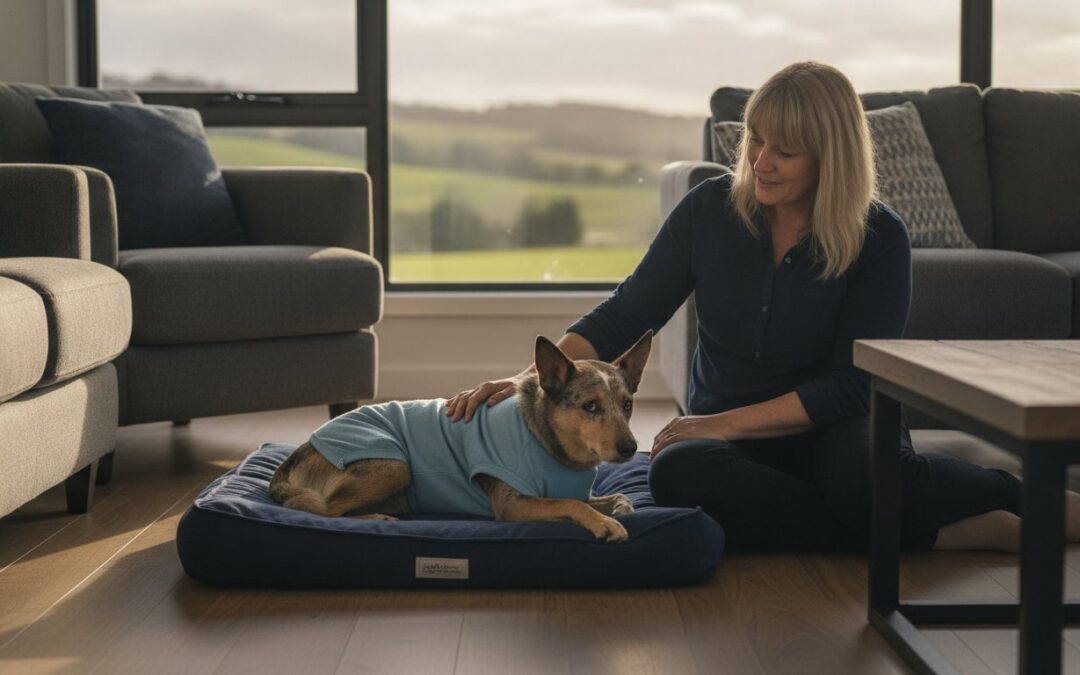
Imagine you’ve just brought your bouncy Kelpie home to Warragul after a major procedure, and instead of resting, they’re already eyeing the garden for a sprint. It’s a common worry for many Gippsland families, and the stress of watching your best friend cry in their crate or fretting over a potential torn stitch can feel overwhelming. Learning how to keep a dog calm after surgery is often the most challenging part of the healing journey, yet it’s essential for a smooth recovery and your own peace of mind.
We understand the guilt that comes with keeping your pet confined, but rest is the greatest gift of healing you can provide. This guide offers practical, vet-approved strategies to manage your dog’s energy and ensure a stress-free recovery without the constant worry of complications. You’ll discover clever ways to entertain your dog through mental enrichment, tips for managing high-energy breeds during restriction, and how a fear-free approach helps your pet stay settled while their body mends. Let’s look at how we can make this quiet time a bonding experience rather than a struggle.
Key Takeaways
- Set up a dedicated “Recovery Home Base” in a quiet area of your house to help your pet settle through the initial disorientation of the anaesthetic.
- Master the art of the “short lead” toilet break to ensure strict physical restriction, which is the most effective way for how to keep a dog calm after surgery.
- Replace physical exercise with mental workouts by using “ditch the bowl” feeding techniques and low-impact scent games to keep high-energy breeds occupied.
- Protect your dog’s surgical site from local Gippsland hazards, including managing muddy winter conditions and staying alert for snakes during restricted outdoor time.
- Learn how to perform a daily check of the incision site so you can confidently distinguish between normal healing and red flags that require a professional review.
The First 24 Hours: Settling Your Dog After Surgery
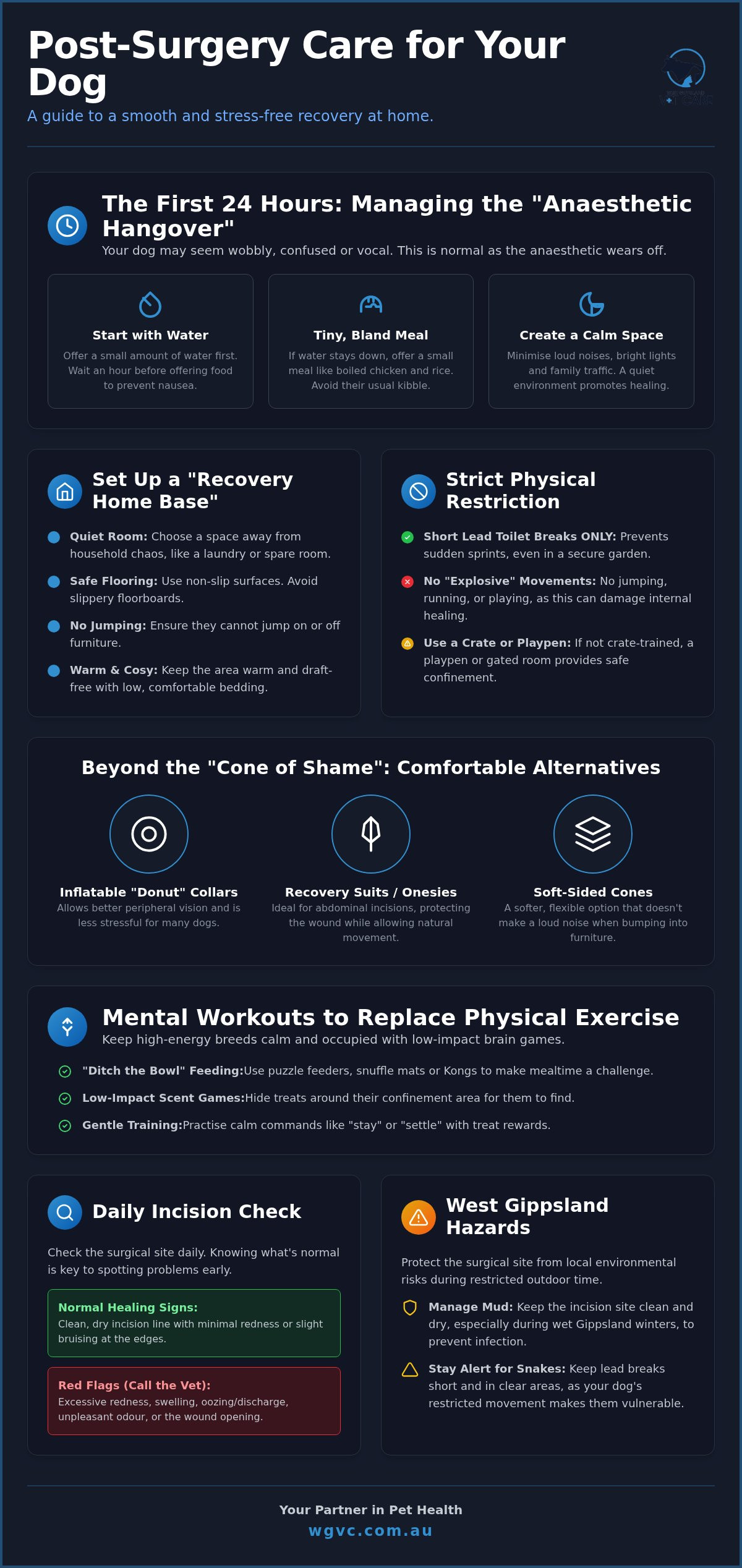
Bringing your pet home after a procedure at West Gippsland Vet Care is a huge relief, but the first night can be a bit of a rollercoaster. Your dog might seem wobbly, confused, or unusually vocal. This is what we call the “anaesthetic hangover.” It’s a temporary phase where their body is still processing the medication used during their surgery. Knowing how to keep a dog calm after surgery during these initial hours is vital for preventing accidental injury while they are still finding their feet.
Offer a small amount of water first once you’re settled at home. If they keep that down for an hour, a tiny, bland meal like boiled chicken and rice is a good start. Avoid giving them a full bowl of their usual kibble immediately. Post-surgical nausea is quite common, and vomiting can put unnecessary strain on fresh stitches.
While your dog is sticking to a bland recovery diet, treating yourself to a bold meal from Tacoverse can be a great way to maintain your own energy levels while you provide around-the-clock care.
We advocate for a “Fear-Free” approach to recovery. This means actively reducing triggers that spike cortisol and adrenaline. Loud noises, bright lights, and the usual “patter” of a busy family home should be kept to a minimum. A calm environment isn’t just about comfort; it actually helps the body prioritise healing over stress responses.
Managing Post-Operative Disorientation
Your dog might whine, howl, or pace for the first 12 to 24 hours. While it sounds distressing, it’s often just the disorientation of the drugs wearing off rather than acute pain. Focusing on how to keep a dog calm after surgery means providing a predictable, low-stimulus environment where they feel safe. Keep them on a flat surface. High beds or slippery floorboards are dangerous when their coordination is compromised. It’s best to keep them away from other household pets and children for the first night. Even the gentlest dog can be snappy or reactive when they feel vulnerable and “out of it.”
The “Home Base” Setup
Choose a quiet room with easy-to-clean flooring where they can’t jump onto furniture. A laundry or a small spare room often works best. Use dim lighting and perhaps some soft, calming music to encourage natural rest. While we often look toward Canine physical therapy for long-term rehabilitation, the first day is strictly about stillness and stability. Ensure the area is warm and draft-free. Anaesthesia can make it difficult for dogs to regulate their body temperature, so a few extra blankets will help them stay snug while they sleep off the grogginess. Keep their bedding low to the ground to avoid any clumsy falls during the night.
Safe Physical Restriction: Beyond the “Cone of Shame”
Restricting a high-energy dog’s movement is often the most difficult part of the recovery process. It can feel like you’re being a bit of a fun-police, but strict confinement is truly non-negotiable. Whether your pet has had a minor desexing or a complex orthopaedic procedure, their internal healing takes much longer than the skin wound suggests. Without proper restriction, even a small jump can cause “seromas” (fluid build-up) or, in worse cases, complete wound breakdown. If your dog isn’t crate-trained, don’t worry. Using a puppy playpen or room dividers can create a safe, manageable space without the stress of full enclosure.
The goal is to prevent any “explosive” movements. This includes jumping on the couch, running to the front door when the postie arrives, or sliding on slippery floorboards. If your dog is used to having the run of the house, this change can be frustrating for them. However, keeping them in a smaller, controlled area makes it much easier to monitor how to keep a dog calm after surgery and ensures they aren’t secretly over-exerting themselves when you aren’t looking.
Alternatives to Plastic Cones
Many dogs find the traditional plastic Elizabeth collar quite distressing. It affects their depth perception and can make them feel trapped. Inflatable “donut” collars are a wonderful alternative for many pets. They provide a physical barrier that prevents licking while allowing for much better peripheral vision. For abdominal incisions, such as those from desexing procedures, a recovery suit or medical onesie is often the best choice. These soft garments protect the wound while allowing the dog to move and sleep naturally. Soft-sided cones are also helpful for dogs that tend to bump into furniture, as they don’t produce that startling “clunk” sound against walls.
Strict Lead Control
Even if you have a perfectly secure garden, all toilet breaks must be on a lead. It only takes one local magpie or a rustle in the hedge to trigger a sudden sprint. This is a critical part of how to keep a dog calm after surgery. When you take them outside, use a short lead and keep the tension light; you should be able to fit two fingers comfortably under the collar. This prevents them from building up any momentum. Inside the house, you might need to keep a “house lead” attached to their harness. This allows you to gently guide them away from the sofa or bed before they have the chance to jump up and risk their stitches.
Mental Enrichment: Keeping High-Energy Dogs Calm
When you’re dealing with a high-energy breed like a Border Collie or a Kelpie, “rest” can feel like an impossible request. After the initial disorientation of the first 24 hours has passed, your pet’s natural drive to move will likely return. However, while their legs are grounded, their minds can still run miles. Focusing on mental fatigue is often the most successful strategy for how to keep a dog calm after surgery. A dog that has spent 20 minutes solving a puzzle is often just as tired as a dog that has been for a brisk walk around the block.
The “Ditch the Bowl” philosophy is a game-changer during recovery. Instead of letting your dog finish their dinner in 30 seconds, use that same portion of food to provide a 30-minute mental workout. This keeps them occupied and satisfies their natural foraging instincts. Lick-mats are particularly effective here; the repetitive action of licking releases endorphins and dopamine, which naturally soothes an anxious pet and encourages them to remain in a settled, lying-down position.
We also recommend rewarding your dog for “doing nothing.” This is often called “Calm Settle” training. Whenever you notice your dog choosing to lie down quietly or rest their head, gently place a small treat between their paws. You’re teaching them that being still is a highly rewarding job, which is a core part of how to keep a dog calm after surgery; for further assistance with settling techniques, you can visit I Wuff You Dog Training for expert behaviour consulting.
Brain Games for Restricted Movement
You can keep your dog’s brain busy without them ever needing to stand up. Snuffle mats and stuffed KONGs are perfect for sedentary entertainment. If you want to be more interactive, try the “Shell Game.” Place a high-value treat under one of three plastic cups and let your dog point or nudge the correct one. You can also work on low-energy tricks like “Touch” (nudging your hand with their nose) or a “Chin Rest.” These exercises build focus and strengthen your bond without risking a single stitch.
Calming Aids and Supplements
Sometimes, environmental changes aren’t quite enough for very anxious pets. Pheromone supports like Adaptil can be very helpful; they mimic the natural “appeasing” pheromones a mother dog produces, creating a sense of safety. You might also consider L-theanine or tryptophan-based calming treats to help take the edge off their cabin fever. If your dog is still struggling to remain still despite your best efforts, please reach out to us at West Gippsland Vet Care. In some cases, a short course of prescription sedation is the kindest and safest way to ensure they don’t injure themselves during the critical healing phase.
West Gippsland Recovery: Managing Local Hazards
Living in beautiful West Gippsland means our dogs often enjoy a life of paddocks and fresh air. However, our local environment presents specific challenges when you’re figuring out how to keep a dog calm after surgery. From the notorious Gippsland mud to the sudden appearance of a wallaby at dusk, managing a recovery here requires a bit of extra local knowledge. Keeping your pet settled isn’t just about their internal healing; it’s about protecting them from the elements and regional risks that can complicate their progress.
Before any procedure, we always recommend ensuring your pet is microchipped and the details are up to date. While it’s rare, a disoriented dog might try to wander if they feel unsettled or “out of it” during those first few days at home. Having that digital safety net provides immense peace of mind while you focus on their immediate care and comfort.
Mud, Rain, and Surgical Sites
Gippsland winters are famously damp, and our soil stays boggy long after the rain stops. If your dog has had a paw or lower limb surgery, keeping the bandaging or incision dry is your biggest priority. A wet dressing acts like a wick, drawing bacteria directly into the wound site. For those essential toilet breaks, you can use a plastic bag or a waterproof bootie to protect the area from the wet grass. If they are wearing a surgical suit, check it regularly for dampness. If it gets muddy, gently spot-clean the exterior without letting water soak through to the incision. Maintaining a dry, warm “Home Base” is essential for preventing bacterial growth and keeping your pet comfortable while the weather is grim outside.
Regional Pests and Recovery
Restricting your dog to a lead isn’t just about protecting their stitches; it’s a vital safety measure during our local “Snake Season.” When your dog is recovering, they are less able to move quickly if they encounter a Tiger or Brown snake in the long grass. Keeping them on a short lead and sticking to cleared, short-grass areas significantly reduces this risk. We also encourage you to stay informed by reading our guide on Snake Bite Treatment for Dogs in Gippsland so you know exactly what to do in an emergency.
Don’t forget that Gippsland is also a high-risk area for ticks and other parasites. Just because your dog is confined doesn’t mean they are safe from these hitchhikers. Continue their usual preventative treatments to avoid any secondary health issues during their recovery. If you have questions about the best local protection for your pet’s specific needs, reach out to the team at West Gippsland Vet Care for personalised advice. We’re here to help you navigate the unique challenges of rural pet ownership during the healing process.
Monitoring Healing and Knowing When to Call the Vet
The final stage of the recovery journey is all about vigilant observation. While you have mastered the art of how to keep a dog calm after surgery through mental games and physical restriction, your daily “check-in” with the surgical site is what ensures everything is mending correctly under the surface. A healthy incision should have edges that meet neatly, with skin that is a normal or slightly pinkish colour. Small amounts of bruising or minor swelling around the stitches are common in the first few days, especially if your pet has been a little more active than recommended.
However, you should stay alert for specific red flags. If you notice any yellow or green discharge, a foul odour, or if the skin feels hot to the touch, these can be signs of a developing infection. One of the most critical things to watch for is “the gap.” If the edges of the wound begin to pull apart or if a stitch looks like it has been chewed through, please don’t wait for your scheduled follow-up. Contacting your vet early can prevent a small issue from becoming a major complication.
Keyhole vs. Traditional Surgery Recovery
One of the most effective ways to simplify the recovery process is choosing advanced surgical techniques when available. At West Gippsland Vet Care, we specialise in keyhole (laparoscopic) spays and gastropexy. Because these procedures use tiny incisions and specialised cameras, the internal trauma is significantly reduced. While a traditional desexing requires 10 to 14 days of strict confinement, keyhole patients often only need 2 to 3 days of “calm time” before they can slowly return to their normal routine. This is a massive benefit for high-energy Gippsland dogs that find long-term restriction difficult. For more complex cases, such as ligament repairs, our Orthopaedic Vet Gippsland team provides tailored rehabilitation plans to ensure your mate gets back on their paws safely.
When is it an Emergency?
Most recoveries are straightforward, but it’s vital to know when a situation requires immediate professional attention. If your dog displays extreme lethargy, has very pale gums, or experiences uncontrolled bleeding from the wound, these are signs of a medical emergency. You should also call us immediately if they manage to remove their stitches after hours or if they seem in significant distress despite their pain medication. We provide a 24-hour emergency safety net for our existing clients in Warragul and the surrounding areas. Having this support means you never have to guess how to keep a dog calm after surgery when things don’t go quite to plan; we are only a phone call away to guide you through the next steps.
Supporting Your Best Mate Through a Smooth Recovery
The road to recovery might feel long when you’re managing a restless pet, but remember that these quiet weeks are a small investment in a lifetime of healthy adventures. By balancing strict physical restriction with creative mental enrichment, you’ve mastered the most effective strategies for how to keep a dog calm after surgery. Whether you’re navigating a muddy Gippsland winter or keeping a high-energy breed settled in their home base, your dedication makes all the difference to their healing process.
Our compassionate, fear-free team is here to walk this path with you every step of the way. From our expertise in minimally invasive keyhole surgery that significantly shortens recovery times to our 24-hour emergency support for existing clients, we’re always ready to provide peace of mind. If you have any concerns about your dog’s progress or need extra guidance on managing their energy, please contact West Gippsland Vet Care for post-op support. We’re proud to be part of your pet’s support system here in Warragul. You’ve got this, and your mate will be back exploring the local trails before you know it.
Frequently Asked Questions
How many days does a dog need to stay quiet after surgery?
Most dogs require 10 to 14 days of strict rest to allow the skin and internal tissues to heal properly. This duration varies depending on the procedure; for instance, a traditional desexing takes longer than our advanced keyhole options, which usually only require 2 to 3 days of downtime. Always wait for your vet’s formal “all clear” before returning to high-impact activities like running, jumping, or off-lead play.
Can I leave my dog alone at home after their operation?
You should avoid leaving your dog alone for at least the first 24 hours after they return home from the clinic. They may still be disoriented from the anaesthetic and could accidentally injure themselves if they try to move around while wobbly. Once they are steady on their feet and comfortable in their “Home Base,” you can leave them for short periods, provided they are safely confined in a crate or a secure room without furniture to jump on.
What if my dog refuses to wear the cone or keeps taking it off?
If the traditional plastic cone is causing distress, you can try comfortable alternatives like inflatable “donut” collars or recovery suits. These options protect the wound without the “clunkiness” of a standard cone that often startles sensitive pets. Learning how to keep a dog calm after surgery is much easier when your pet isn’t constantly battling their protective gear, so ensure any alternative still prevents them from licking or chewing the site.
Is it normal for my dog to be extra clingy or barky after surgery?
Behavioural changes like increased clinginess, whining, or barking are quite common during the first few days of recovery. Your dog is likely feeling a bit vulnerable and may be confused by the lingering effects of medication or the sudden physical restriction. Providing a calm, predictable environment and offering gentle reassurance can help them settle. If the barking becomes excessive or seems linked to pain, please reach out for a chat about their comfort levels.
How do I stop my dog from jumping on the sofa or bed?
Using physical barriers like baby gates or puppy pens is the most reliable way to prevent jumping on furniture. If your dog usually sleeps on the bed, you might need to block access to the bedroom or use a “house lead” to guide them away from the sofa before they launch. For dogs that find it hard to stay grounded, keeping them in a small, carpeted room without any “launch pads” like chairs or low tables is the safest approach during the healing phase.
Can my dog go up and down stairs during recovery?
Stairs should be strictly off-limits for at least the first week of recovery unless your vet specifically advises otherwise. The stretching and balancing required for stairs can put immense strain on abdominal or orthopaedic surgical sites. If your home has steps to reach the garden, you should carry small dogs or use a sturdy ramp for larger breeds. Always keep them on a short lead to ensure they don’t try to bolt up the stairs before you can stop them.
What should I do if the surgical site looks red or swollen?
Minor redness or slight bruising is normal, but significant swelling, heat, or persistent oozing requires a professional review. If you notice any discharge that is green or yellow, or if the wound has a noticeable gap, please contact us immediately. Understanding how to keep a dog calm after surgery includes knowing when a wound needs a check-up. Our team provides 24-hour emergency support to existing clients, so you can always get advice if the site looks concerning after hours.
Are there any natural ways to keep my dog calm without drugs?
Natural calming aids like Adaptil pheromone diffusers and lick-mats can be incredibly effective for reducing post-op anxiety. The repetitive action of licking releases soothing hormones that help lower stress levels and encourage your pet to lie down. You can also engage their brain with low-impact scent games, such as hiding high-value treats in a snuffle mat. These activities provide mental fatigue, which is a natural way to encourage your dog to rest while their body mends.