
You notice your old mate hesitating at the bottom of the stairs, or perhaps they’re taking a little longer to settle into their bed at night. It’s a common worry for many local owners, and it’s natural to feel a bit anxious about whether these changes are just a part of getting older or a sign that they’re in pain. You want them to be comfortable, but the thought of invasive tests or high costs can feel overwhelming. Booking a senior dog check up Trafalgar is the first step toward replacing that worry with a clear, compassionate plan for your dog’s golden years.
We believe that growing older shouldn’t mean living in discomfort. By catching age-related issues like arthritis, heart, or kidney changes early, we can often manage them with simple adjustments that make a world of difference to their daily happiness. In this guide, we’ll explore how tailored health screenings work, what subtle signs of pain to look for, and practical advice on diet and home modifications to keep your mate thriving and mobile for as long as possible.
Key Takeaways
- Learn how your dog’s breed and size influence the ageing process and when it’s time to transition to a more supportive care plan.
- Discover how a senior dog check up Trafalgar can detect “silent” health concerns like kidney disease or heart issues long before symptoms appear.
- Find out how simple home modifications, such as non-slip mats and car ramps, can immediately improve your old mate’s comfort and mobility.
- Understand the vital link between dental hygiene and the health of your dog’s internal organs, including the heart and kidneys.
- Explore how a Fear-Free approach to veterinary care ensures your older pet feels safe and relaxed during their health screenings.
When Does a Dog Become a “Senior” in Trafalgar?
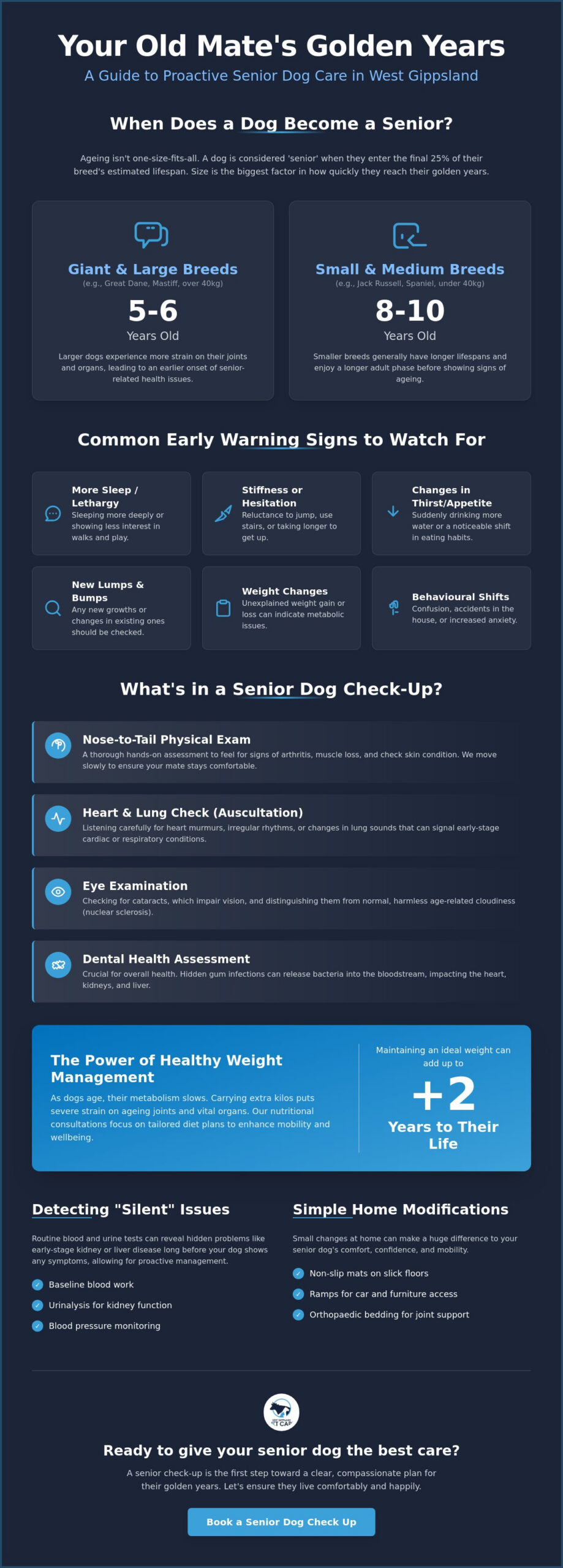
It’s a question we hear often at the clinic: “Is my dog actually old yet?” While we’d love our companions to stay puppies forever, the aging process in dogs is a complex journey that varies significantly between individuals. A senior dog is one entering the final 25% of their expected lifespan based on their breed. However, there’s a distinct difference between being “senior” and being “geriatric”. Senior dogs are typically those starting to slow down, while geriatric dogs are in a more advanced stage where they might face multiple, overlapping health challenges. Identifying these stages early through a senior dog check up Trafalgar helps us stay ahead of the curve and keep your mate comfortable.
Size plays a massive role in how quickly a dog matures. A Great Dane living on a property in Trafalgar might reach their senior years by age five or six, whereas a Jack Russell might still be acting like a teenager until they hit nine or ten. Larger dogs put more strain on their hearts and joints, meaning their bodies often face the challenges of old age much sooner than their smaller counterparts. This is why we recommend starting more vigilant health checks from age six or seven for most dogs. This “middle-aged” transition is the perfect time to establish a health baseline through a senior dog check up Trafalgar. It’s much easier to spot a problem when we know what “normal” looks like for your specific mate.
The Breed-Specific Ageing Timeline
Giant breeds, typically those over 40kg, tend to have shorter lifespans and may show signs of age-related wear and tear as early as five or six years old. Small to medium breeds usually enjoy a longer adult phase, often not reaching senior status until they are eight to ten. Beyond genetics, your dog’s history and lifestyle in West Gippsland also impact their biological age. A hard-working farm dog might have different joint needs compared to a pampered pet who spends most of their time on the lounge, making personalised care essential.
Common Early Warning Signs to Watch For
Keep a close eye on the little things. You might notice your dog is sleeping more deeply or seems a bit reluctant to jump into the car after a walk at Uralla Reserve. Increased thirst or a sudden change in appetite are also signals that shouldn’t be ignored, as they can point to underlying metabolic changes. We also encourage owners to perform a weekly “brush-down” to feel for any new lumps and bumps. Catching these changes early is vital for effective treatment and long-term comfort.
What to Expect During a Senior Dog Check-Up
Walking into the clinic for a senior dog check up Trafalgar is quite different from the routine vaccinations of your dog’s younger years. We take a much slower, more deliberate approach to ensure your old mate feels safe and comfortable throughout the process. This visit is our chance to listen to your concerns and look closely at the subtle changes that happen as pets age. We rely on a combination of clinical expertise and your observations at home to build a complete picture of their health. High-quality senior pet care involves looking beyond the surface to find ways to improve their daily quality of life.
The Physical Examination: More Than Just a Pat
Our physical assessment is a thorough, nose-to-tail process. We pay close attention to joint mobility, gently feeling for signs of arthritis or muscle wastage, especially in the hind legs where many older dogs begin to struggle. We also use a stethoscope for auscultation, which is a fancy way of saying we’re listening intently to the heart and lungs. It’s common for older dogs to develop heart murmurs or irregular rhythms that might not be obvious during a quick pat. We also perform an ophthalmic check to distinguish between normal age-related cloudiness, known as nuclear sclerosis, and more serious cataracts that could be affecting their vision and confidence.
Dental health is another critical focus during a senior dog check up Trafalgar. Many owners don’t realise that a hidden infection in the gums can actually send bacteria through the bloodstream, potentially damaging the heart and kidneys. We’ll also talk about any behavioural shifts you’ve noticed. If your dog has started “house training” accidents or wanders aimlessly at night, it might be a sign of cognitive changes rather than just “getting old”. Identifying these early allows us to provide support before they become distressing for you or your pet.
Nutritional and Weight Consultation
As metabolism slows down, many dogs experience the “senior spread”. Carrying even a few extra kilos puts immense pressure on ageing joints and can make existing arthritis much harder to manage. Research has shown that maintaining an ideal body weight can actually add up to two years to a dog’s life, which is why we spend time discussing specific calorie counts and protein levels. We often recommend joint-support diets and supplements that are specifically formulated to reduce inflammation. If your mate is struggling to get around, our team can help you develop a tailored pain management and arthritis care plan to get them moving comfortably again.
Detecting “Silent” Issues: The Role of Diagnostics
While a physical exam tells us a lot, many age-related conditions hide beneath the surface. Senior dogs are masters at masking discomfort, and by the time they show obvious symptoms, a disease may already be advanced. This is where diagnostic testing becomes a vital part of a senior dog check up Trafalgar. We follow the latest AAHA Senior Care Guidelines to ensure we’re screening for the most common issues that affect older pets. These tests aren’t about over-medicalising your dog; they’re about giving us the data we need to keep them happy and comfortable for longer.
Blood work acts as a window into your dog’s internal organs. It allows us to check how the liver and kidneys are processing waste and whether the heart is under stress. Often, we can detect early-stage kidney disease or diabetes through a simple urinalysis long before your mate starts drinking more water or losing weight. We also check blood pressure, an often-overlooked part of senior health. High blood pressure can lead to sudden blindness or kidney damage, but it’s easily managed once we know it’s there. If we find any unusual “lumps and bumps” during the exam, diagnostic imaging helps us see exactly what’s going on inside without invasive procedures.
The Senior Blood Profile: What We Look For
A comprehensive blood profile looks at liver and kidney enzymes to catch issues before they become crises. We also test thyroid function, as hypothyroidism is common in older dogs and can lead to lethargy and unexplained weight gain. Checking red and white blood cell counts helps us rule out anaemia or hidden inflammation that might be draining your dog’s energy. These insights allow us to tailor a care plan that fits your dog’s specific biological needs rather than just their chronological age.
Advanced Imaging and In-House Lab Benefits
For many West Gippsland owners, waiting days for lab results can be an anxious time. Our in-house laboratory means we can often get answers within the same visit, which is crucial if your dog is unwell. We also use ultrasound to non-invasively peek at abdominal organs and digital X-rays to assess the spine and hips. This imaging is essential for grading the severity of osteoarthritis during a senior dog check up Trafalgar, helping us decide if simple supplements are enough or if more advanced pain management is required. Having these tools ready allows us to move quickly from diagnosis to a comfort-focused treatment plan.
Home Care for Trafalgar’s Senior Dogs
Exercise routines often need a gentle rethink. We suggest trading those long, hilly hikes at Uralla Reserve for shorter, more frequent “sniff-aris.” Letting your dog lead with their nose provides immense mental satisfaction without the physical exhaustion of a five-kilometre trek. West Gippsland is also known for its chilly winter nights. Extra bedding and a well-fitted dog coat can help keep stiff joints warm and mobile. Don’t forget that even as they slow down, parasite protection remains vital. Paralysis ticks are a serious threat in our region and can be devastating for a senior dog whose immune system isn’t as robust as it once was.
Managing Arthritis and Mobility at Home
Quality sleep is essential for recovery and comfort. Ensure your dog isn’t tucked away on a cold laundry floor; an orthopaedic bed that supports their weight can make a world of difference. Raising their food and water bowls also helps reduce strain on the neck and upper back during mealtimes. Recognising pain in older dogs is key, and it doesn’t always look like a limp. Sometimes, it’s just a bit of “grumpiness,” a reluctance to move, or even panting when it isn’t hot. You can book a consultation with our team to discuss a personalised home care and pain management plan.
Mental Enrichment for the Ageing Brain
Keeping the mind sharp is just as important as physical health for a senior dog. We recommend using a variety of tools to keep them engaged without overexerting them:
- Lick mats and puzzle toys: These provide excellent mental stimulation and can keep a dog occupied and happy while they rest.
- Predictable routines: Maintaining a steady schedule helps dogs with cognitive dysfunction feel secure and less confused by their surroundings.
- Social connection: Gentle interaction and simply being part of the family “pack” keeps their spirits high, even if they can’t play like a puppy anymore.
Each of these steps works alongside your senior dog check up Trafalgar to ensure your mate remains a happy and comfortable member of the family for as long as possible.
Why West Gippsland Vet Care for Your Dog’s Golden Years?
Choosing the right team for your dog’s later years is about more than just medical expertise; it’s about finding a partner who understands the deep bond you share with your old mate. We’ve spent years serving the Trafalgar community and surrounding rural areas, building a practice that feels like a supportive extension of your own family. When you book a senior dog check up Trafalgar with us, you aren’t just getting a clinical assessment. You’re gaining a team dedicated to ensuring your pet’s sunset years are filled with comfort, dignity, and joy. We combine advanced medical technology with a gentle, personal touch that puts both you and your pet at ease.
Our clinic is equipped to handle the complex needs of ageing animals, from preventative wellness to advanced surgical interventions. If your dog requires specialized care for their mobility, our orthopaedic vet Gippsland specialists offer everything from traditional surgery to modern keyhole options. We also take an integrated approach to health, recognising that oral hygiene is a cornerstone of systemic wellness. While we are known for our comprehensive cat dental cleaning Gippsland services, we apply that same rigorous standard to our canine patients, protecting their hearts and kidneys from the dangers of dental disease. For our existing clients, we also provide the peace of mind that comes with 24-hour emergency support, ensuring your senior mate is never without care when they need it most.
Fear-Free Senior Consultations
Older dogs can often feel vulnerable or confused in a clinical setting, especially if their sight or hearing isn’t what it used to be. We use Fear-Free techniques to make the clinic a “happy place” rather than a source of stress. This includes the use of calming pheromones, plenty of high-value treats, and a very gentle handling style. We tailor our appointment lengths to suit dogs that need a little more time to settle and feel secure. You are a vital part of this process; we involve you in every step of the examination so your dog feels supported by their favourite person throughout the visit.
A Lifetime of Care in West Gippsland
Our commitment to the local community means we’re always looking for ways to improve the lives of the animals in our care. We stay at the forefront of pain management, offering the latest pharmaceutical options and evidence-based supplements to keep your dog moving freely. We believe that every dog deserves to enjoy their golden years without the burden of chronic pain. If you’ve noticed your old mate slowing down or just want the reassurance of a professional baseline, reach out to us. Contact us today to book your mate’s senior dog check up Trafalgar and let’s work together to keep them happy and healthy for years to come.
Cherishing Every Sunset Walk with Your Old Mate
Your dog has been by your side through every adventure, and now it’s your turn to support them as they transition into their senior years. We’ve explored how understanding the breed-specific ageing process and making simple home adjustments can significantly improve their daily life. Proactive health screenings are the best way to replace uncertainty with a clear plan for their comfort and longevity. Booking a senior dog check up Trafalgar is a simple yet powerful way to show your old mate just how much they mean to you.
At West Gippsland Vet Care, we offer the reassurance of Fear-Free Certified professional care and an in-house laboratory for same-day results. We also provide 24-hour emergency support for our existing clients, so you never have to face a health worry alone. Our goal is to ensure every tail wag is a comfortable one.
Book a Senior Health Check for Your Best Mate
We look forward to partnering with you to keep your companion thriving, happy, and by your side for many more seasons to come.
Frequently Asked Questions
How often should my senior dog have a check-up in Trafalgar?
We recommend that senior dogs have a health check every six months. Because dogs age much faster than humans, a six-month gap is roughly equivalent to two or three years in our lives. These twice-yearly visits allow us to monitor subtle changes in heart health and joint mobility, ensuring we catch any developing issues before they become serious or painful for your mate.
What is the cost of a senior dog health check at West Gippsland Vet Care?
The cost of a senior dog check up Trafalgar depends on your pet’s specific needs and whether you choose to include diagnostic tests like blood work or urinalysis. We believe in open, honest communication and will always discuss any recommended screenings and their associated fees during your consultation. Our goal is to create a tailored care plan that prioritises your dog’s comfort and fits your family’s budget.
My dog is just “slowing down”, is a vet visit really necessary?
Slowing down is rarely just a sign of old age and is often a symptom of underlying pain or a metabolic condition. Many owners find that their dog’s energy and personality return once we address issues like arthritis or thyroid imbalances. A professional assessment helps us determine if your mate is simply ageing or if they are struggling with a treatable condition that we can manage together.
What are the most common health problems for senior dogs in Gippsland?
Senior dogs in our region frequently face challenges like osteoarthritis, heart disease, and dental infections. The chilly Gippsland winters can be particularly tough on stiff joints, making pain management a top priority. Additionally, paralysis ticks remain a significant threat in West Gippsland, so maintaining year-round protection is vital for older pets whose immune systems may be less resilient than they were in their youth.
Can I still vaccinate my senior dog?
Yes, maintaining a vaccination schedule is important for senior dogs to protect them against preventable diseases. While the frequency or specific type of vaccines might be adjusted as your dog gets older, protecting them from local threats like parvovirus and kennel cough remains essential. We will assess your dog’s health and lifestyle to ensure their vaccination plan is both safe and effective for their ageing immune system.
What should I bring to my dog’s senior health appointment?
Please bring a list of any medications or supplements your dog is currently taking and a fresh urine sample if you can collect one. It is also helpful to have a few notes on any changes you have noticed at home, such as shifts in appetite, thirst, or sleeping patterns. These observations are incredibly valuable for our team as we work to build a complete picture of your dog’s wellbeing.
Is it too late to start dental care for my 12-year-old dog?
It is never too late to address dental health, and treating oral infections can significantly improve an older dog’s quality of life. Chronic dental disease causes constant pain and can lead to serious heart and kidney complications if left untreated. We use advanced monitoring and modern anaesthetic protocols to ensure that even our most senior patients can safely receive the dental care they need to feel their best.
How do I know if my dog is in pain from arthritis?
Arthritis pain often appears as stiffness when first getting up, a reluctance to jump into the car, or subtle changes in temperament like “grumpiness.” You might also notice your dog panting more frequently or licking at specific joints. Because dogs are experts at masking chronic discomfort, these small behavioural shifts are often the only clues they give that they are in need of extra support.