
You’re settling in for the night in Warragul when your feline friend wanders in from the garden with a visible limp and a patch of matted, bloody fur. It’s a moment that triggers instant worry for any pet owner. Knowing the right steps for cat injury treatment in those first few minutes can make all the difference to their recovery and your own peace of mind. It’s completely natural to feel anxious about being bitten or scratched by a pained pet, or to worry about whether that antiseptic in your cupboard is actually safe for feline skin.
We understand that the bond you share with your cat is precious, and seeing them hurt is heartbreaking. This guide is designed to help you navigate these stressful situations with calm and confidence. You’ll learn how to safely assess a wound, stop immediate bleeding, and clean injuries without causing further distress. We will also highlight the specific red flags that mean it’s time to seek professional veterinary care in Warragul or Drouin; ensuring your companion receives the expert attention they deserve before a minor scratch becomes a major health concern.
Key Takeaways
- Discover how to create a calm environment to lower your cat’s stress and protect yourself during the critical first few minutes after an accident.
- Learn why minor puncture marks from a scuffle can be misleading and how to spot the early warning signs of a developing abscess.
- Master safe cat injury treatment at home using simple saline solutions while identifying common household antiseptics that are actually toxic to felines.
- Identify the specific red flag symptoms, such as persistent bleeding or extreme lethargy, that require immediate contact with your local West Gippsland vet.
- Understand the benefits of professional wound management, including why gentle sedation and tailored pain relief lead to a much kinder and smoother recovery.
First Steps: What to Do in the First 15 Minutes
When you first realise your cat is hurt, your heart naturally skips a beat. Your immediate instinct is to scoop them up and offer comfort, but the first few minutes require a calm, methodical approach to ensure everyone stays safe. A pained cat is a vulnerable cat. Even the most affectionate feline can lash out when they are in distress. Their natural “fight or flight” response often overrides their usual personality, and they may bite or scratch their favourite person without meaning to. Before you begin any cat injury treatment, take a deep breath and focus on creating a secure environment.
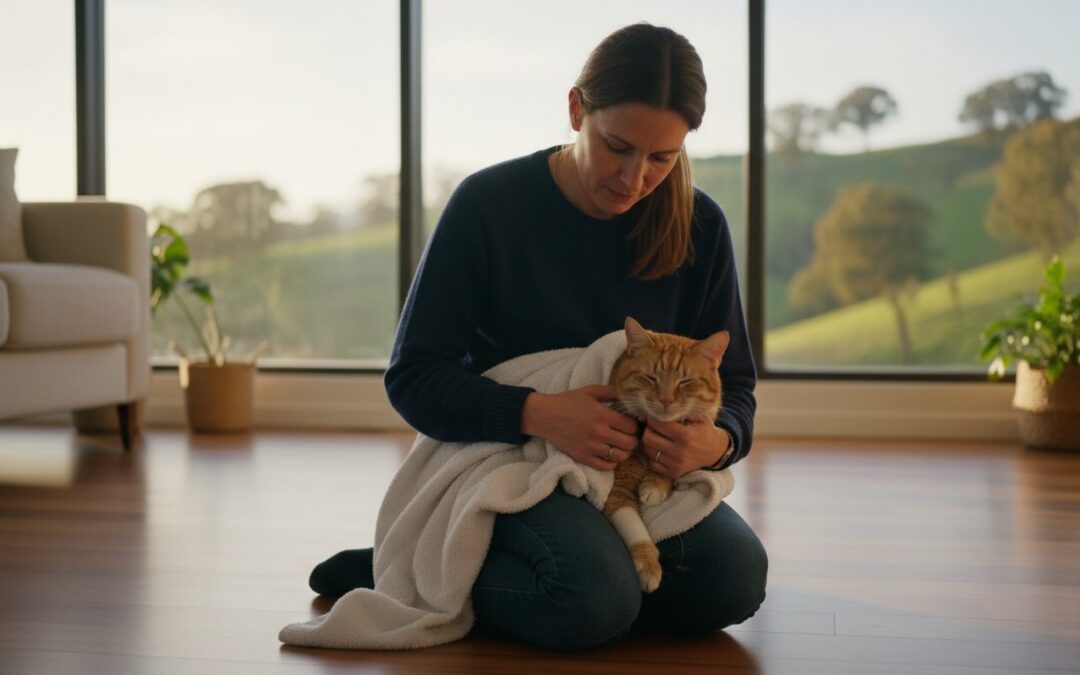
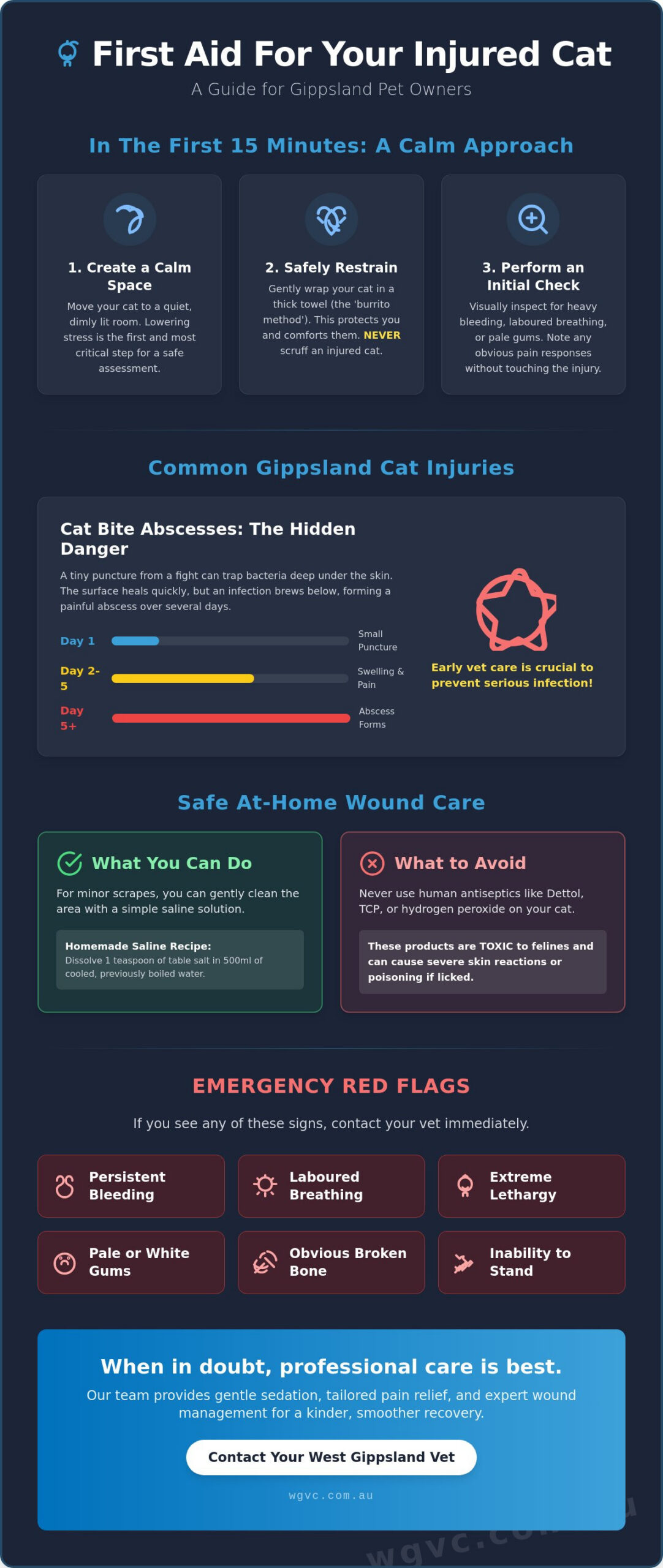
Move your cat into a quiet, dimly lit room away from other household pets or noisy children. Lowering the light levels helps reduce their cortisol and heart rate, which makes the assessment process much smoother. To safely examine your pet, we recommend the “burrito method.” Gently wrap your cat in a thick bath towel, leaving only the area you need to check exposed. This provides them with a sense of security while protecting your hands from sharp claws. This technique is a cornerstone of modern Pet First Aid Principles, as it prioritises the physical and emotional well-being of the animal during a crisis.
Safe Restraint and Fear-Free Handling
It is vital to avoid the old-fashioned practice of “scruffing” an injured cat. Grabbing a cat by the skin on the back of their neck can significantly increase their panic and may even worsen injuries to their spine or soft tissues. Instead, use thick blankets or towels as a soft barrier. If you have calming pheromone sprays at home, a quick spritz on the bedding can help settle their nerves. Our approach to fear free veterinary care starts at home; by keeping your movements slow and your voice soft, you help your cat feel supported rather than cornered.
The Initial Assessment Checklist
Once your cat is safely restrained, perform a visual head-to-tail check without touching the suspected injury site initially. Look for obvious signs of trouble such as heavy, pulsing bleeding or laboured breathing where the chest is moving rapidly. Check their gums if it’s safe to do so; they should be a healthy pink, not pale or white. You should also watch for “hidden” indicators of severe pain, such as widely dilated pupils or skin that flinches and twitches when you get close. If your cat is panting or seems extremely lethargic, stop your assessment and proceed directly to a vet for professional cat injury treatment.
Recognising Common Cat Injuries in West Gippsland
Living in our beautiful corner of Victoria gives our cats plenty of room to explore, but the rural landscape presents its own set of challenges. Whether your feline friend spends their time prowling the paddocks or lounging in a suburban backyard in Drouin, they are exposed to risks that city cats rarely face. Identifying a problem early is the secret to successful cat injury treatment, especially since cats are masters at hiding their discomfort. What looks like a tiny speck of blood on the fur can often be the only outward sign of a much deeper issue.
One of the most frequent injuries we see involves cat fight wounds. These are classic “iceberg” injuries. Because a cat’s canine teeth are long and needle-like, they inject bacteria deep into the tissue through a very small entry hole. The skin often heals over the top within hours, trapping nasty bacteria underneath. This creates a perfect environment for an infection to brew, which is why a seemingly minor scuffle can lead to a serious medical situation just a few days later.
The Danger of Cat Bite Abscesses
Feline saliva is naturally full of bacteria that, when trapped under the skin, quickly leads to a painful abscess. You might not notice the initial bite, but over two to five days, a warm, tender swelling will develop. Your cat may become unusually quiet, lose their appetite, or flinch when you try to pat them. It is a common myth that you should wait for an abscess to burst on its own. Doing so often leads to a much larger wound and increases the risk of the infection entering the bloodstream. Seeking professional cat injury treatment early can prevent these complications and get your pet back to their usual self much faster.
Gippsland-Specific Trauma Risks
Our local environment also brings risks like barbed wire tears, which are common for cats navigating farm boundaries. These wounds are often jagged and prone to debris contamination. If your cat explores bushland, it’s a great idea to keep a prepared Cat First Aid Kit to manage small nicks from thorns or sticks. However, be very mindful of wildlife encounters. While many owners associate snakes primarily with dogs, cats are equally at risk. You might find our guide on snake bite treatment for dogs gippsland helpful for identifying local snake species and their common symptoms, as many of the warning signs are similar across species.
In busier hubs like Warragul, road trauma is another significant concern. Even if a cat appears to walk normally after a close call with a vehicle, they may have internal bruising or shock that isn’t immediately obvious. If you ever feel that something isn’t quite right with your companion, our team is always here to provide emergency care and ensure they are safe and comfortable.
How to Safely Administer Cat Wound Care at Home
After you have safely restrained your pet, you can begin the practical side of cat injury treatment for minor scrapes or grazes. Effective cat injury treatment starts with managing any active bleeding. If you find a wound that is oozing, your first task is to apply steady, gentle pressure. Use a sterile gauze pad or a clean tea towel; avoid using cotton wool as the fibres can easily become stuck in the wound. Hold the pressure for a full five minutes without peeking. This allows the blood to clot naturally. If the bleeding is heavy or does not stop after this time, it is a sign that you need professional help immediately.
Cleaning and Disinfecting the Wound
To clean a dirty wound, the safest tool in your cupboard is a home-made saline solution. Mix one level teaspoon of salt into 500ml of cooled, boiled water. This creates a gentle wash that matches the body’s natural fluids. When cleaning, always use a dabbing motion rather than rubbing; rubbing can damage the delicate new cells trying to heal the area. For a complete list of items you should keep ready in your cupboard, see our guide on pet first aid. Generally, small grazes can be left open to the air, but deeper punctures should never be bandaged at home as this can trap bacteria and lead to the abscesses we discussed earlier.
What NOT to Put on Your Cat
It is incredibly important to remember that cats are not just small dogs or humans. Their livers cannot process certain chemicals, making many common household antiseptics highly toxic. Never use Dettol, as it contains phenols that can be fatal to felines. Similarly, Tea Tree oil and Hydrogen Peroxide should be kept far away from cat skin; the latter actually slows down healing by damaging healthy tissue. Even some human-grade antibiotic creams can cause issues if your cat licks them off. While you may be tempted to use what is on hand, sticking to saline is always the kindest choice.
In more serious cases where you are managing shock or a non-responsive pet, you should refer to Emergency First Aid for Cats for advanced life-saving steps. Once the wound is clean, preventing self-trauma is your next priority. Cats are fastidious groomers and will likely try to lick the area, which introduces more bacteria. An Elizabethan collar, often called the ‘cone of shame’, is a vital tool to ensure they don’t undo all your hard work while the wound begins to close.
Emergency Red Flags: When to Call Your Local Vet
While many minor scrapes can be managed with care and a gentle hand, there are moments when home care reaches its limit. Recognising when to transition from home-based cat injury treatment to professional medical intervention is a vital part of being a responsible pet owner. If you have applied steady pressure to a wound for five minutes and the bleeding continues to soak through your gauze, this is a clear sign that the injury requires urgent attention. Heavy or pulsing bleeding suggests a damaged vessel that needs professional closure to prevent further blood loss.
You should also be highly alert to the physical signs of shock. If your cat’s paws feel unusually cold to the touch or their gums appear blue, white, or very pale, their body is struggling to cope. Breathing difficulties, such as panting with an open mouth or rapid, shallow chest movements, are also critical red flags. In these instances, the priority shifts from wound care to stabilising your pet’s vital functions. Trust your intuition; if your companion seems “off” or is behaving in a way that feels uncharacteristic, it is always better to seek a professional opinion early.
Identifying Infection and Sepsis
Infection can be a quiet, creeping danger that appears days after the initial accident. Keep a close eye on the injury site for any foul-smelling discharge or “pockets” where fluid seems to be gathering under the skin. These are signs of a major abscess or “tunnelling” infection that requires surgical drainage and specific antibiotics. A cat that is suddenly very quiet, stops eating, or hides in dark corners is often dealing with a high fever. These systemic signs of infection or sepsis are emergencies. Rapid intervention for deep punctures can prevent the bacteria from entering the bloodstream and causing life-threatening complications.
Navigating Emergency Care in West Gippsland
When an emergency occurs in Warragul, Drouin, or the surrounding paddocks, knowing your support system is ready can bring immense peace of mind. For our existing clients, we provide 24-hour emergency support to ensure your feline friend is never alone in a crisis. Before you leave home, please call us to provide a brief update on your cat’s condition. This allows our team to triage the situation and prepare the necessary equipment before you arrive. We will ask about their breathing, gum colour, and whether they are conscious. When you are ready to travel, place your cat in a secure carrier with a familiar-smelling towel to keep them as calm as possible during the trip. If your pet is showing any of these red flags, our team is here to provide the expert emergency and trauma care they need to start their journey toward recovery.
Professional Treatment and Diagnostics in West Gippsland
When you bring your cat to us for care, our first priority is to make them feel safe and supported. Professional cat injury treatment often involves gentle sedation, which we believe is a much kinder approach than attempting to treat a painful wound while a cat is awake. An injured pet is already in a state of high alert. By using light sedation, we can thoroughly clean the injury, remove hidden debris, and assess the full extent of the damage without causing your companion any further distress or fear. This aligns with our commitment to fear free veterinary care, ensuring the emotional well-being of your pet is always respected.
Cats have a very specific metabolism, which means they require medications tailored specifically for their species. We provide feline-friendly pain relief and antibiotics that are safe for their systems, avoiding the risks associated with human-grade products. To get the clearest picture of your cat’s health, we utilise our in-house vet laboratory. This allows us to run rapid diagnostics to check for underlying infections or signs of organ stress. If we suspect internal trauma from a fall or a road accident, advanced diagnostic imaging like X-rays or ultrasound helps us see what is happening beneath the surface.
Advanced Wound Management at WGVC
In cases of severe trauma, we may perform surgical debridement. This involves carefully removing dead or contaminated tissue to create a clean environment for healthy skin to grow back. For large abscesses, we often place a small surgical drain. This prevents fluid from building up under the skin again, which is the most common reason for infections to return. Once the procedure is finished, we will provide you with a clear, simple plan for post-operative care. We are here to support you throughout the entire recovery process at home.
Diagnostic Excellence for Peace of Mind
If your cat has been involved in a fight, timing is everything. We often recommend screening for FIV (Feline Immunodeficiency Virus) and FeLV (Feline Leukaemia Virus), as these can be transmitted through bite wounds. Identifying these conditions early allows us to manage your cat’s long-term health more effectively. For high-impact injuries, we also screen for internal bleeding or organ damage to ensure nothing is missed. Our team at West Gippsland Vet Care is dedicated to providing a family-oriented approach that combines clinical expertise with deep compassion. We view ourselves as a vital part of your support system, always ready to listen and act in the best interests of your feline friend.
Confidence for Every Step of Your Cat’s Recovery
Providing the right care for your feline friend during a crisis is one of the most meaningful ways you can support them. By mastering the “burrito” wrap and keeping a simple saline solution ready, you’re already well-equipped to handle minor scrapes safely. Remember that avoiding toxic household antiseptics and staying alert for systemic signs like lethargy are crucial parts of helping your pet heal. Your calm presence is the best medicine your cat can receive in those first few minutes after an accident.
While home care is a wonderful starting point, our team is always here to provide the deeper diagnostic support your pet may need. We offer a fear-free certified approach to feline handling and maintain a full in-house diagnostic laboratory for rapid results. For our existing clients, we provide 24 hours emergency service to ensure you’re never without a guide when it matters most. Please feel free to contact West Gippsland Vet Care for expert cat injury treatment whenever you have a concern about your companion’s well-being. We’re dedicated to keeping your family together and healthy.
Frequently Asked Questions
Can a cat wound heal on its own without a vet?
While tiny surface grazes might heal with basic home care, most puncture wounds will require professional attention. Cats carry high levels of bacteria in their mouths; these germs are often injected deep into the tissue during a scuffle. Without proper cleaning and potentially antibiotics, these small marks frequently develop into painful abscesses that can make your cat quite ill.
How do I clean a cat wound if I don’t have saline?
If you don’t have salt for a saline mix, use plain water that has been boiled and then allowed to cool completely. This ensures the water is sterile and won’t introduce new bacteria to the area. Avoid using soaps, shampoos, or human skin cleansers, as these can irritate the tissue and delay the natural healing process.
What can I put on my cat’s wound to stop it from getting infected?
The best thing you can do for cat injury treatment at home is to keep the area clean and dry using a simple saline wash. Avoid applying human antibiotic creams or essential oils, as these are often toxic if licked off. If the wound is more than a superficial scratch, a vet should assess whether prescription-strength feline-safe medication is needed to prevent deep-seated infection.
Why is my cat hiding after getting into a fight?
Hiding is a natural feline instinct when they feel vulnerable, pained, or feverish. If your cat is tucked away in a cupboard or under a bed after a fight, they are likely protecting themselves while dealing with shock or the onset of an infection. This “hiding” behaviour is a significant indicator that they need a gentle check-up to ensure there aren’t hidden injuries beneath their fur.
How much does it cost to treat a cat abscess in Gippsland?
The total cost depends on the severity of the infection and whether your cat needs sedation, surgical drainage, or specific medications. Every case is unique; a simple graze costs less to manage than a deep, infected pocket requiring surgery. We recommend contacting your local clinic in Warragul or Drouin for a consultation to get an accurate estimate for your pet’s specific situation.
Is it okay to use Savlon or Dettol on my cat?
You should never use Savlon or Dettol on a cat. Dettol contains chemicals called phenols which are highly toxic to felines and can lead to life-threatening complications. Savlon can also be irritating and harmful if ingested during grooming. Stick to a simple saline solution made from salt and cooled boiled water for safe home cleaning.
How do I know if my cat’s wound is an emergency?
A wound is an emergency if bleeding doesn’t stop after five minutes of pressure or if your cat shows signs of systemic distress. Watch for rapid breathing, pale or blue-tinged gums, or extreme lethargy. If you notice any of these “red flags,” please skip the home care and bring your pet straight to the clinic for urgent medical attention.
What should I do if my cat was bitten by a snake or tick?
If you suspect a snake bite or have found a paralysis tick, this is a time-critical emergency. Keep your cat as still and calm as possible to slow the spread of toxins through their system. Do not wait for symptoms to appear; get your cat to a vet immediately for professional assessment and life-saving treatment.