
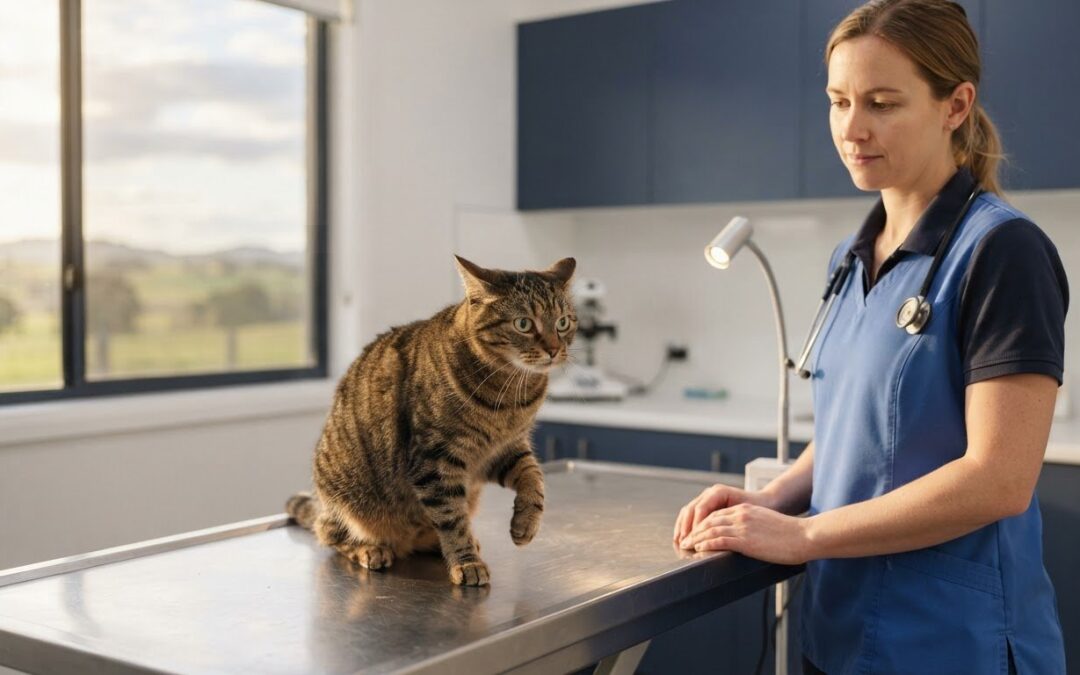
A sudden change in your cat’s behaviour may point to pain or illness, not a change in temperament. If you’re asking, “Why is my cat suddenly aggressive?”, possible causes include dental disease, arthritis, hyperthyroidism, stress or redirected aggression. When there’s no obvious trigger, a veterinary examination can help identify what’s behind the change.
It can be unsettling when a much-loved cat starts hissing, swatting or biting, especially when you can’t see what has changed. Sudden aggression isn’t always deliberate misbehaviour: discomfort, fear and frustration can all affect how a cat responds. This guide explains how medical problems, including dental disease and arthritis, may contribute, and how stress or redirected aggression can play a part. You’ll also learn what changes to tell your veterinarian about, so you can better understand what your cat may be communicating and what support could help.
Key Takeaways
- A sudden change in behaviour can be a sign of pain or illness, so note when the aggression began and what seems to trigger it.
- Dental disease, arthritis and hyperthyroidism are among the medical issues that may affect a cat’s behaviour.
- With redirected aggression, a cat may lash out at someone nearby after being upset by a sound, smell or animal it can’t reach.
- Changes at home can add stress or territorial tension; understanding what has shifted can help you respond more calmly and support your cat.
What Causes Sudden Aggression in Felines?
If your cat’s behaviour changes, territorial conflict, fear, pain or stress may be involved. Punishment or restraint can increase fear and risk injury. Give an agitated cat space, and don’t approach while it is showing defensive postures.
Territorial triggers and resource conflict
Territorial aggression occurs when a cat guards an area or resource it sees as its own, such as a bed, food bowl or favourite perch. A new pet or person, a move, or unfamiliar cats outdoors can trigger conflict. In a multi-cat household, blocking doorways or guarding toys may signal competition, not spite. Note the circumstances and triggers before changing access to resources.
Fear-based and territorial aggression
Fear-based aggression is a defensive response when a cat perceives a threat and can’t escape. Territorial behaviour can also arise from fear of losing a safe space. Sudden noises, visitors or unfamiliar cats may trigger either response. A cornered cat may hiss, arch its back or swat. Recognise these signals and retreat calmly rather than reaching in.
Age and changes in a cat’s surroundings can matter. Cats from six months to two years may show more territorial or play aggression; males may challenge others as they approach social maturity between two and four years. A vet visit, renovation, rearranged furniture or a nursing mother protecting kittens can also shift behaviour. Neurological causes may affect behaviour too, so territorial signs alone don’t establish the cause.
If cats have clashed, separate them and make introductions gradual, not forced. Start with separate spaces, exchange scents, then feed them on opposite sides of a closed door. When they remain settled, allow supervised visual contact. Reintroduction may take weeks to months. Placing the aggressive cat in the other cat’s room for about 30 minutes can help build familiarity.
Provide separate feeding areas and water stations, along with individual beds, scratching posts and perches. During fights, never put your hands between cats. Use a barrier or loud clap instead.
Medical causes of sudden aggression
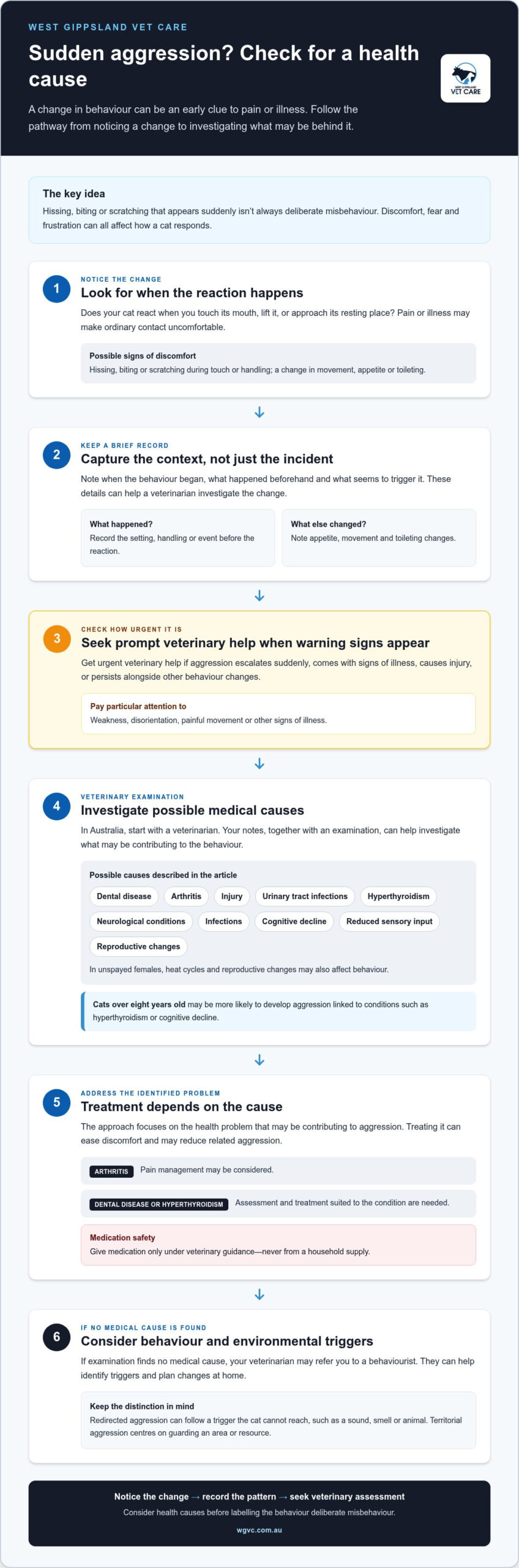
A new burst of hissing, biting or scratching can reflect pain or illness, not a personality change. Seek urgent veterinary help if aggression escalates suddenly, comes with signs of illness, causes injury or persists alongside other behaviour changes. If you sustain a deep scratch or bite during an episode, remember to have it treated promptly by a medical doctor at a clinic like hmscc.com.au to manage the risk of infection. In Australia, start with a veterinarian; if examination finds no medical cause, they may refer you to a behaviourist.
Pain and possible medical causes
Pain or illness can make a cat lash out when touched or when handling seems likely. Dental disease, arthritis, injury and urinary tract infections can make ordinary contact uncomfortable. Other possible causes include hyperthyroidism, neurological conditions, infections, cognitive decline or reduced sensory input. In unspayed females, heat cycles and reproductive changes may also affect behaviour. These possibilities matter because aggression can be an early clue to a health problem.
Look for context rather than assuming it’s play aggression. Does your cat react when you touch its mouth, lift it or approach its resting place? Note when the change began, what happened beforehand, and any changes in appetite, movement or toileting. A veterinarian can use these details, alongside an examination, to investigate the reasons for the behaviour.
Medical treatment options
Treatment means addressing an identified health problem that may be contributing to aggression. The approach depends on the cause: pain management may be considered for arthritis, while dental disease or hyperthyroidism needs assessment and treatment suited to that condition. Treating the underlying problem can ease discomfort and may reduce related aggression. Give medication only under veterinary guidance, never from a household supply.
Keep a brief record of incidents and changes to share at the appointment. Cats over eight years old may be more likely to develop aggression linked to conditions such as hyperthyroidism or cognitive decline. Sudden aggression alongside weakness, disorientation, painful movement or other signs of illness deserves prompt attention. If the cause isn’t medical, a behaviourist can help identify triggers and plan changes at home. Consider health causes before labelling the behaviour deliberate misbehaviour.
Redirected aggression
Redirected aggression happens when a cat becomes highly aroused by a trigger it can’t reach, then lashes out at someone nearby. For example, seeing an outdoor cat through the window may leave your cat tense, and a nearby person or housemate cat may receive the reaction. This can happen hours after the trigger, making the cause harder to spot.
This form of aggression isn’t deliberate or malicious. A cat may be reacting to frustration or fear, not choosing to punish someone. Triggers can include seeing prey outside, hearing a frightening noise, smelling another cat on clothing or being harassed by a dog. Even seeing a cat through a door or window can set off a strong response.
Look at the sequence around an incident: what the cat saw, heard or smelled, and who was nearby when it lashed out. Note whether the behaviour followed a noise, a visitor or contact with another animal. Petting or approaching an agitated cat may bring you within reach, even though you didn’t cause the original trigger. A brief record can reveal patterns that aren’t obvious in the moment.
Give your cat space and avoid approaching while it shows defensive or offensive postures. Don’t pick it up or try to restrain it. If two cats are fighting, never put your hands between them; use a barrier or loud clap to interrupt the fight. Once separated, keep them apart until they’ve settled rather than forcing contact. Unlike redirected aggression, territorial aggression centres on guarding an area or resource.
Reduce exposure to identifiable triggers where practical. For example, block the view of a visiting cat or give your cat a quiet room after a startling event. If sudden aggression recurs, causes injury or has no clear trigger, seek veterinary advice. A veterinarian can assess possible medical causes and discuss behaviour support, including whether stimulus-induced aggression fits the situation.
Hyperthyroidism, dental disease and arthritis
Hyperthyroidism, dental disease and arthritis can each contribute to sudden aggression, but affect a cat in different ways. Pain may make ordinary handling feel threatening, while illness can change how a cat responds to familiar people. A new hiss or swipe deserves attention, especially alongside changes in movement, eating or daily routines.
With dental disease, sore teeth or gums can make contact around the face uncomfortable. A cat may pull away, hiss or bite when someone reaches towards its head or when it tries to eat. Arthritis can make lifting, stroking or getting up from a resting place painful. You may notice reluctance to jump or irritation when a particular area is touched. Don’t test sore spots yourself. Note what happened and tell your veterinarian.
Hyperthyroidism is another possible medical cause of aggression. Cats over eight years old may be more likely to develop aggression linked to conditions such as hyperthyroidism or cognitive decline. A sudden behaviour change in an older cat warrants veterinary assessment, rather than being dismissed as ageing. The veterinarian can consider your cat’s age, behaviour, signs of discomfort and health history when investigating the cause.
Before the appointment, write down when the aggression occurs and what seems to precede it. For example, note whether your cat reacts during meals, when touched or while getting up. Include changes in appetite, movement or litter tray use. These details can help distinguish a pain-related response from redirected aggression or anxiety, although more than one factor may affect behaviour. Investigate medical causes before assuming the problem is purely behavioural.
If your cat’s behaviour has changed suddenly, arrange a veterinary assessment to discuss possible pain or illness.
West Gippsland Vet Care: Pet Vaccinations
West Gippsland Vet Care can help assess a sudden change in your cat’s behaviour and whether pain or injury may be involved. Share when the aggression began, what happens beforehand and any changes you’ve noticed in movement or handling. This context can help guide the next steps in your cat’s care.
If an orthopaedic problem is identified, orthopaedic surgery is among the treatment options available at the practice. West Gippsland Vet Care also offers pet vaccinations, desexing and microchipping, which support other aspects of your cat’s care rather than treating sudden aggression.
For a calm conversation about your cat’s needs, contact West Gippsland Vet Care.
Make a calm next move for your cat
If you’re still asking, “Why is my cat suddenly aggressive?”, let that question lead to curiosity, not blame. A behaviour change is communication, and your cat relies on you to notice it. You don’t have to work through the concern alone. A conversation with a veterinary team can help you consider a thoughtful way forward.
As you decide what to do next, consider what would help your cat feel secure during everyday interactions. Give them room to approach at their own pace and keep your response calm. That steady support can protect the bond you share while you explore the care your cat needs.
When you’re ready to talk things through, get in touch with West Gippsland Vet Care. Taking a considered next step can help you feel more confident supporting your cat.
Frequently Asked Questions
What Does Aggression in Cats Look Like?
Aggression can include growling, hissing, swiping, biting, scratching or chasing. Watch for changes in posture too: a cat may crouch, flatten its ears, puff up its coat or stare intently before acting. Some warnings are subtle, such as a twitching tail or a quick turn towards an approaching hand. Spotting these cues early can help you pause an interaction and give your cat room.
Can pain make a cat aggressive?
Yes, pain can make a cat defensive, particularly if handling or movement aggravates a sore area. For instance, a cat with a painful mouth may react when its face is touched, while joint discomfort may make being lifted unpleasant. Don’t try to examine a painful spot yourself. Note what movement or contact came before the reaction, then arrange a veterinary assessment to investigate the discomfort.
How do I calm an aggressive cat at home?
Reduce stimulation and let your cat settle without crowding it. Close curtains if outdoor activity is upsetting your cat, lower household noise, and keep children and other animals away. Avoid punishment, grabbing or giving medication without veterinary guidance. Once your cat has relaxed, keep routines predictable and watch for possible triggers. Owners in Warragul, Drouin, Bunyip, Yarragon, Trafalgar, Willow Grove, Hill End and Neerim South can discuss recurring episodes with West Gippsland Vet Care.
What causes sudden behaviour changes?
Sudden behaviour changes can follow illness, pain, fear or changes in a cat’s surroundings. A visitor, renovation, altered routine or unfamiliar animal may unsettle a cat, while a health problem can change its response to touch or movement. Write down when the change started and what else shifted at home. That timeline can help your veterinarian distinguish an environmental trigger from a medical concern.
Why did my cat become aggressive out of nowhere?
The question “Why is my cat suddenly aggressive?” can be difficult to answer if the trigger wasn’t obvious. Discomfort may have gone unnoticed, or a frightening sound or animal outside may have left your cat agitated. Think back to the hours before the incident, including activity beyond windows and new smells on clothing. If the behaviour continues, arrange a veterinary assessment.
What medical problems can cause sudden aggression in cats?
Dental disease, arthritis, hyperthyroidism, injury, infection, urinary problems and neurological conditions can all contribute to aggression. Older cats may also experience cognitive changes or reduced sensory input, which can affect their responses. Reproductive changes may contribute to irritability in unspayed females. If you’re wondering, “Why is my cat suddenly aggressive?”, a veterinarian can assess these possible health causes, especially if other signs of illness appear.