
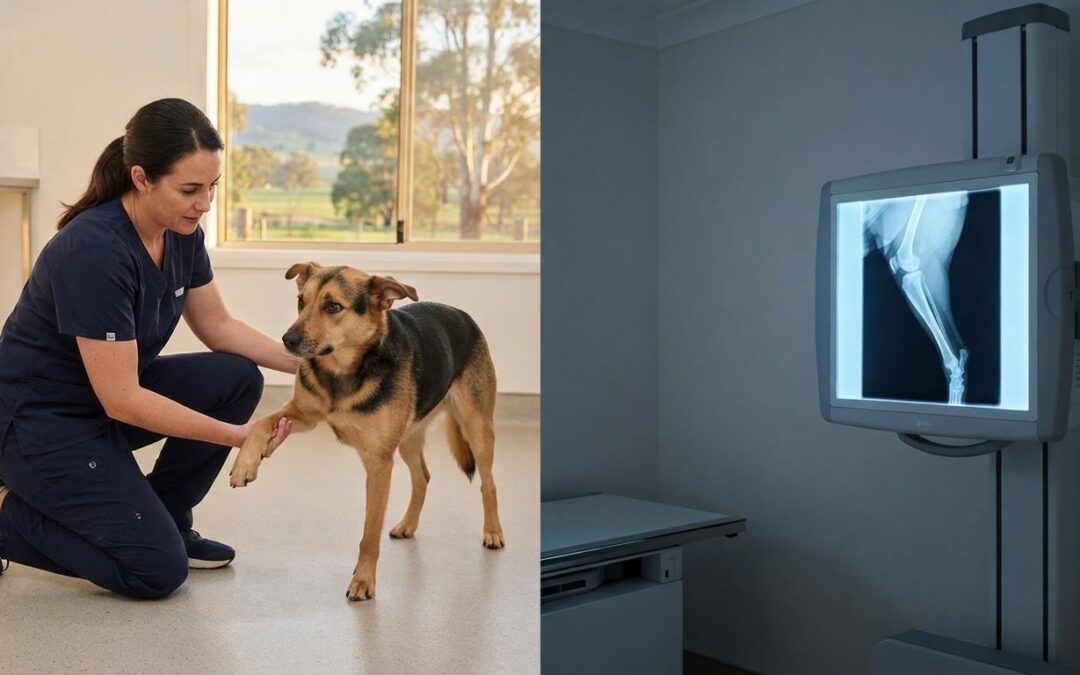
A limp alone can’t tell you whether your dog needs an X-ray. It’s natural to worry when your dog favours a leg, especially if the limp comes and goes. The answer to “when does a limping dog need an x-ray” depends on your dog’s history and symptoms, as well as what your vet finds during an examination.
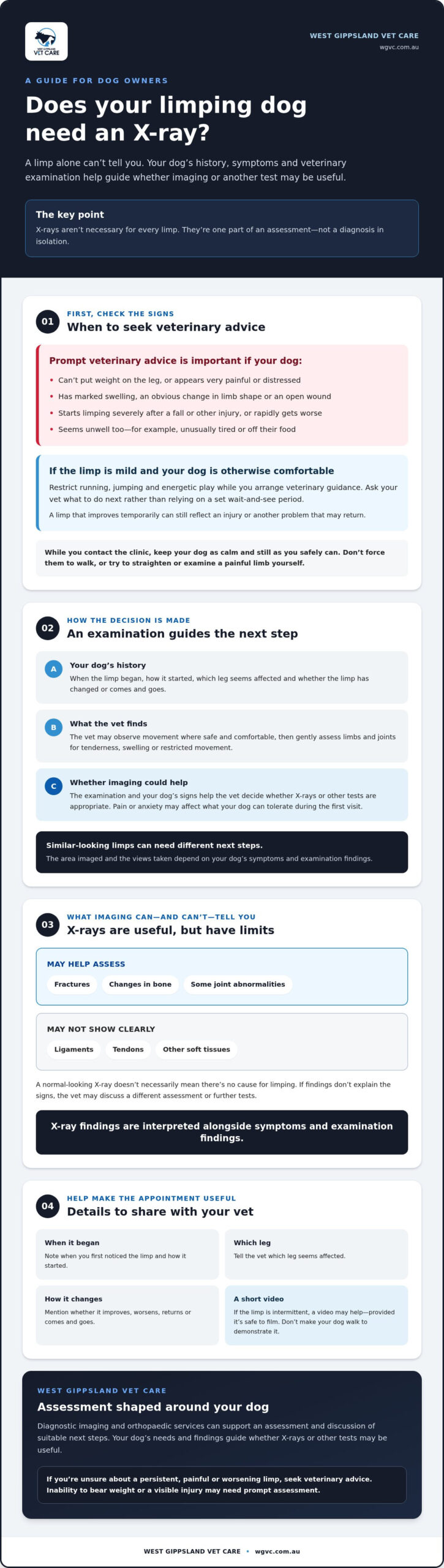
A dog who can’t bear weight, has obvious swelling or a wound, or starts limping after a fall or other injury should be assessed promptly. If your dog also seems unwell, contact a vet for advice. These signs don’t confirm what’s wrong, but they can help your vet judge how quickly your dog needs care.
This guide explains how an examination helps determine whether X-rays or other tests may be useful, what X-rays can reveal, and when to seek veterinary advice. You’ll also find out what details to share at an appointment, including when the limp began and whether it changes. West Gippsland Vet Care provides diagnostic imaging and orthopaedic services, with your dog’s needs guiding the next steps.
Key Takeaways
- Persistent, painful or worsening limping warrants veterinary advice. Inability to bear weight or a visible injury may need prompt assessment.
- Your vet considers your dog’s history and examination findings when deciding whether X-rays are appropriate. They aren’t necessary for every limp.
- X-rays can help assess bones and some joint changes, but may not show every cause of lameness. Your vet can discuss whether other tests may help.
- Note when the limp began, which leg is affected and how it changes. A short video may help if the limp comes and goes, provided it’s safe to film.
- West Gippsland Vet Care’s diagnostic imaging and orthopaedic services can support an assessment and discussion of suitable next steps.
When does a limping dog need an X-ray or urgent veterinary assessment?
A persistent, painful or worsening limp deserves veterinary assessment. Whether your dog needs an X-ray depends on the examination and what may be causing the lameness, not the limp alone. If you’re asking, “when does a limping dog need an x-ray?”, your vet should assess the signs and decide whether imaging is likely to be useful.
Some situations call for prompt advice, while a mild limp without other concerning signs may be less urgent. Contact a vet if you’re unsure, particularly if the limp is getting worse, keeps returning or doesn’t settle. A limp that eases temporarily can still be a sign of an injury or another problem that needs assessment.
Which limping signs mean my dog should be seen promptly?
Seek prompt veterinary advice if your dog can’t put weight on the leg, appears very painful or distressed, or has marked swelling, an obvious change in the limb’s shape or an open wound. A sudden, severe limp after a fall or other trauma, or rapid deterioration, also changes the urgency. If limping comes with signs of illness, such as unusual tiredness or loss of appetite, let the vet know.
Don’t try to straighten or examine a painful limb yourself, and don’t force your dog to walk to show the limp. Keep them as calm and still as you safely can while you contact the clinic for guidance.
Can I monitor a mild limp at home?
If your dog has a mild limp but is otherwise comfortable, restrict running, jumping and energetic play while you arrange veterinary guidance. Ask your vet what to do next rather than relying on a set wait-and-see period. Improvement is reassuring, but it doesn’t rule out an injury or a problem that could return.
Some causes aren’t obvious from the way a dog walks. For example, Hip dysplasia can be associated with hind-limb lameness. Your vet may consider your dog’s history and examination findings when deciding whether X-rays are appropriate. West Gippsland Vet Care provides diagnostic imaging and orthopaedic services. Contact the clinic to discuss your dog’s symptoms and ask what the next step may be.
How a vet decides whether a limping dog needs an X-ray
The question “when does a limping dog need an x-ray” is answered by looking at the whole picture, not just the way your dog walks. Your vet considers when the limp began, whether it has changed, where your dog seems sore and what the examination reveals before recommending imaging.
Radiographs, commonly called X-rays, are images that help assess bones and can show some changes in joints. They’re useful tools, but they don’t provide a complete diagnosis on their own. A vet interprets the images alongside your dog’s symptoms and examination findings.
What happens during a lameness examination?
Your vet will ask about your dog’s health and how the limp started, then observe their movement where it’s safe and comfortable to do so. They may gently assess the limbs and joints to locate tenderness, swelling or restricted movement. Your notes about changes at home can help, especially if the limp is intermittent.
Pain or anxiety can affect what your dog will tolerate, so the vet may not be able to assess every area fully at the first visit. If the findings don’t clearly explain the limp, they may discuss imaging or other diagnostic tests for lameness and explain what each could help investigate.
What can an X-ray show, and what might it miss?
An X-ray may help identify a fracture, changes in bone or some joint abnormalities. The area imaged and the views taken depend on your dog’s signs and examination. A normal-looking X-ray doesn’t necessarily mean there’s no cause for limping.
Ligaments, tendons and other soft tissues may not show clearly on standard X-rays. If your vet suspects a problem involving these structures, they may recommend a different kind of assessment or further tests. The right approach depends on your dog’s individual findings.
An X-ray is one part of a veterinary diagnostic assessment, not a diagnosis in isolation. This helps explain why two dogs with similar-looking limps might need different next steps, and why not every limp calls for imaging.
West Gippsland Vet Care provides diagnostic imaging and orthopaedic services. If you’re unsure what your dog’s symptoms may need, contact West Gippsland Vet Care to discuss an assessment and ask about imaging arrangements.
X-ray, examination or other tests: comparing options for a limping dog
Not every limp needs an X-ray. A veterinary examination helps identify where the problem may be and whether imaging is likely to add useful information. The right approach depends on your dog’s symptoms and examination findings. Your vet may recommend an examination alone, X-rays or further tests.
| Option | What it can help assess | Limitations |
|---|---|---|
| Physical examination | Your vet assesses movement, discomfort and the affected area to guide next steps. | Pain, anxiety or an intermittent limp can make some findings harder to assess. |
| X-rays | Images can help assess bones, including possible fractures, and some joint changes. | They don’t show every cause of lameness, particularly many soft-tissue problems. |
| Further tests or imaging | Depending on the findings, other tests or imaging, such as ultrasound, CT or MRI, may help assess areas X-rays don’t show clearly. | The most suitable option depends on the suspected problem and your dog’s individual circumstances. |
When might an examination be enough to plan the next step?
Sometimes the examination gives your vet enough information to recommend a plan without taking X-rays straight away. That may include monitoring your dog’s progress or discussing appropriate care and follow-up. It doesn’t mean you should rule out an injury at home. If the limp persists, returns or changes, let your vet know so they can advise whether your dog needs another assessment.
When might further imaging or testing be considered?
If your dog’s signs and examination suggest a problem that an X-ray may not fully assess, your vet may discuss further testing. Suspected ligament, tendon or muscle issues, for example, can call for a different approach or follow-up. Advanced imaging may be considered in some cases, but it isn’t automatically needed or suitable for every dog.
X-rays help assess bones and some joint changes, but they can’t confirm every cause of a limp on their own. Your vet interprets any images alongside your dog’s symptoms and examination, then discusses what the findings mean for the next step. Read West Gippsland Vet Care’s orthopaedic care information to learn more.
What to do before your dog’s lameness appointment
A few clear details can help your vet understand what’s changed and decide what assessment may be useful. You don’t need to work out the cause yourself. If you’re wondering when does a limping dog need an x-ray, sharing an accurate history helps your vet make that decision.
What details help the vet assess a limp?
Before the appointment, jot down what you’ve noticed. Don’t deliberately make your dog walk or move in a way that could cause pain just to check the limp.
- Note when it began: Record whether the limp appeared suddenly or developed gradually.
- Identify the leg: Note which leg seems affected, if you can tell without handling it.
- Track changes: Describe whether the limp looks different after rest or ordinary activity, or whether it comes and goes. A short video may help your vet see an intermittent limp, but only film if it’s safe and doesn’t require your dog to move.
- Mention possible injury: Share any fall, collision or other event you noticed, along with relevant medical history.
- List medicines: Tell the vet about any medicine your dog has already had, including what it was and when it was given.
Call the clinic ahead and explain how severe the limp is, whether there was trauma and whether your dog can put weight on the leg. If the situation changes before the appointment, let the clinic know.
How can I keep my dog comfortable while arranging care?
Keep activity calm and limited. Avoid stairs, jumping, running and strenuous walks, and help your dog move only as much as needed. Don’t manipulate the sore area, apply a splint or give human pain medicines unless a vet specifically advises you to. Some medicines intended for people can be harmful to dogs.
If you suspect a snakebite, seek urgent veterinary advice rather than waiting for a lameness appointment. You can read more about snakebite treatment for dogs in Gippsland, but don’t delay contacting a vet.
For guidance about your dog’s limp and how to arrange an assessment, contact West Gippsland Vet Care.
Getting help for a limping dog in West Gippsland
A veterinary assessment can help clarify whether your dog may benefit from X-rays, another test or a different next step. West Gippsland Vet Care provides diagnostic imaging and orthopaedic services, but the right option depends on your dog’s symptoms and examination. If you’re asking when does a limping dog need an x-ray, start by discussing the signs with your vet.
West Gippsland Vet Care supports pet owners in Warragul, Drouin, Bunyip, Yarragon, Trafalgar, Willow Grove, Hill End and Neerim South. When you call, describe how the limp started, how it has changed and whether your dog can bear weight. These details help the team understand your concern and advise on what to do next.
What might happen if the vet recommends an X-ray?
Your vet should explain why imaging may be helpful and what information it could provide. They can also discuss its limitations and whether another step may be more appropriate. How your dog is safely positioned for imaging, and whether any restraint or sedation is considered, depends on your dog and the veterinary assessment.
Ask the clinic where radiographs are performed and what arrangements may be needed. West Gippsland Vet Care offers diagnostic imaging, but confirm the current arrangements directly rather than assuming X-rays are taken at the clinic.
When should I call West Gippsland Vet Care?
Call if the limp is severe, getting worse or causing you concern. Be ready to explain whether there’s been an injury, how much weight your dog can put on the affected leg and whether they seem distressed or unwell. If you’re unsure how urgently your dog needs attention, ask the clinic for guidance rather than waiting for the signs to become clearer.
West Gippsland Vet Care’s 24-hour emergency service is available to existing clients. If you’re not an existing client and your dog needs urgent help outside normal clinic hours, call the clinic for current guidance on where to seek care.
Take the next step with confidence
A limp doesn’t automatically mean your dog needs an X-ray. Your vet uses your dog’s history and examination to decide whether imaging or another next step is appropriate. Persistent, painful or worsening lameness deserves veterinary advice, even if it seems to improve at times.
West Gippsland Vet Care provides diagnostic imaging and orthopaedic services, alongside fear-free veterinary care. The team can discuss your dog’s symptoms and help you understand the assessment options. If your dog needs urgent help after hours, 24-hour emergency care is available to existing clients. If you’re not an existing client, contact the clinic for current guidance.
Contact West Gippsland Vet Care to discuss your dog’s limp. You don’t have to judge the cause alone. A conversation with your vet can help you work out a thoughtful next step for your dog.
Frequently Asked Questions
When should I take my limping dog to the vet?
Contact a vet promptly if your dog can’t bear weight, seems very painful or distressed, has marked swelling or an obvious deformity, or started limping after significant trauma. A limp alongside unusual tiredness or loss of appetite also deserves veterinary advice. Persistent, returning or worsening limping should be assessed, even if it looks mild. If you’re unsure how urgent it is, call a vet and describe what you’re seeing.
Can a dog’s limp get better without an X-ray?
Yes, a limp may improve without an X-ray, but improvement doesn’t confirm that there’s no injury or that imaging wasn’t needed. Your vet decides whether an X-ray is useful after considering your dog’s history and examination findings. Avoid encouraging extra activity just because your dog seems more comfortable. If the limp returns, persists or worsens, contact your vet for advice about whether your dog needs a follow-up assessment.
How long should I wait before taking a limping dog to the vet?
There isn’t one waiting period that’s right for every dog. Seek prompt advice for severe pain, inability to bear weight, obvious injury or a sudden limp after trauma. For a mild limp, call your vet rather than relying on a fixed number of hours or days. If you’re wondering when does a limping dog need an x-ray, the vet’s assessment helps determine whether imaging or another next step is appropriate.
Can a vet tell what is wrong with a dog’s leg without an X-ray?
Sometimes an examination can identify useful clues and help your vet plan the next step without immediate imaging. They’ll ask about the limp, observe your dog’s movement where appropriate and gently assess the affected area. Pain or anxiety may limit what can be safely examined, and some causes aren’t clear from an examination alone. Your vet may recommend X-rays, other tests or follow-up if the findings don’t explain the signs.
What can an X-ray show in a limping dog?
An X-ray can help assess bones and may show a fracture, changes in bone or some joint abnormalities. It doesn’t reveal every cause of limping, and a normal-looking image doesn’t necessarily rule out a problem. Your vet interprets the images alongside your dog’s symptoms and examination findings. Whether imaging is helpful, and which area to assess, depends on your dog’s individual signs and veterinary assessment.
Will my dog need sedation for an X-ray?
Not every dog needs sedation for an X-ray. The decision depends on your dog’s comfort, pain, anxiety, ability to stay still and the images the vet needs. Your veterinary team will assess what’s appropriate and discuss the plan with you. If you’re concerned about how your dog may cope, mention this when booking or at the appointment. Ask the clinic about its imaging arrangements and what to expect beforehand.
Can an X-ray show a ligament or tendon injury in a dog?
Standard X-rays generally don’t show ligament and tendon injuries clearly because these are soft tissues. They may still help your vet assess bones and some joint changes, depending on the case. If your dog’s examination suggests a soft-tissue problem, the vet may discuss another assessment, further testing or follow-up. They’ll consider your dog’s symptoms and examination findings when deciding what may provide useful information.
Should I walk my dog if they are limping?
Keep walks and movement to a minimum while you seek veterinary guidance. Avoid running, jumping, stairs and strenuous walks, and don’t make your dog walk to test or demonstrate the limp. Let them move calmly only as needed for comfort and toileting. If they can’t bear weight or seem very painful, call a vet promptly for advice on what to do next and how to arrange care.
West Gippsland Vet Care serves Warragul, Drouin, Bunyip, Yarragon, Trafalgar, Willow Grove, Hill End and Neerim South. Its 24-hour emergency care is available to existing clients. Others should contact a vet for current guidance.