

What if the kitten who catches your eye isn’t the one whose needs best suit your home? It’s natural to feel an instant connection, but asking thoughtful questions can help you make a confident choice and give your new companion a gentler start. Knowing what to ask when adopting a kitten means looking beyond first impressions to understand their health, history and everyday needs.
You may be unsure what care a kitten has already received, which records to request or what to organise before they arrive. Preparing a few practical questions can make those first days less daunting and help you plan ongoing veterinary care.
This checklist covers health records, vaccinations, parasite treatments, microchipping and desexing, as well as the kitten’s personality, socialisation and experience with people or other animals. It also helps you check whether their needs suit your household, prepare supplies and paperwork, and decide what to discuss with a vet. The goal isn’t to find a perfect kitten, but to understand the individual you’re welcoming home and support them with care.
Key Takeaways
- Use a calm conversation to learn what the kitten needs, rather than expecting perfect answers to every question.
- Ask what health checks, vaccinations and parasite treatments the kitten has had, and request any available records.
- Look for specific examples of the kitten’s behaviour and socialisation to help judge whether they may suit your household and existing pets.
- Use this checklist of what to ask when adopting a kitten to confirm familiar food and litter, prepare a quiet space and plan follow-up care.
- Bring the kitten’s background and health information to a vet to discuss their individual preventative-care needs.
What to ask when adopting a kitten before you decide
Choosing a kitten is a big, lovely decision. Thoughtful questions can help you find a match for your home and routine without turning the conversation into a test. Focus on what’s known, what’s uncertain and what support may be helpful as the kitten settles in.
Ask whether the kitten has been cared for in a rescue, shelter, foster home or breeder setting. The person who has seen the kitten day to day may be best placed to describe its habits. Ask open questions, then invite examples. “What does the kitten do when someone approaches?” is more useful than a broad label such as “friendly”. For general background on feline communication and behaviour, read about understanding cat behavior.
Start by asking about the kitten’s health records, early care, temperament and the support available after you bring them home. The aim is to understand this kitten, not to get a guarantee about how they’ll behave in a new household.
Who has cared for the kitten so far?
What should I know about the kitten’s history?
Ask the kitten’s age, what’s known about its background and whether written records are available. Check whether anyone has noted health concerns, treatments or changes in behaviour, and what happened next. If some details are unknown, ask what can be confirmed, what remains uncertain and whether you can contact the carer with follow-up questions.
As you consider what to ask when adopting a kitten, think about how each answer fits your household. If you have a particular concern, ask the carer to describe what they’ve observed rather than relying on general descriptions. You can also ask what ongoing support is available and which questions are best discussed with a vet. Clear, kind conversations help you prepare while keeping the kitten’s needs at the centre.
Ask about a kitten’s health checks, vaccinations and records
A kitten’s health history depends on what’s known about their early life and care so far. Ask about this kitten rather than assuming all kittens have had the same checks or treatments. Records can help you and your vet understand what’s already been done and what may need to be discussed next.
Ask whether the kitten has seen a vet, what was checked and whether any health concerns or treatments were noted. Find out which vaccinations and parasite treatments have been given, when they were given and whether follow-up was recommended. If you have questions about health and safety around cats, raise them with your vet for advice suited to your kitten and household.
Which health and treatment records should I request?
Ask for copies of any veterinary notes, vaccination records and treatment details. If possible, check the dates and the name of the product used. This gives your vet clearer information than a general note that treatment was provided. Also ask about known health concerns, changes in appetite or behaviour, and any recommended care that hasn’t yet been completed.
Check whether the kitten has been microchipped. If so, ask for the microchip details and how the registration will be transferred into your name. If the kitten hasn’t been microchipped, or you’re unsure, discuss microchipping with a vet.
A kitten’s health record gives your vet useful context when discussing future care. Keep the paperwork together and bring it to your first veterinary discussion, along with any questions you’ve noted.
What if the kitten has no complete medical history?
Some details may be confirmed, estimated or unavailable. Ask the person caring for the kitten to clarify which is which. Missing paperwork doesn’t by itself tell you whether a kitten is unwell or prove that their care is up to date. It means there may be details for your vet to check or discuss with you.
Once you have the information available, arrange a veterinary discussion about appropriate checks and preventative care. If you’re in West Gippsland, you can also discuss kitten health and vaccinations with West Gippsland Vet Care. The clinic provides vaccinations and microchipping, and can help you talk through the records you’ve received in light of your kitten’s history.
Compare answers about kitten temperament, socialisation and home fit
A kitten’s behaviour during a short visit is only a snapshot. They may be shy in an unfamiliar place or lively once comfortable, and their personality can develop as they grow. Instead of relying on labels such as “good” or “quiet”, ask the carer for specific examples of what they’ve observed over time.
Think about how the kitten’s known preferences might fit your household’s daily rhythm. A busy home, young children or existing pets may call for a patient settling-in plan. No answer guarantees a perfect match, but useful details can help you prepare.
What questions reveal a kitten’s personality?
Ask how the kitten responds to gentle handling, play, unfamiliar people and ordinary household sounds. Do they approach new things readily, watch from a distance or seek a familiar person when unsure? Find out what helps them settle when tired or overstimulated, such as a quiet space or undisturbed rest. These observations are more useful than a broad personality label.
Will this kitten suit my household and other pets?
Describe your home clearly, including children, other animals, how much time people are usually home and where the kitten is likely to spend time. Ask what the carer has observed when the kitten has been around children, cats or dogs. If the kitten hasn’t had that experience, treat it as unknown rather than assuming they’ll immediately feel at ease.
If you have other pets, ask what a gradual introduction could look like. Give the animals time and space to become familiar at their own pace instead of expecting instant friendship. You can also read this guide to general kitten care as you consider how your home and routine can support a new arrival.
Use this comparison to separate what’s been observed from what you may need to plan or ask about:
| What you’ve noticed or been told | Known need or preference | What to clarify |
|---|---|---|
| Hides when visitors arrive | May need a quiet place to retreat | What helps them feel safe? |
| Has met a resident dog | Previous contact is known | How did the kitten respond, and how were they introduced? |
| Enjoys play, then moves away | May need breaks and rest | What signs show they’ve had enough? |
Use unanswered questions to guide a calm conversation with the carer. Finding a match isn’t about choosing a kitten with a perfect temperament. It’s about understanding what they’ve experienced and being ready to meet them with patience.
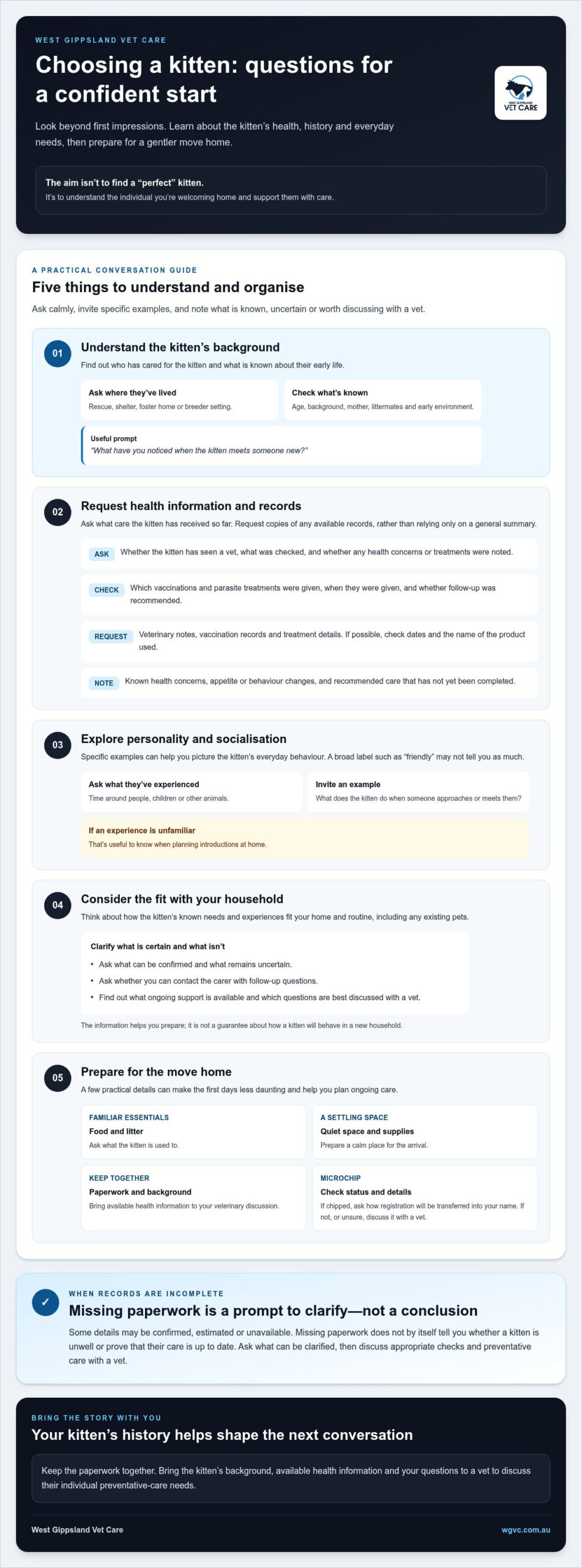
Use this kitten adoption checklist to prepare for the move home
Preparation can make the change of home gentler for your kitten and less overwhelming for you. Before adoption day, confirm which information and records you’ll receive, set up a quiet space, and note any care questions to discuss with a vet.
What should I prepare before bringing the kitten home?
Choose a calm, secure room where your kitten can settle before exploring more of the house. Set out fresh water, food, a litter tray and a comfortable resting place. It is also helpful to have basic brushes or nail clippers on hand, as pet care specialists like Garden State Pet Center often suggest introducing gentle grooming early so young animals grow comfortable with handling. Have a secure carrier ready for the journey, and check the room for hazards such as open windows, accessible balconies, loose cords and small objects a curious kitten might investigate.
Ask the carer what food and litter the kitten currently uses, along with their usual feeding and resting routines. Keeping things familiar at first can make the transition easier. If you plan to change food, ask your vet how to approach that gradually rather than changing everything on arrival. Familiar bedding or a safe item from the kitten’s previous environment may also offer comfort.
What should I confirm on adoption day?
Before you leave, check that you have the available health records and care instructions, plus contact details for the person who has been looking after the kitten. Confirm feeding guidance, familiar routines and any follow-up recommendations. Write down anything you’re unsure about so you can raise it with your veterinary team.
- Confirm which records and care instructions you’ll take home.
- Ask what food, litter and daily routines the kitten knows.
- Note any recommended follow-up or unanswered health questions.
- Set up the quiet space and carrier before the kitten arrives.
Questions about ongoing care can continue after the first visit. Ask a vet about your kitten’s individual needs, including vaccinations, microchipping and dental health. West Gippsland Vet Care provides kitten care services including vaccinations and microchipping, and its team can discuss questions about your new arrival.
If you’re in West Gippsland and would like to talk through your kitten’s care needs, contact West Gippsland Vet Care.
Plan your kitten’s next steps with a trusted local vet
You’ve asked about your kitten’s background, health records, temperament and what they’ll need to settle at home. Use those answers to plan care around this kitten, rather than relying on a one-size-fits-all schedule. A vet can review the information you have, discuss what remains unclear and help you understand which preventative-care needs to consider.
When should I arrange a veterinary conversation?
Contact a clinic to ask when it would be useful to discuss your kitten’s history and care. Timing can depend on what’s already known, which records are available and whether any concerns have been raised. Seek advice tailored to your kitten rather than assuming the same schedule suits every new arrival.
Before speaking with the team, gather any records and write down unanswered questions. Note what you know about vaccinations, microchipping or desexing, as well as anything you’d like clarified about the kitten’s behaviour or early care. A short list can make the conversation easier and help you leave with clear next steps.
How can local veterinary care support a new kitten?
West Gippsland Vet Care offers pet vaccinations, microchipping, desexing procedures and fear-free veterinary care. The clinic also lists kitten adoption among its offerings, though current availability and any associated process should be confirmed directly. For people in Warragul, Drouin, Bunyip, Yarragon, Trafalgar, Willow Grove, Hill End and Neerim South, the clinic can be a local point of contact for questions about a kitten’s records and care.
You don’t need to have every answer ready. Bring what you know and ask about anything you’re unsure of. You could check whether the records are clear, what care may need follow-up, and how to make veterinary visits as comfortable as possible for your kitten. The team can discuss the information you provide and help you consider suitable next steps.
A thoughtful start is built from small, practical conversations. Keep your notes and records together, and share changes or concerns as you get to know your kitten at home. Your questions about background, health, temperament and settling in can guide a calm discussion with your vet.
Talk with the West Gippsland Vet Care team about your kitten’s care questions.
Take your next steps with confidence
Asking what to ask when adopting a kitten can help you make a thoughtful choice and feel more prepared for life together. Focus on what’s known about the kitten’s background and health, request available records, and consider whether their observed temperament and needs suit your household. Before they come home, prepare a calm space and note questions to discuss with a vet.
Every kitten’s history is different, so you don’t need to have everything figured out straight away. A veterinary team can talk through the records you have and help you consider care that’s appropriate for your kitten. West Gippsland Vet Care lists kitten adoption among its offerings and provides routine vaccinations, microchipping and fear-free veterinary care. Check directly with the clinic about current adoption availability and any associated process.
With good information, a little preparation and support when you need it, you can help your new companion settle in at their own pace.
Frequently Asked Questions
What should I ask before adopting a kitten?
Ask about the kitten’s age, background, daily care, observed temperament and any known health concerns. Request available veterinary records, including vaccination, parasite treatment and microchipping details. Find out what food and routines the kitten knows, and whether they’ve lived with children or other animals. If you’re unsure what to ask when adopting a kitten, start with what’s known, clarify any gaps and discuss follow-up care with a vet.
What health records should I get when adopting a kitten?
Ask for any available veterinary history, treatment details and written care recommendations. Confirm which vaccinations or parasite treatments the kitten has received and when, and whether they’re microchipped. If the records are incomplete, ask the previous carer what’s known and why details may be missing. Share the documents with your vet so they can consider the kitten’s individual history when discussing future care.
How can I tell if a kitten will suit my home?
Ask the carer to describe behaviours they’ve regularly observed, such as how the kitten responds to handling, play, new people and household sounds. Explain your routine, whether children or other pets live with you, and what the kitten’s environment will be like. Ask what’s known about the kitten’s experience in similar settings. A brief meeting can’t predict every behaviour, so treat these answers as helpful context, not guarantees.
What should I ask a kitten’s breeder or rescue organisation?
Ask about the kitten’s early environment, care so far, known health concerns and available records. Find out what food and routines they’re used to, and how they respond to people or other animals. It’s also useful to ask who you can contact if questions come up after adoption. The person or organisation may not know everything, so ask them to distinguish confirmed details from estimates or unknowns.
Can I adopt a kitten if I already have pets?
Having other pets doesn’t automatically rule out adopting a kitten, but it’s wise to plan introductions carefully. Tell the carer about your pets’ ages, temperaments and routines, then ask what the kitten has experienced around other animals. Prepare separate spaces and seek gradual introduction advice suited to your household. If you’re uncertain how to manage introductions, discuss your plans with a veterinarian before bringing the animals together.
What should I prepare before bringing a kitten home?
Set up a secure, quiet area with food, water, litter and a comfortable resting place. Ask the kitten’s current carer about familiar food, feeding routines and items that may help them settle, and make changes thoughtfully. Prepare a suitable carrier and check for household hazards such as accessible cords or small objects. Keep health records and the previous carer’s contact details together for future reference.
When should I take an adopted kitten to the vet?
Ask the adoption source what veterinary care the kitten has received and whether follow-up was recommended. The right timing depends on the kitten’s age, health, history and available records, so contact a veterinary clinic for advice tailored to them rather than relying on a universal schedule. Bring any paperwork and note your questions. West Gippsland Vet Care offers vaccinations, microchipping and fear-free care for local families in Warragul, Drouin, Bunyip, Yarragon, Trafalgar, Willow Grove, Hill End and Neerim South.