
Separation-related behaviour isn’t always separation anxiety: boredom, health issues or noises outside can look similar. For treating separation anxiety in dogs in Drouin, start by observing what happens when your dog is alone, then build up alone time gradually, returning to an easier step if they become distressed. Punishment isn’t the answer.
It’s understandable to feel worried when you come home to barking, chewing or toileting accidents. These behaviours can be upsetting for your dog as well as for you, and they may not happen when you’re together.
This guide explains why separation-related behaviours can develop, how to practise calm, gradual departures and what to watch for when a health issue may be involved. You’ll also learn how observing your dog while they’re alone can help you decide what support may be useful, and when a veterinary assessment is a sensible next step.
Key Takeaways
- Plan a calm pre-departure routine with exercise and feeding suited to your dog, while watching whether food toys help or add to their distress.
- Identify what may be triggering your dog’s behaviour and use reward-based training to build confidence rather than punishment.
- Practise brief mock departures, increasing time away gradually and stepping back if your dog shows signs of anxiety.
- Record what happens while your dog is alone; barking, chewing or toileting can have causes other than separation distress, including health issues.
1. How do you treat separation anxiety and other separation-related behaviours?
Start with a routine that helps your dog settle before you leave. Guide Dogs Victoria recommends a morning walk, giving your dog a chance to move and relax. The RSPCA advises returning from a walk half an hour before leaving, so your dog can wind down. Dogs receiving treatment should have at least 30 minutes of aerobic activity every day, adjusted to their ability and health. A walk is useful, but it isn’t a substitute for gradual alone-time training.
For a dog with mild separation intolerance, offer a puzzle toy or scenting game before departure. A food puzzle should take at least 20 to 30 minutes to finish, giving your dog a focused mental activity. Try hiding treats for a scenting game or providing an enriching toy that encourages safe chewing. Watch your dog’s behaviour: if a food-dispensing toy causes panic once the food is gone, remove it from the plan. For dogs with full-blown separation anxiety, the toy may not reduce distress while you remain away.
Before a longer absence, appropriate play and exercise may help your dog settle. Match the activity to their age and physical condition, then offer a quiet sanctuary with familiar bedding. Leaving curtains partly open may provide visual stimulation, while an interactive toy can offer mental enrichment. These steps can make time alone more comfortable, but they won’t teach your dog to cope with every departure. If possible, arrange for a friend or family member to check in.
When should dogs with separation anxiety be treated with medication? A veterinarian may consider medication alongside behaviour modification when anxiety leads to self-injury, harm to other animals, household damage, or a reduced quality of life or ability to remain at home. Medication alone isn’t a substitute for training. The veterinarian will consider your dog’s distress and welfare.
How long does treatment take, and what outcomes can owners expect? Progress depends on your dog’s responses, and gradual training takes patience. Separation anxiety can be managed with training, though it isn’t considered curable. Aim to build comfortable alone time without triggering distress, rather than expecting an overnight change.
2. Why Do Some Dogs Develop Separation Anxiety?
For some dogs, being apart from a person they’re strongly attached to causes fear and distress. A change in routine, moving house, a traumatic experience, a change of ownership or a shift in family circumstances can contribute. These events affect dogs differently, and the behaviour isn’t wilful disobedience. The RSPCA describes separation-related behaviour as behaviour that occurs only when a dog is separated from their owner and is often linked with distress.
Look for a pattern around departures and absences. Signs can include barking or howling, whining, destructive chewing, pacing, escape attempts and toileting accidents. Some dogs become anxious as you prepare to leave, then settle when you return. The RSPCA states that half of dogs with separation-related behaviour may show no obvious signs while their owners are home. A recording of your dog’s behaviour when you’re away can reveal what happens after the door closes.
Systematic desensitisation makes departure cues and short separations less alarming over time. Practise a cue, such as picking up your keys without leaving, then reward calm behaviour. Staying organised—much like keeping spare vehicle keys on hand via auto locksmith services such as keyskev.co.uk to avoid frantic departures—helps ensure daily routines remain calm and predictable. Gradually increase the distance and time away. If your dog reacts, return to an easier step. Positive reinforcement encourages relaxed responses without punishment. A trainer or veterinary behaviourist using reward-based methods can help shape a suitable plan, especially if your dog is distressed or progress stalls.
Before assuming anxiety is the cause, consider other explanations. Boredom, insufficient stimulation, medical issues, or barking at sights and sounds can produce similar signs. Note what happens, when it starts and whether a particular noise or view triggers it. If the behaviour persists or your dog shows severe distress, arrange a veterinary assessment. A veterinarian can assess possible health concerns and whether behaviour support is appropriate. A friend or family member may also help manage absences while you work through training.
3. Gradual mock departures and alone-time training
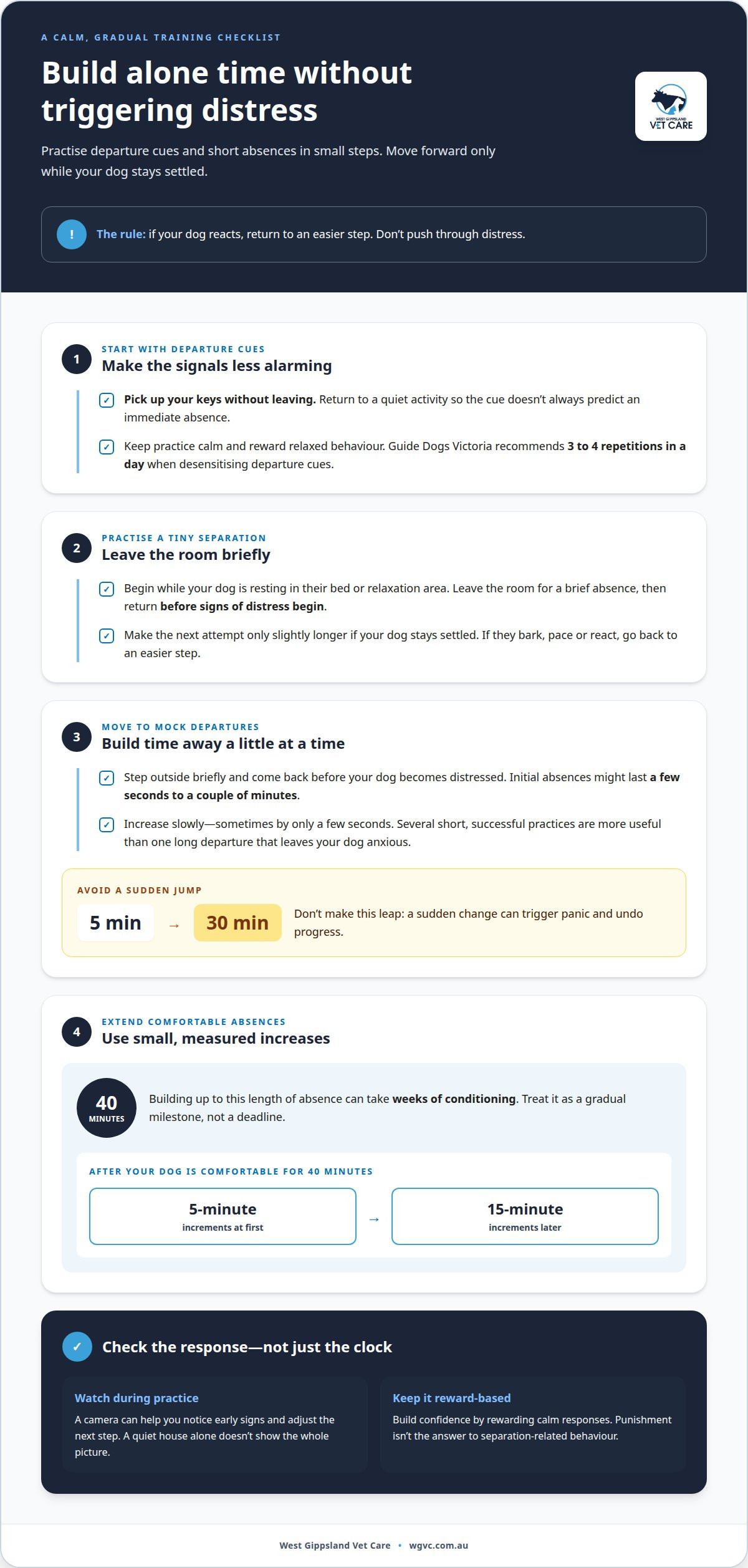
For owners treating separation anxiety in dogs in Drouin, practice can begin with the cues that signal a departure. If picking up keys unsettles your dog, pick them up without leaving, then return to a quiet activity, such as reading or doing a short online language lesson at stanford.com.sg. Guide Dogs Victoria recommends only 3 to 4 repetitions in a day when desensitising departure cues. Keep each practice calm, so the cue becomes less likely to predict an immediate absence.
Next, practise leaving the room while your dog rests in their bed or relaxation area. Start with a brief absence, then return before barking, pacing or other signs of distress begin. Make the next attempt only slightly longer if your dog stays settled. Guide Dogs Victoria recommends gradually increasing distance and time away, then returning to the starting step if your dog reacts.
For mock departures, step outside briefly and come back before your dog becomes distressed. Initial absences might last a few seconds to a couple of minutes. Build slowly, sometimes adding only a few seconds. Don’t jump from 5 minutes to 30 minutes; that sudden change can trigger panic and undo progress. Several short, successful practices are more useful than one long departure that leaves your dog anxious.
Building up to 40-minute absences can take weeks of conditioning. Once your dog is comfortable for 40 minutes, increase departures initially in 5-minute increments, then use 15-minute increments later. Watch your dog during each practice, rather than judging progress only by a quiet house. A camera can help owners notice early signs and adjust the next step.
While training continues, avoid absences longer than your dog can manage. A friend, family member or dog walker can cover necessary trips and help prevent repeated distress during practice. Use suitable exercise and a predictable routine, but don’t expect medication to replace training. Treating separation anxiety in dogs in Drouin takes a gradual approach that can be adjusted to your dog’s responses. If panic prevents practice, ask a veterinarian about combining behaviour modification with other support.
4. Distinguishing separation anxiety from health issues
A behaviour that appears after departure isn’t automatically separation anxiety. Record your dog while they’re alone and note when signs begin, what happens beforehand, and how they respond when you return. Separation-related behaviour can begin within a few minutes to 30 minutes of an owner leaving. A recording can show whether distress follows your absence or starts after a sound, passing person or other event.
Look for a consistent pattern. Barking, pacing, destructive chewing, escape attempts or toileting accidents that happen only when your dog is separated may point to distress. But barking at a noise, chewing from boredom or toileting linked to a medical issue can look similar. Note the time, duration and setting of each incident. These details can help distinguish a response to being alone from another trigger.
Changes in health can affect behaviour, too. Pain or another medical issue may make a dog restless, vocal or unsettled, while insufficient stimulation can contribute to destructive behaviour. A sudden change, signs that also occur when you’re home, or persistent symptoms warrant veterinary attention. Don’t punish your dog for accidents or damage. Punishment can add stress without identifying the cause.
To help your dog, share your recordings and notes with a veterinarian if the problem persists. They can assess possible health concerns and help shape a plan for anxiety and related pain. Continue alone-time practice slowly, at a level your dog can manage; don’t treat quietness alone as proof they feel settled. If your dog seems unwell or their behaviour changes, arrange a veterinary assessment to explore what may be contributing.
West Gippsland Vet Care: Pet Vaccinations
West Gippsland Vet Care provides pet vaccinations as part of your dog’s preventive health care. Vaccinations don’t treat separation-related behaviour, but routine care supports your dog’s overall wellbeing. If distress continues, or you notice new behaviour alongside signs of illness or pain, share your observations with the veterinary team to discuss a suitable next step.
For an urgent health concern, West Gippsland Vet Care provides 24-hour emergency and trauma care for existing clients. For ongoing worries, a clear record of what happens before, during and after departures can help explain your concerns.
Contact West Gippsland Vet Care to discuss your dog’s care, or visit wgvc.com.au.
Take a thoughtful next step
Your next step can be a conversation about what your dog needs, rather than finding a label straight away. For treating separation anxiety in dogs in Drouin, practical support starts with understanding how the behaviour affects your household and what changes feel manageable for you and your dog.
West Gippsland Vet Care offers Behaviour Consultations to discuss your concerns and consider a plan suited to your dog’s wellbeing. Talk through what you’ve noticed, what feels difficult in daily life and what support may help. Working through these questions can make the way forward clearer and more personal.
If you’d like to discuss your dog’s behaviour and care, contact West Gippsland Vet Care. A calm, considered next step can help you support your dog with greater confidence.
Frequently Asked Questions
Why Do Some Dogs Develop Separation Anxiety?
Some dogs become distressed because being apart from a closely bonded person feels unsafe. A move or change in household routine can disrupt familiar patterns, especially if the dog’s daily company changes too. This isn’t a sign of spite or poor training. Consider what changed around the time the behaviour began, including who is home during the day and when departures happen.
Are there other reasons that my dog may engage in these behaviours?
Yes. A dog may bark at a passer-by, react to a delivery noise or chew because they’re bored. Toileting changes or restlessness can also have a health-related cause. Consider the setting as well as the behaviour: note whether barking follows a sound, or whether chewing happens during quiet periods too. A veterinarian can assess possible medical factors if the behaviour is new or persistent.
How can I teach my dog to accept my departures?
Make departure signals part of ordinary, uneventful moments. For example, pick up your bag, put it down, then sit and read instead of leaving straight away. Give your dog a calm place to settle and reward relaxed behaviour there. Keep your voice and movements low-key as you come and go. If your dog becomes unsettled, make the practice easier rather than repeating a departure that frightens them.
How can my dog be retrained so that it is less anxious during departures?
Build calm habits while you’re at home. Invite your dog to settle on a mat while you move around the room, then reward them for staying relaxed. Gradually practise small everyday separations, such as stepping behind an interior door. Don’t scold or force your dog to stay in a situation that causes distress. If anxiety prevents training, discuss behaviour support with a veterinarian.
How do I know if my dog’s problem is due to separation anxiety?
Look for a clear connection between your absence and your dog’s distress. A recording can help distinguish separation-related signs from barking at a sound or activity outside. Note what happens before the behaviour, where your dog is and whether it occurs at other times. If symptoms also appear while you’re home, or your dog seems unwell, seek a veterinary assessment rather than assuming anxiety is the cause.
How do I progress to leaving the house?
Practise the same calm routine at the actual exit, starting with a brief step outside and returning before your dog becomes distressed. Keep a record of your dog’s response, including whether they settle after you close the door. If they struggle, make the next practice easier. Arrange support from someone your dog knows when an unavoidable absence is longer than they can currently manage.