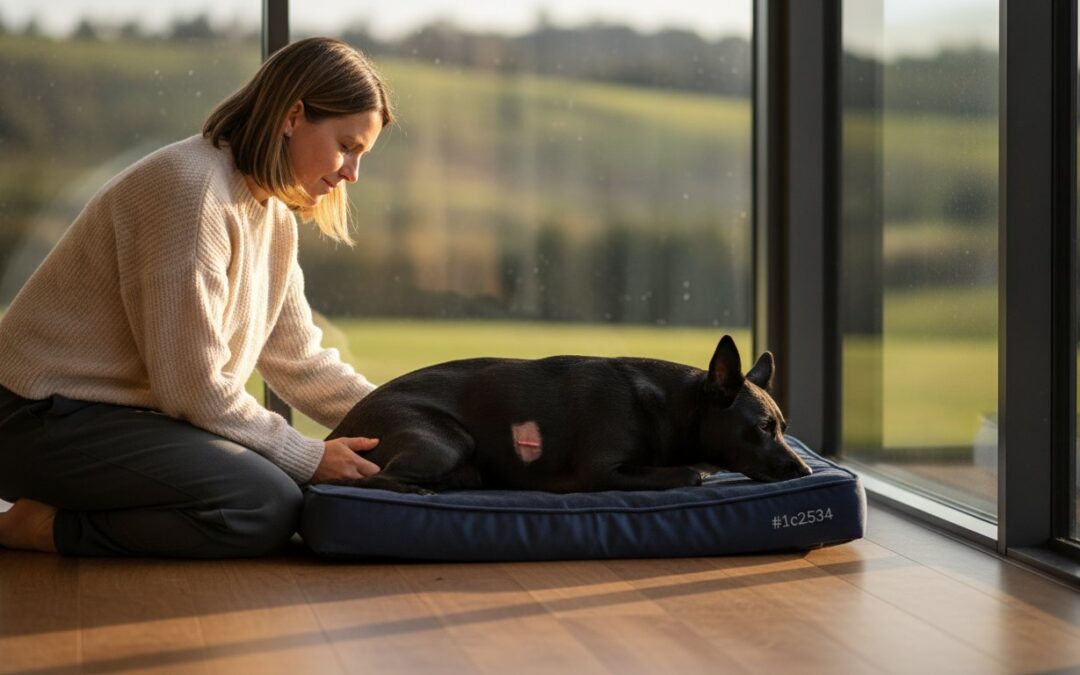
You’ve just brought your best friend home from a procedure, and as they settle into their bed, you might find yourself hovering, wondering if every little twitch or change in their skin colour is one of the early signs of infection after dog surgery. It’s a heavy feeling, isn’t it? We know you just want them back to their bouncy, happy selves, and that fear of missing a complication can be truly exhausting. You aren’t alone in this; with nearly half of Australian households now including a dog, many local families are currently navigating these same quiet nights of post-operative care.
We want to help you replace that uncertainty with calm by teaching you how to distinguish between normal healing and serious issues using our comprehensive physical and behavioural checklist. This article provides the clarity you need to move past the guilt and worry, ensuring you feel like a capable partner in your pet’s journey back to health.
From understanding what a healthy incision looks like to spotting subtle shifts in their mood, this guide will give you the tools to support your pet’s recovery with confidence. We’ll walk you through exactly what to look for, so you can focus on helping your companion feel loved and safe while they mend.
Key Takeaways
- Learn how to tell the difference between expected post-operative inflammation and actual signs of infection after dog surgery using our 72-hour timeline.
- Discover five specific visual indicators and a simple heat test you can perform at home to monitor your companion’s healing progress safely.
- Recognise why subtle shifts in appetite or energy levels are often the first clues that your dog might be dealing with a systemic complication.
- Find practical advice for protecting surgical wounds from Gippsland’s seasonal elements, including the Garden Rule for muddy or dusty conditions.
- Understand why we always encourage a quick phone call to our Warragul or Drouin clinics if you feel any uncertainty about your pet’s recovery.
Normal Healing vs. Red Flags: What to Expect in the First 72 Hours
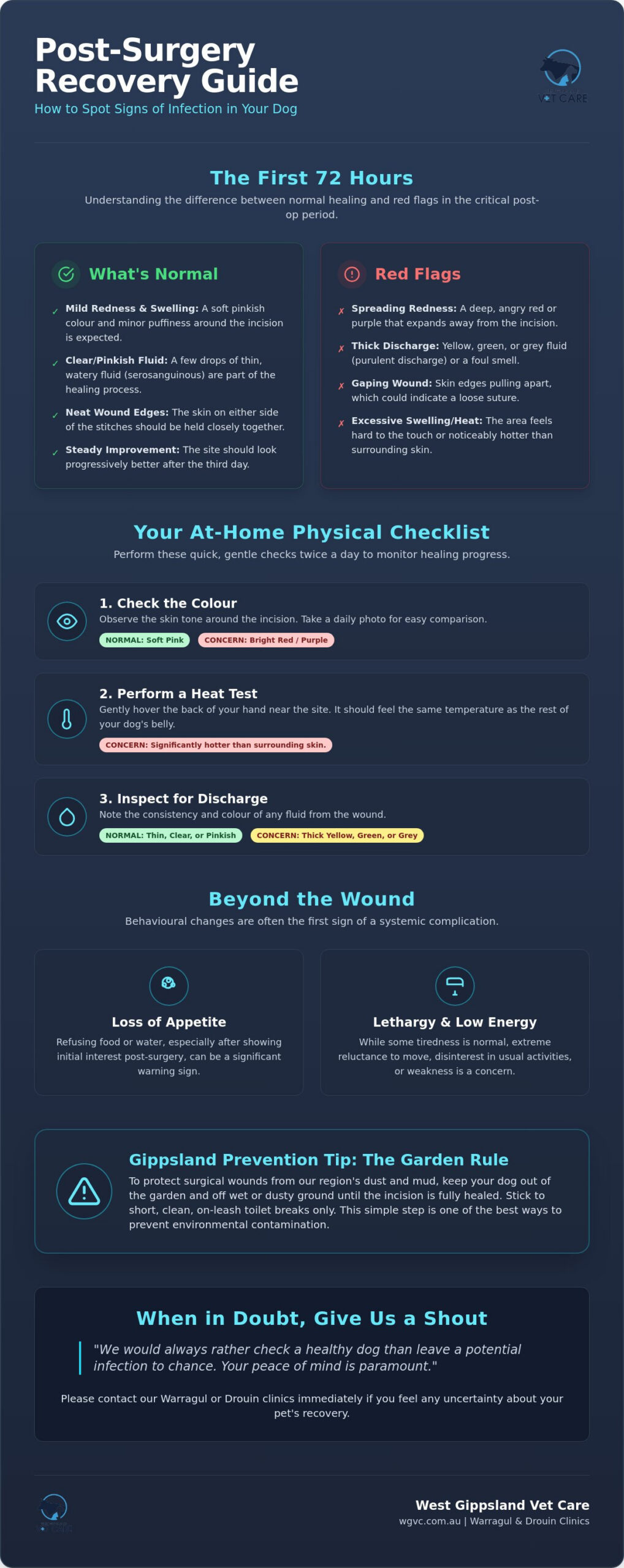
Bringing your dog home after a procedure is a relief, but it also marks the beginning of a vigilant few days for you as a pet parent. Understanding exactly what’s happening under your best friend’s skin can help settle those nerves and give you peace of mind. When a vet performs a surgery, the body immediately sends a dedicated team of cells to the area to begin the repair process. This natural inflammatory response is actually a positive sign that your dog’s immune system is working hard. During the first 24 to 72 hours, it’s common to see some mild bruising or a little bit of swelling around the site. This is especially true for traditional open surgeries where the incision might be a bit longer.
If your pet has had a keyhole procedure, such as the laparoscopic spays we perform at our Drouin and Warragul clinics, you’ll notice the incisions are much smaller, often just a few millimetres wide. These tiny sites typically have a lower risk of complications, but they still require the same level of gentle observation. Regardless of the surgery type, the goal is to see a steady improvement after the third day. This is the “turning point” where the initial redness should start to fade. If things seem to be getting worse instead of better, it might be time to look closer for the specific Surgical site infection markers that require professional attention.
The First 48 Hours: The Peak of Inflammation
During this initial peak period, the skin directly around the stitches might look a soft pink or light red. You might even find a few drops of clear or slightly blood-tinged fluid on their bedding or when they stand up. This is generally part of the normal healing journey. The edges of the wound should stay neatly together, or “apposed,” without any visible gaps between the skin. Keep the area clean and dry, and try to keep your dog calm while their body focuses on these first critical repairs.
When ‘Normal’ Becomes a Concern
While some pinkness is expected, a deep, angry purple or a bright red that spreads further away from the cut is one of the primary signs of infection after dog surgery. If the swelling feels hard to the touch or radiates a noticeable heat when you get close, it’s a signal that the body is struggling to manage the recovery. You should also watch for any “gaping” where the skin edges pull apart. This can happen if a suture has come loose or if there’s too much tension from internal pressure. If you notice a foul smell or any thick, cloudy discharge, please don’t hesitate to reach out to us. We would always rather check a healthy dog than leave a potential infection to chance.
Your Post-Op Physical Checklist: 5 Visual Signs of Infection
Monitoring your dog’s recovery is about being a quiet, observant partner in their healing. We recommend a systematic check of the surgical site twice a day, perhaps during a quiet morning cuddle and again before bed. Performing these checks when your pet is relaxed prevents unnecessary stress for both of you. During these inspections, take a quick photo on your phone. It’s often difficult to remember exactly how a wound looked twenty-four hours ago, but having a side-by-side comparison helps you spot subtle changes in colour or size that might indicate early signs of infection after dog surgery.
One of the most effective ways to gauge what’s happening beneath the surface is the “back of the hand” test. Gently hover or lightly rest the back of your hand near the incision. The skin there should feel similar in temperature to the rest of their belly. If it feels significantly hotter, it could suggest localised inflammation or a developing infection. While you might feel the urge to tidy up the area, please never scrub or clean the incision with soaps or antiseptics unless our team has specifically asked you to. Scrubbing can irritate the new, fragile tissue and actually introduce bacteria into the wound.
Discharge: The Good, The Bad, and The Ugly
In the first few days, you might see a thin, watery, pinkish fluid known as serosanguinous discharge. This is quite normal as the body manages initial fluid levels. However, if you notice thick yellow, green, or grey fluid, these are major red flags. We call this “purulent discharge,” and it is a clear sign that requires an immediate call to the vet. Understanding Infection Risks involves knowing that bacteria often produce a distinct odour. If the area smells foul or unusually “sweet,” it’s a strong indicator of bacterial activity that needs professional attention.
Swelling and Skin Integrity
It’s important to differentiate between a seroma and an abscess. A seroma is a relatively harmless pocket of clear fluid that feels soft and squishy, whereas an abscess is often firmer, hotter, and very painful. Watch for tiny pustules or pimple-like bumps appearing near the stitches, as these can signal a surface infection. If you notice bruising that doesn’t fade but instead turns a very dark purple or black, this might indicate necrosis, where the tissue isn’t getting enough blood flow. If you’re ever worried about the look of a wound, our compassionate surgical team is always here to help you figure out the best next steps for your pet.
Beyond the Wound: Behavioural Signs of Systemic Infection
While the physical wound is the most obvious place to check, your dog’s behaviour often provides the earliest clues that something isn’t quite right internally. Dogs are remarkably stoic, often trying to hide their discomfort from their favourite humans. As their primary caregiver, you are the best person to notice those tiny shifts in personality that might signal a systemic issue. We always encourage owners to trust their gut. If your companion just seems “off,” it’s often one of the more subtle signs of infection after dog surgery that warrants a closer look by our team in Warragul or Drouin.
Monitoring “The Big Three”—appetite, hydration, and energy—is your most reliable way to track internal recovery. While a lack of appetite is common on the evening of the surgery, they should be showing a keen interest in their meals by the second day. Similarly, they should be drinking water regularly. If they are turning their nose up at high-value treats or seem disinterested in their water bowl, it’s time to take note. We also look closely at how they respond to their prescribed pain medication. If they remain restless, whiny, or unable to find a comfortable position despite being on schedule with their meds, it suggests the body is fighting more than just standard post-op soreness.
Lethargy vs. Post-Anaesthetic Grogginess
It’s perfectly normal for your pet to be a bit “spacey” or sleepy for the first 24 hours as the anaesthesia wears off. This grogginess should lift relatively quickly as they process the medication. If you notice a deep lethargy starting on day two or three, where they are reluctant to stand or go for a toilet break in the garden, this is a concern. Watch for unusual hiding spots, like under a bed or in a dark corner they don’t usually frequent. A healthy recovering dog might be tired, but they should still be responsive to your voice and happy to see you.
Fever and Shivering
A dog’s normal body temperature sits between 38.3°C and 39.2°C, which is quite a bit warmer than ours. If you have a pet thermometer at home and feel comfortable using it, a reading above 39.5°C is a significant red flag for systemic infection. Shivering can be tricky to interpret. While some pets shiver because they are cold or coming out of surgery, persistent shivering or “rigors” (uncontrollable shaking) often points to a fever. You might also notice heavy panting or restlessness even when they are resting in a cool, quiet area. These are clear signals that their body is working overtime to fight off an infection.
Preventing Infection in the Gippsland Environment
Living in West Gippsland means our dogs enjoy a wonderful lifestyle, but our local environment presents unique challenges during the recovery period. Whether you are dealing with the thick, sticky mud of a Warragul winter or the fine, pervasive dust of a Drouin summer, keeping a surgical site clean requires a bit of extra planning. Environmental debris is a common culprit when owners begin to notice signs of infection after dog surgery. To keep your pet safe, we recommend following the “Garden Rule” strictly. This means your dog should stay away from long grass where moisture and prickles hide, keep well clear of farm dams, and avoid those favourite dirt patches where they love to roll.
Inside the home, maintaining a “Fear-Free” environment is just as important for physical healing. High-energy movements, like jumping onto the sofa or racing to the front door when the postie arrives, can put sudden tension on fresh stitches. This tension can create tiny gaps in the incision, making it much easier for bacteria to enter. By keeping your pet in a quiet, confined space with non-slip flooring, you help ensure the wound edges stay perfectly apposed. If you have questions about setting up a recovery space, our dedicated surgical team is always happy to provide tailored advice for your home setup.
Protecting the Incision Site Outdoors
During the first ten to fourteen days, all toilet breaks should be on a short lead. This isn’t just about stopping them from running; it’s about keeping them away from the “danger zones” of the garden. If the ground is particularly damp, some owners find that a clean, well-fitted t-shirt or a professional surgical suit provides a helpful extra barrier against splashes. After every trip outside, remember to wipe their paws thoroughly with a damp cloth. Just be careful to stay well away from the actual wound site while you do this, as we want that area to remain completely dry.
Alternatives to the Standard Cone
The Elizabethan collar, or “the cone,” is often the most disliked part of recovery, but it is truly non-negotiable. A dog’s mouth is full of bacteria, and even a few seconds of licking can introduce an infection. If your dog is particularly stressed by a plastic cone, you might consider an inflatable “doughnut” or a soft-sided collar. However, these only work if they are long enough to physically stop your dog’s tongue from reaching the wound. For pets with long noses or those who have had surgery on their lower limbs, the traditional plastic cone is usually the safest bet. To keep them happy while they are restricted, try using “brain games” like slow-feeder mats or gentle scent work to keep their mind busy without moving their body.
When to Contact West Gippsland Vet Care
We often tell our families that we would much rather see a happy, healthy dog for a quick reassurance check than miss the early signs of infection after dog surgery. As a local community fixture in Warragul and Drouin, we view ourselves as a vital extension of your pet’s support system. You know your companion better than anyone else, and if your “gut feeling” says something isn’t right, we want to hear from you. Our professional team is here to listen and guide you, ensuring that every interaction feels tailored to your pet’s specific needs and your peace of mind.
For our existing clients, we provide the added security of a 24-hour emergency service. We know that complications don’t always happen during business hours, and having access to a team that already knows your pet’s medical history can be incredibly comforting during a stressful moment. Whether it’s a quick phone call to settle a worry or an urgent after-hours visit, we are dedicated to being there when you need us most. We aim to strike a balance between our clinical expertise and a nurturing, family-oriented approach that puts both you and your dog at ease.
Emergency Red Flags: Call Us Immediately
While most recoveries are smooth and steady, certain situations require an immediate professional assessment. Please contact us straight away if you notice any of the following critical issues:
- Excessive bleeding that consistently drips or quickly soaks through a bandage.
- Vomiting or diarrhoea that prevents your dog from keeping down their essential pain relief or antibiotics.
- A wound that has “dehisced” or opened up, especially if you can see internal tissue or if the gap is widening.
- A sudden, dramatic collapse or a total inability to stand or walk.
Routine Follow-Ups and Suture Removal
Most pets will need to return to our clinic 10 to 14 days after their procedure for a routine follow-up. This is a lovely milestone in the recovery journey where we can celebrate your dog’s progress. Because we are Fear-Free certified, we take extra care to ensure this visit is a positive experience. We use gentle handling and plenty of encouragement to make suture removal a stress-free event, focusing on the bond between your pet and our staff. It’s during this check that we’ll perform a final scan for any lingering signs of infection after dog surgery.
Once we’ve given your dog the “all-clear,” we won’t just send you on your way. We’ll work with you to organise a gradual return to their normal exercise levels. It’s important not to rush back into high-impact play or long hikes through the Gippsland bush immediately. We’ll help you create a sensible plan to rebuild their strength safely, ensuring they can return to their favourite activities with a wagging tail and a fully mended body.
As your dog returns to their normal lifestyle, you might also want to focus on their overall hygiene and coat health; specialised wellness providers like Bohemian Spaw highlight how professional grooming can play a key role in a pet’s post-recovery comfort and wellbeing.
Supporting Your Pet’s Journey Back to Health
Watching your best friend recover is a journey that requires patience and a watchful eye. By identifying the visual and behavioural signs of infection after dog surgery early, you can act quickly to ensure their healing stays on track. Remember that while some mild pinkness is expected in those first few days, persistent heat, unusual discharge, or a sudden drop in energy are signals that your companion needs professional support. Whether you are managing their rest during a muddy Gippsland winter, keeping them calm after an advanced orthopaedic procedure, or seeking specialised dermatological insights from resources like avh.tw, your dedication makes all the difference.
Our team is here to walk this path with you, offering specialised care through our Fear-Free certified professionals. We are experts in both traditional and keyhole surgeries, and we provide 24-hour emergency support for our existing clients to ensure you’re never alone in a crisis. Worried about your dog’s recovery? Contact the West Gippsland Vet Care team for expert advice.
We are so proud of the care you provide your companion. With a little vigilance and our team by your side, your pet will be back to enjoying the Gippsland outdoors before you know it.
Frequently Asked Questions
How can I tell if my dog’s surgery site is infected or just healing?
The easiest way to tell the difference is by monitoring whether the site is improving or worsening over time. Healing involves a steady reduction in redness and swelling after the first 72 hours. If you notice spreading redness, increasing pain, or a foul odour, these are clear signs of infection after dog surgery. We recommend taking daily photos so you can objectively compare the wound’s progress each morning.
What does a normal dog surgery incision look like after 3 days?
By the third day, the edges of the incision should be neatly touching and the initial bright pinkness should be starting to fade. You might see some mild bruising around the stitches, but the site should be dry and free from any new discharge. For pets who have had a keyhole procedure at our Gippsland clinics, the tiny entry points should look clean and very stable by this stage.
Is it normal for a dog’s incision to be red and swollen?
Mild redness and slight puffiness are expected parts of the body’s natural inflammatory response during the first 48 hours. This is simply the immune system sending help to the area to begin the repair process. However, if the redness spreads further away from the cut or the swelling feels hard and hot, it’s no longer considered a normal part of the healing journey.
My dog is licking their stitches; will it cause an infection?
Licking is one of the most common causes of post-operative complications because a dog’s mouth is full of bacteria. Even a few seconds of licking can introduce pathogens or physically pull the stitches apart. This is why the Elizabethan collar is a vital tool for recovery. It provides a physical barrier that ensures your pet’s wound stays clean and the stitches remain intact.
What should I do if I smell a bad odour coming from my dog’s wound?
You should contact your vet immediately if you notice a foul or unusually sweet smell coming from the incision. Odour is a primary indicator of bacterial activity and is often one of the first signs of infection after dog surgery that owners notice. Early treatment with appropriate antibiotics can prevent a minor surface issue from developing into a more serious or painful abscess.
Can I clean my dog’s surgical incision with salty water or antiseptic?
Please don’t apply any liquids, including salty water, creams, or antiseptics, unless our team has specifically asked you to. The goal is to keep the surgical site completely dry to allow the skin edges to knit together. Moisture can soften the tissue and actually provide a pathway for bacteria to enter the wound, which can delay the entire healing process.
How long does it take for a dog’s surgical wound to close completely?
Most skin incisions are healed enough for suture removal within 10 to 14 days. While the surface looks closed by this point, the internal layers of muscle and tissue take much longer to regain their full strength. This is why we usually recommend restricted activity for a few weeks beyond the initial stitch removal, especially for more complex orthopaedic or soft tissue surgeries.
What are the first signs of sepsis in a dog after surgery?
The first signs of sepsis, which is a severe systemic response to infection, include extreme lethargy, a high fever, and uncontrollable shivering. You might also notice that your dog’s gums look very pale or muddy rather than a healthy pink. Sepsis is a life-threatening emergency, so if you notice these symptoms, please call our 24-hour emergency service for existing clients immediately.