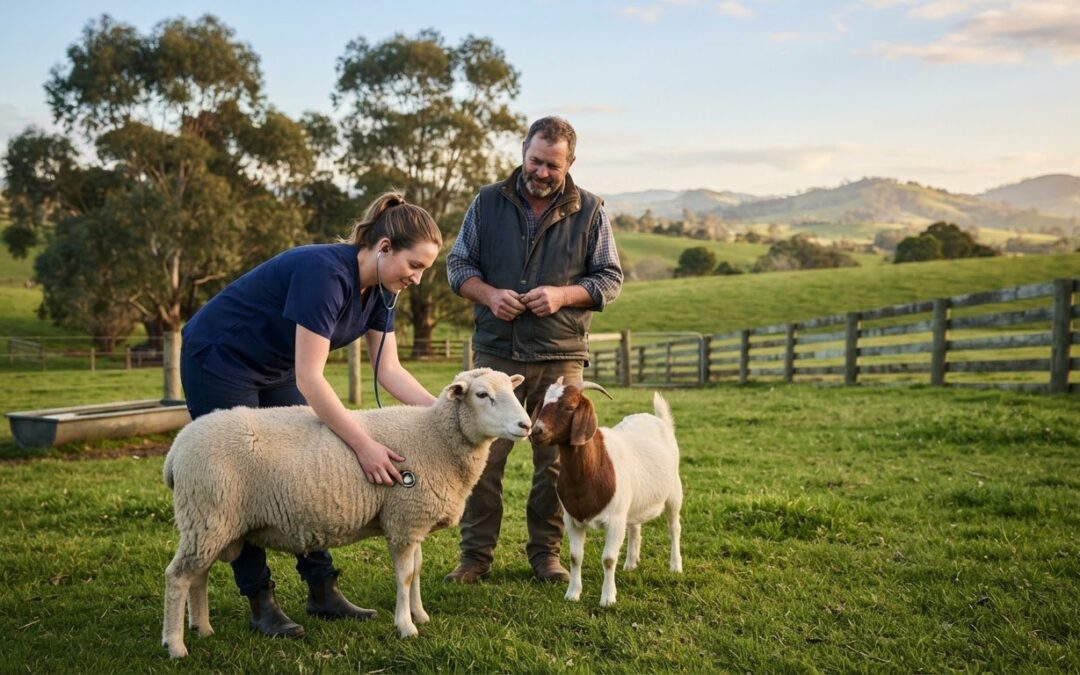
Has a sheep or goat gone off its feed, started moving differently or seemed unlike itself? It can be hard to judge whether a change needs veterinary attention, especially when you’re caring for livestock. A vet for sheep and goats Bunyip owners can contact is available through West Gippsland Vet Care’s clinics in Warragul and Drouin.
Noticing what has changed, when it began and whether other animals are affected can help the veterinary team understand the concern. West Gippsland Vet Care has supported the local community since 1989. Its Farm Animal Services include farm animal medicine and surgery, herd health programmes, nutritional advice and cattle reproductive services.
This guide covers signs that a sheep or goat may need assessment, the details to have ready when you contact the clinic, and practical ways to describe the concern. A few careful observations can help you feel prepared and make the conversation more useful.
Key Takeaways
- Sudden, worsening or unexplained changes in a sheep or goat are worth discussing promptly with a veterinarian.
- A veterinary assessment considers the individual animal, what you’ve noticed and its relevant history.
- Use the animal’s condition and how quickly it is changing to guide your next step, rather than trying to diagnose the cause yourself.
- Before contacting a vet for sheep and goats Bunyip owners can share the animal’s identification, when signs began, how many are affected and any relevant management changes.
- West Gippsland Vet Care’s Farm Animal Services include farm animal medicine and surgery, herd health programmes and nutritional advice, with clinics in Warragul and Drouin.
When should sheep or goats near Bunyip see a vet?
It can be difficult to tell whether a sheep or goat’s change in condition is temporary or needs veterinary attention. If a change comes on suddenly, gets worse or has no clear explanation, contact a veterinarian promptly. You don’t need to know what’s causing it before getting in touch. A clear description of what you’ve observed is a useful first step.
Some changes need particularly prompt attention. Describe significant difficulty breathing, collapse or an animal that can’t rise as urgent concerns when seeking veterinary guidance. If an animal’s condition is deteriorating, don’t wait for several signs to appear before asking for advice.
Signs can have different causes, and this guide can’t diagnose an animal or replace an individual veterinary assessment. A veterinarian considers the animal and its history before advising on next steps. If you’re unsure what the signs mean, explain what you can see and when it began.
Changes in behaviour, appetite or movement to take seriously
Focus on what you can observe rather than trying to name a condition. Has the animal eaten less, separated itself from the group, moved differently or seemed less responsive than usual? Note any change in breathing and mention visible swelling or lumps. For example, caseous lymphadenitis (CLA) is one condition discussed in sheep and goats, but a lump alone can’t establish its cause.
- Describe what’s different from the animal’s usual behaviour.
- Note when you first noticed the change and whether it has progressed.
- Share other observations without guessing at a diagnosis.
Timing gives the vet useful context. A change noticed today may call for a different discussion from one that has developed gradually. When contacting a vet for sheep and goats Bunyip owners can explain what they’ve observed, when it began and whether it is changing.
When a flock or mob pattern matters
Keep track of whether one animal or several are affected. If multiple sheep or goats show a similar change, note how many, when you first noticed it and whether their signs seem alike or different. This pattern gives the veterinarian broader context about what’s happening across the group, although it doesn’t identify a cause by itself. Avoid treating animals based only on similar signs.
Whether the concern affects one animal or a whole flock or mob, share your observations with a veterinarian and follow their guidance. West Gippsland Vet Care’s Warragul and Drouin clinics provide farm-animal support for Bunyip-area owners.
What can a sheep and goat vet assess?
A veterinary assessment considers an animal’s condition alongside its history and the observations you provide. The approach depends on the animal, what has changed and the information available. Your notes are valuable, but they don’t replace an examination or determine the cause on their own.
An assessment is a vet’s review of an animal and its history; a diagnosis is a conclusion reached through appropriate veterinary evaluation, not guesswork from a sign alone. Similar changes can have different explanations. A veterinarian can decide what further assessment or care is appropriate for the individual animal.
For Bunyip livestock owners, a vet for sheep and goats Bunyip can use your observations as a practical starting point. West Gippsland Vet Care’s Farm Animal Services include farm animal medicine and surgery, herd health programmes and nutritional advice. The care considered depends on the animal and the circumstances.
The history and observations that help the vet
Before speaking with the clinic, jot down when the change began and how it has developed. Note changes to appetite, movement or behaviour, and whether other sheep or goats are affected. Include recent changes to feed, routine, management or surroundings. These details help the vet build a clearer picture without you needing to interpret the signs.
- Record when you first noticed the concern and whether it is improving or worsening.
- Describe what you can observe, such as altered eating, movement or behaviour.
- Share relevant changes to feed, management or the animal’s environment.
If you’re unsure whether a detail is relevant, include it in your account. The veterinary team can consider it alongside the animal’s history.
Individual animal concerns and herd health context
A concern affecting one animal may need a different discussion from a similar change appearing across a flock or mob. The vet may consider the individual animal’s condition as well as what you’re seeing in the wider group. Sharing how many animals are affected and whether their signs are alike gives useful context, but doesn’t establish a cause or determine treatment.
This individual and group perspective connects with West Gippsland Vet Care’s herd health programmes and farm-animal advice. For more on the broader approach to livestock care, explore the West Gippsland livestock vet guide, which discusses on-farm care and herd strategy.
Clear observations help the conversation begin. Learn more about the clinic’s farm-animal support at West Gippsland Vet Care’s Warragul and Drouin locations.
Choosing the right next step for sheep and goats near Bunyip
It’s not always easy to judge what a change means or how quickly to act. Start by describing what you can see, how it compares with the animal’s usual condition and whether it is changing. The table below can help you organise that first conversation. It isn’t a diagnostic guide and can’t replace veterinary advice.
| What you’re noticing | A practical next step |
|---|---|
| A stable concern that hasn’t noticeably changed | Record the visible signs, when you first noticed them and whether one or more animals are affected. Contact a veterinarian to discuss the concern and suitable next steps. |
| Signs that are changing or getting worse | Describe what has altered and over what period. Seek veterinary guidance rather than waiting for a particular threshold or trying to identify the cause yourself. |
| Sudden, serious deterioration | Contact a veterinarian promptly. Explain the animal’s current condition and what changed suddenly so the veterinary team can guide the next step. |
The veterinarian determines the appropriate assessment after considering the animal, your observations and the circumstances. If you’re unsure how to describe the concern, start with the facts you can see.
Routine concerns and changes that are getting worse
For a gradual or recurring concern, put the timeline into plain language: when it began, whether it comes and goes, and what has changed since you first noticed it. Note which animals are affected and any visible differences. Then contact the clinic to discuss the concern. Keeping a record can make the conversation clearer, but don’t let note-taking delay veterinary advice if signs are worsening.
Sudden or serious changes in an animal
If an animal deteriorates suddenly, contact a veterinarian promptly. Describe its condition now and the immediate change you observed. Don’t rely on an online description to diagnose the problem or decide on treatment without veterinary guidance. The vet can consider the information and advise on a suitable assessment. West Gippsland Vet Care’s 24-hour emergency service is available to existing clients.
For a useful first conversation, tell the clinic where the animals are, whether the concern involves one animal or several, and how quickly the situation is changing. This context helps the team discuss an appropriate next step. West Gippsland Vet Care has clinics in Warragul and Drouin for livestock owners near Bunyip. If you’re looking for a vet for sheep and goats Bunyip owners can contact, start by sharing a clear account of the concern. You can also explore West Gippsland Vet Care’s farm-animal support.
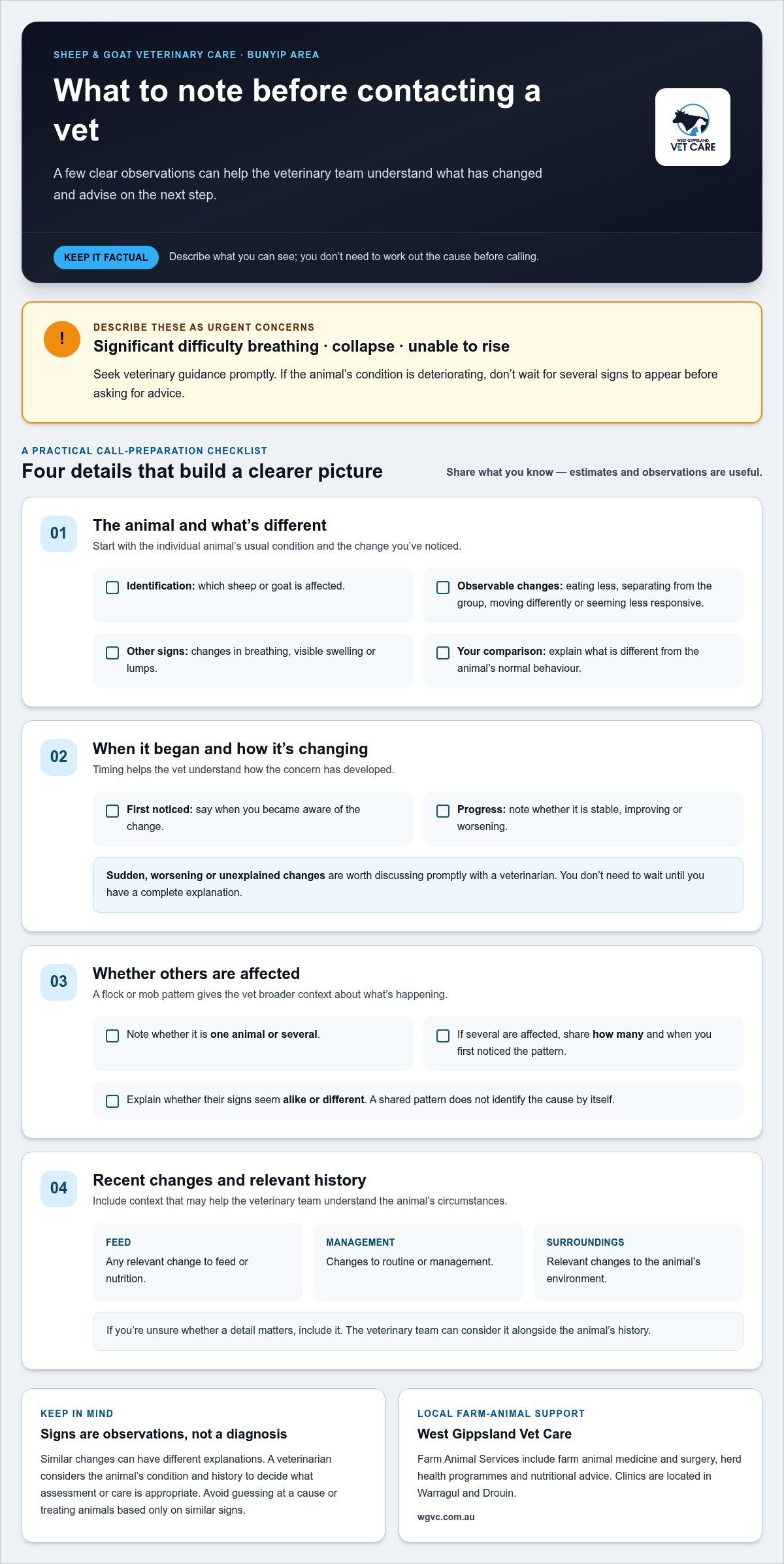
How to prepare for a sheep or goat vet consultation
A few details gathered before you call can help the clinic team understand what’s happening and discuss a suitable next step. You don’t need to work out what’s causing the concern. Focus on clear observations and the animal’s recent history.
- Identify the animal. Note its ear tag, name or another identifier, whether it’s a sheep or goat, and any relevant age or history you know.
- Write down the timeline. Record when you first noticed the change and whether it has stayed the same, improved or worsened.
- Count who is affected. Note whether it’s one animal or several, and describe any differences you’ve noticed between them.
- Describe what you can see. Use plain language about changes in appetite, movement or behaviour rather than suggesting a diagnosis.
- Recall recent changes. Note relevant changes to feed, management or the animal’s environment.
Information to have ready when you call
Keep your notes handy, along with the property location and a suitable callback number. If you can safely and practically capture a clear photo or short video without disturbing the animal or delaying a call, it may help you describe what you’ve seen. Don’t put yourself or the animal at risk to get an image. The clinic team can talk through the concern and guide you on suitable appointment arrangements.
For example, instead of saying an animal “seems unwell”, explain what you’ve observed and when it started. If several animals are affected, say how many and whether their changes appeared around the same time. If you don’t know a detail, say so. An accurate account is more useful than a guess.
Planning for care near Bunyip
West Gippsland Vet Care’s clinics in Warragul and Drouin serve nearby communities, including Bunyip-area livestock owners. When you contact the team, share the animal’s circumstances and the information you’ve prepared. The team can discuss an appropriate next step based on the concern and its context.
Farm-animal care can involve different arrangements depending on the situation. The team can discuss suitable care for the animal and the concern. If the animal’s condition changes while you’re preparing, update the clinic with what has changed rather than relying on earlier notes alone.
Having the animal’s details, your observations and your location ready can make the first conversation more focused. If you’re looking for a vet for sheep and goats Bunyip owners can speak with, contact West Gippsland Vet Care about farm-animal support.
Contact West Gippsland Vet Care for farm-animal support near Bunyip
Knowing who to speak with can make arranging veterinary care feel more manageable when a sheep or goat needs attention. West Gippsland Vet Care supports farm-animal owners from its Warragul and Drouin clinics, serving nearby communities including Bunyip. Farm Animal Services include farm animal medicine and surgery, herd health programmes, nutritional advice, lameness treatment and calf care, alongside cattle reproductive services.
These services support a range of farm-animal needs. The right discussion depends on the animal and the concern, so sharing clear observations helps the team understand your situation and talk through an appropriate next step. You don’t need to identify the cause before getting in touch.
Local veterinary care from Warragul and Drouin
West Gippsland Vet Care has served the West Gippsland community since 1989. Its clinics are in Warragul and Drouin, providing nearby locations for Bunyip-area livestock owners seeking veterinary support. You don’t need to have every detail worked out before speaking with the team. A plain account of what you’ve noticed can start a useful conversation about your animals and the care they may need.
For a sheep or goat concern, describe the animal’s current signs and how they differ from its usual condition. If more than one animal is affected, mention that too. These details provide context for the discussion, while the veterinarian determines a suitable assessment based on the animal and circumstances.
What to expect from the first conversation
Have your notes nearby if you’ve recorded when the concern began, how it has changed and any relevant management or feed history. The clinic team can listen to your observations, discuss the concern and guide you on appropriate appointment arrangements. If you’re uncertain about a detail, say so rather than trying to diagnose the problem yourself.
West Gippsland Vet Care’s wider farm-animal support includes herd health programmes and nutritional advice, as well as farm animal medicine and surgery. This service range provides a local point of contact for livestock owners seeking guidance. For anyone looking for a vet for sheep and goats Bunyip owners can contact, sharing the animal’s signs and relevant history is a practical way to begin.
If you have a concern about your sheep or goats, contact West Gippsland Vet Care about farm-animal care. The Warragul clinic is at 1 Bona Vista Rd, Warragul, and can be reached on (03) 5623 4822. The Drouin clinic is at 185 Princes Way, Drouin, and can be reached on (03) 5625 1707.
Build confidence in your next step
Make regular observation part of your flock or herd routine. A brief record of usual appetite, movement and behaviour can make a change easier to describe if one appears. It also gives you a clearer starting point for a conversation with a veterinarian, without expecting you to work out the cause. Small, consistent notes can support thoughtful decisions about your animals over time.
If you’re unsure whether a concern warrants a call, you don’t have to resolve that uncertainty alone. The vet for sheep and goats Bunyip owners need is one who can hear what you’ve noticed and help you talk through a sensible next step for your circumstances.
West Gippsland Vet Care supports livestock owners across Warragul, Drouin, Bunyip, Yarragon, Trafalgar, Willow Grove, Hill End and Neerim South. Contact West Gippsland Vet Care to discuss farm-animal care.
Frequently Asked Questions
Can a vet near Bunyip assess both sheep and goats?
West Gippsland Vet Care provides farm animal medicine and surgery for livestock owners with sheep or goat concerns. Describe which species is affected and what you’ve observed so the veterinary team can discuss an appropriate assessment. The practice supports rural communities across West Gippsland, including Bunyip, Warragul, Drouin, Yarragon, Trafalgar, Willow Grove, Hill End and Neerim South.
What signs in a sheep or goat mean I should contact a vet?
Contact a veterinarian if you notice a sudden, worsening or unexplained change in your animal’s condition. A sheep or goat eating less, moving differently, breathing unusually or behaving unlike itself may warrant a discussion. Describe what you can see and when it started; signs alone don’t confirm a cause. If the animal’s condition is deteriorating, seek veterinary guidance promptly rather than waiting for additional signs.
Should I call a vet if several sheep or goats become unwell?
Yes. Contact a veterinarian if several animals show a concerning change, and explain that more than one is affected. Share how many, when you first noticed the issue and whether their signs seem similar. This group context can help the veterinary team understand the concern alongside each animal’s circumstances. Don’t assume the animals have the same condition or begin treatment based only on similar signs.
What information should I have ready before contacting a livestock vet?
Have the animal’s identification, the property location and a callback number ready. Be prepared to say when the concern began, what has changed and whether other animals are affected. Recent changes to feed, routine or surroundings may also provide useful context. If you have a clear photo or video captured safely, you can mention it, but don’t delay seeking advice or put yourself or an animal at risk to get one.
Does West Gippsland Vet Care have a clinic in Bunyip?
West Gippsland Vet Care’s clinics are in Warragul and Drouin, serving nearby Bunyip-area livestock owners. The team provides Farm Animal Services including farm animal medicine and surgery, herd health programmes and nutritional advice. Share where the animals are and what support you’re seeking so the clinic team can discuss an appropriate next step.
Who can access West Gippsland Vet Care’s 24-hour emergency service?
West Gippsland Vet Care’s 24-hour emergency service is available to existing clients only. If you’re an existing client and an animal needs urgent attention, use the clinic’s emergency contact arrangements. Be ready to explain the animal’s current condition and what has changed. The 24-hour emergency service is for existing clients.