Preventing metabolic disease in dairy cows starts well before the first obvious sign of trouble. Around calving, cows face changing nutritional demands, and early problems can be difficult to spot in a busy shed or paddock. Coordinating feed, transition management and mineral balance can feel like a lot to manage. Conditions such as milk fever and ketosis are linked to this demanding period, so prevention works best as a joined-up plan rather than a series of isolated fixes.
This guide looks at where risks can arise before and after calving, and how a practical routine can help you notice changes early. You’ll find ways to review transition-cow nutrition and mineral management, decide what to monitor, and identify when advice tailored to your cows, feed and farm routines may help. The aim is to make informed, manageable decisions that support cow wellbeing and herd performance, not add complexity to calving season.
Key Takeaways
- Preventing metabolic disease in dairy cows starts with a coordinated transition plan, not waiting for obvious signs of illness.
- Energy balance, mineral balance and rumen health create related but distinct risks around calving.
- Review transition feeding, feed access, body condition and calving management together to build a clearer picture of herd risk.
- Use a repeatable plan to prepare, observe and record changes, then review patterns with your veterinarian.
- Farm-specific herd health advice and nutritional guidance can help shape prevention around your cows and management routines.
Preventing metabolic disease in dairy cows starts with the transition period
By the time a cow looks unwell, a metabolic problem may already be affecting her appetite, comfort or ability to settle into lactation. Prevention starts earlier, with attention to how cows are managing the changes around calving. A metabolic disease occurs when energy or mineral balance is disrupted enough to interfere with normal body function. The causes differ, but the transition period is a useful time to review feeding, cow condition and daily management before problems become obvious.
Calving brings a rapid shift in a cow’s needs. She must adapt to lactation while her feed intake may be changing, and differences in condition, appetite or access to feed can matter. Observation is therefore just as important as ration planning. Risk varies with the cows, the feed on offer, facilities and the way calving groups are managed. Build prevention around those conditions rather than relying on a single formula.
What does the transition period mean for dairy cows?
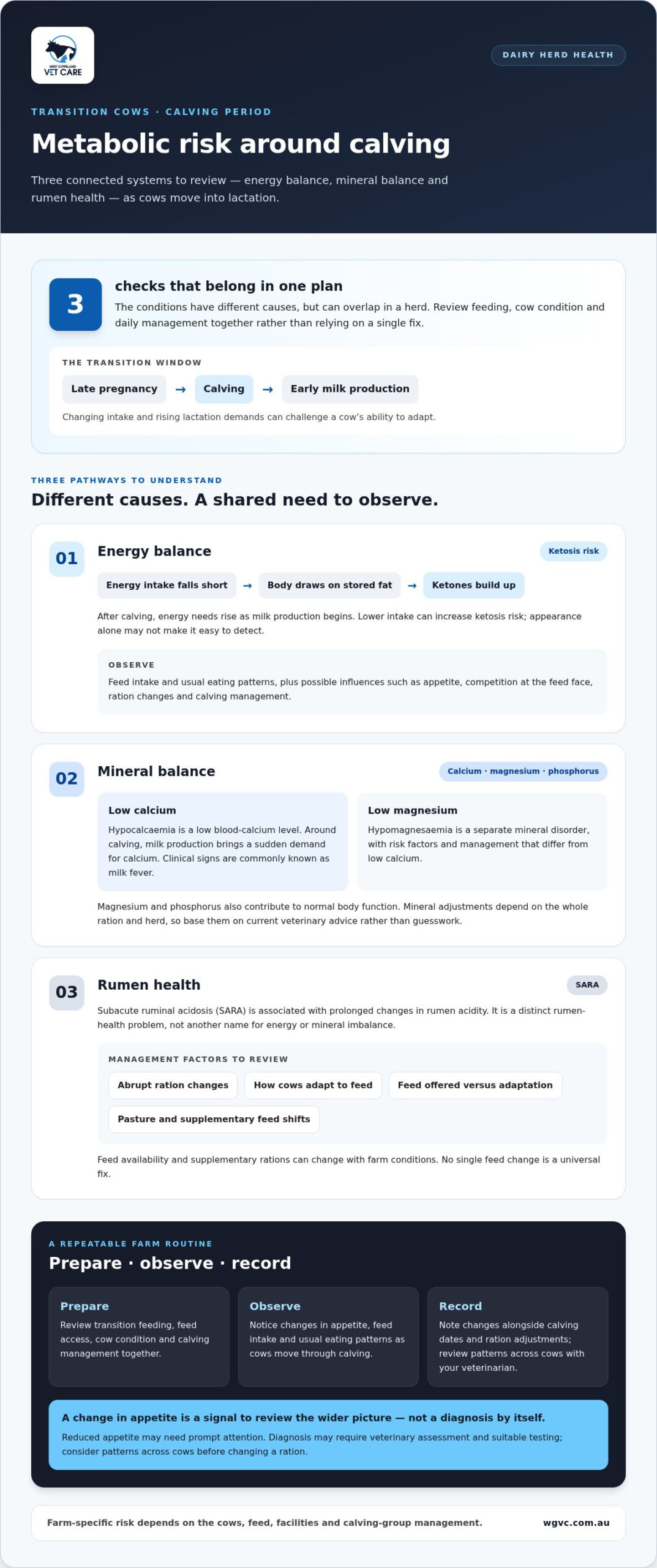
The transition period covers the management around a cow’s move from late pregnancy through calving and into early milk production. It’s often discussed as the weeks immediately before and after calving, although the planning window can differ between farms and protocols. During this time, changes in intake and the increasing demands of lactation challenge a cow’s ability to adapt. Consistent routines and close observation help the farm team notice when an individual isn’t keeping pace.
Which metabolic diseases should farmers know about?
Metabolic problems don’t all begin in the same way. Ketosis is associated with an energy shortfall, while hypocalcaemia and hypomagnesaemia involve low levels of calcium and magnesium respectively. Subacute ruminal acidosis is different again, involving changes in rumen acidity. Knowing the difference helps keep prevention focused on the relevant risk factors, rather than treating every condition as the same feeding problem.
- Ketosis: When energy intake doesn’t meet a cow’s needs, her body uses fat for energy and produces ketones. Appearance alone may not make the condition easy to detect; this general overview of Ketosis in dairy cows explains the condition and its effects.
- Hypocalcaemia: A drop in blood calcium around calving can interfere with normal muscle and body function. It’s commonly known as milk fever when clinical signs are present.
- Hypomagnesaemia: Low blood magnesium is another mineral disorder in dairy cattle. Its risk factors and management differ from those for low calcium.
- Subacute ruminal acidosis: This rumen disorder is linked to changes in acidity and should be considered alongside, not as a synonym for, energy or mineral imbalance.
In short: energy-balance disorders arise when available energy doesn’t meet a cow’s needs; mineral disorders involve an imbalance in essential minerals. The distinction is useful, but conditions can overlap in a herd. A farm-specific review of feeding and management can help identify which risks deserve closer attention.
How ketosis, hypocalcaemia and rumen disruption develop
These conditions can arise around the same stage of lactation, but they don’t share one cause. A useful prevention plan considers whether cows are getting enough usable energy, whether key minerals are in balance and whether the rumen is adapting well to the feed on offer. Since these factors can interact, a change in appetite or performance is a reason to review the wider picture, not a diagnosis by itself.
Energy balance, ketosis and feed intake
After calving, a cow’s energy needs rise as milk production begins. If she isn’t eating enough to meet those needs, her body draws on stored fat. This can lead to ketone build-up and increase the risk of ketosis. Feed availability is only one part of the picture: appetite, competition at the feed face, ration changes and how smoothly cows move through calving management may also influence intake. The details vary between farms.
Monitor whether cows come to feed and maintain their usual eating patterns. Note changes alongside calving dates and ration adjustments. A cow eating less may need prompt attention, but reduced appetite alone can’t confirm ketosis. Diagnosis may require veterinary assessment and suitable testing. Rather than changing a ration based on one observation, consider the pattern across cows and discuss it with your veterinarian.
Mineral balance, hypocalcaemia and rumen health
Hypocalcaemia means a low level of calcium in the blood. Around calving, the cow must meet a sudden demand for calcium as milk production starts. This differs from ketosis, which involves energy balance, although health problems can overlap. Magnesium and phosphorus also contribute to normal body function. Their role in a prevention plan depends on the whole ration and the herd, so base mineral adjustments on current veterinary advice rather than guesswork.
Subacute ruminal acidosis (SARA) is a rumen-health problem associated with prolonged changes in rumen acidity. Feeding management can influence risk, including abrupt ration changes or a mismatch between the feed offered and how cows adapt to it. In pasture-based systems, available feed and supplementary rations can shift with farm conditions. A veterinarian can assess these factors in context; no single feed change is a universal fix.
Prevention needs to consider energy, minerals and rumen health together, because one transition-cow problem can affect appetite, wellbeing and the risk of other problems. For example, a cow eating poorly may need assessment of more than her energy supply. Record what the farm team observes, including feed intake changes, calving timing and ration shifts. Clinical signs and farm records help build a picture, but they can’t replace veterinary assessment when disease is suspected.
For herd health advice that takes your cows, feed and management routines into account, West Gippsland Vet Care can help turn these connected risks into a practical farm plan.
Assessing metabolic disease risk across a West Gippsland dairy herd
A useful risk assessment looks across the herd and its management, rather than treating one cow’s signs or one month’s records as the whole story. A cow eating less may prompt a closer look, for example, but it doesn’t identify the cause. Patterns help the farm team and veterinarian decide where to investigate and whether particular groups or stages around calving need more attention.
West Gippsland farms don’t all feed or calve in the same way. Some have seasonal calving patterns, while others manage cows across different calving stages; pasture, supplementary feed and facilities also vary. Preventing metabolic disease in dairy cows calls for a review grounded in your farm’s routine, not an assumed model of how every herd operates.
Farm and feeding factors to review
Walk through how cows move from late pregnancy into early lactation. Check whether feed changes are planned and consistent, and whether cows can reach feed and water without avoidable competition. Use these as prompts for discussion with your adviser, not as fixed ration instructions or facility standards.
- Transition feeding: Note what changes around calving, when those changes occur and whether the approach is consistent for the relevant groups.
- Feed access: Observe whether cows can approach the feed face and drink comfortably, including when several animals are doing so at once.
- Rest and movement: Consider whether the layout and routine allow cows to rest and move between areas without undue disruption.
- Body condition and calving management: Review the condition of cows entering the period and how groups are managed before and after calving.
Discuss your findings with a veterinarian or nutrition adviser who can interpret them alongside the ration and farm conditions. A change that suits one property may not suit another.
Cow observations and records that help identify patterns
Individual observations matter, but records are more useful when they retain context. Note appetite, demeanour and milk performance alongside the cow’s group and calving stage. Record relevant changes in feed or routine too. This helps show whether concerns cluster around a particular group, period or management change, rather than relying on memory after a busy week.
Choose a recording method the farm team can maintain consistently. Shared notes, a herd record system or another established method can all help, provided the information is clear and linked to the right cows and stages. Review records regularly with your adviser, looking for repeated patterns rather than drawing a diagnosis from a single entry.
Sudden changes in appetite, demeanour or milk performance, or signs that suggest a cow is unwell, warrant veterinary assessment. Records can guide that conversation, but they can’t confirm a metabolic disease on their own. West Gippsland herd health and on-farm care can bring cow observations, feeding practices and management routines together in a farm-specific review with veterinary support.
A practical prevention routine for transition cows
A routine is easier to maintain when everyone knows what to do, what to record and when to raise a concern. Preventing metabolic disease in dairy cows isn’t about following a rigid recipe. It’s about making feeding and observation consistent, then reviewing what’s working with a veterinarian who understands the farm’s cows, feed and calving pattern.
Before calving: plan feed, facilities and responsibilities
Before cows enter the transition group, discuss feeding and mineral management with your farm adviser or veterinarian. Rations and supplements need to suit the actual feed sources and herd, so avoid copying a recipe from another property or making abrupt changes without professional guidance. Agree on how feed changes will be managed and what observations matter on your farm.
Make responsibilities clear to everyone involved. Decide who checks the cows, who keeps records and who should be told if a cow appears unwell or a pattern emerges. Consider whether group movement, feed access, water and resting areas are working smoothly. These are prompts for a farm-specific review, not universal facility standards.
After calving: monitor, record and respond
Set an observation routine that fits the farm’s daily work and can be followed consistently. Look for changes in appetite, behaviour and milk performance, comparing them with each cow’s usual pattern. One change doesn’t identify a particular disease, but it can help the team decide whether closer assessment is needed.
Keep notes in a format the people working with the cows can use. Record the cow or group, calving stage, observations and relevant feed or management changes. This context helps distinguish an isolated event from a recurring issue. If a cow seems unwell, or concerns recur across a group, seek timely veterinary advice rather than relying on records to diagnose the cause.
A practical routine can follow five repeatable steps:
- Plan the transition approach with your adviser, including how the farm will review feeding and mineral management.
- Prepare the relevant groups, facilities and team responsibilities before calving activity increases.
- Observe cows consistently, paying attention to changes from their normal appetite, demeanour and performance.
- Record observations alongside calving stage and relevant changes in feed or routine.
- Review the information with your veterinarian, and adjust the plan when herd patterns or farm conditions call for it.
Plan, prepare, observe, record and review with your veterinarian to support transition-cow health, without assuming any routine can eliminate disease. The value lies in making timely decisions with a clear picture of the herd, rather than relying on memory during a busy calving period. For help shaping a farm-specific approach, discuss herd health planning with West Gippsland Vet Care.
How West Gippsland Vet Care supports dairy herd health
Preventing metabolic disease in dairy cows is a shared effort between the farm team and a veterinarian who understands the herd’s conditions. West Gippsland Vet Care supports dairy and livestock clients with herd health advice and nutritional guidance, bringing farm observations, feeding practices and management routines into the same conversation. The aim is practical planning suited to your cows and farm, not a one-size-fits-all formula or a promise that disease can be prevented entirely.
What a herd health discussion can help address
Records of appetite, behaviour, milk performance, calving stage and feed changes can help give a veterinarian a clearer view of patterns across the herd. Nutritional advice is one part of the wider farm animal health picture. It can be considered alongside how cows are grouped and managed, and what the farm team observes day to day.
West Gippsland Vet Care’s veterinarians include postgraduate expertise in cattle nutrition and cattle medicine and surgery. This knowledge supports a considered discussion of feeding and herd health together. A herd-level review can help identify questions for further assessment, but it doesn’t replace examining an individual cow. If a cow appears unwell, veterinary assessment can help determine what care is appropriate for her.
Local farm support across West Gippsland
West Gippsland Vet Care supports local farm clients from its clinics in Warragul and Drouin, with on-farm care for livestock clients. Farmers around Warragul, Drouin, Bunyip, Yarragon, Trafalgar, Willow Grove, Hill End and Neerim South can discuss transition management as part of a broader conversation about herd health and farm-specific care. Local context matters: feed sources, calving patterns and daily routines differ between farms, so advice is most useful when considered alongside the details of your operation.
Before a herd health discussion, bring together recent records and note the questions your farm team wants to work through. Are appetite or production changes recurring in a particular group? Have there been recent feed or management changes? Are there individual cows that need examination as well as a wider herd review? These details help keep the discussion grounded in what’s happening on your farm.
Support works best as an ongoing partnership: the farm team contributes its daily knowledge of the cows, while veterinary advice helps interpret concerns and consider appropriate next steps. West Gippsland Vet Care has supported the local community since 1989, working with dairy and livestock clients across the region. If you’d like to discuss your dairy herd’s health and prevention planning, talk with West Gippsland Vet Care.
Make your next transition plan a shared one
Each calving period offers a chance to learn what suits your herd and where a small adjustment could make daily management clearer. Rather than trying to change everything at once, take one question into your next planning conversation. For example, does the current transition approach suit the cows and feed you expect to manage?
That steady, farm-specific approach is at the heart of preventing metabolic disease in dairy cows. Your team’s observations, considered alongside veterinary guidance, can help shape practical priorities for the next group of cows and support ongoing review as conditions change. Progress comes from thoughtful decisions made together, not from expecting one plan to fit every season or farm.
Ready to explore a herd health plan suited to your operation? Talk with our team about your dairy herd’s health. A considered conversation is a positive next step towards supporting your cows through transition.
Frequently Asked Questions
What are the main metabolic diseases in dairy cows?
Common metabolic concerns include ketosis, hypocalcaemia, subacute ruminal acidosis and hypomagnesaemia. They affect different processes, so the same sign or management change won’t point to one condition with certainty. A drop in milk output, for example, may have several possible explanations. A veterinarian can consider the cow’s history, examination findings and any appropriate tests to distinguish metabolic disease from other health or management issues.
When are dairy cows most at risk of metabolic disease?
The weeks around calving deserve particular attention as cows adjust to lactation and changing nutritional demands. Risk for an individual cow depends on her circumstances, and herd patterns can differ with calving systems and feed management. Comparing records from different calving groups or periods may reveal where concerns tend to occur on your farm, giving you and your veterinarian a useful starting point for review.
Can metabolic disease in dairy cows be prevented?
Good planning and monitoring can reduce risk, but no routine can guarantee that every case will be avoided. Preventing metabolic disease in dairy cows means shaping nutrition and mineral management around the actual herd, then reviewing how cows respond. Before changing feed or supplements, discuss the plan with your veterinarian or nutrition adviser. This helps avoid applying a generic recipe that may not suit your feed sources, cow groups or farm system.
How can I tell if a dairy cow has a metabolic problem?
You can’t reliably identify a specific metabolic disease from appearance alone. A cow that is off feed, quieter than usual or producing less milk needs closer attention, but those changes can have several causes. Note when the change began and any recent feed or management differences. If she seems unwell or worsens, seek veterinary assessment. Your observations provide useful context, but shouldn’t be treated as a diagnosis.
Does changing a dairy cow’s feed prevent metabolic disease?
Not by itself. Feed management can form part of prevention, but an unplanned change may create new challenges or fail to address the relevant risk. Before altering a ration, consider how the change fits the whole group, the available feed and the stage of lactation. A veterinarian or suitably qualified nutrition adviser can help assess the proposed approach. Avoid borrowing another farm’s supplement routine without checking whether it suits your herd.
How can a dairy farmer monitor metabolic disease risk in the herd?
Choose a record-keeping approach your team can maintain during busy periods. Alongside health observations, note the cow’s calving date, group and any recent feed changes so each entry can be understood later. Reviewing information by group or calving period may bring repeated concerns to light. Records help your veterinarian follow patterns over time, but they don’t replace an examination when an individual cow appears unwell.
When should I call a vet about a dairy cow’s health?
Seek veterinary advice if a cow appears unwell, deteriorates or shows changes that concern you. Don’t wait for a pattern if an individual cow needs attention. Repeated concerns or several affected cows are also good reasons to discuss the herd with a veterinarian. For farms around Warragul, Drouin, Bunyip, Yarragon, Trafalgar, Willow Grove, Hill End and Neerim South, clear notes can help make that conversation more focused.