Did you know that for a Great Dane facing the sudden onset of bloat, the mortality rate can be as high as 80% without immediate medical intervention? It’s a confronting statistic for any owner of these gentle giants. We understand that the bond you share with your dog is incredibly special, and the mere mention of Gastric Dilatation-Volvulus (GDV) often brings a deep sense of anxiety. You want to protect your best mate, but the idea of a major, invasive surgery can feel just as overwhelming as the condition itself. This is why choosing a preventative gastropexy for Great Dane Warragul owners is becoming such a vital part of proactive pet care.
In this guide, you’ll learn how this procedure serves as a life-saving insurance policy for your dog’s health. We’ll explain why local laparoscopic, or keyhole, options offer a much faster and less painful recovery than traditional methods. We’ll also explore how choosing expert care right here in Warragul provides the peace of mind that comes from having a trusted team close to home. We’re here to help you move from worry to confidence, ensuring your giant companion receives the gentle, professional care they deserve.
Key Takeaways
- Understand how the unique deep-chested anatomy of Great Danes makes them vulnerable to stomach torsion and why a proactive approach is vital.
- Discover why a preventative gastropexy for Great Dane Warragul owners offers a much higher success rate and a more controlled environment than emergency surgery.
- Learn how modern keyhole techniques using specialised micro-instruments result in tiny incisions, significantly less discomfort, and a swifter return to play.
- Find out the best age to schedule the procedure and the benefits of combining it with routine desexing to reduce your dog’s time under anaesthesia.
- Explore how a fear-free clinical environment and local expert care can make the surgical journey a calm, stress-free experience for your gentle giant.
The Great Dane Risk: Why Preventative Gastropexy is Essential
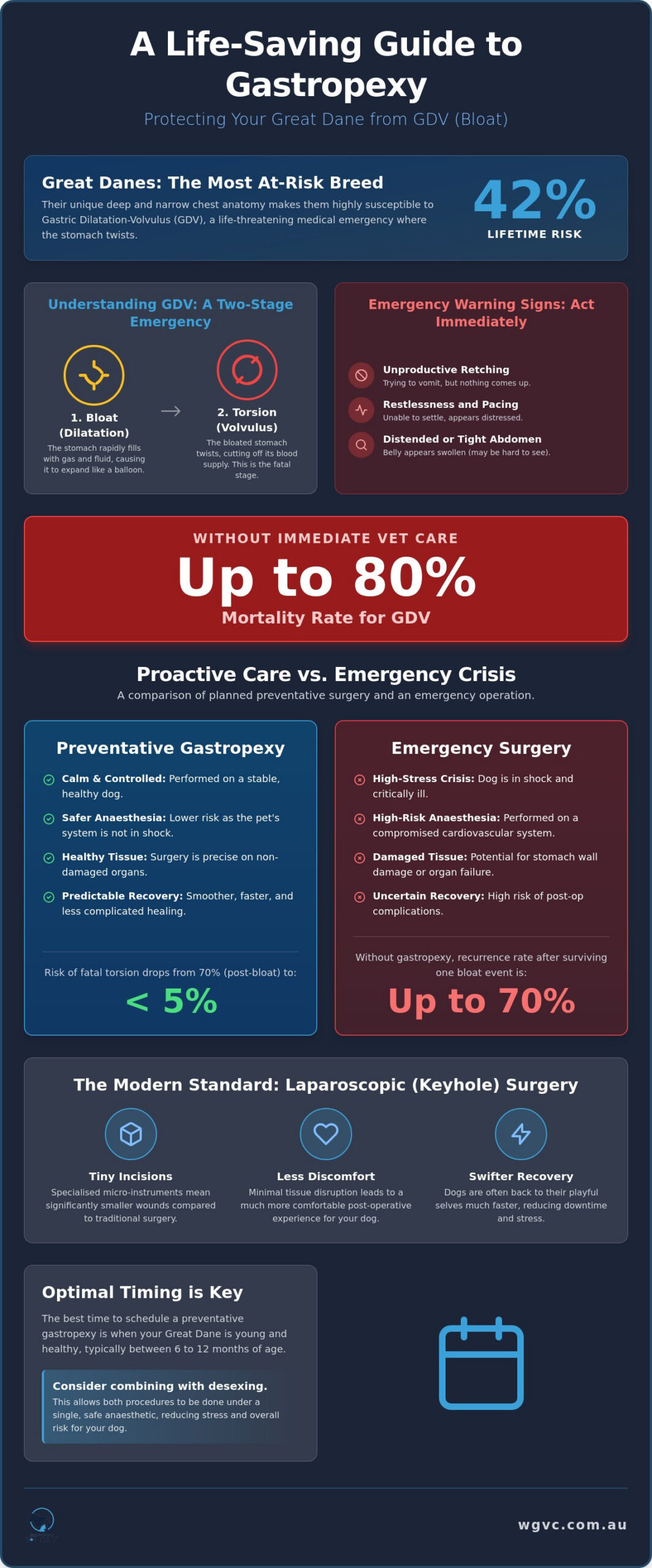
Great Danes are known as the gentle giants of the dog world, beloved for their calm nature and towering presence. However, their unique physical build comes with a specific biological vulnerability. Because of their deep, narrow chests, Great Danes are statistically the most at-risk breed for a life-threatening condition known as Gastric Dilatation-Volvulus (GDV). Research indicates that Great Danes have a staggering 42% lifetime risk of developing this condition. For many owners, this isn’t just a medical fact; it’s a constant source of worry that sits in the back of their minds during every mealtime and play session.
It is helpful to understand the difference between simple “bloat” and “torsion.” Simple bloat, or gastric dilatation, occurs when the stomach fills with gas or fluid. While uncomfortable, it becomes a critical emergency when the stomach actually twists on its axis. This twisting, known as volvulus or torsion, traps the gas and cuts off blood supply to vital organs. This is why a preventative gastropexy for Great Dane Warragul owners is so highly recommended. It addresses the “volvulus” part of the equation, ensuring that even if gas builds up, the stomach cannot perform that fatal rotation.
Recognising the Signs of a Bloat Emergency
When GDV occurs, every second counts. The most common warning sign is unproductive retching, where your dog looks like they are trying to vomit but nothing comes up. You might also notice your dog pacing restlessly, appearing distressed, or looking at their abdomen. A distended or “tight” belly is a classic sign, but in deep-chested breeds, the stomach can sometimes be tucked up under the ribs, making the swelling less obvious. If you notice these behaviours, immediate veterinary attention is the only option, as the mortality rate for untreated GDV can be as high as 80%.
How Gastropexy Acts as a Life-Saving Anchor
A preventative gastropexy works by physically “tacking” or suturing the stomach to the abdominal wall. This creates a permanent bond that acts as an anchor, preventing the stomach from twisting even if it becomes distended with gas. For families living in rural areas around West Gippsland, such as Neerim South or Thorpdale, this procedure is especially valuable. Travel times to an emergency centre can be significant during a crisis. By choosing a preventative gastropexy for Great Dane Warragul pets, you are effectively removing the most dangerous element of the condition, providing a vital safety net for your best mate and genuine peace of mind for your family.
Preventative vs. Emergency Gastropexy: A Comparison
Choosing between a planned procedure and waiting to see if an emergency arises is a decision many giant breed owners face. While it’s tempting to hope for the best, the reality of an emergency gastropexy is vastly different from a preventative one. A planned preventative gastropexy for Great Dane Warragul owners takes place in a calm, controlled environment. Your dog arrives fasted and stable, allowing our team to focus on precision. In contrast, an emergency surgery often occurs in the middle of the night when the dog is already in a state of shock, making the entire process far more complex and risky.
The predictability of outcomes is perhaps the most compelling reason to act early. Statistics show that without a gastropexy, the recurrence rate for dogs that have previously bloated can be as high as 70%. However, once the stomach is surgically tacked, this risk of life-threatening torsion drops to less than 5%. As highlighted by Cornell University on GDV, this condition is a true medical emergency where the physiological toll on the animal is immense. By opting for prevention, you’re ensuring the surgery happens while your dog is at their strongest.
The Clinical Advantage of Proactive Care
From a surgical perspective, the advantages of proactive care are significant. During a planned procedure, our vets work with healthy, vibrant tissue. In an emergency, the stomach wall may already be devitalised or damaged due to a lack of blood flow during torsion. This makes the surgical repair much more difficult and the recovery far more uncertain. Furthermore, a planned anaesthetic is always safer than one performed on a dog whose cardiovascular system is already struggling. We can take the time to tailor the pain management and monitoring to your dog’s specific health profile, which is especially important for giant breeds that may have underlying heart considerations. If you’re considering this for your own giant, our team is always happy to discuss the best approach for your dog’s specific needs.
Reducing Owner Stress and Anxiety
The emotional weight of an emergency “dash” to the clinic cannot be understated. It’s a traumatic experience for both the dog and the family. By scheduling a preventative gastropexy for Great Dane Warragul pets, you remove that looming “what if” from your daily life. You can organise the surgery for a time that suits your schedule, ensuring you’re home to monitor their recovery. This proactive approach transforms a potential life-or-death crisis into a manageable, routine part of your dog’s health plan, allowing you to focus on enjoying the many years ahead with your gentle giant.
Laparoscopic (Keyhole) Gastropexy: The Modern Standard in Warragul
Traditional surgery for giant breeds often involves a significant abdominal incision, sometimes stretching up to 20cm in length. While effective, this “open” method requires more extensive healing and can be quite taxing on a dog’s body. At West Gippsland Vet Care, we’ve embraced a more advanced, gentle alternative. Laparoscopic, or “keyhole,” surgery represents the modern gold standard for preventative care. By using specialised cameras and micro-instruments, we can perform the same life-saving procedure through just two or three tiny 1cm incisions. This shift from major surgery to a minimally invasive approach makes a world of difference for your dog’s comfort and recovery.
During a laparoscopic preventative gastropexy for Great Dane Warragul pets, our surgeons use a high-definition camera to view the internal organs on a monitor. This provides exceptional visibility and precision that simply isn’t possible with the naked eye during traditional surgery. As noted by the American College of Veterinary Surgeons on preventative gastropexy, these modern techniques are highly recommended for at-risk breeds because they achieve the same permanent “tack” of the stomach with far less trauma to the surrounding tissue. It’s about providing the highest level of protection while being as kind as possible to your dog’s body.
Benefits of Keyhole Surgery for Giant Breeds
The most immediate benefit of the keyhole approach is the reduction in post-operative pain. Because the incisions are so small, there is significantly less inflammation and bruising. This means your Great Dane won’t need to rely as heavily on strong sedatives or heavy pain relief during their first few days at home. Smaller wounds also mean a much lower risk of common recovery hurdles, such as wound infections or the constant urge for your dog to lick at their stitches. For an active Great Dane, this translates to a much faster return to their normal activity levels and their favourite spot on the lounge.
Advanced Surgical Tech in West Gippsland
Performing keyhole surgery on a giant breed requires both specialised equipment and a high degree of technical skill. Our team’s extensive experience as an orthopaedic vet Gippsland specialist means we are accustomed to the precision and care required for complex procedures. We apply that same level of expertise to our soft tissue work, ensuring every gastropexy is performed with meticulous attention to detail. We’ve invested in the latest laparoscopic technology specifically because we believe our local community deserves access to the best possible care. When you trust us with your gentle giant, you’re choosing a team that combines advanced surgical capability with a deeply personal, family-oriented approach.
Timing the Procedure: When Should Your Dane Go Under?
Deciding on the right time for surgery involves a careful balance between your dog’s physical development and the urgency of bloat prevention. For most Great Danes, the recommended window for a preventative gastropexy is between six and twelve months of age. This timeframe is often chosen because it aligns with the typical age for desexing, allowing both procedures to be completed during a single anaesthetic event. However, every dog is an individual. We take the time to assess your dog’s specific growth and health before making a final recommendation.
Giant breeds like Great Danes require a nuanced approach because their growth plates take longer to close than smaller dogs. Delaying desexing until they are closer to physical maturity can be beneficial for their long-term orthopaedic health. Because the risk of GDV increases as a dog ages, we often discuss a tailored plan that protects their joints while still providing the security of a preventative gastropexy for Great Dane Warragul families. Before any surgery, we also prioritise thorough pre-surgical screening, including blood tests and heart checks, to ensure your gentle giant is in the best possible condition for their procedure.
Combining Gastropexy with Desexing
Many owners find that combining a gastropexy with a routine desexing is the most sensible path forward. The primary advantage is the “one anaesthetic” rule, which reduces the overall physiological stress on your dog. When using modern laparoscopic techniques, we can often use the same tiny entry ports for both the keyhole spay and the gastropexy. This means your dog wakes up with fewer incisions and a streamlined recovery process. It’s a proactive way to manage two important health milestones in one go, making the experience much easier for both you and your mate.
Preparing Your Home for Post-Op Care
Recovery for a giant breed dog requires a bit of forward planning. While the keyhole approach significantly reduces pain, your dog will still need to keep relatively quiet for a short period to allow internal healing. Restricting the activity of a bouncy Great Dane puppy can be a challenge, so we recommend setting up a calm, “Fear-Free” space in your home where they can relax without the temptation to jump on the lounge or run down the hallway. We’ll provide you with detailed guidance on managing this transition and schedule follow-up appointments at our Warragul or Drouin clinics to ensure everything is healing perfectly. If you’re ready to discuss the best timeline for your puppy, you can book a consultation with our team to create a personalised health plan.
Why Choose West Gippsland Vet Care for Your Great Dane
Choosing the right team for your dog’s surgery is a deeply personal decision. We know that Great Danes aren’t just pets; they’re significant family members who take up a lot of space in your home and your heart. At West Gippsland Vet Care, we’ve dedicated ourselves to providing the kind of advanced surgical care you might expect in a Melbourne specialist centre, but with the warmth and accessibility of a local practice. By offering preventative gastropexy for Great Dane Warragul families, we ensure your gentle giant gets the best protection possible without the stress of a long commute or an unfamiliar environment.
Our commitment to your dog’s safety is reflected in our investment in specialised laparoscopic equipment. This technology allows us to perform precise, minimally invasive procedures that prioritise a gentle recovery. We believe that every pet in our community deserves access to the highest standard of veterinary medicine. Whether it’s a routine check-up or a complex keyhole surgery, our team approaches every case with the same level of dedication and clinical excellence. If you ever find yourself in a crisis, you can also rely on our emergency vet Warragul team for critical care when it matters most.
A Compassionate Approach to Giant Breed Care
Big dogs have big hearts, but they can also feel a little vulnerable in a clinical setting. This is why we’ve embraced a “Fear-Free” philosophy across our clinics. We understand the unique temperament of Great Danes and tailor our handling techniques to keep them calm and comfortable. From the way we conduct exams to the physical logistics of our hospitalisation wards, everything is designed with giant breeds in mind. We’ve created spacious recovery areas so your dog doesn’t feel cramped, and our nursing staff provide the kind of personal touch that makes them feel like they’re staying with family rather than being in a hospital.
Serving the West Gippsland Community
We are proud to be a trusted fixture for residents in Warragul, Drouin, and the surrounding rural townships. Our deep roots in the region mean we understand the lifestyle of West Gippsland families. For those living on larger properties, our surgical services often integrate with the broader health strategies provided by our livestock vet West Gippsland experts. We view ourselves as a partner in your dog’s long-term wellbeing. Beyond the preventative gastropexy for Great Dane Warragul pets, we offer ongoing support through puppy preschool, regular vaccinations, and senior pet health checks. We’re here for every stage of your giant’s life, ensuring they stay healthy, happy, and by your side for as long as possible.
Securing a Healthier Future for Your Best Mate
Protecting your Great Dane from the life-threatening risks of stomach torsion is one of the most significant steps you can take for their long-term wellbeing. By choosing a preventative gastropexy for Great Dane Warragul families, you replace the looming anxiety of a midnight emergency with the security of a planned, gentle procedure. Our specialised laparoscopic surgical suite and Fear-Free certified veterinary professionals ensure your giant companion receives advanced, compassionate care right here in West Gippsland. We’re dedicated to supporting our local community with expert surgical options and the ongoing reassurance of 24-hour emergency support for our existing clients.
If you’re ready to take this proactive step for your dog’s safety, please book a consultation with our surgical team to discuss preventative gastropexy. We’ll take the time to listen to your concerns and create a tailored health plan that fits your dog’s specific needs and your family’s schedule. It’s our privilege to help you keep your gentle giant happy, healthy, and by your side for many wonderful years to come.
Frequently Asked Questions
Does a gastropexy prevent my dog from ever bloating?
A gastropexy does not prevent your dog from bloating, which is the accumulation of gas or fluid in the stomach. However, it does prevent the life-threatening twisting, or volvulus, that often follows. While your dog might still experience gas buildup, the surgical “tack” keeps the stomach anchored in its correct position. This ensures that while you should still monitor for signs of discomfort, the most fatal aspect of the condition is effectively managed.
What is the recovery time for a keyhole gastropexy vs traditional surgery?
Recovery from a keyhole gastropexy is significantly faster, with most dogs feeling back to themselves within two to three days. Traditional open surgery typically requires a much longer rest period of 10 to 14 days due to the larger incision. Because the laparoscopic incisions are so small, there is less inflammation and bruising, which means your dog won’t need to be kept under heavy sedation or restricted for nearly as long.
Is it safe to perform a gastropexy on an older Great Dane?
It is generally safe to perform this procedure on older dogs, provided they undergo thorough pre-surgical screening first. We conduct comprehensive blood tests and heart checks to ensure their cardiovascular system can safely handle the anaesthetic. While we often recommend a preventative gastropexy for Great Dane Warragul puppies, older dogs can still benefit immensely from the protection it provides against sudden, life-threatening torsion as they age.
Can my Great Dane still eat normal meals after the surgery?
Yes, your dog will be able to return to their normal diet after a very short transition period. Immediately following the surgery, we usually recommend several smaller, soft meals over the first 48 hours to allow the stomach to settle. Once the initial healing phase is complete, there are no long-term dietary restrictions caused by the gastropexy itself, though you should still follow general bloat-prevention feeding practices recommended by our team.
What is the cost difference between preventative and emergency gastropexy?
A preventative gastropexy is considerably more cost-effective than an emergency intervention. Emergency surgery involves not just the procedure itself, but also intensive care, stabilising a dog in shock, and extended hospitalisation. By choosing a planned, elective surgery, you avoid the high costs associated with critical trauma care and midnight emergency call-outs. It is a wise financial and emotional investment in your dog’s future health.
How do I know if my dog is a good candidate for laparoscopic surgery?
Most healthy Great Danes are excellent candidates for laparoscopic surgery, provided they are in good overall health and of an appropriate age. During a consultation, we assess your dog’s physical condition and review their medical history to ensure a minimally invasive approach is the best fit. This modern method is particularly beneficial for large, deep-chested breeds as it provides our surgeons with superior visibility of the abdominal cavity.
Will a gastropexy affect my dog’s digestion or energy levels?
A gastropexy has no known negative impact on a dog’s long-term digestion or energy levels. Once the small keyhole incisions have healed, your dog will be able to run, play, and eat just as they did before. The procedure simply secures the stomach to the abdominal wall, which doesn’t interfere with the natural movement of food through the digestive tract or your dog’s general zest for life.
What are the risks associated with preventative gastropexy?
As with any surgery, the primary risks involve the general anaesthetic and potential minor complications like wound swelling or licking at the site. However, because a preventative gastropexy for Great Dane Warragul pets is performed in a controlled, elective setting on a stable animal, these risks are significantly lower than in an emergency. We use advanced monitoring and “Fear-Free” handling to ensure the safest possible experience for your gentle giant.