
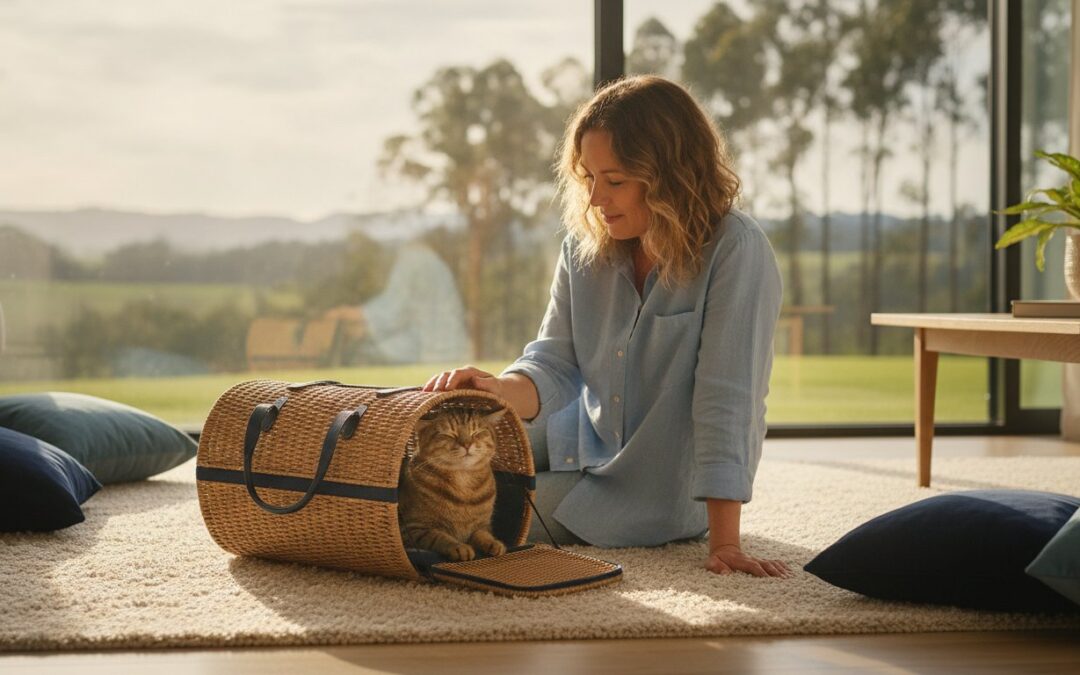
Imagine the moment you reach for the cat carrier and your feline friend vanishes into thin air, only to be found huddled behind the washing machine. It’s a heartbreaking scene that many of us know all too well, often ending in scratched arms and a heavy sense of guilt before you’ve even backed out of the driveway. We understand that the struggle is real. In fact, research shows that 25 percent of cat owners avoid the vet because the stress simply feels like too much to handle.
You want the best for your pet, but the battle of preparing an anxious cat for a vet visit can make regular check-ups feel like an impossible task. This guide will show you how to transform those frantic mornings into a calm, manageable routine using gentle Fear-Free techniques. We will explore everything from carrier desensitisation to making the car ride more peaceful. By the time you finish reading, you’ll have a clear plan to ensure your cat arrives at the clinic relaxed enough for a thorough, productive health check.
Key Takeaways
- Understand that feline anxiety is a natural survival response and learn why preparing an anxious cat for a vet visit begins with respecting their need for territory.
- Turn the carrier into a permanent, “happy” fixture in your home to replace fear with a sense of safety and familiarity.
- Organise a calmer car journey by securing the carrier in a stable spot and using synthetic pheromones to soothe your cat’s senses.
- Minimise waiting room stress by calling ahead and keeping the carrier elevated, helping your cat feel secure and out of harm’s way.
- Explore how Fear-Free techniques and “Happy Visits” can transform the clinic into a place of comfort rather than a source of dread.
Why do cats find the vet so stressful?
To understand why your cat reacts so strongly, we first need to look at the world through their eyes. For a cat, anxiety isn’t a choice or a personality flaw. It’s a hardwired survival response triggered by a perceived loss of control. Cats are solitary hunters who rely heavily on their territory to feel safe. When we place them in a carrier and drive away, we aren’t just taking them for a check-up; we’re removing them from their entire support system. This sudden change can feel like a life-threatening event to their sensitive nervous systems.
The clinical environment itself is often a sensory minefield. Between the sharp, medicinal smells and the distant sounds of barking dogs, a cat’s senses are immediately overwhelmed. These unfamiliar triggers, combined with bright fluorescent lights, tell a cat that they’ve entered a “danger zone.” When you’re preparing an anxious cat for a vet visit, it’s helpful to remember that their hissing or hiding isn’t “bad behaviour” or spite. It’s a physiological state where their “fight or flight” reflex has taken the wheel. They aren’t trying to be difficult. They’re simply trying to survive.
Recognising subtle signs of feline stress
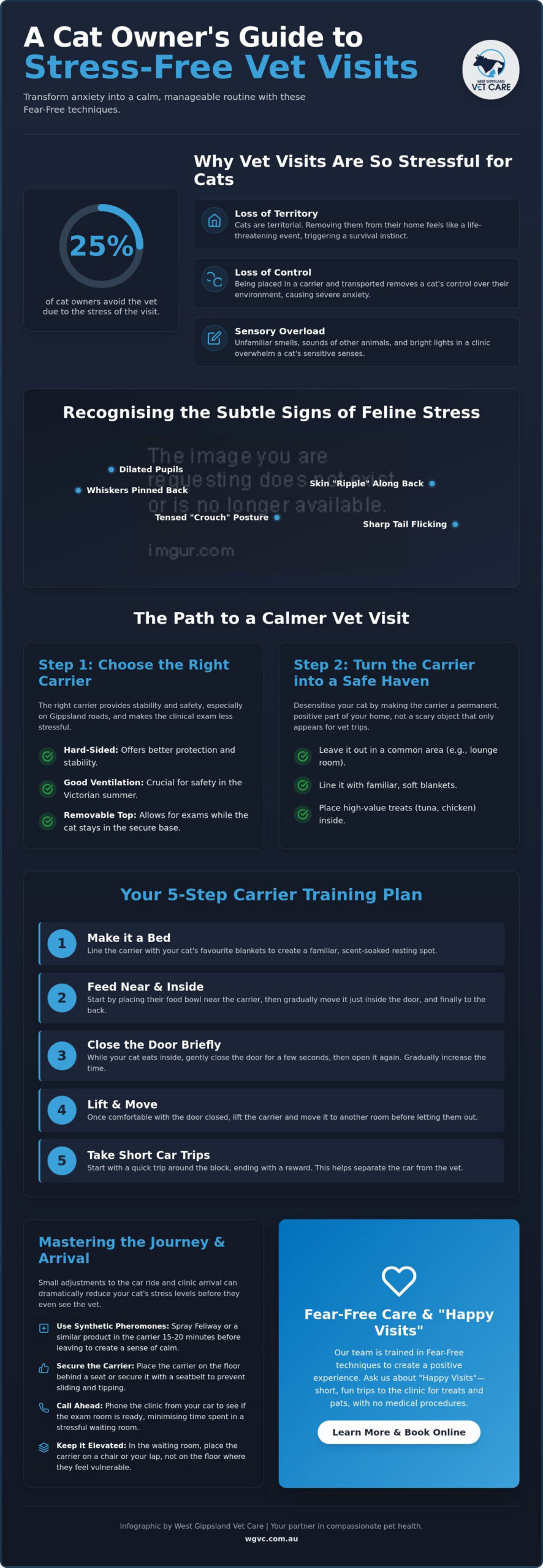
Most of us recognise a growl or a scratch, but cats communicate their discomfort much earlier through quiet body language. Watch their whiskers. If they’re pinned back tight against the cheeks, your cat is feeling highly defensive. You might also notice “the ripple,” which is a subtle twitching of the skin along the back, often paired with a sharp, rhythmic flick of the tail. These are early warning signs that your cat’s stress levels are climbing. Dilated pupils that look like large black saucers and a tensed “crouch” posture, where the cat looks ready to spring, are clear indicators that they’re no longer in a relaxed “loaf” state.
The “Stranger Danger” of the clinical environment
Scent is a cat’s primary way of navigating safety. In a clinic, the absence of their own familiar pheromones makes them feel exposed. Cats often experience “one-trial learning,” meaning a single negative experience can leave a lasting emotional scar. This is why the waiting room is frequently the most taxing part of the entire journey. Being at eye level with a curious dog or hearing the rumble of a busy reception area can peak their anxiety before the vet even enters the room. By understanding these triggers, we can begin to adjust our approach and make preparing an anxious cat for a vet visit a much more gentle process for everyone involved.
Turning the carrier into a safe haven
For many cats, the sight of a carrier is the ultimate red flag. It is the signal that their predictable world is about to be turned upside down. However, the secret to preparing an anxious cat for a vet visit often lies in how we present this “box” long before the appointment day arrives. Instead of hiding the carrier in the garage and dragging it out only when needed, try making it a permanent part of your home’s landscape. Carrier desensitisation is a gradual process of building trust by transforming a scary object into a familiar, safe retreat.
We recommend choosing a carrier with both top and front openings. This gives you much more flexibility. Instead of forcing a reluctant cat through a small front door, you can gently lower them in from above, which feels far less confrontational. Place the carrier in a high-traffic, “happy” area of your home, such as the lounge room or near a sunny window. If it is just another piece of furniture where they occasionally find high-value rewards like tuna or roast chicken, the “scary box” suddenly becomes a rewarding destination. Over time, your cat may even choose to nap there voluntarily.
Choosing the right carrier for Australian conditions
When selecting a carrier for Gippsland roads, stability is paramount. Hard-sided carriers generally offer better protection and don’t collapse or tip as easily if the car takes a sharp turn. In the peak of a Victorian summer, ventilation is a safety requirement rather than just a comfort. Look for models with mesh or vents on multiple sides to ensure plenty of airflow. A removable top is perhaps the most helpful feature for the clinic. If your cat is particularly nervous, our team can often perform Fear-Free veterinary care exams while they remain nestled in the bottom half of their carrier, which helps them feel much more secure.
A 5-step carrier training plan
Building confidence takes patience, so it’s best to start this process well before your next scheduled visit. Follow these steps to help your cat feel at home:
- Step 1: Making it a bed. Line the carrier with familiar, scent-heavy blankets that your cat already loves to sleep on.
- Step 2: Feeding near and inside. Place your cat’s food bowl near the carrier. Once they’re comfortable, move the bowl just inside the door, and eventually to the very back.
- Step 3: Closing the door. While your cat is happily eating inside, close the door for just five seconds. Open it before they finish their meal and offer a treat.
- Step 4: Lifting and carrying. Gently lift the carrier and walk a few steps around the house. Keep your movements steady and avoid bumping into furniture.
- Step 5: The “stationary” car trip. Place the carrier in the car, sit with your cat for a few minutes with the engine off, then bring them back inside for a reward.
Mastering the car journey through West Gippsland
Once you have successfully encouraged your cat into their carrier, the next challenge is the drive itself. For many families in West Gippsland, this might involve navigating winding regional roads or dealing with the intense summer heat. The car journey is often where the most significant stress occurs, so preparing an anxious cat for a vet visit must include a plan for a stable, quiet, and cool environment. By focusing on their comfort during the transit, you can arrive at the clinic with a pet that is much more settled and ready for their check-up.
To give your cat the smoothest ride possible, place the carrier on the floor behind the front passenger seat. This is generally the most stable spot in the vehicle, as it minimises the tilting and swaying that can lead to motion sickness. If the floor isn’t an option, buckle the carrier securely into the back seat using the seatbelt. Never place the carrier on the front seat where an airbag could cause serious injury, or in the boot where airflow is restricted. Before you even bring your cat to the car, ensure the cabin is pre-cooled. During a Gippsland heatwave, a car’s interior can reach dangerous levels in minutes. Turn on the air conditioning and let it run until the temperature is comfortable.
Safe travel on regional roads
If you’re coming from outlying areas like Neerim South or Willow Grove, the longer drive time means vibration and cornering can take a toll on your cat’s balance. Cats can easily become nauseous from the constant movement of a long commute. It’s vital that you never let a cat loose in the car, regardless of how calm they seem at home. A loose cat can quickly become a projectile in a sudden stop or crawl under the brake pedals, creating a dangerous situation for everyone. For these longer trips, covering the carrier with a light towel provides a visual barrier that helps them feel tucked away in a safe, private burrow.
Sensory calming techniques
To enhance that sense of safety, spray the covering towel with synthetic feline pheromones about 15 minutes before you leave. These scents mimic the natural “happy markers” cats use to identify safe spaces, providing a silent message of security. You can also try “scent-swapping” by placing a worn t-shirt or a piece of your clothing inside the carrier. Your familiar scent acts as a powerful anchor in an unfamiliar environment. Throughout the drive, keep your own voice low and steady. Talking gently to your cat isn’t just for them; it’s a simple way to help you stay calm and focused as you head towards the clinic.
What to do once you arrive at the clinic
The moment you pull into the clinic car park, your cat’s “stranger danger” radar is likely at full alert. Even with the best efforts at home, the transition from the car to the clinic can be a tipping point for their stress levels. Success in preparing an anxious cat for a vet visit often comes down to these final few metres. By taking a proactive approach to the waiting room and the initial moments of the consultation, you can prevent your cat’s anxiety from peaking before the exam even begins.
We always suggest giving our reception team a quick ring from your mobile once you arrive. We can let you know if the waiting room is currently clear or if a consultation room is ready for you to enter straight away. If the reception area is bustling with other pets, staying in the car with the aircon running is often the kindest choice. This keeps your cat in a familiar, temperature-controlled environment for just a few more minutes, away from the sounds and smells of other animals. When you do enter, remember to keep the carrier elevated. Cats feel much more secure when they are high up and can survey their surroundings, so place the carrier on a chair or a sturdy table rather than on the floor where they might feel cornered by a passing dog.
The “Cat-First” waiting strategy
If you must wait in the reception area, try to find a quiet corner and position the carrier so the door faces a wall or your own chair. Use a towel to create a visual barrier, which helps your cat feel like they are in a private burrow. It might seem counterintuitive, but avoiding direct eye contact with your cat in the clinic can actually be helpful. In feline language, a direct, prolonged stare is often perceived as a challenge or a threat. Instead, offer soft blinks and speak in a low, reassuring hum to signal that everything is under control.
Partnering with your vet during the exam
Once you are in the consultation room, place the carrier on the table and open the door, but don’t feel the need to pull your cat out. Allow them to walk out in their own time while we chat about their health history. We find that “less is more” when it comes to physical restraint. Many cats are much more relaxed if they are allowed to stay in the bottom half of their carrier or nestled in a familiar blanket during the exam. We are proud to offer Fear-Free veterinary care, which is a collaborative approach where we prioritise your pet’s emotional wellbeing just as much as their physical health. If you have noticed specific triggers at home, please share them with us so we can tailor our approach to suit your cat’s unique personality. To see how this gentle approach can make a difference for your feline friend, reach out to us to book your next consultation.
Fear-Free care and long-term anxiety management
Managing feline stress isn’t just about making the day easier; it’s about providing better medicine. When we talk about preparing an anxious cat for a vet visit, we’re looking at the long-term emotional health of your pet. The Fear-Free initiative is a professional commitment to reducing fear, anxiety, and stress in our patients. One of the most effective ways to build this bond is through “Happy Visits.” These are short trips to the clinic where nothing scary happens. Your cat stays in their carrier or explores the room while receiving high-value treats and gentle pats. Over time, these positive repetitions help rewrite old, fearful memories.
A calm cat also allows us to get much more accurate diagnostic results. Stress can cause a significant spike in heart rate and blood pressure, which can sometimes mask or mimic underlying health issues. By ensuring your cat is relaxed, we can be confident that the numbers we see on our monitors reflect their true physical state. This partnership between you and our team ensures that every check-up is as thorough and gentle as possible.
Calming supplements vs. medications
For some cats, natural supplements like Zylkene can provide a gentle buffer against mild stress. These work best when started a few days before an appointment. However, when a cat is severely distressed, a pre-visit pharmaceutical (PVP) prescribed by your vet is often the most compassionate choice. This isn’t about “drugging” your pet; it’s about allowing them to remain in a peaceful state so we can perform essential checks. For example, orthopaedic vet Gippsland visits often require very still patients for clear diagnostic imaging. A relaxed cat ensures we get the most accurate results without the need for repeated attempts.
Settling back in at home
The journey doesn’t end when you pull back into the driveway. Most cats need a “decompression period” to process the day’s events. Place the carrier in a quiet room and open the door, letting your cat choose when to come out in their own time. In multi-cat households, be mindful of “non-recognition aggression.” The cat returning from the clinic often carries unfamiliar smells, which can cause other cats at home to treat them like a stranger. Rubbing the returning cat with a familiar blanket from the lounge room can help re-establish the group scent and keep the peace. If your cat hasn’t returned to their usual self within 24 hours, don’t hesitate to reach out to us for a chat. We are here to support you in every step of preparing an anxious cat for a vet visit, ensuring your companion feels safe and loved.
Creating a lifetime of calm for your feline friend
Transforming the way your cat views medical care doesn’t happen overnight, but every small step you take makes a world of difference. By turning the carrier into a familiar sanctuary and managing the sensory world of the car ride, you’re laying the groundwork for a much more peaceful experience. We’ve explored how preparing an anxious cat for a vet visit through gradual training and thoughtful clinic arrival strategies can turn a day of dread into a manageable routine.
Our team is here to support you in this journey. With our Fear-Free certified professionals and dedicated cat-friendly handling techniques, we prioritise your pet’s emotional safety at every turn. We also provide 24-hour emergency support for our existing clients, ensuring you have peace of mind whenever you need us. You don’t have to do this alone. Book a Fear-Free consultation for your cat at West Gippsland Vet Care today. Let’s work together to ensure your cat feels secure, heard, and cared for during every single visit.
Frequently Asked Questions
How long before the vet visit should I start using pheromone sprays?
You should apply synthetic pheromone sprays to the carrier and bedding approximately 15 minutes before your cat enters. This short window allows the alcohol base in the spray to evaporate, leaving behind the calming scent without it being overwhelming for your cat’s sensitive nose. If you are using a plug-in diffuser at home, it is best to have it running in the “safe room” for at least 24 hours before you begin the process of preparing an anxious cat for a vet visit.
Is it okay to give my cat a natural rescue remedy before the car ride?
While many natural calming aids are safe, you should always have a quick chat with our team before introducing any new supplement. Some cats respond beautifully to natural milk proteins like Zylkene, but these often work best when started two or three days before the appointment. We want to ensure that any remedy you choose is appropriate for your cat’s specific health history and won’t interfere with any other care they might need during their visit.
What should I do if my cat vomits or soils the carrier during the drive?
Try to remain as calm as possible and pull over safely to provide a quick clean-up if it is practical to do so. It is a great idea to keep a “travel kit” in the car containing spare towels, unscented wipes, and a plastic bag for soiled laundry. Motion sickness and stress-induced accidents are physiological responses, so avoid scolding your cat. Simply swap the bedding and continue the journey with a soothing voice to help lower their heart rate.
Why does my other cat hiss at the one who just came back from the vet?
This behaviour is known as non-recognition aggression and happens because the returning cat smells like the veterinary clinic rather than like “family.” Your resident cat doesn’t recognise the unfamiliar scent and perceives their housemate as a potential intruder. To manage this, keep the cats in separate rooms for a few hours and rub the returning cat with a familiar blanket from the lounge room to help re-establish their communal scent before they interact.
Can I stay in the room with my cat during the entire examination?
We absolutely encourage you to stay with your feline friend throughout their check-up. Your presence provides a familiar scent and a reassuring voice that can significantly lower your cat’s stress levels. We view ourselves as partners in your pet’s care, and we find that cats are often much braver when their favourite human is right there by their side. We will work together to ensure the exam is performed in a way that feels safe for everyone.
What if my cat is too aggressive to even get into the carrier?
If the struggle becomes a safety risk for either you or your cat, it is often best to stop and reschedule the appointment. Forcing a terrified cat into a box can cause long-term trauma and damage the trust you have built. When preparing an anxious cat for a vet visit feels like an impossible battle, we can discuss using mild pre-visit sedatives. These medications help take the “edge” off their fear, making it much easier to start your carrier training from a place of calm.
Does West Gippsland Vet Care offer specific cat-only appointment times?
We do our best to schedule feline consultations during quieter periods of the day to minimise the chance of your cat meeting a barking dog in the reception area. While we are a busy mixed-species practice, we prioritise finding a peaceful slot for our more sensitive patients. When you call to book, please let our reception team know that your cat is particularly nervous so we can find the most suitable time for a gentle, low-stress entry.
How do I know if my cat needs medication for vet anxiety instead of just training?
Medication is usually recommended when a cat’s fear is so great that they experience a complete physical shutdown or extreme distress that training alone cannot overcome. If your cat is panting, trembling, or becoming defensive despite your best efforts at home, pharmaceuticals can provide a compassionate “safety net.” This allows them to receive vital medical care without the experience being a source of terror. We can discuss these options during a behaviour consultation to find the right balance for your pet.