
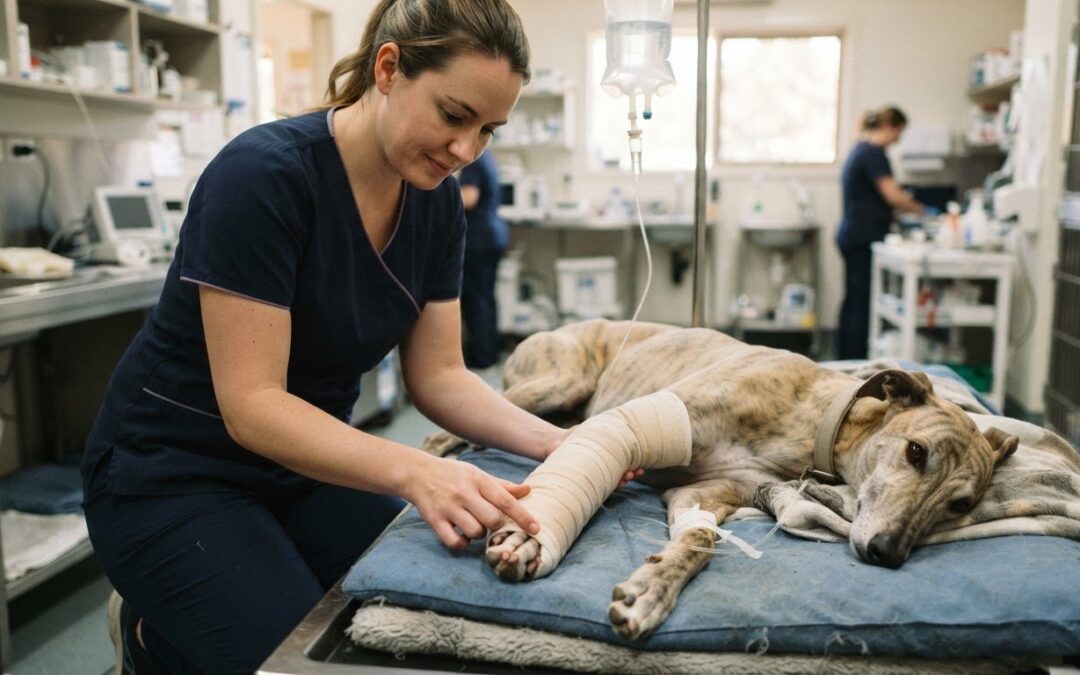
A pet’s condition can change quickly after an injury. A pet trauma care centre in West Gippsland can assess what has happened, provide emergency treatment and monitor your companion while managing pain. Seizures or collapse may require urgent veterinary care.
It’s understandable to feel worried when your pet is hurt or suddenly unwell, especially if you’re unsure how urgent the situation is. This guide explains signs that need prompt veterinary attention and what emergency treatment, hospital monitoring and pain management may involve. You’ll also learn how a veterinary team can support you and your pet through the next steps.
Key Takeaways
- Share what happened and any changes you’ve noticed so the veterinary team can assess your pet’s needs.
- Hospital monitoring helps the team follow your pet’s condition and adjust care as needed.
- Know which sudden changes may call for urgent veterinary attention, and act promptly when they occur.
- Pain relief is guided by your pet’s injury, comfort and response to treatment.
Emergency care for sudden illness or injury
After an accident or sudden change in health, prompt veterinary assessment helps identify the care your pet needs. A pet trauma care centre in West Gippsland can assess injuries, plan treatment and determine whether surgery is needed.
Emergency surgery for trauma
Emergency surgery may be considered when an injury needs an operation as part of treatment. The veterinary team assesses the affected area, your pet’s overall condition and examination or diagnostic findings. These details help determine whether surgery is appropriate and what needs attention first. If an accident has caused a serious injury, describe what happened and when.
Arrival and emergency appointments
Call ahead when possible and explain that your pet has had an accident or sudden illness. Give your pet’s species, describe the incident and visible injuries, and mention any changes you’ve noticed. This helps the team prepare for your arrival and advise on transport. West Gippsland Vet Care has clinics in Warragul and Drouin, serving pet owners in nearby communities including Bunyip, Yarragon, Trafalgar, Willow Grove, Hill End and Neerim South.
24-Hour emergency call service
Existing clients can access a 24-hour emergency call service for urgent veterinary concerns. Explain your pet’s symptoms, injury and location, then follow the advice given about the next step. Payment arrangements, including upfront payment or payment plans, are set by each clinic; ask about them when calling. Animal ambulance or pet transport availability varies, so call for guidance on getting your injured companion to care safely.
Recognising pet emergencies
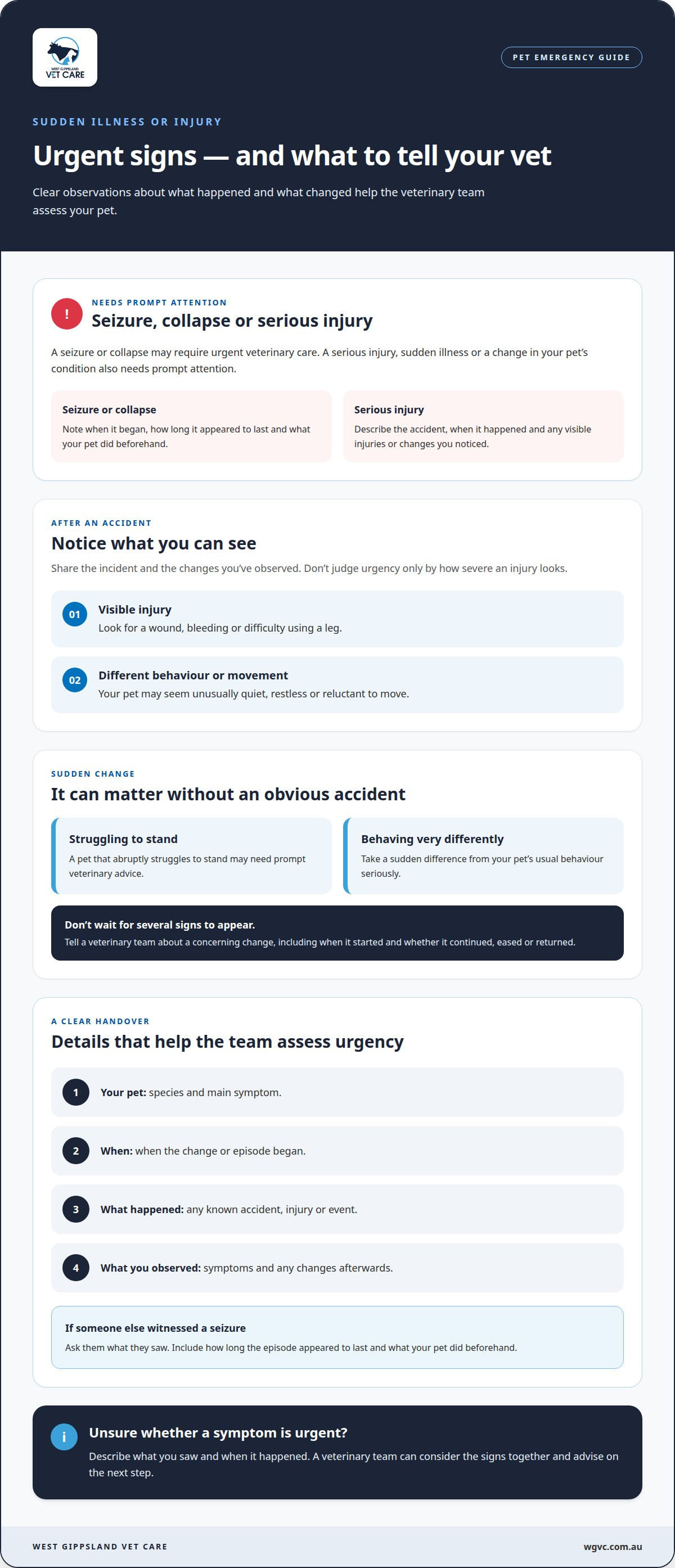
A seizure or collapse may require urgent veterinary care. Sudden illness or an accident also needs prompt attention if your pet’s condition changes or an injury appears serious. Share what happened, when it happened and any symptoms you’ve observed. These details help the veterinary team assess urgency. If you’re looking for a pet trauma care centre in West Gippsland, call ahead and describe your pet’s condition for transport advice.
Hospitalisation and monitoring
After an injury or sudden illness, a veterinary team may recommend hospitalisation if your pet needs treatment and observation beyond an initial assessment. The decision depends on your pet’s condition, the care required and how they respond. Hospitalisation and intensive care provide closer attention for pets who need it, with treatment shaped around each patient’s needs.
During a hospital stay, the team can monitor changes that matter to your pet’s recovery. These may include breathing, alertness, comfort, mobility and the affected area, such as a wound or injured limb. The team can also consider whether your pet is eating, drinking or passing urine. Changes in these observations help guide further assessment and treatment decisions.
Monitoring involves more than watching for an obvious setback. Your pet’s response to medication, procedures or rest can help determine whether care should continue, change or move towards discharge. For example, a pet recovering from an injury may need their comfort and movement reassessed before the team recommends the next stage of care. Monitoring depends on the injury and your pet’s condition.
Before hospitalisation, the veterinary team can explain why they recommend a stay, which aspects of your pet’s condition they’ll monitor and what may affect the plan. Tell them about your pet’s usual behaviour, existing health conditions and any medicines already given. These details help build a clearer picture alongside the examination findings. If your pet needs inpatient support, hospitalisation and intensive care can form part of their veterinary treatment.
Urgent signs that may need veterinary care
Some emergencies are clear, while others begin with a sudden change in your pet’s behaviour or movement. A collapse, seizure or serious injury needs prompt attention. If your dog or cat suddenly seems unwell, take the change seriously and contact a veterinary team for advice.
Seizures and collapse are urgent symptoms that may need veterinary care. Note when the episode began, how long it appeared to last and what your pet did beforehand. If someone else witnessed it, ask them to describe what they saw. These details help the veterinary team understand the event and decide what assessment is needed.
After an accident, look for visible injuries such as a wound, bleeding or difficulty using a leg. Your pet may also seem unusually quiet, restless or reluctant to move. Describe the incident and the changes you’ve noticed rather than judging only by how severe an injury looks. The veterinary team can assess your pet and determine the next step.
Sudden changes matter even when there’s no obvious accident. For example, a pet that abruptly struggles to stand or behaves very differently from usual may need prompt veterinary advice. Share when the change started and whether it has continued, eased or returned. Don’t wait for several signs to appear before telling a vet about a concerning change.
Clear observations help the team assess urgency. Explain your pet’s species, main symptom, when it began and any known injury or event. Mention whether your pet has had a seizure or collapsed, even if they seem more settled now. Keep your description factual: what you saw, when it happened and what changed afterwards.
If you’re unsure whether a sudden symptom needs urgent care, call and describe it. A veterinary team can consider the signs together and advise on the next step. Sharing details promptly about a seizure, collapse or accident helps the team prepare for your pet’s assessment.
Pain management
Pain management is part of caring for an injured pet, alongside treating the cause. A veterinary team assesses the injury, your pet’s behaviour and movement, then considers suitable pain relief. A sore leg, tender wound or difficulty settling provides useful context, but every pet responds differently. The aim is to support comfort while treating the underlying problem.
Pets don’t always show discomfort clearly. A dog might avoid putting weight on one leg, while a cat may hide, resist handling or withdraw from familiar interaction. Restlessness, a hunched posture or reluctance to move can also help the team assess comfort. Tell the vet what’s different from your pet’s usual behaviour, including when you first noticed it.
The veterinary team considers the type and location of the injury, examination findings and any treatment already given. These details help them plan pain relief and review your pet’s response. If your companion is hospitalised, changes in comfort and movement can guide ongoing care. Share the name and timing of any medication given before arrival.
After your pet returns home, follow the care instructions provided by the veterinary team. Contact them if you notice a change, such as increased reluctance to move or difficulty settling. Don’t give human pain medicines or change a prescribed plan without veterinary advice. The right approach depends on your pet’s condition and treatment.
Clear communication helps the team understand your pet’s comfort throughout treatment. Describe specific changes, such as avoiding stairs, guarding an injured area or reacting differently to gentle handling. Ask what signs to watch for and how to report changes after discharge. West Gippsland Vet Care provides pain management and arthritis care to support pets’ comfort.
If an injury is affecting your pet’s comfort, contact West Gippsland Vet Care to discuss veterinary care.
West Gippsland Vet Care: Emergency and Trauma Care
West Gippsland Vet Care provides Emergency and Trauma Care for pets that have suffered an injury or suddenly become seriously unwell. The veterinary team assesses your companion and determines the care needed, whether the concern follows an accident or involves a sudden change in health. Share what happened and the signs you’ve noticed to help the team understand the situation.
For existing clients, emergency support is available through a 24-hour emergency service. West Gippsland Vet Care also provides Pet Vaccinations, Desexing Procedures and Microchipping as preventative and routine care for dogs and cats. These services have different purposes from urgent trauma treatment, so describe your pet’s immediate concern when seeking help.
If your pet needs emergency attention, contact West Gippsland Vet Care to discuss the next step.
Take the next step with confidence
When choosing a pet trauma care centre in West Gippsland, look for a veterinary team you can speak with openly when your companion needs help. Clear communication gives you space to explain what matters to your pet and understand the proposed care. Discuss your concerns, ask what the next stage involves and share any changes you notice as your pet recovers.
Keep the conversation focused on your companion’s needs. Talk through the care plan with the veterinary team, including how you’ll stay informed and what to expect after treatment. Feeling heard can help you make decisions with greater clarity during a difficult moment.
If you’d like to discuss care for your pet, contact West Gippsland Vet Care. Your companion deserves thoughtful support, and starting a conversation can help you move forward.
Frequently Asked Questions
What are the opening hours and after-hours emergency arrangements for West Gippsland vets?
West Gippsland Vet Care’s Warragul and Drouin clinics are open Monday to Friday, 8:00 am to 5:30 pm, and Saturday, 8:00 am to 12:00 pm. Existing clients can access a 24-hour emergency service. This supports pet owners across Warragul, Drouin, Bunyip, Yarragon, Trafalgar, Willow Grove, Hill End and Neerim South. After-hours emergency care is for existing clients.
What phone number should I call for urgent pet trauma care in West Gippsland?
Call the Warragul clinic on (03) 5623 4822 or the Drouin clinic on (03) 5625 1707. Tell the team your location, your pet’s species and the urgent concern, such as an accident or sudden illness. Existing clients seeking after-hours emergency support should use the clinic’s emergency arrangements. Keeping the relevant clinic number saved can make it easier to reach the team promptly.
What pet trauma services are available, such as surgery, imaging and intensive care?
West Gippsland Vet Care offers orthopaedic and soft-tissue surgery, diagnostic imaging, hospitalisation and intensive care. Imaging options include digital X-ray, dental X-ray, ultrasound and endoscopy. These services help the veterinary team investigate injuries and plan treatment. The appropriate approach depends on the examination and findings for each pet. The team explains which assessment or treatment is relevant to your companion’s situation.
When should a pet injury be treated as an emergency rather than by a regular vet?
Seek emergency advice if an injury is severe, your pet’s condition is worsening, or they suddenly cannot stand or move normally. An accident followed by collapse or a seizure also needs urgent veterinary attention. Even a minor-looking injury may need assessment if your pet’s behaviour or movement changes. Explain what happened and when so the team can advise on the urgency of care.
Which West Gippsland clinics treat dogs, cats, and other animals after accidents?
Emergency-care clinics in Warragul and Drouin can assess injured dogs and cats after an accident; the nearest option depends on your location in West Gippsland.
How can I transport an injured pet safely to an emergency vet?
Call ahead, describe your pet’s species, injury and symptoms, and follow the clinic’s transport advice. Animal ambulance and pet transport availability varies.