
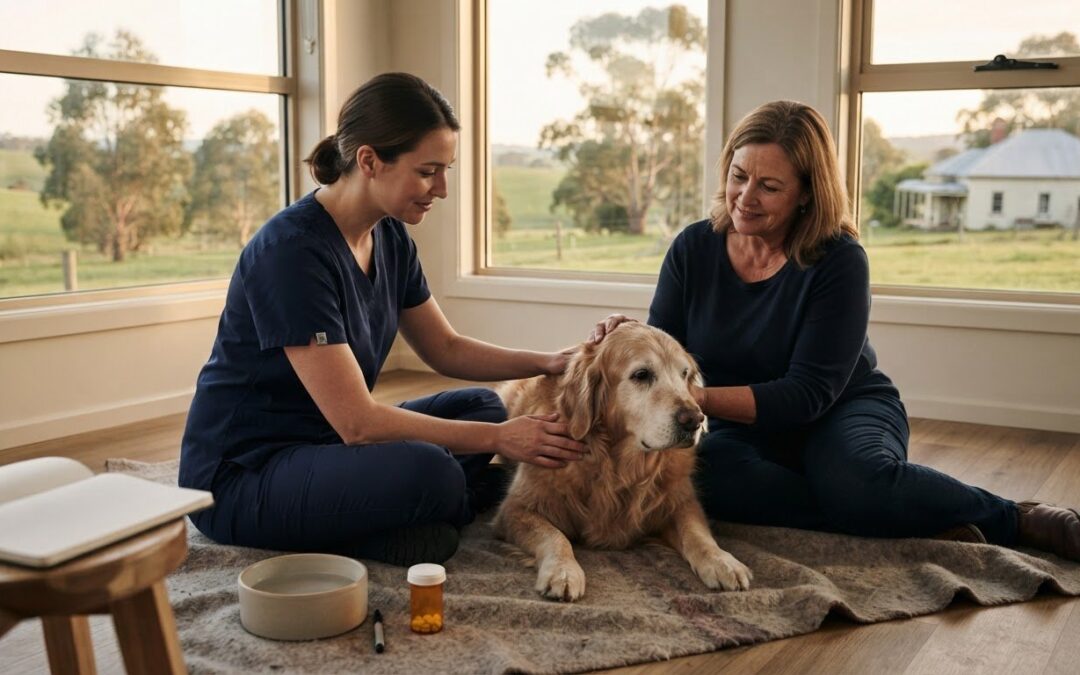
What if caring for a pet with a terminal illness isn’t about choosing between treatment and comfort, but adapting the plan as their needs change? Pet pain management in West Gippsland starts with a veterinary assessment to identify signs of pain or distress and discuss ways to support your pet’s comfort in light of their individual circumstances.
It’s understandable to wonder whether a quieter nature, changes in appetite or difficulty settling are part of the illness, signs of discomfort, or both. You may also feel unsure whether to continue treatment or focus more on day-to-day wellbeing. These are difficult decisions, and you don’t have to interpret every change alone.
This article explains how pain management and comfort-focused care can form part of an evolving plan, what changes at home are useful to share with your vet, and when to seek an assessment. It also offers practical points to discuss with your family vet, so decisions can be thoughtful, manageable and centred on your pet’s welfare.
Key Takeaways
- Comfort-focused care can prioritise your pet’s quality of life as illness changes, with support tailored to their needs.
- Ask your vet to assess pain alongside changes in movement, appetite, rest and interaction.
- Keep a simple daily record of eating, drinking, toileting, movement and interest in familiar activities to help spot patterns.
- Bring medication details, previous test results and questions to help shape a practical comfort-care plan with your vet.
- Pet pain management West Gippsland can involve ongoing veterinary reassessment as your pet’s comfort and needs change.
What does comfort-focused pet care mean when illness is terminal?
When a much-loved pet has a terminal illness, changes in their comfort, routine or personality can bring difficult questions. Palliative care, sometimes called hospice care, is veterinary support focused on comfort and quality of life. If you’re considering pet pain management in West Gippsland, your vet can assess your pet and discuss support suited to their condition and needs.
Comfort-focused care isn’t the same as doing nothing or stopping veterinary attention. It can involve ongoing assessment, pain management and practical support, with the plan reviewed as your pet’s needs change. Your vet can consider what you’ve noticed at home alongside an examination and, where appropriate, diagnostic tests. Care should reflect your pet’s circumstances rather than rely on one treatment or decision.
How is palliative care different from curative treatment?
Curative treatment aims to resolve an illness or address its cause. Palliative care places greater emphasis on easing discomfort and supporting quality of life. The goals depend on the diagnosis, likely progression and your pet’s individual circumstances. These approaches aren’t always separate: comfort measures may accompany treatment when your vet considers that clinically appropriate. There isn’t one plan that suits every animal or family.
Comfort can involve more than medication. Your vet may discuss changes to your pet’s routine or surroundings, or whether supportive approaches could suit their condition. For background on one area of supportive care, canine physical therapy describes techniques used with dogs. Talk with your vet about whether an approach is suitable for your pet.
Does choosing comfort care mean giving up?
No. Focusing on comfort is an active way to care for your pet. It means noticing changes, seeking veterinary advice and making thoughtful adjustments as their needs evolve. You and your vet can discuss what matters most for your pet and revisit those goals over time. It’s a shared conversation, not a judgement about how much you love your animal or a decision you have to make all at once.
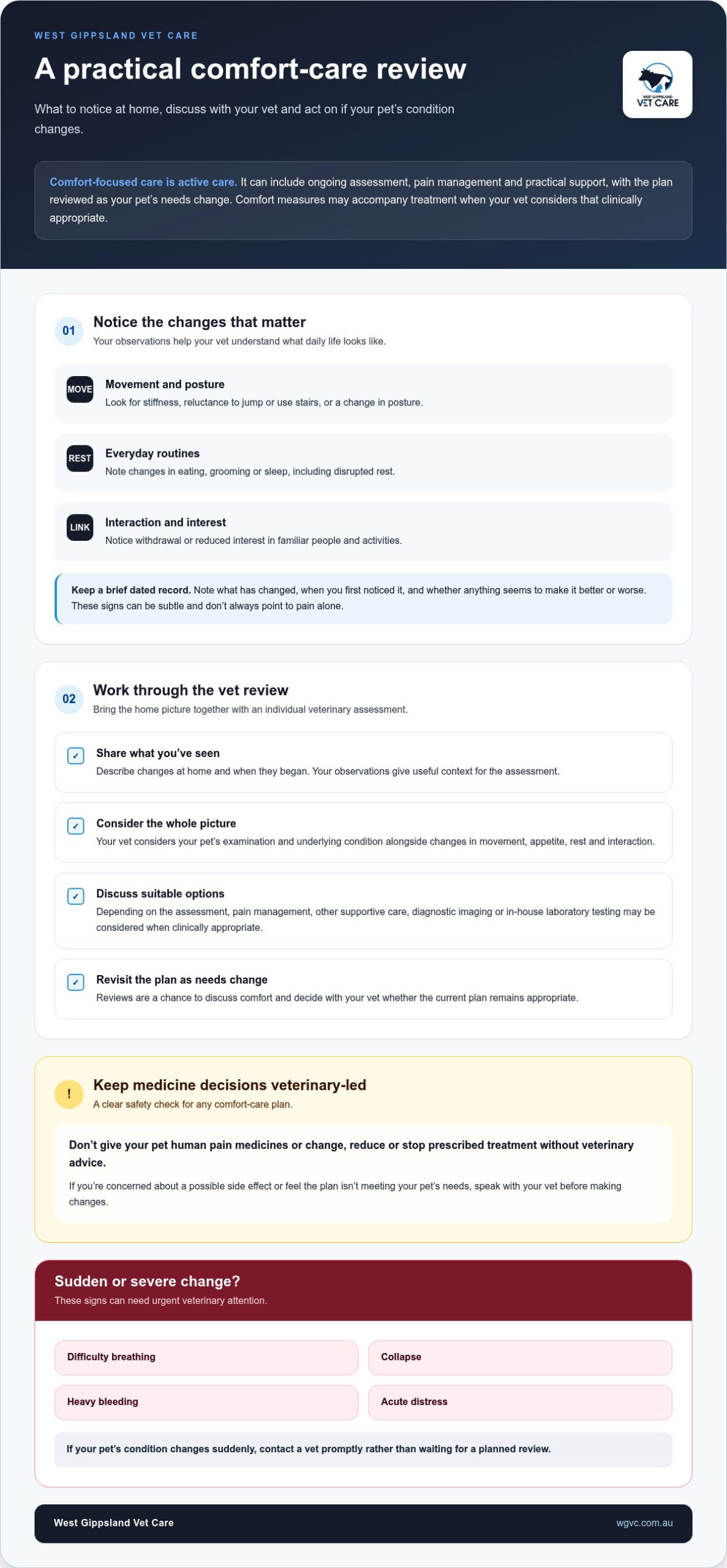
Planned comfort support is different from a sudden or severe change. Difficulty breathing, collapse, heavy bleeding or acute distress can need urgent veterinary attention. If your pet’s condition changes suddenly, contact a vet promptly rather than waiting for a planned review. For ongoing care, keep sharing what you observe and what feels manageable at home with your veterinary team.
How can veterinary pain management support a pet with terminal illness?
Pain can affect more than how a pet moves. It may also influence appetite, rest, grooming and interest in familiar people or activities. During an assessment, your vet considers these changes alongside your pet’s examination and underlying condition. Your observations at home are valuable: share what has changed, when you first noticed it, and whether anything seems to make it better or worse. This gives your vet useful context for discussing pain management and your pet’s care.
What might a vet assess during a pain review?
Your vet may ask about stiffness, reluctance to jump or use stairs, changes in posture, reduced grooming, disrupted sleep, eating less or withdrawing from interaction. These signs can be subtle and don’t always point to pain alone. The illness itself or another change in health may also be involved, so an examination helps put the full picture together. The AAHA Pain Management Guidelines for Dogs and Cats provide further background on assessing and managing pain in pets.
A care plan is shaped around the individual animal, their condition and the goals you discuss with your vet. Depending on the assessment, your vet may consider pain management alongside other supportive care. Diagnostic imaging or in-house laboratory testing may help investigate a concern when clinically appropriate. Whether these are needed depends on your pet’s circumstances. Ask your vet to explain suitable options and how they’ll review your pet’s comfort.
Don’t give your pet human pain medicines or change, reduce or stop prescribed treatment without veterinary advice. Medicines intended for people can be unsafe for animals, and treatment decisions need to account for your pet’s health and current care. If you’re concerned about a possible side effect or feel the plan isn’t meeting your pet’s needs, speak with your vet before making any changes.
Why does comfort care need regular reassessment?
An illness and a pet’s response to care can change over time. Reviews give you and your vet a chance to discuss comfort, movement, appetite, rest and interaction, then consider whether the plan remains appropriate. West Gippsland Vet Care provides pain management and arthritis care, supported by diagnostic imaging and in-house laboratory services as part of an individual assessment. Notes from home can make each review more specific.
Sharing your observations with the veterinary team can help guide a conversation about your pet’s changing needs. Discuss your pet’s pain management needs with West Gippsland Vet Care.
How can you assess your pet’s comfort and quality of life at home?
You know your pet’s usual rhythms best. A brief daily record can help you notice gradual changes that are easy to miss when each day feels much like the last. It isn’t a diagnosis or a test you need to score perfectly. Think of it as a practical way to describe what life looks like at home and support conversations about your pet’s care.
Which everyday changes are useful to record?
Choose a few simple details and note them with the date. Record whether your pet ate and drank as usual, rested comfortably, moved around, toileted and showed interest in familiar people or routines. For example, note if they no longer greet you at the door or need more encouragement to get up. Include good moments too, such as enjoying a favourite spot or gentle interaction.
Brief notes are enough. If a change is safe to capture, a short video of your pet walking or getting settled may help your vet understand what you’ve noticed. Don’t encourage movement or handle your pet in a way that could cause discomfort just to record it. Resources from the International Veterinary Academy of Pain Management can also offer background on pain management in animals.
Look for patterns, not a perfect day
One unusually good afternoon or difficult morning may not show the overall picture. Over time, your notes can help reveal whether changes are becoming more frequent or everyday routines are getting harder. These observations complement a veterinary assessment, but they can’t replace it. Share what you’ve recorded with your vet, including when changes began and what seems to ease or worsen them. This can help guide reassessment and pet pain management in West Gippsland.
When should a change prompt urgent veterinary advice?
Some gradual changes may be suitable to discuss at a planned review. Sudden severe distress or rapid deterioration is different. Contact a veterinary service promptly if your pet has difficulty breathing, collapses, appears to be in worsening pain or can’t settle. These signs can have different causes, so avoid trying to diagnose them at home. If you’re concerned that your pet is acutely unwell, seek veterinary advice rather than waiting to add it to your daily record.
How do you make a practical comfort-care plan with your vet?
A clear plan can make difficult decisions feel more manageable. You don’t need to arrive with all the answers. Start by sharing what you’ve noticed at home, then talk through what matters most for your pet’s comfort and daily life. Your vet can explain suitable options, including their potential benefits, limitations and any monitoring they may involve.
A plan is a conversation, not a fixed set of instructions. It can include what to observe, when to check in and how you’ll review the approach if your pet’s needs change. Keep following prescribed treatment unless your vet advises otherwise.
What should you prepare before a veterinary appointment?
A few notes can help you make the most of your discussion. Consider bringing:
- A brief record of changes at home, including when each one began and whether it has become more frequent.
- Current medication names and instructions, along with relevant records or test results from previous assessments.
- Questions about comfort, daily care, signs that need prompt attention and when to arrange a review.
You can also note what your pet still enjoys and what has become harder. These details help your vet understand how the illness is affecting everyday life, not just what happens during an appointment.
What questions can help shape a shared plan?
Ask which changes should prompt veterinary advice and which you can record for a planned review. You might also ask what the next steps could be if your pet’s comfort or symptoms change, what monitoring is useful, and when the team would like to reassess. If you’re unsure what to do between appointments, ask how to reach veterinary support and what to do if your pet becomes acutely unwell.
For families considering pet pain management in West Gippsland, home observations can help the veterinary team tailor an individual approach. West Gippsland Vet Care supports pet owners in Warragul, Drouin, Bunyip, Yarragon, Trafalgar, Willow Grove, Hill End and Neerim South with pain management and veterinary assessment. Book a conversation about your pet’s comfort care to discuss changing needs with the team.
Where can West Gippsland families turn for ongoing pet comfort care?
Supporting a pet with a serious or terminal illness can bring new questions as their needs change. A local veterinary team can help you make sense of what you’re seeing, assess your pet and discuss an individual approach to comfort. West Gippsland Vet Care supports families in Warragul, Drouin, Bunyip, Yarragon, Trafalgar, Willow Grove, Hill End and Neerim South as part of that ongoing conversation.
What can local veterinary support involve?
Care starts with understanding your pet’s condition and how it affects their everyday life. The veterinary team can consider pain management and arthritis care alongside an examination and the changes you’ve observed at home. If the assessment indicates they may be useful, diagnostic imaging or in-house laboratory services can help investigate your pet’s health. Hospital care may also be considered when it’s relevant to their clinical needs.
There isn’t one plan that suits every pet. Your vet can discuss suitable options and review them as your pet’s comfort or condition changes, without assuming a particular treatment or outcome. West Gippsland Vet Care also practises fear-free care in clinic settings, with a thoughtful approach to helping pets feel more at ease during their visit.
What are the next steps for pet owners in West Gippsland?
If changes in your pet’s comfort or daily routine are concerning you, arrange a veterinary discussion. Bringing a few notes can help the team understand what’s happening between visits. You might include:
- Changes in movement, appetite, rest, toileting or interest in familiar activities.
- When you first noticed each change and whether it is becoming more frequent.
- Your questions about comfort, care at home and when to seek further advice.
These observations help guide the conversation, while an examination allows your vet to assess your pet directly. Together, you can discuss what matters most for their welfare and when it may be helpful to review the plan. You don’t need to have every answer ready before you begin.
Take the next step towards your pet’s comfort
Supporting a pet with a terminal illness is an ongoing process, shaped by their changing needs and what matters to your family. Keep track of changes at home and share them with your vet; these observations can help guide assessment and future conversations. Comfort-focused care can include veterinary pain management, with options reviewed as your pet’s condition changes.
For families considering pet pain management West Gippsland, West Gippsland Vet Care provides pain management and arthritis care, diagnostic capabilities and fear-free care as part of its companion animal services. The veterinary team can help you consider an individual plan without pressure to make every decision at once.
Talk with the West Gippsland Vet Care team about your pet’s comfort. A thoughtful conversation can help you decide what to do next, one step at a time.
Frequently Asked Questions
What is hospice care for pets with a terminal illness?
Hospice care, also called palliative care, is veterinary support focused on comfort and quality of life when an illness can’t be cured. It isn’t the same as stopping care: your vet can continue to assess your pet, discuss symptoms and review suitable ways to support them. The plan is individual and can change as needs change. You and your vet can talk through what feels appropriate for your pet and family.
How can I tell if my pet with a terminal illness is in pain?
Changes in behaviour or routine can be clues, but they don’t confirm pain on their own. Watch for stiffness, reluctance to move, altered posture, reduced grooming, disrupted sleep, changes in appetite or less interest in people and favourite activities. Signs can be subtle and have different causes. Keep brief notes about what you notice and when, then share them with your vet for an assessment. Raise a concern even if you haven’t noticed a dramatic sign.
Can a pet with terminal cancer still have a good quality of life?
Some pets with terminal cancer may still enjoy meaningful, comfortable moments, but quality of life is individual and can change as illness progresses. Notice whether your pet can rest, eat, move and enjoy familiar routines, and discuss these observations with your vet. Together, you can review comfort and care goals without assuming there’s one right answer for every animal or family. Your vet can help you consider your pet’s needs and what matters most to you.
What happens during a veterinary pain management appointment?
Your vet will discuss your pet’s condition and the changes you’ve noticed, then assess them in light of their health and daily function. They may ask about movement, appetite, sleep and interaction. Bring current medication details, previous test results and any notes or questions. If clinically appropriate, diagnostic imaging or laboratory tests may help with assessment. West Gippsland Vet Care supports pet owners in Warragul, Drouin, Bunyip, Yarragon, Trafalgar, Willow Grove, Hill End and Neerim South.
Can I give my pet human pain relief?
No, don’t give your pet human pain relief unless a vet has specifically advised you to. Medicines intended for people may be unsafe for animals, and the right approach depends on your pet’s individual health and treatment. If your pet seems uncomfortable, contact your vet for guidance rather than using medication from your own cupboard. Don’t change, reduce or stop any prescribed treatment without veterinary advice. Tell the vet about any medicines your pet has already received.
When should I seek urgent veterinary care for a terminally ill pet?
Seek veterinary advice promptly if your pet has difficulty breathing, collapses, appears acutely distressed, has worsening pain or can’t settle. These signs can have different causes, so don’t try to diagnose them at home or wait for a planned review if your pet is suddenly much worse. West Gippsland Vet Care provides 24-hour emergency care for existing clients. If your pet is acutely unwell, contact a veterinary service promptly for advice.