
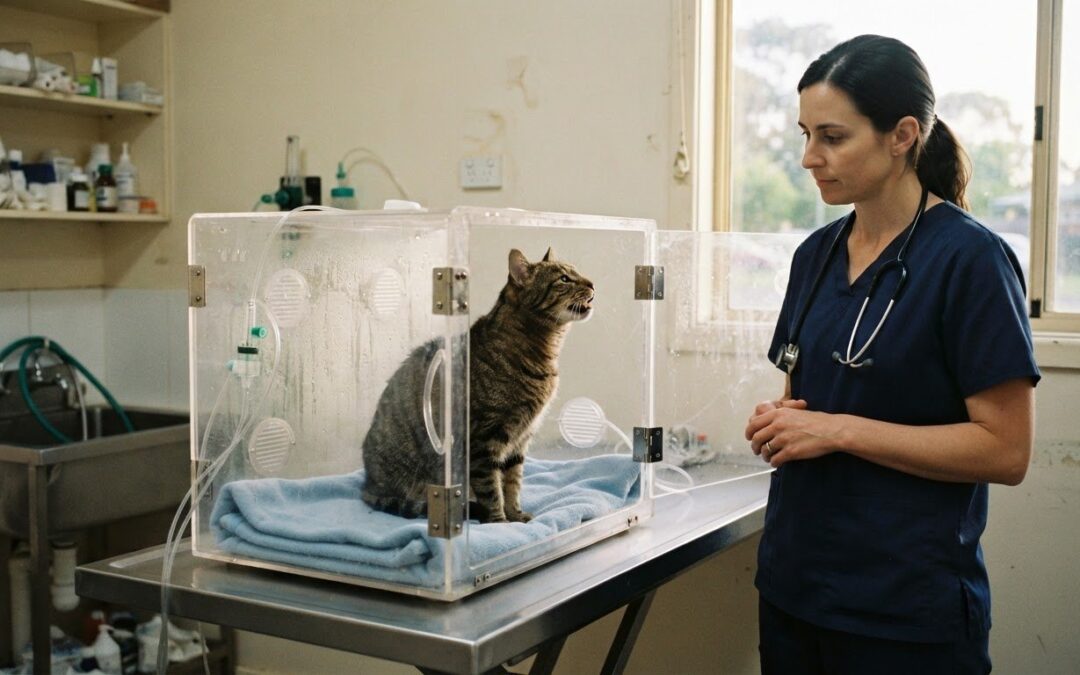
A pet emergency isn’t always obvious, but breathing trouble should never be watched and waited out. What constitutes a pet emergency is a sudden problem where delaying veterinary care could seriously harm your pet, cause unnecessary suffering or threaten their life. Gasping, noisy or laboured breathing, blue or pale gums, severe bleeding, major trauma, collapse, suspected poisoning and intense, ongoing pain all need urgent attention.
It can be hard to judge what’s serious when you’re worried about a much-loved companion. This guide explains which breathing problems and injuries call for immediate veterinary attention, along with warning signs such as seizures, heatstroke, repeated vomiting and difficulty urinating. You’ll also learn what to do while arranging care, so you can focus on keeping your pet calm and safe.
Key Takeaways
- Recognise laboured, noisy or gasping breaths and unusual gum colour as signs that need urgent veterinary attention.
- After trauma, move your pet gently and keep them supported; serious internal injuries may not be visible.
- Repeated vomiting, severe diarrhoea, suspected poisoning or concerning seizures can need prompt veterinary care.
- When symptoms are severe, persistent or rapidly worsening, contact a veterinarian promptly rather than waiting to see if they pass.
1. Breathing difficulties and respiratory distress
Laboured breathing is serious, not a reason to wait for a routine appointment. Watch for gasping, wheezing, noisy breaths, or breathing that looks unusually fast or effortful. Excessive panting at rest can also signal distress, especially if your pet struggles to settle or breathe comfortably. Arrange prompt veterinary assessment for any clear change in breathing.
Check your pet’s gums if you can do so safely. Blue, grey, purple or very pale gums can indicate a serious problem and need immediate veterinary attention. Keep your pet calm and minimise handling, as stress and exertion can make breathing harder. Don’t force food or water, and don’t delay care to see if symptoms pass.
Coughing also warrants veterinary attention. It can be linked to conditions ranging from kennel cough to heart disease, pneumonia or bleeding disorders. If coughing comes with breathing difficulty, weakness or collapse, treat it as urgent. Vomiting alongside laboured breathing is also concerning, particularly if your pet seems distressed or cannot settle.
Breathing trouble with a suddenly swollen, firm abdomen needs immediate care. A distended, hard belly can indicate bloat, also known as GDV, a serious condition requiring urgent veterinary treatment. Don’t press the abdomen or wait for a routine appointment. Sudden swelling with restlessness, retching or weakness makes prompt action especially important.
Seizures and trauma can also affect breathing or signal a wider emergency. Keep a seizing pet away from hazards, keep your hands clear of its mouth, and contact a veterinarian as soon as the seizure ends. After a collision or fall, internal injuries may be hidden, so breathing changes warrant urgent assessment. If your pet suddenly stops breathing, begin CPR and seek emergency veterinary care immediately. West Gippsland Vet Care provides 24-hour emergency and trauma care for existing clients.
2. Trauma, major wounds and hidden internal injuries
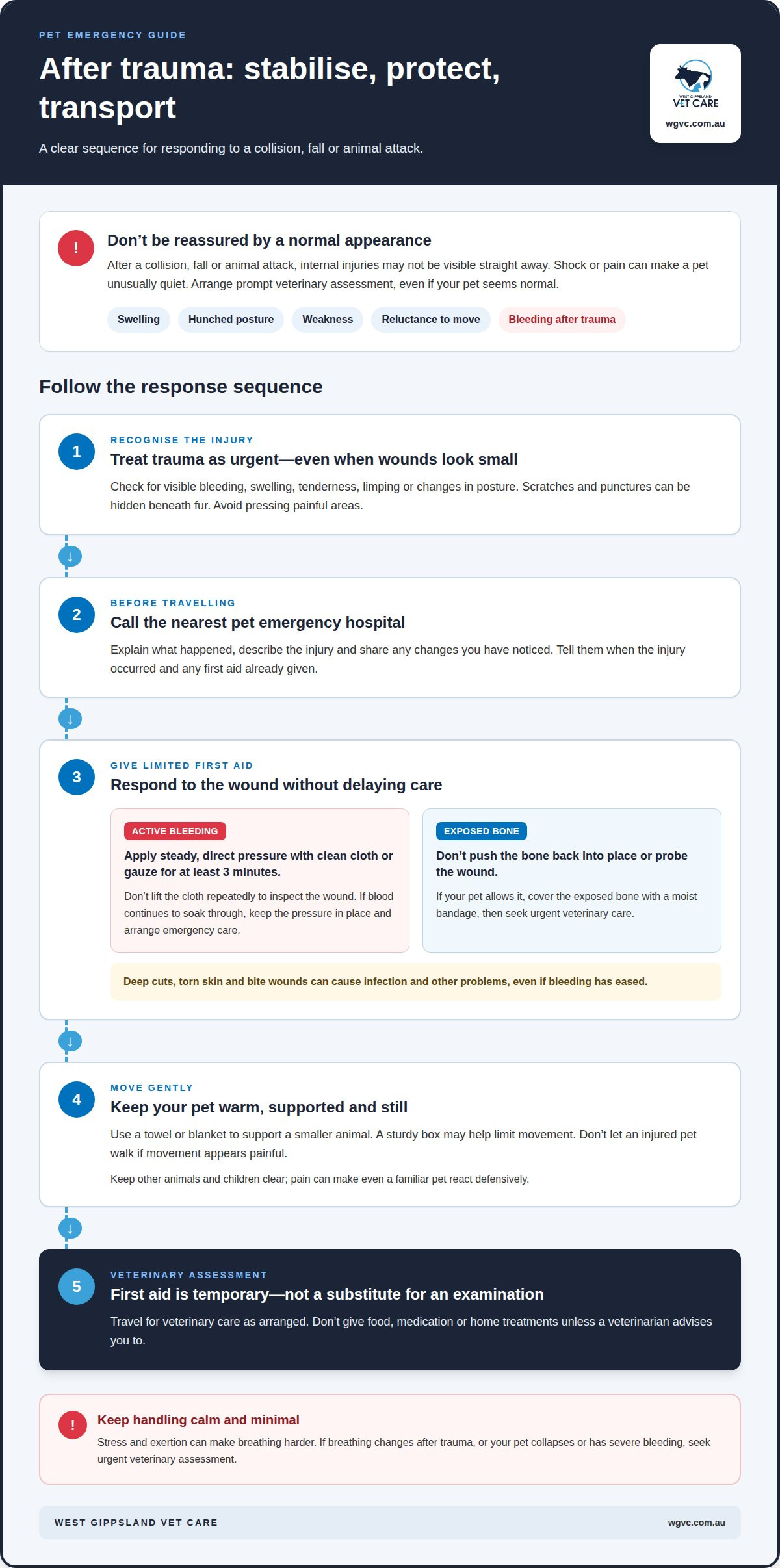
A pet involved in a car collision, fall or animal attack needs prompt veterinary assessment, even if they seem normal afterwards. Internal injuries may not be visible straight away, and shock or pain can make an animal unusually quiet. Swelling, a hunched posture, weakness or reluctance to move are important signs. Bleeding after trauma needs urgent attention, even if the wound looks small.
For an actively bleeding wound, apply steady, direct pressure with clean cloth or gauze for at least three minutes. Avoid lifting the cloth repeatedly to inspect the injury, as this can disturb clotting. If blood continues to soak through, keep the pressure in place and arrange emergency care. Deep cuts, torn skin and bite wounds can cause infection and other problems, even when bleeding has eased.
Before travelling, call the nearest pet emergency hospital and explain what happened, including the injury and any changes you’ve noticed. Move your pet gently, keeping them warm, supported and as still as possible. A towel or blanket can support a smaller animal; a sturdy box may help limit movement. Don’t let an injured pet walk if movement appears painful.
If bone is exposed, don’t push it back into place or probe the wound. If your pet allows it, cover the exposed bone with a moist bandage, then seek urgent veterinary care. Keep other animals and children clear, as pain can make even a familiar pet react defensively. Don’t give food, medication or home treatments unless a veterinarian advises you to.
Scratches and punctures can hide beneath fur, especially after a bite or scuffle. Check for tenderness, swelling, limping or changes in posture without pressing painful areas. First aid is only a temporary step, not a substitute for an examination. If you’re arranging urgent veterinary assessment, share when the injury occurred and any first aid already given.
3. Recognising The Signs: Is Your Pet In Need Of Emergency Care?
Repeated vomiting or severe diarrhoea can lead to dehydration and needs prompt veterinary attention. Several vomiting or diarrhoea episodes within 24 hours are especially concerning, particularly with blood, weakness or other symptoms. Vomiting blood, collapse or sudden difficulty standing are urgent signs, not symptoms to monitor through a routine appointment.
A seizure may involve uncontrolled shaking, drooling, tremors or loss of consciousness. Move nearby furniture and other hazards away, keep children and animals clear, and don’t put your hands near your pet’s mouth. Note when the seizure starts and ends. A seizure lasting more than two minutes, or repeated seizures close together, needs urgent veterinary attention.
After a seizure ends, contact a veterinarian as soon as possible and describe what happened. Collapse, disorientation, weakness or difficulty walking can indicate a serious medical problem, especially after trauma or possible poisoning. If your pet remains unconscious or has trouble breathing, seek immediate veterinary care rather than waiting for them to recover.
Tremors and twitching can also follow exposure to toxins, including human medication, plants, insecticides or pesticides. For suspected poisoning in Australia, contact an emergency veterinarian promptly and share the substance, likely amount and time of exposure. Bring the product packaging if you travel to a clinic. There isn’t a single helpline cost to rely on; any phone charge depends on the service you contact.
During a seizure, focus on preventing further injury: keep your pet away from stairs, water and sharp objects, but don’t restrain their movements. A short video can help the veterinarian understand the episode if it’s safe to record. Repeated vomiting, severe diarrhoea, seizures, collapse or suspected poisoning all warrant timely veterinary advice, even if your pet seems more normal afterwards.
4. Emergency symptoms requiring immediate veterinary attention
Difficulty breathing, collapse and severe bleeding need immediate veterinary care. So do unconsciousness, blue or pale gums, intense continuous pain, a hard swollen abdomen, or suspected poisoning. These signs can point to a time-sensitive medical problem, even if your pet was active and comfortable earlier.
Suspected heatstroke needs urgent veterinary attention because it can worsen quickly and become fatal. A seizure that lasts unusually long or happens in a cluster also needs emergency assessment. Straining to urinate, passing blood, or being unable to urinate is urgent, particularly for a male cat, as a blockage can threaten life.
To find after-hours emergency care in Australia, search online maps for “emergency vet near me” or “after-hours vet” and call the clinic before travelling. Explain your pet’s symptoms and ask where to bring them; emergency hospitals assess patients by medical priority.
When calling, give the clinic your pet’s species, age and current symptoms, including when they began. Describe breathing changes, collapse, bleeding, vomiting or seizure activity, and mention any trauma or possible toxin exposure. If poisoning is possible, share the substance and estimated amount, and bring the product packaging if you’re travelling to the clinic.
Brief restlessness or a mild stomach upset that settles, without other concerning changes, can usually be raised with your primary veterinarian at an appointment. Seek advice sooner if symptoms persist, return or worsen. Timely treatment matters when signs are severe or escalating, since waiting can allow serious problems to progress. For urgent assessment, arrange emergency veterinary care.
West Gippsland Vet Care
West Gippsland Vet Care can help you understand concerning symptoms and decide on your pet’s next steps. If your pet has breathing trouble, collapse, severe bleeding or another rapidly worsening sign, seek veterinary attention promptly rather than waiting for a routine appointment. The clinic also provides orthopaedic surgery for injuries affecting movement. Share when symptoms began, what changed and any first aid already given to help the veterinary team assess the situation. If you’re unsure how urgently your pet needs care, contact West Gippsland Vet Care to discuss your concern and arrange the next step.
Be ready to act when your pet needs you
Knowing what constitutes a pet emergency can help you make a clear decision when your pet’s health changes suddenly. Keep your veterinary clinic’s contact details accessible and report new or worsening symptoms promptly. If you’re uncertain about the next step, your veterinary team can help you decide how to proceed.
Preventive care also supports your pet’s wellbeing over time. West Gippsland Vet Care offers vaccinations, desexing and microchipping for pets at different life stages. These services are separate from emergency assessment, but can help you plan for your companion’s ongoing needs.
If you’d like to discuss your pet’s care or arrange a routine service, contact West Gippsland Vet Care. Staying connected with a veterinary team gives you a trusted place to turn as your pet’s needs change.
Frequently Asked Questions
What is a Pet Emergency?
A pet emergency is a sudden health problem where waiting for routine care could expose your animal to serious harm or suffering. To understand what constitutes a pet emergency, consider how severe the signs are and whether they’re worsening quickly. For example, a pet that becomes unresponsive needs urgent assessment, while a brief, mild change that settles may be suitable for discussion at a regular appointment.
Is there first aid treatment I can give my pet at home?
Yes, simple first aid can help while you arrange veterinary care, but it doesn’t replace an examination. For a burn, cool the area with cool water or a cool compress for at least 10 minutes. For a bleeding wound, use steady pressure with clean cloth. Keep an injured pet still, and avoid giving human medication or attempting treatment for poisoning without veterinary advice.
Recognising The Signs: Is Your Pet In Need Of Emergency Care?
Look for sudden changes that affect normal function, such as difficulty walking, unusual confusion, severe pain or a swollen, hard abdomen. Eye problems also need prompt attention if your pet is squinting, tearing excessively, or has a bulging eye or visible foreign material. Note what changed and when; that timeline can help the veterinary team assess urgency and plan care.
What symptoms in dogs or cats require immediate emergency vet care in Australia?
Knowing what constitutes a pet emergency can guide your next step: seek immediate veterinary care for breathing distress, collapse, uncontrolled bleeding, unconsciousness, suspected poisoning or major trauma. A hard, distended abdomen can signal bloat, while a male cat straining without passing urine may have a life-threatening blockage. Sudden pale, blue, grey or purple gums also warrant urgent attention.
What signs of poisoning in pets need urgent veterinary attention?
Tremors, twitching, seizures, vomiting, collapse or sudden weakness after possible toxin exposure need urgent veterinary advice. Some toxins can cause serious effects before signs seem dramatic. Possible sources include human medication, plants, insecticides and pesticides. If your pet has chewed a packet, plant or treated object, keep it or its packaging for identification and tell the veterinarian what you observed.
What should I do if my pet eats a toxic food, plant, or medication in Australia?
Contact a veterinarian promptly and explain what your pet ate, approximately how much, and when it happened. Keep the packaging, a plant sample or a clear photo to help identify the substance. Don’t wait for symptoms or try to make your pet vomit unless a veterinarian specifically directs you. If immediate clinic treatment is advised, take the product packaging with you.