
Managing chronic kidney disease in cats means slowing its progression and protecting quality of life, not restoring lost kidney function. The kidneys filter waste, help regulate hydration and blood pressure, and produce hormones involved in red blood cell production, so changes can affect several parts of your cat’s health.
A diagnosis can feel worrying, and it’s natural to wonder what care will involve and whether your cat is uncomfortable. Understanding the priorities can make conversations with your veterinary team clearer and more manageable.
This article explains what the kidneys do and how hydration, blood pressure, sodium, pain management and regular monitoring fit into care. It also looks at the bigger goal: tailoring treatment to your cat’s needs while supporting comfort and day-to-day wellbeing.
Key Takeaways
- Kidney care is tailored to blood and urine results, including blood pressure and protein levels.
- Food choices matter: sodium and other nutrients need to suit your cat’s kidney health and overall condition.
- Hydration support may include wet food, ready access to fresh water and, when recommended, fluids given under the skin.
- Care focuses on comfort and quality of life, with monitoring helping the veterinary team adjust support as your cat’s needs change.
Sodium and blood pressure
Because the kidneys help regulate fluid balance and blood pressure, chronic kidney disease can affect both. Monitoring blood pressure, weight, and blood and urine results helps identify changes and guide care.
Sodium and blood pressure links
Sodium is a mineral in food that can influence how the body manages fluid and blood pressure. For cats with chronic kidney disease, a diet containing less than 0.4% sodium on a dry-matter basis is recommended here, but sodium restriction should not be treated as a proven way to improve outcomes. Studies haven’t shown benefits from changing dietary sodium in these cats. Mild restriction is thought to reduce kidney workload and help maintain reasonable blood pressure, so the overall diet still needs to suit the cat.
Blood pressure regulation
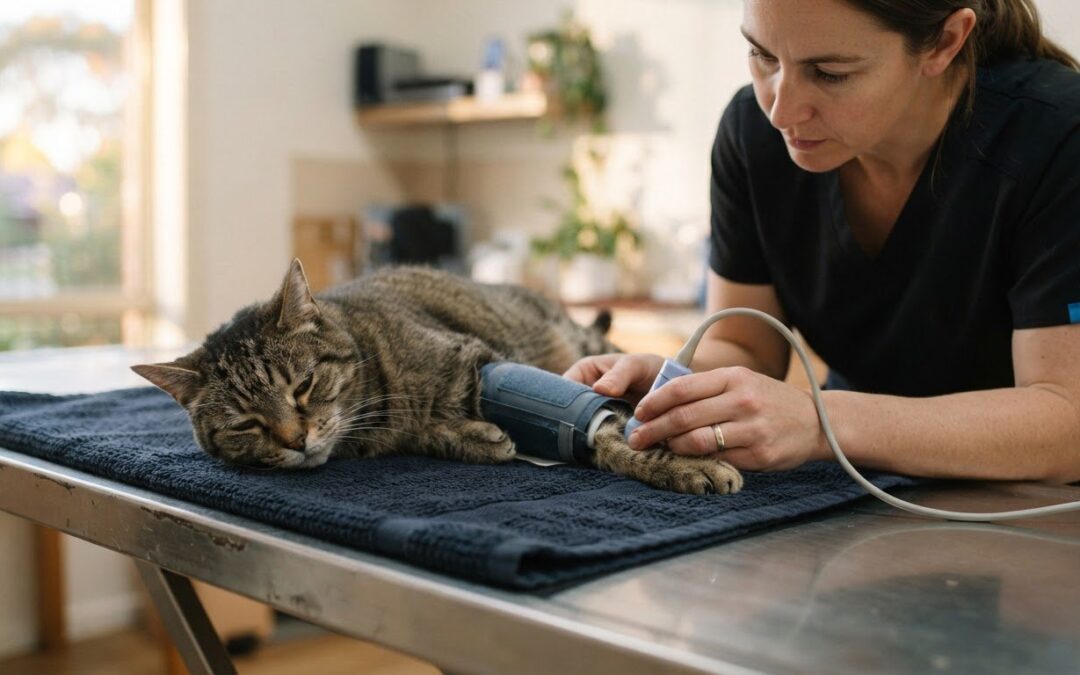
Blood pressure is the force of blood moving through the vessels, and hypertension means that pressure is persistently too high. Around 60% of cats with chronic kidney disease also develop hypertension. A systolic reading above 160 mm Hg indicates hypertension in these cats; readings of 160-179 mmHg are moderate, while at least 180 mmHg is severe. The International Renal Interest Society classifies systolic readings below 150 mm Hg as AP0, indicating minimal risk, and readings of 150-159 mm Hg as AP1, indicating low risk. These categories help assess the risk of damage to organs such as the eyes, heart and kidneys.
Blood pressure should be measured when chronic kidney disease is diagnosed and checked regularly. A high reading may affect the treatment plan, while a normal result still needs follow-up because blood pressure can change as kidney function changes. Monitoring matters, rather than relying only on appetite or visible signs.
Regular weigh-ins can reveal loss of body weight, while blood tests and urinalysis help track kidney function and urine protein. Periodic checks of blood and urine parameters can also help identify complications and guide treatment adjustments. Over the long term, cats should be re-evaluated at least every 3-6 months, even when stable. This combination gives the veterinary team a clearer picture than any single result.
Are cats in pain with kidney disease?
Chronic kidney disease doesn’t automatically mean a cat is in pain. A veterinary assessment considers the cat’s history, physical examination and signs such as vomiting, alongside test results; the stage alone cannot explain how a cat feels.
Diagnosis uses blood and urine testing, including serum creatinine, SDMA and urine concentration. The International Renal Interest Society (IRIS) system groups feline CKD into four stages, based on kidney function. Stage 1 is non-azotaemic, with creatinine below 140 μmol/l; Stage 2 is 140-250 μmol/l; Stage 3 is 251-440 μmol/l; and Stage 4 is above 440 μmol/l. A cat’s hydration and weight also help the veterinarian interpret results and assess overall health.
IRIS staging is done when creatinine is stable, varying by less than 20% over at least a 2-week interval. Substaging then considers urine protein and blood pressure, which can reveal risks that the main stage doesn’t show. These results, along with appetite, vomiting and nutrition, help shape dietary and medical care. Monitoring intervals depend on stage and clinical signs; Stage 2 cats should be assessed for stability or progression every 3 to 6 months.
In Australia, diagnosis and treatment costs depend on the tests and care required. A quote accounts for factors such as repeat blood and urine tests, imaging and medication.
Treatment is tailored to stage and complications: a renal diet and monitoring may be central, while high blood pressure, nausea or electrolyte changes may need medication. IRIS is the named framework for staging and planning care; veterinary assessment applies it to the cat’s results. Reported survival varies by stage: studies report a mean of two to three years for Stage 2, while Stage 4 averages less than six months.
Ask about fear-free veterinary care for a considered assessment of your cat’s signs, results and comfort.
Hydration and subcutaneous fluids
Chronic kidney disease can make it harder for a cat to stay hydrated. Depending on the cat’s condition, support may include fresh water, moisture-rich food or veterinary fluid therapy.
Hydration and fluid support
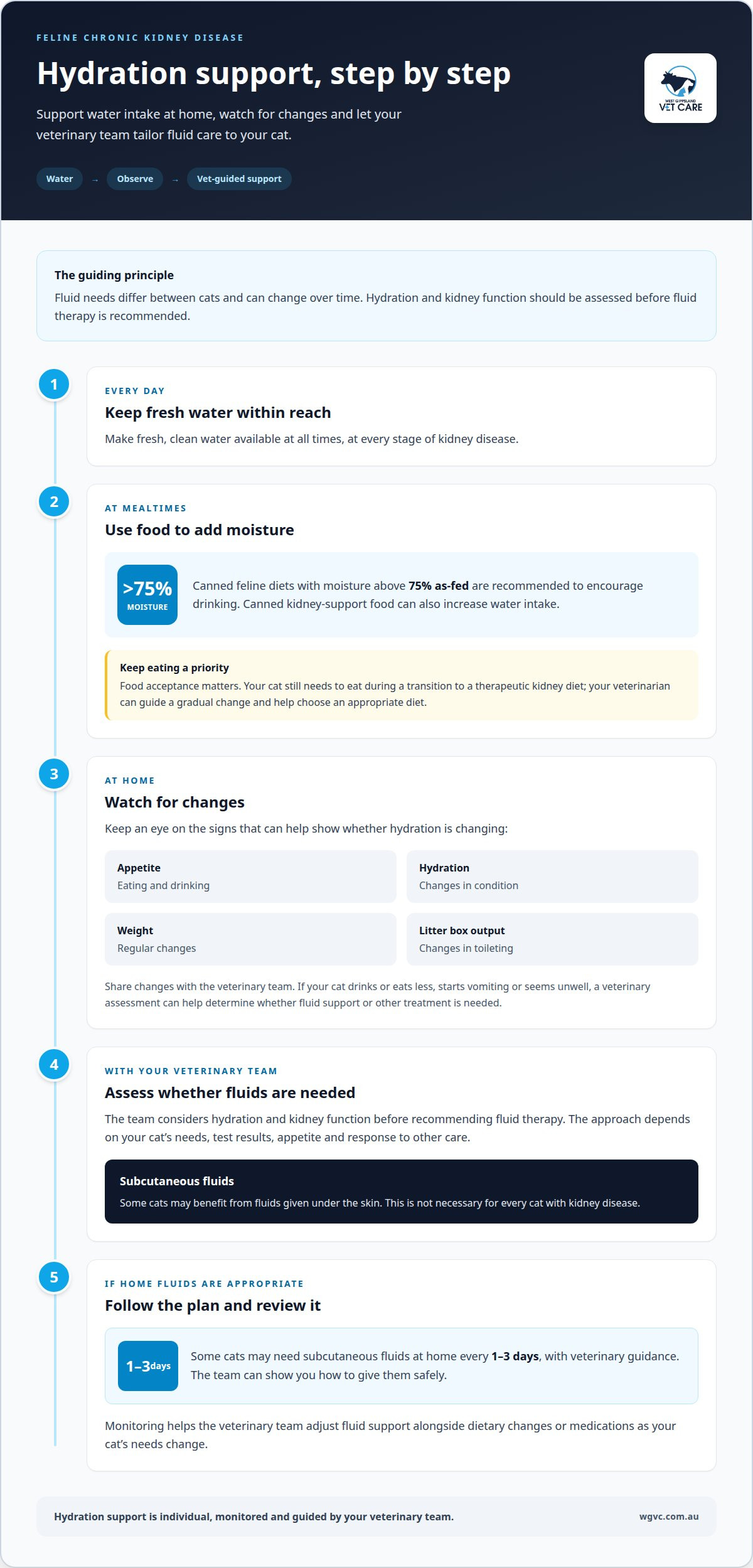
Fluid support can help address dehydration when the kidneys cannot regulate water balance effectively. The veterinary team assesses hydration and kidney function before recommending fluids, as the right approach depends on your cat’s needs. Some cats benefit from fluids given under the skin, called subcutaneous fluids. If home treatment is appropriate, the team can show you how to give them safely.
Some cats may need subcutaneous fluids at home every 1-3 days, with veterinary guidance. This isn’t necessary for every cat with kidney disease. The decision depends on hydration, test results, appetite and how the cat responds to other care. Fluid needs can change, so monitoring helps the veterinary team adjust support alongside dietary changes or medications.
Water intake
Water intake is the amount a cat drinks and takes in through food; supporting it helps maintain hydration. Fresh, clean water should always be available at every stage of kidney disease. Canned kidney-support food can also increase water intake, and canned feline diets with moisture above 75% as-fed are recommended to encourage drinking.
Food acceptance matters: your cat still needs to eat during a transition to a therapeutic kidney diet, as going without food can cause significant health problems. Your veterinarian can guide a gradual change and choose an appropriate diet for your cat’s condition. Kidney-support diets manage nutrients such as phosphorus and potassium, while wet food adds moisture.
At home, monitor appetite, hydration, weight and litter box output, and share changes with the veterinary team. These observations can help show whether your cat’s hydration is changing. If your cat drinks or eats less, starts vomiting, or seems unwell, a veterinary assessment can help determine whether fluid support or other treatment is needed.
Goals of managing feline chronic kidney disease
The aim of managing chronic kidney disease in cats is to slow progression and protect quality of life. Care focuses on clinical signs, comfort and appetite, and may be adjusted as test results change. A diagnosis starts the care process, but it doesn’t show by itself how your cat feels day to day.
Nutrition is a foundation of care. A therapeutic renal diet controls phosphorus and adjusts protein while remaining palatable enough for your cat to keep eating. The veterinary team considers disease stage, weight, appetite and blood results when choosing food. A gradual transition is important, and your cat should continue eating as the food changes.
Other therapy targets specific complications. Medication may help control high blood pressure, nausea or vomiting, stimulate appetite, or balance electrolytes. If blood phosphorus remains above 4.6 mg/dL after dietary phosphorus restriction, enteric phosphate binders may be recommended. EPA and DHA in kidney-support diets can help slow progression. Blood pressure and bloodwork help guide treatment selection and follow-up.
Medicines and supplements may help manage blood pressure, nausea, appetite, electrolyte balance or phosphorus levels, but they can also cause unwanted effects or be unsuitable for some cats. Their selection and monitoring depend on your cat’s signs and blood results, so don’t add supplements or change prescribed treatment without veterinary guidance.
Care goals can shift as the disease progresses. Early care may centre on diet and monitoring, while advanced disease can require closer attention to nausea, hydration and comfort. Some cats maintain a good quality of life for many months or years, depending on their diagnosis and response to care. Regular reassessment helps the veterinary team weigh treatment benefits against comfort and daily routines.
Discuss a tailored plan through veterinary medical care that considers your cat’s symptoms, test results and quality of life.
West Gippsland Vet Care
West Gippsland Vet Care can help you discuss your cat’s kidney disease and understand what test results mean for care. A veterinary assessment brings together changes in appetite, drinking, weight and behaviour with blood and urine findings, helping you identify concerns and decide what to discuss next.
If your cat has a diagnosis, new symptoms or changes in everyday comfort, share those details and any recent test results during a veterinary assessment. This gives the team useful context to consider your cat’s needs and support decisions about ongoing care. You can also discuss treatment goals and monitoring, so the plan makes sense for your cat and household.
Contact West Gippsland Vet Care to discuss your cat’s kidney health and care needs.
Make the next care conversation count
Managing chronic kidney disease in cats involves ongoing conversations about what matters most to your cat and household. Priorities may shift over time: comfort, appetite, daily routines and the practical demands of treatment can all shape decisions. You don’t need to have every answer before speaking with your veterinary team.
Before your next discussion, consider which changes have been hardest to manage and what you most want to protect in your cat’s everyday life. Sharing these priorities helps the veterinary team understand your concerns and discuss care suited to your cat. If your cat’s condition or comfort changes, raise it promptly rather than waiting for a routine review.
Contact West Gippsland Vet Care to talk through your cat’s care. Thoughtful questions and an open conversation can help you take the next step with confidence.
Frequently Asked Questions
What Do the Kidneys Do?
A cat’s kidneys filter waste from the blood, help regulate hydration and blood pressure, and produce hormones involved in red blood cell production. This explains why kidney disease can affect more than urination. Changes may influence several aspects of health, so veterinary assessment considers your cat’s overall condition, not just one symptom or test result.
Can diet alone manage CKD?
No. A kidney-support diet is an important part of care, but it can’t address every complication of chronic kidney disease. Your cat may also need treatment for issues such as high blood pressure, nausea or altered electrolyte levels. The care plan depends on your cat’s signs and test results and may change as the disease progresses.
How can a vet help you make good nutritional choices for a cat with CKD?
A veterinarian can match food choices to your cat’s disease stage, blood and urine results, appetite and body condition. This is especially helpful if your cat refuses a renal diet or has another health concern that affects food choices. For a homemade diet, a veterinary nutritionist can help ensure the recipe provides complete, appropriate nutrition rather than relying on ingredient swaps.
How do nutritional requirements differ for cats with CKD?
Compared with standard adult cat food, therapeutic kidney diets control phosphorus and adjust protein, sodium, potassium and omega-3 fatty acids. The precise balance depends on the cat’s condition and blood results. For example, a cat with high potassium may need a lower-potassium food, while excessive protein restriction can contribute to loss of lean muscle.
How often should lab work be repeated?
Laboratory work is commonly repeated every 3-6 months, depending on CKD stage and clinical signs. Cats with Stage 4 disease may need reassessment every 1 to 2 months. Results are most useful when interpreted alongside hydration and changes in appetite or weight; a veterinarian may use repeat blood and urine samples to clarify a developing trend.
Can a vet teach you to give fluids at home, and what support is available?
Yes. A veterinary team can teach caregivers to give prescribed fluids under the skin and provide guidance suited to the cat’s needs. Some cats require home fluids every 1-3 days, but this schedule isn’t right for every patient. The veterinary team can also reassess hydration and response, helping determine whether the plan needs adjustment.