
What if you could reduce your dog’s post-operative pain by 65% and skip the two-week struggle of keeping an energetic pup confined? For many families in West Gippsland, the thought of desexing often comes with a side of worry about recovery times and surgical discomfort. Choosing a laparoscopic spay warragul pet owners can rely on is quickly becoming the preferred choice for those who want a kinder, more advanced alternative to traditional surgery.
We know how much you care for your companion, and it’s natural to feel a bit of anxiety when considering any medical procedure. You want the best for them, but the prospect of managing a restless dog during a long recovery can feel overwhelming. This guide will show you how keyhole surgery offers a safer path with significantly smaller scars and a much faster return to running in our beautiful local paddocks. We will also look at how desexing impacts your Baw Baw Shire registration fees, ensuring you have all the information needed to make a gentle, informed choice for your best friend’s wellbeing.
Key Takeaways
- Learn how minimally invasive “keyhole” techniques significantly reduce post-operative pain and surgical trauma compared to traditional methods.
- Discover why a laparoscopic spay warragul families choose allows for a much faster return to normal activity and running in local Gippsland paddocks.
- Understand the benefits of an ovariectomy and why removing only the ovaries is a safer, modern standard for your dog’s long-term health.
- Explore our “Fear Free” approach and 30-year history of providing compassionate, advanced surgical care to the West Gippsland community.
- Gain access to a practical 48-hour recovery checklist to help you monitor your pet’s healing at home with confidence and peace of mind.
Understanding Laparoscopic Spay in Warragul
Deciding to desex your dog is a significant step in responsible pet ownership. While the traditional method has been the standard for decades, many families are now looking for a gentler approach that prioritises their pet’s comfort. A laparoscopic spay warragul pet owners can access right here in West Gippsland uses the same “human-grade” technology found in modern hospitals. It is a minimally invasive “keyhole” surgical technique that focuses on precision and significantly reduced recovery times.
During this procedure, our surgeons perform an ovariectomy, which means only the ovaries are removed. This is different from the traditional method where both the ovaries and the uterus are taken out. By using specialised high-definition cameras, we can see inside the abdomen with incredible clarity. This modern approach is often considered the gold standard for pet comfort because it causes much less trauma to the internal tissues. For a broader look at the different methods of desexing, Understanding Laparoscopic Spay and other surgical options can help you feel more confident in your decision.
What Makes Keyhole Surgery Different?
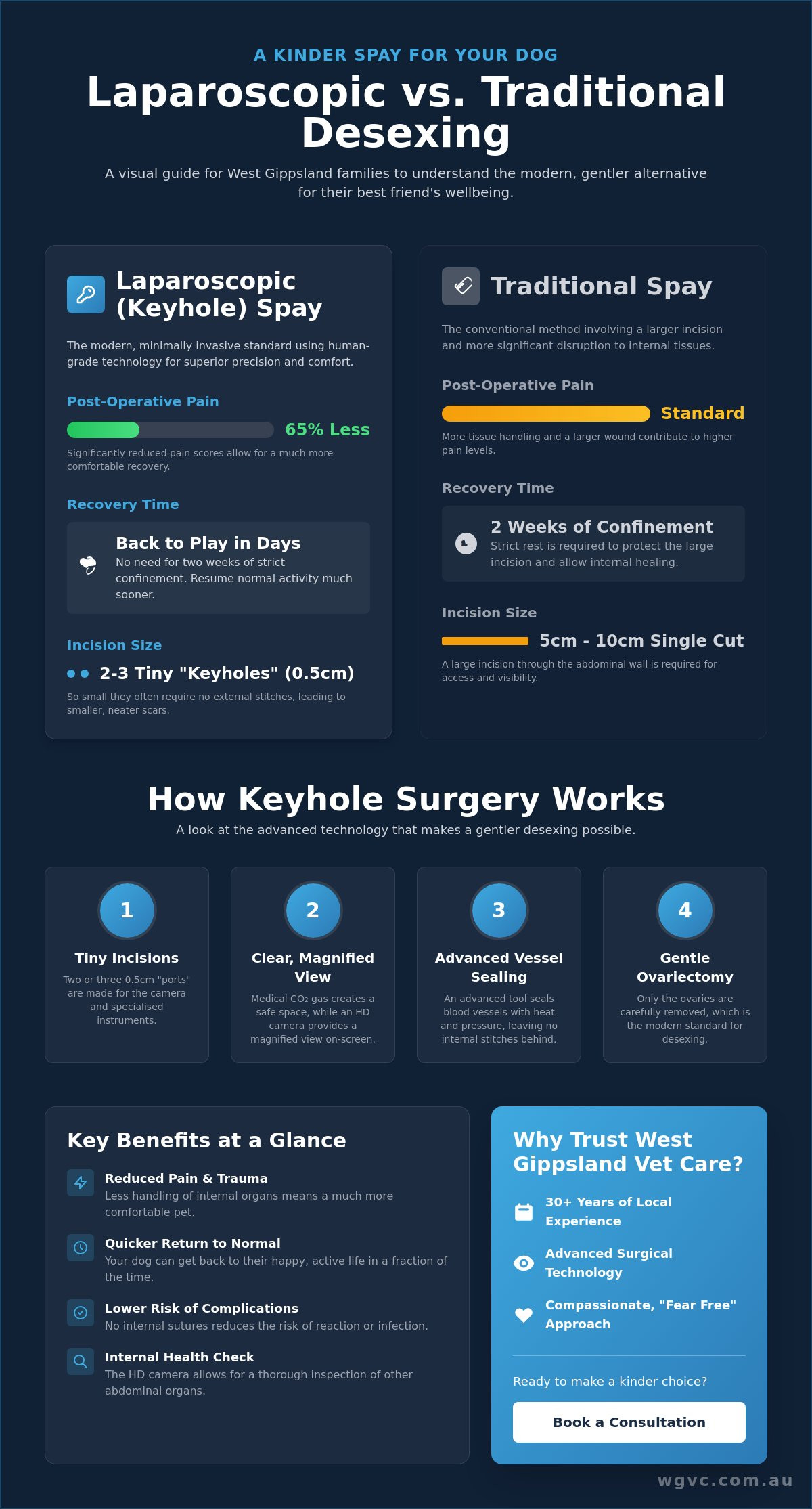
The most visible difference between the two methods is the size of the incision. A traditional spay usually requires a single large cut ranging from 5cm to 10cm, depending on the size of the dog. In contrast, a laparoscopic spay involves just two or three tiny “keyholes” only 0.5cm in length. These small entry points are just large enough for the laparoscope and the surgical instruments to pass through.
The laparoscope acts as the surgeon’s eyes, providing a magnified, high-definition view of the internal organs on a monitor. This superior visualisation allows for magnified precision that simply isn’t possible with the naked eye. Because the surgeon isn’t pulling or stretching the internal ligaments to reach the ovaries, there is far less bruising and post-operative pain for your dog. It’s a much more delicate way to perform a routine but essential procedure.
Is it Right for Every Dog?
Most female dogs are excellent candidates for this advanced technique. We find it’s particularly beneficial for larger, deep-chested breeds that are so common across our Gippsland farming and residential areas. These bigger dogs often have deeper abdominal cavities, which makes traditional surgery more invasive. By choosing a laparoscopic spay warragul families can ensure their large-breed companions have a much easier time during and after the operation.
Whether you have a young puppy or an older female, this method is generally suitable for all life stages. While the technology is advanced, the goal is simple: to make the experience as stress-free as possible for your pet. We assess every patient individually at our clinic to ensure we recommend the safest and most comfortable path forward for your specific dog. It’s all about providing the level of care we would want for our own four-legged family members.
How Keyhole Surgery Works for Pets
When you drop your dog off for a laparoscopic spay warragul at our clinic, the day begins with a gentle admission process to ensure she feels safe and settled. Once she is ready, our surgical team prepares the theatre with specialised equipment. A key part of this process involves using medical-grade CO2 gas. This gently inflates the abdomen, creating a “dome” of space. This pocket of air is vital because it gives the surgeon a clear view and enough room to move instruments safely without disturbing other internal organs.
Instead of using traditional silk or nylon sutures to tie off blood vessels, we use advanced cautery tools like Ligasure. These devices use a combination of heat and pressure to seal the vessels permanently. Because there are no foreign materials or knots left behind inside the body, there is a much lower risk of internal irritation or reaction. Research from leading institutions has shown that these minimally invasive techniques result in significantly lower pain scores and less inflammation for the patient. It truly is a kinder way to handle a routine procedure.
The Technology Behind the Procedure
Our investment in high-end imaging means we aren’t just performing a spay; we’re performing a thorough internal health check. The high-definition camera allows us to inspect the liver, spleen, and kidneys with incredible detail. If there were any early signs of other health issues, we would likely spot them on the HD monitor during the procedure. These specialised instruments are designed specifically for the delicate nature of pet anatomy. Every movement is controlled and precise, which minimises the impact on your dog’s body.
Anaesthesia and Monitoring
It is completely normal to feel a flutter of worry about your dog being under anaesthesia. We take this responsibility very seriously. Every pet has a dedicated surgical nurse who stays by their side from the moment they fall asleep until they are fully awake and resting comfortably. We use advanced vitals tracking to monitor heart rate, oxygen levels, and blood pressure in real-time. Because a laparoscopic spay warragul is often more efficient than traditional surgery, the time spent under anaesthesia is reduced. Shorter surgical times generally lead to a smoother and safer experience for your dog. If you have questions about how we tailor our care to your dog’s specific needs, please feel free to reach out to our friendly team for a chat.
Laparoscopic vs. Traditional Spay: Which is Right for Your Dog?
Choosing between a traditional desexing and a laparoscopic spay warragul is a personal decision that depends on your dog’s lifestyle and your own peace of mind. A traditional spay involves a larger abdominal incision to allow the surgeon to manually locate and remove the reproductive organs. While this has been the standard for years, it involves more stretching of the internal tissues. A laparoscopic approach replaces this with tiny incisions and high-definition visualisation, leading to significantly less bruising and a much smoother physical experience for your girl.
One of the biggest differences involves the “Ovariectomy vs. Ovariohysterectomy” debate. In a traditional spay, the uterus and ovaries are both removed. However, modern research shows that removing just the ovaries (ovariectomy) is sufficient. Without the hormones produced by the ovaries, the uterus remains in a dormant, healthy state. This means the risk of a life-threatening uterine infection, known as Pyometra, is essentially eliminated because the hormonal triggers are gone. It’s a less invasive way to achieve the same health benefits while leaving the body’s internal structure more intact.
Safety is always the top priority. During traditional surgery, surgeons often rely on their sense of touch to secure blood vessels. With the magnified view of a laparoscopic spay warragul, we can see every vessel with incredible clarity. This precision drastically reduces the risk of “dropped pedicles” or internal bleeding, as the surgeon can confirm a perfect seal with our advanced cautery tools before moving on. While keyhole surgery comes with a higher price point due to the specialized HD cameras and Ligasure technology, many owners find the reduced risk and increased comfort well worth the investment.
Comparing Recovery Timelines
The difference in recovery is where most Gippsland families see the greatest benefit. A traditional spay usually requires 10 to 14 days of strict crate rest, with only short lead-walks for toilet breaks. For a high-energy dog used to roaming the local paddocks, this can be a stressful fortnight for everyone. With a laparoscopic spay, most dogs are back to their happy, bouncy selves within 2 to 3 days. While we still recommend a gradual return to full activity, the “quiet time” is much shorter and significantly easier to manage.
Long-term Health Outcomes
There is a common myth that leaving the uterus behind could cause problems later in life. Modern veterinary science has debunked this, confirming that an ovariectomy is just as effective as a full hysterectomy for preventing future health issues. By removing the source of hormones, we effectively protect your pet from future complications. A laparoscopic spay eliminates the risk of ovarian cancer entirely. It provides a safer, modern standard of care that focuses on what is truly necessary for your dog’s future wellbeing.
Recovery and Post-Operative Care in West Gippsland
Bringing your companion home after surgery is always a relief, but the first few days are vital for ensuring a smooth path to wellness. Even though a laparoscopic spay warragul involves much smaller incisions than traditional surgery, your dog has still undergone a general anaesthetic and needs a little extra TLC. We recommend a simple “First 48 Hours” checklist to keep things on track. This includes providing a warm, quiet space away from other pets, monitoring their tiny 0.5cm incisions twice daily, and sticking to lead-only toilet breaks to prevent any sudden lunging or jumping.
Monitoring the surgical site is much easier with keyhole surgery because the incisions are so small. A healthy healing site should look clean and dry; a small amount of redness or minor bruising is normal in the first day or two. However, if you notice any persistent oozing, significant swelling, or if the area feels excessively hot to the touch, it’s time to give us a call. Because the trauma to the abdominal wall is so minimal, most dogs don’t feel the same urge to lick or chew at their stitches, which often means they can avoid the dreaded “cone of shame” entirely.
Living in West Gippsland means many of our patients are active dogs used to wide open spaces and daily adventures. Managing the “Gippsland Zoomies” can be the hardest part of post-op care. While your dog will feel like running through the paddocks within 48 hours, we ask for a few days of patience. We generally advise a gradual return to exercise, starting with short five-minute lead walks around the garden before building back up to your usual Warragul trail routes. A vital part of this journey is the post-operative check-up at our Warragul or Drouin clinics, where we can confirm everything is knitting together perfectly before giving the all-clear for full activity.
Managing Pain at Home
Dogs are incredibly stoic, so they don’t always whimper when they feel unsettled. Instead, look for subtle signs of discomfort like panting, restlessness, or a reluctance to settle into their favourite sleeping position. One of the kindest aspects of a laparoscopic spay warragul is that patients typically require fewer days of anti-inflammatory medication because there is less internal bruising. When a dog feels “normal” sooner, it reduces their stress levels and helps their overall immune system focus on healing rather than managing significant pain.
Nutrition and Rest Post-Surgery
On the evening after their procedure, your dog might still feel a little groggy from the anaesthesia. Offer a small, light meal, such as boiled chicken and rice or a sensitive-care wet food, rather than a large bowl of heavy kibble. It’s also important to set up a “recovery zone” that is cosy and familiar. Avoid cold laundry floors; instead, a soft bed in a draught-free corner of the living room helps them feel safe and included while they rest. If you ever feel concerned about your pet’s progress during those first few nights, remember that we provide a 24-hour emergency service exclusively for our existing clients. For more details on how we support your pet’s recovery, contact our caring veterinary team today.
Why Warragul Families Trust Us for Advanced Surgical Care
West Gippsland Vet Care has been a familiar face in our local community for over 30 years. Since we first opened our doors in 1989, we have focused on building deep, lasting relationships with Gippsland families and their four-legged friends. This long history is paired with a constant drive to stay at the forefront of veterinary medicine. By investing in “human-grade” technology and becoming a regional centre of excellence for minimally invasive procedures, we provide a laparoscopic spay warragul pet owners can rely on for the highest level of surgical care.
We understand that a visit to the clinic can feel a little daunting for both you and your pet. That’s why we have embraced “Fear Free” techniques across our entire practice. These methods are specifically designed to reduce anxiety and create a calm, nurturing environment from the moment you walk through our doors. Our veterinarians aren’t just highly experienced; many hold postgraduate surgical qualifications, ensuring that your pet is in the most capable and dedicated hands possible. This blend of clinical expertise and a gentle, family-oriented approach defines who we are.
A Compassionate, Family-First Approach
Whether you are bringing in a hard-working kelpie, a bouncy lab, or a cuddly cavoodle, we treat every patient as if they were a member of our own family. We know that you might have a list of “silly” questions or specific worries about the recovery process. We’re here to listen and provide clear, honest answers. We believe in open dialogue and true partnership in your pet’s health. If you’d like to see the environment where your pet will be cared for, we’d be more than happy to show you around our modern facilities in Warragul or Drouin.
Booking Your Consultation
Every journey towards a laparoscopic spay warragul starts with a thorough pre-surgical assessment. This allows us to check your dog’s overall health and ensure she is perfectly ready for her procedure. With two convenient locations across West Gippsland, dropping off and picking up your companion is designed to be a stress-free experience. We’re dedicated to making this process as smooth and supportive as possible for you and your best friend. Organise a consultation with our surgical team today to discuss how we can provide a kinder, faster recovery for your dog.
A Gentler Path to a Lifetime of Health
Your dog’s comfort and long-term health are the most important factors when deciding on a desexing method. By opting for a laparoscopic spay warragul families can offer their pets a modern surgical experience that significantly reduces internal trauma and post-operative pain. This advanced approach means smaller scars, fewer complications, and a much faster return to exploring our beautiful West Gippsland trails and paddocks. It’s a compassionate choice that reflects the deep bond you share with your companion.
With over 30 years of local experience, our team at West Gippsland Vet Care is dedicated to providing the highest standard of surgical care. We use human-grade equipment and Fear Free certified handling techniques to ensure every pet feels safe and nurtured in our care. We’re here to support you through every step of the process and answer any questions you may have about your dog’s recovery. We invite you to Book a Laparoscopic Spay Consultation at West Gippsland Vet Care today. We look forward to helping your best friend get back to her happy, active self as quickly and gently as possible.
Frequently Asked Questions
Is laparoscopic spay really less painful for my dog?
Yes, clinical studies have shown that laparoscopic procedures result in up to 65% less post-operative pain for dogs compared to traditional methods. Because we avoid a large abdominal incision and the manual stretching of internal tissues, there is significantly less bruising and inflammation. Most of our patients are up and about much faster, often appearing as though they haven’t had surgery at all by the very next morning.
What is the price difference for a keyhole spay in Warragul?
There is a higher cost associated with this advanced technique due to the specialised high-definition cameras, monitors, and single-use vessel sealing instruments required. The procedure also involves advanced training for our surgical team to ensure the highest level of safety. While we don’t list set fees online, we encourage you to contact our clinic directly. We can provide a tailored estimate based on your dog’s weight and specific health needs.
Does my dog still need to wear a “cone of shame” after a keyhole spay?
Most dogs do not need to wear a protective collar after a laparoscopic spay warragul. Since the two or three incisions are only 0.5cm long, they cause very little irritation to the skin. Dogs are far less likely to lick or chew at a site that isn’t itchy or painful. We still monitor every patient closely, but the majority of our families find their pets recover comfortably without the stress of a cone.
At what age should I book my dog in for a laparoscopic spay?
We generally recommend booking the procedure from six months of age, though the ideal timing can vary depending on your dog’s breed and size. Some larger breeds may benefit from waiting a little longer to allow for proper bone and joint development. During a pre-surgical consultation, we’ll discuss your dog’s lifestyle and physical growth to determine the safest window for her specific needs.
Can any vet in Gippsland perform a laparoscopic spay?
No, this procedure requires significant investment in specialised equipment and specific postgraduate surgical training. Not all clinics in the region have the facilities or the expertise to offer minimally invasive “keyhole” surgery. At West Gippsland Vet Care, we have committed to this technology because we believe in providing the most comfortable and advanced options for our local community’s pets.
What happens if the surgeon finds a problem during the keyhole procedure?
The high-definition camera actually makes it easier to spot internal health issues that might be missed during traditional surgery. If we identify a condition that cannot be safely managed through keyhole incisions, our surgeons are fully prepared to transition to a traditional open procedure immediately. Your pet’s safety is always our absolute priority, and we’ll discuss all findings with you during the post-operative discharge session.
Is the uterus left behind? Will my dog still get “heat” cycles?
The uterus is typically left behind, but your dog will not have heat cycles or be able to get pregnant. By removing the ovaries, we stop the production of the hormones that trigger heat and reproductive behaviour. Without these hormones, the uterus remains in a quiet, healthy state. This approach effectively removes the risk of ovarian cancer and life-threatening uterine infections.
How long does the actual laparoscopic surgery take?
The active surgical time for a laparoscopic spay warragul is typically between 30 and 45 minutes. While the surgery itself is efficient, your pet will spend the day with us for pre-operative checks and a gentle recovery period. This allows our nursing team to monitor her as she wakes up from anaesthesia, ensuring she is comfortable and ready to head home with you by the afternoon.