
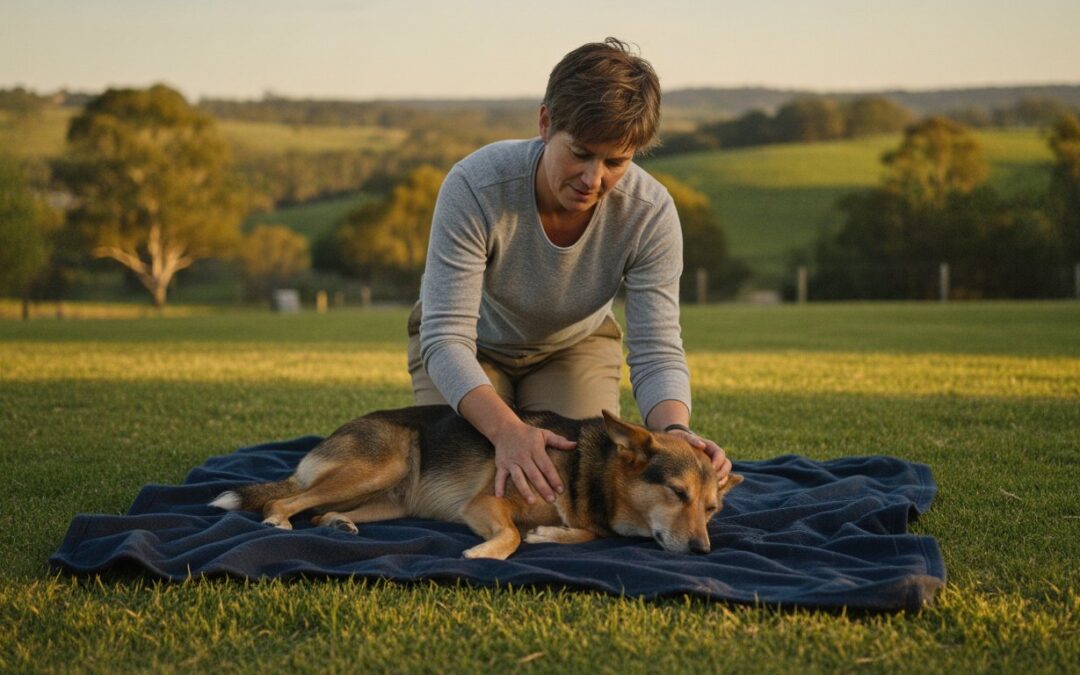
Imagine the heart-stopping moment your dog yelps in pain after a bad fall or a mishap in the backyard. Your first instinct is to rush to their side, but seeing your usually gentle mate snapping in shock or whimpering can leave you feeling completely helpless. It’s a terrifying experience, and the fear of causing even more pain while trying to help is a heavy burden for any pet owner to carry. Knowing exactly how to transport a dog with a broken leg is the most important step you can take in those first frantic minutes.
We’re here to help you move from panic to a calm, clear plan of action that keeps both you and your dog safe. This guide outlines the most gentle techniques to stabilise a fracture and move your injured companion to the vet without risking further injury. You’ll learn how to handle a dog that’s acting out in pain, how to use household items as a makeshift stretcher, and the best ways to lift larger breeds if you’re on your own. By following these steps, you’ll ensure your mate arrives at the surgery comfortably, giving them the best possible start on their road to recovery.
Key Takeaways
- Discover why staying calm and assessing for safety is your first priority, even when your mate is in distress and acting out of character.
- Learn the essential techniques for how to transport a dog with a broken leg safely, including when to avoid DIY splinting to prevent further bone displacement.
- Master the art of lifting your dog while maintaining perfect horizontal alignment, ensuring no extra pressure is placed on their chest or the injured limb.
- Find out how to use simple household items like cushions and rolled-up blankets to create a stable, “wedged” position for a secure car journey to the clinic.
- Understand the critical protocol for arriving at the vet surgery, from phoning ahead to safely managing the transition from the car to the triage area.
Immediate First Steps: Staying Calm and Ensuring Safety
When you first realise your dog is hurt, your heart starts racing. It’s natural to want to scoop them up immediately, but the first rule of Pet First Aid Basics is to ensure the environment is safe for both of you. Before you even touch your dog, look around for hazards like traffic, power lines, or other animals. Clear the area of children and curious pets to keep the stress levels as low as possible. This isn’t just about their safety; it’s about making sure you’re in the best position to help without distraction.
One of the hardest things for a pet owner to accept is that their gentle mate might bite them when they’re in agony. Pain-induced aggression is a biological reflex, not a choice. When a dog is in shock, their brain is in “fight or flight” mode. If you’re wondering how to transport a dog with a broken leg without getting hurt yourself, you must start by respecting their current state of mind. Even the most loyal companion can snap when a fractured bone shifts.
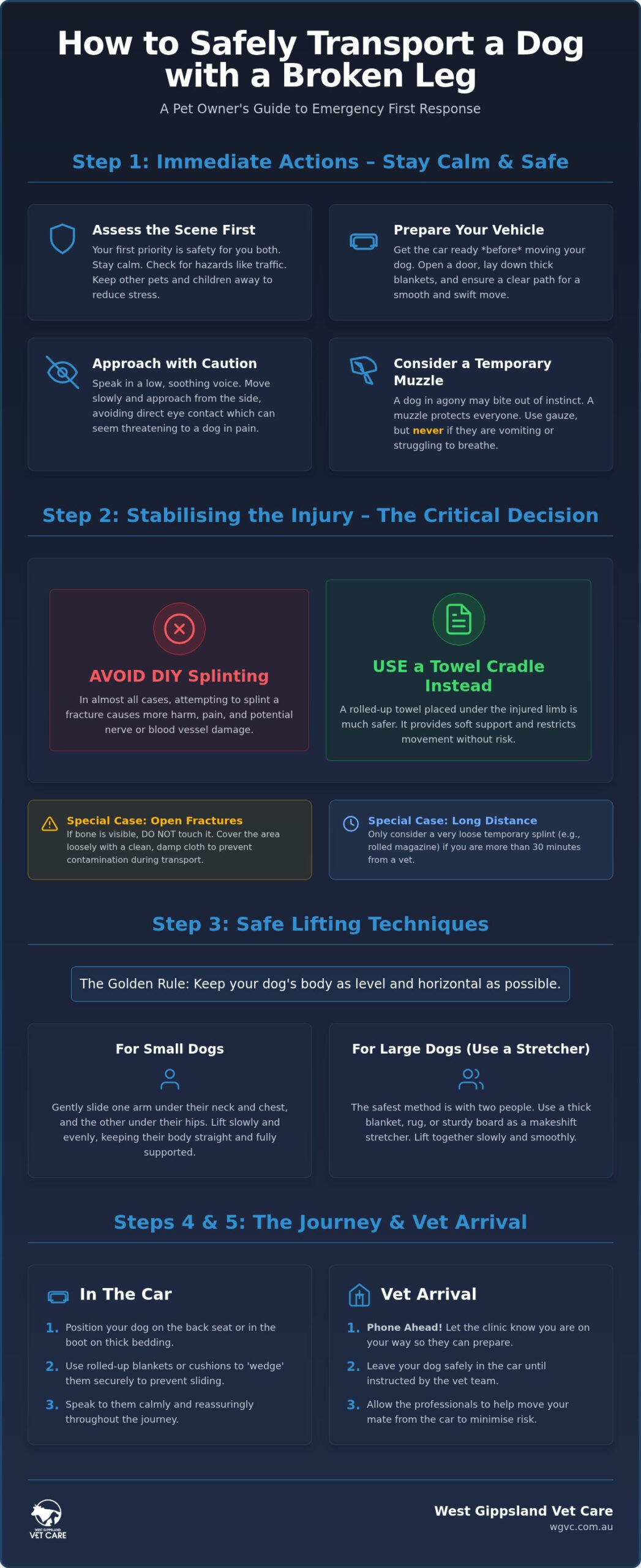
Get your car ready before you attempt to move them. Open the boot or the back door, lay down a thick layer of blankets, and make sure you have a clear path. Doing this now prevents you from having to juggle a heavy, pained dog while fumbling for car keys or clearing out groceries later. Preparation allows the actual move to be as swift and smooth as possible.
The Importance of a Temporary Muzzle
A muzzle is a tool of kindness, not a sign of a “bad” dog. It protects you and allows you to focus entirely on their leg. If you don’t have a professional muzzle, you can easily craft one using a soft gauze bandage or even a pair of stockings. Loop the material over their snout, tie a single knot on top, bring the ends under the chin to tie again, and then secure it behind their ears. However, never muzzle a dog if they’re vomiting, struggling to breathe, or have a short, flat face like a Pug, as this can cause a life-threatening airway blockage.
Approaching Your Injured Mate
Your dog takes their cues from you. If you’re frantic, they’ll be terrified. Speak in a low, soothing tone to help settle their heart rate. As you get closer, avoid staring directly into their eyes. In the animal world, direct eye contact is often seen as a challenge or a threat. Instead, approach from the side and move slowly. If they seem particularly distressed, gently draping a towel over their head can work wonders. It creates a dark, quiet “den” effect that helps many dogs feel more secure while you figure out how to transport a dog with a broken leg to the surgery safely.
To Splint or Not to Splint? Stabilising the Injury
When you see your mate in pain, your first instinct is likely to try and “fix” the problem. You might feel a strong urge to straighten the leg or tie it to something solid. However, UC Davis veterinarians advise that in the vast majority of cases, you shouldn’t attempt to splint a fracture yourself. DIY splinting is incredibly difficult to get right and often causes more harm than good. If you accidentally move the bone fragments while trying to secure them, you could cause further displacement, nerve damage, or even a punctured blood vessel.
The golden rule for any pet owner is simple: if your dog resists your help, stop immediately. If they growl, pull away, or show signs of increased distress when you touch the limb, it’s a clear signal that the pain is too intense for a home splint. Your primary goal isn’t to align the bone; it’s simply to limit movement. Think of yourself as a gentle transport service rather than a surgeon. If you can see the bone through the skin, this is an “open” fracture. Don’t touch the bone or try to clean the wound. Simply cover it loosely with a clean, damp cloth to keep out debris while you’re learning how to transport a dog with a broken leg safely.
When to Attempt a Temporary Splint
You should only consider a temporary splint if you’re a long way from help, such as being more than 30 minutes away from the vet surgery. If you’re in this situation, you can use a rolled-up magazine or a few layers of newspaper to create a rigid sleeve around the limb. Wrap the paper around the leg and secure it loosely with tape or a bandage. It needs to be firm enough to provide support but loose enough that you can easily slide two fingers under the bandage. If it’s too tight, you risk cutting off the blood supply, which can lead to tissue death.
Alternatives to Splinting
For most local trips, a towel cradle is a much safer option. Roll up a thick bath towel and place it under the injured limb to act as a soft, supportive cushion. This “cradling” effect naturally restricts movement without the risks associated with a rigid splint. Keep your dog in a small, confined space to prevent them from trying to walk or shift their weight. Most importantly, never give your dog human medications like Panadol or Nurofen. These are highly toxic to animals and can lead to serious complications. If you’re worried about their pain levels, our team provides specialised emergency and trauma care designed to manage fractures safely and humanely.
Lifting and Moving: Safe Techniques for All Dog Sizes
Moving a dog with a fracture requires a steady hand and a calm heart. The most important goal is to keep their body in a straight, horizontal line. If the spine or the broken limb twists during the lift, it can cause sharp, stabbing pain and potentially worsen the break. You should never put pressure on the chest, as this can make breathing difficult if the dog is in shock. Instead, focus on supporting their weight from the strongest parts of their body while keeping the injured leg as still as possible.
Experts suggest using a rigid surface whenever possible to safely transport an injured pet, as this provides a stable foundation that prevents the body from sagging. Whether you’re moving a tiny Terrier or a heavy Golden Retriever, the way you lift them can make a world of difference to their recovery and comfort levels during the trip to the surgery.
Small and Toy Breeds
For small breeds like Toy Poodles or Chihuahuas, you can gently cradle them using your arms. Place one arm under their chest and the other securely under their rump. A great tip for added security is to use a laundry basket or a pet carrier lined with thick, soft towels. This creates a secure “nest” that stops them from sliding around. If you can, try to keep the injured leg on the “up” side. This prevents the weight of their body from pressing down on the fracture while you’re carrying them.
Medium to Large Dogs
Large dogs, such as Labradors or German Shepherds, present a bigger physical challenge. If you’re wondering how to transport a dog with a broken leg when they weigh 30kg or more, a blanket stretcher is your best friend. Gently slide a sturdy, thick blanket under the dog while they are lying down. With one person on each side of the dog, grab the corners of the blanket and pull it taut. This allows you to lift the dog evenly without putting any direct pressure on the injury.
If you have a car parcel shelf or a flat piece of plywood handy, this provides even better rigid support than a blanket. Coordinate your lift with a simple “one, two, three” count to make sure the board stays perfectly level. If you are alone, don’t try to carry a heavy dog. Instead, focus on sliding them onto a flat rug or blanket and dragging them slowly toward the vehicle. This method is much safer than attempting a high lift that might lead to a fall or further trauma for your mate. Learning how to transport a dog with a broken leg is about working smarter, not just harder, to keep them stable.
The Car Journey: Safe Restraint and Comfort
Once you’ve safely lifted your mate, the next challenge is keeping them secure during the drive. A moving car is a dynamic environment where every turn or stop can cause an injured limb to shift painfully. To prevent this, position your dog in the boot of an SUV or on the back seat. Use rolled-up blankets or firm cushions to “wedge” them into a stable position. This isn’t about pinning them down; it’s about creating a snug nest that absorbs the car’s movement. Knowing how to transport a dog with a broken leg effectively means ensuring they can’t slide across the upholstery when you take a corner.
During the trip, keep a close watch for signs of shock. Trauma can cause a dog’s blood pressure to drop, which is just as dangerous as the fracture itself. Check their gums periodically if it’s safe to do so; they should be a healthy pink. If the gums look pale or white, or if their paws feel unusually cold, they may be slipping into shock. Rapid, shallow breathing is another warning sign that requires immediate professional attention. Drive with extreme care, making every movement of the steering wheel and brake pedal as smooth as possible.
Setting Up the Vehicle
If you’re driving a ute or an SUV, flatten the back seats to create a large, level surface. This prevents your dog from having to balance on an incline, which can put unnecessary strain on their muscles. It’s also vital to keep the cabin cool. Heat stress can quickly overwhelm an injured animal, making the physiological effects of shock much worse. Before you arrive, ensure your dog is restrained with a harness or crate so they don’t try to bolt out of the door the moment you open it in a state of confusion.
Managing the Drive to Warragul
We always recommend having a passenger sit in the back with the dog if possible. This person can provide soothing words and prevent the dog from trying to stand up or reposition themselves. If your dog begins to panic or struggle, have the passenger gently rest a hand on them to provide a sense of security. Plan the smoothest route possible, avoiding bumpy backroads or heavy traffic that might lead to sudden stops. If you’re an existing client and need immediate assistance for a fracture, our emergency vet Warragul team is ready to assist with rapid triage and assessment. For those looking for local expertise in complex injuries, we provide specialised emergency and trauma care to help your pet through the most difficult moments.
Arriving at the Vet: Communication and Next Steps
Once you pull into the car park at our Warragul surgery, you’ve completed the most difficult part of the process. Knowing how to transport a dog with a broken leg is about getting them to us safely, and your calm, methodical approach has made all the difference to your mate’s comfort. Please phone us when you’re five minutes away. This simple call allows our nursing team to prepare the triage area and ensure we have a stretcher and staff ready at the door the moment you arrive.
When you pull up, it’s often best to leave your dog in the car for a moment while you step into reception to check in. This keeps your mate in their stable, quiet environment and away from the noise of other pets in the waiting room until we can bring them straight through to a treatment area. When you speak to the vet, try to provide a clear timeline of when the injury happened and a brief description of the incident. These details help our team assess the risk of shock or other internal injuries that might not be immediately visible to the eye.
We use a triage system to ensure the most critical cases are seen first. While a fracture is incredibly painful and an absolute priority, life-threatening emergencies involving breathing or heart issues must be stabilised first. We’ll provide immediate, professional pain relief to settle your dog as soon as they are admitted, ensuring they feel safe and cared for while we begin our assessment.
What Happens After Admission
After your dog is settled, we use advanced diagnostic imaging to see the exact nature of the break. This allows us to determine if the bone can be stabilised with a cast or if your companion requires specialised orthopaedic surgery. We’ll discuss every option with you clearly, focusing on the best path to get your mate back on their feet and pain-free.
Supporting Your Dog’s Recovery
Your role is just as important once you head home. You’ll need to set up a “recovery zone” in a quiet part of the house where your dog’s movement is strictly limited. This usually means no stairs and very short, leashed toilet breaks. Following our post-operative instructions to the letter is the best way to ensure the bone heals correctly. Our West Gippsland Vet Care team is always here to support your mate’s rehabilitation, providing the guidance and care needed for a smooth recovery.
Taking the First Step Toward Recovery
When an accident happens, your calm and steady hands are the greatest gift you can give your pet. By prioritising safety, using gentle lifting techniques like the blanket stretcher, and avoiding the risks of DIY splinting, you’ve already given your mate a much better chance at a full recovery. Understanding how to transport a dog with a broken leg with minimal stress ensures that the injury doesn’t worsen during those critical moments before you reach the surgery.
At West Gippsland Vet Care, we’re here to be your partner in this journey. Our Fear-Free certified team combines a nurturing approach with an advanced orthopaedic surgical suite and diagnostic imaging to provide the best possible outcomes. We offer 24 hours emergency service to our existing clients, ensuring that expert help is always just a phone call away. If your dog has suffered a trauma, please contact West Gippsland Vet Care for emergency support so we can begin the healing process together. You’ve done the hard work of getting them here safely; now, let us take care of the rest.
Frequently Asked Questions
How can I tell if my dog’s leg is actually broken or just sprained?
It’s often impossible to tell the difference between a severe sprain and a fracture without professional diagnostic imaging. Common signs of a break include the limb sitting at an unnatural angle, an immediate inability to put any weight on the leg, or a distinct grinding sound during the injury. Since a sprain can still involve ligament tears that require surgery, any non-weight-bearing lameness should be treated as a priority at our Warragul clinic.
Can I give my dog Panadol or Aspirin for the pain?
You should never give your dog Panadol, Aspirin, or any other human medication. These drugs are processed differently by animals and can lead to life-threatening stomach ulcers, kidney failure, or liver damage. Our team uses specialised, pet-safe pain management protocols that are much more effective and won’t interfere with the medications required for surgery or stabilisation. Safety is always our first concern when treating your mate’s pain levels during an emergency.
What should I do if my dog won’t let me touch the injured leg?
If your dog is snapping or pulling away, don’t risk a bite. Pain-induced aggression is a natural reflex, even in the sweetest pets. Use a soft muzzle or gently drape a thick towel over their head to help them settle. Instead of touching the leg, focus on how to transport a dog with a broken leg by sliding a sturdy blanket under their whole body to create a stretcher that requires no direct contact with the painful injury.
Is a broken leg in a dog considered a medical emergency?
Yes, a broken leg is always a medical emergency. Beyond the intense pain, a fracture can lead to internal bleeding, severe shock, or permanent nerve damage if the bone fragments shift. Quick action is vital for a successful recovery. We provide 24-hour emergency and trauma care to our existing clients in the West Gippsland region, ensuring your dog receives the expert attention they need to stabilise their condition as soon as possible.
How much does it cost to fix a dog’s broken leg in Australia?
The cost of treating a fracture in Australia depends entirely on the complexity of the break and the size of the dog. Simple fractures might only require a cast and sedation, while complex breaks often need orthopaedic surgery with plates and screws. Because every case is unique, we provide a detailed estimate after our initial assessment and X-rays. This ensures you have a clear understanding of the care your dog requires to return to their active self.
What is the best way to move a large dog with a broken leg by myself?
If you’re on your own with a heavy dog, don’t attempt a high lift that could result in a fall. The safest way for one person to manage how to transport a dog with a broken leg is to use a drag and slide method. Place a heavy rug or a thick blanket next to your dog, gently roll them onto it, and slowly slide the rug toward your vehicle. Use a ramp if available to get them into the boot.
Should I try to put the bone back in place if it is sticking out?
You must never try to push a bone back into place if it has pierced the skin. This is known as an open fracture and carries a high risk of deep-seated infection. Manipulating the bone can also cause further damage to surrounding nerves and blood vessels. Simply cover the area with a clean, damp cloth or a sterile dressing to keep it moist and protected from dirt while you’re on your way to the vet surgery.
How long does it typically take for a dog’s broken leg to heal?
Most fractures take between eight and twelve weeks to heal completely, though this varies based on your dog’s age and overall health. Younger puppies often heal faster because their bones are still growing, while senior dogs may require a longer recovery period. Success depends heavily on strict rest at home. We’ll guide you through each stage of the rehabilitation process to ensure the bone knits back together strongly and correctly for your companion.