
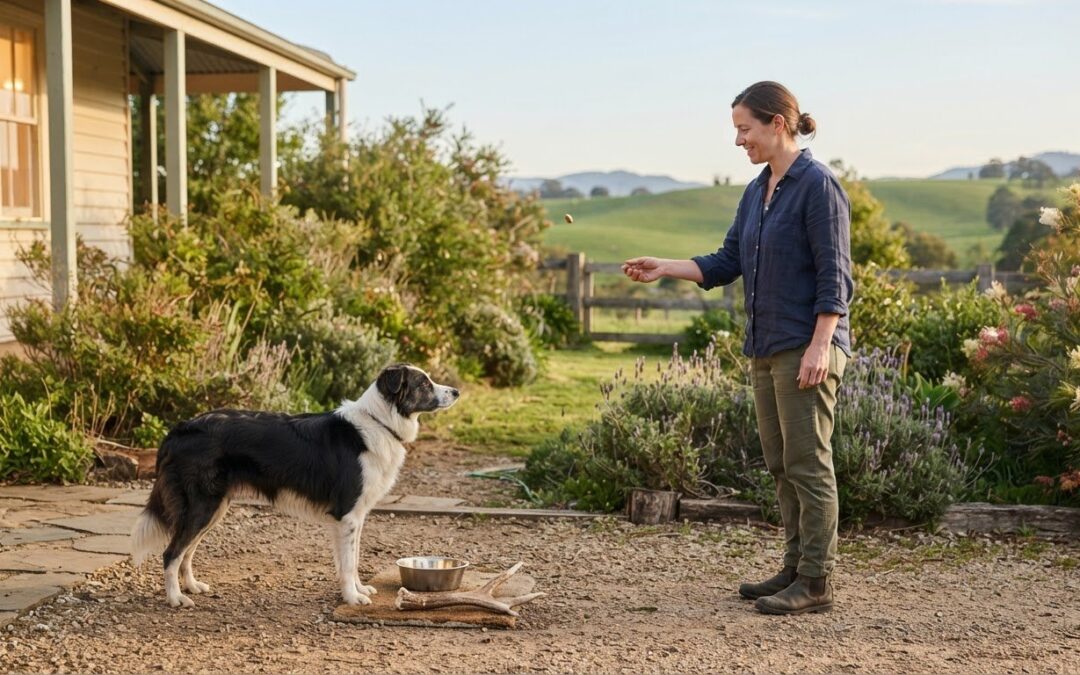
Taking a guarded item away can increase a dog’s worry about losing it. To learn how to stop a dog from resource guarding, give them space, avoid punishment or force, and use gradual training to build a calmer response when someone approaches. Resource guarding is a natural behaviour, but early warning signs need attention.
It can be unsettling to see a dog stiffen, turn their head or growl near food or a favourite toy. These signals don’t mean your dog is being difficult; they’re communicating discomfort. Responding calmly helps keep everyone safer.
This guide explains what dogs may guard, why guarding can develop, and how desensitisation and counterconditioning can help. You’ll also learn practical ways to manage the situation during training, including when to seek support for behaviour that is difficult to handle at home.
Key Takeaways
- Notice whether your dog guards food, chews, toys or resting places, and look for subtle signs of discomfort.
- Give your dog space when they guard something, and keep children and other pets away from the item or area.
- Build a safer response gradually with desensitisation and counterconditioning, starting with easier training steps rather than reaching for the resource.
- Consider how past experiences, such as having valued items taken away, may contribute to guarding and shape your training approach.
1. Commonly guarded food, chews, toys and spaces
A dog may guard anything they value, not just a dinner bowl. Common examples include meals, food scraps, long-lasting chews, favourite toys and objects they’ve picked up. A dog might also guard a resting place, such as a bed, sofa or quiet corner. Note the specific item or location: identifying the trigger helps you manage access and plan training.
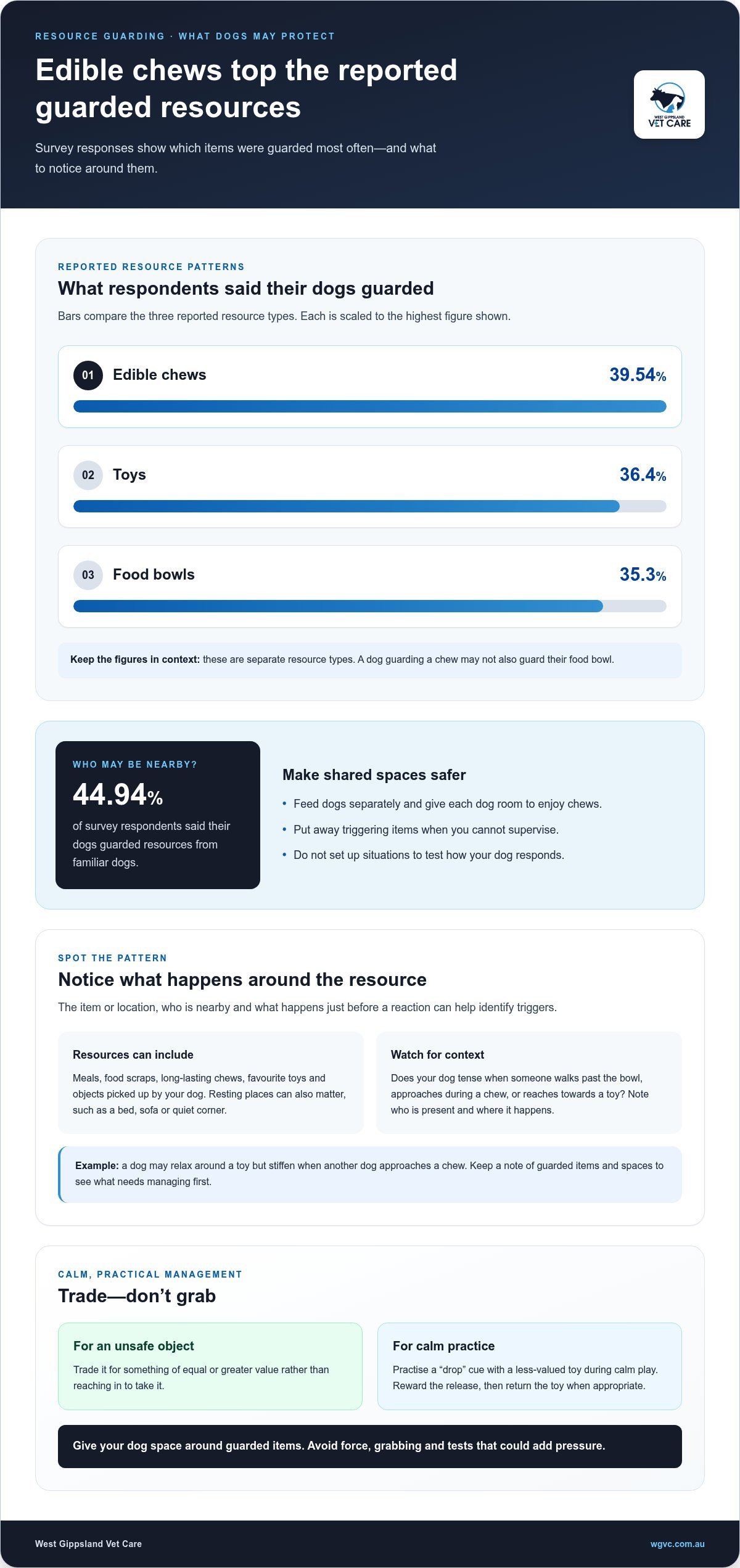
Survey responses show several common patterns. As of October 2026, 39.54% of respondents reported that their dogs guarded edible chews. Toys were reported by 36.4%, while food bowls were reported by 35.3%. These figures describe different resources, so don’t assume a dog that guards a chew will also guard their bowl.
Look for patterns around the resource. Does your dog become tense when someone walks past their bowl, approaches while they’re chewing, or reaches towards a toy? Note who is nearby, where the resource is and what happens just before your dog reacts. For example, a dog may relax around a toy but stiffen when another dog approaches a chew.
Guarding can involve familiar animals too: 44.94% of survey respondents said their dogs guarded resources from familiar dogs. If you have more than one dog, feed them separately and give each dog space to enjoy chews. Put away items that trigger guarding when you can’t supervise, and avoid setting up situations to test your dog’s response.
For objects, practise a “drop” cue with a less-valued toy during calm play. If your dog picks up something unsafe, trade it for something of equal or greater value rather than grabbing it. Keep a note of guarded items and spaces. This gives you a clearer picture of what to manage first and what to discuss in a behaviour consultation.
2. Desensitisation and counterconditioning
Desensitisation means introducing a trigger at low intensity and gradually building a positive association with it. If your dog worries when someone approaches their bowl, start far enough away that they stay relaxed. Toss a treat, then move away. This teaches your dog that an approach predicts something pleasant, not the loss of food. Learning how to stop a dog from resource guarding starts with finding a distance where they feel safe.
Repeat calmly and progress in small steps. You might gradually reduce the distance over several training sessions, but only while your dog remains comfortable. If they stiffen, freeze, turn away or growl, stop advancing and give them space. Reaching for the bowl too soon can make the trigger more worrying, so let your dog’s response guide the pace.
If your dog guards toys, teach a “drop” cue with a low-value toy first. During fetch, offer a treat when your dog returns. Mark and reward the moment they drop the toy, then return it when appropriate. This teaches your dog that releasing an object can bring a reward, rather than automatically ending the fun. Don’t practise by forcibly taking toys away.
To prevent guarding in puppies and newly adopted dogs, make meals and chews predictable, provide quiet space, and avoid taking valued items to test their response. Puppies as young as 7 weeks can show guarding, so seek professional help if you notice it rather than waiting for them to grow out of it.
Keep practice brief and finish while your dog is comfortable. Change one factor at a time, such as your distance or the toy’s value, so you can see what affects their response. Knowing how to stop a dog from resource guarding also means choosing an easier practice when your dog seems tense. A behaviour consultation can help you shape a gradual plan around your dog’s triggers and household routine.
3. What Is Resource Guarding in Dogs?
Resource guarding is behaviour that discourages another person or animal from approaching something a dog values. A dog may freeze, turn their head, stare, show teeth, growl or snap. Some warnings are subtle, so watch your dog’s posture around food, toys and resting places.
For immediate safety, stop moving closer at the first warning signal and give your dog space. Don’t punish a growl or grab the guarded item. Move children and other pets away, then use a barrier or separate room to prevent another approach. These steps reduce pressure while you plan what to do next.
Guarding can become dangerous when someone ignores warnings, corners the dog or reaches for the item. A bite can happen if the dog feels trapped or expects a valued resource to be taken. No behaviour guarantees a bite, but a lunge, snap, contact bite or escalating warning needs prompt attention. Keep people away from the trigger.
Consult a veterinarian if guarding starts suddenly, worsens, or occurs alongside signs of pain or illness. Seek a qualified dog behaviour professional if your dog threatens or bites, guards several resources, or is difficult to manage safely at home. A veterinary assessment can help identify medical factors, while behaviour support can guide safe training and management.
Dog behaviour training costs in Australia depend on the case and are provided after a quote request. Cost factors include the assessment needed, session format and follow-up support.
Look for a professional with relevant education, practical experience treating resource guarding, and a clear, reward-based approach. Ask how they assess risk, involve household members and adapt training to your dog. A veterinary behaviourist is a veterinarian with further behaviour expertise. A dog trainer’s qualifications and experience can vary, so check their background and methods.
For a behaviour consultation, prepare a clear description of what your dog guards, who is present and which warning signs you’ve observed. Share any history of bites or snaps, and explain how you currently separate your dog from children or other pets. These details help shape a practical safety plan.
4. Possible causes of resource guarding
A dog may learn that guarding works if people or other animals repeatedly take valued things away. For example, reaching into a food bowl or removing a chew can teach a dog that an approaching hand predicts loss. Their warning may then appear sooner next time. Avoid deliberately taking items to test your dog; this can strengthen the association instead of building trust.
Resource guarding can begin early. Puppies as young as 7 weeks old can show guarding towards littermates or people. A puppy that stiffens when another puppy approaches a chew is already communicating discomfort. Don’t assume the behaviour will disappear with age. Manage access and seek professional support if guarding is present, even in a young dog.
The context can also shape what a dog guards and when. A dog may relax with a toy in a quiet room but become tense when another dog enters. A busy household, repeated interruptions during meals or competition for a resting spot can make particular situations harder. Record the resource, setting, people or animals nearby, and what happened immediately beforehand.
Past experiences are clues, not a complete explanation. A newly adopted dog may have learned to protect food or objects before joining your household, while another dog may develop guarding after repeated removals at home. Don’t punish the warning or try to prove you can take the item. Instead, note the pattern and adjust the environment so your dog can eat or rest without interruption.
These details can help guide a practical behaviour plan. If guarding is emerging or becoming harder to manage, arrange a behaviour consultation to discuss the triggers and safer next steps.
West Gippsland Vet Care: Pet Vaccinations
West Gippsland Vet Care provides pet vaccinations and veterinary care for your dog’s health needs. Vaccinations, desexing and microchipping support routine care, while orthopaedic surgery can address orthopaedic problems. These services don’t replace resource-guarding training, but your dog may need veterinary attention for a separate health concern alongside behaviour support.
If your dog’s guarding appears alongside changes in movement or signs of discomfort, discuss those changes with a veterinarian. For help with routine care or an orthopaedic concern, contact West Gippsland Vet Care or visit wgvc.com.au.
Build a calmer routine, one step at a time
Start with one manageable change, such as keeping a simple record of what happens before your dog guards a resource. Your notes can help you recognise patterns and choose considered next steps in training. Learning how to stop a dog from resource guarding isn’t about forcing a quick change; it’s about creating safer experiences and building trust through steady practice.
If you’re unsure how to adapt training to your dog’s behaviour, a behaviour consultation can help you talk through the situation and plan practical next steps. You can also discuss health concerns that may be affecting your dog’s comfort as part of their veterinary care.
Contact West Gippsland Vet Care to start a conversation about support for your dog. With patience, thoughtful management and the right guidance, you can keep working towards a more settled routine together.
Frequently Asked Questions
What Is Resource Guarding in Dogs?
Resource guarding is behaviour a dog uses to keep another person or animal away from something they value. The resource might be food, a toy, a resting spot or a person’s attention. Treat it as information about how your dog feels in that moment, rather than a character flaw. Respond calmly and avoid setting up tests to see what they’ll do.
What is resource guarding in dogs and what are its signs?
Signs can include a fixed stare, a closed mouth, a sudden pause in eating, or placing the body between a resource and someone nearby. A dog may also move away carrying an object, then become tense if followed. Notice the sequence and setting, such as whether this happens when someone enters the kitchen. Those details can help you recognise patterns and describe them clearly.
How can you safely stop a dog from guarding food, toys, or stolen items?
Don’t approach or chase a dog carrying a stolen item. Move other people and animals away, then encourage your dog to move away using a safe trade. Once they’re elsewhere, secure the object without reaching over them. Arrange meals so nobody needs to pass close by. If the item could harm your dog, seek veterinary advice about the safest response.
What training steps help prevent resource guarding in dogs?
Practise everyday cues away from guarded items first. Teach “come”, “leave it” and “drop” with ordinary objects, rewarding your dog for responding. Then use those skills in calm situations before they’re needed around something valuable. Keep a record of each practice, including the cue, object and response. Learning how to stop a dog from resource guarding also means making training easier if your dog seems tense.
What should you avoid doing when a dog resource guards?
Avoid scolding, startling or physically confronting a dog over a valued object. Don’t lean over them, block their escape or ask children to practise taking things. These actions can make an already tense interaction harder to manage. Instead, pause, create distance and change the environment. If you need to retrieve something, first plan a calm way to move your dog away.
Can resource guarding be caused by pain, anxiety, or medical problems?
Pain or illness can affect a dog’s comfort, so a sudden behaviour change deserves veterinary attention. Anxiety or stress may also influence how a dog responds around valued resources. Note when the behaviour began and any changes in appetite, movement or routine. Understanding how to stop a dog from resource guarding includes considering whether discomfort may be contributing. A veterinarian can assess health concerns and discuss suitable next steps.