What if your high-energy Kelpie or energetic crossbreed only needed forty-eight hours of quiet time before feeling like her usual self again after being desexed? It sounds like a dream for any Gippsland pet owner, but with laparoscopic technology, it is a reality. We understand that the thought of your best mate undergoing surgery brings up a lot of “what-ifs,” from worrying about surgical risks to the struggle of keeping an active dog calm for weeks on end.
It is completely normal to feel a bit anxious, but knowing exactly how to prepare a dog for keyhole spay surgery can turn that worry into confidence. Research shows that this minimally invasive approach can result in up to 65% less post-operative pain compared to traditional methods, meaning a much more comfortable experience for your girl. We are here to support you through every step of this journey, ensuring you feel like a fully prepared pet parent who is making the best choice for their companion.
In this guide, we will share the essential steps to get your home and your dog ready for the big day. You will learn about fasting requirements, how to set up a “low-impact” recovery space, and what to expect when you arrive at the clinic. Our goal is to ensure a smooth surgery day and a recovery so quick, you will both be back to your favourite local walking tracks before you know it.
Key Takeaways
- Understand why a laparoscopic spay is the gold standard for your dog, using tiny incisions to ensure she feels significantly less pain than traditional surgery.
- Discover the essential steps on how to prepare a dog for keyhole spay surgery, from the strict 8:00 pm fasting rule to the importance of a gentle pre-op walk.
- Learn how to create a “recovery sanctuary” at home by preventing jumps onto the ute and using yoga mats to help your mate stay steady on slippery floors.
- Find out why the first 48 hours are the most critical for healing and how laparoscopic technology allows your dog to bounce back much faster.
- Gain peace of mind by choosing a local team that combines advanced surgical equipment with Fear-Free techniques to keep your pet calm and comfortable.
What is a Keyhole Spay and Why is it the Gold Standard?
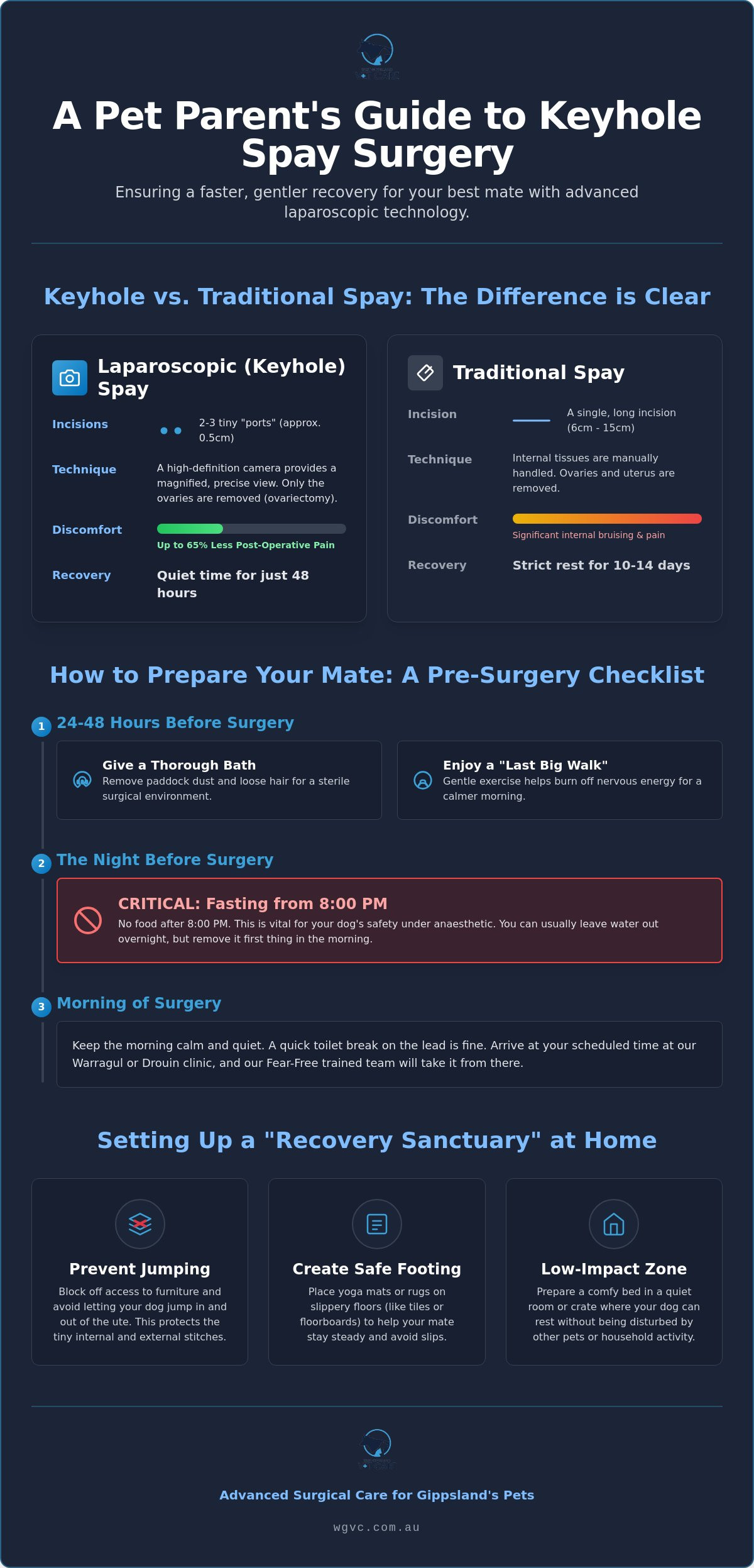
Choosing the right surgical path for your girl is a deeply personal decision. While traditional desexing has been the norm for decades, veterinary medicine has evolved to offer a gentler alternative. A Laparoscopic Surgery (Keyhole Spay) is a minimally invasive technique that reduces post-operative pain by up to 65% compared to conventional methods. By using a specialised high-definition camera and tiny instruments through incisions as small as 0.5cm, we can perform the procedure with incredible care. Understanding the mechanics of this modern approach is the first step when you are researching how to prepare a dog for keyhole spay surgery.
The primary difference lies in what is removed and how we access it. In a traditional spay, a large incision is made to allow the surgeon to manually “blindly” find and remove the ovaries and the uterus. In contrast, a keyhole spay focuses on an ovariectomy, where only the ovaries are removed. This is far less traumatic for the body. Since the uterus only becomes a health risk due to the hormones produced by the ovaries, removing the ovaries alone provides the same health benefits with a fraction of the internal disruption. For our active Gippsland dogs, from hard-working Kelpies to adventurous family Labradors, this means a much faster return to their happy, wagging selves.
The Benefits of Laparoscopic Surgery
The most immediate advantage is the reduction in physical stress. Smaller wounds mean there is a significantly lower risk of infection or “wound breakdown,” which is a common worry for owners of high-energy dogs. The precision offered by the technology is also a game-changer. Our surgeons have a clear, magnified view of the internal organs, allowing for much better visualisation than traditional open surgery. This high-definition perspective ensures that every movement is deliberate and gentle, prioritising your pet’s safety above all else.
Keyhole vs. Traditional Incisions
When you compare the two methods, the physical difference is striking. Traditional incisions often range from 6cm to 15cm depending on the size of the dog. Keyhole “ports,” however, are roughly the size of a ladybird. Because we aren’t “tugging” on internal tissues to bring them to the surface, there is far less internal bruising and discomfort. This approach is particularly beneficial for larger breeds prone to bloat. While we are already using the laparoscopic equipment, a preventative gastropexy can often be performed at the same time. Knowing these details helps when you consider how to prepare a dog for keyhole spay, as it highlights just how much smoother the recovery journey will be for your mate.
Pre-Operative Preparation: What to Do Before the Big Day
Preparing for your dog’s laparoscopic procedure is just as much about her emotional well-being as it is about her physical safety. When you are looking into how to prepare a dog for keyhole spay surgery, the process begins well before you load her into the car. One of the most critical steps is fasting. We ask that your mate is “nil by mouth” from 8:00 pm the night before. This is vital for her safety under anaesthetic, as it prevents complications like aspiration while she sleeps. If you have a multi-pet household, it’s often easiest to feed everyone at once and then pick up all the bowls to avoid any sneaky midnight snacks.
Hygiene is another practical step that makes a difference. We recommend giving your dog a thorough bath 24 to 48 hours before the surgery. This helps remove paddock dust, allergens, or loose hair that could compromise the sterile environment of our surgical suite. It also means she’ll be clean and comfortable for her rest period afterwards. On the day before, take her for a “Last Big Walk.” This gentle exercise helps burn off nervous energy, making her more likely to settle quietly the next morning when you head to our Warragul or Drouin clinics.
The Night Before Surgery
As the sun sets, focus on keeping the environment calm and predictable. Along with removing food, you should follow your vet’s specific advice on when to pull the water bowl; usually, this happens first thing on the morning of the procedure. Feed her a light, easily digestible meal to avoid any tummy upsets during the night. You might also like to prepare a small “doggy bag” containing a familiar-smelling blanket. Having something that smells like home can be incredibly reassuring while she is in our care. You can even review our post-operative instructions early so you feel completely ready for her return.
Fear-Free Arrival Tips
The journey to the clinic should be as peaceful as possible. Many owners find that using calming pheromone sprays in the car helps lower anxiety for the trip. We suggest arriving about five minutes early. This gives your girl time for a calm “sniff and settle” on the grass outside before coming through the doors. We take our Fear-free veterinary care approach seriously, ensuring every interaction is gentle and supportive. If you have any last-minute jitters, feel free to chat with our friendly reception team who are always here to help put your mind at ease.
Setting Up a ‘Recovery Sanctuary’ at Home
While the recovery from a laparoscopic spay is remarkably quick, those first forty-eight hours require a bit of careful management. When you are planning how to prepare a dog for keyhole spay, the environment you bring her home to is just as important as the surgery itself. You want to create a space that encourages rest and prevents the exuberant “zoomies” that Gippsland working dogs and active family pets are known for. By setting up a dedicated recovery sanctuary, you ensure she remains calm while her body begins its rapid healing process.
One of the biggest challenges for local owners is restricting vertical movement. Jumping up onto the back of the ute or leaping onto the sofa can put unnecessary strain on the internal surgical sites, even if the external wounds are tiny. It is best to keep her on a lead or in a small room where jumping isn’t an option for at least the first two days. This prevents sudden stretches that could cause discomfort or minor internal bruising while the inflammation is at its peak.
Flooring is another detail that often gets overlooked. Slippery floorboards or tiles can cause a dog to “splay” or slide, which might lead to a sudden, jerky movement. If your home has these surfaces, consider laying down some temporary rugs or even cheap yoga mats. These provide the grip she needs to stand up and lie down safely without any sudden slips. For high-energy pups that simply won’t stay still, using a crate or a small exercise pen can be a helpful temporary measure to keep them contained and safe when you aren’t directly supervising.
Managing the ‘Gippsland Paddock’ Factor
Living in Gippsland often means dealing with mud and damp grass, especially during the cooler months. These elements are the primary enemies of surgical port sites. For the first few days, it is best to keep your dog away from muddy paddocks and long grass entirely. We recommend setting up a small, clean “toilet area” and taking her out on a lead rather than letting her free-roam the yard. By walking her out on a short lead, you prevent her from running off or rolling in the dirt. Always give her paws a quick wipe before she re-enters her sanctuary to keep her bedding clean and dry.
Bedding and Comfort
Comfort is key to a calm recovery. Choose a low-sided bed so your mate doesn’t have to “climb” or step high to get in. Place this bed in a quiet corner of the house, away from the hustle and bustle of children or other boisterous pets. During our chilly Gippsland winters, ensure this spot is entirely draft-free. A warm, stable environment helps her body focus all its energy on healing. Keeping the area quiet and predictable will help her sleep off the remaining effects of the anaesthetic, ensuring she wakes up feeling bright and refreshed.
Recovery Time for Keyhole Spay in Dogs vs. Traditional Surgery
The difference in recovery between a traditional spay and a laparoscopic procedure is often what surprises owners the most. With a conventional spay, your mate would typically need ten to fourteen days of strict confinement to allow a large abdominal incision to heal. When you are learning how to prepare a dog for keyhole spay, you will find the timeline is drastically condensed. Most dogs are bright, alert, and walking comfortably within just six hours of waking from their anaesthetic. Because the internal work is so much less traumatic, their bodies don’t have to work nearly as hard to mend.
The forty-eight-hour milestone is particularly significant in the healing journey. This is when internal inflammation naturally peaks before it begins to rapidly subside. In a traditional surgery, this peak can be quite uncomfortable, but with keyhole technology, the inflammatory response is much more manageable. A keyhole spay allows dogs to return to full off-lead activity in roughly one-third of the time required for open surgery. This means less time spent worrying about a high-energy dog bursting her stitches and more time enjoying your usual routine together.
The First 24 Hours at Home
When you first bring your girl home, she might still have a touch of “anaesthetic grogginess.” It is best to offer small, frequent meals rather than one large dinner to help her tummy settle. We will provide you with specific pain management medication; please administer this exactly as prescribed, even if she seems fine. Dogs are remarkably stoic, and keeping ahead of any discomfort ensures her recovery stays on track. Take a quick look at the port sites; they should look like tiny, clean nicks with minimal redness and absolutely no discharge. If you have any questions about her progress, you can always contact our team for advice.
Timeline to Full Activity
While she will feel like her old self almost immediately, we still recommend a structured return to exercise to ensure everything heals perfectly. Here is a general guide for the first week:
- Day 1 to 2: Strict rest in her recovery sanctuary. Only short, on-lead toilet breaks are allowed.
- Day 3 to 5: You can start a gradual increase in lead walking. Keep these walks short and on flat ground to avoid any sudden straining.
- Day 7 to 10: We will see you back at the clinic for a final check-up. Once our vets give the all-clear, she can return to her normal Gippsland life, including running, swimming, and jumping.
This rapid return to health is why so many local families choose this path. Knowing how to prepare a dog for keyhole spay means you can plan for a few days of quiet time rather than a fortnight of stress, making the whole experience much easier for both you and your best mate.
Why West Gippsland Vet Care is the Right Choice for Your Mate
Entrusting your dog to a surgical team is a significant decision, and we want you to feel completely at ease. At West Gippsland Vet Care, we have invested in a specialised surgical suite equipped with advanced laparoscopic towers. This technology allows us to offer the high standard of care your pet deserves right here in our local community. By choosing a team that understands how to prepare a dog for keyhole spay surgery with both technical precision and emotional care, you are ensuring the best possible outcome for your companion.
Our approach goes beyond the equipment. Every member of our team is dedicated to Fear-Free techniques, which means we prioritise your dog’s mental well-being from the moment she walks through our doors. We provide comprehensive care that starts with pre-operative blood testing to ensure she is healthy for anaesthesia and continues through to her post-operative recovery checks. Because we are a local practice, we are also here for our existing clients with twenty-four-hour emergency support if you have any urgent concerns after the procedure.
Advanced Surgical Expertise in Warragul
Our vets have undergone training in minimally invasive techniques that were once only available through city specialists. This expertise means your dog can benefit from modern surgical advancements without the stress of a long commute to Melbourne. Whether it is a routine desexing or more complex Orthopaedic Vet Gippsland services, our focus remains on safety and comfort. We use the most up-to-date anaesthetic protocols, tailored specifically to your dog’s age, breed, and health status, to make the experience as safe as possible.
A Supportive Community Practice
We are more than just a clinic; we are your neighbours. We live and work in Gippsland, so we understand the practicalities of managing a dog on a farm or a busy town block. When you are learning how to prepare a dog for keyhole spay, you might have specific questions about your home setup or your dog’s unique personality. Our team is always just a phone call away, providing direct access for those “is this normal?” moments during the recovery phase. We view our work as a partnership with you to keep your pets healthy and happy for years to come.
If you are ready to give your girl the gift of a faster, more comfortable recovery, we would love to help. Contact us today to discuss a keyhole spay for your dog and see how our caring team can support you both through this important milestone.
Giving Your Mate the Best Start to Recovery
Preparing your best friend for her surgery doesn’t have to be a source of worry. By focusing on simple pre-operative steps like strict fasting and setting up a quiet indoor sanctuary, you are paving the way for a remarkably fast return to health. Laparoscopic technology is a wonderful way to ensure your dog experiences minimal discomfort and gets back to her favourite local spots in record time. It’s about more than just a quick procedure; it’s about ensuring she feels safe and supported throughout the entire journey.
Understanding how to prepare a dog for keyhole spay ensures that surgery day is calm and predictable for both of you. As an independent, locally owned practice, we are deeply committed to the well-being of Gippsland’s animals. Our Fear-Free certified approach means your pet’s emotional comfort is always our priority; plus, we provide 24-hour emergency care for existing clients to give you total peace of mind. We view every patient as a member of our own family.
Book a Keyhole Spay Consultation at West Gippsland Vet Care today to discuss how this modern, gentle approach can benefit your girl. We look forward to seeing you and your mate at the clinic soon.
Common Questions About Keyhole Spay Surgery
Is a keyhole spay safer than a traditional spay?
Keyhole spays are considered safer because they are minimally invasive, leading to significantly less internal trauma for your dog. The use of a high-definition camera allows our surgeons to see internal structures with incredible clarity, which reduces the risk of bleeding. Because the incisions are so small, there is also a much lower chance of wound breakdown or infection compared to a traditional six to fifteen centimetre cut.
How much does a keyhole spay cost in Gippsland?
The cost of a laparoscopic spay depends on several factors, including your dog’s weight and whether any additional procedures are performed at the same time. Because it requires specialised equipment and advanced surgical training, the investment is higher than a traditional spay. We recommend contacting our friendly reception team for a personalised estimate that covers everything from your initial consultation to post-operative checks.
Will my dog still need to wear a cone after keyhole surgery?
Many dogs don’t need a cone at all, though it depends entirely on your dog’s personality. Since the incisions are tiny and cause less irritation, most pets aren’t as tempted to lick the area. However, if your mate is a known “licker,” we might suggest a light recovery onesie or a soft collar for the first forty-eight hours to keep the port sites clean and dry.
Can any vet perform a keyhole spay?
No, this procedure requires a specialised laparoscopic tower and specific surgical training that isn’t found in every clinic. It is a technical skill that takes time to master. At West Gippsland Vet Care, we have invested in this technology and training so that local owners don’t have to travel into the city for advanced, minimally invasive care.
What happens if my dog jumps after her keyhole surgery?
A single jump usually won’t cause a disaster, but it can lead to internal bruising or swelling at the port sites. This is exactly why knowing how to prepare a dog for keyhole spay involves creating a low-impact environment before she comes home. If she does leap onto the sofa or into the ute, keep a close eye on her and give us a call if she seems stiff or if the sites look red.
Can I get my dog’s stomach tacked (gastropexy) at the same time as a keyhole spay?
Yes, performing a gastropexy alongside a keyhole spay is a very common and proactive choice for large or deep-chested breeds. While we are already using the camera and instruments, we can tack the stomach to the abdominal wall to prevent life-threatening bloat. It is a wonderful way to combine two important health measures into a single, gentle anaesthetic session.
How long does the keyhole spay procedure take?
The actual surgical time for a keyhole spay is typically between thirty and forty-five minutes. However, your mate will stay with us for the whole day. This allows our nursing team to provide a calm, Fear-Free wake-up and monitor her closely until she is bright, wagging, and ready to head home to her recovery sanctuary.
What are the signs of a complication after laparoscopic surgery?
While complications are rare, you should watch for excessive redness, swelling, or discharge at the tiny port sites. Other signs to look out for include persistent lethargy, a refusal to eat after the first twenty-four hours, or obvious signs of pain like panting or restlessness. If you notice anything that doesn’t feel right, our team is always here to offer support and advice.