
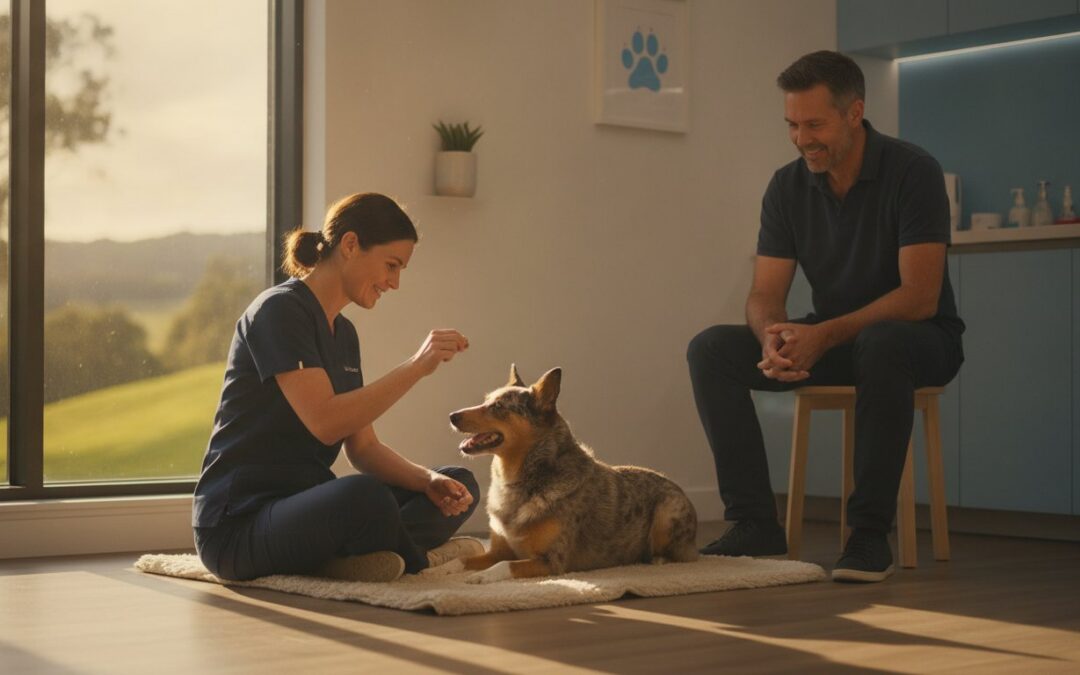
Imagine the scene: you’ve finally managed to coax your trembling Kelpie into the back of the ute, only to arrive at the clinic and find yourself being dragged through the door while everyone in the waiting room watches. It’s a situation many Gippsland pet owners know all too well, and it can leave you feeling completely exhausted before the consultation even begins. You certainly aren’t alone in wondering how to make vet trips less stressful for my dog. We understand that seeing your best friend in distress is incredibly tough, and feeling like you have the “difficult” pet in the lobby is a weight no one should have to carry.
We believe that a trip to the vet should be a partnership in care, not a source of anxiety. This guide will show you how to use gentle, Fear-Free techniques to transform these outings into a positive, calm experience for both of you. We will explore practical steps for more relaxed car rides, ways to settle those waiting room jitters, and how to build a better relationship with your veterinary team so that every check-up ends with a wagging tail and a genuine sense of ease.
Key Takeaways
- Understand why clinical smells and high-pitched sounds trigger your dog’s “flight or fight” response, helping you empathise with their unique sensory experience.
- Discover how to make vet trips less stressful for my dog by practicing “mock exams” at home and using high-value rewards like roast chicken.
- Learn to manage travel anxiety and motion sickness on winding Gippsland roads to ensure your pet arrives at the clinic feeling calm and settled.
- Explore the principles of Fear-Free care, where modern, gentle handling techniques replace old-fashioned restraint to prioritise your pet’s emotional safety.
- Build a lasting partnership with your veterinary team through consistent “happy visits” that focus on positive reinforcement and open communication.
Why Do Dogs Find Vet Visits So Stressful?
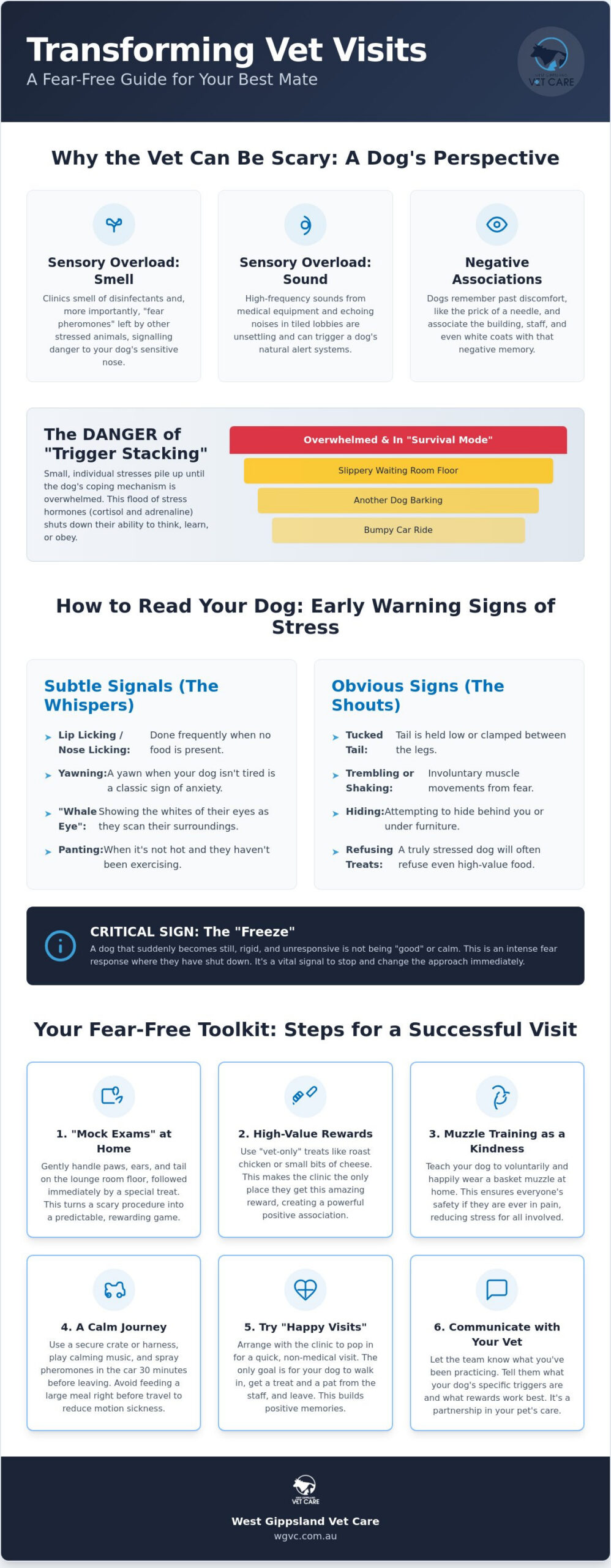
To understand how to make vet trips less stressful for my dog, we first need to look at the world through their eyes, or more accurately, through their nose. A veterinary clinic is a sensory explosion. While we might just smell a bit of disinfectant, your dog is picking up a complex library of “fear pheromones” left behind by other stressed animals. Combined with the high-frequency hum of medical equipment and the unfamiliar echoes of a tiled lobby, it’s no wonder their natural “flight or fight” response kicks in before they even reach the consult room.
Many Gippsland owners find that their dogs start pacing the moment the car turns off the Princes Highway toward the clinic. This is often the “White Coat” effect in action. Dogs are masters of association. They remember the sharp prick of a needle or the discomfort of a previous ear cleaning; they link those memories to the building, the smells, and even the specific scrubs the staff wear. If your dog already struggles with Separation anxiety in dogs or general nervousness, these clinical triggers can feel even more overwhelming. They also “read the lead” with incredible precision. If you are feeling tense or embarrassed about their behaviour, that energy travels straight down the leash, confirming to your dog that there is indeed something to worry about.
The Science of Canine Fear
We often talk about “trigger stacking” in the veterinary world. This happens when small, manageable stresses pile up until the dog simply can’t cope anymore. A bumpy car ride, a barking dog in the car park, and a slippery floor in the waiting room might seem minor individually. Together, they create a chemical cocktail of adrenaline and cortisol. When a dog is in this state, the “thinking” part of their brain shuts down and the “survival” part takes over. This is why a normally obedient dog might stop listening to commands or refuse their favourite treats. Forcing a dog through an exam when they are in this state doesn’t just make the visit difficult; it can create long-term trauma that makes future visits even harder to manage.
Identifying Your Dog’s Stress Signals
Learning to spot the early warning signs of fear is a vital skill for any pet parent. Some signals are subtle, such as frequent lip licking, yawning when they aren’t tired, or “whale eye,” where you can see the whites of their eyes as they scan for threats. More obvious signs include trembling, a tucked tail, or trying to hide behind your legs. It’s particularly important to recognise the “freeze” response. A dog that stands perfectly still might look like they are being “good,” but they are often actually terrified and shut down. By noticing these signs early, we can pause, offer comfort, and adjust our approach to keep the experience as positive as possible.
Preparing at Home: The Foundation of a Fear-Free Visit
Building a calm experience starts long before you pull into the clinic car park. When you’re wondering how to make vet trips less stressful for my dog, the answer usually lies in the quiet moments spent at home on the rug. By turning veterinary procedures into a normal, rewarding part of daily life, we can strip away the mystery and fear that often leads to a struggle at the clinic door. One of the most effective ways to help your pet get over this fear is to bring the “vet experience” into your lounge room using positive reinforcement.
Start with “Mock Exams” during your regular bonding time. Gently touch your dog’s paws, look inside their ears, and lift their tail, always following up with a high-value treat. We recommend using “vet-only” snacks that your dog doesn’t get at any other time. Think roast chicken, tiny bits of steak, or even a lick of peanut butter. This creates a powerful positive association: when my ears are touched, I get something delicious. Muzzle training is also a vital part of this preparation. Teaching your dog to love wearing a basket muzzle is a kindness, not a punishment. It ensures that if they are ever in pain or frightened, they can be handled safely without escalating their stress. Additionally, applying calming pheromone sprays to their bedding or using a Thundershirt thirty minutes before you leave can provide a sense of security before the journey even begins.
Desensitisation Techniques for Handling
Desensitisation is the gradual exposure to a stimulus to reduce a fearful response. To practice this at home, follow these steps:
- The Gentle Touch: Start by just touching a paw for a single second, then immediately rewarding. Over several days, slowly increase the duration of the touch until you can gently squeeze each toe.
- Ear and Mouth Checks: Lift the ear flap or lip for a brief moment, give a treat, and repeat. This prepares them for the look and feel of an otoscope or a dental check.
- Mastering “The Lift”: Practice getting your dog comfortable with being picked up or standing on a stable platform, like a sturdy garden bench. This mimics the feeling of a consult table and helps them feel secure when their feet aren’t on the ground.
The Role of Puppy Preschool
For those with young pups, Puppy Preschool is a critical first step in preventing adult anxiety. It allows your dog to build a “social bank account” of positive memories in the clinic while they are in their key socialisation window. These early visits, filled with play and treats rather than just needles, set the stage for a lifetime of relaxed check-ups. If you find your adult dog’s anxiety is already quite high, reaching out for one of our behaviour consultations can help us tailor a specific plan for how to make vet trips less stressful for my dog based on their unique personality.
The Journey: Managing the Trip Across West Gippsland
For many local dogs, the stress of a vet visit starts long before they see a stethoscope. It begins the moment the keys jingle or the ute tailgate drops. If your dog only ever goes in the car to visit the clinic, they quickly learn to associate the vehicle with “scary places.” When looking at how to make vet trips less stressful for my dog, we have to consider the physical and emotional impact of the drive itself. The winding, undulating roads across West Gippsland can also trigger motion sickness. If a dog feels nauseous every time they travel, they will naturally develop a deep-seated dread of the destination. This nausea builds on their anxiety, creating a cycle that is hard to break without a change in routine.
Establishing a calm “Arrival Ritual” is a game-changer. Instead of rushing from the car straight into the clinic, try to arrive five minutes early. Spend this time letting your dog sniff the grass in the car park or sit quietly with them while they watch the world go by. This allows their heart rate to settle and gives them a chance to process the environment. If the waiting room looks busy or has a particularly vocal patient inside, don’t feel pressured to enter immediately. Most clinics are more than happy for you to check in and then wait in the car until it is your turn. This simple boundary keeps your dog away from other stressed animals and maintains the calm environment you worked so hard to create at home.
Making the Car a “Mobile Safe Zone”
Your vehicle should feel like a secure extension of your home. Using a sturdy crate or a crash-tested harness helps your dog feel physically stable, which is especially important on our regional roads. Remember that as of November 2025, Victorian law requires dogs on the back of a ute to be appropriately tethered or caged. To break the negative association with the car, plan several “non-event” trips each week. Drive to a local park in Warragul or Drouin for a walk, or head to a dog-friendly café for a quick pat. We also highly encourage “Happy Visits.” This is when you pop into the clinic just to say hello, get a liver treat from the reception team, and leave again without any medical procedures. It builds a positive history that can outweigh the memory of a needle.
Regional Travel Considerations
Living in Gippsland means being mindful of our local conditions. On hot summer days, ensure the car is pre-cooled before your dog hops in. In Victoria, if the temperature hits 28 degrees Celsius or higher, it’s illegal to leave a dog unattended in a car for more than 10 minutes. A quick walk on a lead before your appointment can also help burn off nervous energy, provided the pavement isn’t too hot for their paws. Of course, sometimes a trip isn’t a planned check-up. If your pet has experienced an accident, knowing you have access to an emergency vet in Warragul can provide peace of mind. While urgent trauma is naturally stressful, having a pre-established “safe zone” in your car makes even these difficult journeys a little easier for your pet to handle.
What is Fear-Free Veterinary Care?
When you are researching how to make vet trips less stressful for my dog, you will likely come across the term “Fear-Free.” This isn’t just a catchy phrase; it’s a fundamental shift in how we approach veterinary medicine. Traditionally, the focus was almost entirely on physical health, sometimes at the expense of a pet’s emotional state. Fear-Free care flips this script, prioritising the emotional well-being of your dog alongside their medical needs. We understand that a dog who is terrified cannot be thoroughly examined, and more importantly, they shouldn’t have to be. In a modern clinic, the old-fashioned practice of “pinning a dog down” for a procedure is a thing of the past. Instead, we use gentle, minimal restraint techniques that allow your dog to feel in control of their body and their space.
One of the most visible parts of this approach is the “Treat Stream.” This involves providing a continuous flow of high-value rewards throughout the entire procedure. Whether it’s a lick mat with some peanut butter or small pieces of cheese, the goal is to keep the dog’s brain occupied with something positive while we perform our checks. We also meet the dog where they feel most comfortable. If your mate is terrified of being lifted onto a cold, slippery table, we will simply get down on the floor with them. By conducting floor-based exams, we remove a major source of anxiety and build a much stronger sense of trust between the pet, the owner, and the veterinary team.
A Different Kind of Exam Room
Fear-Free is a veterinary certification that focuses on reducing Fear, Anxiety, and Stress (FAS) in pets. To achieve this, our exam rooms are designed to be “zen” spaces. We use non-slip mats so dogs don’t feel like they are losing their footing, and we have pheromone diffusers constantly running to signal safety to their sensitive noses. We also strictly follow the “Three-Second Rule.” If a dog shows signs of mounting stress or struggle, we pause the procedure for three seconds to allow them to reset. If they still aren’t comfortable, we stop and re-evaluate our approach rather than pushing through and causing potential trauma.
When Medication is the Compassionate Choice
Sometimes, despite our best efforts at home and in the clinic, a dog’s anxiety is simply too high for a safe visit. In these cases, we might discuss “pre-visit pharmaceuticals” (PVPs). There is often a stigma around “drugging” a dog, but we view this as a deeply compassionate choice. These mild sedatives or anti-anxiety medications aren’t about making our job easier; they are about making the experience bearable for your dog. For example, if your dog needs a detailed orthopaedic vet Gippsland assessment, being relaxed allows us to manipulate joints and check for pain without causing them further distress. We work closely with you to find the exact dosage that keeps your best mate calm and comfortable. If you feel your dog’s anxiety is a barrier to their health, please reach out so we can organise a tailored plan for your next visit.
Long-Term Success: Building a Partnership with Your Vet
Transforming your pet’s perspective on medical care is a journey that requires patience and a shared commitment between you and your veterinary team. Learning how to make vet trips less stressful for my dog is a marathon, not a sprint. It relies on consistent, positive experiences that slowly rewrite old, fearful memories. Open communication is the bedrock of this process. Don’t be afraid to tell us exactly what triggers your dog’s anxiety. Whether they are sensitive about their paws being touched or they have a particular dislike for the sound of clippers, sharing these details allows us to adjust our approach before the stress levels start to climb.
Being your dog’s advocate is one of the most powerful things you can do in the consult room. You know your best mate better than anyone else, and it’s perfectly okay to ask for a short break if you see them becoming overwhelmed. Sometimes, just two minutes of quiet sniffing or a few extra treats can prevent a total meltdown. We also need to celebrate the small wins along the way. Progress doesn’t always look like a dog sprinting into the clinic with joy. Sometimes, victory is a dog that stands a little taller in the waiting room, takes a treat from a nurse for the first time, or simply stops trembling quite so much. These moments are huge milestones in building their confidence.
Customising the Visit for Your Dog
Every dog is an individual, and their veterinary care should reflect that. We can add specific notes to your pet’s digital file, such as “prefers liver treats” or “prefers floor exams,” to ensure every staff member is on the same page. If your dog is particularly reactive to other animals, try scheduling your appointments during quieter times of the day, such as mid-morning or early afternoon. This helps you avoid a crowded lobby and keeps the environment as calm as possible. You can also integrate vet-friendly handling into your daily “cuddle” routine at home, making the physical checks they experience at the clinic feel like just another part of their normal day.
How West Gippsland Vet Care Supports You
At West Gippsland Vet Care, we are deeply committed to the principles of Fear-Free care. Our team understands that every animal has a unique emotional threshold, and we approach “difficult” or highly anxious pets with genuine kindness and a steady hand. We don’t believe in rushing; we believe in building trust. If you’re ready to start this journey, we invite you to book a “Happy Visit” or consult with our Fear-Free team today. Together, we can ensure that your dog’s health care is a source of comfort rather than a cause for concern.
A Brighter Future for Your Best Mate
We’ve explored how small changes at home, like gentle mock exams and high-value rewards, can make a world of difference. When you combine these with a thoughtful journey across our beautiful Gippsland landscape and a patient arrival ritual, the entire experience begins to shift. It’s about moving away from the old ways of restraint and embracing a new, kinder approach to health care that puts your dog’s feelings first.
Understanding how to make vet trips less stressful for my dog is a significant step in honouring the bond you share. As an independent, locally owned practice, our Fear-Free trained team is here to support you every step of the way. We even provide 24-hour emergency support to our existing clients, ensuring you always have a familiar hand to hold during difficult times. Whether it’s a routine check-up or a complex procedure, we are dedicated to making the process as calm as possible.
Book a Stress-Free Consult at West Gippsland Vet Care and let’s work together to make your dog’s next visit a positive one. You’ve got this, and we’re right here with you.
Frequently Asked Questions
Is it okay to give my dog a treat right before a vet visit?
Yes, it is generally fine and even encouraged to give your dog a small treat or keep them slightly hungry so they are more motivated by rewards at the clinic. However, if your dog is scheduled for surgery, a desexing procedure, or certain blood tests, they must be fasted as instructed by our team. Check your appointment confirmation or give us a quick ring if you aren’t sure about the requirements for your specific visit.
How can I tell if my dog is just nervous or truly terrified?
A nervous dog might scan the room or pull slightly on the lead, whereas a terrified dog often shuts down completely or enters a “flight” state. You can spot the difference by looking for “whale eye,” where the whites show, or a dog that refuses even their absolute favourite treat. If your dog is trembling uncontrollably or trying to hide under the waiting room chairs, they have moved past simple nerves into true distress.
Will my dog ever grow out of their fear of the vet?
Dogs rarely grow out of vet fear on their own; in fact, negative experiences often stack over time and make the anxiety worse. This is why learning how to make vet trips less stressful for my dog through early intervention and positive reinforcement is so important. By actively working on desensitisation at home and scheduling “happy visits,” you can help your best mate unlearn their fearful responses and build a more confident outlook for the future.
What should I do if my dog becomes aggressive at the clinic?
If your dog shows signs of aggression, please don’t feel embarrassed, as this is almost always a fear-based “defence” response rather than “bad” behaviour. Let our team know before you arrive so we can arrange a direct entry to a consult room or find a quieter time for your visit. We may also suggest muzzle training at home to ensure everyone stays safe while we work on reducing your dog’s underlying anxiety through gentle handling.
Can I stay with my dog during their exam or surgery prep?
You are always welcome to stay with your dog during their physical examination, as your presence provides a vital sense of security. For surgery prep or hospitalisation, we usually transition pets into our treatment area to maintain a sterile environment and allow our team to focus on clinical care. We find that many dogs actually settle quite well once they are in the calm, quiet rhythm of our hospital ward with our dedicated nursing staff.
What are “Happy Visits” and does West Gippsland Vet Care offer them?
Happy Visits are short, social appointments where your dog comes into the clinic just for a pat, a weigh-in, and some high-value treats without any medical procedures. West Gippsland Vet Care highly encourages these visits to help build a “social bank account” of positive memories. They are a fantastic way to familiarise your pet with the smells and sounds of the clinic in a completely pressure-free way that builds long-term trust.
Is there a specific breed that is more prone to vet anxiety?
While any dog can develop vet anxiety, sensitive or highly intelligent breeds like Border Collies, Kelpies, and German Shepherds are often more attuned to changes in their environment. These “working” breeds can be more reactive to the clinical smells and sounds of a busy practice. Regardless of breed, the key to how to make vet trips less stressful for my dog is early socialisation and consistent positive reinforcement to ensure they feel safe and secure.
How do I find a Fear-Free certified vet in Gippsland?
You can find a Fear-Free certified professional by checking the official Fear-Free directory or asking a clinic directly about their specific training and handling protocols. At West Gippsland Vet Care, we prioritise these gentle techniques across our entire team to ensure the best possible experience for your pet. We are proud to be a locally owned practice that understands the unique needs of our Gippsland community and their four-legged companions.