
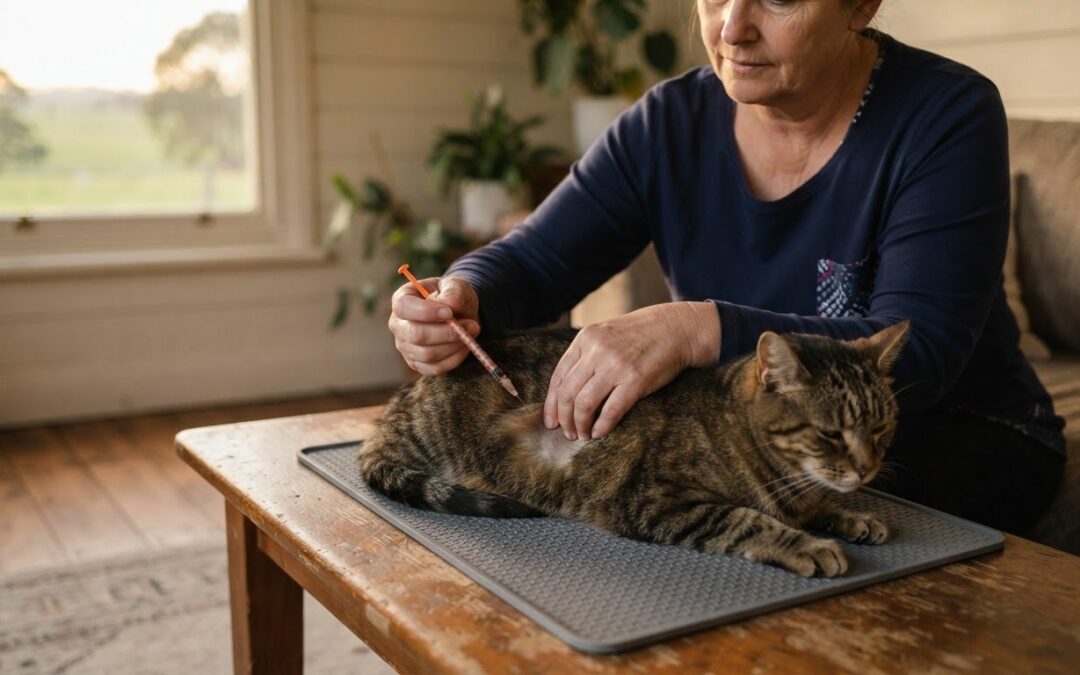
The gentlest injection isn’t necessarily the fastest. To learn how to give a cat insulin injections, follow your vet’s instructions and give the prescribed dose just under the skin, in a loose-skin area such as the scruff or side of the abdomen. An insulin pen is designed to deliver insulin under the skin; a syringe is another option.
It’s understandable to worry about hurting your cat or getting the injection wrong. Pushing insulin through a syringe too quickly can cause pain, so use a calm approach and press the plunger gently and steadily. Rotating injection sites can help avoid repeatedly using the same area.
This guide explains where to inject, how to give the dose carefully and what to do if your cat resists. You’ll learn to recognise signs of fear, stress or pain, and when a change in behaviour means it’s time to pause and seek veterinary advice. With practice and a safe, familiar routine, injections can become a more settled part of your cat’s care.
Key Takeaways
- Choose an injection area your vet has shown you, and vary sites to avoid repeatedly using the same patch of skin.
- Read resistance as a possible sign of fear, stress or pain, and pause if your cat seems uncomfortable.
- Use a calm, steady technique; if you’re unsure whether the full dose went in, don’t give another dose.
- Know which changes in your cat’s behaviour need prompt veterinary advice, including unusual sleepiness or uncoordinated movement.
Where should insulin be injected in a cat?
Follow your Australian vet’s instructions for your cat’s prescribed insulin, dose and handling; don’t change the dose without discussing it with them. Cats generally receive injections twice a day, roughly 12 hours apart, but your vet determines the dose and adjusts it gradually.
-
Choose an injection site
Choose a loose-skin area your vet has shown you, such as the scruff or side of the abdomen. An injection may also be given about one to two inches from the middle of the back, near the shoulder blade or hip bone. Insulin goes just under the skin, not into muscle. Check the area first and avoid skin that looks sore or damaged.
-
Rotate injection sites
Move between suitable areas instead of using the same spot each time. For example, alternate between approved areas on either side of the back or abdomen, following your vet’s directions. Repeated injections in one patch can contribute to lipodystrophy, changes in fatty tissue beneath the skin that may affect insulin absorption. Keep track of the sites you use so you can rotate them consistently.
-
Vary sites for comfort
Choose another suitable spot if your cat flinches, guards an area or seems uncomfortable when you touch it. Don’t force an injection into a site your cat is protecting. Pause and select another loose-skin area included in your vet’s instructions. Watch your cat’s response during and after each injection; discomfort or a new reaction is useful information to share with your veterinary team.
-
Consider injection sites and equipment
Use the syringe and fine needle or purpose-designed insulin pen recommended for your cat. Store insulin as directed, typically in a refrigerator, and don’t use it past its expiration date. For a syringe, wipe the bottle’s rubber stopper with rubbing alcohol, turn the bottle upside down and draw the prescribed amount into a new syringe. Give only the prescribed dose. A new dose can take 3-5 days to show its full effect, and reaching an optimal dose may take some weeks.
Recognising fear, stress, or pain behind resistance
Common risks include giving an extra dose when you’re unsure whether the first went in, or injecting when your cat is unwell. Resistance may signal fear, stress or pain rather than deliberate difficult behaviour.
- Pause and observe your cat. Notice whether your cat pulls away when you reach for the injection area, flinches when touched, hides, struggles or becomes unusually tense. These reactions can reflect fear, stress or pain. Don’t punish or force your cat through the injection. Stop, give them space, and consider whether the same response happens when you approach or touch a particular area.
- Look for signs your cat may be unwell before dosing. If your cat is lethargic, wobbly or unusually sleepy, contact your veterinary team before giving insulin. Don’t give insulin if your cat is vomiting or refusing food. If your cat has not eaten for more than a 12-hour period when food was expected and refuses food when offered, withhold insulin and contact a vet.
- Recognise possible hypoglycaemia. Too much insulin can lower blood glucose, causing hypoglycaemia, also called a hypo. Watch for lethargy, tremors, uncoordinated movements or seizures. Severely low blood glucose can also cause weakness, poor responsiveness, unusual behaviour, collapse or coma, and can be fatal if untreated. Treat these signs as urgent.
- Act promptly if overdose is suspected. If severe signs appear, rub honey or golden syrup on your cat’s gums and contact a vet immediately. Don’t repeat a dose if you’re unsure whether it was given or fully injected; wait until the next scheduled dose and give the normal amount. Existing clients needing urgent help can access 24-hour emergency care.

Avoiding pain from injecting insulin too quickly
Insulin pushed through a cat’s syringe too rapidly can cause pain. A controlled injection gives you time to notice your cat’s response and avoid rushing the plunger.
- Set up before bringing your cat over. Prepare the prescribed insulin and equipment according to your vet’s instructions, then settle in a quiet place. Keep the syringe or insulin pen within reach so you don’t have to search while your cat is waiting. A calm, organised setup helps you focus on giving one smooth injection.
- Keep your cat comfortably supported. Use a stable surface or familiar spot where your cat can settle without being tightly restrained. If a helper is available, they can gently support your cat while you give the injection. Watch for tensing, pulling away or sudden movement, and pause rather than forcing the procedure.
- Insert the needle steadily, then press gently. Once the needle is in the skin fold, push the syringe plunger with controlled, even pressure. Avoid a sudden, hard push, which can force insulin in too rapidly and cause discomfort. Aim to give the dose smoothly, without repeatedly stopping and restarting the plunger.
- Follow the insulin pen’s instructions. If you’re using a pen, deliver the dose as directed for that device. After pressing the button, hold the pen in place for 5-10 seconds before removing the needle. This allows the dose to pass through the needle rather than withdrawing the pen immediately.
- Notice and respond to discomfort. If your cat flinches or moves during the injection, stay calm and don’t push faster to finish. Once you’ve removed the needle, observe your cat and note what happened, such as a reaction when the plunger moved. If injections repeatedly cause distress, ask your veterinary team to review your technique and equipment with you.
How do you give a cat an insulin injection step by step?
- Feed and prepare your cat. Unless your vet directs otherwise, offer your cat food before giving insulin. Set up the prescribed insulin and equipment, then settle your cat somewhere familiar. A helper can gently support your cat, or a towel can leave only the injection area exposed. These steps can make giving your cat insulin injections a calmer, more predictable routine.
- Prepare the insulin as directed. For a syringe, wipe the bottle’s rubber stopper with rubbing alcohol. Turn the bottle upside down and draw the prescribed amount into a new syringe. For a pen, follow its instructions: priming usually means dialling 1-2 units and releasing insulin until a drop appears. If the pen requires mixing, gently roll it between your palms 10-20 times.
- Make a skin tent. At the site your vet has shown you, gently pinch a fold of skin. Insert the needle into the centre of the fold, just under the skin. For a pen, the needle usually enters the fold at a slight 45-degree angle. Keep your fingers clear of the needle’s path.
- Deliver the full dose steadily. Once the needle is through the skin, gently push the syringe plunger all the way down. With a pen, press the button to deliver the prescribed dose, then hold it in place for 5-10 seconds. Remove the needle smoothly. Don’t inject rapidly or repeat a dose if you’re unsure how much entered.
- Finish safely and reward your cat. Use a new sterile needle for each pen injection. Place used needles and syringes in a closed sharps or biohazard container. Offer something your cat enjoys, such as playtime, snuggles or a suitable treat. If you’re practising how to give a cat insulin injections, contact the veterinary team for help with the steps.
West Gippsland Vet Care
West Gippsland Vet Care can help you discuss concerns about your cat’s insulin routine and signs you’ve noticed. If injections are consistently difficult, your cat seems painful or their behaviour changes, share those details with our veterinary team to discuss next steps.
Note when your cat resists, what happened during the injection, and any signs such as unusual sleepiness or uncoordinated movement. For sudden, severe symptoms, seek urgent veterinary advice. A clear account of the dose and timing can help the team understand the situation.
If you’d like to discuss your cat’s care, contact West Gippsland Vet Care.
Build a routine that works for both of you
As you learn how to give a cat insulin injections, let your cat’s responses guide the routine. A familiar, quiet setting and a patient approach can make each session feel more predictable. Notice changes over time, and share concerns with your veterinary team rather than trying to solve a persistent problem alone.
It’s reasonable to ask for help if you’re uncertain about a step, your cat’s reaction worries you, or giving injections is becoming difficult. Working through the concern with your veterinary team can help you feel more comfortable with your role in your cat’s care.
Discuss your cat’s insulin routine with West Gippsland Vet Care, and take the next step with support suited to your cat.
Frequently Asked Questions
What is an insulin pen used for in cats?
An insulin pen delivers your cat’s prescribed insulin dose under the skin. It’s an alternative to drawing insulin into a syringe when the prescribed insulin and pen are compatible. Use the pen’s dose dial and button according to its instructions. Your vet can show you how to use the specific pen and explain what to do if the dose seems incomplete.
What equipment is needed to use an insulin pen?
You’ll need the prescribed insulin pen, a compatible sterile needle for each injection and a closed sharps container for disposal. Store the pen as directed and follow its instructions for attaching the needle, priming and dialling the dose. Don’t substitute a different needle or insulin product without veterinary advice, as the equipment must suit the prescribed treatment.
What happens if my cat misses an injection?
If a dose is missed, wait until the next scheduled injection and give the normal prescribed amount. Don’t give an extra dose to make up for the missed one, as too much insulin can cause hypoglycaemia. If you’re unsure whether the injection was missed or only partly given, don’t repeat it. Contact your veterinary team if your cat is unwell or you need guidance.
Why do veterinarians recommend insulin pens?
A veterinarian may recommend a pen when it suits your cat’s prescribed insulin and treatment plan. A pen lets you dial the prescribed dose and administer it with a purpose-designed device. It isn’t automatically right for every cat or insulin. Your vet will consider the prescribed treatment and can demonstrate the steps before you use the pen at home.
Why is monitoring important for diabetic cats?
Monitoring helps your veterinary team assess how your cat is responding and recognise changes that may need attention. Track appetite, behaviour, energy and any injection difficulties, then share patterns with the team. For example, unusual sleepiness, tremors or uncoordinated movement can signal low blood glucose. Don’t adjust insulin yourself based on a single observation; discuss changes with your vet.
Where should insulin be injected in a cat, and should injection sites be rotated?
Insulin is injected just under the skin, into a loose-skin area your vet has shown you. Common sites include the scruff or sides of the abdomen; suitable areas near the shoulder blade or hip may also be used. Rotate the approved sites instead of repeatedly using one patch. This can help reduce tissue changes that affect insulin absorption.