
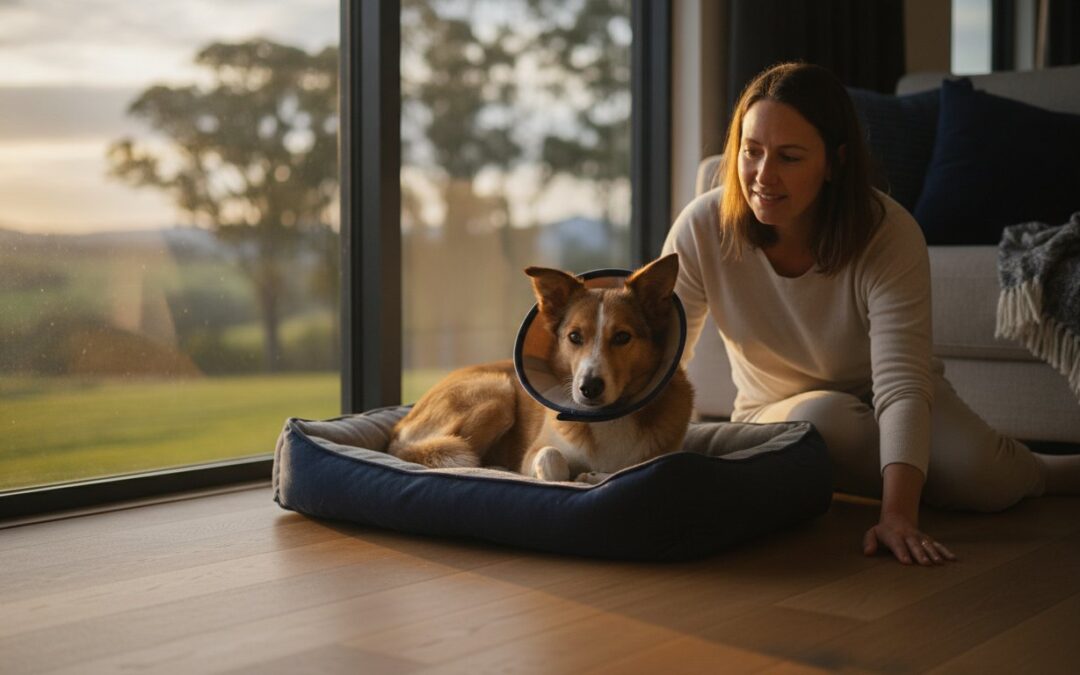
You’ve just arrived home from the clinic, and while the house is finally quiet, your mind is likely racing as you watch your dog settle into their bed. It’s a deeply vulnerable moment for any pet owner. You want to ensure they’re comfortable, yet every small whimper or change in their breathing can feel like a reason to worry. Understanding exactly how to care for a dog after abdominal surgery is the best way to replace that anxiety with confidence, ensuring your companion stays safe during those critical first few days.
We know that the recovery period can feel daunting, especially when you’re managing pain medications or trying to keep a high-energy dog still. This guide will help you manage your dog’s recovery safely at home, from monitoring incisions to navigating the unique challenges of our Gippsland environment. We’ll walk you through what to expect regarding post-operative lethargy, how to spot signs of infection, and how to transition back to your favourite walks at Lardner Park. By following these steps, you can ensure a smooth, infection-free healing process that gets your best friend back to their happy, healthy self.
Key Takeaways
- Discover how to care for a dog after abdominal surgery by setting up a quiet “recovery suite” to manage post-operative lethargy and wobbliness safely.
- Learn to perform a daily “look and feel” check of the incision to distinguish between normal bruising and red flags that require professional attention.
- Understand why strict rest is essential for 10 to 14 days to prevent internal damage, especially when managing high-energy dogs in a Gippsland backyard.
- Identify subtle signs of pain, such as restlessness or “whale eye”, and learn how to maintain a medication schedule that keeps your pet comfortable.
- Know exactly when to contact West Gippsland Vet Care by recognising red alert symptoms like pale gums or persistent vomiting.
The First 24 Hours: Bringing Your Dog Home After Surgery
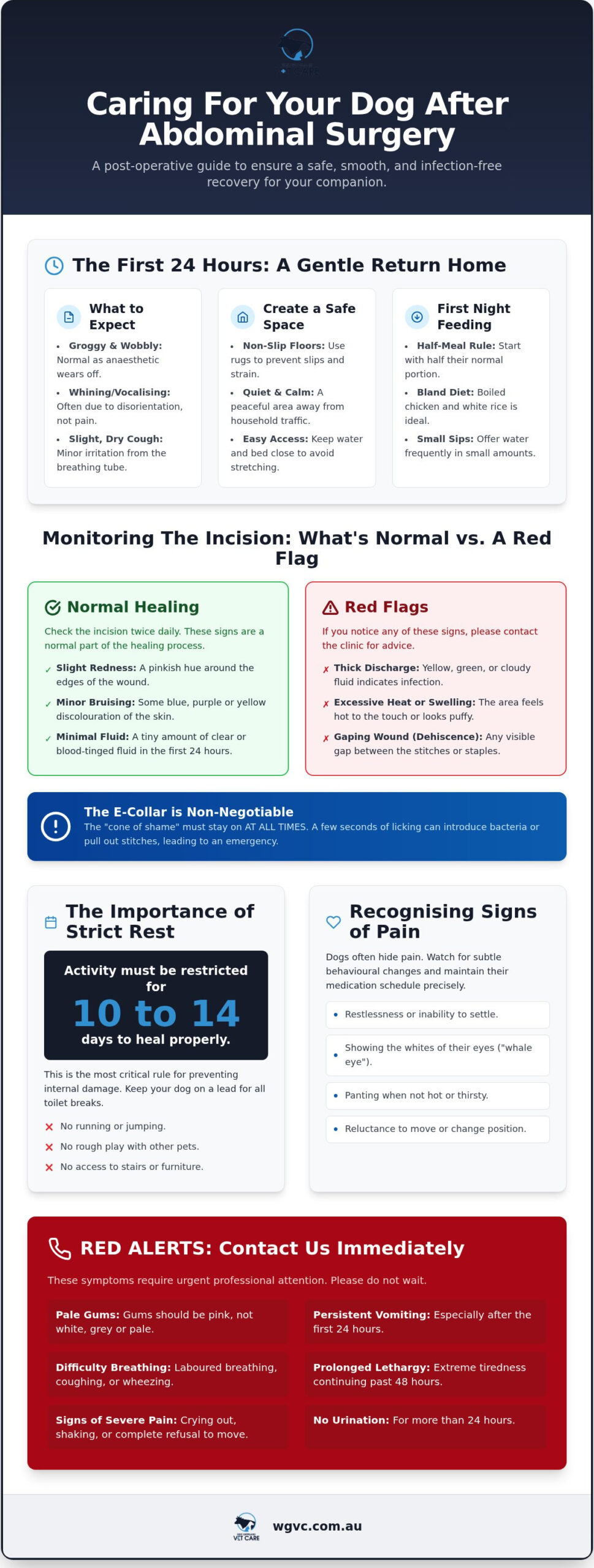
Bringing your companion home after veterinary surgery is a relief, but the first 24 hours require a gentle, watchful eye. Your dog will likely be groggy, wobbly on their paws, and perhaps a bit disoriented as they settle back into their familiar surroundings. This is a normal part of the anaesthetic wearing off. You might hear some whining or vocalising during the night. Usually, this isn’t because they’re in pain, as our team ensures they have long-acting relief, but rather because they feel “strange” as their senses return to normal.
Learning how to care for a dog after abdominal surgery starts with understanding these immediate behavioural changes. You may also notice a slight, dry cough. This post-op cough is typically just a bit of irritation from the breathing tube used during the procedure. It should settle within a day or two. During this time, your main job is to be a calming presence, providing a stable environment where they can sleep off the remaining effects of the medication.
Creating a Safe Recovery Space
Your dog needs a dedicated “recovery suite” to prevent accidents. Skip the slippery floorboards or tiles for now. Choose a small, carpeted area or lay down non-slip rugs. This prevents them from splaying their legs or slipping, which could put unnecessary strain on the abdominal incision. Keep the area draft-free and quiet. We advocate for a Fear Free approach, so try using low-level lighting and perhaps some soft, calming music to keep their cortisol levels low. Make sure their water bowl is right next to their bed. They shouldn’t have to jump or stretch to stay hydrated.
First Night Feeding and Hydration
Nausea is quite common following anaesthesia. To manage this safely, follow the “half-meal” rule. Offer a small portion, roughly half of what they usually eat, of a bland meal like boiled chicken and white rice. If they keep that down without any trouble, you can offer a bit more a few hours later. Hydration is vital, but don’t let them gulp. Offer water in small, frequent amounts to prevent vomiting. Most dogs regain their full appetite within 24 to 48 hours. If they are still refusing food after two days, please reach out to us so we can check on their progress.
Monitoring the Incision: What is Normal vs. a Red Flag?
Once your dog is settled into their recovery suite, your primary focus shifts to the surgical site. Understanding how to care for a dog after abdominal surgery means becoming familiar with what their skin looks like during the healing process. We recommend a daily “look and feel” check. Gently look at the incision twice a day to check for changes. The Postoperative Care of the Small Animal Patient guidelines highlight that consistent monitoring is the most effective way to catch complications before they become serious.
In the first few days, it’s quite normal to see a small amount of bruising or slight redness around the edges of the wound. This is simply the body’s natural inflammatory response to the procedure. However, the non-negotiable rule of recovery is the E-collar, often called the “cone of shame”. It must stay on at all times. It only takes a few seconds of licking for a dog to introduce bacteria or pull out a stitch, which can lead to an emergency trip back to the clinic. If you have other pets at home, keep them separated, as “helpful” companions often try to groom the surgical site for their friend.
Identifying Signs of Infection or Dehiscence
While a tiny bit of clear or slightly blood-tinged fluid (serous fluid) can be normal in the first 24 hours, you should watch for thicker discharge. If you see yellow, green, or cloudy fluid, this is a sign of infection. Dehiscence, or the opening of the wound, is another concern. If you notice a visible gap between the stitches or staples, or if the skin feels excessively hot to the touch, don’t wait. These symptoms require professional attention to prevent the deeper layers of the abdomen from being exposed. If you’re ever unsure about a change in the wound, our team at West Gippsland Vet Care is always here to provide a reassuring second look.
Traditional Incisions vs. Keyhole Ports
The type of surgery your dog had will change how the incision looks. Traditional abdominal surgery involves a larger midline incision that requires more diligent monitoring due to the length of the wound. In contrast, keyhole spays and gastropexies use tiny 5 to 10mm ports. These smaller sites generally heal much faster and carry a lower risk of opening up. Even with these smaller ports, you still need to check for swelling. Because the entries are so small, any significant bulge underneath the skin should be reported to your vet immediately.
Strict Rest: Managing the Gippsland Backyard Challenge
One of the most difficult parts of learning how to care for a dog after abdominal surgery is convincing your pet they still need to rest once the initial grogginess wears off. By day three or four, many dogs start feeling like their old selves and may try to resume their usual antics. However, while the skin incision might look like it’s knitting together, the internal layers of the abdominal wall take much longer to regain their strength. Strict rest is non-negotiable for at least 10 to 14 days, as any sudden strain can lead to internal stitches tearing or the development of a hernia.
The “zoomies” are a major risk during this period. A sudden burst of energy, a leap onto the sofa, or a dash to the fence line to bark at a passing neighbour can cause significant internal damage. If you live in a multi-pet household, the challenge is even greater. Rough play or even gentle wrestling can put pressure on the surgical site. It’s best to keep your recovering dog separated from their housemates during this time to ensure their “quiet time” truly remains quiet. Following professional post-operative care instructions is the best way to avoid a setback that could require further surgery.
The 5-Step Lead-Only Rule
In our part of the world, backyards are often large and tempting. Even if your dog usually has excellent recall, they must stay on a short lead for every single toilet break. A quick dash to chase a bird or a magpie can happen in the blink of an eye. Keep the lead short and walk them slowly to their usual spot. Avoid using extendable leads, as these allow too much momentum if the dog decides to bolt. Once they’ve finished their business, lead them straight back inside to their recovery space. This routine helps them understand that outdoor time is for utility, not for play.
Indoor Confinement Strategies
Managing the “Gippsland mud” is a unique local hurdle during the wetter months. It’s vital to keep the incision site clean and dry, so if the ground is damp, consider using a clean towel to gently pat their belly dry after they come back inside. Indoors, use crates or playpens to limit their movement. If your home has stairs, block them off with baby gates, as climbing or descending puts immense pressure on abdominal muscles. By restricting them to a small, level area, you remove the temptation to jump onto furniture, keeping their recovery on the right track.
Pain Management and Mental Stimulation
Managing a pet’s recovery can be a significant undertaking, especially for those also managing their own care needs. For those seeking high-quality, person-centred support for themselves or loved ones, you can learn more about Elleson Care and their approach to NDIS and aged care services.
Managing your dog’s comfort is about more than just checking an incision. It’s about their overall emotional state. When considering how to care for a dog after abdominal surgery, many owners focus solely on the physical wound, but a dog’s mental health is just as vital for a smooth recovery. A dog that is stressed or in pain will heal more slowly, so we prioritise a “fear-free” approach to keep their nervous system calm and their spirits high during these quiet weeks at home.
Recognising pain in dogs can be tricky because they’re experts at hiding it. While you might expect whimpering or crying, the signs are often much more subtle. Watch for heavy panting when it isn’t hot, general restlessness, or “whale eye”, where you can see the whites of their eyes more than usual. These are clear signals that your pet isn’t feeling their best. If you notice these behaviours, it’s a sign that their current comfort levels need a professional review. For personalised advice on managing your pet’s unique needs, you can always contact West Gippsland Vet Care for a consultation.
Sticking to the Medication Plan
It’s a common mistake to skip a dose of pain medication because a dog “looks fine”. In reality, they look fine because the medication is working. Staying ahead of the pain is much easier than trying to catch up once they’re already hurting. Always follow the prescribed schedule exactly. If you have a fussy eater, try hiding tablets in a small amount of wet food or a tiny piece of boiled chicken. Keep an eye out for potential side effects from anti-inflammatories, such as vomiting or a sudden loss of appetite. If these occur, stop the medication and give us a call immediately.
Brain Games for the Resting Dog
Since your dog can’t go for their usual trot around Warragul or chase balls at the local oval, they’ll likely get bored. Boredom often leads to mischief or anxiety, which is the last thing a healing dog needs. Mental stimulation is your best friend here. Low-impact tools like Lickimats or Snuffle Mats provide long periods of entertainment without requiring your dog to move their body. You can also try these gentle activities:
- Scent Work: Hide a few smelly treats under three cups and let them “find it” using only their nose while lying down.
- Calm Grooming: A gentle brushing session can be very soothing and reinforces your bond. Just be sure to stay well away from the surgical site.
- Interactive Toys: Use food-dispensing toys that can be used while your dog is stationary in their recovery suite.
By keeping their brain busy, you’ll find they’re much more willing to accept the physical restrictions needed for their body to mend properly. This holistic approach ensures they return to their favourite Gippsland trails not just physically healed, but happy and confident too.
The Road to Recovery: When to Call West Gippsland Vet Care
The final phase of learning how to care for a dog after abdominal surgery involves knowing when to step back and when to seek professional help. While most recoveries are straightforward, having a clear roadmap for follow-up appointments and emergency signals ensures your dog stays on the right path. At West Gippsland Vet Care, we view the post-operative period as a partnership between our clinical team and you, the dedicated owner.
The type of procedure performed significantly impacts this timeline. For instance, keyhole surgery at our clinic often allows for a much faster return to normal activity compared to traditional open abdominal procedures. Because the incisions are smaller and there is less tissue trauma, many pets are back on their paws and feeling vibrant within just a few days. Regardless of the method, we generally schedule checks at the 3-day and 10-day marks to ensure everything is healing perfectly.
The Standard Follow-Up Process
While we expect some quietness initially, certain symptoms are red alerts that require immediate attention. Check your dog’s gums; they should be a healthy bubblegum pink. If they appear pale, white, or grey, this can indicate shock or internal bleeding. Extreme lethargy where your dog is difficult to rouse, or persistent vomiting that prevents them from keeping water down, are also serious concerns.
A sudden loss of interest in food after a period of improvement is another significant red flag. For our existing clients in Warragul and the surrounding Gippsland areas, we provide 24-hour emergency support. If you’re worried at 2:00 am, you don’t have to wait. Our team is ready to provide the advanced diagnostics and medical care your pet needs to stay safe.
Getting Back to Your Favourite Gippsland Walks
Navigating the recovery period requires patience, but your dedication ensures your dog returns to health safely. By prioritising strict rest and creating a calm environment, you’re protecting the vital internal work their body is doing to mend. Remember that consistent monitoring of the incision and staying ahead of pain medications are your most effective tools for a smooth, infection-free healing process.
Knowing how to care for a dog after abdominal surgery is a partnership between your home care and our clinical expertise. Our compassionate, local Gippsland team is here to support you throughout this journey. We specialise in minimally invasive keyhole surgery to help pets recover faster, and we provide 24-hour emergency care for our existing clients for total peace of mind. If you have any concerns or need to schedule a follow-up, please book a post-operative check-up or surgical consultation with West Gippsland Vet Care. We can’t wait to see your companion back to their happy, energetic self, ready for their next adventure at Lardner Park.
Frequently Asked Questions
How long does it take for a dog to recover from abdominal surgery?
Recovery typically takes 10 to 14 days for the external wound to close, though internal tissues continue strengthening for several weeks. If your pet had a traditional midline incision, they must remain strictly restricted for the full fortnight. For those who underwent keyhole procedures, the outward signs of recovery appear much faster. Regardless of how energetic they seem, you must avoid vigorous activity until your vet provides a formal clearance at the follow-up check.
Can I leave my dog alone after abdominal surgery?
You should avoid leaving your dog alone for the first 24 hours after they return home. During this initial window, they are still processing anaesthetic drugs and need monitoring for nausea or disorientation. Once they are stable, they can be left for short periods, provided they are confined to a secure “recovery suite” like a crate or playpen. Ensure they are wearing their E-collar to prevent any unsupervised licking or chewing of the wound.
What should a healthy incision look like after 5 days?
By day five, a healthy incision should have edges that are neatly aligned and skin that is a light pink colour. You may still see some fading purple or yellow bruising, which is a normal part of the healing process. There should be no active oozing, foul smells, or significant gaps between the stitches. If the area looks angry, bright red, or feels notably hot to the touch, it’s best to contact the clinic for a review.
My dog hasn’t pooped since surgery, should I be worried?
It is quite common for a dog not to pass a bowel movement for two or three days after their procedure. This delay happens because of the pre-surgery fasting and the way anaesthesia slows down the digestive system. As long as they are eating and not straining uncomfortably, you generally don’t need to worry. However, if they haven’t pooped by the fourth day, please give us a call for advice on gentle ways to help.
Is it normal for my dog to whine or cry after coming home?
Whining or crying is very common during the first night home, often caused by the lingering effects of anaesthesia rather than acute pain. This state, known as dysphoria, can make your dog feel confused or restless as the drugs leave their system. If the vocalising is persistent, or if it continues well into the second day despite you following the prescribed pain medication schedule, please reach out to our team so we can assess their comfort.
How do I keep my high-energy dog calm during the 2-week rest period?
Keeping a high-energy dog still is one of the hardest parts of how to care for a dog after abdominal surgery. Focus on “brain work” rather than physical work to tire them out. Use Lickimats, snuffle mats, or interactive puzzle toys that they can enjoy while lying down. Gentle scent games, where they sniff out a treat hidden in your hand, provide excellent mental exhaustion without putting any physical strain on their abdominal muscles.
When can my dog go back to off-lead exercise?
Most dogs can return to off-lead exercise approximately three weeks after surgery, but only after a successful 10-day vet check. Once the stitches are removed, you should spend a week gradually increasing the length of their lead walks before allowing them to run free. Jumping, rough wrestling, or high-speed chasing should be the very last activities reintroduced to ensure the internal abdominal wall has regained enough strength to handle the pressure safely.
What if my dog licks the incision just once?
If your dog licks the incision even once, you should immediately inspect the area for any redness, moisture, or dislodged stitches. A single lick can introduce millions of bacteria into a healing wound, potentially leading to a surface infection. Ensure the E-collar is fitted correctly and worn at all times. If the area looks damp or inflamed after the incident, it is best to have it checked by a professional to prevent further complications.