
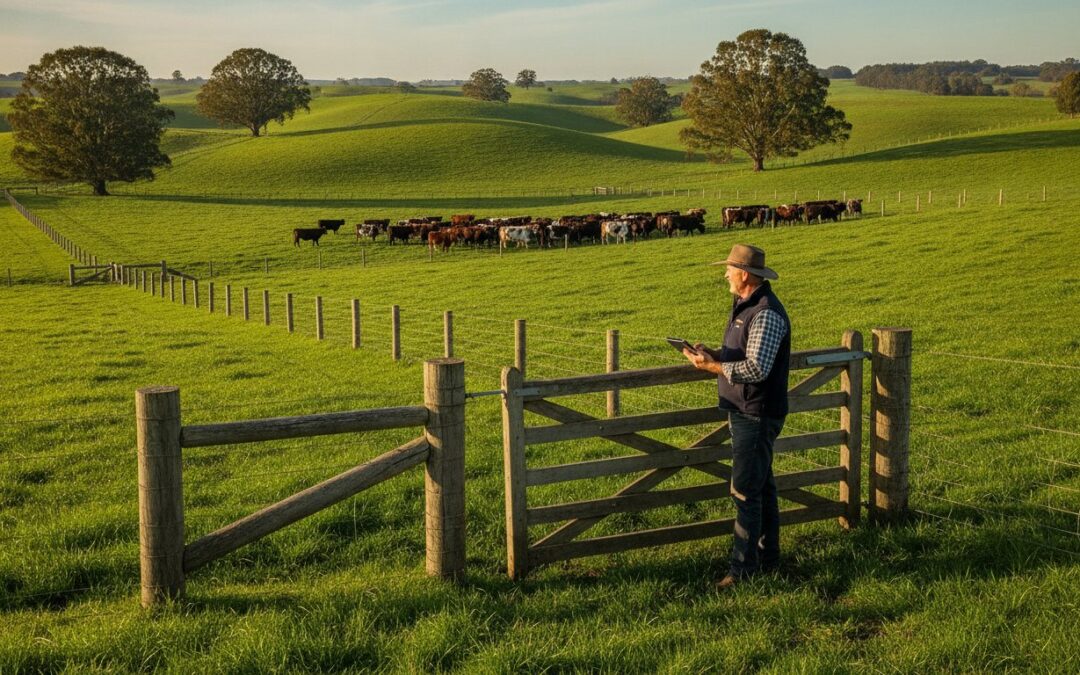
Since 1 September 2026, every Gippsland producer seeking LPA accreditation must now digitally upload their biosecurity plan, making that sun-faded folder on the dashboard a thing of the past. We understand that finding the right farm biosecurity plan template Victoria requires can feel like a daunting task when you’re already balancing early morning starts with the constant demands of the land. It’s completely natural to feel a bit of “audit anxiety” when you’re trying to navigate confusing jargon while keeping your animals healthy and your paperwork up to date.
We’ve put this guide together to help you customise a plan that protects your livestock and gives you genuine peace of mind before your next audit. You’ll learn how to manage the mandatory Agriculture Victoria BMP cover sheets, address regional Gippsland risks like liver fluke or Theileriosis, and turn a simple template into a practical shield for your farm’s future. Our goal is to help you move past the stress of compliance so you can get back to what you do best: caring for your herd and your community.
Key Takeaways
- Understand why recent changes to Livestock Production Assurance (LPA) mean a digital biosecurity plan is now a mandatory requirement for your property.
- Discover how to select and customise the best farm biosecurity plan template Victoria offers to suit your specific livestock and property layout.
- Learn the essential steps for managing stock movements and farm inputs to protect your herd from local risks like liver fluke and Theileriosis.
- Follow a simple five-step guide to move your plan from a piece of paper to a practical, living strategy that works for your daily routine.
- See how partnering with a local vet for expert herd health advice can help audit-proof your farm and provide true peace of mind for your family.
What is a Farm Biosecurity Plan and Why is it Mandatory in Victoria?
A farm biosecurity plan is much more than a collection of maps and contact numbers; it’s a formal document that outlines the specific risks to your property and the clear actions you take to manage them. We understand that your animals are more than just assets. They represent years of hard work and a deep connection to the land. Biosecurity is the proactive management of disease, pest, and weed risks. By putting these protocols in writing, you’re creating a safety net for your family’s livelihood and the health of every animal in your care.
Since 1 September 2026, the Livestock Production Assurance (LPA) program has made these plans mandatory to be uploaded digitally for every Property Identification Code (PIC). This shift ensures that every producer is playing their part in a larger system. Victoria’s standards are unique because our lush, high-rainfall environment in Gippsland presents different challenges than the dry outback. We deal with specific regional pests and diseases that thrive in our rolling green hills, making a tailored approach essential. Finding the right farm biosecurity plan template Victoria offers is the first step toward securing your farm’s future.
The Link Between Biosecurity and Market Access
Your ability to move stock and access premium markets depends entirely on the integrity of your records. International buyers look for the high standards set by the biosecurity framework in Australia to ensure the meat and milk they purchase are safe and healthy. When you keep meticulous records on your National Vendor Declarations (NVDs) and update the NLIS within 48 hours of stock arriving, you’re proving to the world that Gippsland stock is second to none. This transparency builds trust with processors and saleyards, ensuring you get the best value for your hard work.
Protecting Your Herd from Local Threats
In West Gippsland, our high rainfall means we’re often on the lookout for footrot and internal parasites like liver fluke. These aren’t just minor nuisances; they can cause significant distress to your herd and impact your bottom line. Using a practical farm biosecurity plan template Victoria producers can easily customise helps you set clear “Come Clean, Go Clean” protocols. This means every contractor, from the shearer to the fencer, understands they must wash down their gear before entering your paddocks. It’s a simple, respectful way to keep your soil and your animals safe from introduced weeds and pathogens.
Choosing the Right Farm Biosecurity Plan Template for Victoria
Selecting a template is about finding a tool that fits your specific farm life. For a small hobby farm in Drouin, a basic checklist might suffice. For a large dairy operation near Bunyip, the complexity increases significantly. The Agriculture Victoria farm biosecurity plan templates provide a solid foundation for meeting the state’s Livestock Management Act requirements. It’s vital to ensure your farm biosecurity plan template Victoria choice reflects the latest 2026 standards, including the mandatory digital upload for LPA accreditation that came into effect on 1 September.
There is a significant difference between a basic compliance template and a comprehensive health strategy. While a basic form keeps the auditors happy, a strategic plan keeps your animals safe from the unique pressures of our region. High-density dairy herds, for example, require much more detailed record-keeping regarding milk hygiene and disease transmission than a few head of beef cattle. Your plan should be a reflection of your dedication to your animals, tailored to the specific rhythm of your property.
The Standard LPA Template
The Integrity Systems Company (ISC) template is a common starting point because it’s designed to help you pass an AUS-MEAT audit. It’s relatively fast to fill out and covers the essentials like livestock sourcing, feed declarations, and stray management. These are excellent for meeting the minimum requirements, but they can sometimes feel a bit detached from the daily realities of your paddocks. They might miss specific veterinary risks unique to your mob or the nuances of our high-rainfall climate. You can download the most recent version through your LPA online account to ensure you’re using the most effective farm biosecurity plan template Victoria offers for your enterprise type.
Custom Veterinary-Led Biosecurity Plans
We believe that a plan should be a living strategy, not just a tick-box exercise. By working with a livestock vet West Gippsland producers trust, you can transform a standard template into a robust health shield. This involves integrating your specific vaccination schedules and results from bull fertility testing directly into your documentation. This approach moves the focus from simply finishing paperwork to actively protecting your herd’s future. It’s about creating a partnership where we help you identify the weak spots in your biosecurity before they become a problem. If you’re feeling a bit stuck with the new digital requirements, we’re always here to provide the herd health advice you need to feel confident and prepared.
Essential Components of an Effective Victorian Biosecurity Plan
Building a robust biosecurity plan is about creating layers of protection around the animals you care for every day. While the farm biosecurity plan template Victoria provides the structure, the real strength lies in how you manage the daily interactions on your property. This involves looking at every possible way a disease or weed could enter your paddocks, from the wheels of a contractor’s ute to the stray heifer that finds a gap in the boundary fence. By identifying these risks, you’re not just ticking a box for an audit; you’re actively safeguarding the health and happiness of your livestock.
Your plan should address four key pillars: livestock movements, farm inputs, people and vehicles, and feral animal management. Sourcing clean fodder and water is particularly vital in our region, where damp conditions can sometimes hide contaminants. Managing your boundary fences is also a high priority. In the rolling hills of Gippsland, a sturdy fence is your first line of defence against “over-the-fence” transmission from neighbouring herds or wandering feral pests. These practical steps ensure that your property remains a safe haven for your animals.
Managing Livestock Movements and Isolation
When new stock arrives, whether from a saleyard or a neighbour, they need time to settle and clear their systems before joining your main herd. Following the Livestock Production Assurance biosecurity requirements, you must record all cattle movements via the NLIS within 48 hours of arrival. Beyond the paperwork, we recommend a minimum quarantine period of 21 days in a dedicated “off-gate” paddock. This window allows you to monitor for signs of illness and ensures any weed seeds in their gut have passed. In Gippsland, our weather can be unpredictable. Heavy rain or local flooding might require you to move stock quickly, so having a flexible isolation plan that accounts for wet ground is essential for maintaining hoof health and preventing the spread of soil-borne pathogens.
Infrastructure and Signage
Clear communication is a simple but powerful way to protect your farm. A well-placed “Biosecurity Area – No Entry” sign at your front gate serves as a respectful reminder to visitors that your land is a controlled health zone. It sets the tone for anyone entering the property, encouraging them to call ahead and check your wash-down requirements. Designing a dedicated loading zone near the road is another smart move. By keeping transport trucks and heavy machinery off your internal farm tracks, you significantly reduce the risk of bringing unwanted pests or diseases into your core grazing areas. Ensuring your boundary fences are “Gippsland-proof” with regular maintenance prevents unplanned socialising between herds, giving you total control over your animals’ environment and your own peace of mind.
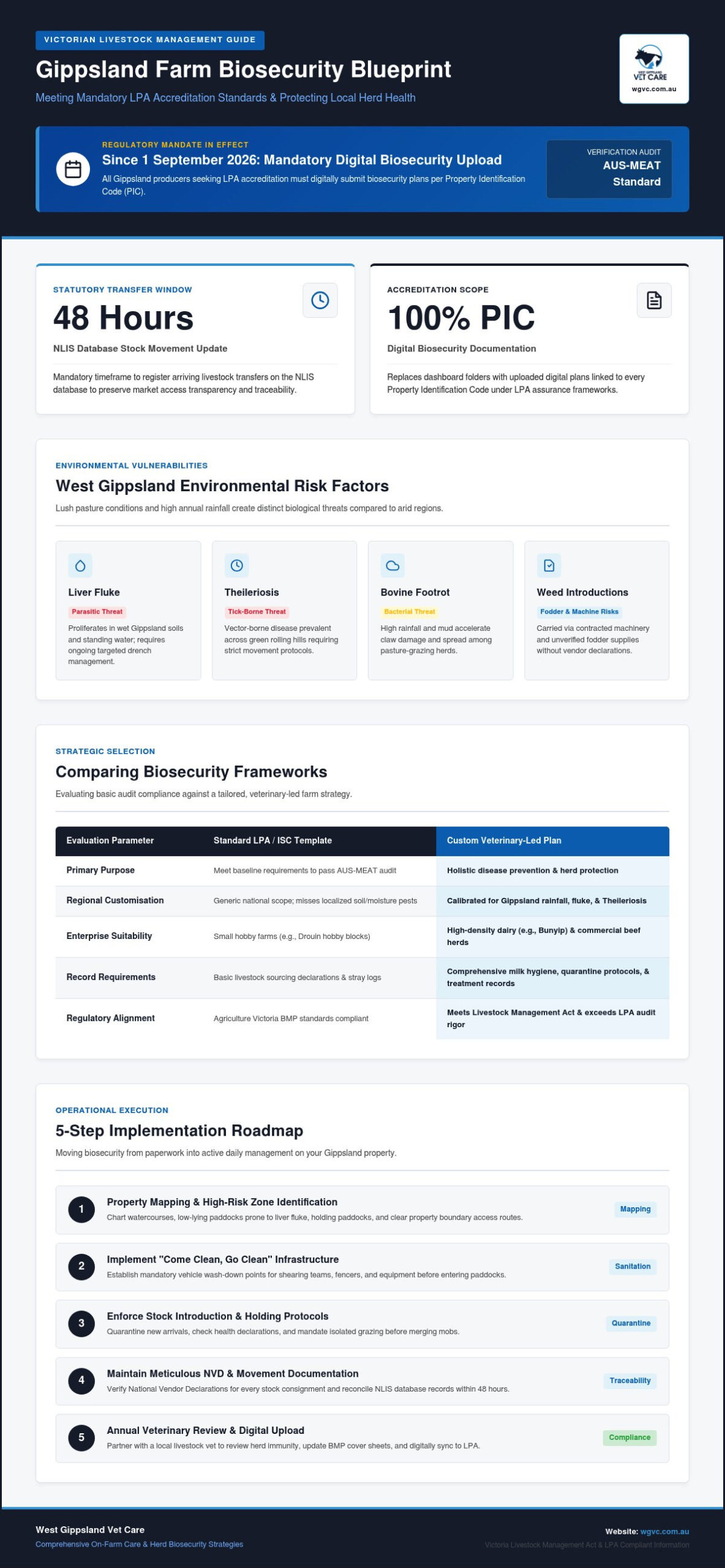
How to Implement Your Plan on a Gippsland Farm: 5 Steps
Bringing your plan to life is where the real protection for your animals begins. It’s about moving from a digital file to the daily rhythm of your property, ensuring every person who steps onto your land understands how much you value your herd’s safety. When you’ve chosen the right farm biosecurity plan template Victoria offers, the next phase is making it work for your specific paddocks and fences. We’ve broken this down into five practical steps to help you build a secure environment without feeling overwhelmed by the process.
Step 1: The Paddock-by-Paddock Risk Audit
Start by taking a slow walk or ride around your property to see it through the lens of a potential disease or weed. You’ll want to identify high-risk zones such as shared boundaries where a neighbour’s stock might reach through the wire, or creek crossings that could carry contaminants during a Gippsland downpour. Mapping the flow of people and animals across the farm centre helps you see where cross-contamination is most likely to happen. We recommend that you take clear photographs of your current infrastructure and gate setups to serve as a baseline for your audit and future improvements. This simple visual record makes it much easier to track your progress over time.
Step 2: Customise your template. Once you have your audit notes, fill in your chosen Victorian template with specific local contact details. This includes your local vet, the nearest saleyard, and emergency animal disease hotlines. Having these numbers ready saves precious time if a concern ever arises.
Step 3: Train your staff and family. A plan only works if everyone follows it. Spend a morning showing your team the new protocols, with a heavy focus on gate management and wash-down procedures. It’s about building a culture where everyone feels responsible for the animals’ well-being.
Step 4: Update your record-keeping. Whether you prefer a digital app or a sturdy notebook in the ute, ensure your system for tracking stock movements and chemical use is easy to access. Consistency is the secret to a stress-free audit.
Step 5: The Annual Veterinary Review
Your biosecurity needs aren’t static; they should evolve as your property and herd health improve. An annual review with your vet ensures that your protocols remain effective against the latest Victorian disease alerts and regional challenges. We often link these reviews to other seasonal checks, such as bull breeding soundness evaluations, to make the most of our time on your farm. This holistic approach ensures that your biosecurity plan is a living document that supports your long-term goals for a healthy, productive herd. If you’re ready to move beyond the paperwork and secure your farm’s future, we’re here to provide the local herd health advice you need to succeed.
Audit-Proof Your Farm with West Gippsland Vet Care
At West Gippsland Vet Care, we see ourselves as an extension of your farm family. We know that while a digital farm biosecurity plan template Victoria is a necessary tool, it’s the heartbeat of your property, your livestock, that truly matters. Our team helps you move beyond just filling out forms to creating a robust, real-world shield. By integrating our professional herd health advice directly into your biosecurity documentation, we help you build a system that’s as practical as it is compliant. It’s about moving from a “tick-the-box” mindset to a culture of genuine care and protection.
When an AUS-MEAT auditor visits, having a plan that’s been reviewed by a vet who knows your history makes all the difference. We understand the specific layout of your paddocks and the health challenges your herd has faced over the years. This personal connection allows us to help you prepare for LPA audits with genuine confidence. You aren’t just showing a generic document; you’re demonstrating a professional commitment to animal welfare and biosecurity integrity that is backed by local expertise.
Beyond the Paperwork: Real Herd Strategy
Biosecurity isn’t just about keeping disease out; it’s about helping your animals thrive. A well-implemented plan can lead to better conception rates and higher weaning weights by reducing the health burdens on your mob. Professional services like livestock pregnancy testing and bull fertility checks are core components of this framework. They allow us to identify risks early and ensure only healthy, productive animals are part of your breeding cycle. We’d love for you to have a yarn with our livestock team about how we can tailor these strategies to your specific property. We believe that a good plan should support your production goals as much as your compliance needs.
Local Support for Gippsland Producers
Our roots are deep in the Warragul and Drouin agricultural communities. We’ve stood alongside local producers through seasons of plenty and times of challenge, and we understand the unique pressure of managing high-density herds in our lush climate. This local knowledge is your best defence against exotic disease threats because we understand how pests and pathogens move through our specific Gippsland landscape. We’re dedicated to helping you “audit-proof” your farm while ensuring your animals receive the highest standard of care. Contact West Gippsland Vet Care to schedule a herd health consultation today and let’s work together to secure your farm’s future.
Securing Your Farm’s Legacy for Future Generations
Protecting your property is a deeply personal commitment that goes far beyond simple compliance. By selecting the right farm biosecurity plan template Victoria requires and tailoring it to your unique landscape, you’re building a safer future for your animals and your family. We’ve explored how a thoughtful approach to quarantine, staff training, and paddock audits can transform a standard document into a powerful shield against disease. It’s about ensuring your herd remains healthy and your property stays resilient in the face of ever-changing regional challenges.
Our team has been trusted by West Gippsland farmers for generations, providing comprehensive on-farm livestock support and expert local knowledge of Victorian biosecurity standards. We’re here to help you move beyond the paperwork and implement a strategy that truly works for your daily routine. We’d love to have a yarn about your property and help you audit-proof your business with professional care and a friendly approach. Book a Herd Health Consultation with Our Gippsland Experts today and let’s protect what matters most together.
Frequently Asked Questions
Is a farm biosecurity plan legally required for all Victorian farmers?
A farm biosecurity plan is legally required under two specific pathways in Victoria. Since 1 September 2026, it’s mandatory for all LPA-accredited producers to upload a digital plan to their online account. Additionally, under the Livestock Management Act 2010, having a compliant plan and a BMP cover sheet is the only way to legally prosecute trespassers or protesters who enter your property without permission. It’s a vital layer of protection for your family and animals.
Which template is best for a small hobby farm in West Gippsland?
For a small hobby farm in West Gippsland, the Farm Biosecurity Action Planner from Animal Health Australia is often the most accessible choice. It uses a simple “check and action” format that’s easy to follow without getting bogged down in complex industry jargon. You can also use the basic farm biosecurity plan template Victoria provides through Agriculture Victoria. These templates help you focus on the essentials, like keeping your boundary fences secure and managing new animal arrivals safely.
How often do I need to update my farm biosecurity plan for LPA?
You should review and update your plan at least once a year to remain compliant with Livestock Production Assurance (LPA) requirements. It’s also important to update the document whenever you make significant changes to your operation, such as installing new wash-down facilities or changing the species of livestock you run. An annual review ensures that your protocols stay relevant to current Victorian disease alerts and reflects the actual day-to-day practices on your Gippsland property.
Do I need a separate plan for cattle and sheep on the same property?
You don’t need separate documents; one comprehensive plan per Property Identification Code (PIC) is usually sufficient to cover all your livestock. However, your plan must clearly address the specific risks for each species. For example, you might focus on footrot and lice management for your sheep while prioritising BVDV (Pestivirus) and reproductive health for your cattle. Combining these into one document keeps your record-keeping simple while ensuring every animal on your farm is properly protected.
What happens if I fail an LPA biosecurity audit in Victoria?
If you don’t meet the requirements during an LPA audit, you’ll typically be issued a Corrective Action Request (CAR). This notice outlines exactly what needs to be fixed and gives you a specific timeframe to complete the work. Failing to address these issues can lead to the suspension of your LPA accreditation, which means you won’t be able to use National Vendor Declarations (NVDs) to sell your stock. We can help you “audit-proof” your farm with professional advice.
Can my local vet help me write my biosecurity plan?
Yes, we certainly can. At West Gippsland Vet Care, we believe the best plans are built on a foundation of professional herd health advice. We can help you translate a standard farm biosecurity plan template Victoria into a practical strategy that fits your property’s unique history. Our vets can also provide the necessary sign-offs for higher-level assurance programs like J-BAS 7 or 8, giving you greater market access and true peace of mind during your next audit.
Where do I get those biosecurity “No Entry” signs for my gate?
You can obtain the official “Biosecurity Area – No Entry” signs through Agriculture Victoria or the Victorian Farmers Federation (VFF). To be legally enforceable under the Livestock Management Act, these signs must meet specific size and wording requirements. They should be placed clearly at every main access point to your property. These signs act as a respectful but firm reminder to visitors that they are entering a zone where the health of your animals is the top priority.
Does a biosecurity plan cover things like weed management and chemical use?
Yes, managing weed seeds and chemical residues is a core part of a compliant biosecurity plan. You’ll need to record where you source your fodder and water, ensuring they’re free from contaminants that could harm your livestock or downgrade your meat and milk. This also includes keeping detailed records of any chemical treatments used on your pastures. These steps protect the “clean and green” reputation of Gippsland produce and ensure your animals stay healthy and productive.