
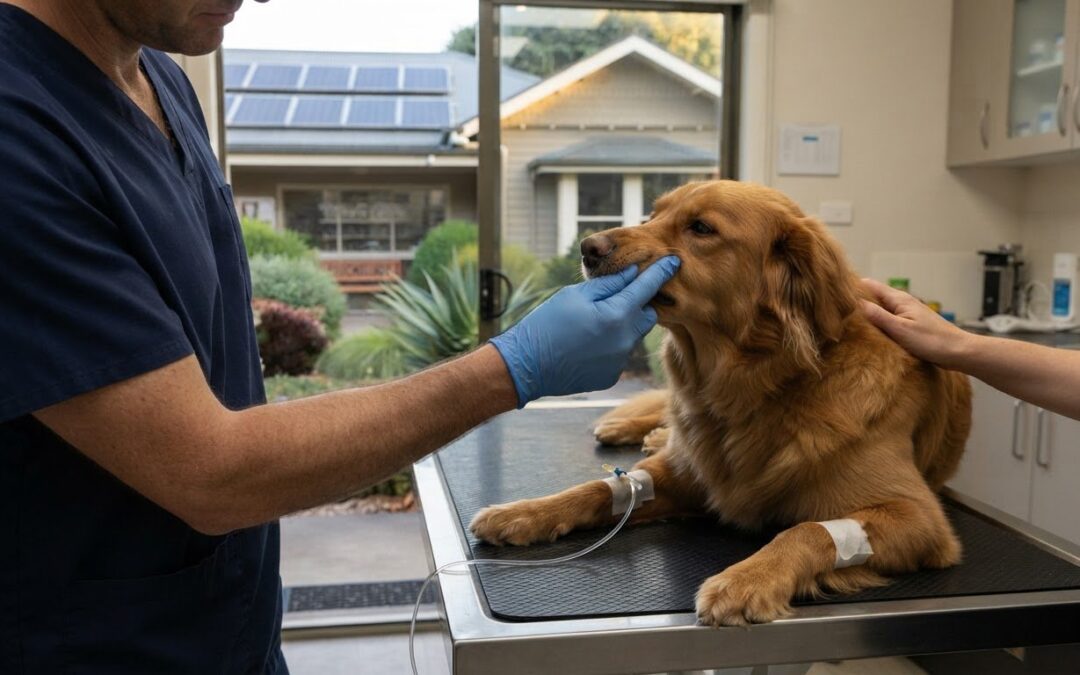
The consultation is only one part of an emergency vet bill. With emergency vet care for existing clients in Drouin available 24 hours, the total depends on the assessment and treatment needed, including any tests, medicines or hospital care.
It’s understandable to want a clearer idea of costs and what to do when your pet suddenly becomes unwell. Knowing when urgent care is available, whether you need an appointment or referral, and which conditions may need immediate attention can make the next decision feel less daunting.
This guide explains how to access emergency vet care for existing clients in Drouin, which sudden illnesses and injuries may need urgent attention, and what to expect during an emergency visit. A clear conversation with the veterinary team can help you understand the next steps and keep your pet’s wellbeing at the centre.
Key Takeaways
- Understand which parts of emergency treatment can affect the total cost, from the initial assessment to tests and hospital care.
- Learn when urgent help is available and how the clinic’s emergency service supports existing clients.
- Find out what to expect when seeking urgent care, including whether an appointment or referral is needed.
- Recognise sudden illnesses and injuries that may need prompt veterinary assessment, and what information can help explain your pet’s condition.
Emergency treatment and hospitalisation costs
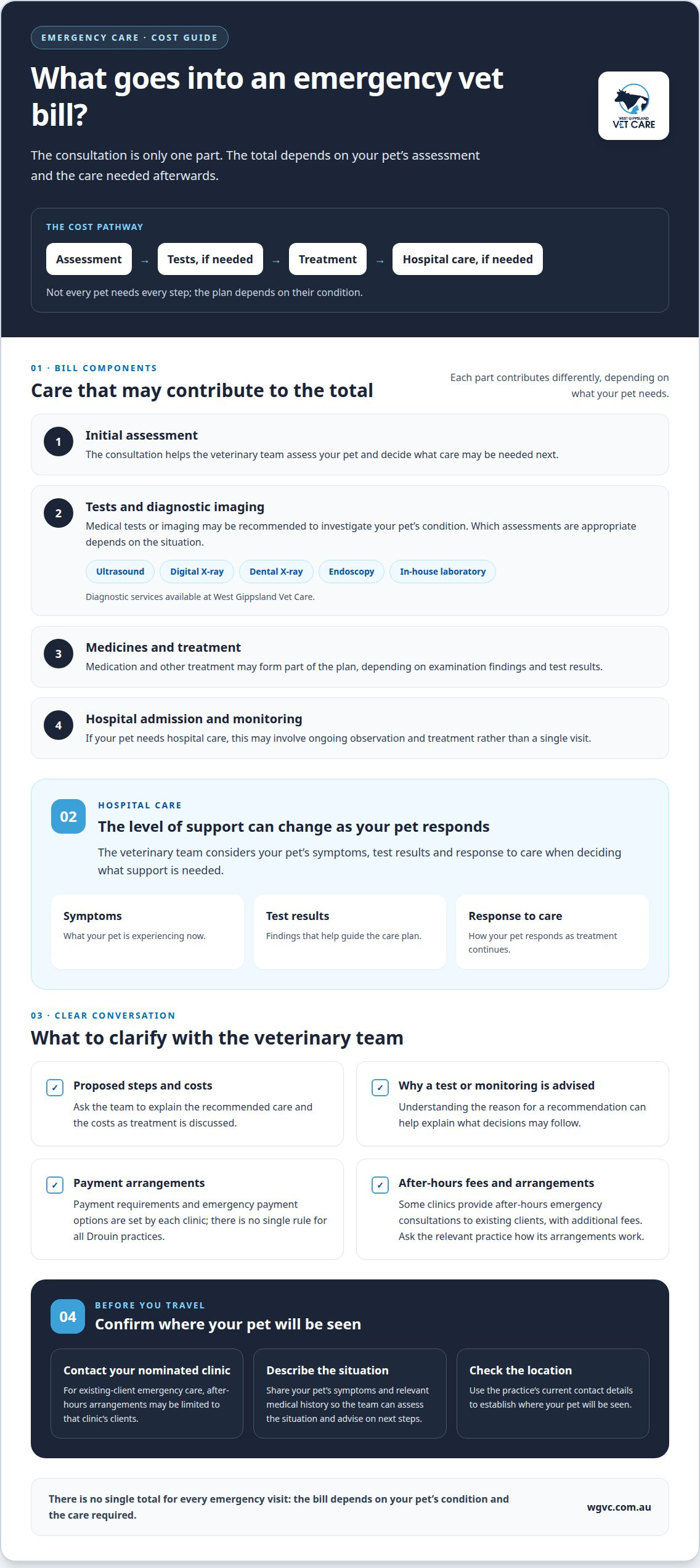
Emergency costs depend on the care your pet needs after assessment. A consultation may lead to medical tests, medication, imaging, treatment or hospital admission. Each step contributes differently to the overall bill, so the total depends on your pet’s condition and the care required. An injury needing examination alone, for example, involves different work from one requiring diagnostic tests and intensive monitoring.
Hospitalisation may involve ongoing observation and treatment rather than a single visit. The veterinary team considers your pet’s symptoms, test results and response to care when deciding what support is needed. Ask the team to explain the proposed steps and costs as treatment is discussed. This helps you understand why a test or period of monitoring is recommended and what decisions may follow.
Payment requirements and any emergency payment options are set by each clinic; there is no single payment rule for all Drouin practices. The relevant clinic can explain its arrangements alongside the treatment estimate. For existing-client emergency care, contact the veterinary practice where your pet is registered, as after-hours arrangements may be limited to that clinic’s clients.
Hospital location and contact details depend on which practice is receiving the case. Use your nominated clinic’s current contact details to establish where your pet will be seen. Regular hours also differ: one Drouin clinic schedule runs Monday to Friday, 8:30 am to 6:00 pm, and Saturday, 8:30 am to 12:30 pm. That clinic is closed Sundays and public holidays, so those hours should not be assumed for every practice.
West Gippsland Vet Care has diagnostic imaging, including ultrasound, digital X-ray, dental X-ray and endoscopy, alongside an in-house laboratory. Which assessments are appropriate depends on your pet’s condition. When you call, describe the symptoms and share any relevant medical history so the team can assess the situation and advise on next steps.
Urgent and emergency care during opening hours
During clinic hours, call your usual practice promptly about a sudden illness or injury. For emergency vet care for existing clients in Drouin, explain what has changed and ask what to do next.
Regular clinic hours
One Drouin clinic’s regular hours are Monday to Friday, 8:30 am to 6:00 pm, and Saturday, 8:30 am to 12:30 pm. These hours apply to that clinic, not every veterinary practice nearby. Check your usual clinic’s schedule before travelling, as its opening times determine whether it can assess your animal during the day.
When you call, describe the symptoms, when they began and any visible injuries. Mention relevant medical history and current medication. These details help the team understand the situation and advise whether to attend. For emergency vet care for existing clients in Drouin, calling the practice is a practical first step when an animal’s condition changes suddenly.
Weekend and public holiday hours
The same clinic is open on Saturday from 8:30 am to 12:30 pm, but closed on Sundays and public holidays. A concern arising later on Saturday or during a public holiday may need different arrangements. Check the relevant clinic’s weekend schedule and follow its emergency instructions when it’s closed, rather than assuming regular appointments are available.
Care when the usual vet is unavailable
If your usual Drouin vet is closed or unavailable, follow its published after-hours instructions and call before travelling. Explain your pet’s symptoms and location, then follow the directions for urgent assessment. Some clinics provide after-hours emergency consultations to existing clients, with additional fees. Ask how to arrange the consultation and where to bring your animal.
For emergency vet care for existing clients in Drouin, clinic eligibility and its after-hours arrangements guide the next step. If your usual practice can’t see your pet, use the directions it provides for urgent care. Giving a concise account of the symptoms can help the team understand the concern and advise what to do.
If you’re unsure how to access care, review the emergency arrangements for existing clients.
Emergency care without a referral or appointment
Emergency assessment may be needed before a regular appointment is available. Call the veterinary clinic before travelling, explain your pet’s symptoms and ask where to go.
Have your pet’s medical history, current medicines and known allergies ready, along with a clear account of when the symptoms began. If there was an injury, describe what happened and when.
Emergency assessment and walk-in appointments
A walk-in arrival doesn’t necessarily mean immediate treatment. At a 24-hour emergency centre, waits of 2 to 6 hours are not unheard of, as patients may be prioritised according to urgency. Call ahead so the team can explain the arrival process and whether your pet should come straight in.
Emergency assessment helps the veterinary team understand the immediate problem and decide what care is needed next. A sudden collapse, for example, may need a different response from a wound that is not bleeding heavily. If further medical or surgical care is recommended, the team can discuss the proposed steps and likely monitoring with you.
Information to bring or provide
Useful details help the team assess your pet and reduce repeated questions during a stressful visit. Have these ready where possible:
- Your pet’s name, age, breed and relevant medical history.
- Current medicines, known allergies and any recent treatment.
- When the problem started, what changed, and whether symptoms have worsened.
- For an injury, how it happened and which area appears affected.
If another clinic has treated your pet, provide its name and any available records or test results. Mention changes in eating, drinking, breathing or movement, using specific examples. These details help the veterinary team build a clearer picture before examination.
Calling before setting off is a practical first step, especially if you’re unsure whether your pet needs urgent assessment. Explain that you’re seeking urgent care, give the key symptoms and follow the team’s directions. Emergency assessments are prioritised by urgency, so ask about the process rather than assuming arrival guarantees immediate attention.
Sudden illnesses and injuries treated
Sudden changes in breathing, movement or behaviour can warrant urgent veterinary assessment. A fall, wound or unexpected collapse also gives the team important information for the initial assessment. Describe what happened, when it began and how your pet has changed. These observations help the team decide what needs attention and whether further treatment is required.
Breathing difficulty deserves particular care. Around one in two flat-faced dogs struggle to breathe, so changes such as laboured breathing or unusual breathing sounds should be taken seriously. Keep your dog calm and explain what you’ve noticed when arranging urgent care. The veterinary team can assess the animal and determine appropriate next steps.
Injuries can vary, even when they look similar at home. A cut, a limp after a fall or sudden reluctance to stand may need different assessments. Don’t assume your pet is comfortable because they remain quiet; share any changes in movement, appetite or responsiveness. If signs worsen while you’re arranging a visit, tell the clinic promptly.
Some sudden problems need more than a single examination. Depending on assessment findings, care may involve diagnostic tests, treatment, hospitalisation or continuous monitoring. Nurses may support patients during hospital visits, while the veterinary team reviews changes and explains the plan. If a specialist or surgical assessment is appropriate, the team can discuss that pathway with you.
For existing clients, emergency care can provide a familiar route when a sudden illness or injury occurs outside ordinary appointments. The 24-hour service is for existing clients; share your pet’s history and the immediate concern when arranging care. This helps the team understand the situation before your arrival and prepare for the consult.
If your pet needs urgent assessment for a sudden illness or injury, arrange emergency veterinary care.
West Gippsland Vet Care: 24 hours emergency service to existing clients
West Gippsland Vet Care provides a 24 hours emergency service to existing clients when a pet needs urgent veterinary attention. If your animal suddenly becomes unwell or is injured outside a routine visit, this service offers a way to seek emergency care through the clinic you already know.
When arranging help, explain what has happened, when symptoms began and any relevant medical history. Clear details help the team understand your pet’s immediate needs and guide the next steps. The service is for existing clients, so it’s intended for people whose pets are already known to the practice.
For routine care, West Gippsland Vet Care also offers pet vaccinations, desexing and microchipping. These services support planned health needs, while emergency care is for sudden concerns requiring urgent attention.
Contact West Gippsland Vet Care to discuss your pet’s care.
Make a plan that feels right for your pet
When a pet is unwell, having a clear next step can make decisions feel more manageable. Knowing how emergency vet care for existing clients in Drouin works gives you space to explain your concerns and stay involved in decisions about your pet’s care. You don’t need every answer before starting that conversation.
It can help to decide who in your household will communicate with the veterinary team if an urgent situation arises. Agreeing on this practical detail can make it easier to focus on your pet and give the team a consistent account. Writing down the key details can also help keep the conversation clear and useful.
If you’d like to talk about your pet’s care or understand the next step, contact West Gippsland Vet Care. A caring conversation can help you feel more prepared to support your companion.
Frequently Asked Questions
What are the after-hours emergency contact numbers for Drouin veterinary clinics?
For West Gippsland Vet Care’s Drouin clinic, call (03) 5625 1707. Its Drouin clinic is at 185 Princes Way, Drouin VIC 3818. Keep the number saved with your pet’s records so it’s easy to find during a stressful situation. If your pet is registered with another practice, use that clinic’s own after-hours instructions.
What types of emergencies do Drouin veterinary clinics handle after hours?
West Gippsland Vet Care provides after-hours emergency and trauma care for existing clients. This is intended for sudden situations needing urgent veterinary attention, rather than routine appointments such as vaccinations or microchipping. When you call, explain the immediate concern and your pet’s condition. The veterinary team can advise on the next step for accessing emergency care.
What are the after-hours consultation and emergency fees at Drouin clinics?
After-hours emergency care may involve additional fees, and the total depends on the care your pet needs. Costs can vary with the consultation, investigations, medication or hospital treatment involved. Ask the team to explain expected charges and proposed treatment before proceeding. There is no single fee for every emergency, so discuss the likely costs with West Gippsland Vet Care.
Which nearby 24-hour animal emergency hospitals serve Drouin, and how far away are they?
West Gippsland Vet Care provides a 24-hour emergency service for existing clients, including those based in Drouin. Its Drouin clinic is located at 185 Princes Way. A specific travel distance to another emergency hospital depends on the destination and starting point, so avoid relying on an estimated distance when arranging urgent care. Use your clinic’s after-hours directions to establish where to go.
How should existing clients contact their Drouin vet before arriving with an emergency?
Phone your clinic before setting off and say you’re an existing client seeking emergency help. For West Gippsland Vet Care’s Drouin clinic, call (03) 5625 1707. Give a concise update on what has changed and your pet’s current condition, then follow the team’s directions about arrival. If another practice holds your pet’s records, mention that during the call.