
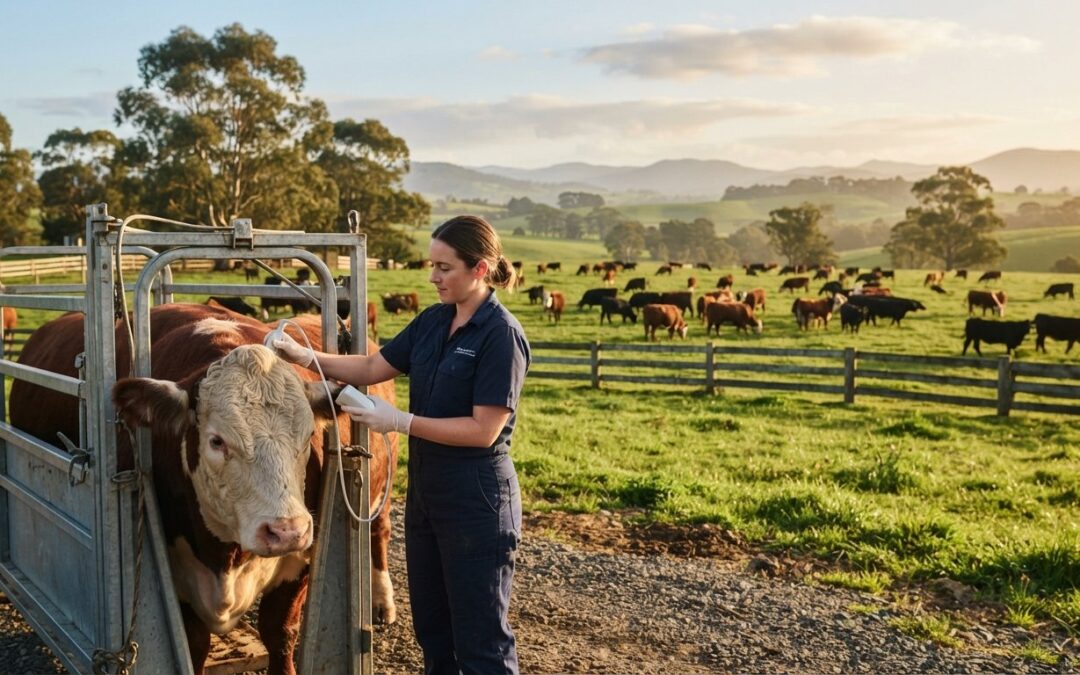
What if the most expensive bull on your Gippsland property isn’t the one you just brought home from the sales, but the one failing to do his job in the paddock? It is a stressful discovery many producers in Warragul and Drouin face when pregnancy testing reveals far too many empty cows. We know how much heart you put into your cattle, and there is nothing quite as disheartening as paying for supplementary feed for animals that aren’t producing a calf to show for it. Understanding the economic impact of bull fertility testing is the first step toward moving away from unpredictable joining outcomes and toward a more secure financial future.
You might see a Veterinary Bull Breeding Soundness Evaluation (VBBSE) as just another on-farm expense, but it’s actually a high-return investment for your cattle business. In this guide, we’ll show you how proactive testing transforms your herd’s productivity from the ground up. You will learn how to maximise the number of calves on the ground, reduce the cost of empty cows, and ensure a tight calving block that makes seasonal management much easier. By focusing on the capability of your bulls, you’re not just booking a vet visit; you’re protecting your family farm’s bottom line.
Key Takeaways
- Identify the hidden costs of sub-fertile bulls that appear healthy but fail to deliver the tight calving block your business relies on.
- Understand the significant economic impact of bull fertility testing by weighing a simple VBBSE against the high cost of maintaining empty cows.
- Explore the four scientific pillars of a Veterinary Bull Breeding Soundness Evaluation to ensure your bulls are physically and biologically ready for the season.
- Learn the best time to organise on-farm testing in West Gippsland to allow for the natural sperm cycle and any necessary recovery before joining.
- Discover how partnering with local experts in Warragul and Drouin for tailored herd health advice can transform your cattle enterprise into a high-return investment.
The Hidden Cost of Sub-Fertility: Why Visual Checks Aren’t Enough
Many farmers in West Gippsland pride themselves on the look of their livestock. A bull with a deep chest, strong legs, and a keen interest in the cows looks like a winner. However, visual checks and observing a bull’s libido are often misleading. A bull that appears to be working hard in the paddock can still be a financial liability if his biological engine isn’t firing correctly. We often call this the “silent profit killer” in local beef and dairy herds because the damage isn’t obvious until it’s too late. Understanding the economic impact of bull fertility testing starts with looking past the surface and focusing on what is actually happening during joining.
Infertility vs. Sub-Fertility
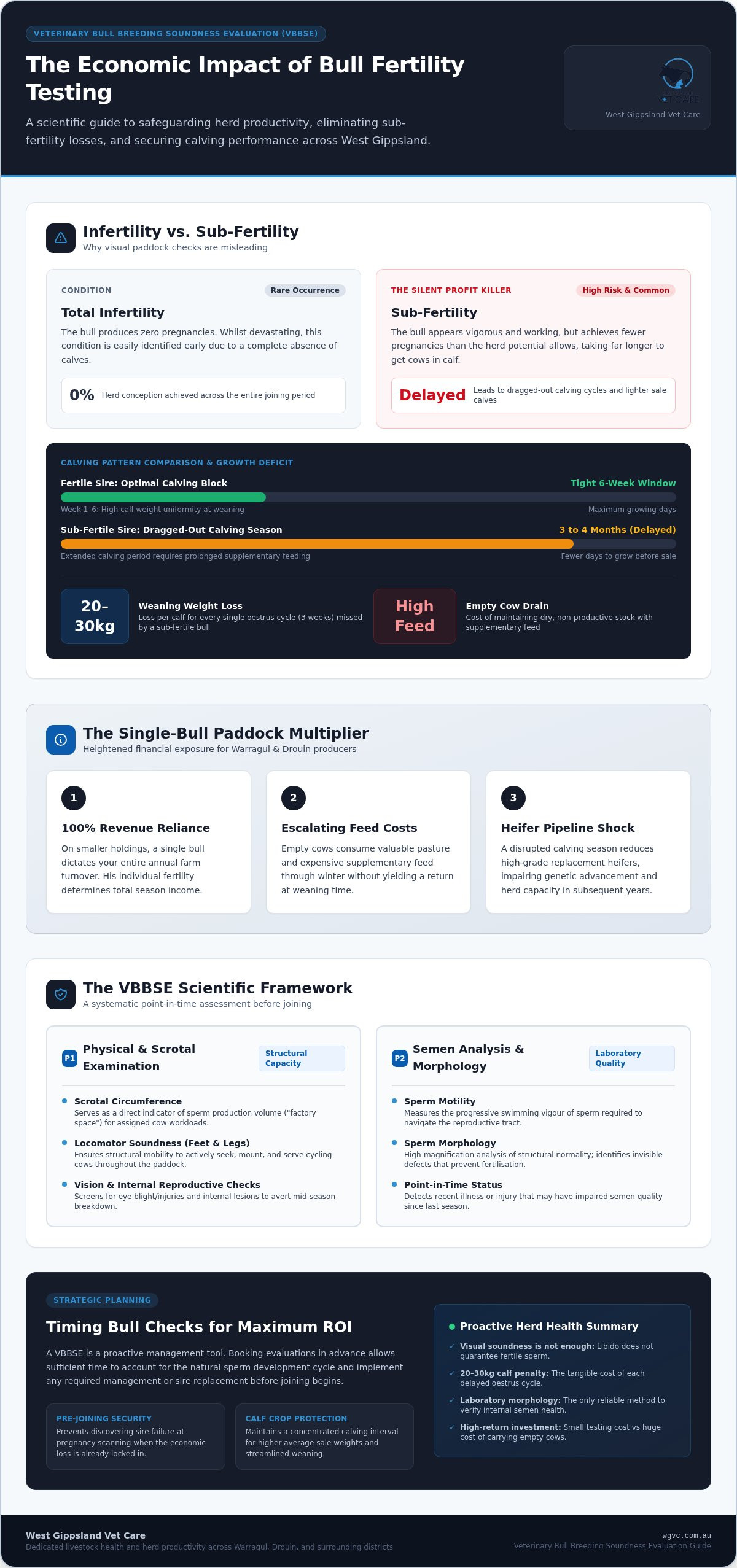
Total infertility, where a bull produces zero calves, is actually quite rare. The real danger for your business lies in sub-fertility. Sub-fertility is a condition where a bull achieves fewer pregnancies than the herd potential allows. These bulls don’t necessarily leave every cow empty, but they take far longer to get the job done. This leads to a “dragged out” calving season. Instead of a tight six-week block, you end up with calves arriving over three or four months. This delay has a direct economic impact of bull fertility testing because those late-born calves have fewer days to grow before weaning. A calf born just one cycle late can easily weigh 20kg to 30kg less at sale time. When you multiply that loss across a whole herd, the cost of a “working” but sub-fertile bull becomes staggering.
The Risk of the Single-Bull Paddock
For many smaller holdings around Warragul and Drouin, the risk is even higher. If you only run one bull, his performance dictates your entire year’s income. When a single bull is sub-fertile, the multiplier effect on your cash flow is devastating. You won’t just see fewer calves this year; you’ll face higher costs for supplementary feed for empty cows and a disrupted replacement heifer program next year. Relying on a physical inspection alone can’t reveal issues with sperm morphology or motility. Professional laboratory semen analysis is the only way to ensure the bull’s internal health matches his external appearance. By identifying these issues before joining, you protect your bottom line from the invisible drain of a sub-performing sire and ensure every cow has the best chance to conceive early in the season.
The VBBSE Framework: A Scientific Approach to Herd Productivity
While a quick visual check is a traditional starting point, a Veterinary Bull Breeding Soundness Evaluation (VBBSE) provides the scientific certainty required for a profitable season. We view this evaluation as a thorough health check for your farm’s most vital workers. It is vital to remember that a VBBSE is a point-in-time assessment. It tells us if the bull is ready to perform right now. A bull that passed a test last year or looked great at the sales can still suffer from recent injuries or illnesses that aren’t obvious to the naked eye. When assessing the economic impact of bull fertility testing, we look at how these scientific pillars prevent costly failures before they happen.
Physical and Scrotal Examination
The first part of our evaluation focuses on the bull’s physical ability to do the job. Scrotal circumference is a key metric because it serves as a direct indicator of sperm production volume. A larger circumference generally means more “factory space” for sperm, which is essential for bulls expected to cover large groups of cows. According to Agriculture Victoria’s guide to managing bulls at mating, meeting specific benchmarks for age and breed is essential for ensuring a bull has the capacity to handle his assigned cow load.
We also pay close attention to structural soundness. If a bull has poor feet or leg structure, he won’t be able to stay mobile enough to find and serve cows in heat. We examine his eyes for any signs of blight or injury and perform internal reproductive organ checks to ensure there are no hidden infections. These physical checks prevent mid-season breakdowns that could leave your herd without a working sire for weeks. If you are preparing for the upcoming season, our team can help you organise on-farm testing to give you peace of mind.
Semen Analysis and Morphology
The second phase moves into the laboratory. We look at motility, which is simply how well the sperm swim, but the real gold standard is morphology. Morphology is the study of the percentage of “normal” versus “abnormal” sperm. A bull can have high motility and still be sub-fertile if his sperm are built incorrectly. Poor morphology means the sperm might reach the egg but will fail to fertilise it or result in an early pregnancy loss. This hidden issue has a significant economic impact of bull fertility testing because it often identifies bulls that will fail under the environmental stress of a Gippsland summer. By ensuring your bulls have high morphology scores, you are securing the long-term conception success of your entire herd.
Calculating the ROI: Testing Costs vs. the Price of an Empty Cow
When you look at your bank balance at the end of the season, the numbers don’t lie. A single lost calf is a direct hit to your farm’s revenue. While some see a vet visit as a cost, the economic impact of bull fertility testing is actually one of the most effective ways to protect your income. A single VBBSE typically pays for itself if it prevents just one cow from remaining empty. When you consider the market value of a weaned calf in Victoria, which can sit between A$1,000 and A$1,400 depending on the season, the modest investment in testing becomes a clear financial win.
Let’s look at a hypothetical 50-cow herd to see the difference. If a sub-fertile bull leads to an 80% calving rate, you have 40 calves on the ground. If a tested, fertile bull achieves a 95% rate, you have 47 calves. That difference of seven calves represents over A$7,000 in additional gross income. This isn’t just about the number of calves; it’s about the efficiency of your whole operation. Fertile bulls create a tighter calving block, which means your labour is concentrated into a shorter window and your calves are more uniform in weight when it’s time to sell.
The Financial Impact of “Empties”
The cost of an empty cow goes far beyond the missing calf. In Gippsland, carrying a dry cow through a cold, wet winter is a significant drain on resources. With current fodder prices, the silage and hay required to maintain an unproductive animal can cost hundreds of dollars per head. You’re effectively paying for her “board and room” without any return on that investment. Additionally, when a top-tier bull underperforms, you lose a year of genetic progress in your replacement heifers. Our livestock vet West Gippsland services focus on preventing these scenarios by ensuring every animal in your breeding program is earning her keep.
ROI of Semen Morphology Testing
Not all tests provide the same level of security. While a basic check is helpful, morphology testing offers the highest risk reduction. We follow the BULLCHECK veterinary breeding soundness standards to ensure every sire meets national benchmarks for fertility. By identifying a sub-fertile bull early, you save thousands in a single season. The table below illustrates why moving beyond a standard check is a smart business move.
| Test Type | Risk Identified | Financial Protection |
|---|---|---|
| Standard Physical Test | Lameness, eye issues, gross scrotal defects | Moderate – prevents total failure |
| Morphology Test | Sperm defects, stress-related infertility, poor fertilisation rates | High – secures high conception rates and tight calving |
Investing in scientific certainty means you aren’t just hoping for a good season; you’re actively planning for one. By understanding the economic impact of bull fertility testing, you can make informed decisions that keep your Gippsland herd profitable year after year.
Strategic Timing for Gippsland Joining: When to Book Your Bull Checks
Timing is everything in agriculture. In West Gippsland, where we balance the specific demands of both spring and autumn joining windows, getting your schedule right is vital for a successful season. If you wait until you see the bull working in the paddock to wonder about his health, you’ve waited too long to protect your profit. The economic impact of bull fertility testing is greatest when the evaluation is performed early enough to allow for management changes. We recommend booking your checks at least 6 to 8 weeks before your planned joining date to ensure your sires are truly ready for the job ahead.
The 60-Day Rule
The biology of a bull is a complex system that requires time to reset. It takes roughly 60 days for a bull to produce a new batch of sperm, a process known as the sperm cycle. This timeline is the reason our 6 to 8 week recommendation is so important. If a bull has suffered from a high fever, a foot infection, or even a period of extreme heat stress three weeks ago, it will show up in his semen quality today. Testing early gives you a vital “Plan B”. If a sire fails his evaluation, you have a window of time to source a quality replacement or adjust your joining groups without delaying your entire calving block. You can use our bull breeding soundness evaluation checklist to help stay on track with your seasonal preparations and ensure no detail is overlooked.
Managing Bulls Post-Test
Once the vet departs your property in Warragul or Drouin, the work continues to maintain that peak fertility. A bull’s reproductive health is a moving target, and his capability can change significantly between seasons. Maintaining a stable, high-quality plane of nutrition is essential to keep sperm production at its best. In our part of Victoria, the local weather plays a significant role in bull performance. Gippsland’s summer heat can cause temporary infertility due to scrotal overheating, while a particularly harsh, wet winter can lead to soft feet or lameness that hinders a bull’s ability to cover the paddock. We always suggest monitoring your bulls closely during the first few weeks of the joining period. Watch for his desire to work and ensure he isn’t favouring a leg or showing signs of lethargy. By staying vigilant, you ensure the economic impact of bull fertility testing remains positive throughout the entire joining window.
If you are approaching your next joining window, don’t leave your results to chance. Our team is here to help you plan a productive season. Please contact us to book your bull fertility testing and ensure your Gippsland herd stays on track for a high-return year.
Partnering with West Gippsland Vet Care for a Profitable Season
We have lived and worked alongside the farming families of Warragul and Drouin for many years. We understand that your cattle are more than just assets; they represent your hard work, your heritage, and your future. Our team is dedicated to ensuring the economic impact of bull fertility testing works in your favour by providing expert, compassionate care that fits the unique conditions of West Gippsland. We don’t just see ourselves as service providers, but as partners in your farm’s long-term success and stability.
Beyond the Test: Integrated Herd Support
A VBBSE is a vital tool, but it is most effective when it’s part of a larger, cohesive plan. We integrate bull evaluations into a broader herd health strategy that looks at the big picture of your operation. This holistic approach allows our vets to combine fertility testing with livestock pregnancy testing and tailored nutritional advice. By looking at both sides of the breeding equation, we help you identify exactly where improvements can be made to boost your bottom line.
There is a distinct advantage in having a vet who knows your specific paddocks and your herd’s history. We’ve seen the local seasonal shifts and we understand the challenges of Gippsland’s terrain. This relationship allows for more nuanced advice that goes beyond a simple pass or fail. We also provide the security of 24-hour emergency support for our regular clients. It’s our way of ensuring you never have to face a crisis alone, whether it’s a difficult calving or a sudden injury in the paddock.
Booking Your On-Farm Evaluation
We aim to make the evaluation process as smooth and stress-free as possible for both you and your livestock. Our team travels across the West Gippsland region to perform on-farm visits, saving you the hassle of transporting large animals. To help the day run efficiently, we simply ask that you have a safe, functional crush and sturdy yards ready. It’s also helpful to have the bulls penned up and settled before our arrival so we can work through the checks calmly and safely.
Every Gippsland farm is different, and we want to hear about your specific goals. Whether you’re looking to tighten your calving block or improve the genetic potential of your replacement heifers, we’re here to help. We encourage you to give us a bell to discuss your requirements for the upcoming season. Taking this step ensures the economic impact of bull fertility testing results in a more predictable, profitable, and enjoyable year for your cattle business.
Securing Your Herd’s Future Success
Protecting your farm’s productivity starts with moving beyond guesswork and embracing the scientific certainty of a professional evaluation. By identifying sub-fertile bulls before joining, you avoid the heavy financial burden of empty cows and late-born calves. We’ve seen firsthand how the economic impact of bull fertility testing transforms a seasonal expense into a powerful insurance policy for your business. It’s about ensuring every sire on your property is physically and biologically capable of delivering the results you work so hard to achieve.
Our team has been trusted by West Gippsland farmers for decades, providing comprehensive VBBSE and morphology reporting tailored to our unique local climate and soil. We’re here to support you with expert advice and a genuine commitment to your herd’s well-being. Don’t leave your next calving season to chance. Book your bull fertility testing with our Gippsland team today and take the first step toward a more predictable and profitable year. We look forward to seeing you in the yards and helping you reach your herd goals.
Frequently Asked Questions
How much does a bull fertility test cost compared to a lost calf?
A bull fertility test is a minor investment when compared to the loss of a single weaned calf. In Victoria, a lost calf represents a revenue gap of over A$1,000 based on current market values. The testing fee is only a small fraction of this potential loss. When you consider the economic impact of bull fertility testing, the ROI is clear: preventing just one empty cow more than covers the cost of evaluating your entire bull battery.
Can a bull pass a physical check but still be infertile?
Yes, a bull can appear perfectly healthy and have high libido but still be sub-fertile or infertile. Physical exams look for structural issues like lameness or scrotal defects, but they can’t identify what’s happening at a microscopic level. Semen morphology testing is the only way to identify sperm defects that prevent fertilisation or lead to early pregnancy loss. This scientific approach ensures your bulls are biologically capable of getting your cows in calf.
How often should I have my bulls tested in West Gippsland?
We recommend testing your bulls annually, approximately 6 to 8 weeks before every joining season. A bull’s fertility is not a permanent state; it can change due to illness, injury, or environmental stress like Gippsland’s variable summer heat. Regular evaluations in Warragul and Drouin ensure that any issues developed since the last season are identified early. This routine check protects your calving block and maintains consistent productivity for your herd year after year.
What happens if my bull fails his VBBSE?
If a bull fails his evaluation, we’ll discuss the specific reasons and whether the issue is likely temporary or permanent. Some conditions, like minor infections or temporary heat stress, may resolve with rest and treatment. In these cases, we might suggest a re-test after 60 days. If the failure is due to permanent structural or genetic defects, identifying it early allows you time to source a quality replacement sire before your joining window closes.
Is morphology testing really necessary for commercial herds?
Morphology testing is highly beneficial for commercial herds because it identifies silent sub-fertility that basic motility tests miss. While motility shows if sperm are moving, morphology confirms they are built correctly to fertilise an egg. For Gippsland producers, this extra layer of detail provides security against poor conception rates. It is a key component in understanding the economic impact of bull fertility testing, as it directly influences the final number of calves on the ground.
Does bull fertility testing include checks for reproductive diseases?
A standard VBBSE focuses on physical soundness and semen quality, but it provides an ideal opportunity to discuss broader disease management. While not always part of the base evaluation, we can include testing for reproductive diseases like Vibriosis or Pestivirus upon request. Managing these risks is a vital part of our integrated herd health advice for farms across Bunyip, Yarragon, and Trafalgar, ensuring your breeding program remains robust, healthy, and profitable.
How long does a bull fertility evaluation take on-farm?
A typical evaluation takes about 30 to 45 minutes per bull, provided your yards and crush are ready for use. We aim to make the process as calm and efficient as possible to minimise stress for your animals. Our vets travel throughout West Gippsland, including Neerim South and Willow Grove, to perform these evaluations. Having your bulls penned up and settled before we arrive helps us work through the checks smoothly, safely, and professionally.
Can I test my bulls myself, or do I need a vet?
While you can monitor a bull’s physical condition and libido, a professional VBBSE requires specialised equipment and veterinary expertise. Only a qualified vet can perform internal reproductive exams and conduct a detailed laboratory semen analysis. Using a professional service ensures the results are accurate and meet national standards. This level of scientific rigour is essential for making informed decisions that protect your farm’s bottom line and ensure the long-term success of your cattle business.