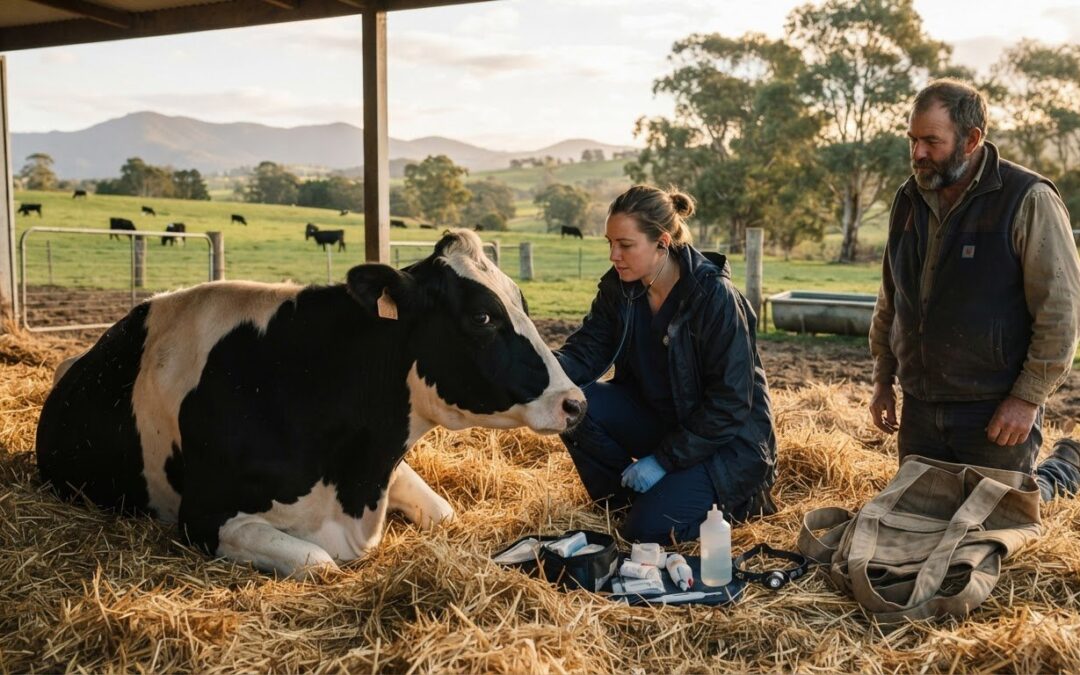
A down cow in the calving paddock is an immediate race against the clock, where the first six hours often determine whether she walks again. When initial home remedies stall, securing professional downer cow diagnosis and treatment Trafalgar farmers can rely on ensures your recumbent cow receives the precise veterinary care needed before secondary pressure damage takes hold.
Few things are more disheartening than watching a high-producing milker fail to rise after a routine calcium bottle. You’re left managing the constant worry of muscle necrosis and nerve injury, all while grappling with difficult decisions about recovery potential and animal welfare. It’s a stressful, exhausting position for any producer, and you shouldn’t have to carry that uncertainty alone.
Discover how early clinical diagnosis, targeted medical therapies, and dedicated on-farm nursing can save your recumbent dairy and beef cows. This guide explores how to uncover the true underlying cause of recumbency, the medical interventions that restore standing mobility, and the practical nursing steps that protect your cows every day they spend off their feet.
Key Takeaways
- Prompt triage within the initial hours of recumbency protects nerve pathways and prevents secondary muscle damage from settling in.
- A structured ‘Four M’ clinical approach ensures the thorough downer cow diagnosis and treatment Trafalgar herds need when standard calcium treatments fall short.
- Carefully monitored intravenous mineral therapies address complex metabolic deficiencies common across lush West Gippsland pastures.
- Practical nursing protocols, including deep non-slip bedding and mindful lifting trials, give recovering cows the best chance to regain their feet safely.
- Clear clinical milestones and collaborative veterinary guidance support compassionate, welfare-first decisions if recumbency extends past 48 hours.
Immediate Emergency Triage: The First Four Hours of Bovine Recumbency
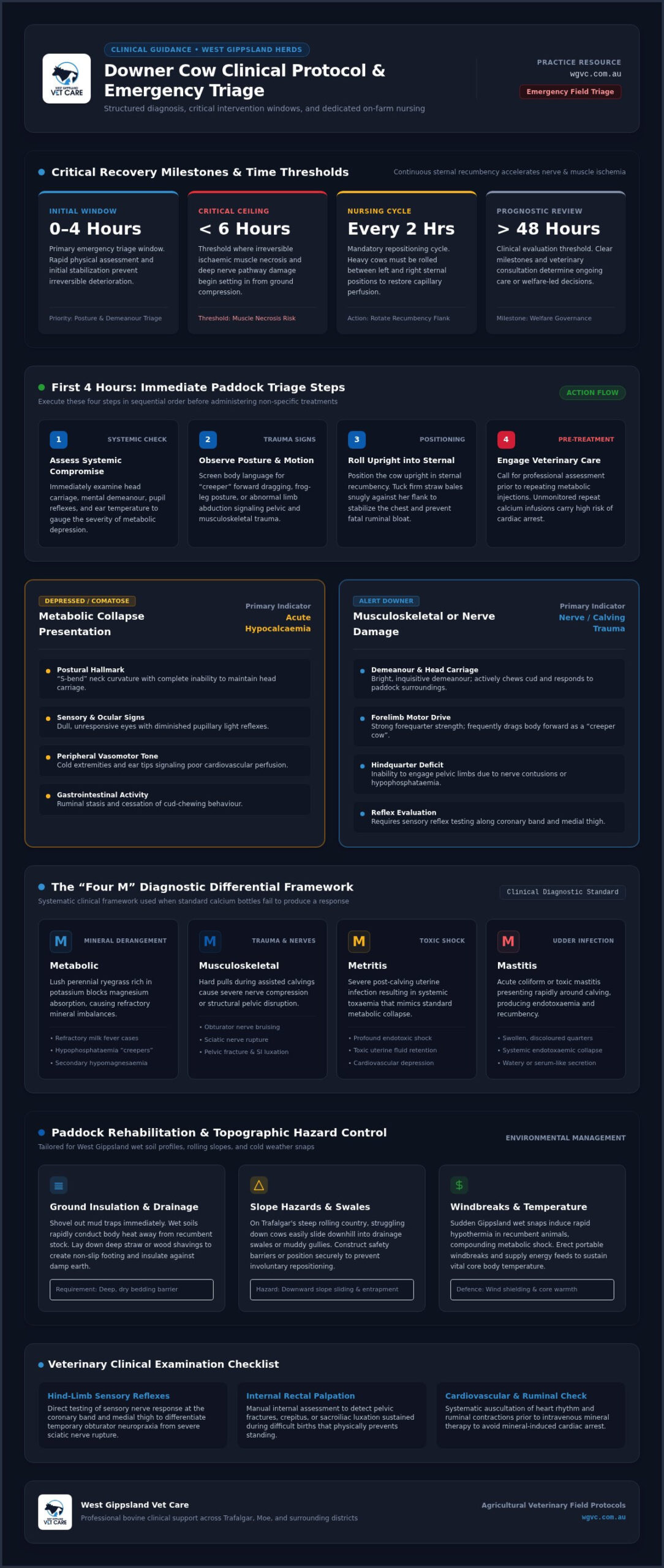
When a cow cannot rise, the clock starts immediately. The sheer physical mass of a mature dairy or beef cow compresses underlying muscles and nerves against the ground. Within six hours of continuous sternal recumbency, irreversible ischaemic muscle necrosis begins setting in, often transforming a simple temporary issue into permanent impairment. Initiating prompt downer animal overview evaluations and seeking expert downer cow diagnosis and treatment Trafalgar producers trust can change the trajectory of her recovery.
Work through four critical paddock triage steps during those opening hours:
- Step one: Assess head carriage, demeanour, pupil reflexes, and ear temperature right away to gauge systemic compromise.
- Step two: Observe body language for “creeper” behaviour, frog-leg posture, or abnormal limb abduction that suggests pelvic or musculoskeletal injury.
- Step three: Roll the animal upright into a sternal position, tucking straw bales firmly against her flank to support her chest and prevent fatal ruminal bloat.
- Step four: Call your veterinarian for an on-farm assessment before administering repeated, unmonitored metabolic injections that can trigger cardiac arrest.
Recognising the Alert Downer versus Comatose Presentation
Differentiating mental status helps isolate the primary problem. A comatose cow with dull eyes, an “S-bend” neck, and cold ears typically signals metabolic collapse, such as acute hypocalcaemia. In contrast, an alert downer looks around brightly and chews her cud, yet remains unable to lift her hindquarters, pointing toward nerve damage or musculoskeletal trauma. Assessing rectal temperature, heart rhythm, and ruminal movements provides critical diagnostic clarity. Across Trafalgar’s rolling country, sudden wet snaps quickly induce hypothermia in recumbent stock, complicating both clinical diagnosis and cardiovascular stability.
Preventing Irreversible Pressure Damage in the Paddock
Unlike international dairy operations managing cows on indoor pack barns, West Gippsland producers must contend with wet soils and steep topography. A down cow on a slick slope can easily slide into deep drainage swales or muddy ruts, preventing spontaneous recovery. Reposition heavy cows every two hours, alternating between left and right sternal recumbency to restore capillary perfusion to compressed hindquarter muscles. Shovel out surrounding mud traps, lay down thick straw or wood shavings to insulate her body against the damp Gippsland earth, and construct a portable windbreak to preserve vital core warmth.
Diagnostic Differential: Uncovering the Root Causes of Down Cows
A recumbent cow is never a single diagnosis; it’s a symptom demanding systematic detective work. When standard commercial calcium bottles produce zero response, thorough downer cow diagnosis and treatment Trafalgar herds receive relies on the proven “Four M” clinical framework: Metabolic, Musculoskeletal, Metritis, and Mastitis.
Complex Metabolic Derangements Around Calving
Lush perennial ryegrass across West Gippsland contains rich potassium levels that actively block magnesium absorption, triggering compound mineral deficiencies. A standard milk fever case often shifts into a refractory downer when underlying blood magnesium or phosphorus imbalances go unaddressed. This frequently produces “creeper cows” that drag themselves forward on their forelimbs yet lack hindquarter motor drive, reflecting deep hypophosphataemia rather than simple calcium exhaustion.
Calving Paralysis and Musculoskeletal Trauma
Hard pulls during assisted calvings frequently compress the mother’s pelvic cavity, causing nerve contusions. We assess hind-limb sensory reflex responses by testing skin sensation around the coronary band and medial thigh. Internal rectal palpation helps detect pelvic fractures, crepitus, or sacroiliac luxation that physically prevents standing. While temporary obturator nerve bruising often resolves with time, deeper sciatic rupture carries a much more guarded outlook. Implementing established methods for handling and nursing down cows ensures injured nerves can rest without suffering secondary compression damage.
Systemic Toxaemia Mimicking Simple Recumbency
Profound endotoxic shock often disguises itself as straightforward exhaustion or weakness. A cow may collapse rapidly from peracute coliform or black mastitis, which is why thoroughly stripping all four quarters is an essential step during every clinical check. Deep pelvic exploration also helps rule out severe toxic metritis, uterine tears, or retained membranes that spill bacteria into systemic circulation. Evaluating gum colour, hydration deficits, and capillary refill time helps identify toxic shock before irreversible organ damage occurs. If an unexplained down cow isn’t responding to standard pasture care, connecting with the West Gippsland Vet Care team ensures prompt diagnostic clarity and tailored herd health advice.
Veterinary Clinical Treatments and Targeted Medical Interventions
Restoring a recumbent cow demands deliberate clinical precision. Once a cow loses the strength to stand, administering medications without an accurate assessment can cause more harm than good. Compassionate, effective downer cow diagnosis and treatment Trafalgar cattle require involves careful physiological monitoring, balancing electrolytes, and actively protecting muscle health before permanent damage sets in.
Precision Intravenous and Subcutaneous Mineral Delivery
Administering intravenous calcium borogluconate carries real cardiac risks. Calcium acts directly on the heart muscle, making continuous cardiac auscultation essential during slow administration. If arrhythmias or sudden bradycardia occur, the infusion is paused immediately to avoid fatal cardiac arrest. To provide steady therapeutic levels after initial vein access, we often pair slow intravenous delivery with loose subcutaneous deposits along the lateral neck. Where complex pasture dynamics deplete multiple trace minerals, administering balanced magnesium sulphate and bioavailable phosphorus compounds prevents cattle from relapsing into weakness.
Mitigating Compartment Syndrome with Targeted Therapy
A mature cow’s mass places immense mechanical pressure on down-side hindquarter muscles. As detailed in the Merck Veterinary Manual on Bovine Recumbency, this prolonged pressure restricts local circulation and triggers severe intrafascial compartment syndrome. Targeted non-steroidal anti-inflammatory drugs (NSAIDs) play a vital role here, subduing nerve inflammation and reducing pressure within tight muscle sheaths. Paired with injectable vitamin E and selenium to support cellular repair, anti-inflammatory treatment gives bruised tissue the relief it needs to heal.
When systemic shock or severe dehydration complicates the picture, delivering rapid fluid therapy with hypertonic saline expands vascular volume quickly. This lifts blood pressure, improves organ perfusion, and stabilises cows facing toxic complications.
On-Farm Rehabilitation: Dedicated Nursing Protocols and Lifting Strategies
Nursing care is often the deciding factor in whether a recumbent cow gets back on her feet. Even the most precise downer cow diagnosis and treatment Trafalgar vets deliver must be backed by attentive daily care on the ground. Creating a dedicated recovery area with deep sand, clean wood shavings, or an elevated, well-drained paddock bed protects vulnerable joints and gives her hooves adequate grip when she attempts to push up.
Safe Application of Mechanical Lifting Aids
Hip clamps serve as valuable diagnostic aids, but using them incorrectly can cause significant tissue bruising and pelvic trauma. Always position padded clamps carefully over the tuber coxae, tightening just enough to support balance. Limit suspended trials to under ten minutes. Clamps are designed to test weight-bearing ability on firm, non-slip footing, never to suspend dead weight. For extended support, inflatable bags or full-body slings distribute pressure evenly, while warm water flotation tanks remain an outstanding option to promote blood flow safely.
Managing Hydration, Rumen Function, and Mastitis Risk
Recumbent cows dehydrate rapidly when troughs sit out of reach. Keep wide, shallow buckets of fresh water and electrolytes within comfortable reach of her head at all times. Offering palatable lucerne hay or sweet green chop encourages active cud chewing and protects rumen motility. Regularly strip or milk all four quarters twice daily to safeguard against opportunist bacterial mastitis. If you need hands-on assistance setting up a nursing plan or assessing weight-bearing progress, contact our veterinary team at West Gippsland Vet Care to coordinate dedicated on-farm support.
Prognosis, Welfare Governance, and Veterinary Partnership in Trafalgar
Caring for a recumbent animal takes an emotional and physical toll on any farm team. When you have invested hours into nursing and medical therapy, knowing when to persist and when to call time is one of the hardest parts of farming. Making those difficult calls alongside trusted clinicians ensures that downer cow diagnosis and treatment Trafalgar producers invest in remains grounded in clear animal welfare principles.
Evaluating Favourable versus Guarded Clinical Indicators
A cow’s prognosis shifts considerably once recumbency extends beyond 48 hours. Favourable signs include a bright demeanour, warm ears, an eager appetite, active crawling efforts, and intact sensation in both hind legs. These cattle are often genuine candidates for continued rehabilitation.
Conversely, clinical signs that point to a poor prognosis include:
- Persistent dullness, low body temperature, and cold extremities despite warmth and fluids
- Complete loss of withdrawal reflexes or muscle tone in the hindquarters
- Deep pressure sores and decubitus ulcers breaking out over the pins and hocks
- Continuous low groaning, teeth grinding, or refusal to drink and eat
Under Victorian animal welfare legislation, producers carry a legal and ethical duty to prevent prolonged suffering in non-ambulatory livestock. When multiple treatments fail and secondary pressure damage mounts, choosing timely, humane euthanasia is often the kindest decision. Partnering with your local vet gives you an objective, compassionate sounding board during these difficult moments.
Proactive Transition Diets and Gippsland Herd Support
Preventing recumbency before calving begins is far easier than nursing a cow back to health. Designing transition diets that balance dietary cation-anion difference (DCAD) minerals primes a cow’s hormonal pathways to mobilise bone calcium immediately after birth. In West Gippsland, where lush clover and perennial ryegrass can suppress magnesium uptake during wet winter snaps, tailored mineral supplementation acts as a vital insurance policy against seasonal clusters of milk fever and tetany.
To audit your springing herd’s transition program and safeguard herd productivity, consult our dedicated team via the Livestock Vet West Gippsland: Comprehensive On-Farm Care & Herd Strategy. Working closely through tailored herd health advice helps you protect the long-term welfare and longevity of your valuable milkers.
Taking Swift Action for Your Recumbent Stock
Managing a recumbent cow is always challenging, but timely triage and dedicated nursing can make all the difference. Acting quickly during those crucial opening hours halts secondary muscle damage, while looking beyond simple milk fever uncovers complex metabolic, traumatic, or toxic causes that need focused medical care. When pasture conditions or tough calvings test your herd, you don’t have to carry that burden alone.
West Gippsland Vet Care delivers responsive on-farm livestock support across Trafalgar, Yarragon, and Warragul. Combining a comprehensive diagnostic approach with 24-hour emergency care for existing agricultural clients, our experienced local practitioners help you navigate every step of recovery with honest guidance and compassionate care. For reliable downer cow diagnosis and treatment Trafalgar farmers trust, request an on-farm downer cow assessment with West Gippsland Vet Care today. Together, we can give your down cows the strongest possible chance of standing proud in the paddock again.
Frequently Asked Questions
How quickly should a downer cow receive veterinary attention in Trafalgar?
A down cow should receive veterinary triage within two to four hours of becoming recumbent. Irreversible muscle necrosis and nerve impairment begin after just six hours of continuous sternal recumbency due to heavy body weight. Contacting an on-farm practitioner promptly for downer cow diagnosis and treatment Trafalgar cattle need ensures underlying problems are corrected before permanent pressure damage ends her productive life in the paddock.
Can a cow fully recover after being down for more than 48 hours?
Yes, cattle can recover after 48 hours down, but their prognosis becomes substantially more guarded. Success depends heavily on dedicated nursing, frequent turning, and whether she retains sensation in her limbs without pelvic fractures. While prolonged recumbency increases risks of pressure sores and muscle ischaemia, cows that stay bright, eat eagerly, and receive supportive lifting assistance can regain their footing over several days.
Why did my recumbent cow fail to get up after receiving a bag of calcium?
Failure to respond to a standard calcium bottle usually indicates an unaddressed secondary issue or an entirely different primary cause. The cow may suffer from compound mineral deficits like hypophosphataemia or hypomagnesaemia, which calcium alone cannot resolve. Alternatively, calving trauma like obturator nerve paralysis, a dislocated hip, or acute endotoxaemia from toxic mastitis could be keeping her down.
What is the safest method to lift a down cow without causing bone injury?
Full-body slings, inflatable air bags, and warm water flotation tanks offer the safest, most supportive lifting methods. While padded hip clamps are common, you should restrict their use to short standing trials under ten minutes. Clamps must only help an animal balance on non-slip footing; never leave a cow hanging in them, as this crushes delicate pelvic bones and tears surrounding musculature.
How do high-potassium Gippsland pastures contribute to downer cow syndrome?
Lush West Gippsland ryegrass pastures are frequently high in potassium and low in sodium, especially during fast-growing seasonal flushes. High dietary potassium actively interferes with magnesium absorption across the rumen wall. Because magnesium is essential for activating parathyroid hormone to mobilise skeletal calcium, this deficiency causes refractory downer presentations that resist standard subcutaneous calcium treatments during early lactation.
What are the primary clinical signs indicating a downer cow has a fractured pelvis?
Common signs of a fractured pelvis include asymmetry around the pin bones, visible swelling over the rump, and palpable bone crepitus or grinding during internal rectal examination. Affected cows often exhibit severe pain when repositioned, show a characteristic frog-leg posture, or make no attempt to bear weight on one hind leg during gentle lifting trials.
When does animal welfare legislation require humane euthanasia for non-ambulatory cattle?
Victorian animal welfare standards mandate humane euthanasia when a recumbent animal shows no prospect of recovery and suffers intractable pain. If a cow remains unresponsive to medical treatment, suffers severe decubitus pressure sores, displays complete loss of limb sensation, or cannot sit sternally despite supportive nursing, prompt euthanasia is legally and ethically required to prevent prolonged distress. Seeking professional downer cow diagnosis and treatment Trafalgar services helps farmers make this call objectively.